


PREHISTORIC BRITAIN 10. 000 – 5. 000 BC: MESOLITH 3. 000 BC: NEOLITHIC ( NEW STONE AGE)
10. 000 – 5. 000 BC About 10, 000 years ago the ice age ended , and, finally, the era of the Holocene started. The temperature rose , probably to the current level and the territory covered by forests has expanded. About 9, 500 years ago, because of the rising sea levels caused by the melting of glaciers, Britain was separated from Ireland. About 6500 - 6000 BC. e. Continental Europe was cut off from Britain. Warm climate changed the environment to pine , birch and alder forests. This less open landscape was less favorable for the large herds of deer and wild horses that had previously shunned people. To these animals in the diet of the population added pigs and less gregarious animals such as moose , deer , roe deer , wild boar and bison and it required to differ hunting methods. Thin microliths were used to make harpoons and spears. There are new woodworking tools , such as the sword , although some types of flint blades like their predecessors of the Paleolithic. Dog was domesticated with its advantages in hunting among the wetlands. At this time people have migrated and settled the land in the far north of Scotland.
Mesolithic-Neolithic transition Although at the time of the Mesolithic nature had more resources, population growth and the success of the ancient Britons in their operation eventually led to their depletion. Hunting as a way of life preserved in the Neolithic Age in the first place. Other elements of the Neolithic, such as pottery, arrowheads and polished stone axes were known previously. The climate continued to warm up during the Late Mesolithic and, therefore, pine forests gave way pineries. In 1997, was done the DNA analysis of the remains of the tooth of the Mesolithic Cheddar man (about 7150 BC. ), which were been found in a cave in Cheddar Gorge Howe. His mitochondrial haplogroup U 5 occurs in 11% of the people of the modern European nations.
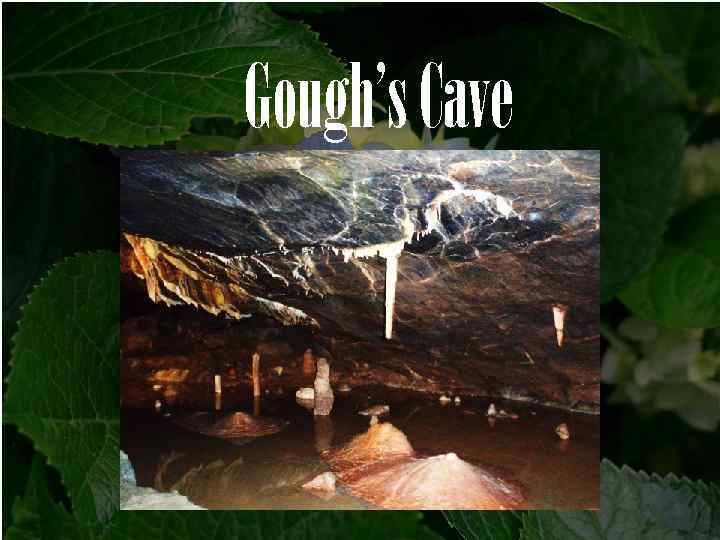
Gough’s Cave
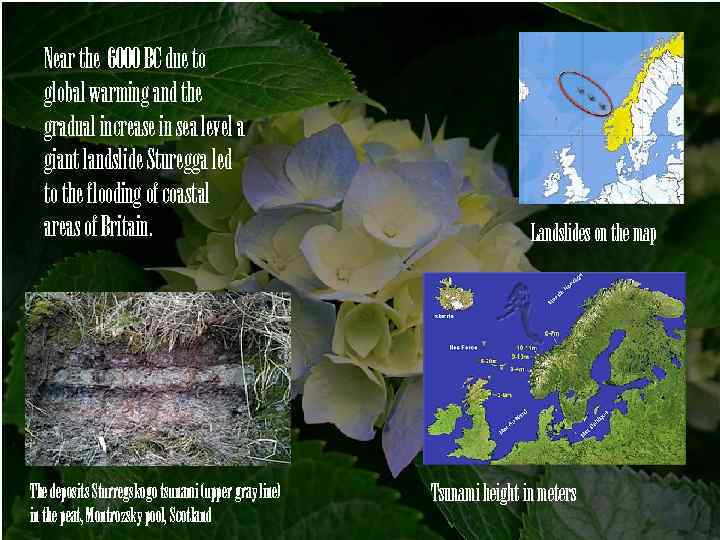
Near the 6000 BC due to global warming and the gradual increase in sea level a giant landslide Sturegga led to the flooding of coastal areas of Britain. The deposits Sturregskogo tsunami (upper gray line) in the peat, Montrozsky pool, Scotland Landslides on the map Tsunami height in meters
The Neolithic revolution brought a settled way of life, which ultimately led to the stratification of society into different groups of farmers , artisans and leaders. The forests were destroyed for the sake of clearing the area under cultivation of crops and livestock. The inhabitants of Britain at that time kept cattle and pigs , while sheep and goats, as well as wheat and barley were introduced later in the continent. However , in contrast to the continent , in England were discovered only a few Neolithic settlements in the open countryside. In the British Neolithic were still dominated cave settlements.
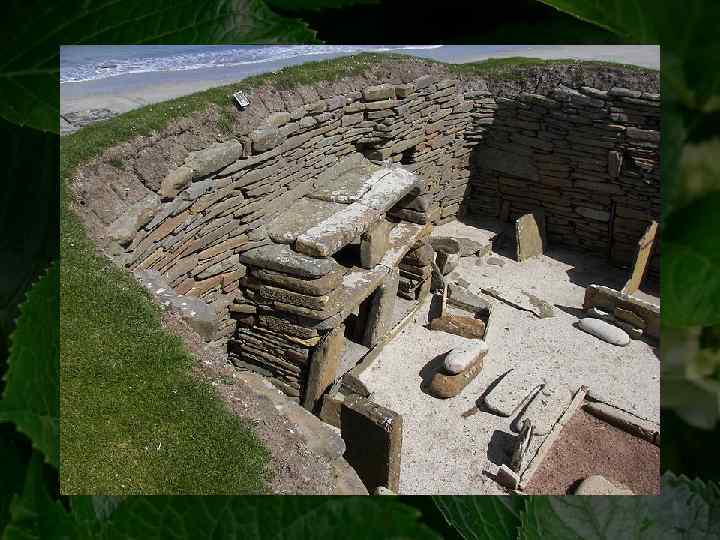
Construction of the first embankments in Britain began in the early Neolithic period (about 4400 BC. E. - 3300 BC. E. ). They were in the form of long barrows, which were used for public burials and the first bulk camps, which have parallels on the continent. Long barrows may have descended from the Neolithic longhouse, although finding long houses in Britain, just a few examples. Stone houses in the Orkney Islands, such as Skara Brae, is a fine example of the origin of settlement in the UK.
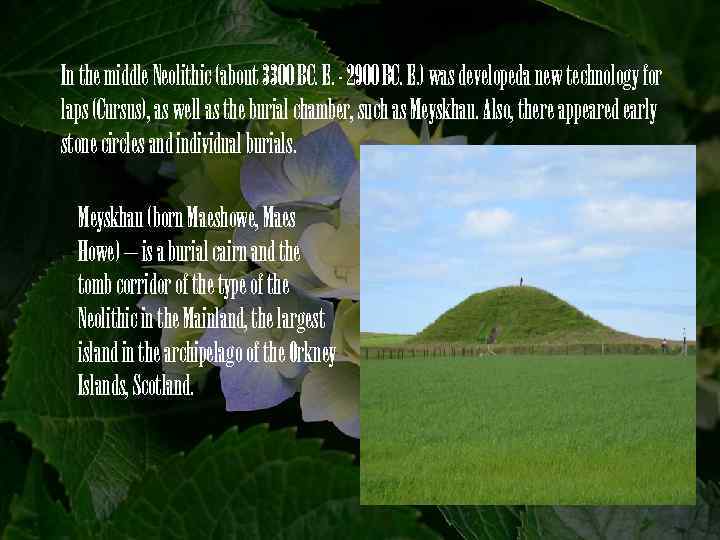
In the middle Neolithic (about 3300 BC. E. - 2900 BC. E. ) was developeda new technology for laps (Cursus), as well as the burial chamber, such as Meyskhau. Also, there appeared early stone circles and individual burials. Meyskhau (born Maeshowe, Maes Howe) – is a burial cairn and the tomb corridor of the type of the Neolithic in the Mainland, the largest island in the archipelago of the Orkney Islands, Scotland.
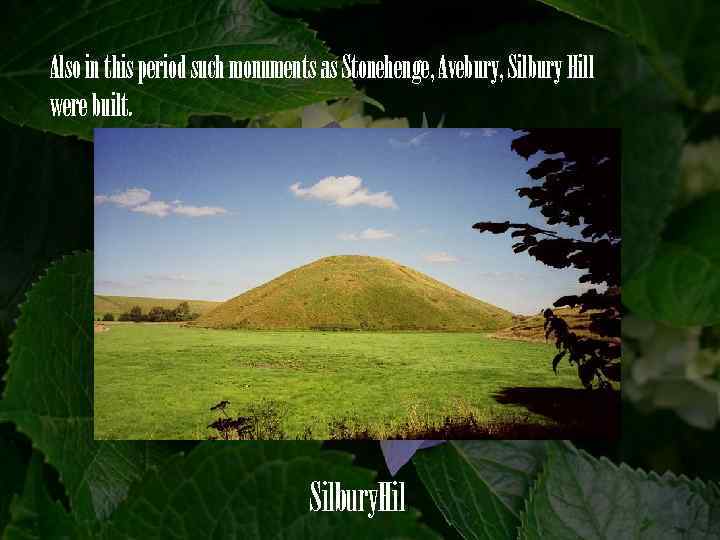
Also in this period such monuments as Stonehenge, Avebury, Silbury Hill were built. Silbury. Hill
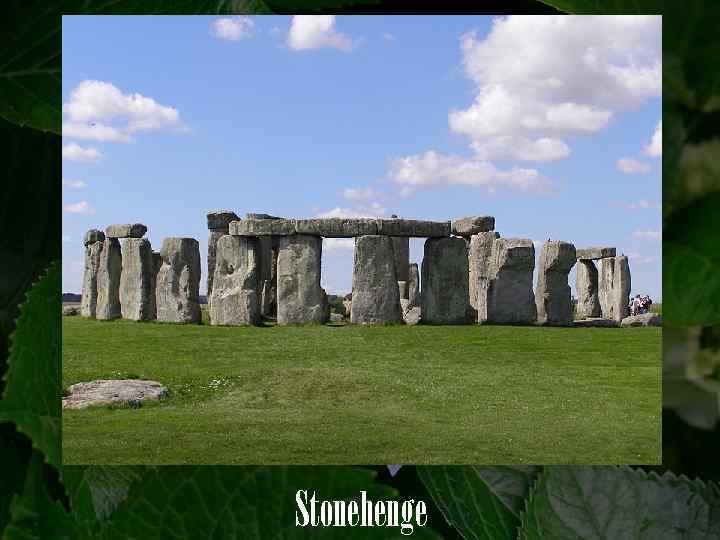
Stonehenge
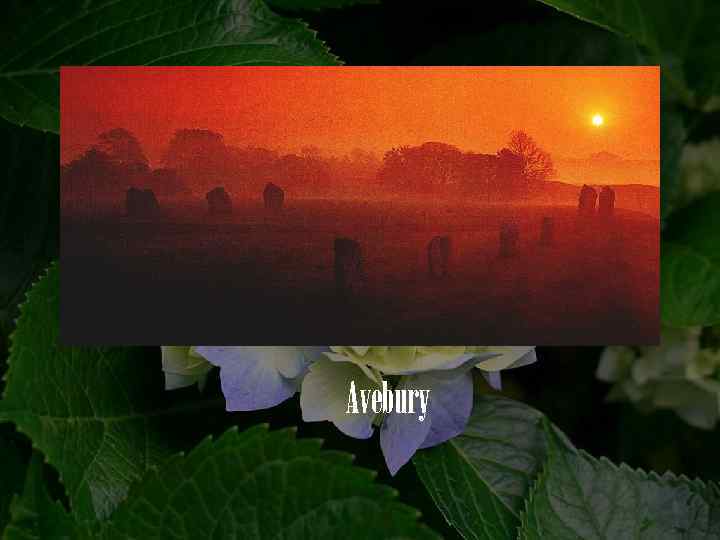
Avebury
