


 Скачать презентацию Prefrontal Cortex and Executive Function A P Saygin
8725be49419fafe93e4ebf3b2fc636e4.ppt
- Количество слайдов: 50
 Prefrontal Cortex and Executive Function A. P. Saygin Cogs 172 UCSD
 Frontal Lobes Traditionally considered to be associated with higher cognition and “intelligence” n n Most recent to evolve Primates, especially humans have particularly large frontal lobes compared to other animals
 Executive functions
 Executive functions 1%
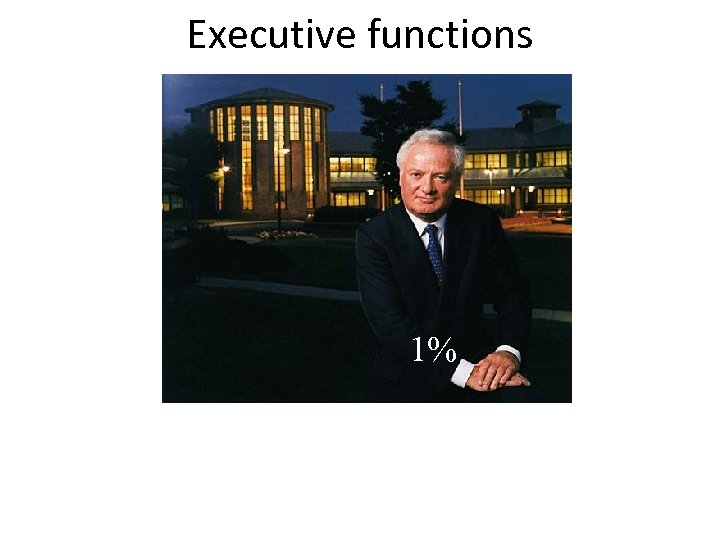
 You woke up this morning. Decided to go to class. How much time did you have to prepare? Showered, got dressed? Coffee? Breakfast? Drive? Park? Bike? Bus?
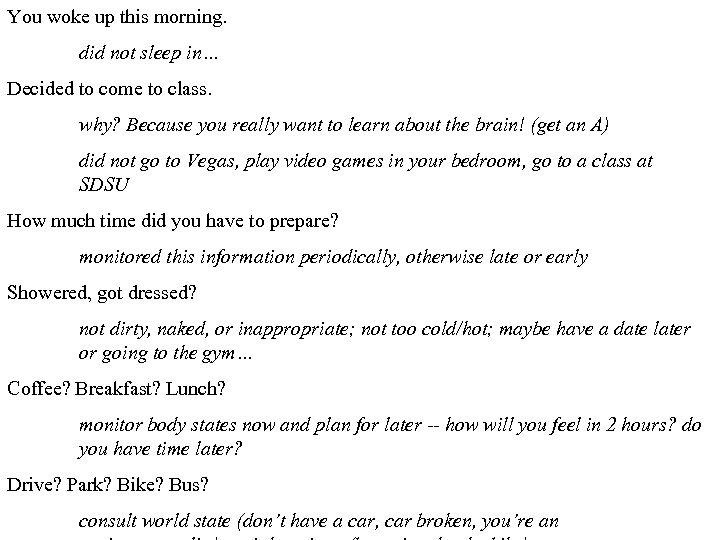 You woke up this morning. did not sleep in… Decided to come to class. why? Because you really want to learn about the brain! (get an A) did not go to Vegas, play video games in your bedroom, go to a class at SDSU How much time did you have to prepare? monitored this information periodically, otherwise late or early Showered, got dressed? not dirty, naked, or inappropriate; not too cold/hot; maybe have a date later or going to the gym… Coffee? Breakfast? Lunch? monitor body states now and plan for later -- how will you feel in 2 hours? do you have time later? Drive? Park? Bike? Bus? consult world state (don’t have a car, car broken, you’re an
 You’re an executive too!
 Executive functions 1%
 Executive functions include: - Setting Goals - Weighing alternatives - Selecting a course of action - Sequencing - Regulating behaviour
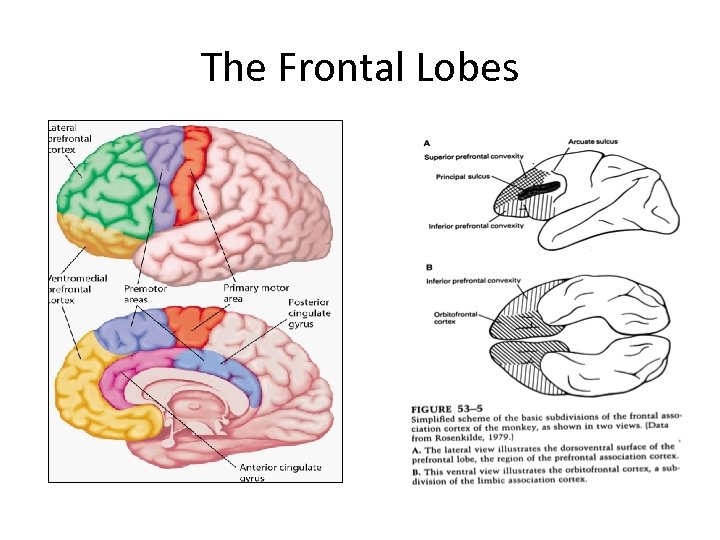 The Frontal Lobes
 Frontal Lesions “Frontal lobe patients”: Frontal lobes are large and lesions can be large too. Sometimes the term will refer to frontal lobe patients who have lesions in premotor or motor cortex which we discussed separately. Many aphasic patients can have frontal lesions… When you hear about “frontal lobe patient X”, remember the lesion can cover a large area or be anywhere in frontal cortex.
 Frontal lobe functions are heterogeneous Some classic consequences of frontal lobe damage - Impairments in decision-making Risk-taking problems - Poor mental flexibility - Cognitive control Disinhibition is possible Trouble stopping actions once initiated Compulsive behaviors, obsessions Inappropriate judgments, emotional reactions - Attention and memory - “Sense of self”
 Executive meets Existential
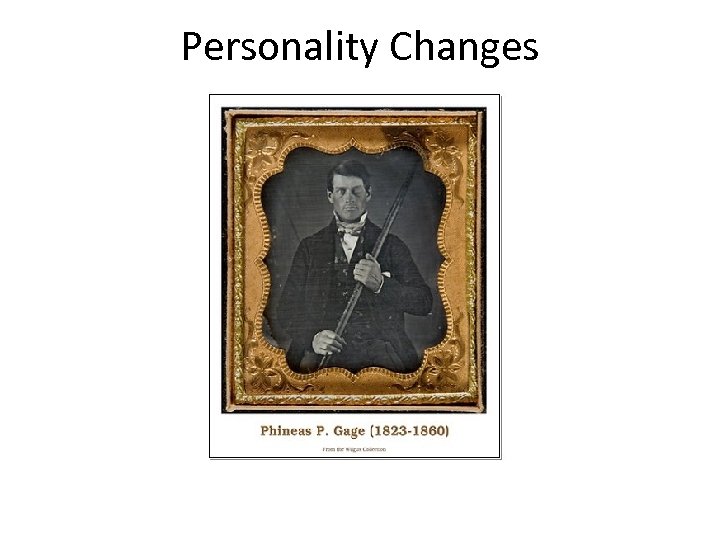 Personality Changes
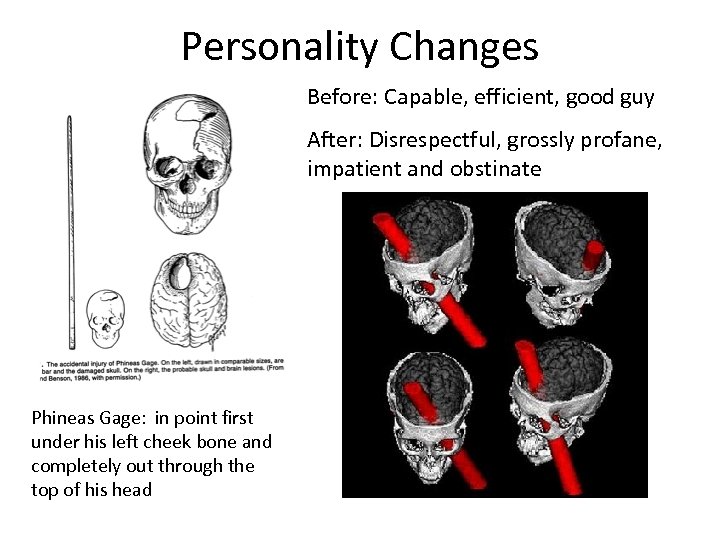 Personality Changes Before: Capable, efficient, good guy After: Disrespectful, grossly profane, impatient and obstinate Phineas Gage: in point first under his left cheek bone and completely out through the top of his head
 Does this happen? This dramatic is not often but… Poor decision making Impulsiveness, recklessness, risk taking Perseveration, may be disposed to imitation Obsessive, compulsive and/or repetitive behaviors Lack of concern for the future/consequences Poor emotional regulation; euphoria and/or depression Mood disorders Irritability Silliness & facetiousness Failure to obey rules Lack of social graces Addiction
 Once again, there is individual variability among patients and symptoms may vary depending on lesion site
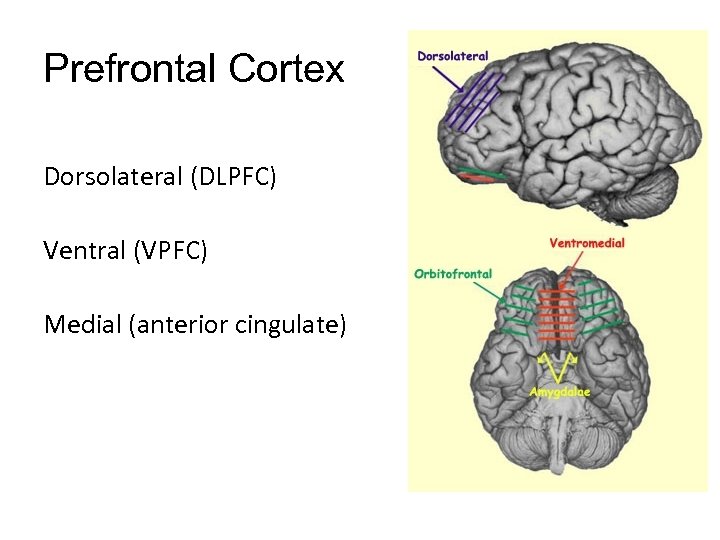 Prefrontal Cortex Dorsolateral (DLPFC) Ventral (VPFC) Medial (anterior cingulate)
 Working Memory Capacity to hold information for short periods of time and to use or manipulate that information in thinking and solving problems - Storage - Manipulation
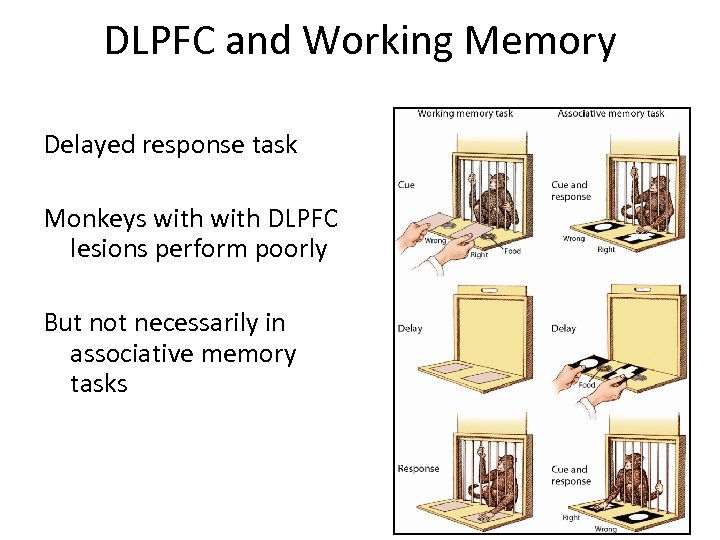 DLPFC and Working Memory Delayed response task Monkeys with DLPFC lesions perform poorly But not necessarily in associative memory tasks
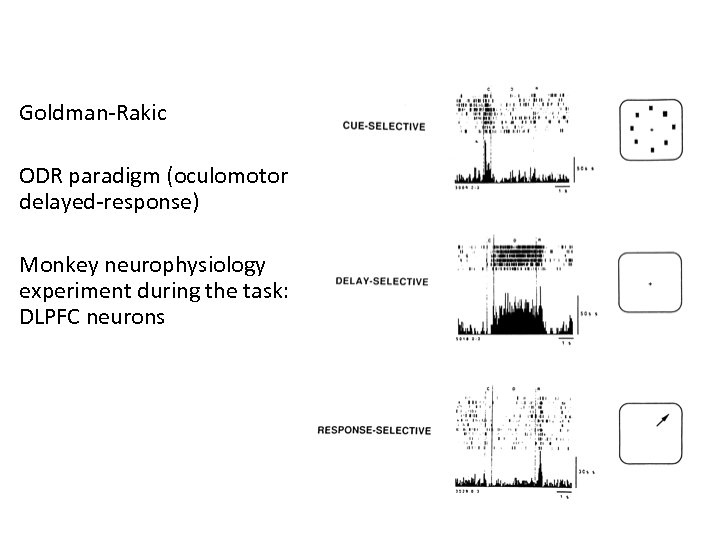 Goldman-Rakic ODR paradigm (oculomotor delayed-response) Monkey neurophysiology experiment during the task: DLPFC neurons
 Behavioral spontaneity Lab to Life
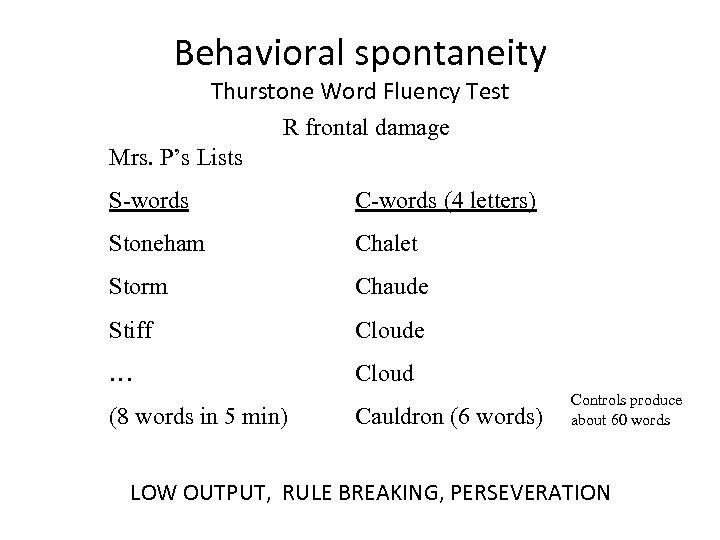 Behavioral spontaneity Thurstone Word Fluency Test R frontal damage Mrs. P’s Lists S-words C-words (4 letters) Stoneham Chalet Storm Chaude Stiff Cloude … Cloud (8 words in 5 min) Cauldron (6 words) Controls produce about 60 words LOW OUTPUT, RULE BREAKING, PERSEVERATION
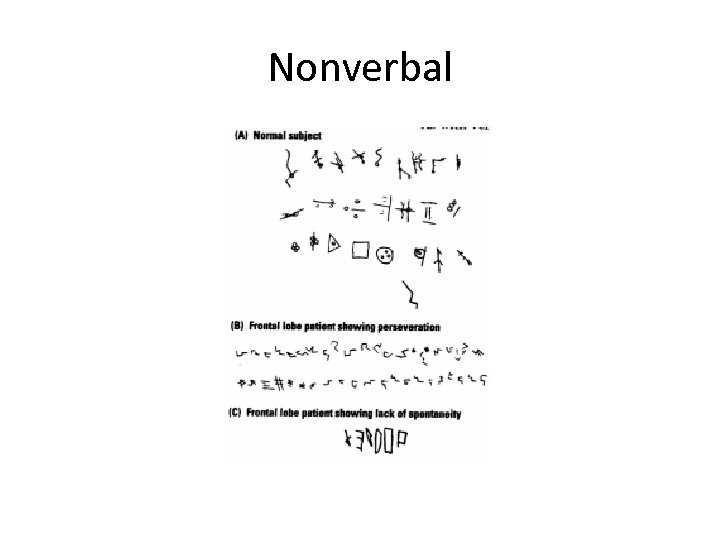 Nonverbal
 Behavioral spontaneity Real life effects May appear nonchalant or even “lazy” Difficulties – Working – Daily activities such as shopping, cooking – In severe cases, getting out of bed, getting dressed
 Environmental Control of Behavior
 Response inhibition e. g. STROOP
 Purple Red Green Black Blue Yellow Green Red Purple Blue
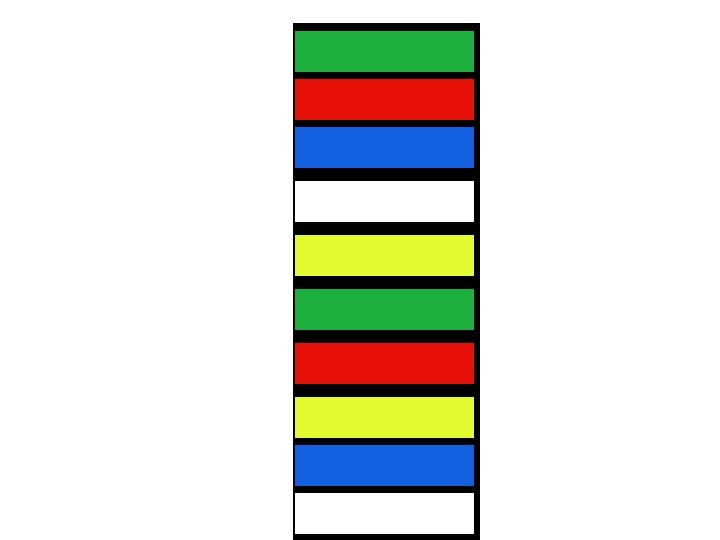 Purple Red Green Black Blue Yellow Green Red Purple Blue
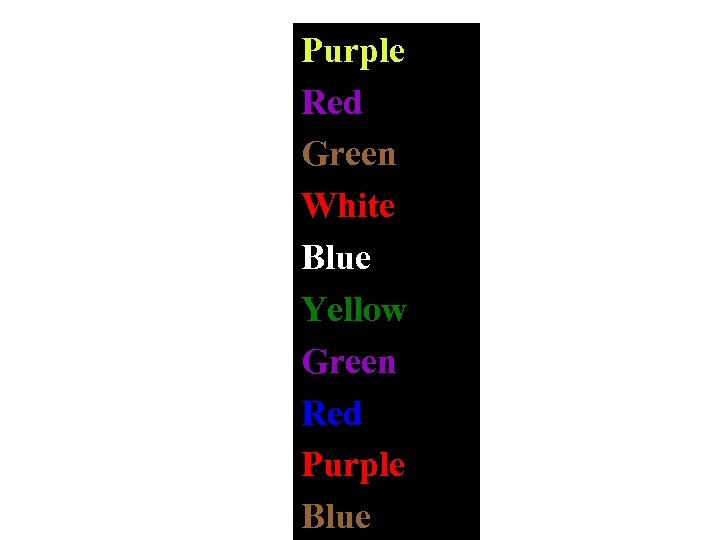 Purple Red Green White Blue Yellow Green Red Purple Blue
 Frontal patients Too much Stroop interference Can be aware, but cannot help Especially LH patients
 Wisconsin Card Sorting Test (WCST) Abstract thinking Maintaining and shifting attention appropriately Utilizing feedback in problem solving Response inhibition
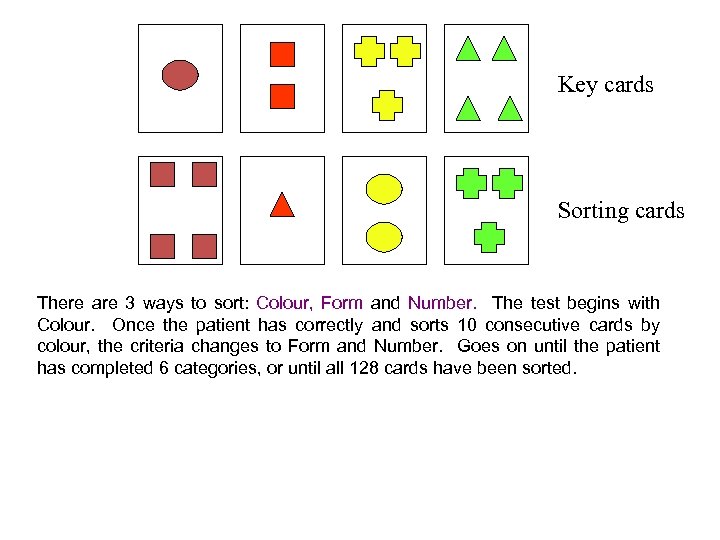 Key cards Sorting cards There are 3 ways to sort: Colour, Form and Number. The test begins with Colour. Once the patient has correctly and sorts 10 consecutive cards by colour, the criteria changes to Form and Number. Goes on until the patient has completed 6 categories, or until all 128 cards have been sorted.
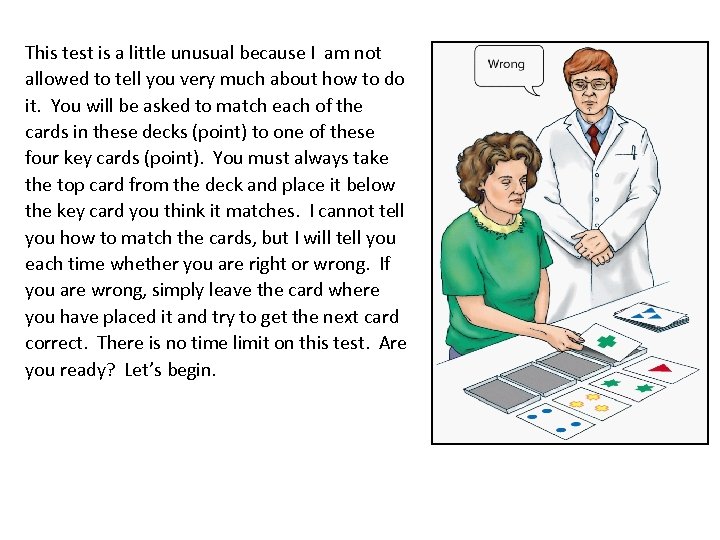 This test is a little unusual because I am not allowed to tell you very much about how to do it. You will be asked to match each of the cards in these decks (point) to one of these four key cards (point). You must always take the top card from the deck and place it below the key card you think it matches. I cannot tell you how to match the cards, but I will tell you each time whether you are right or wrong. If you are wrong, simply leave the card where you have placed it and try to get the next card correct. There is no time limit on this test. Are you ready? Let’s begin.
![“Form is probably the correct solution now so this [colour sorting] will be wrong](https://present5.com/presentation/8725be49419fafe93e4ebf3b2fc636e4/image-35.jpg "“Form is probably the correct solution now so this [colour sorting] will be wrong") “Form is probably the correct solution now so this [colour sorting] will be wrong so this will be wrong and wrong again” Generally frontal lobe patients, especially dorsolateral
“Form is probably the correct solution now so this [colour sorting] will be wrong so this will be wrong and wrong again” Generally frontal lobe patients, especially dorsolateral
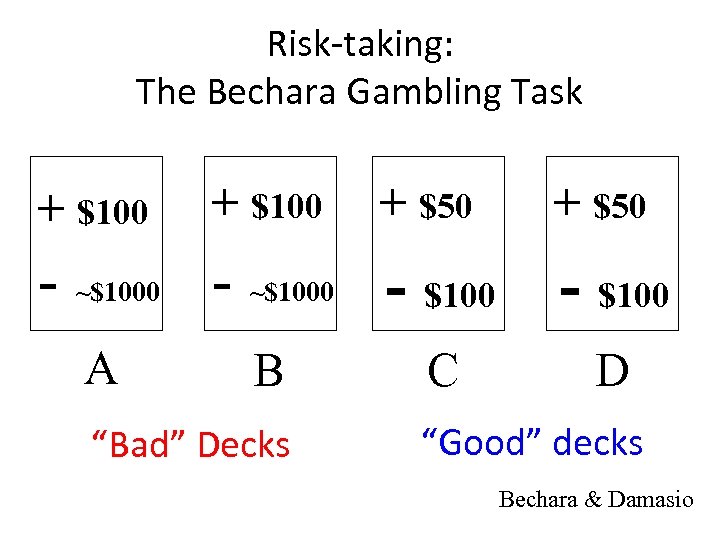 Risk-taking: The Bechara Gambling Task + $100 + $50 - ~$1000 - $100 A B “Bad” Decks C D “Good” decks Bechara & Damasio
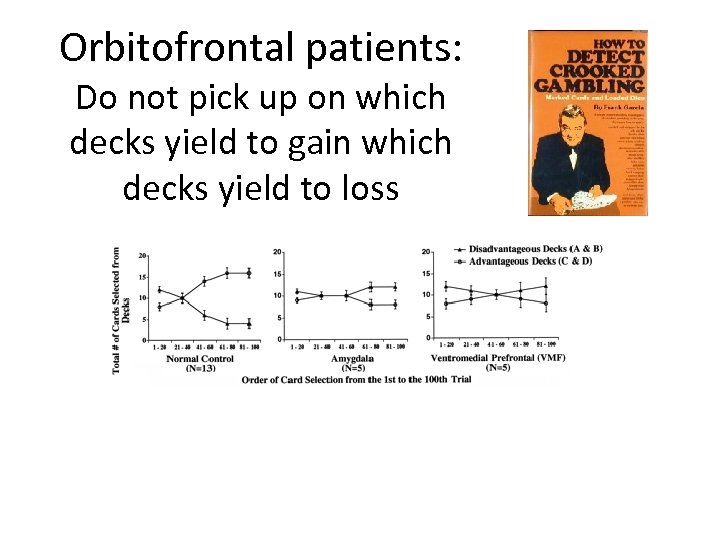 Orbitofrontal patients: Do not pick up on which decks yield to gain which decks yield to loss
 VMF (orbitofrontal) patients were able to generate skin conductance response (SCR) when they received a reward or a punishment (play money). In a Pavlovian conditioning experiment the VMF patients acquired a conditioned SCR to visual stimuli paired with an aversive loud sound. VMF cortex damage precludes the ability to use somatic signals that are necessary for guiding decisions but not their formation or generation per se.
 Closer to Real Life: Planning Consider a person trying to prepare a meal. He doesn’t have all the ingredients, is unable to put them together, or to follow a recipe. Or consider you, coming to class this morning. Frontal damage --> Planning deficits --> Major consequences when trying to function independently Often despite lack of major motor, memory language, IQ problems
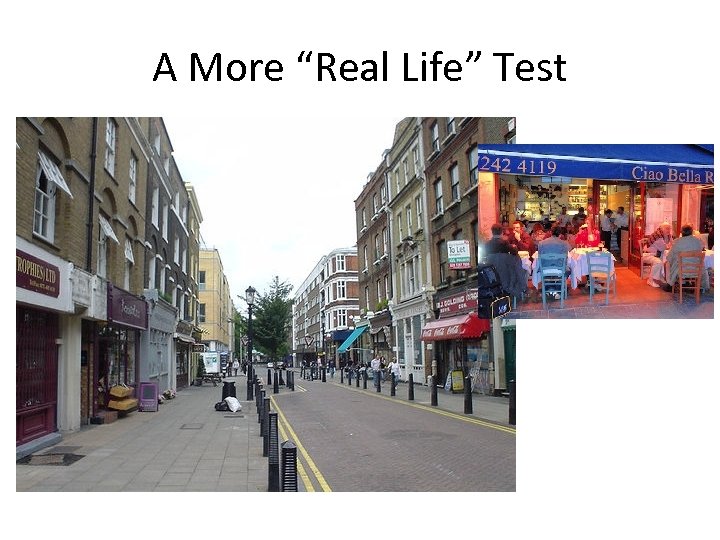
 A More “Real Life” Test Shallice & Burgess 1991 - Multiple Errands Test Small but unfamiliar environment with map, where you have to visit different shops “Multitasking" in everyday life Run 6 errands, get answers to 4 questions (e. g. , price of a lb of tomatoes), and be done and be at a specific place in 15 minutes Do not do irrelevant things (e. g. do not enter shops except to buy something) As quickly as possible
 A More “Real Life” Test
 Case 1 Burgess and Shallice (1991) 27 -year-old male Traffic accident Bilateral frontal damage Cannot carry even simple activities since he has problems keeping his mind on the task at hand Shopping, cleaning and laundry cannot do… Verbal IQ 121 Performance IQ 120 Performed well on standardized “frontal” tests
 Case 2 Burgess and Shallice (1991) Professional male Traffic accident Right frontal damage; mild changes in left frontal For the next 5 years couldn’t hold jobs Does not do anything at home Verbal IQ 126 Performance IQ 112 Visual memory impairment Only performed poorly on 1 standard frontal test
 Case 3 Burgess and Shallice (1991) 55 -year-old female Extensive lesion of the left frontal lobe Lives alone Untidy Verbal IQ 135 Performance IQ 114 Problems with frontal memory tasks Performed poorly on frontal tests
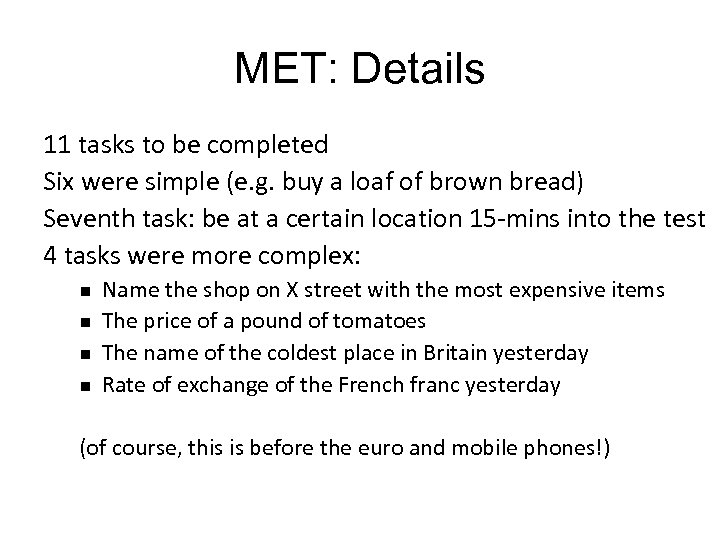 MET: Details 11 tasks to be completed Six were simple (e. g. buy a loaf of brown bread) Seventh task: be at a certain location 15 -mins into the test 4 tasks were more complex: n n Name the shop on X street with the most expensive items The price of a pound of tomatoes The name of the coldest place in Britain yesterday Rate of exchange of the French franc yesterday (of course, this is before the euro and mobile phones!)
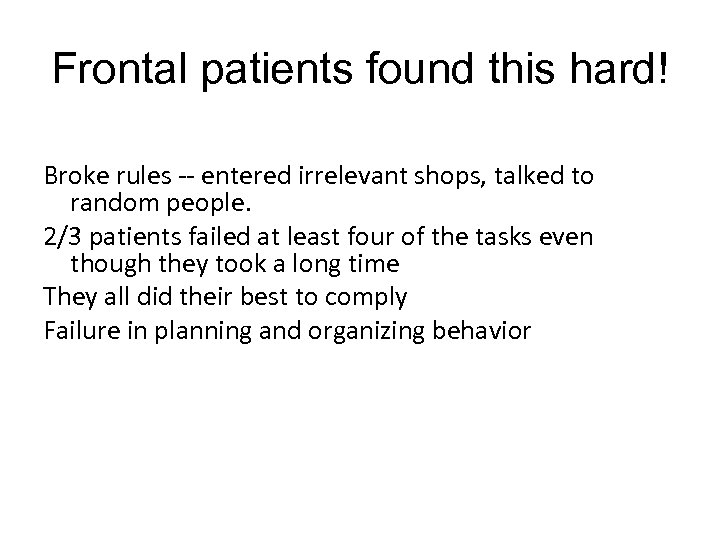 Frontal patients found this hard! Broke rules -- entered irrelevant shops, talked to random people. 2/3 patients failed at least four of the tasks even though they took a long time They all did their best to comply Failure in planning and organizing behavior
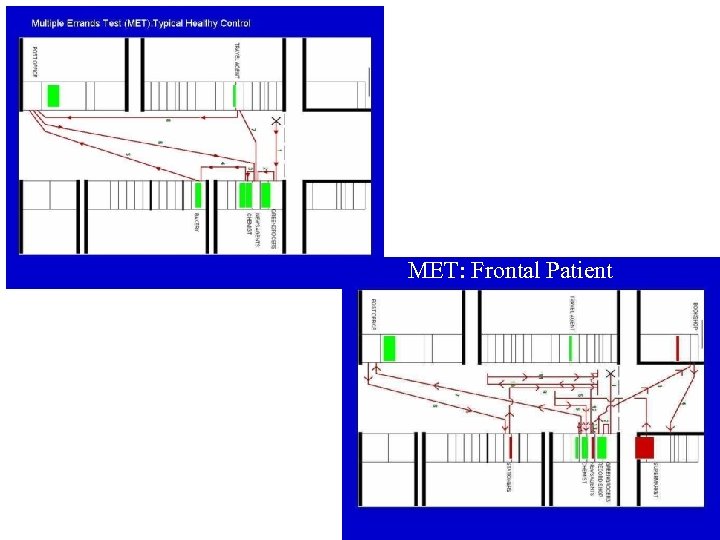 MET: Frontal Patient
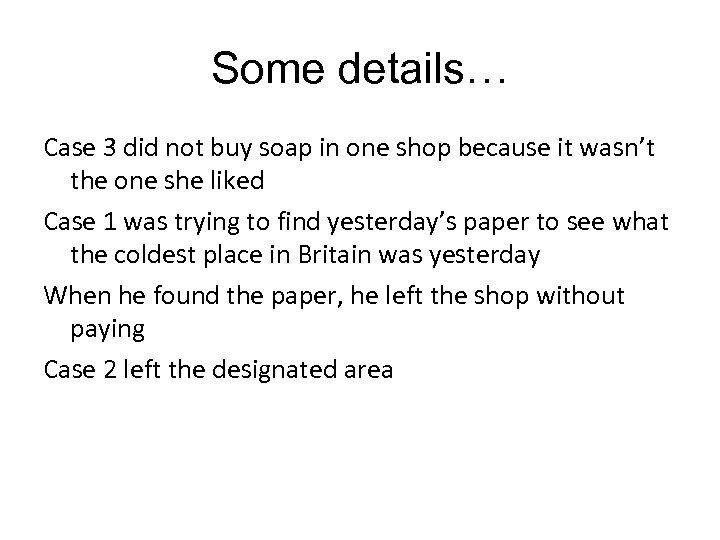 Some details… Case 3 did not buy soap in one shop because it wasn’t the one she liked Case 1 was trying to find yesterday’s paper to see what the coldest place in Britain was yesterday When he found the paper, he left the shop without paying Case 2 left the designated area
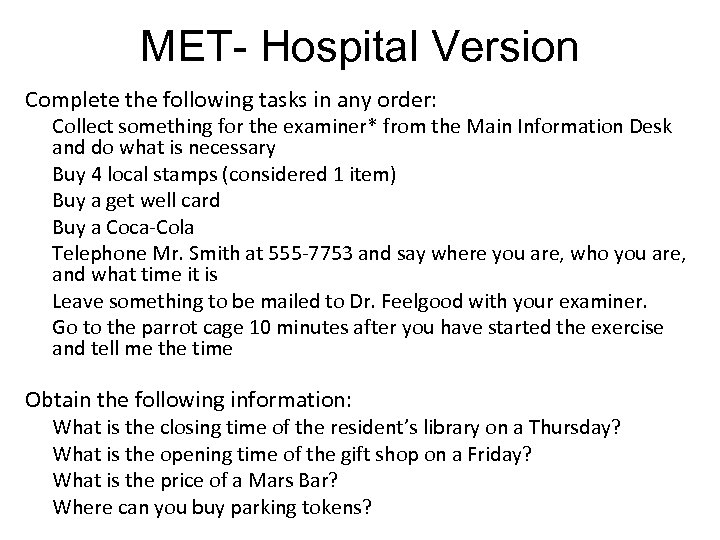 MET- Hospital Version Complete the following tasks in any order: Collect something for the examiner* from the Main Information Desk and do what is necessary Buy 4 local stamps (considered 1 item) Buy a get well card Buy a Coca-Cola Telephone Mr. Smith at 555 -7753 and say where you are, who you are, and what time it is Leave something to be mailed to Dr. Feelgood with your examiner. Go to the parrot cage 10 minutes after you have started the exercise and tell me the time Obtain the following information: What is the closing time of the resident’s library on a Thursday? What is the opening time of the gift shop on a Friday? What is the price of a Mars Bar? Where can you buy parking tokens?
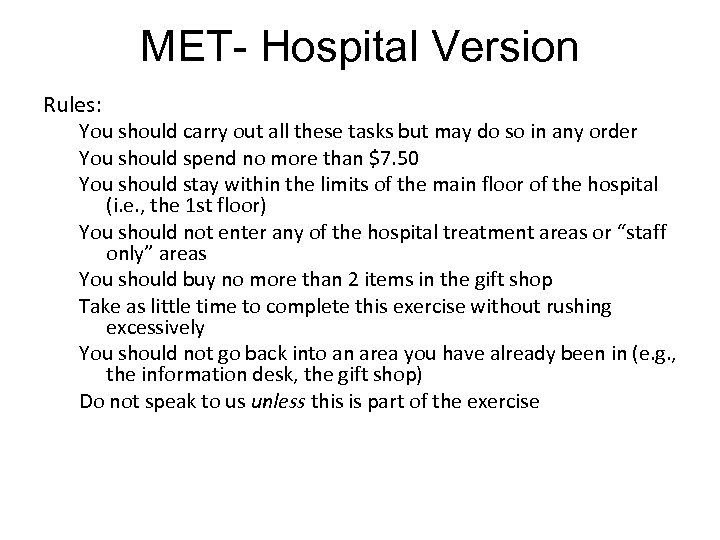 MET- Hospital Version Rules: You should carry out all these tasks but may do so in any order You should spend no more than $7. 50 You should stay within the limits of the main floor of the hospital (i. e. , the 1 st floor) You should not enter any of the hospital treatment areas or “staff only” areas You should buy no more than 2 items in the gift shop Take as little time to complete this exercise without rushing excessively You should not go back into an area you have already been in (e. g. , the information desk, the gift shop) Do not speak to us unless this is part of the exercise