


 Скачать презентацию Prediction is difficult especially of the future -Neils
59fb0af8848636b61d1b4f29f37b5a14.ppt
- Количество слайдов: 90
 Prediction is difficult, especially of the future… -Neils Bohr (atomic physicist) The Doctor’s World: 2004 to 2054
 Goals: Look at the future, with a critical eye u Draw conclusions regarding your training needs u “If you don’t know where you’re going, you might end up there…” u
 Some Sources U. S. Census Bureau RAND corporation Kaiser Family Foundation Concord Coalition WHO The Transformation of American Health Care: The Arduous Road to Value John L. Haughom, MD Senior VP, Healthcare Improvement Also, Drs. Bagley and Greene, from the AAFP’s Graham Center for Policy Research Most graph’s souces & annotations in “Notes” view of this presentation
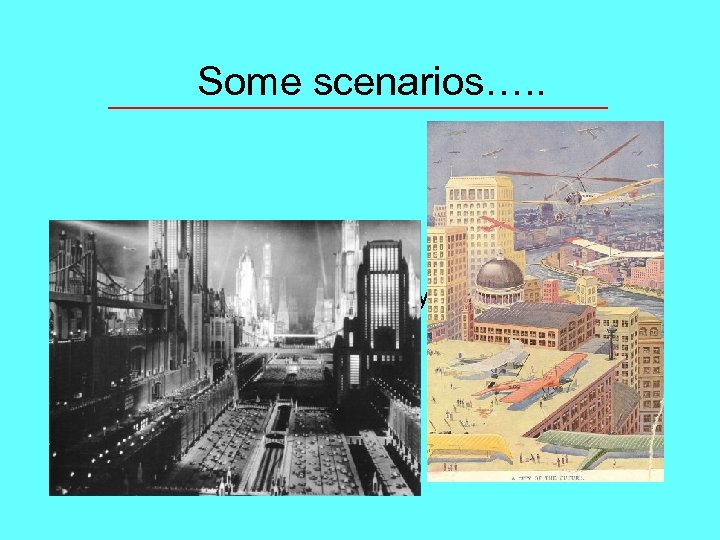 Some scenarios…. . …. Or, where the heck is my “flying car”?
 #1. Demographics: Population & Environment
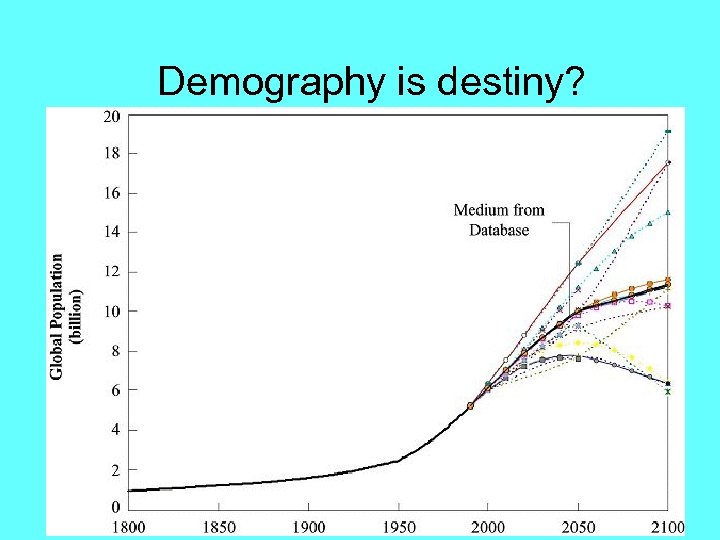 Demography is destiny?
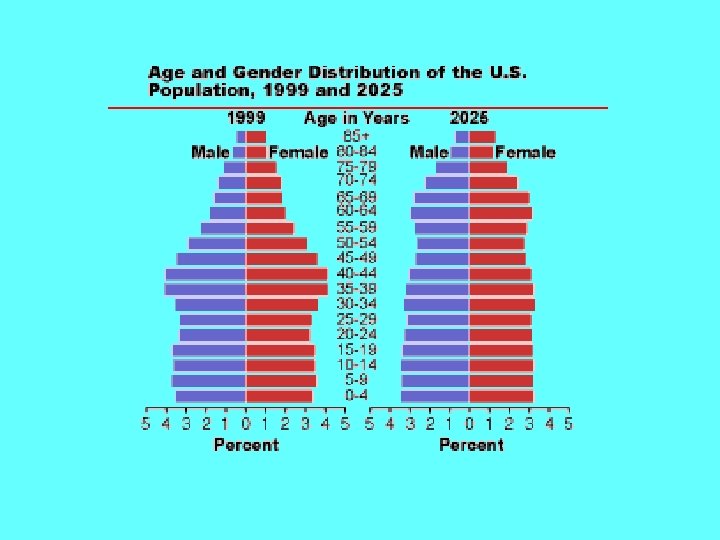
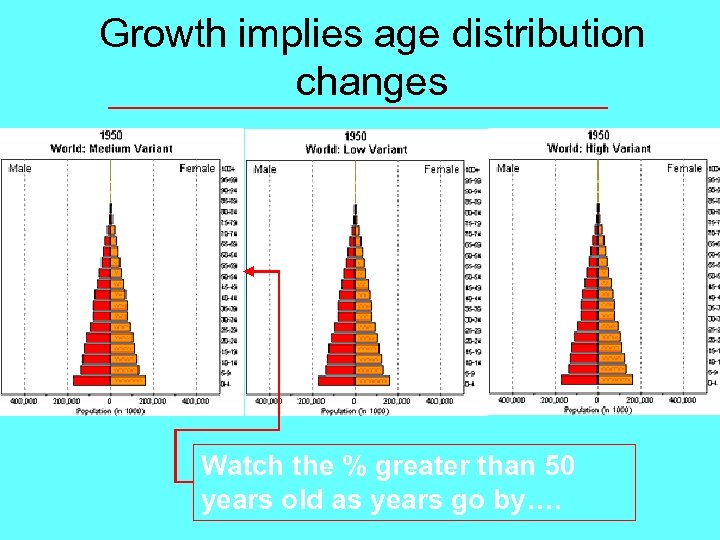 Growth implies age distribution changes Watch the % greater than 50 years old as years go by….
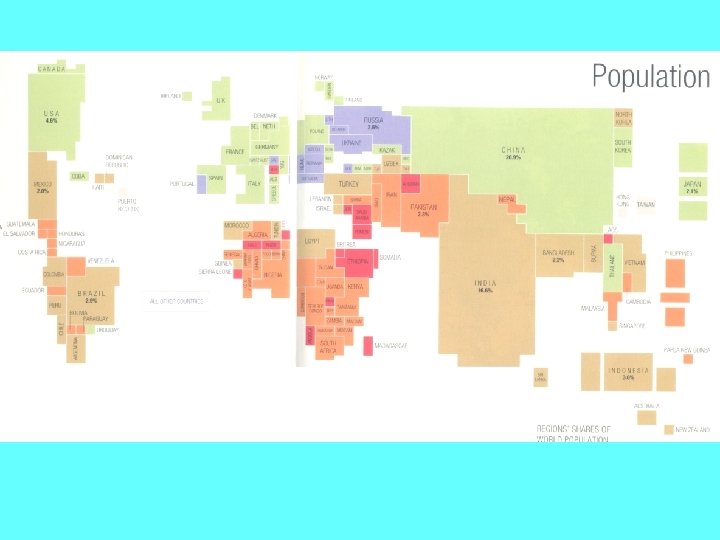
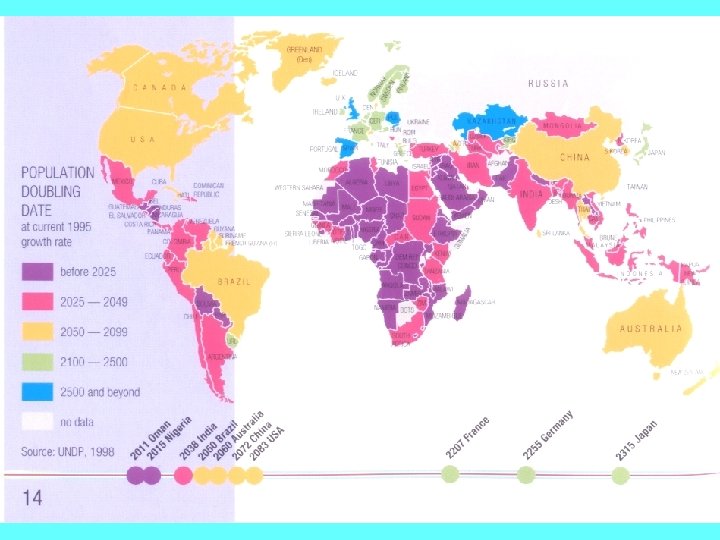
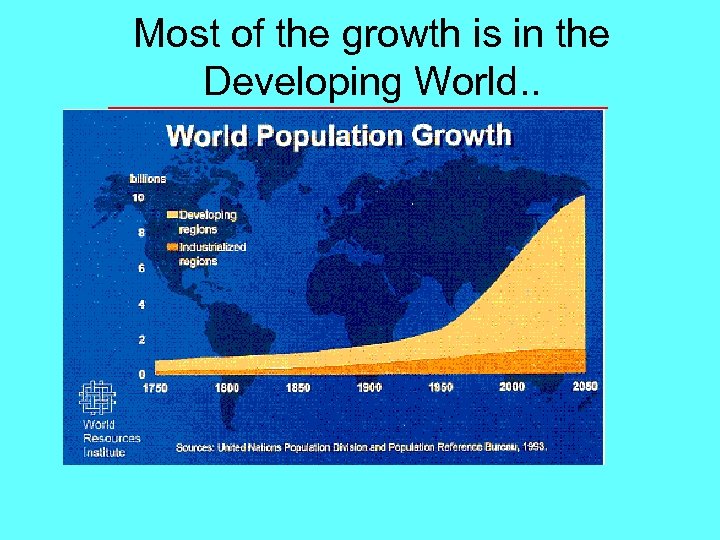 Most of the growth is in the Developing World. .
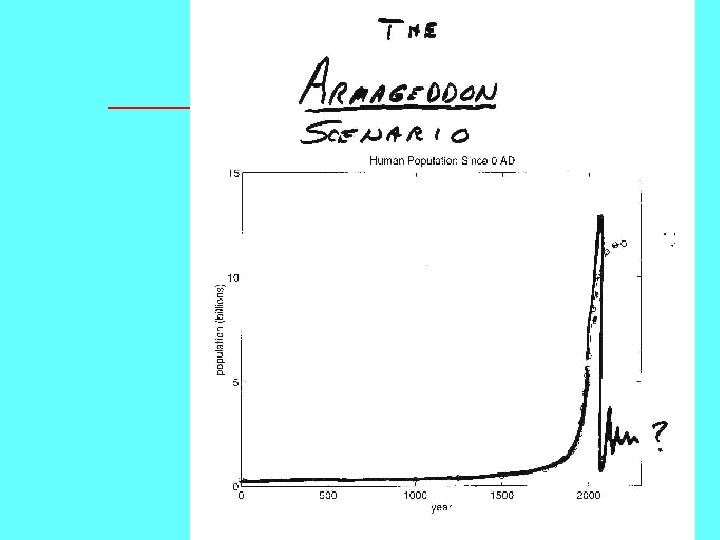
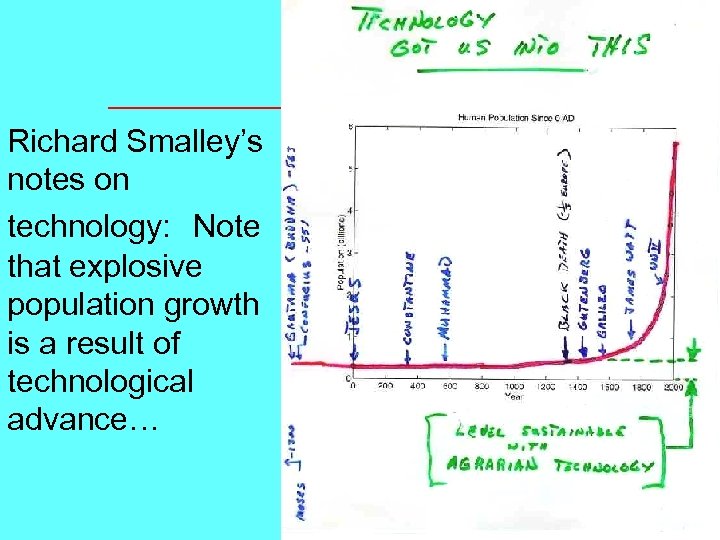 Richard Smalley’s notes on technology: Note that explosive population growth is a result of technological advance…
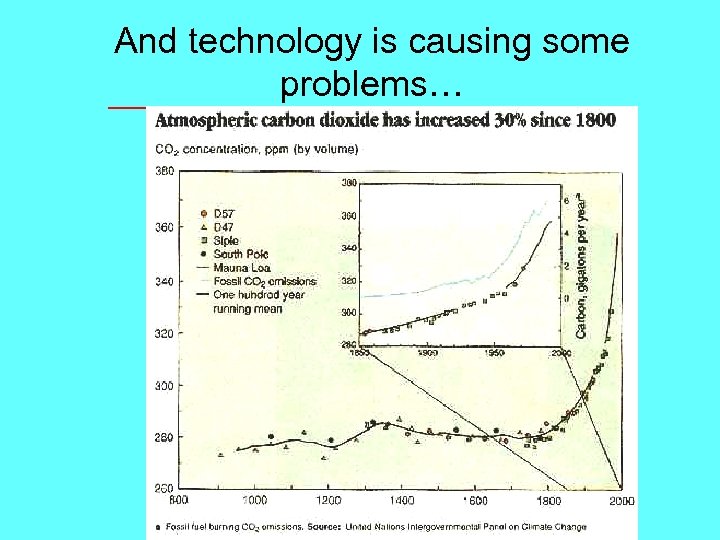 And technology is causing some problems…
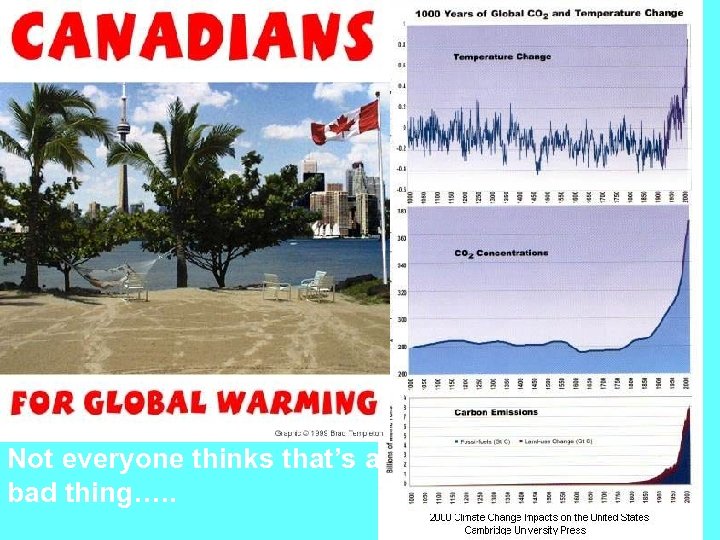 Major scientific groups agree that the globe is warming… Not everyone thinks that’s a bad thing…. .
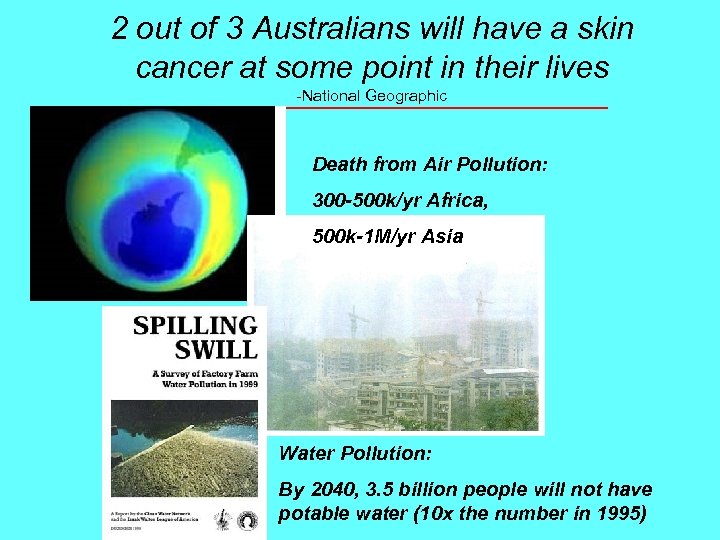 2 out of 3 Australians will have a skin cancer at some point in their lives -National Geographic Death from Air Pollution: 300 -500 k/yr Africa, 500 k-1 M/yr Asia Water Pollution: By 2040, 3. 5 billion people will not have potable water (10 x the number in 1995)
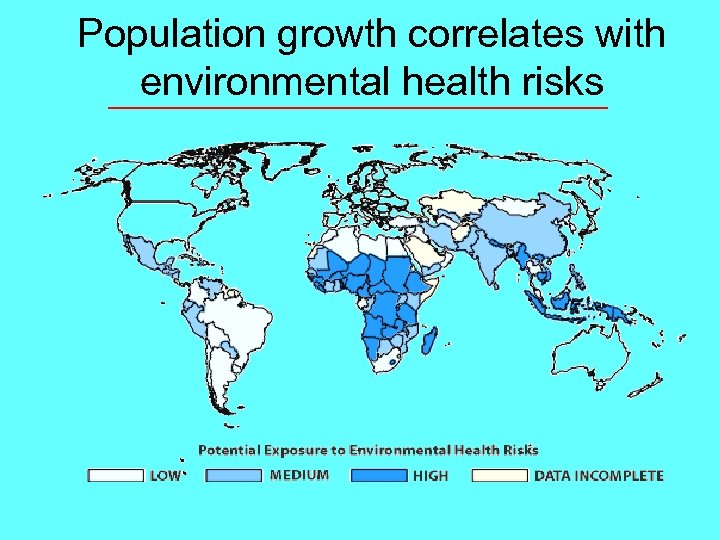 Population growth correlates with environmental health risks
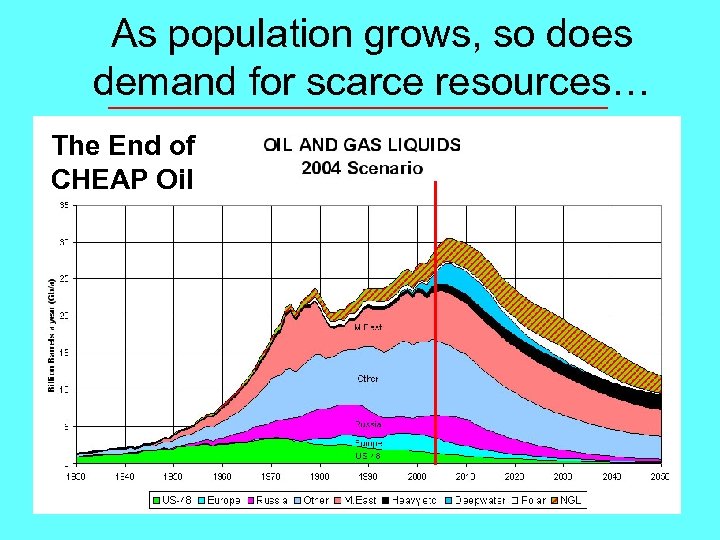 As population grows, so does demand for scarce resources… The End of CHEAP Oil
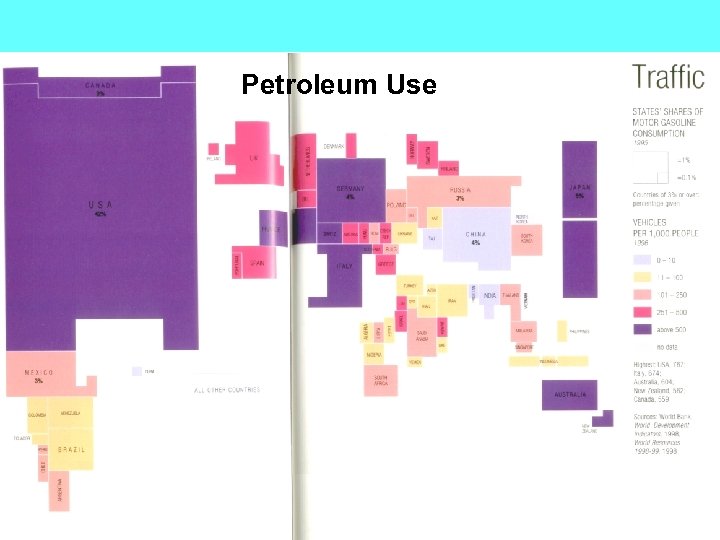 Petroleum Use

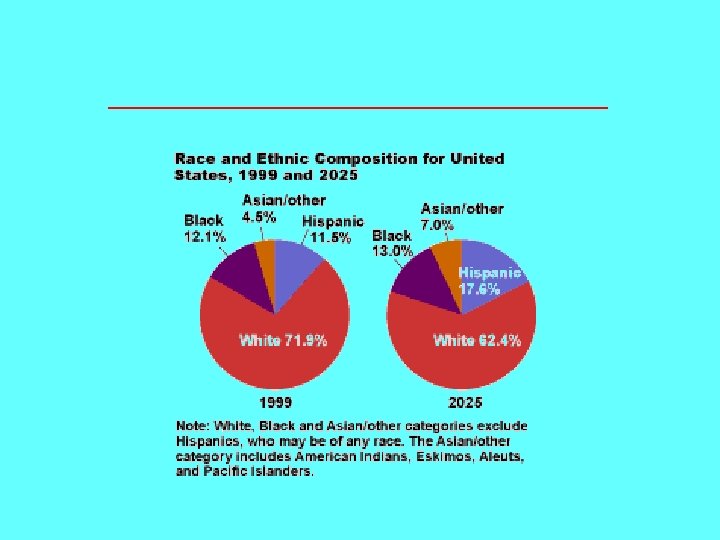
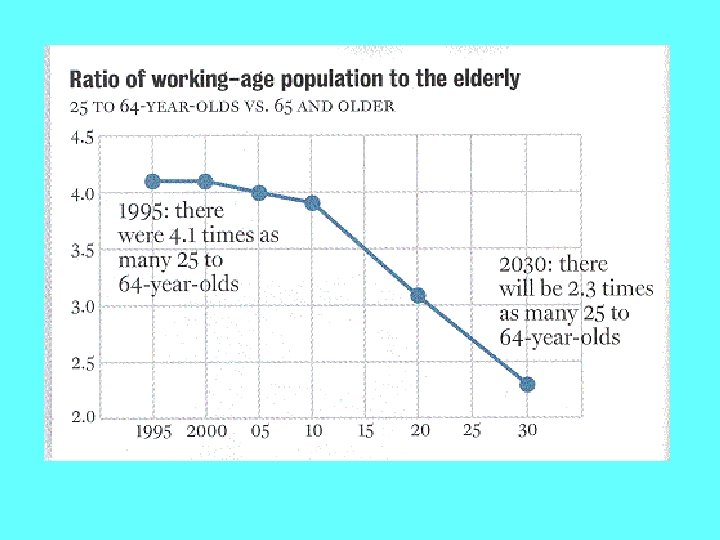
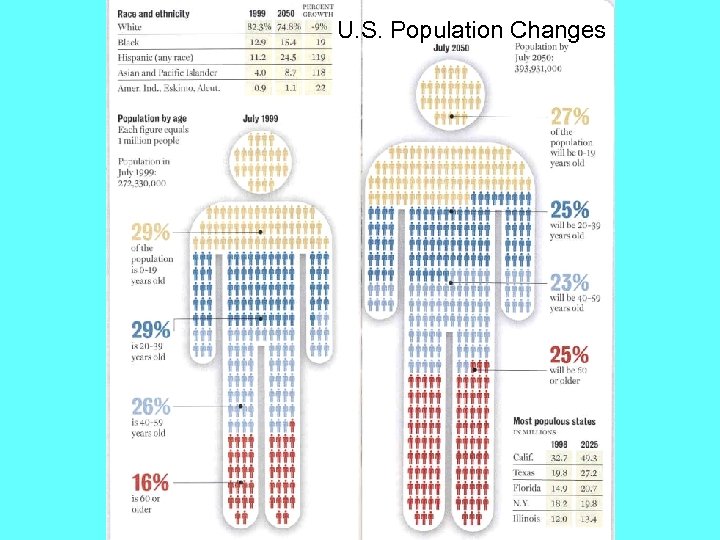 U. S. Population Changes
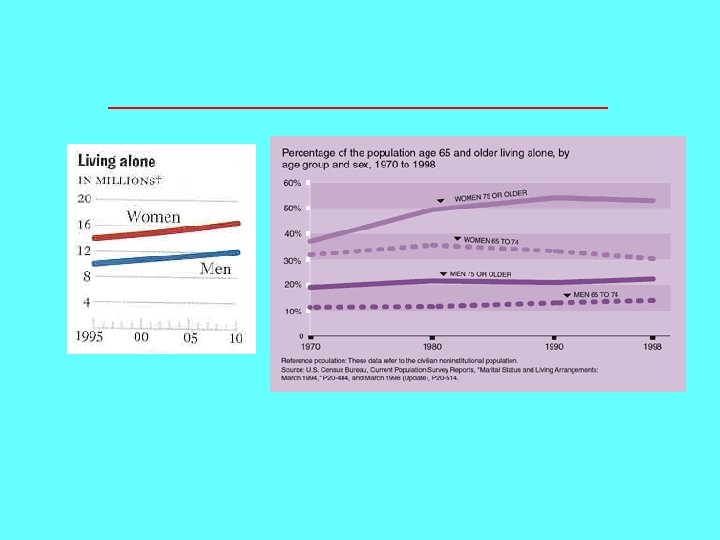
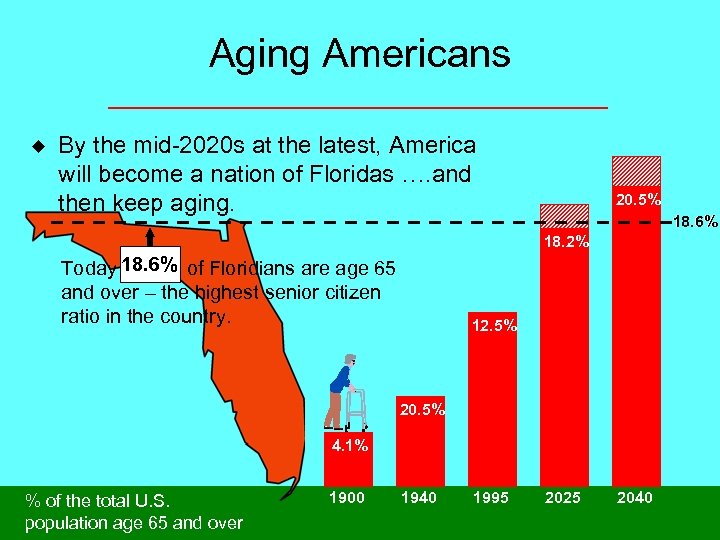 Aging Americans u By the mid-2020 s at the latest, America will become a nation of Floridas …. and then keep aging. 20. 5% 18. 6% 18. 2% Today 18. 6% of Floridians are age 65 and over – the highest senior citizen ratio in the country. 12. 5% 20. 5% 4. 1% % of the total U. S. population age 65 and over 1900 1940 1995 2025 2040
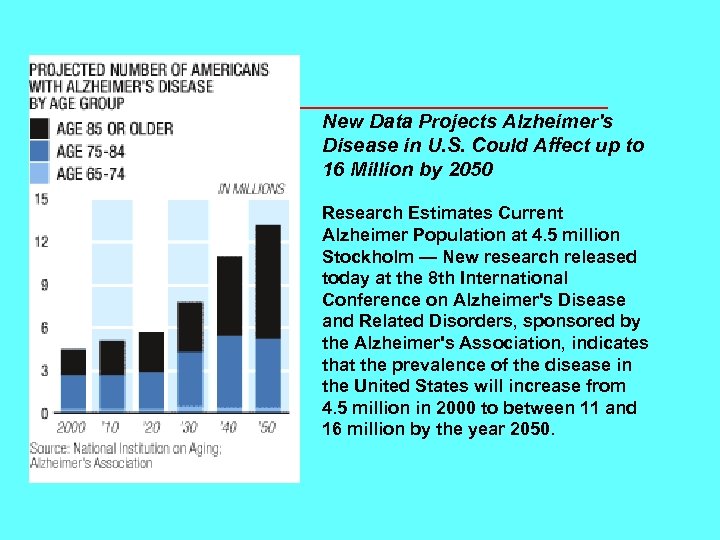 New Data Projects Alzheimer's Disease in U. S. Could Affect up to 16 Million by 2050 Research Estimates Current Alzheimer Population at 4. 5 million Stockholm — New research released today at the 8 th International Conference on Alzheimer's Disease and Related Disorders, sponsored by the Alzheimer's Association, indicates that the prevalence of the disease in the United States will increase from 4. 5 million in 2000 to between 11 and 16 million by the year 2050.
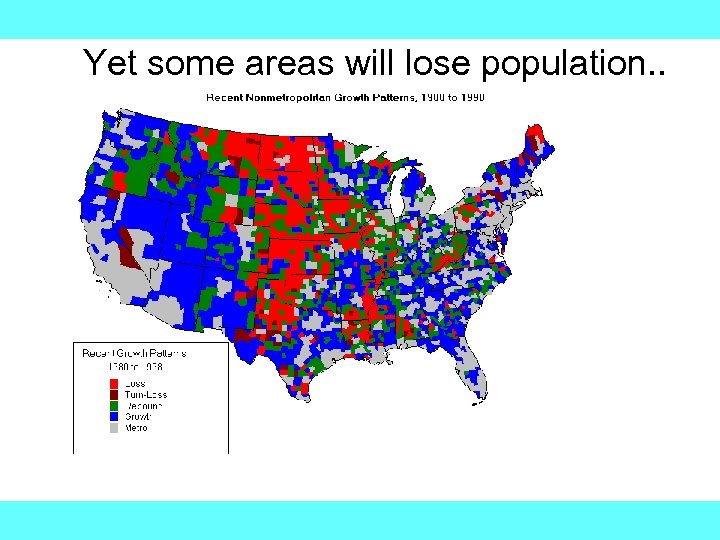 Yet some areas will lose population. .
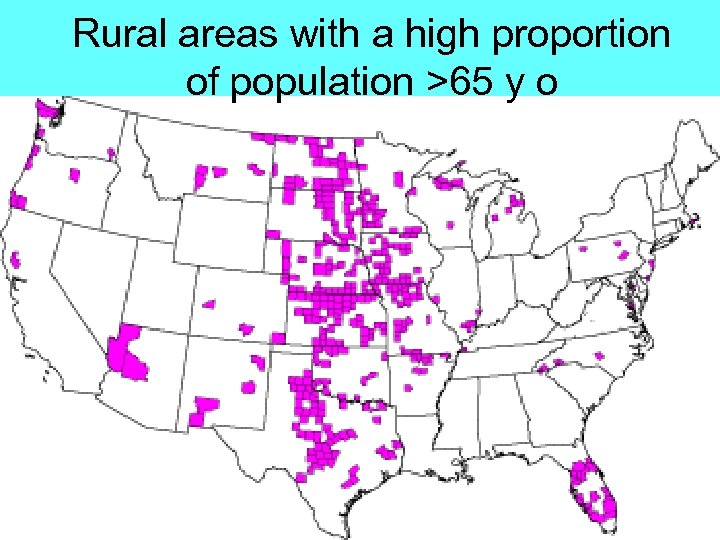 Rural areas with a high proportion of population >65 y o
 #2 Economics
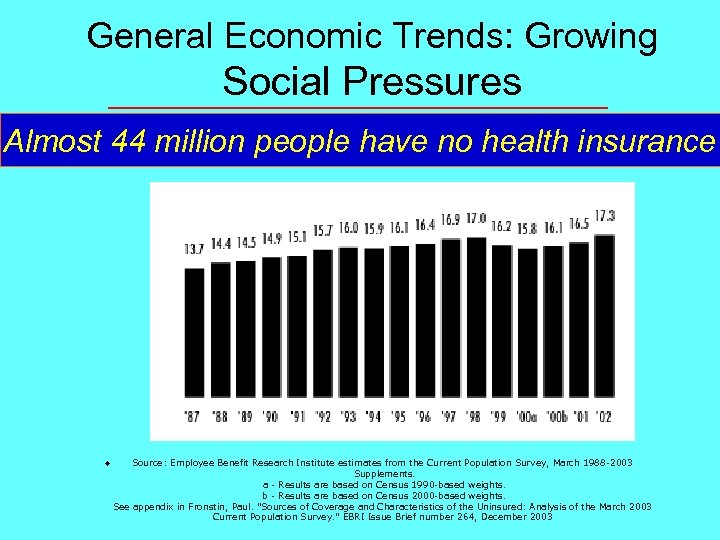 General Economic Trends: Growing Social Pressures Almost 44 million people have no health insurance u Source: Employee Benefit Research Institute estimates from the Current Population Survey, March 1988 -2003 Supplements. a - Results are based on Census 1990 -based weights. b - Results are based on Census 2000 -based weights. See appendix in Fronstin, Paul. "Sources of Coverage and Characteristics of the Uninsured: Analysis of the March 2003 Current Population Survey. " EBRI Issue Brief number 264, December 2003
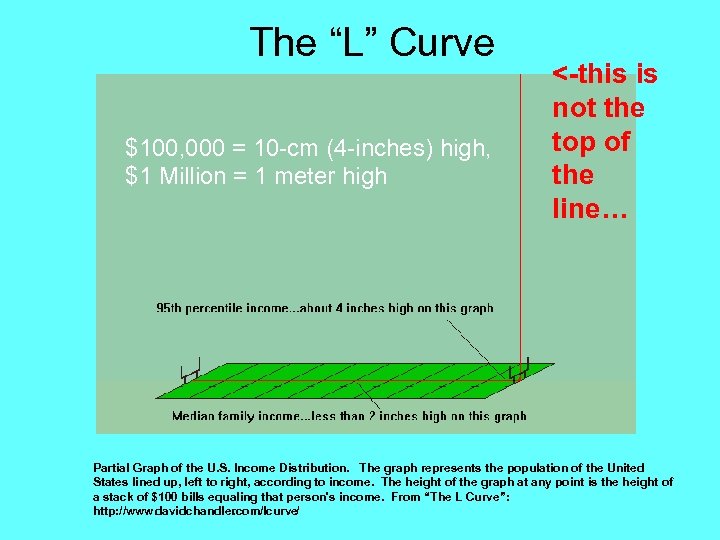 The “L” Curve $100, 000 = 10 -cm (4 -inches) high, $1 Million = 1 meter high <-this is not the top of the line… Partial Graph of the U. S. Income Distribution. The graph represents the population of the United States lined up, left to right, according to income. The height of the graph at any point is the height of a stack of $100 bills equaling that person's income. From “The L Curve”: http: //www. avidchandlercom/lcurve/ d.
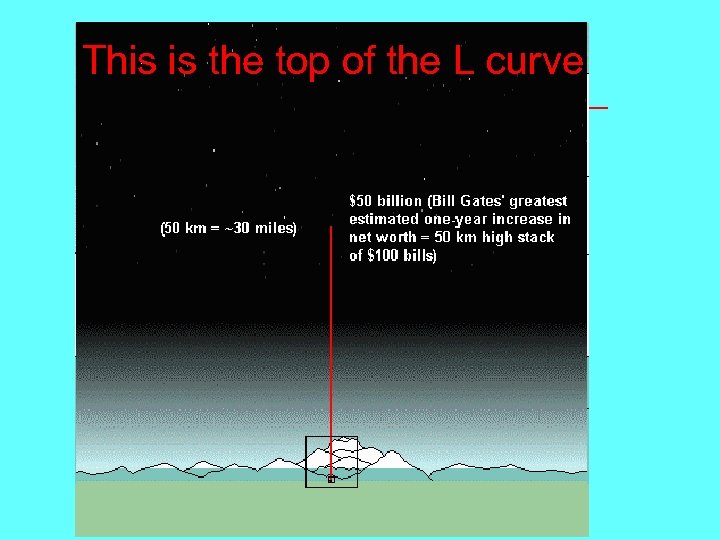 This is the top of the L curve Mount Everest
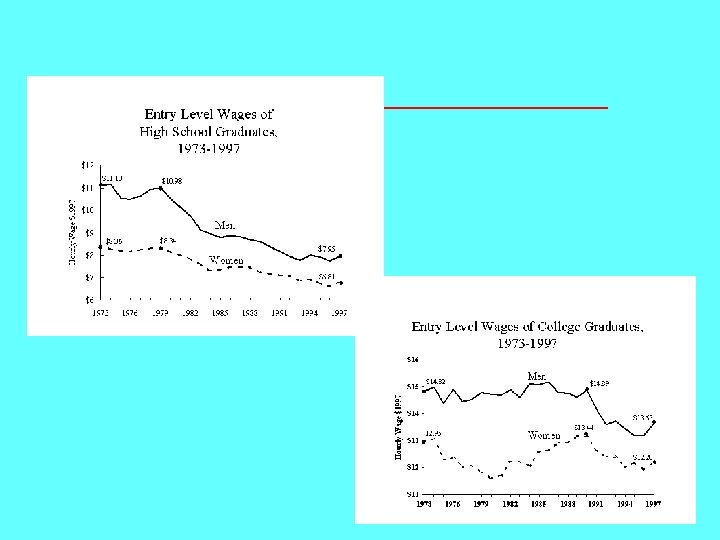
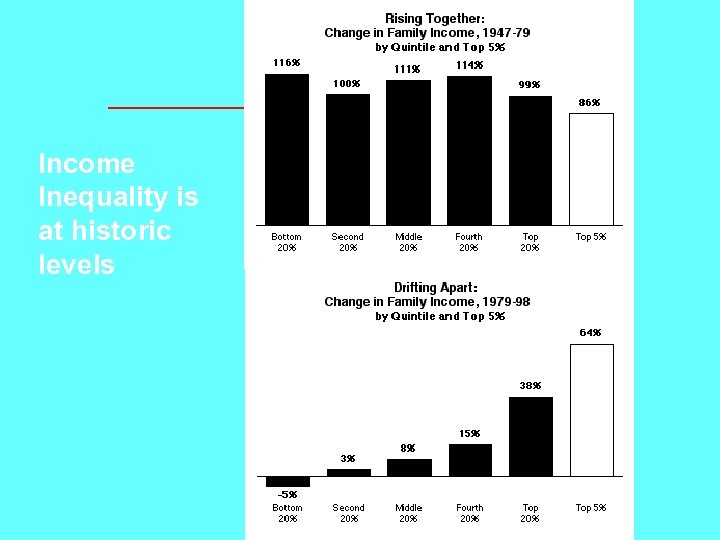 Income Inequality is at historic levels
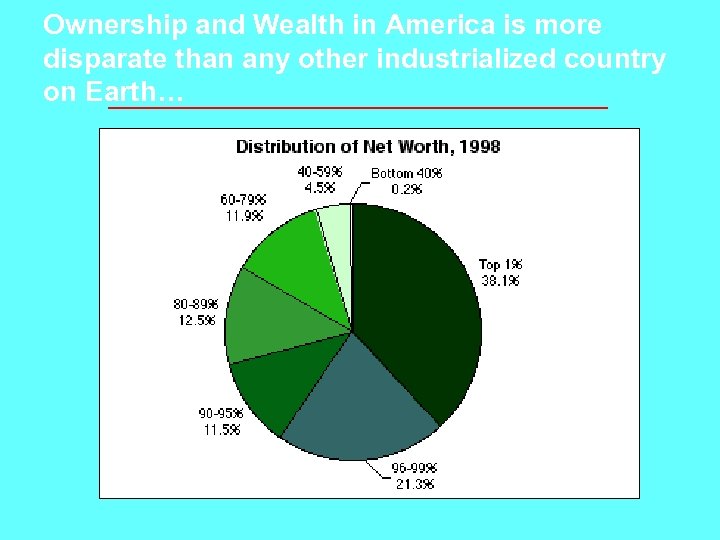 Ownership and Wealth in America is more disparate than any other industrialized country on Earth…
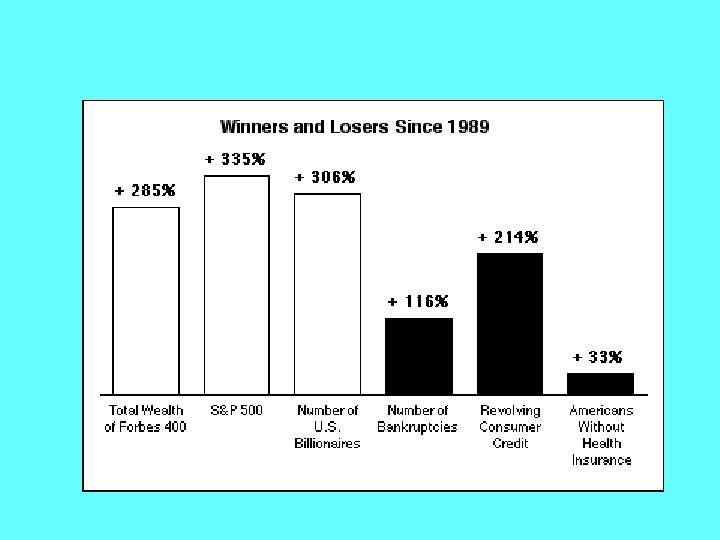
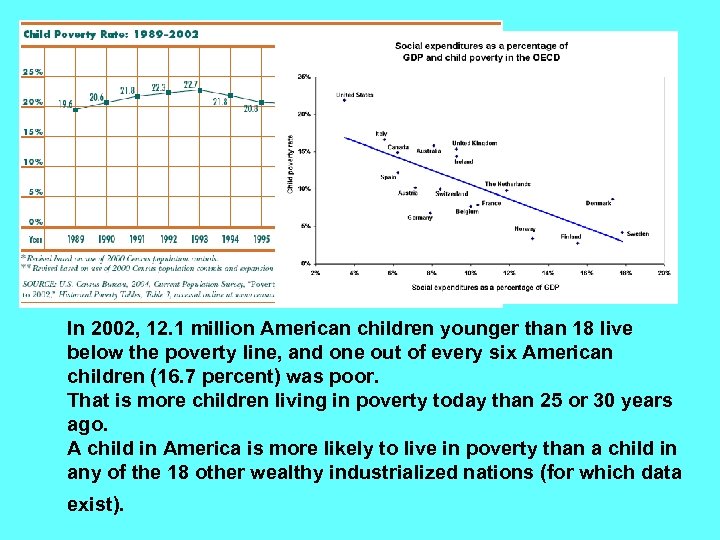 In 2002, 12. 1 million American children younger than 18 live below the poverty line, and one out of every six American children (16. 7 percent) was poor. That is more children living in poverty today than 25 or 30 years ago. A child in America is more likely to live in poverty than a child in any of the 18 other wealthy industrialized nations (for which data exist).
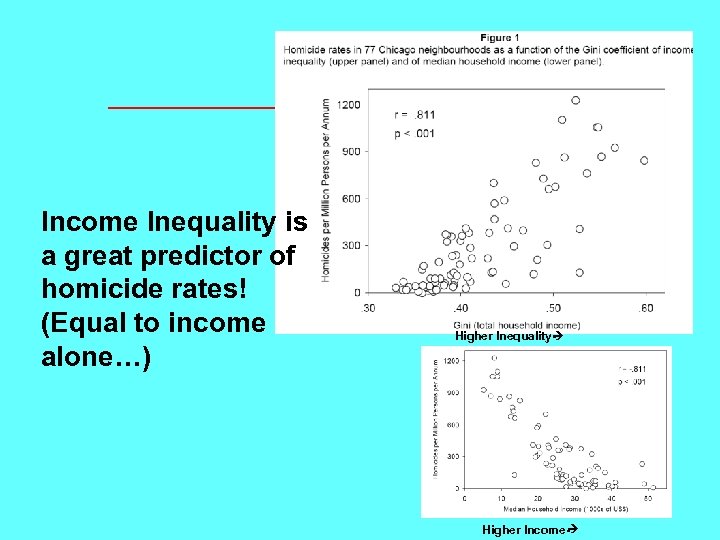 Income Inequality is a great predictor of homicide rates! (Equal to income alone…) Higher Inequality Higher Income-
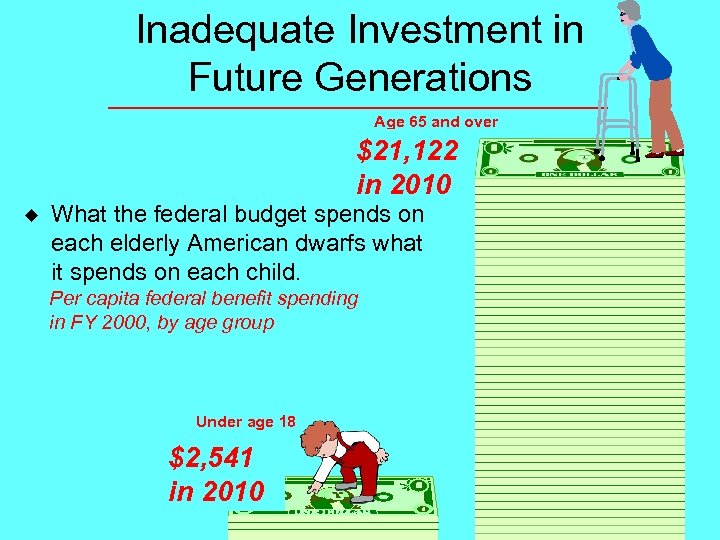 Inadequate Investment in Future Generations Age 65 and over $17, 688 $21, 122 in 2010 u What the federal budget spends on each elderly American dwarfs what it spends on each child. Per capita federal benefit spending in FY 2000, by age group Under age 18 $2, 541 in 2010
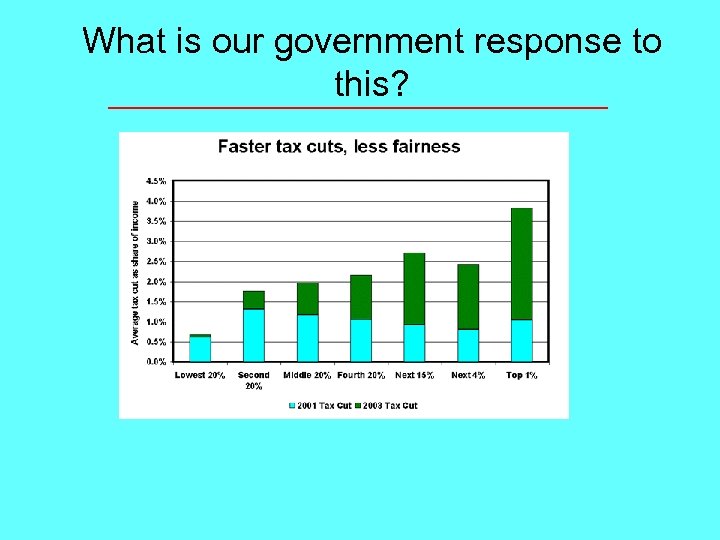 What is our government response to this?
 A look at the private health care sector. . .
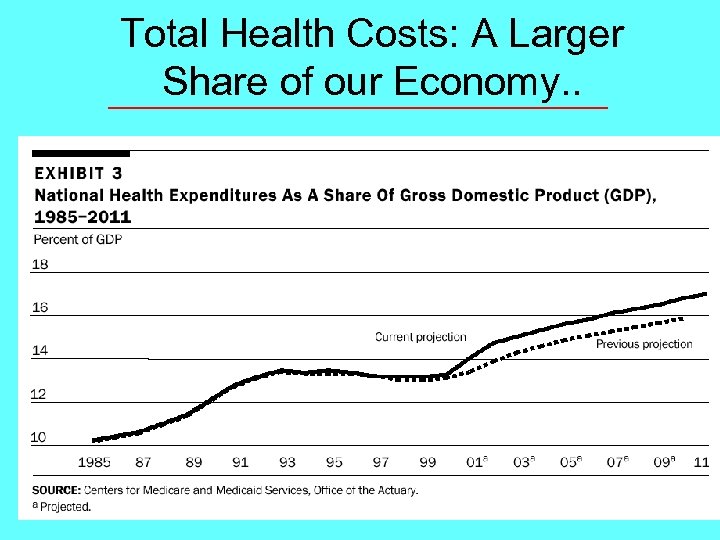 Total Health Costs: A Larger Share of our Economy. .
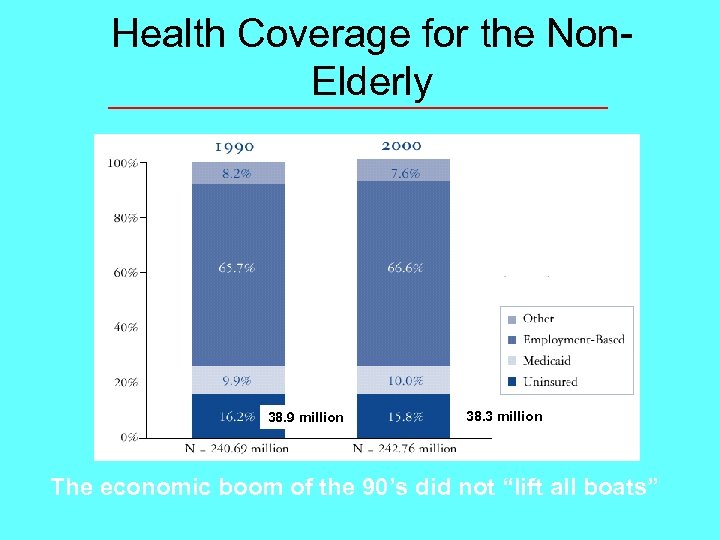 Health Coverage for the Non. Elderly 38. 9 million 38. 3 million The economic boom of the 90’s did not “lift all boats”
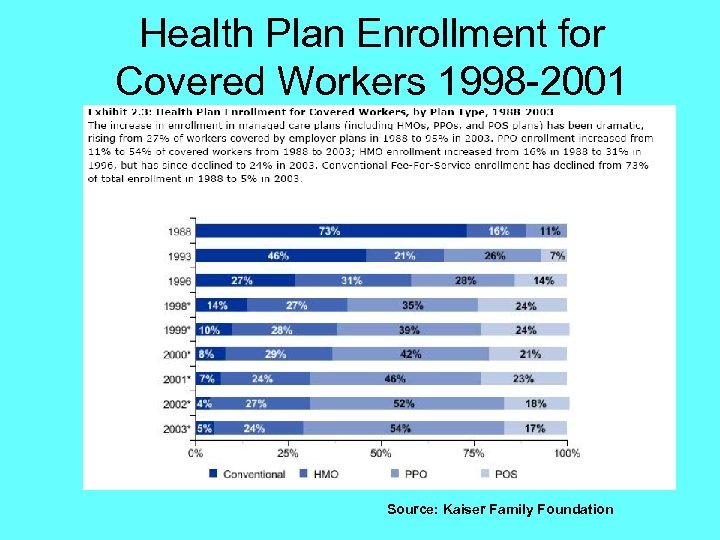 Health Plan Enrollment for Covered Workers 1998 -2001 Source: Kaiser Family Foundation
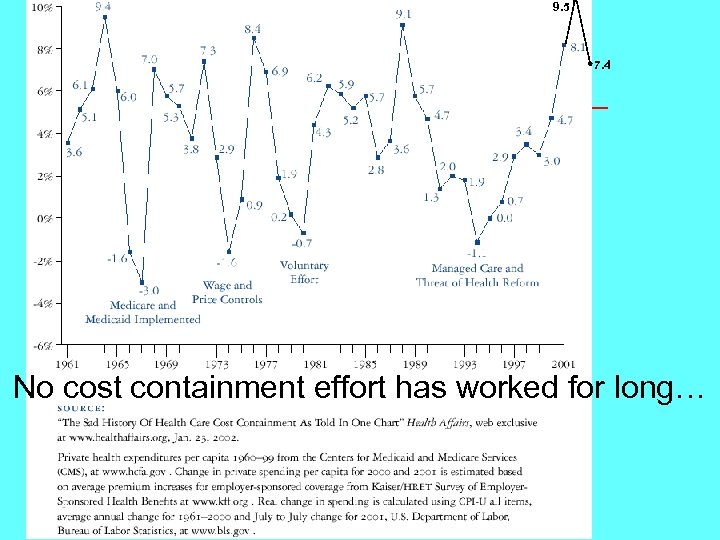 9. 5 7. 4 No cost containment effort has worked for long…
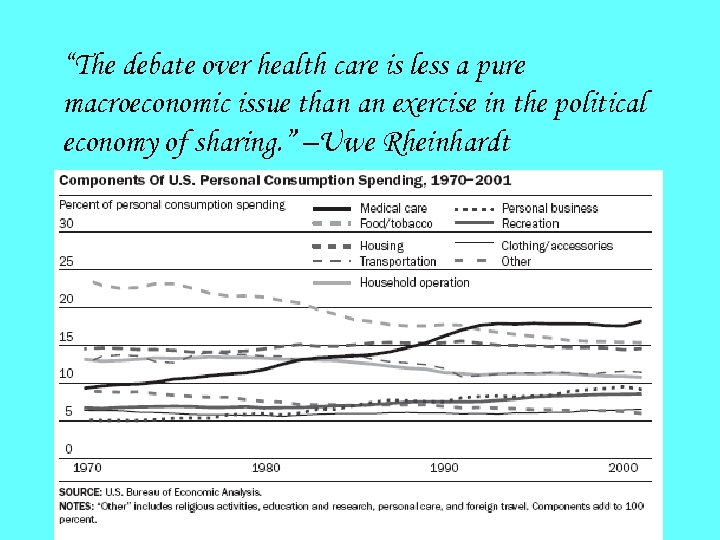 “The debate over health care is less a pure macroeconomic issue than an exercise in the political economy of sharing. ” –Uwe Rheinhardt
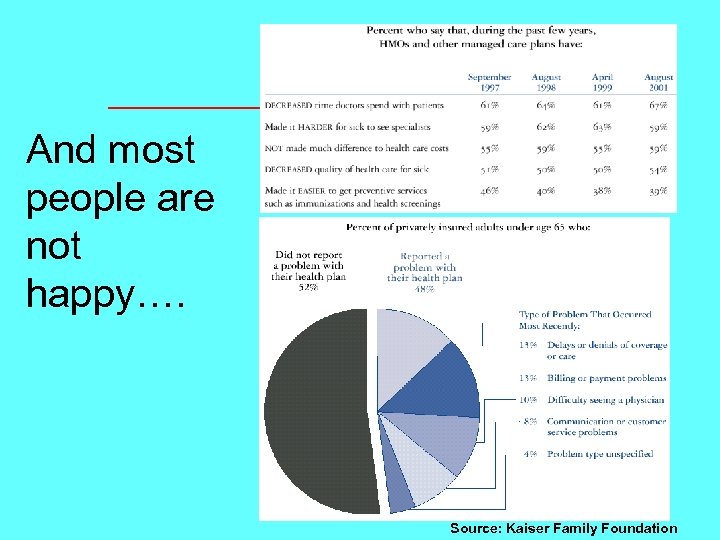 And most people are not happy…. Source: Kaiser Family Foundation
 What about government funded health care? (e. g. , Medicare, Medicaid, etc. )
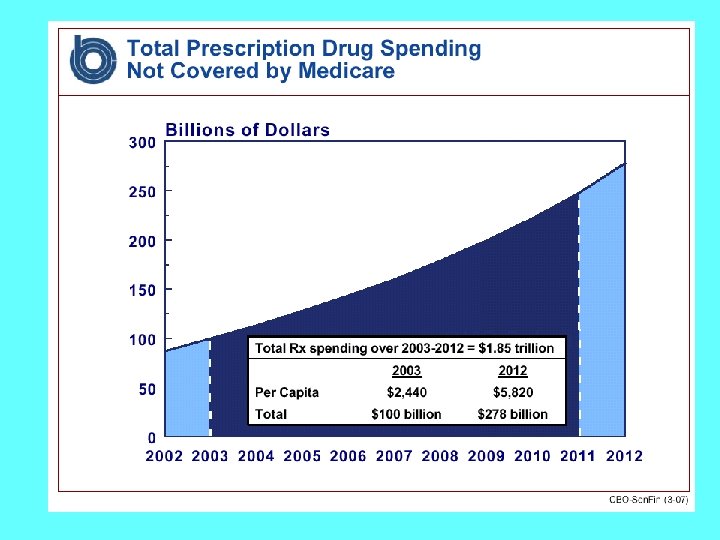
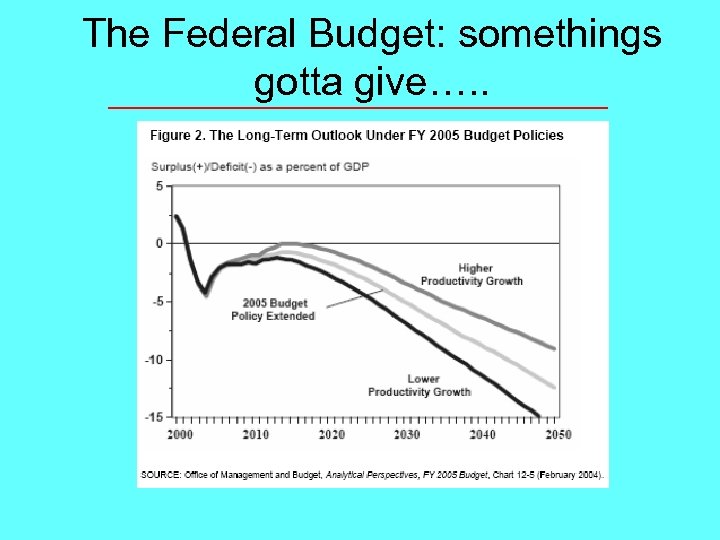 The Federal Budget: somethings gotta give…. .
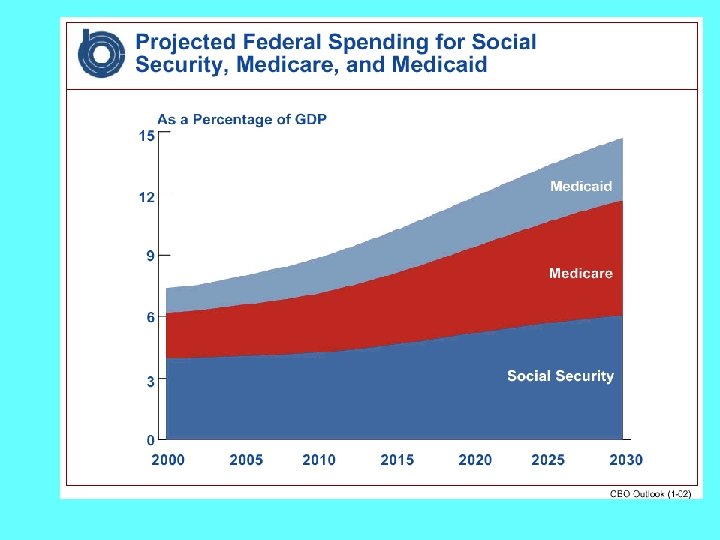
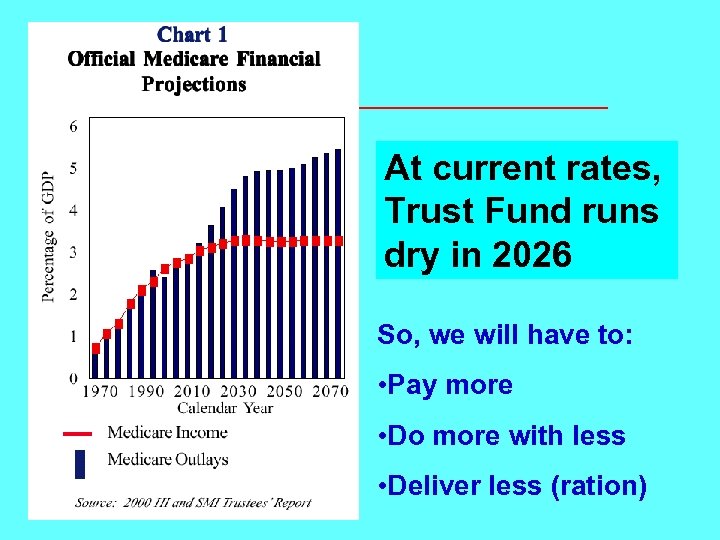 At current rates, Trust Fund runs dry in 2026 So, we will have to: • Pay more • Do more with less • Deliver less (ration)
 #3 Competition and Consumerism In a setting of excessive costs, focus will be on cutting costs by new efficiencies, and controlling demands for service
 The Most Expensive Medical Instrument in the World u Studies have shown…. – Over 80% of the costs and most of the quality is driven by physician decisions u Experience has shown…. – Failure of Efforts to Change Actual Medical Practices Gets Much of the Blame [for the failure. to control health care inflation]” (Wall Street Journal, May 19, 1998) – Peace. Health…. . Managing care does not mean managing physicians and nurses. It means giving physicians and nurses the tools they need to manage optimal care….
 New Competitive Pressures u u Healthcare is now exposed to market forces, and must respond as any business Providers will have to – drive their costs down – improve productivity just to remain in the game. Cost efficiency will be necessary for survival in the new healthcare market, but it will not be sufficient for long-term success. u 43
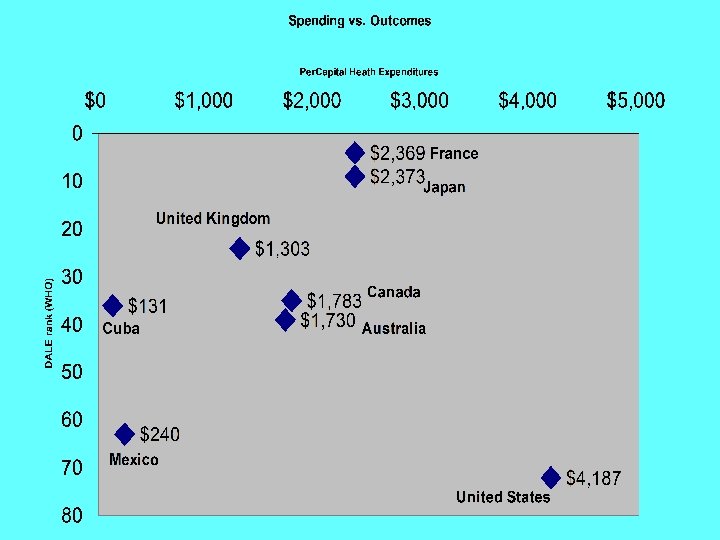
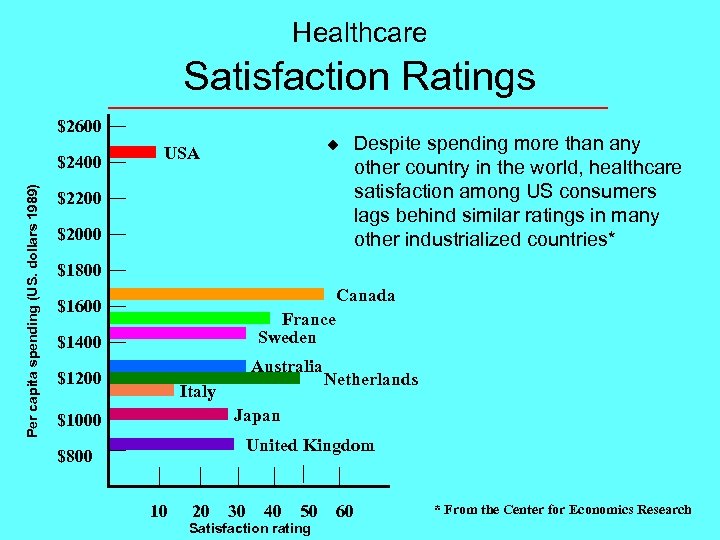 Healthcare Satisfaction Ratings $2600 Per capita spending (US. dollars 1989) $2400 u USA $2200 $2000 Despite spending more than any other country in the world, healthcare satisfaction among US consumers lags behind similar ratings in many other industrialized countries* $1800 Canada $1600 France Sweden $1400 Australia $1200 Italy Netherlands Japan $1000 United Kingdom $800 10 20 30 40 50 Satisfaction rating 60 * From the Center for Economics Research
 Rising Consumerism in America u A new consumer is emerging – – Assertive (better educated, less time) Focused Pragmatic Demanding (not tolerant of inadequate information, poor service, inconvenience, poor value, etc. ) u This consumerism is dramatically changing other industries – Many examples (e. g. , retail, financial services, etc. ) – Case history: Book retailing u The same forces will impact health care!
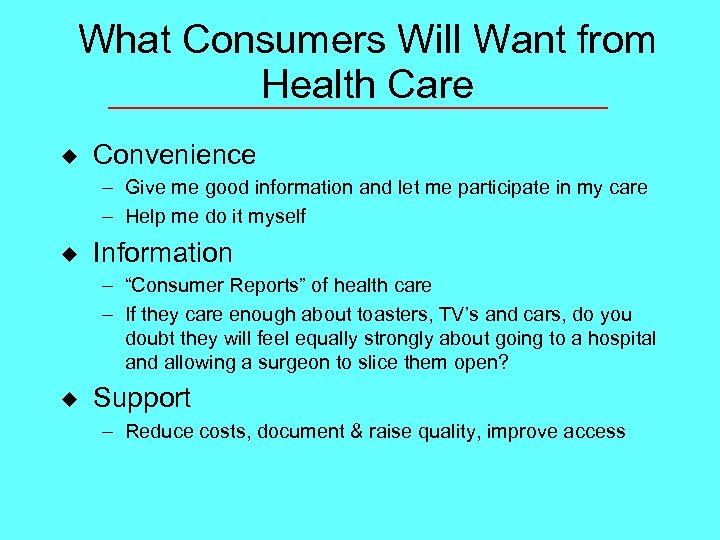 What Consumers Will Want from Health Care u Convenience – Give me good information and let me participate in my care – Help me do it myself u Information – “Consumer Reports” of health care – If they care enough about toasters, TV’s and cars, do you doubt they will feel equally strongly about going to a hospital and allowing a surgeon to slice them open? u Support – Reduce costs, document & raise quality, improve access
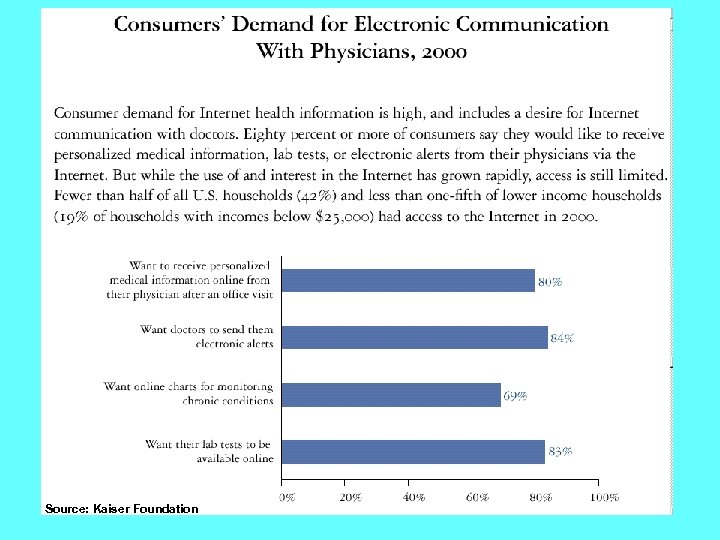 Source: Kaiser Foundation
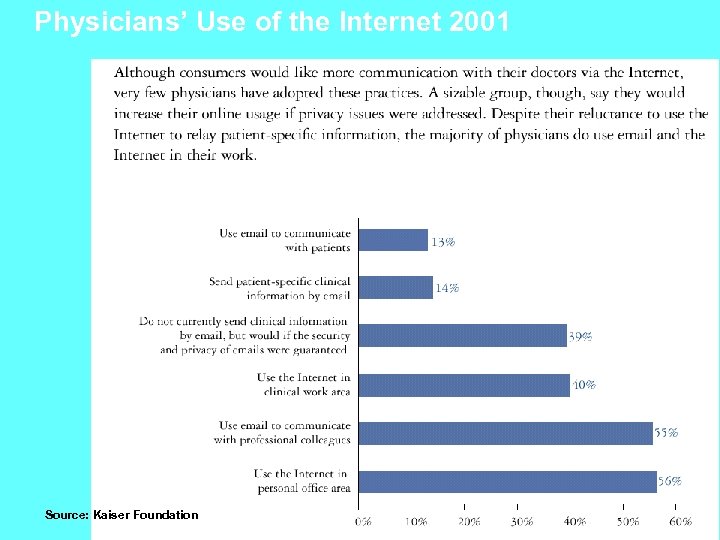 Physicians’ Use of the Internet 2001 Source: Kaiser Foundation
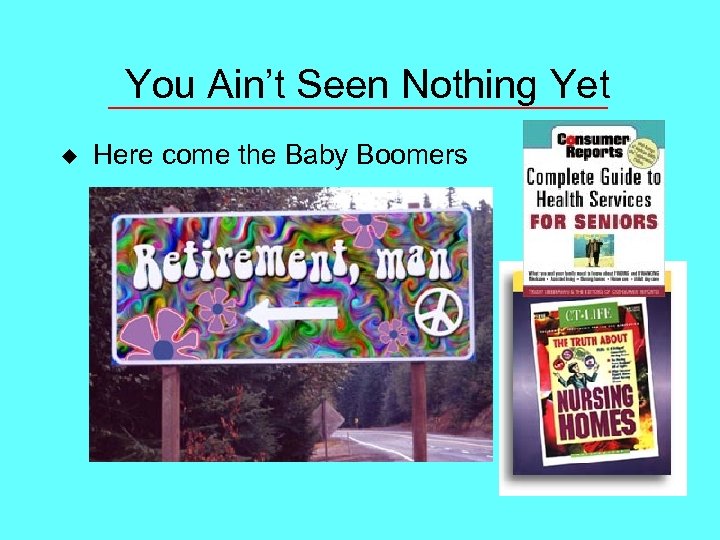 You Ain’t Seen Nothing Yet u Here come the Baby Boomers
 The Internet & Consumerism What is the Consumer Report on Dr. Zelnick?
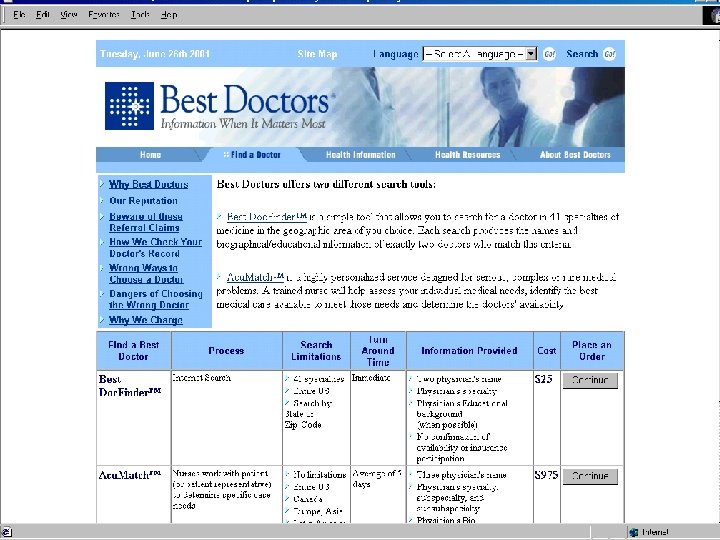
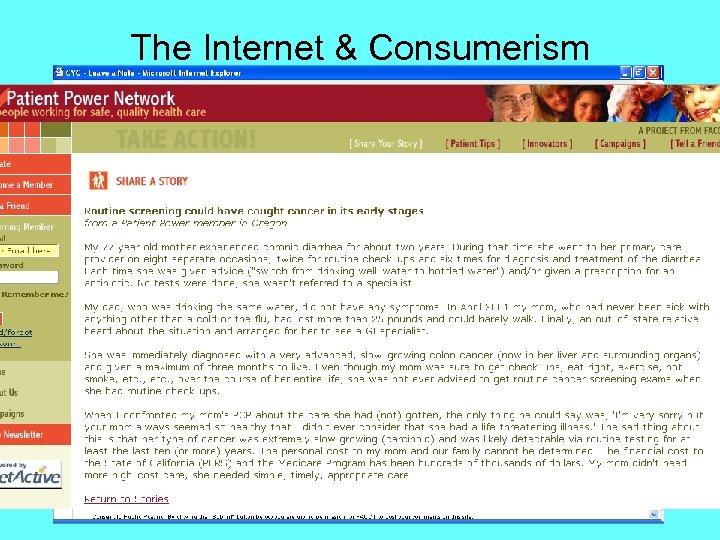 The Internet & Consumerism
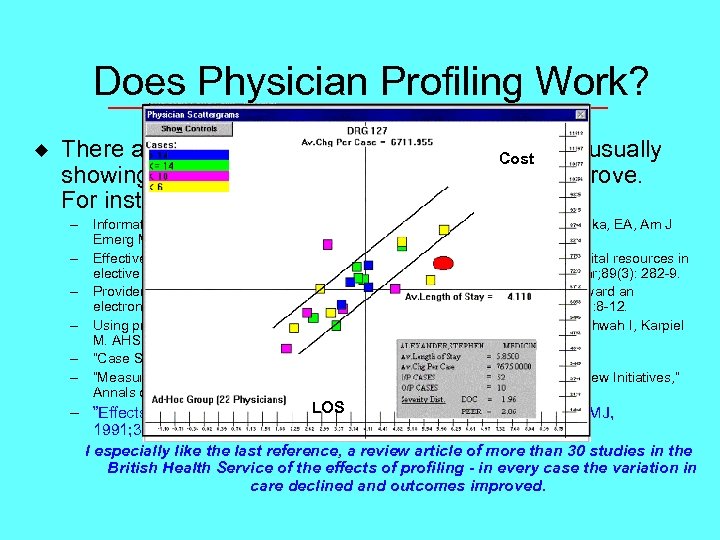 Does Physician Profiling Work? u There are many studies of the effects of profiling, usually Cost showing that variation declines and outcomes improve. For instance: – Information sharing can reduce laboratory use by emergency physicians. Ramoska, EA, Am J Emerg Med. 1998 Jan; 16(1): 34 -6. – Effectiveness of a physician education program in reducing consumption of hospital resources in elective total hip replacement. Johnson CC; Martin M, South Med J. 1996 Mar; 89(3): 282 -9. – Provider and practice profiling with electronic patient records. Churgin, P, In: Toward an electronic patient record ‘ 97: proceedings, volume one. Newton, MA: MRI, 1997. : 8 -12. – Using profiling for cost and quality management in the emergency department. Ahwah I, Karpiel M. AHSR FHSR Annu Meet Abstr Book. 1996; 13: 186 -7. – “Case Study of Physician Profiling, ” Managed Care Quarterly, 1994; 2(4): 60 -70. – “Measuring and Reporting Managed Care Performance: Lessons Learned and New Initiatives, ” Annals of Internal Medicine, Part 2, 15 October 1997. 127: 726 -732. LOS – ”Effects of Feedback of Information on Clinical Practice - A Review, ” BMJ, 1991; 303: 398 -402. I especially like the last reference, a review article of more than 30 studies in the British Health Service of the effects of profiling - in every case the variation in care declined and outcomes improved.
 Some Questions. . . u u u Would it be ideal to have access to your own, reliable, cost and quality data to compare to such “report cards” and disprove them if you feel your “grade” is inappropriately low? If your results aren’t good, wouldn’t you want to proactively know that and demonstrate you can improve? Wouldn’t “riding the wave of change” be a better long term survival strategy than refusing to participate?
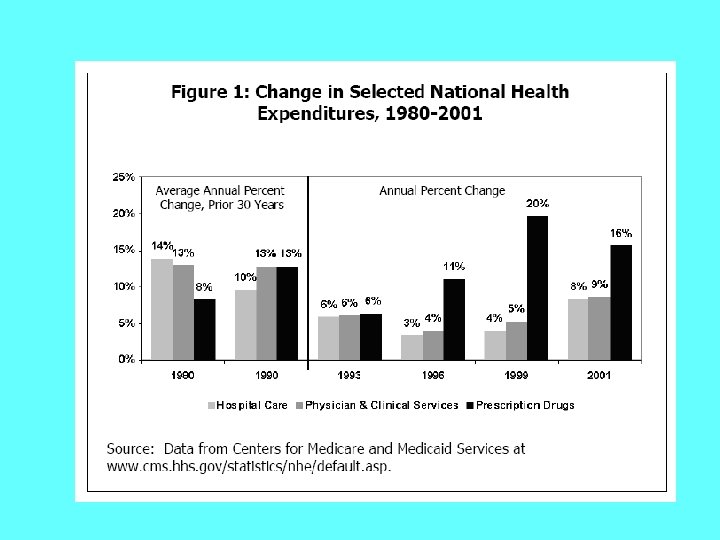
 Prescription Drug Benefits An Example of Consumer Demand…
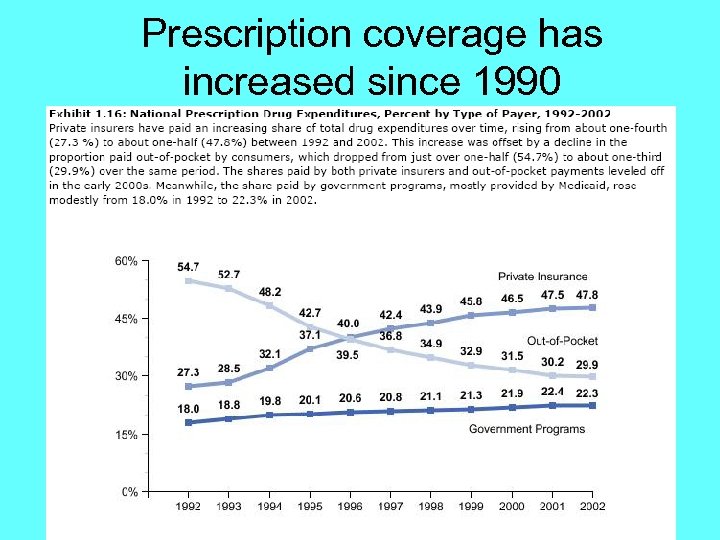 Prescription coverage has increased since 1990
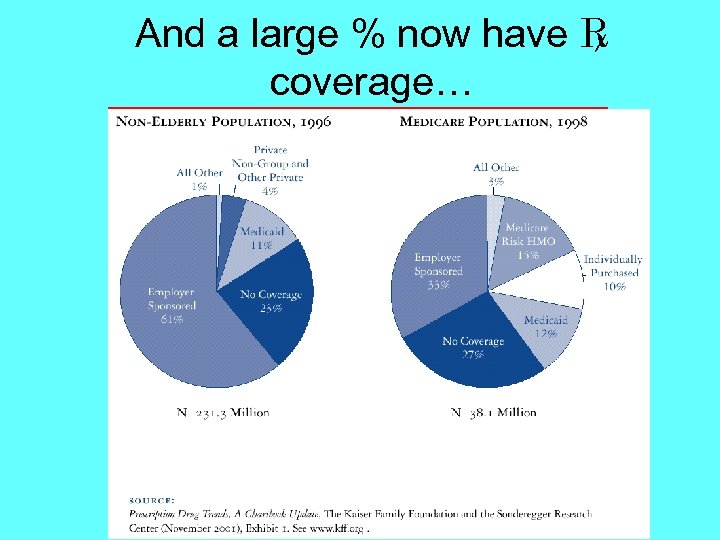 And a large % now have coverage…
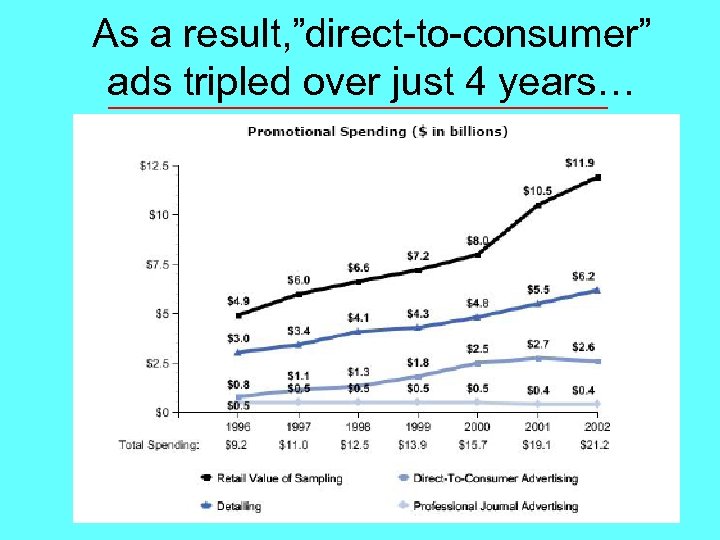 As a result, ”direct-to-consumer” ads tripled over just 4 years…
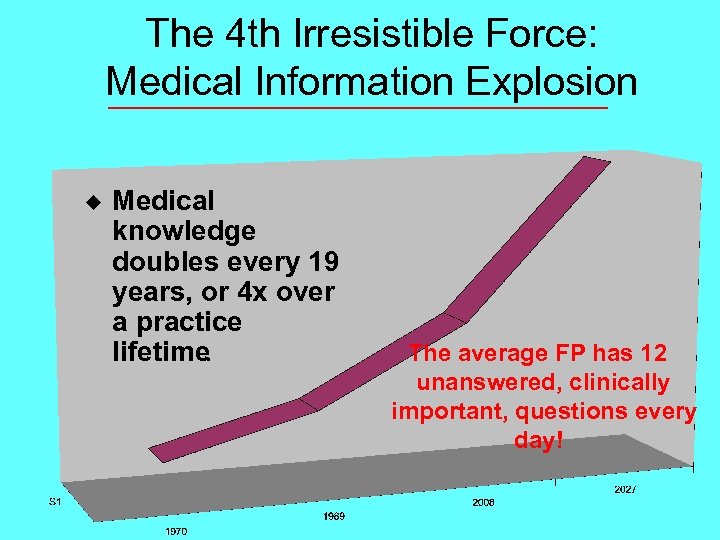 The 4 th Irresistible Force: Medical Information Explosion u Medical knowledge doubles every 19 years, or 4 x over a practice lifetime. The average FP has 12 unanswered, clinically important, questions every day!
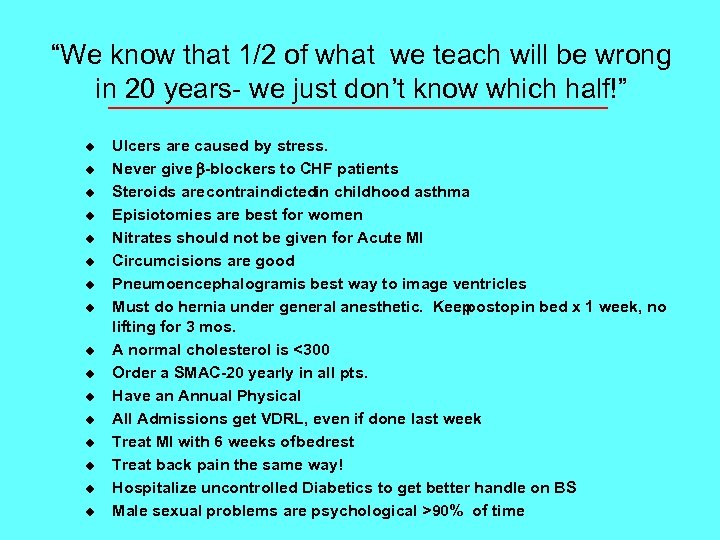 “We know that 1/2 of what we teach will be wrong in 20 years- we just don’t know which half!” u u u u Ulcers are caused by stress. Never give -blockers to CHF patients Steroids are contraindicted in childhood asthma Episiotomies are best for women Nitrates should not be given for Acute MI Circumcisions are good Pneumoencephalogram is best way to image ventricles Must do hernia under general anesthetic. Keep postop in bed x 1 week, no lifting for 3 mos. A normal cholesterol is <300 Order a SMAC-20 yearly in all pts. Have an Annual Physical All Admissions get VDRL, even if done last week Treat MI with 6 weeks of edrest b Treat back pain the same way! Hospitalize uncontrolled Diabetics to get better handle on BS Male sexual problems are psychological >90% of time
 Some guesses about new areas you might need to know about. . .
 5 th Irresistible Force: “I don’t want to make the wrong mistake”. -Yogi Berra
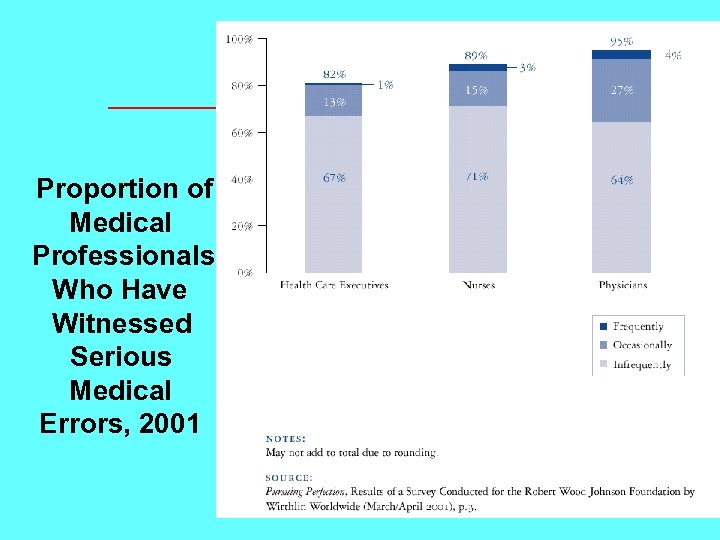 Proportion of Medical Professionals Who Have Witnessed Serious Medical Errors, 2001
 The Institute of Medicine 2001: “To Err Is Human” u u u The US health care system is seriously flawed and is a major source of morbidity, mortality and missed opportunities to benefit people. There is not just a gap, but a chasm between what is and what can and should be provided to people. The system can not be fixed in its current form; it is in need of fundamental change and must be re-designed.
 So! At the beginning of the 21 st Century: u u u The myth that the United States has the best health care system in the world is exposed. We are witnessing an awakening to the fact that our 70 -year commitment to specialism, reductionism and biomedicine, even though productive, has proved insufficient. A new world of medicine, not yet born but gestating, is coming right at us.
 And Family Medicine is having an Identity Crisis… “The Future of Family Medicine” FFM Charge: Develop a strategy to transform and renew the specialty of family practice to meet the needs of people and society in a changing environment.
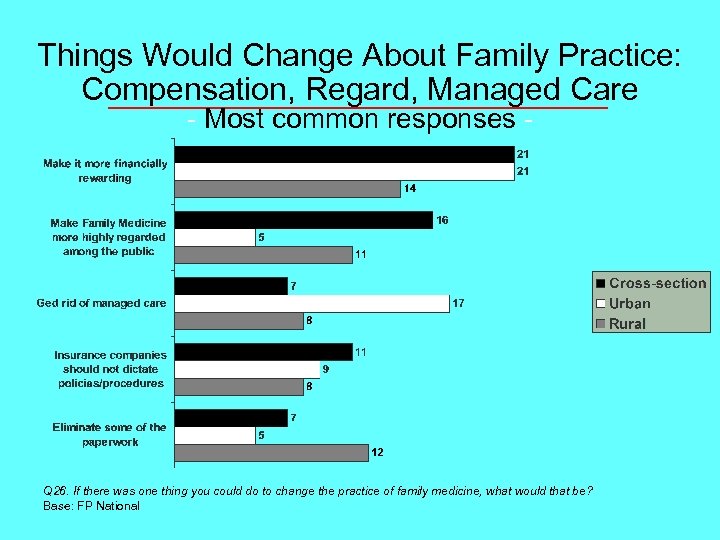 Things Would Change About Family Practice: Compensation, Regard, Managed Care - Most common responses - Q 26. If there was one thing you could do to change the practice of family medicine, what would that be? Base: FP National
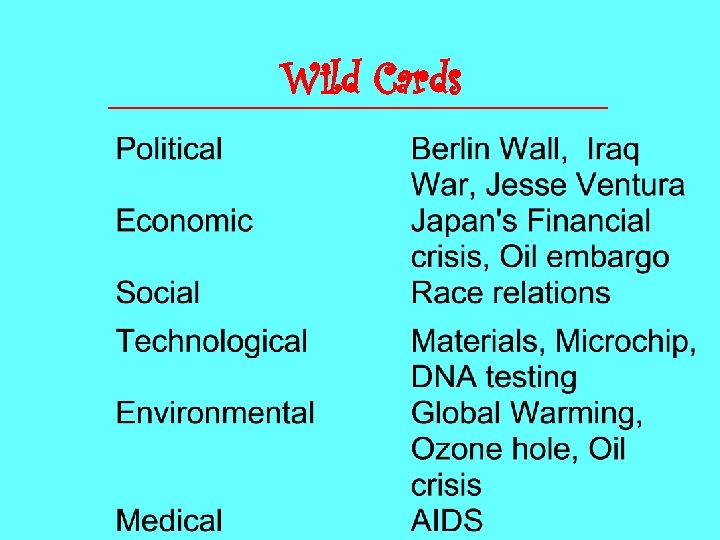 Wild Cards
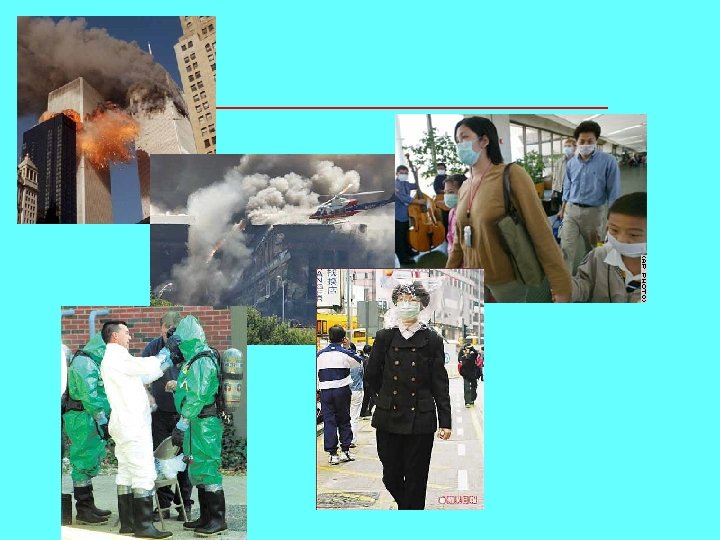
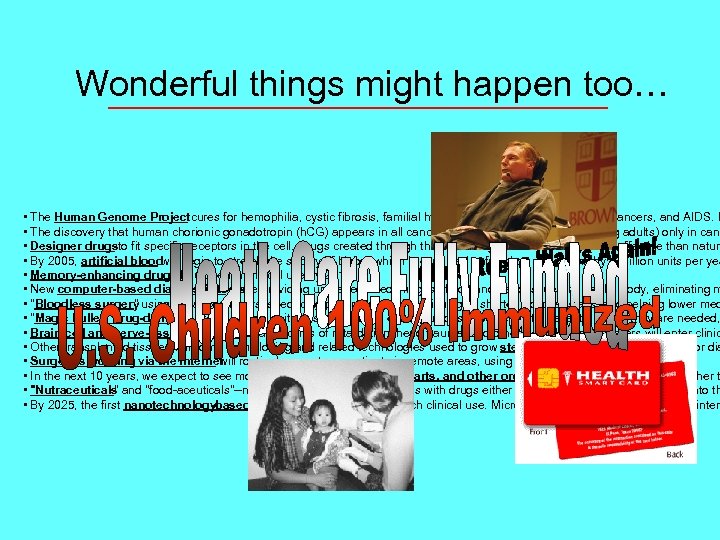 Wonderful things might happen too… • The Human Genome Projectcures for hemophilia, cystic fibrosis, familial hypercholesterolemia, a number of cancers, and AIDS. E • The discovery that human chorionic gonadotropin (h. CG) appears in all cancer cells tested thus far, and (among adults) only in canc • Designer drugsto fit specific receptors in the cell. Drugs created through this technology often are much more effective than natura • By 2005, artificial bloodwill begin to stretch the supply of blood, which is expected to fall short of demand by 4 million units per yea • Memory-enhancing drugs should reach clinical use by 2010. • New computer-based diagnostic tools providing unprecedented images of soft and hard tissues inside the body, eliminating m are • "Bloodless surgery using advanced lasers is reducing patient trauma, continuing to shorten hospital stays, and helping lower med " • "Magic bullet" drug-delivery systems will make it possible to direct enormous doses of medication exactly where they are needed, • Brain-cell and nerve-tissue transplants aid victims of retardation, head trauma, and other neurological disorders will enter clinic to • Other transplanted tissues will come from cloning and related technologies used to grow stem cells Radical new treatments for dia. • Surgeons working via the Internet routinely operate on patients in remote areas, using robot manipulators. will • In the next 10 years, we expect to see more and better bionic limbs, hearts, and other organs ; drugs that prevent disease rather t • "Nutraceuticals and "food-aceuticals"--nutritional supplements and foods with drugs either added or genetically engineered into th " • By 2025, the first nanotechnology -based medical therapiesshould reach clinical use. Microscopic machines will monitor our intern
 So, What Have You Learned From this Session? What are your learning goals. . u What can you expect in the future u What is your role and responsibility, given what you’ve learned? u
 My Goals for You…. Learn to expect and embrace CHANGE creatively u “If you’re not part of the solution, you’re part of the problem” u Think about SYSTEMS of care u Become a life-long Un-learner, as well as a LEARNER u
 The end… of the beginning. . .