


 Скачать презентацию Precipitation development Warm and Cold clouds 0 C 0 C
6b45173bb50416bf6074a2e2a33f7339.ppt
- Количество слайдов: 39
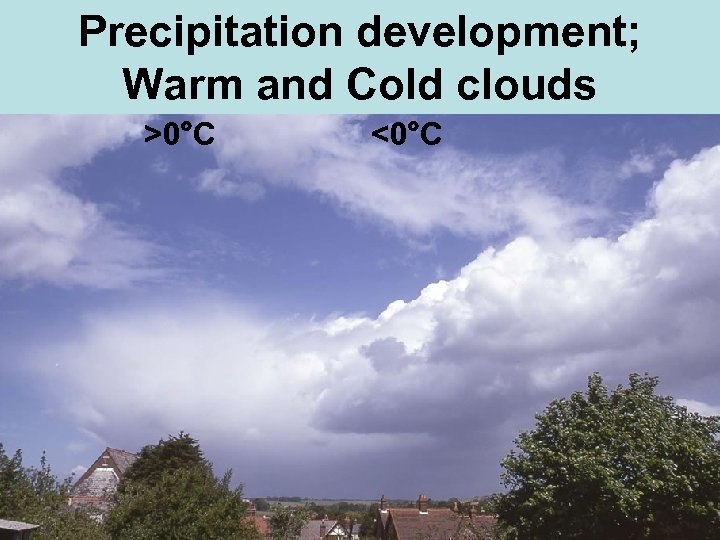 Precipitation development; Warm and Cold clouds >0°C <0°C
 Last lectures from me… • Cloud droplet formation (micro-scales) • Cloud/fog formation processes (macroscales) • This lecture – return to the micro-scales
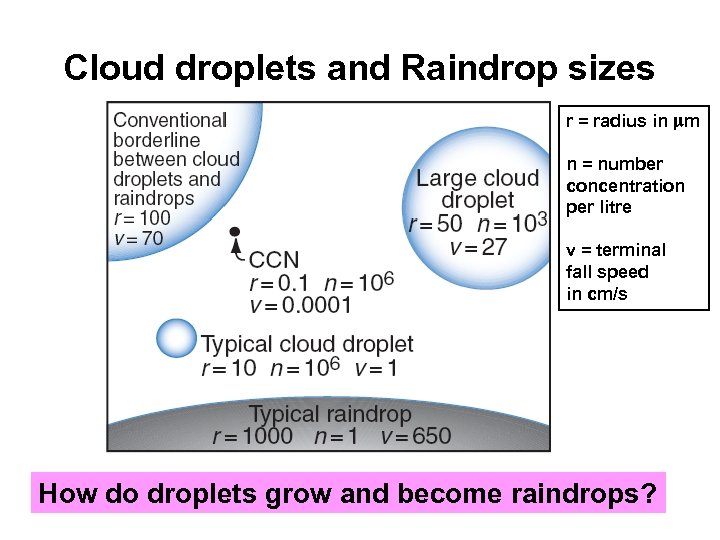 Cloud droplets and Raindrop sizes r = radius in m n = number concentration per litre v = terminal fall speed in cm/s How do droplets grow and become raindrops?
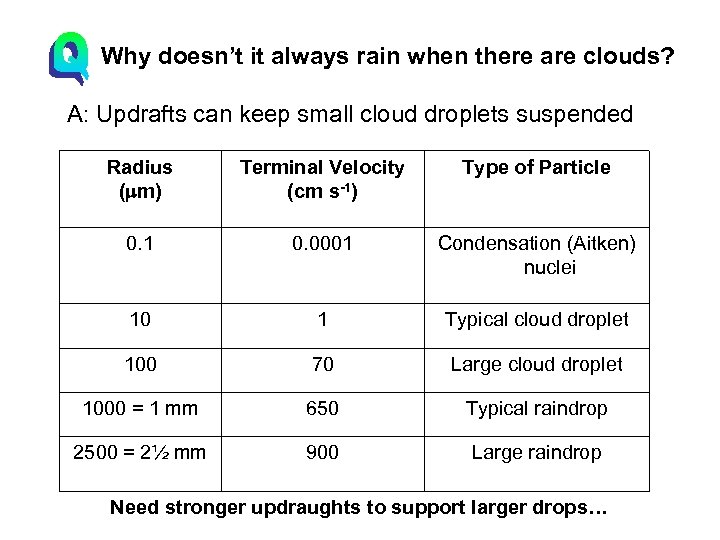 Why doesn’t it always rain when there are clouds? A: Updrafts can keep small cloud droplets suspended Radius ( m) Terminal Velocity (cm s-1) Type of Particle 0. 1 0. 0001 Condensation (Aitken) nuclei 10 1 Typical cloud droplet 100 70 Large cloud droplet 1000 = 1 mm 650 Typical raindrop 2500 = 2½ mm 900 Large raindrop Need stronger updraughts to support larger drops…
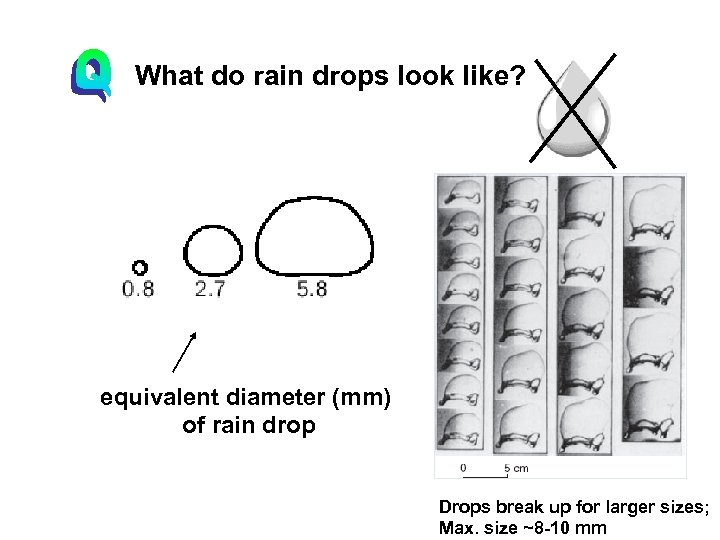 What do rain drops look like? equivalent diameter (mm) of rain drop Drops break up for larger sizes; Max. size ~8 -10 mm
 How do cloud droplets (radius = 10 m) turn into rain drops (1 mm) ? Initial growth by condensation, but this is limited by diffusion… They never get a chance to grow into raindrops by condensation alone – this process would take D A Y S. . . There are 2 main processes: 1. In ‘warm’ clouds with cloud top T > -15 °C 2. In ‘cold’ clouds with cloud top T <-15 °C
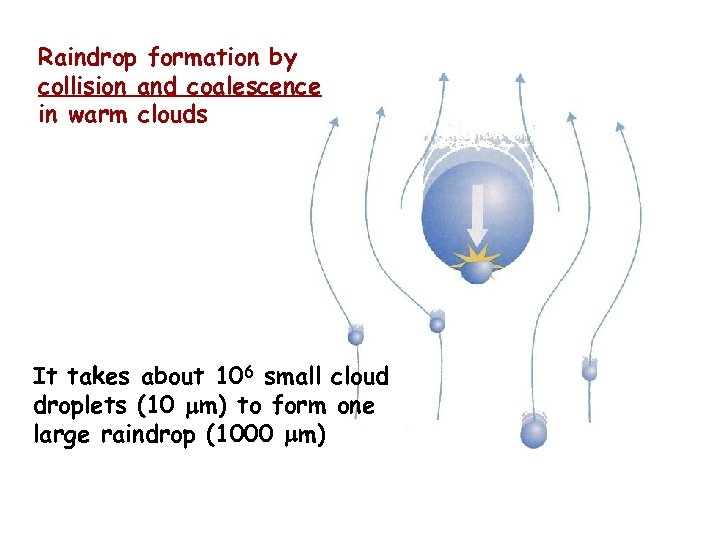 Raindrop formation by collision and coalescence in warm clouds It takes about 106 small cloud droplets (10 m) to form one large raindrop (1000 m)
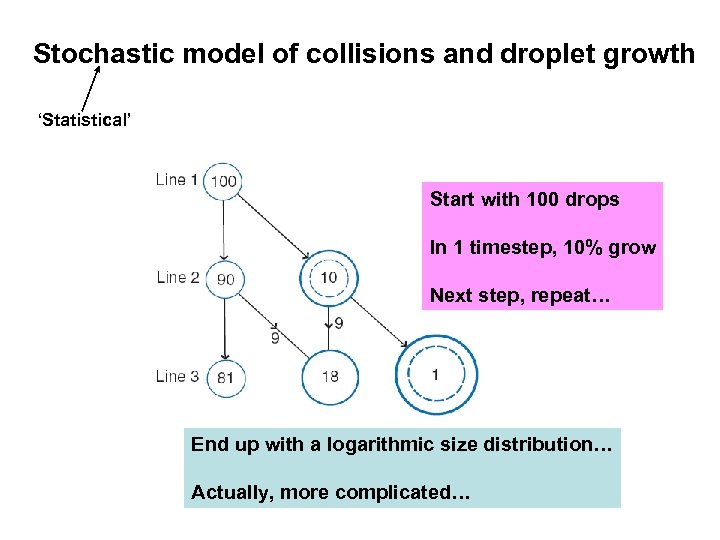 Stochastic model of collisions and droplet growth ‘Statistical’ Start with 100 drops In 1 timestep, 10% grow Next step, repeat… End up with a logarithmic size distribution… Actually, more complicated…
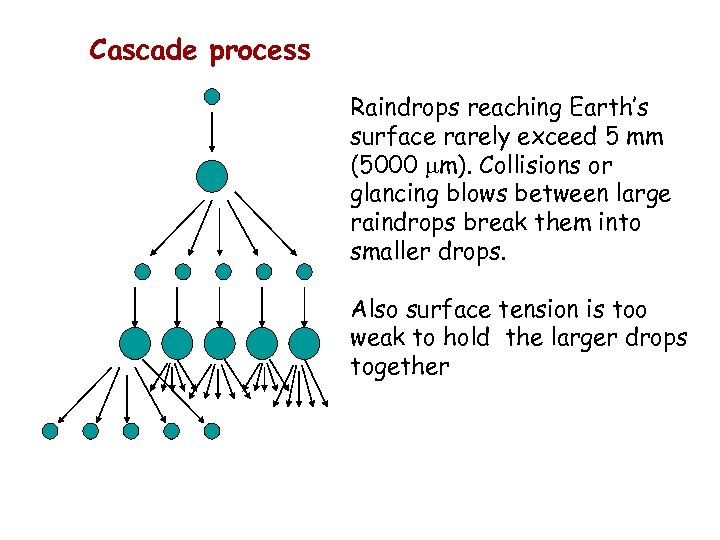 Cascade process Raindrops reaching Earth’s surface rarely exceed 5 mm (5000 mm). Collisions or glancing blows between large raindrops break them into smaller drops. Also surface tension is too weak to hold the larger drops together
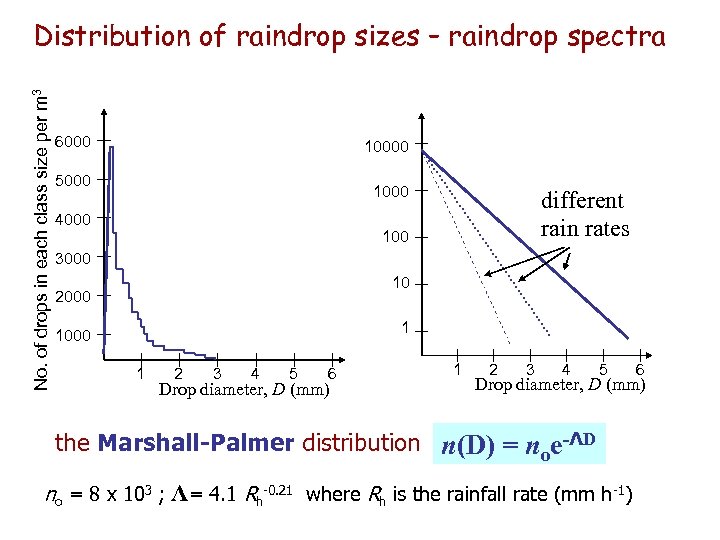 No. of drops in each class size per m 3 Distribution of raindrop sizes – raindrop spectra 6000 10000 5000 1000 4000 different rain rates 100 3000 10 2000 1 1000 1 2 3 4 5 6 Drop diameter, D (mm) the Marshall-Palmer distribution n(D) = noe-ΛD no = 8 x 10³ ; Λ= 4. 1 Rh-0. 21 where Rh is the rainfall rate (mm h-1)
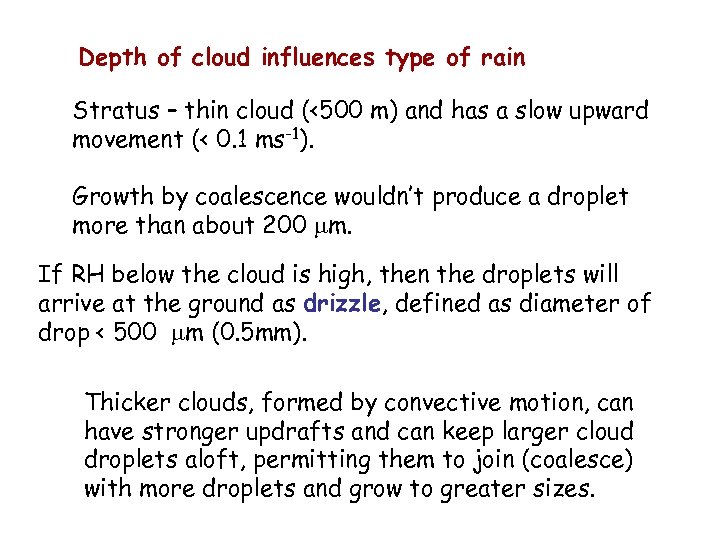 Depth of cloud influences type of rain Stratus – thin cloud (<500 m) and has a slow upward movement (< 0. 1 ms-1). Growth by coalescence wouldn’t produce a droplet more than about 200 mm. If RH below the cloud is high, then the droplets will arrive at the ground as drizzle, defined as diameter of drop < 500 mm (0. 5 mm). Thicker clouds, formed by convective motion, can have stronger updrafts and can keep larger cloud droplets aloft, permitting them to join (coalesce) with more droplets and grow to greater sizes.
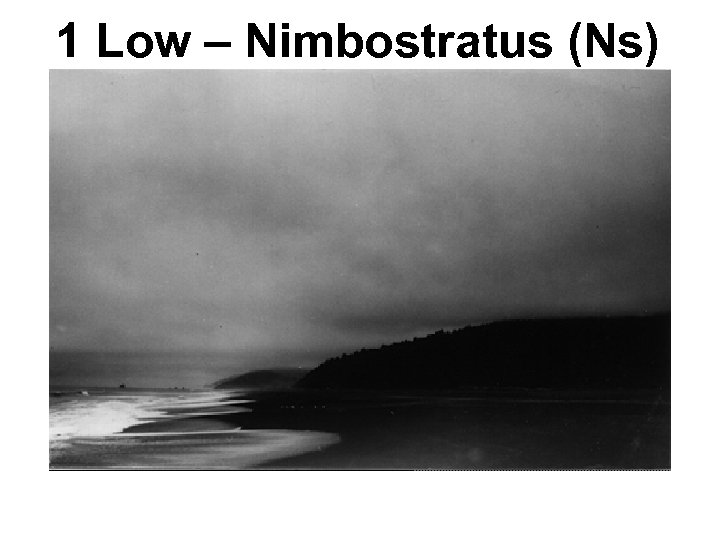 1 Low – Nimbostratus (Ns)
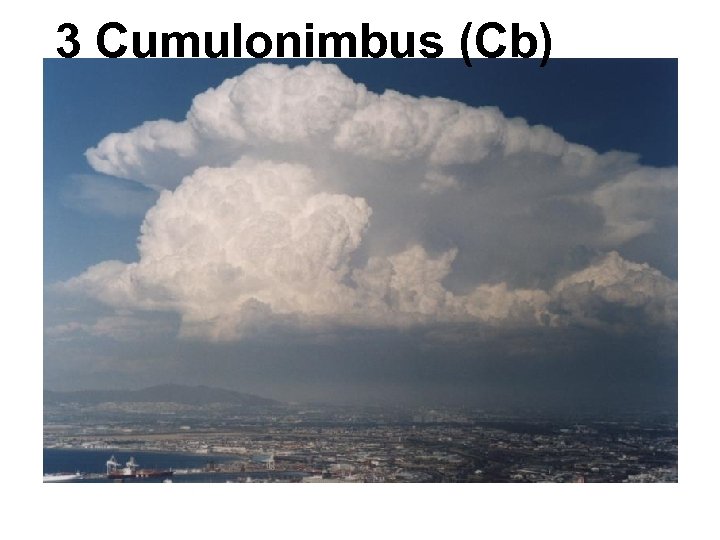 3 Cumulonimbus (Cb)
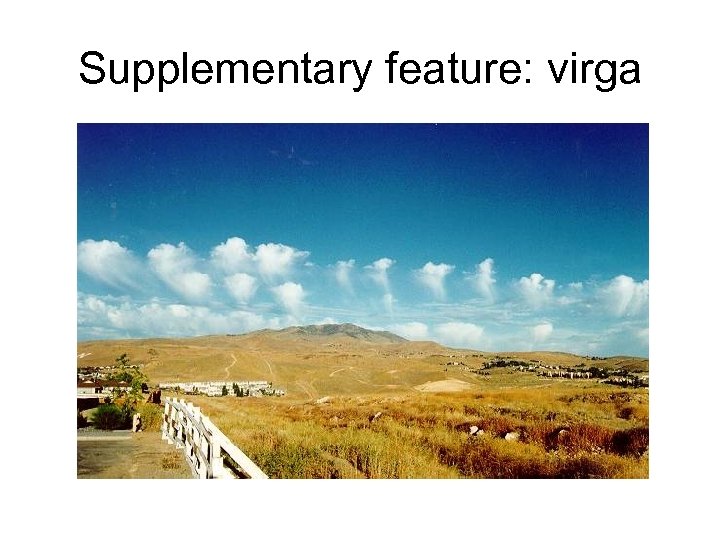 Supplementary feature: virga
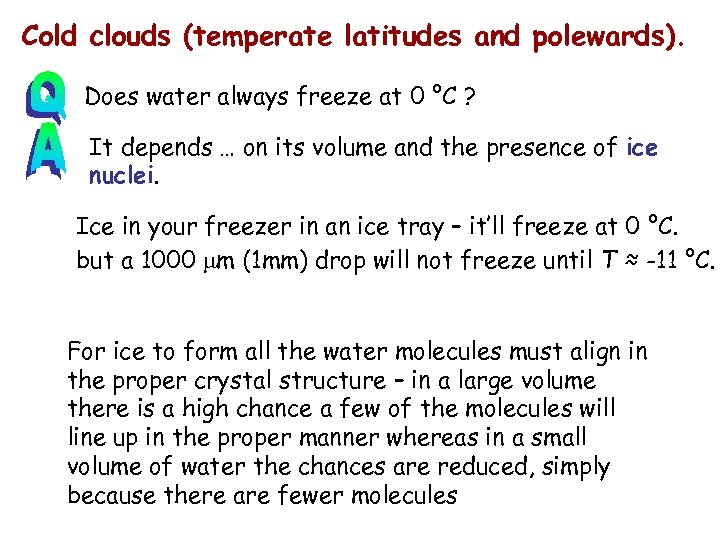 Cold clouds (temperate latitudes and polewards). Does water always freeze at 0 °C ? It depends … on its volume and the presence of ice nuclei. Ice in your freezer in an ice tray – it’ll freeze at 0 °C. but a 1000 mm (1 mm) drop will not freeze until T ≈ -11 °C. For ice to form all the water molecules must align in the proper crystal structure – in a large volume there is a high chance a few of the molecules will line up in the proper manner whereas in a small volume of water the chances are reduced, simply because there are fewer molecules
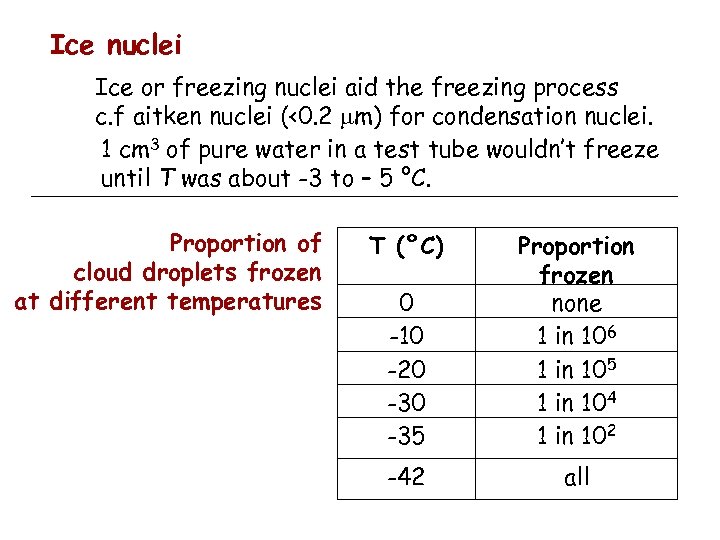 Ice nuclei Ice or freezing nuclei aid the freezing process c. f aitken nuclei (<0. 2 mm) for condensation nuclei. 1 cm 3 of pure water in a test tube wouldn’t freeze until T was about -3 to – 5 °C. Proportion of cloud droplets frozen at different temperatures T (°C) 0 -10 -20 -35 Proportion frozen none 1 in 106 1 in 105 1 in 104 1 in 102 -42 all
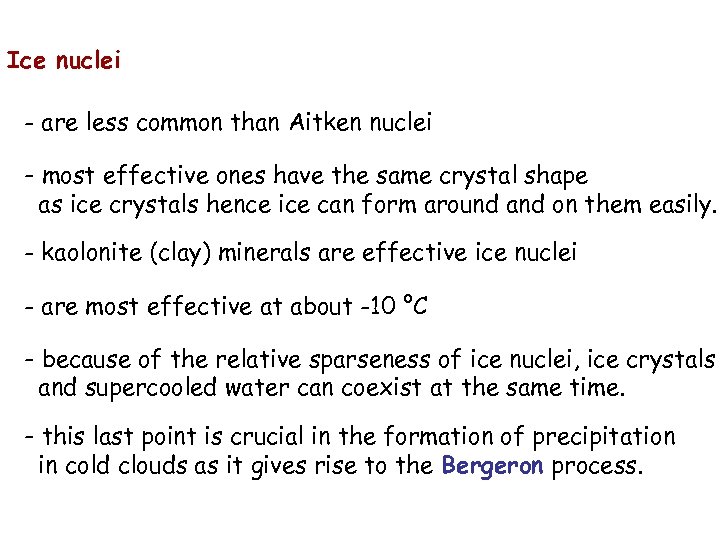 Ice nuclei - are less common than Aitken nuclei - most effective ones have the same crystal shape as ice crystals hence ice can form around and on them easily. - kaolonite (clay) minerals are effective ice nuclei - are most effective at about -10 °C - because of the relative sparseness of ice nuclei, ice crystals and supercooled water can coexist at the same time. - this last point is crucial in the formation of precipitation in cold clouds as it gives rise to the Bergeron process.
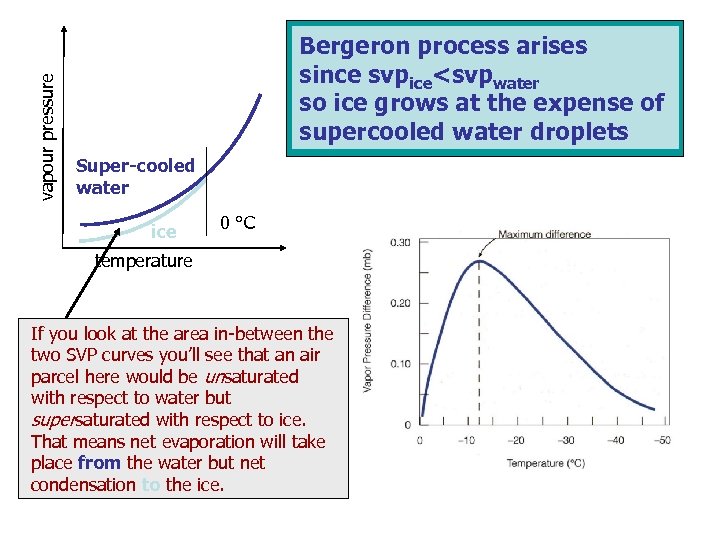 vapour pressure Bergeron process arises since svpice
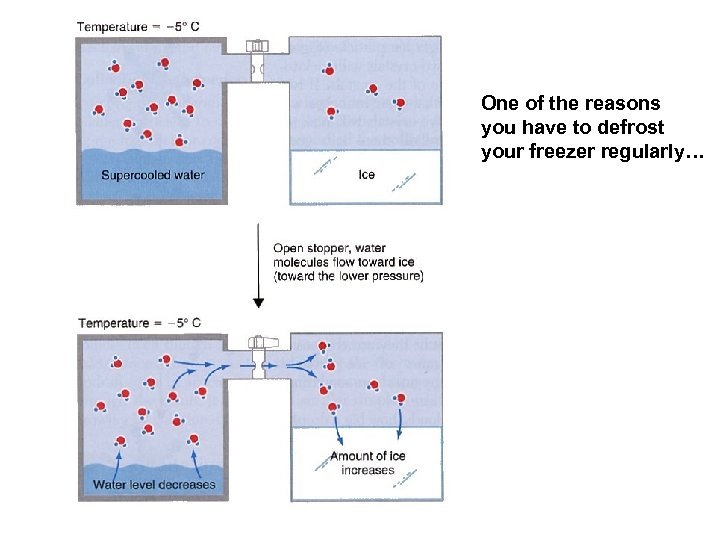 One of the reasons you have to defrost your freezer regularly…
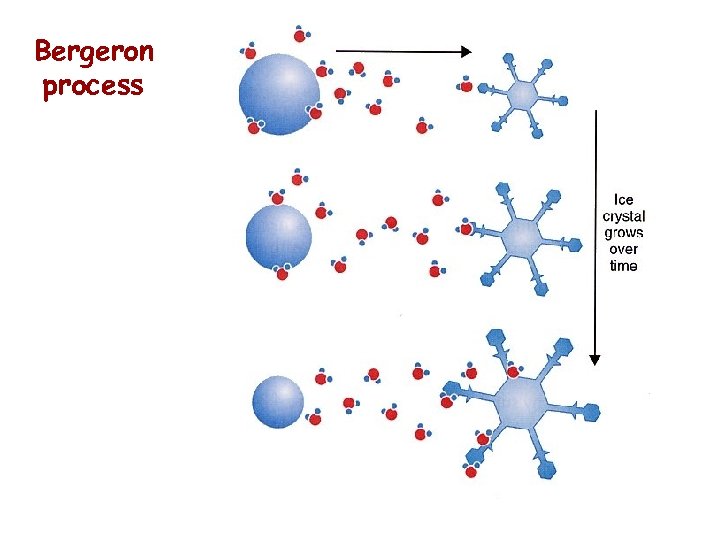 Bergeron process
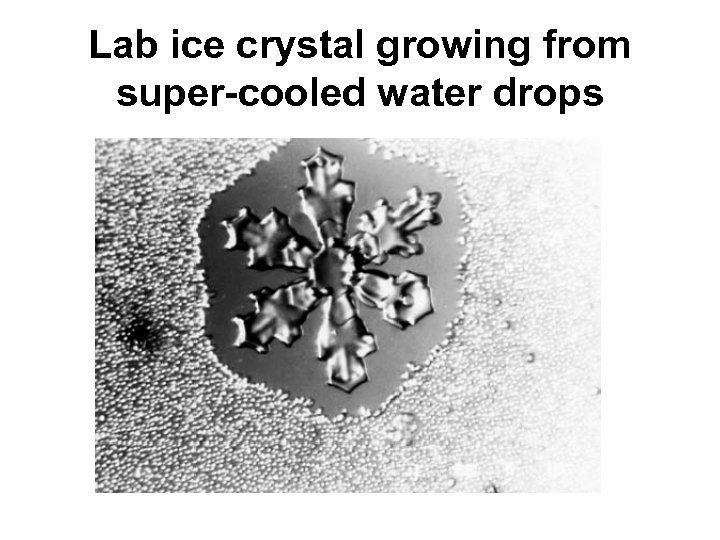 Lab ice crystal growing from super-cooled water drops
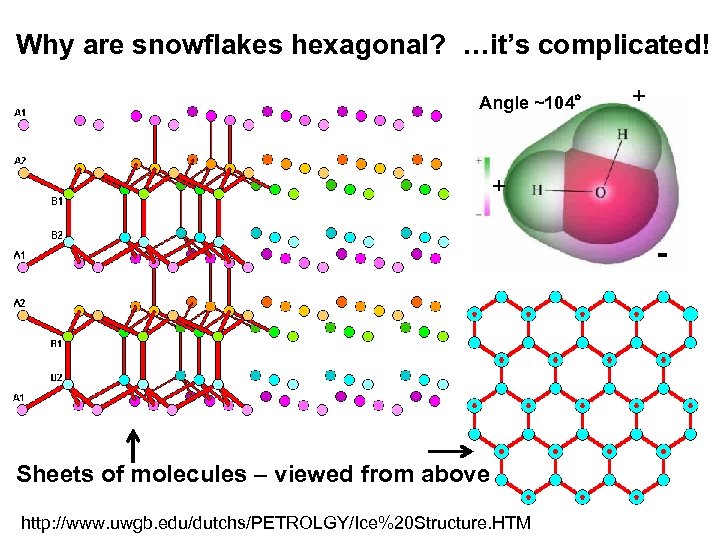 Why are snowflakes hexagonal? …it’s complicated! Angle ~104° + + - Sheets of molecules – viewed from above http: //www. uwgb. edu/dutchs/PETROLGY/Ice%20 Structure. HTM
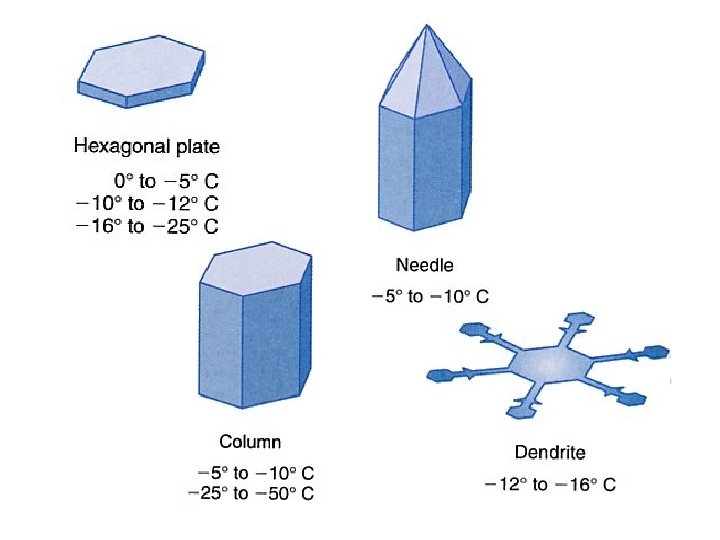
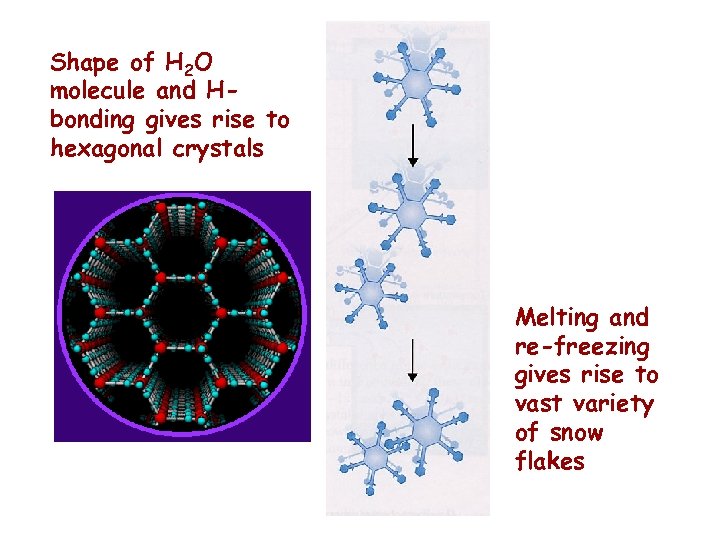 Shape of H 2 O molecule and Hbonding gives rise to hexagonal crystals Melting and re-freezing gives rise to vast variety of snow flakes
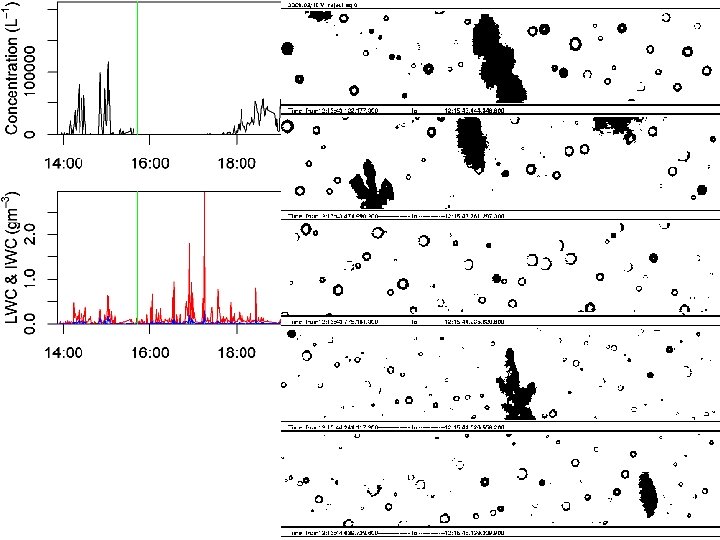
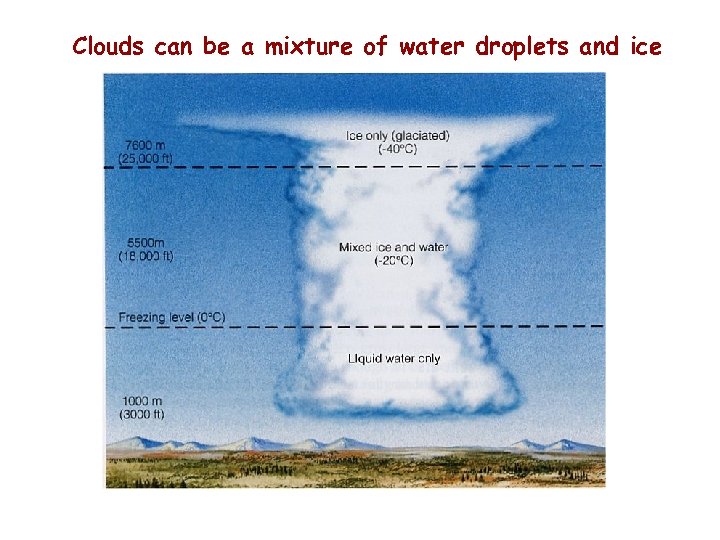 Clouds can be a mixture of water droplets and ice
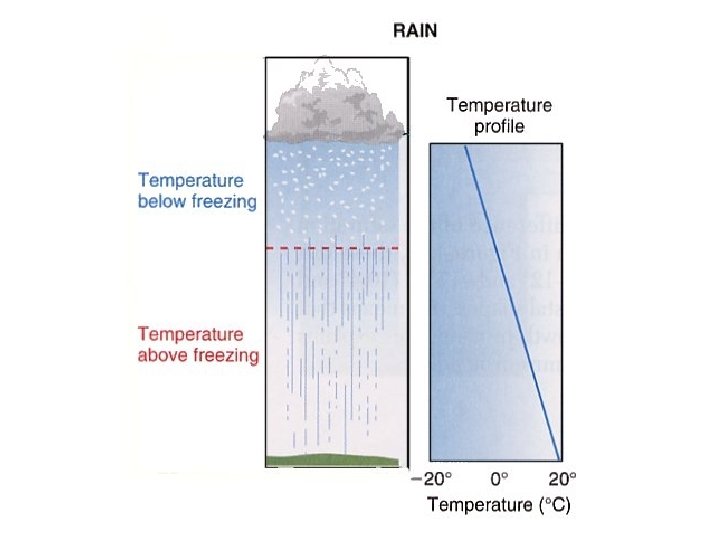
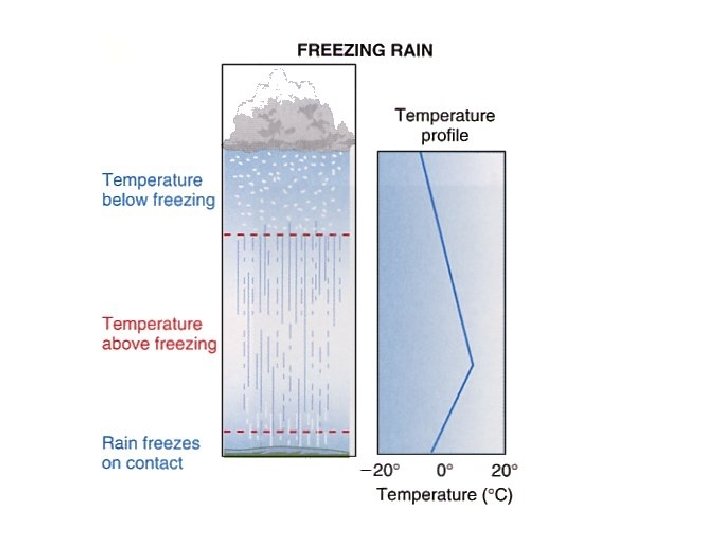
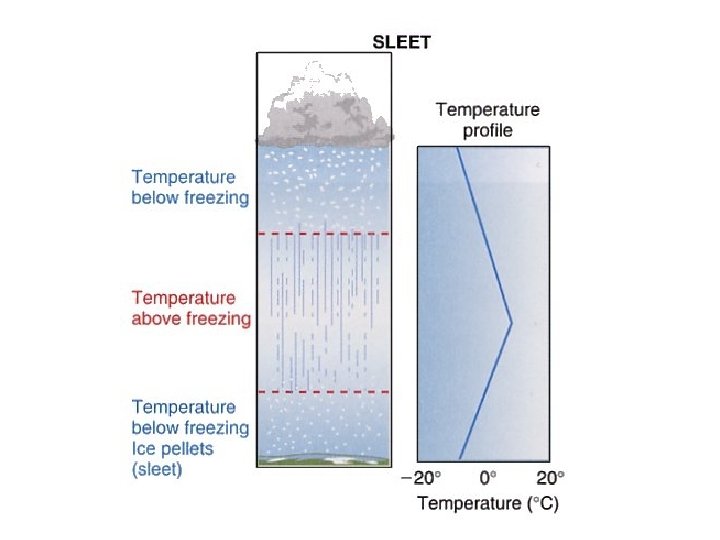
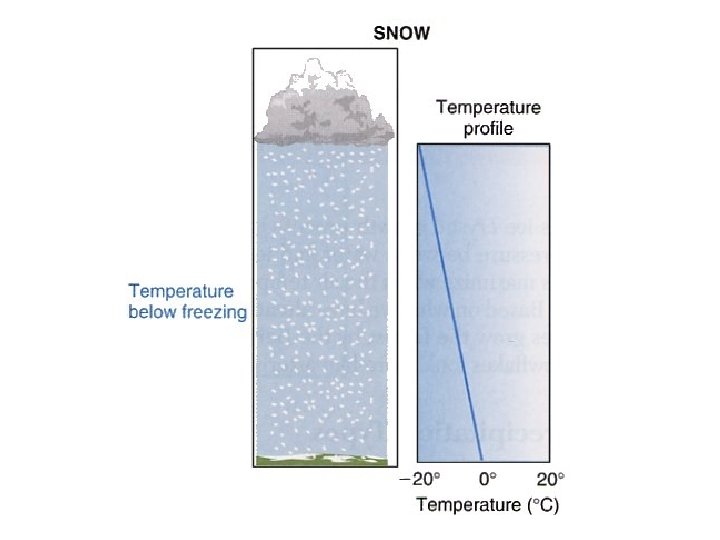
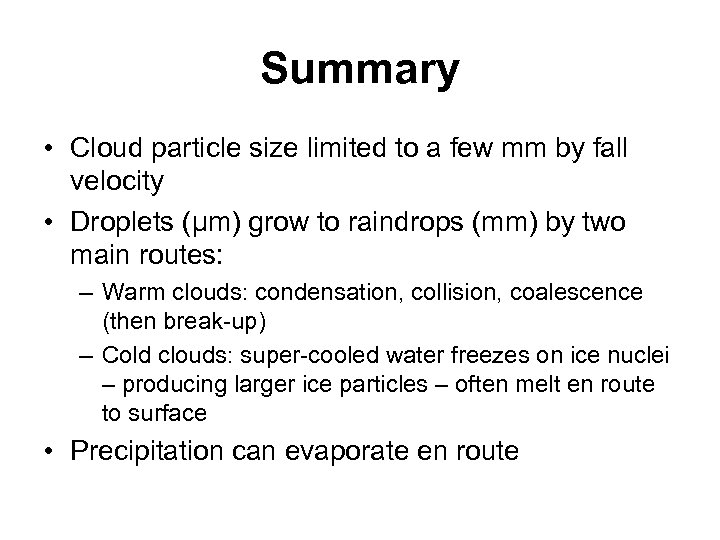 Summary • Cloud particle size limited to a few mm by fall velocity • Droplets (μm) grow to raindrops (mm) by two main routes: – Warm clouds: condensation, collision, coalescence (then break-up) – Cold clouds: super-cooled water freezes on ice nuclei – producing larger ice particles – often melt en route to surface • Precipitation can evaporate en route
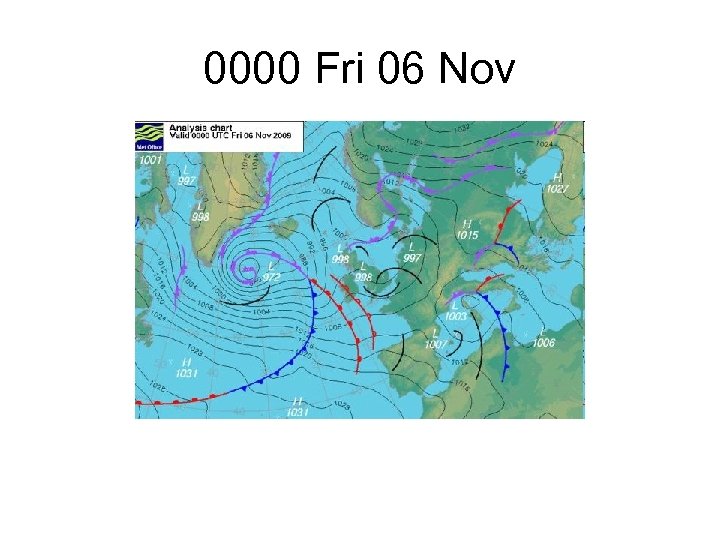 0000 Fri 06 Nov
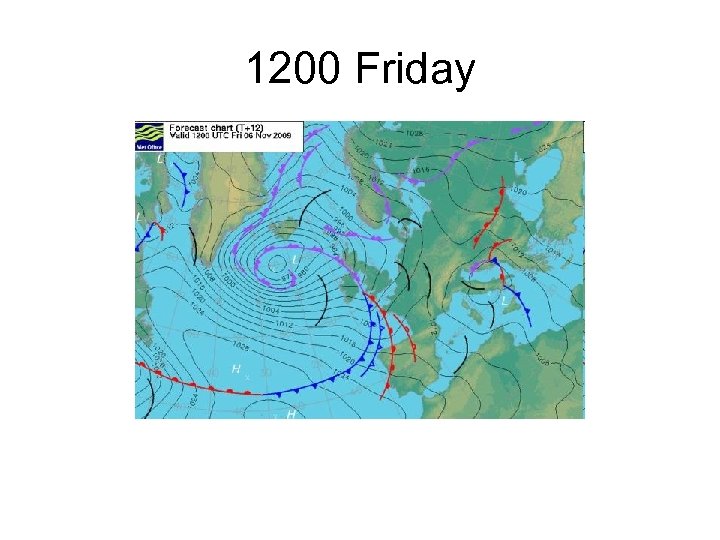 1200 Friday
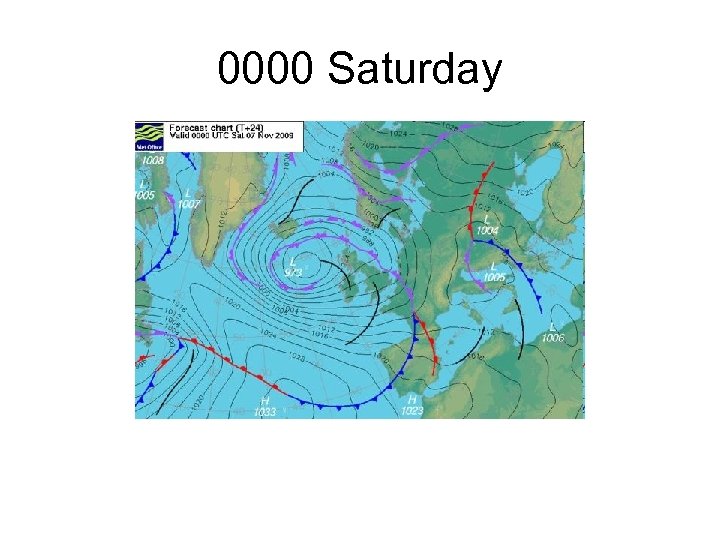 0000 Saturday
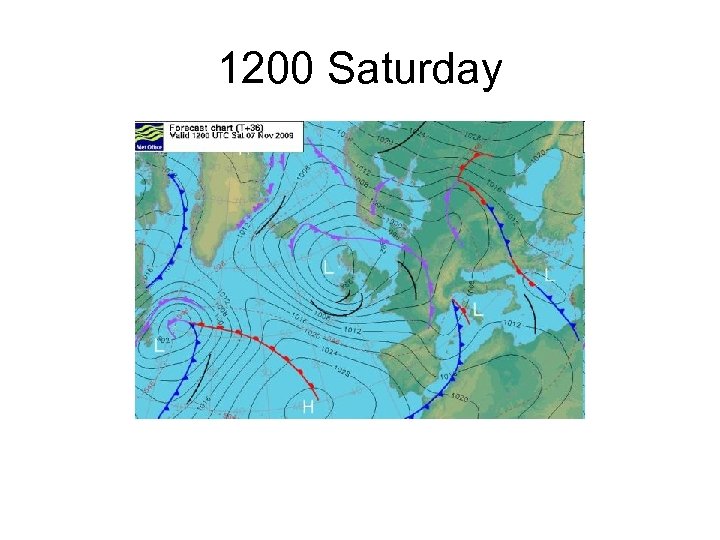 1200 Saturday
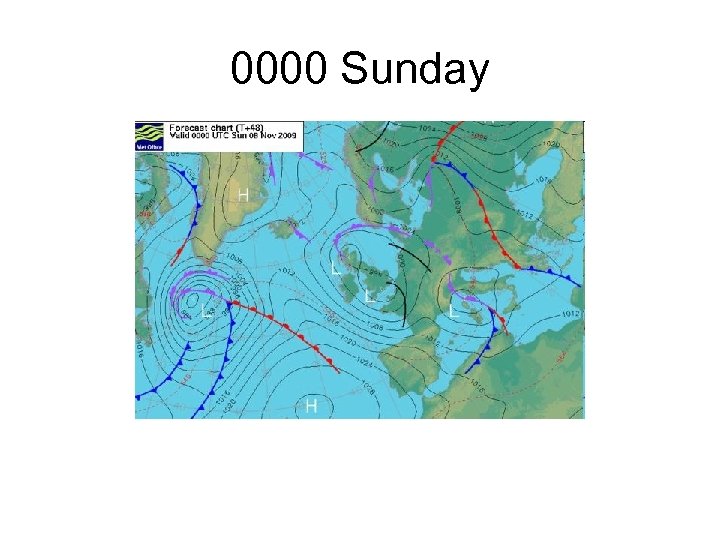 0000 Sunday
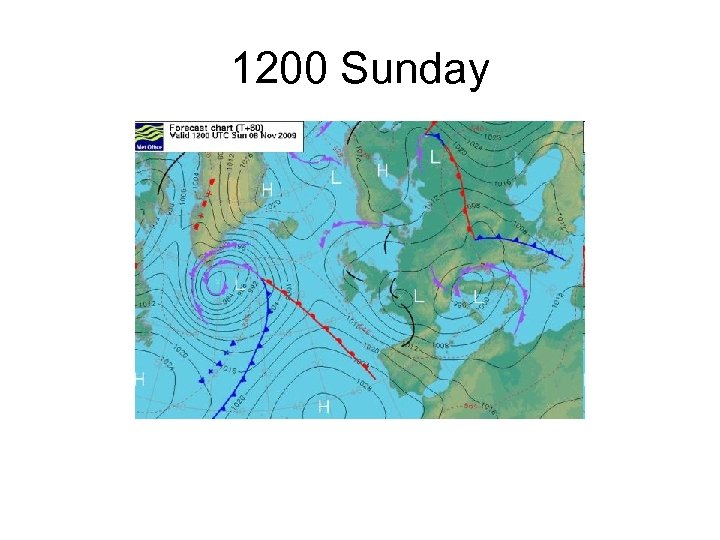 1200 Sunday
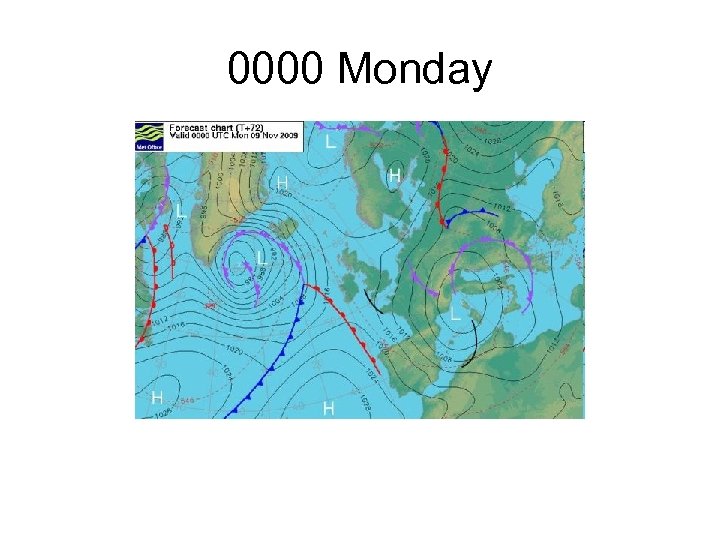 0000 Monday