 Скачать презентацию PRACTICE MANAGER MEETING Friday February 20 th
2b6351ab1244938a9c6a5e8a1a5fef51.ppt
- Количество слайдов: 35



PRACTICE MANAGER MEETING Friday February 20 th 2015 Noon – 1: 00 PM Instructions to join the meeting remotely: 1. 2. Open a web browser and enter URL: www. readytalk. com Enter participant access code: 2093166 Phone in for the audio portion of the conference: 1 -866 -740 -1260 - then enter the access code: 2093166 MEETING HANDOUTS: www. cchap. org/pmmeeting
PRACTICE MANAGER MEETING Friday February 20 th 2015 Noon – 1: 00 PM Healthcare Reform in Colorado: What About the Children? PRESENTER David Keller, M. D. Professor and the first Vice Chair for Clinical Affairs and Clinical Transformation of the Department of Pediatrics of the University of Colorado School of Medicine and Colorado Children’s Hospital MEETING HANDOUTS: www. cchap. org/pmmeeting
HEALTHCARE REFORM IN COLORADO: WHAT ABOUT THE CHILDREN? David Keller MD Professor and Vice of Clinical Affairs and Clinical Transformation Department of Pediatrics, UC Denver SOM and Children’s Hospital Colorado, Denver CO

DISCLOSURE STATEMENT Speaker: David Keller Dr. Keller has documented that he has nothing to disclose. 4
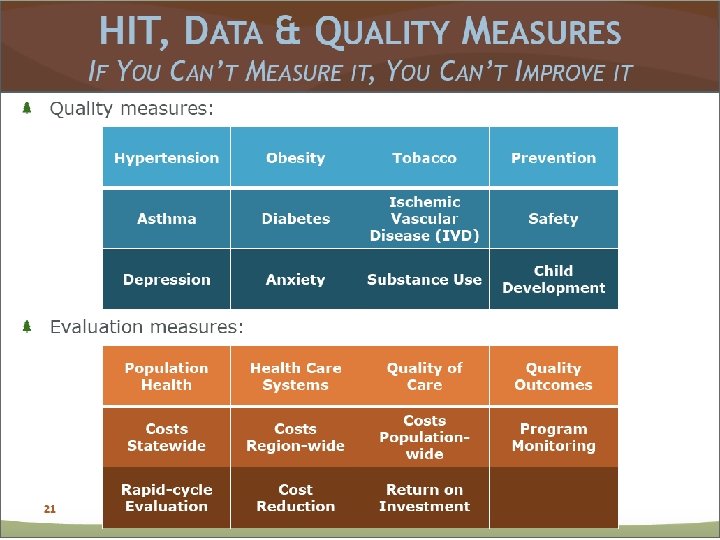
Objectives By the end of today’s session, you will be able to: • Discuss the ways in which the health care landscape is changing nationally and within Colorado • Describe how payment reform, quality measures and health information technology will affect your practice • Outline challenges to assuring that changes in payment and practice improve the health of children 5
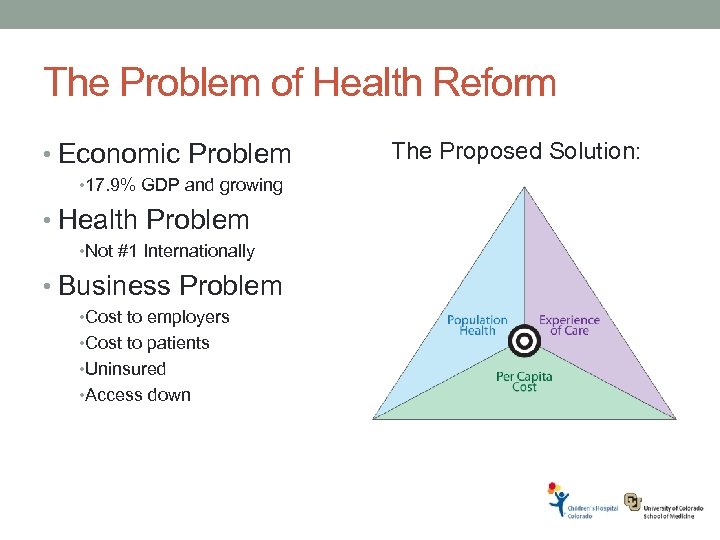
The Problem of Health Reform • Economic Problem • 17. 9% GDP and growing • Health Problem • Not #1 Internationally • Business Problem • Cost to employers • Cost to patients • Uninsured • Access down The Proposed Solution:
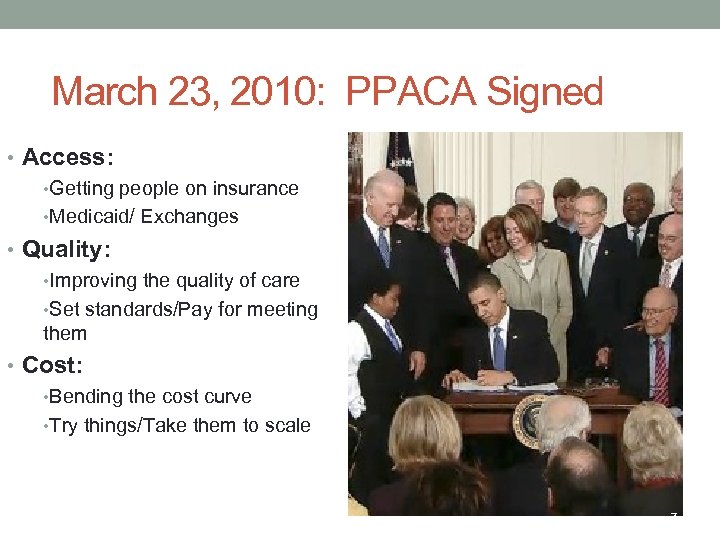
March 23, 2010: PPACA Signed • Access: • Getting people on insurance • Medicaid/ Exchanges • Quality: • Improving the quality of care • Set standards/Pay for meeting them • Cost: • Bending the cost curve • Try things/Take them to scale 7
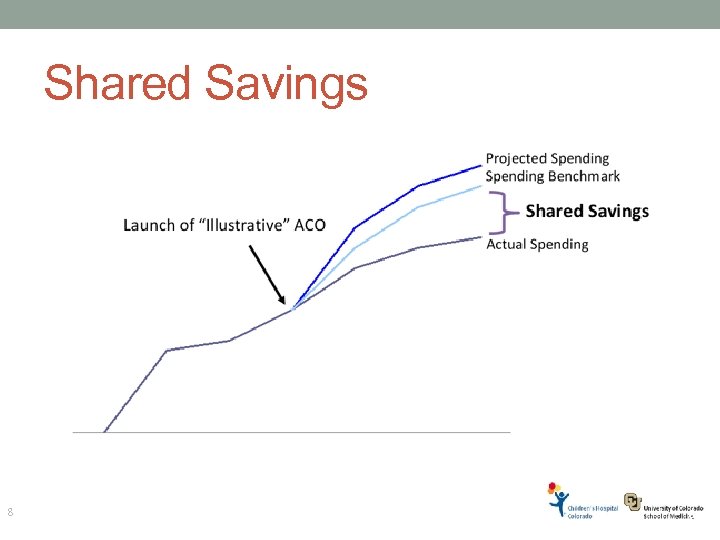
Shared Savings 8 8
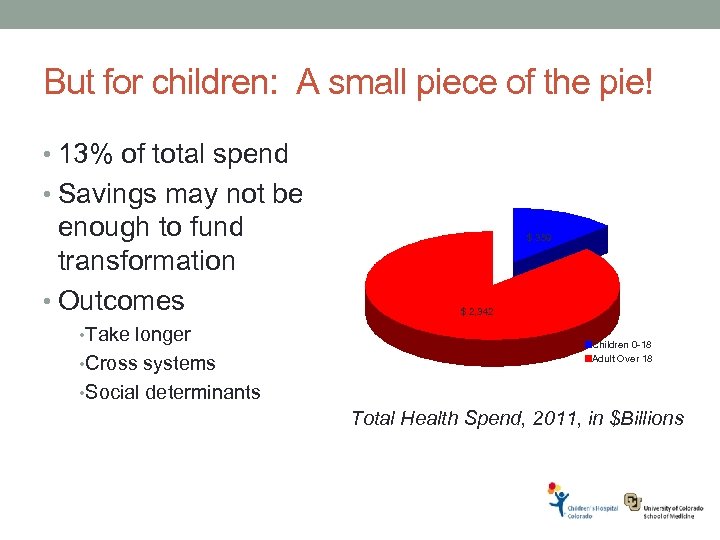
But for children: A small piece of the pie! • 13% of total spend • Savings may not be enough to fund transformation • Outcomes • Take longer • Cross systems $ 359 $ 2, 342 Children 0 -18 Adult Over 18 • Social determinants Total Health Spend, 2011, in $Billions
How Do You Measure Success? Several possibilities • Structure • Process • Outcome • Access • Patient Experience Each has particular challenges in child health Photo © 2011 J. Ronald Lee 10
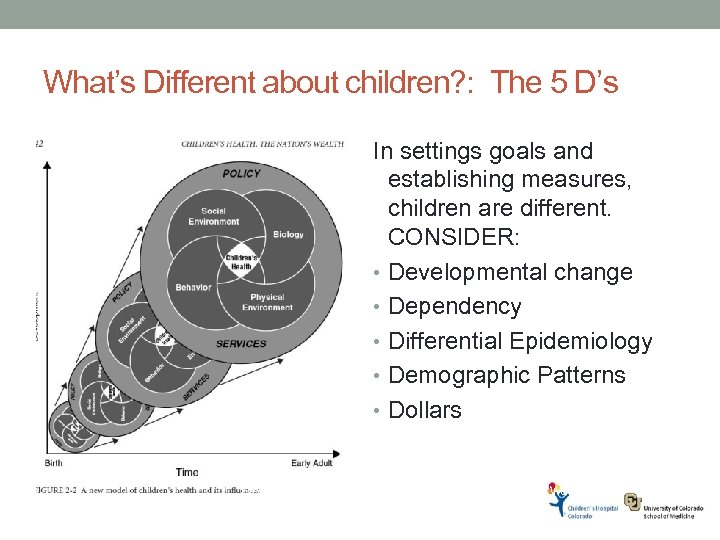
What’s Different about children? : The 5 D’s In settings goals and establishing measures, children are different. CONSIDER: • Developmental change • Dependency • Differential Epidemiology • Demographic Patterns • Dollars From Children’s Health, the Nation’s Wealth. 2005. IOM: Washington. P. 42.
PPACA is an Act of Federalism, Implemented State by State § Congress: Provides the frame, and appropriates the money, from House to Senate to President § Executive: Sets up the frame and spends the money But this frame needs the States! § Governors: Exchanges, Medicaid, Regulations, Workforce § State Legislators: Exchanges, Programs, Regulations, Matching Funding
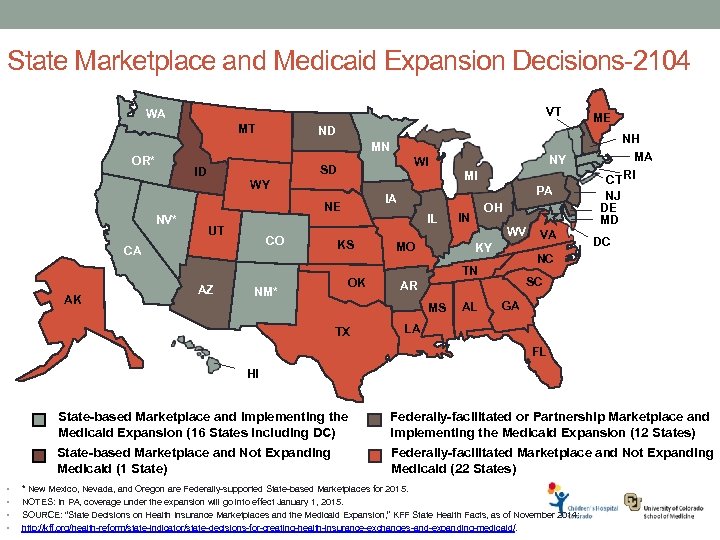
State Marketplace and Medicaid Expansion Decisions-2104 VT WA MT ND MN OR* ID MI WY UT CO CA AK AZ IL KS OK NM* PA IA NE NV* NY WI SD MO IN WV KY NJ DE MD DC SC AR AL VA NH MA CT RI NC TN MS TX OH ME GA LA FL HI State-based Marketplace and Implementing the Medicaid Expansion (16 States including DC) State-based Marketplace and Not Expanding Medicaid (1 State) • • Federally-facilitated or Partnership Marketplace and Implementing the Medicaid Expansion (12 States) Federally-facilitated Marketplace and Not Expanding Medicaid (22 States) * New Mexico, Nevada, and Oregon are Federally-supported State-based Marketplaces for 2015. NOTES: In PA, coverage under the expansion will go into effect January 1, 2015. SOURCE: “State Decisions on Health Insurance Marketplaces and the Medicaid Expansion, ” KFF State Health Facts, as of November 2014: http: //kff. org/health-reform/state-indicator/state-decisions-for-creating-health-insurance-exchanges-and-expanding-medicaid/.
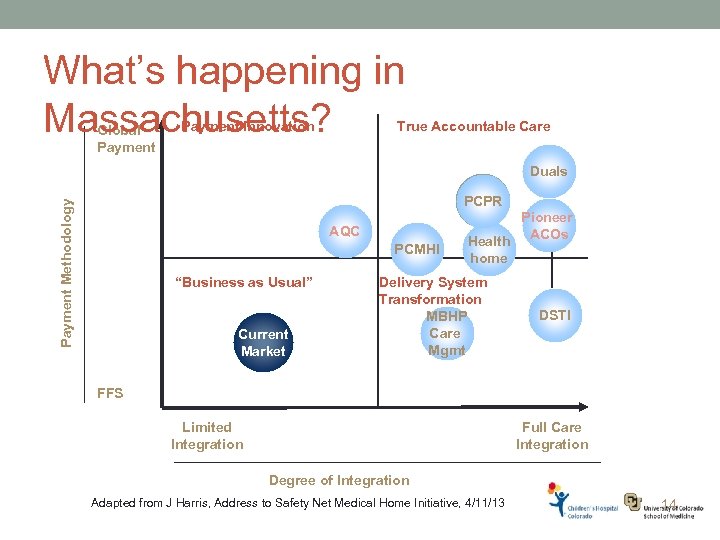
What’s happening in Massachusetts? Global Payment Innovation True Accountable Care Duals Payment Methodology PCPR AQC PCMHI “Business as Usual” Current Market Health home Delivery System Transformation MBHP Care Mgmt Pioneer ACOs DSTI FFS Limited Integration Full Care Integration Degree of Integration Adapted from J Harris, Address to Safety Net Medical Home Initiative, 4/11/13 14
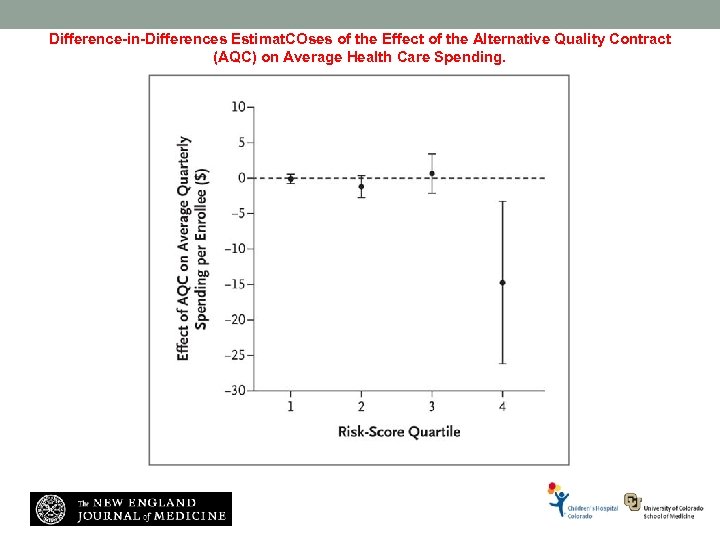
Difference-in-Differences Estimat. COses of the Effect of the Alternative Quality Contract (AQC) on Average Health Care Spending. Song Z et al. N Engl J Med 2011; 365: 909 -918
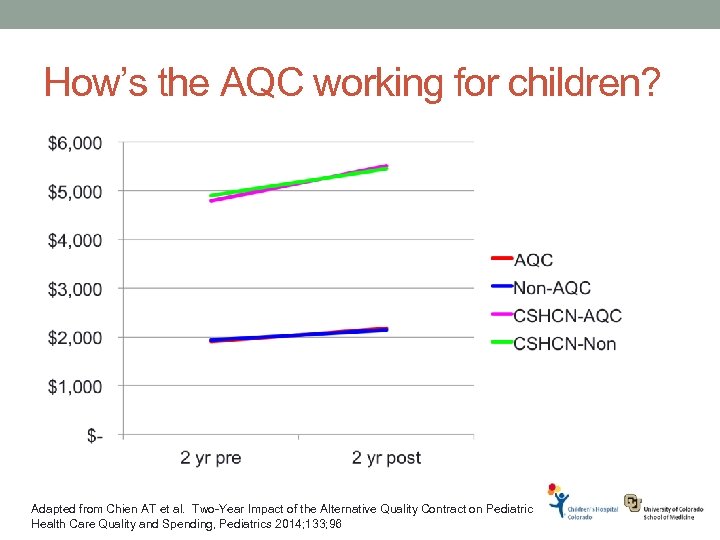
How’s the AQC working for children? Adapted from Chien AT et al. Two-Year Impact of the Alternative Quality Contract on Pediatric Health Care Quality and Spending, Pediatrics 2014; 133; 96
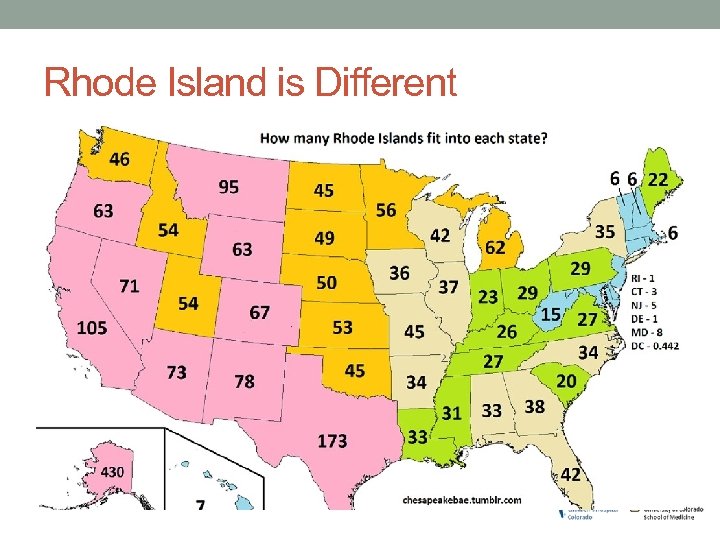
Rhode Island is Different
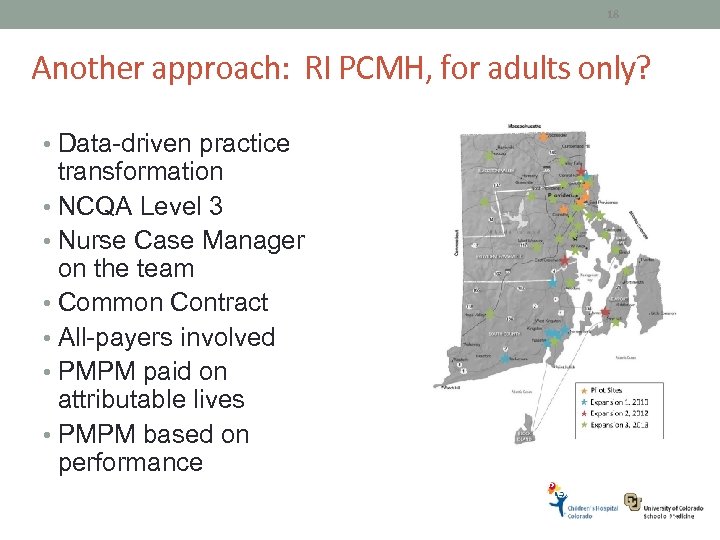
18 Another approach: RI PCMH, for adults only? • Data-driven practice transformation • NCQA Level 3 • Nurse Case Manager on the team • Common Contract • All-payers involved • PMPM paid on attributable lives • PMPM based on performance Used with permission of Ed Paul MD, Yuma Regional Medical Center 18
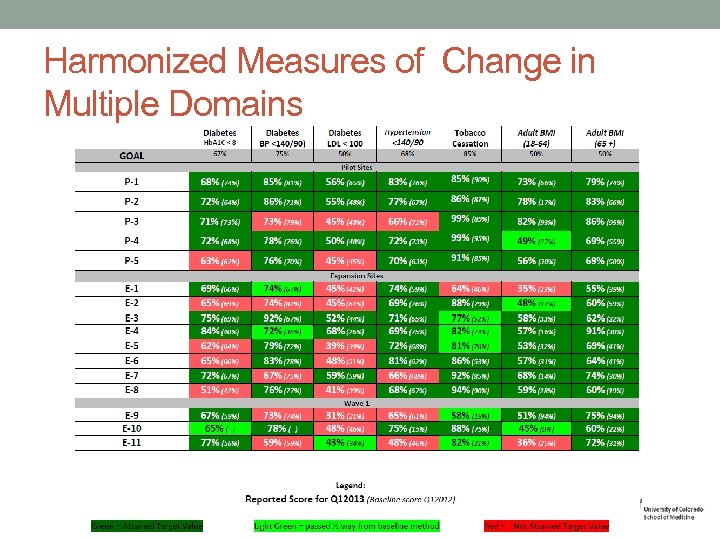
Harmonized Measures of Change in Multiple Domains
How are children faring in Rhode Island? • Continued involvement driven by engagement • State organized initially around adult services, facilitated by Health Insurance Commissioner • Pediatricians persisted, advocating for inclusion • New initiative backed by Health and Human Services, Medicaid, insurers and Foundations • Challenges remain • What are the measures that matter? • How does the transformed pediatric practice differ from the adult equivalent? • What is the pediatric medical neighborhood?
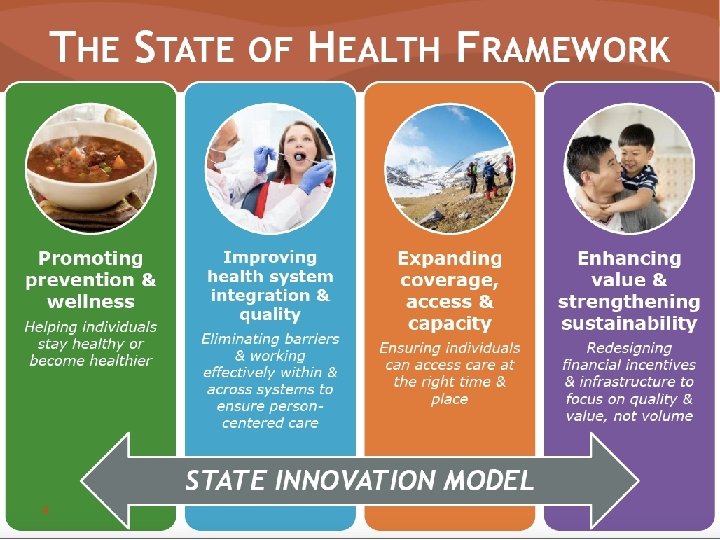
So What About Colorado? • The State of Health: administration-wide commitment to making Colorado healthiest state in the nation • Senate Bill 208 Commission & Commission on Affordable Health Care: bipartisan and public/private commitments to upgrade health policy • Comprehensive Primary Care Initiative (CPCI): Convened public/private payers to engage in jointdecision making & develop data aggregation solution • Accountable Care Collaborative (ACC): Colorado Medicaid advancing public sector delivery/payment reform • State Innovation Model (SIM): engaged stakeholders around integrating Behavioral Health & Primary Care
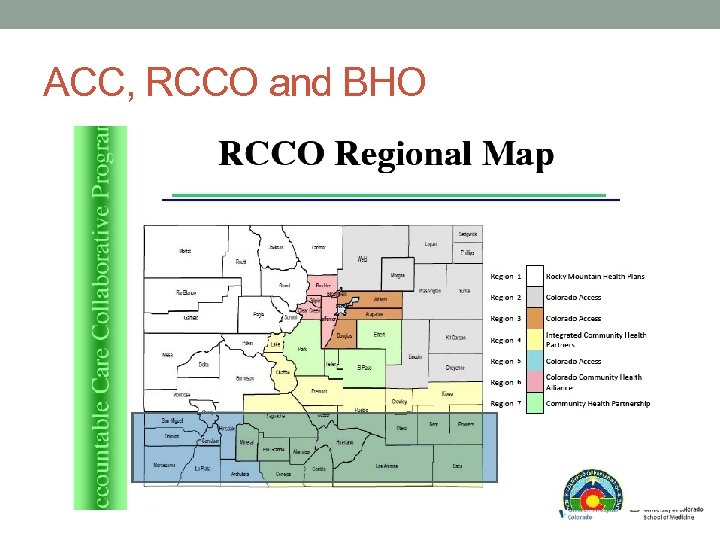
ACC, RCCO and BHO
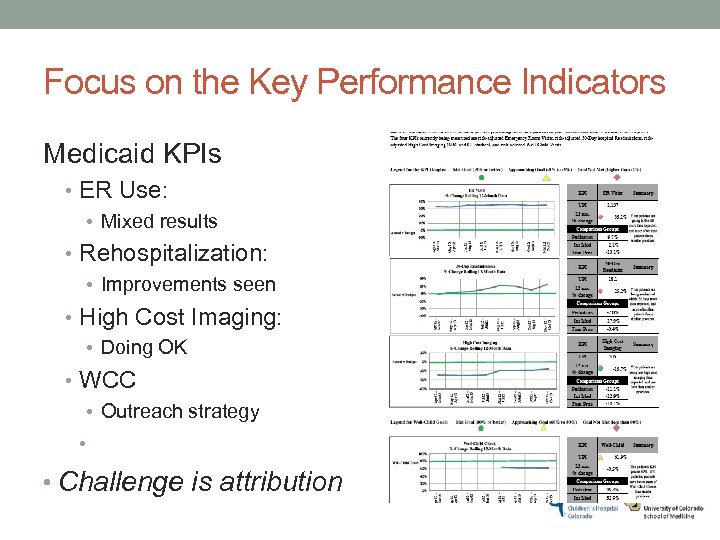
Focus on the Key Performance Indicators Medicaid KPIs • ER Use: • Mixed results • Rehospitalization: • Improvements seen • High Cost Imaging: • Doing OK • WCC • Outreach strategy • • Challenge is attribution
Focus on Children with Medical Complexity: Coordinate All Resources Effectively (CARE) 10 hospitals within Children’s Hospital Association Objective: Inform sustainable change in health care delivery through new payment models supporting improved care and reduced costs for children with medical complexity (CMC). Goals: 1)improve the health and well-being of CMC and their families/caregivers 2)improve quality of health care for CMC 3)reduce health care costs through improved efficiency
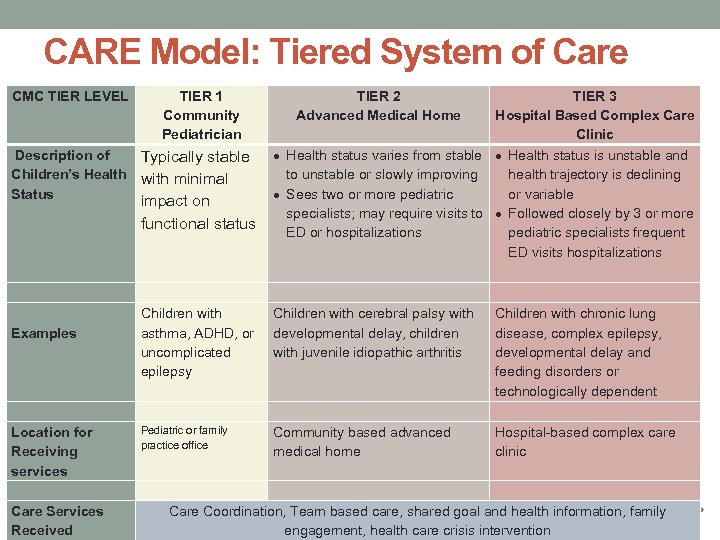
CARE Model: Tiered System of Care CMC TIER LEVEL TIER 1 Community Pediatrician Description of Typically stable Children’s Health with minimal Status impact on functional status Examples Children with asthma, ADHD, or uncomplicated epilepsy TIER 2 Advanced Medical Home TIER 3 Hospital Based Complex Care Clinic Health status varies from stable Health status is unstable and to unstable or slowly improving health trajectory is declining Sees two or more pediatric or variable specialists; may require visits to Followed closely by 3 or more ED or hospitalizations pediatric specialists frequent ED visits hospitalizations Children with cerebral palsy with developmental delay, children with juvenile idiopathic arthritis Children with chronic lung disease, complex epilepsy, developmental delay and feeding disorders or technologically dependent Pediatric or family Location for Community based advanced Hospital-based complex care practice office Receiving medical home clinic Intensity of Services Received services Care Services Care Coordination, Team based care, shared goal and health information, family Received engagement, health care crisis intervention
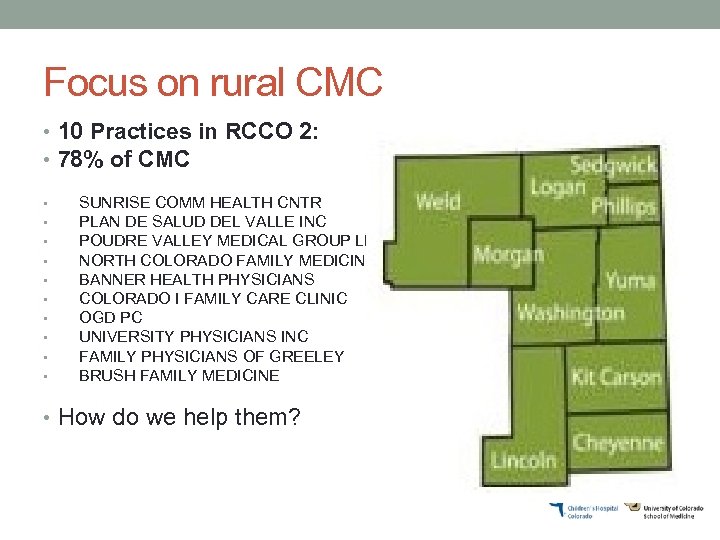
Focus on rural CMC • 10 Practices in RCCO 2: • 78% of CMC • • • SUNRISE COMM HEALTH CNTR PLAN DE SALUD DEL VALLE INC POUDRE VALLEY MEDICAL GROUP LLC NORTH COLORADO FAMILY MEDICINE BANNER HEALTH PHYSICIANS COLORADO I FAMILY CARE CLINIC OGD PC UNIVERSITY PHYSICIANS INC FAMILY PHYSICIANS OF GREELEY BRUSH FAMILY MEDICINE • How do we help them?
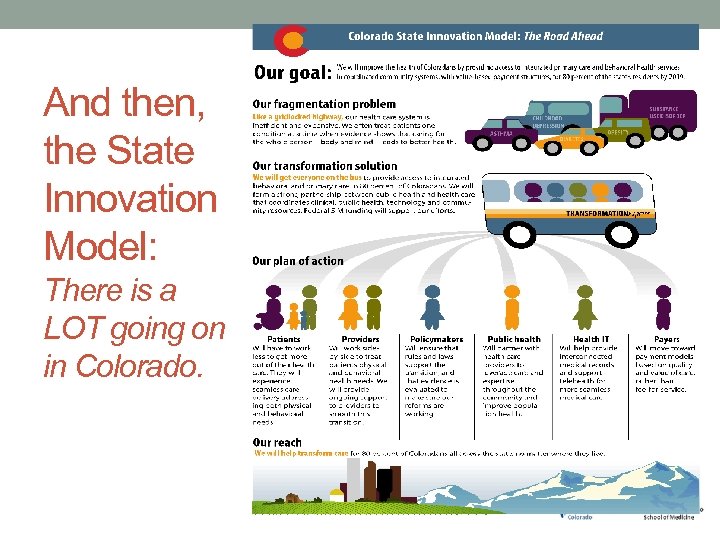
And then, the State Innovation Model: There is a LOT going on in Colorado.
How are children faring in Colorado? • Many processes, many silos • Children benefited from 2008 legislation • Multi-payer initiatives focused on adult care (Health. Team. Works, CPCI) • Children currently in majority in the RCCOs • Challenges remain • What are the measures that matter? • What is the measure of a medical home? • How does one integrate public and private sector initiatives? • Where do children fit into the State Innovation Model?
What about the 114 th Congress? • Elections have consequences • Senate and House are controlled by Republicans • White House remains Democratic • Major health issues are still about adults • SGR fix • PPACA repeal • What about the children? • CHIP reauthorization and reappropriation • Medicaid primary care “bump” • Children are bipartisan, but not really on the radar
Take Home Message: What’s different for children? The Five D’s • Developmental change • Dependency • Differential Epidemiology • Demographic Patterns • Dollars • Need to look at life-course outcomes with multiple inputs • Need to include families • Need to focus on behavioral health and mental health outcomes • Need to account for diversity and poverty • Need to reward incent with more than shared savings Keller et. al. Not Just Little Adults: Policies to Support Medical Home Transformation in Pediatric Practice. From Children’s Health, the Nation’s Wealth. 2005. IOM: Washington. P. 42. http: //www. qualitymeasures. ahrq. gov/expert-commentary. aspx? id=47896 32
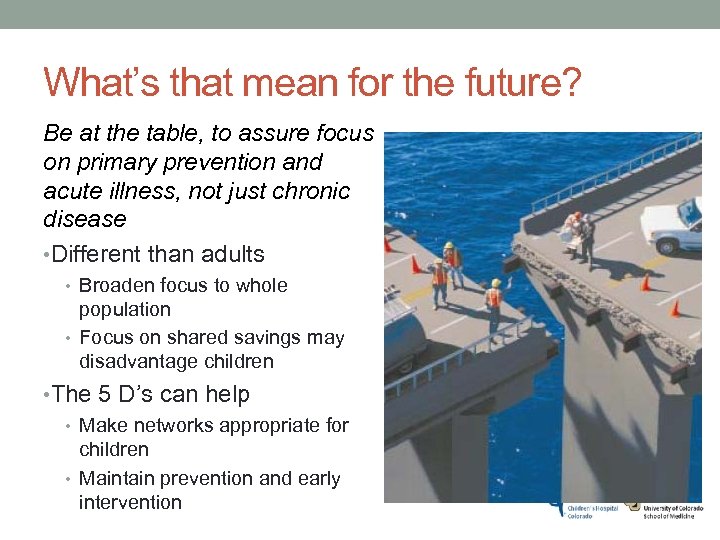
What’s that mean for the future? Be at the table, to assure focus on primary prevention and acute illness, not just chronic disease • Different than adults • Broaden focus to whole population • Focus on shared savings may disadvantage children • The 5 D’s can help • Make networks appropriate for children • Maintain prevention and early intervention
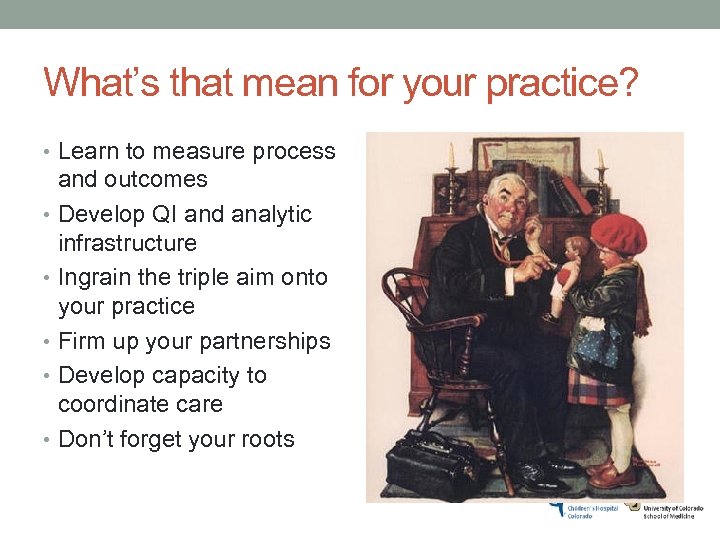
What’s that mean for your practice? • Learn to measure process and outcomes • Develop QI and analytic infrastructure • Ingrain the triple aim onto your practice • Firm up your partnerships • Develop capacity to coordinate care • Don’t forget your roots
It’s a Moving Target: Stay Informed! § Federal Government: www. healthreform. gov § Kaiser Health News: www. khn. org § Health Reform GPS: www. healthreformgps. org § AAP Federal Affairs: www. aap. org/advocacy/washing/mainpage. htm § AMA Health Reform: www. ama-assn. org/health-system-reform/index. shtml § AHRQ Medical Home Site: http: //www. pcmh. ahrq. gov/portal/server. pt/community/pcmh__home/1483 § Patient Centered Care Collaborative: http: //www. pcpcc. net/ § National Center for Medical Home: http: //www. medicalhomeinfo. org 35
Скачать презентацию PRACTICE MANAGER MEETING Friday February 20 th
2b6351ab1244938a9c6a5e8a1a5fef51.ppt