


 Скачать презентацию Practical lesson 6 TOPIC LESSON AS AN ELEMENT
Lesson #6.pptx
- Количество слайдов: 21
 Practical lesson #6 TOPIC: LESSON AS AN ELEMENT OF COMPLETE SYSTEM. NON-TRADITIONAL FORMS OF EDUCATIONAL PROCESS. AIM: TO TRAIN STUDENTS TO UNDERSTAND THE SIGNIFICANT PLACE OF A LESSON AS AN ELEMENT OF COMPLETE SYSTEM AND APPLY NON-TRADITIONAL FORMS OF EDUCATIONAL PROCESS
 Outline
 Key special words: lesson, teaching, learning, traditional and non- traditional forms of educational process, method, methodology system, training, excursion, travelling lesson, workshop, conference, problem-solving, labs, excursions, online-lessons, mentoring, tutoring, family teaching, self-study, business games, studio lessons, projects, creative week, research week.
 Questions: What is lesson? What is an effective lesson, in your opinion? Prove. What are main features of a lesson? What types of lesson do you know? What are non-traditional forms of educational process? Give the example. What are labs? What is conference? What are online-lessons? Where do we usually go for excursions?
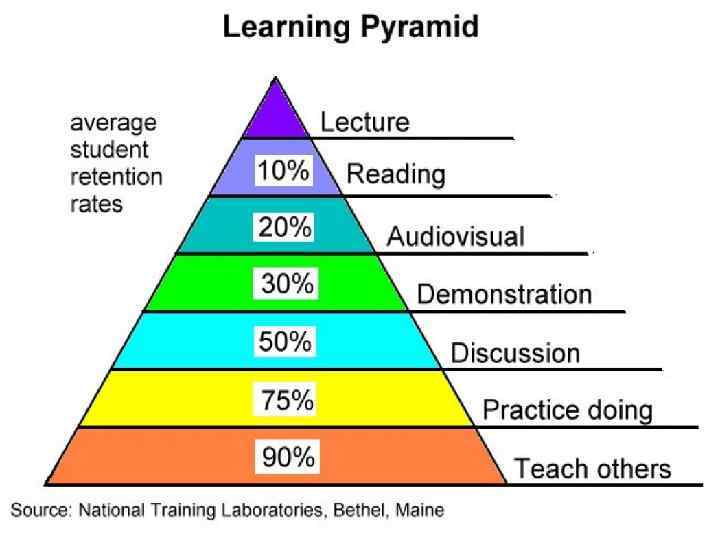
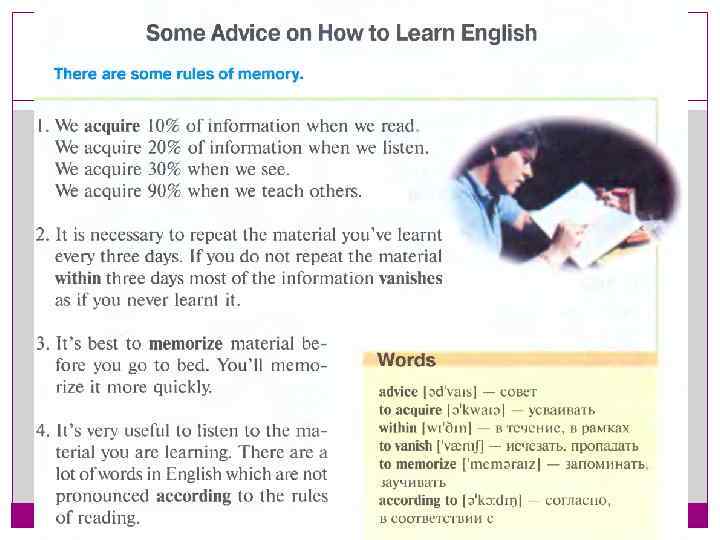
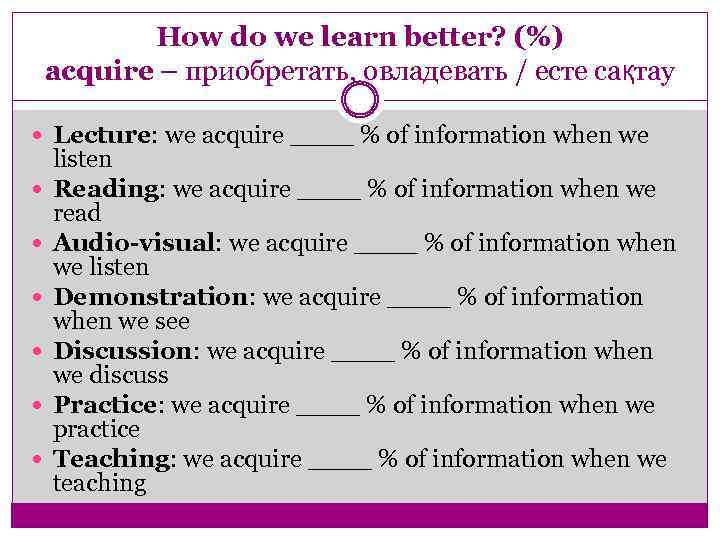 How do we learn better? (%) acquire – приобретать, овладевать / есте сақтау Lecture: we acquire ____ % of information when we listen Reading: we acquire ____ % of information when we read Audio-visual: we acquire ____ % of information when we listen Demonstration: we acquire ____ % of information when we see Discussion: we acquire ____ % of information when we discuss Practice: we acquire ____ % of information when we practice Teaching: we acquire ____ % of information when we teaching
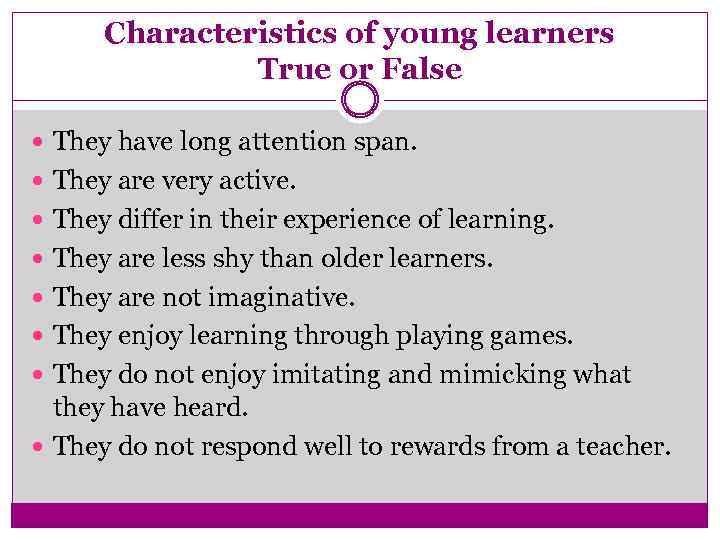 Characteristics of young learners True or False They have long attention span. They are very active. They differ in their experience of learning. They are less shy than older learners. They are not imaginative. They enjoy learning through playing games. They do not enjoy imitating and mimicking what they have heard. They do not respond well to rewards from a teacher.
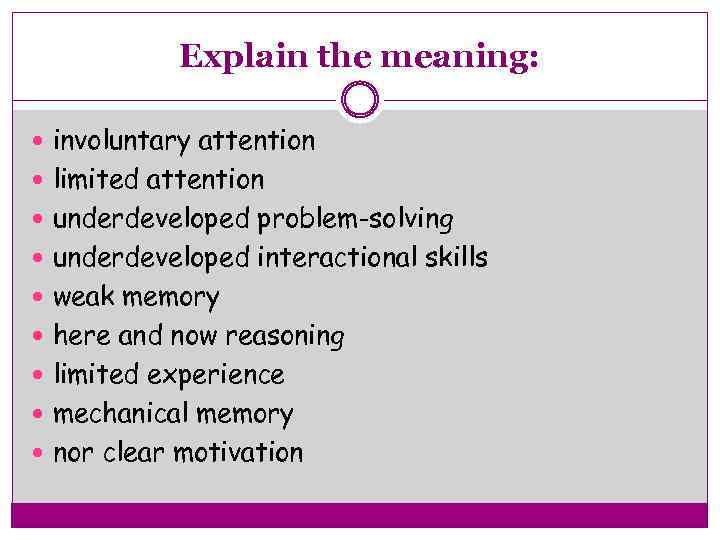 Explain the meaning: involuntary attention limited attention underdeveloped problem-solving underdeveloped interactional skills weak memory here and now reasoning limited experience mechanical memory nor clear motivation
 Teacher
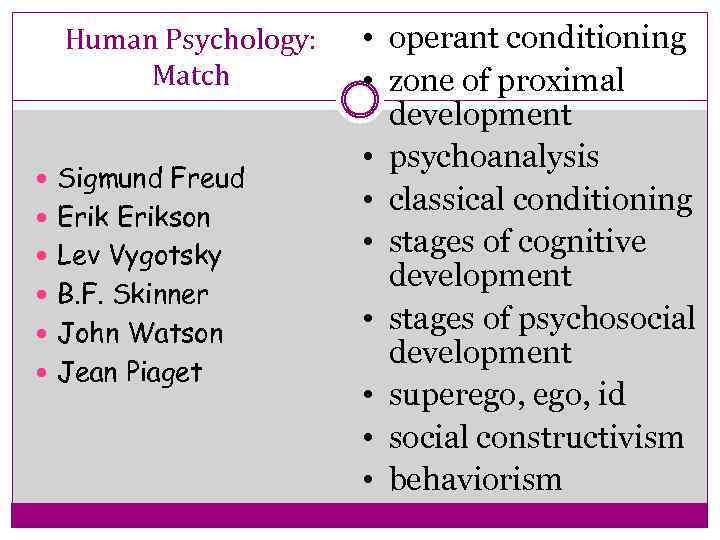 Human Psychology: Match Sigmund Freud Erikson Lev Vygotsky B. F. Skinner John Watson Jean Piaget • operant conditioning • zone of proximal development • psychoanalysis • classical conditioning • stages of cognitive development • stages of psychosocial development • superego, id • social constructivism • behaviorism
 Sciences related to Pedagogy and Methodology of Primary education
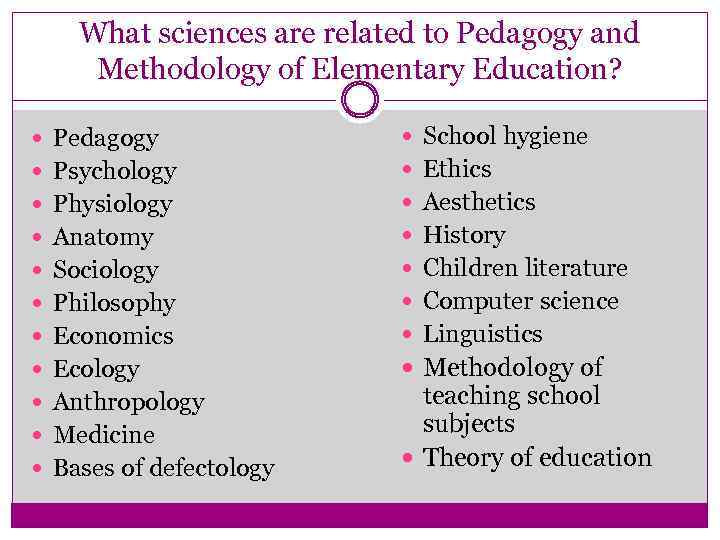 What sciences are related to Pedagogy and Methodology of Elementary Education? Pedagogy School hygiene Psychology Ethics Physiology Aesthetics Anatomy History Sociology Children literature Philosophy Computer science Economics Linguistics Ecology Methodology of Anthropology Medicine Bases of defectology teaching school subjects Theory of education
 Warm-up. Give the definition: Pedagogy Psychology Ethnopedagogics Education Didactics
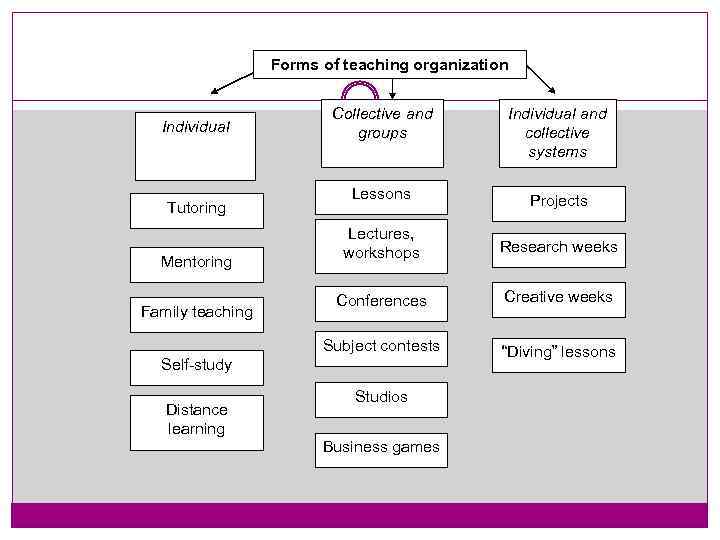 Forms of teaching organization Tutoring Mentoring Family teaching Collective and groups Individual and collective systems Lessons Projects Lectures, workshops Research weeks Conferences Creative weeks Subject contests Individual “Diving” lessons Self-study Distance learning Studios Business games
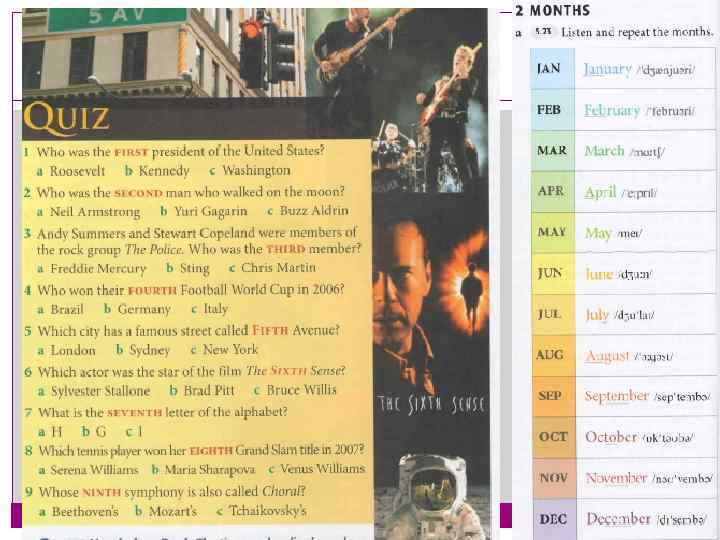
 Non-traditional types of lesson “Lesson–Workshop”, “Lesson –Excursion”, “Quiz “What? Where? When? ”, a game “The Field of Wonders”, lesson “Club of Merry and Cute”, “Lesson - Conference”, “Lesson Press-conference”, “Lesson revue”, “Round table”, “Fairies”, etc. What other options can you offer for a nontraditional lesson? Prepare a microteaching for any non-traditional lesson type. Discuss and give feedback.
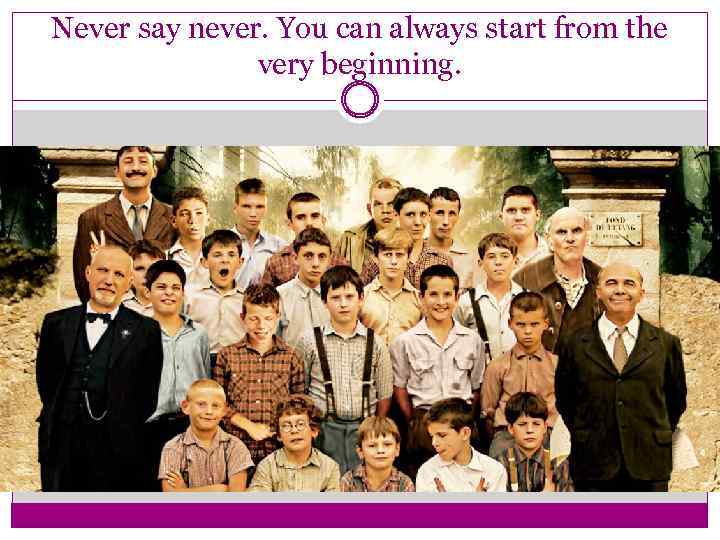
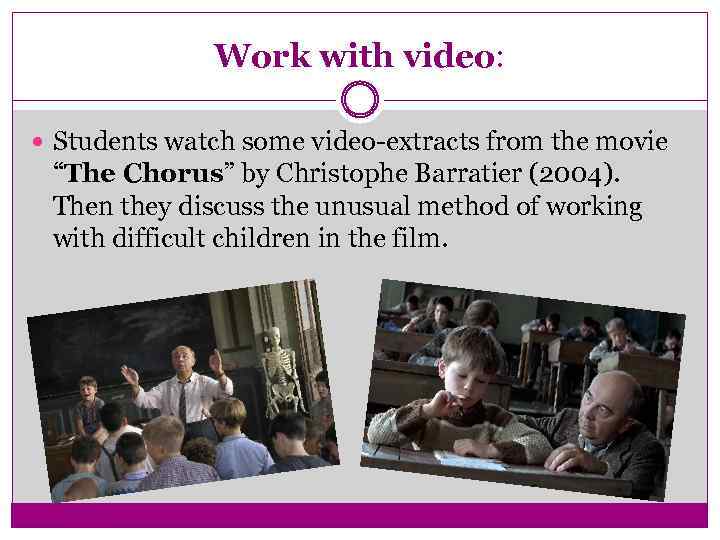 Work with video: Students watch some video-extracts from the movie “The Chorus” by Christophe Barratier (2004). Then they discuss the unusual method of working with difficult children in the film.
 “The Chorus” Answer questions: Where does main character start working as a teacher? What does mean “Action – Reaction” method? Is it effective? What is unusual in main character’s method of educating? Why do children like singing? What do children feel while singing? How did it help them to self-development? How do you think what traits a good teacher should possess? (http: //www. buzzle. com/articles/what-makes-a -good-teacher. html)
 Never say never. You can always start from the very beginning.