


 Скачать презентацию Practical Aspects of Nutrition Support in the ICU
34a7472e7f720cd9fa6caa46b7e33d90.ppt
- Количество слайдов: 25
 Practical Aspects of Nutrition Support in the ICU John W. Drover, MD, FRCSC, FACS Associate Professor Queen’s University Kingston, ON Canada www. criticalcarenutrition. com
 Disclosure Information • None www. criticalcarenutrition. com

 Objectives At the end of the session the participant will be able to: • List 3 strategies to maximize the benefits of enteral nutrition. • List 2 advantages of post-pyloric enteral feeding. • Identify 1 method of gaining post-pyloric access at the bedside in the ICU.
 Outline • Review the rationale for enteral feeding. • Focus on the data regarding post-pyloric feeding. – Specifically RCT’s – Clinically important outcomes • Review the risks of and obstacles to post -pyloric feeding. • Develop a recommendation www. criticalcarenutrition. com
 Case #1 • • Day #1 50 yo female COPD with CAP Intubated, resuscitated Who would start EN within 24 hours of admission? • Who would attempt to place a post -pyloric feeding tube?
 Case #2 • • • Day #5 50 yo female COPD with CAP Intubated, resuscitated feeding tube in stomach Receiving metoclopromide Achieving <30% of goal; GRV >400 ml • Who would recommend placement of a post-pyloric feeding tube?
 Nutrition in the Critically ill • Enteral nutrition strongly recommended • Early enteral nutrition recommended • Optimize the benefits and minimize risks – Use of feeding protocols – Motility agents for gastric feeding – Small bowel feeding
 Intra-gastric feeding The good: • Easy access • Early initiation • Often tolerated well The bad: • Gastric residual volumes (GRV’s) • Gastro-pharyngeal reflux • Respiratory aspiration • Unrealized nutritional goals
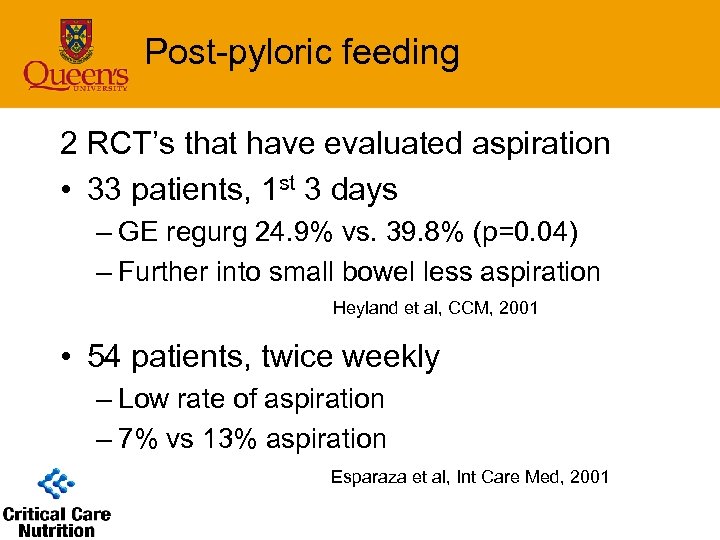 Post-pyloric feeding 2 RCT’s that have evaluated aspiration • 33 patients, 1 st 3 days – GE regurg 24. 9% vs. 39. 8% (p=0. 04) – Further into small bowel less aspiration Heyland et al, CCM, 2001 • 54 patients, twice weekly – Low rate of aspiration – 7% vs 13% aspiration Esparaza et al, Int Care Med, 2001
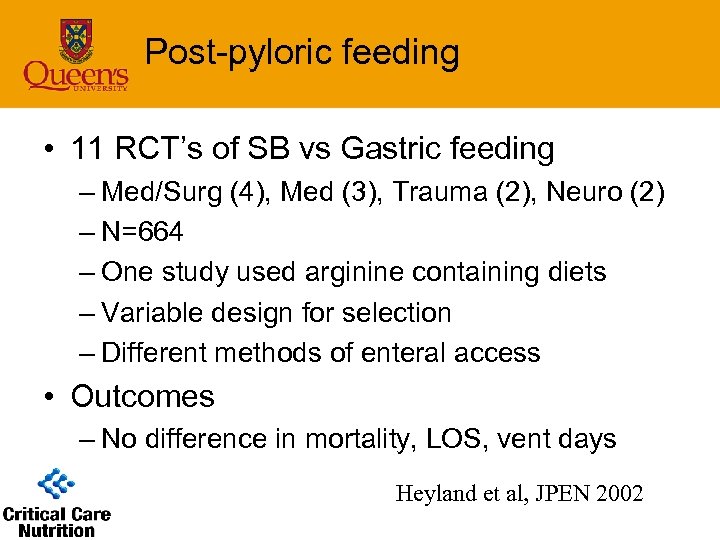 Post-pyloric feeding • 11 RCT’s of SB vs Gastric feeding – Med/Surg (4), Med (3), Trauma (2), Neuro (2) – N=664 – One study used arginine containing diets – Variable design for selection – Different methods of enteral access • Outcomes – No difference in mortality, LOS, vent days Heyland et al, JPEN 2002
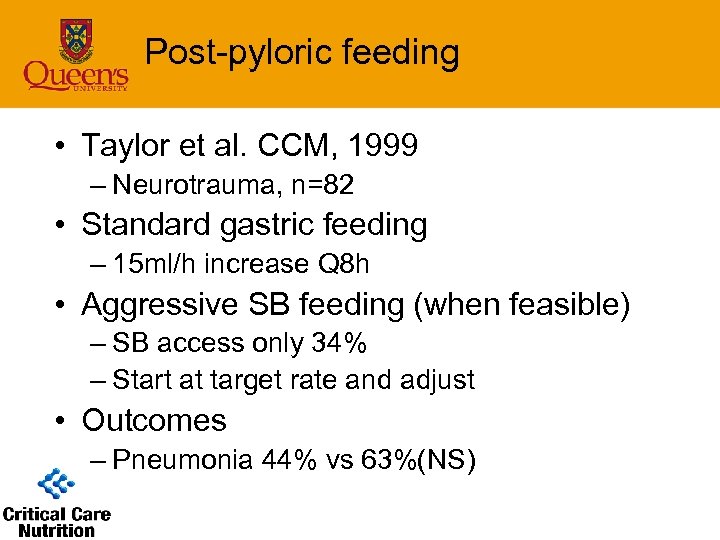 Post-pyloric feeding • Taylor et al. CCM, 1999 – Neurotrauma, n=82 • Standard gastric feeding – 15 ml/h increase Q 8 h • Aggressive SB feeding (when feasible) – SB access only 34% – Start at target rate and adjust • Outcomes – Pneumonia 44% vs 63%(NS)
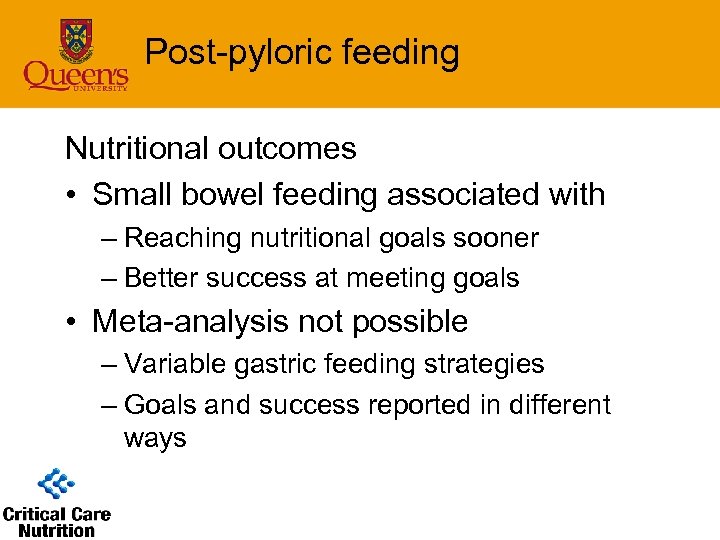 Post-pyloric feeding Nutritional outcomes • Small bowel feeding associated with – Reaching nutritional goals sooner – Better success at meeting goals • Meta-analysis not possible – Variable gastric feeding strategies – Goals and success reported in different ways
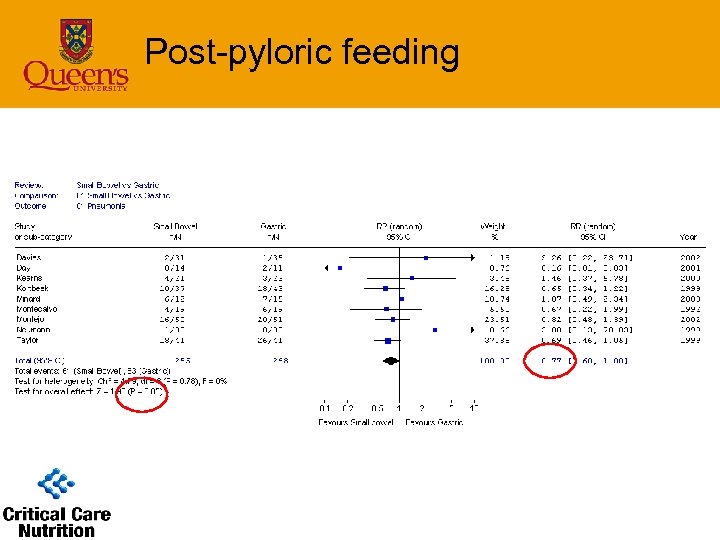
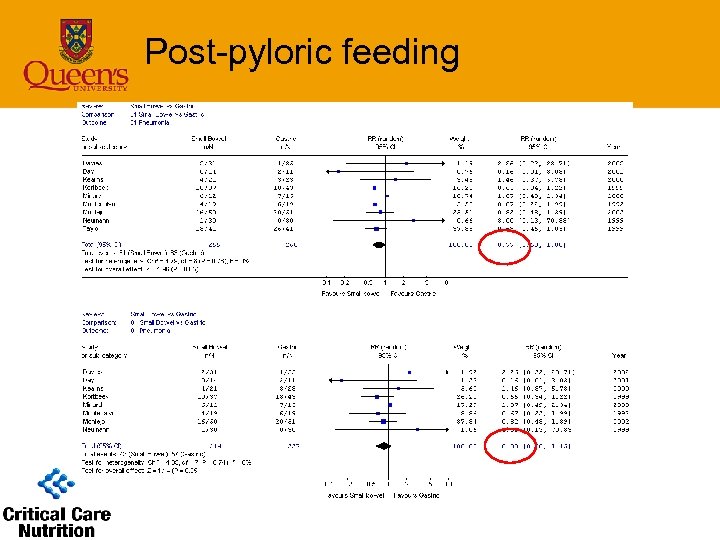
 Post-pyloric feeding • Infections – pneumonia (9 studies) • 8 clinical criteria; 1 bronchoscopy • SB feeding associated with reduced pneumonia – RR=0. 77(0. 60 -1. 0), p=0. 05 – 23% risk reduction • With Taylor study removed – RR=0. 83(0. 6 -1. 15), p=0. 3
 Post-pyloric feeding
 Post-pyloric feeding
 Controversy “A comparison of early gastric feeding in critically ill patients: a meta-analysis” • No difference in outcomes • Same RCT’s • Exclude Taylor • Use studies of reflux • Didn’t count all pneumonia in Montecalvo study Ho et al, ICM 2006
 Post-pyloric feeding • Problems associated with: – Difficult to achieve – Once achieved may move – Doesn’t overcome all issues Canadian survey says 10% • (eg. ACS, short bowel, enteric fistula) • Bowel necrosis – rare event not clearly associated with enteral nutrition Zaloga: Nutrition Week 2005
 The ENTERIC Study The Early Nasojejunal Tube To Meet Energy Requirements In Intensive Care Study Investigators: Andrew R Davies Rinaldo Bellomo D Jamie Cooper Gordon S Doig Simon R Finfer Daren K Heyland For the ANZICS Clinical Trials Group
 Conclusions • SB feeding improves – time to reach target goals – success at achieving target goals • SB feeding may be associated with less pneumonia
 Discussion • Routine use: – Difficulties of SB access • Blind • Endoscopic • Flouroscopic • Patients with gastric intolerance • Patients with other risk factors – GERD – unable to nurse semi-recumbent • (eg. C-spine injury)
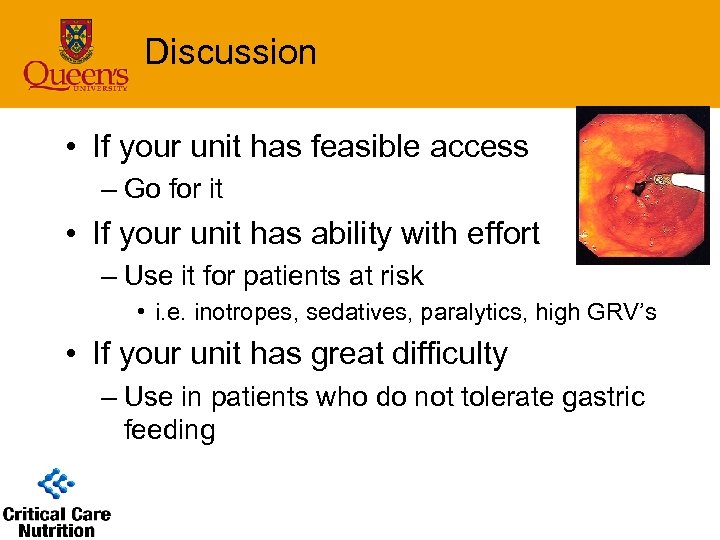 Discussion • If your unit has feasible access – Go for it • If your unit has ability with effort – Use it for patients at risk • i. e. inotropes, sedatives, paralytics, high GRV’s • If your unit has great difficulty – Use in patients who do not tolerate gastric feeding
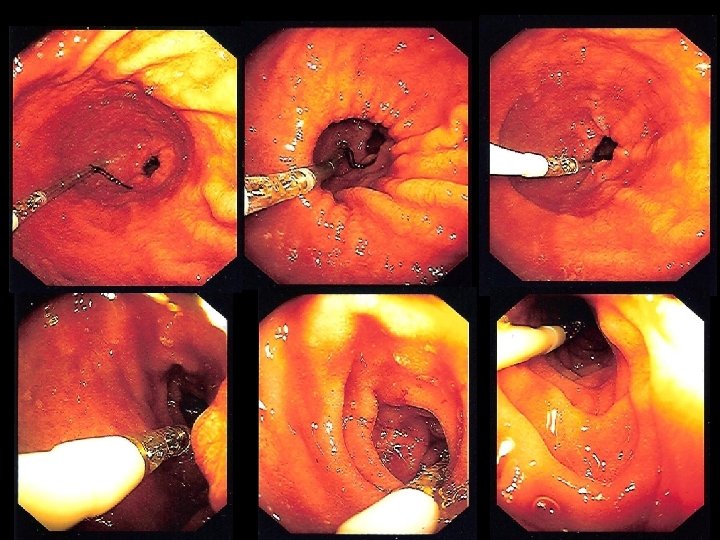
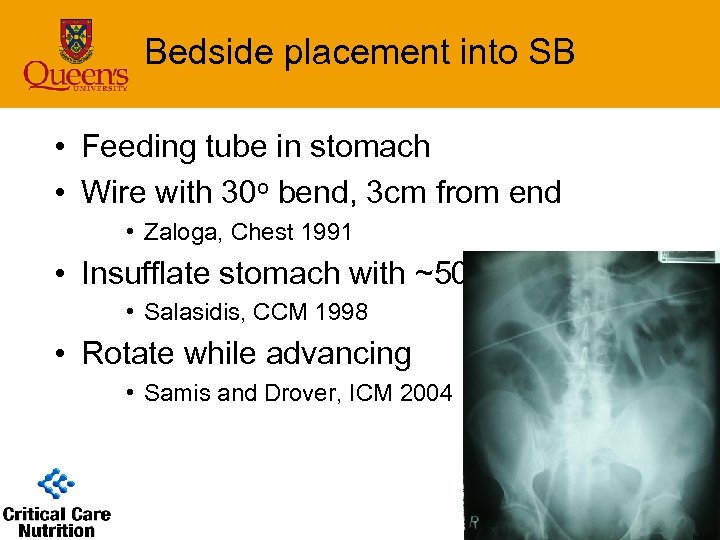 Bedside placement into SB • Feeding tube in stomach • Wire with 30 o bend, 3 cm from end • Zaloga, Chest 1991 • Insufflate stomach with ~500 ml • Salasidis, CCM 1998 • Rotate while advancing • Samis and Drover, ICM 2004
 Thank You! • Choosing an approach to: • MAXIMIZE BENEFIT • Minimize risk