 Скачать презентацию PPQ s Biological and Technical Services BTS Michael J
d3d8a3d994c633cdace7d3924ec6079d.ppt
- Количество слайдов: 45



PPQ’s Biological and Technical Services (BTS) Michael J. Firko, Ph. D. Director, Biological and Technical Services (301) 734 -8760 ASTA/APHIS Meeting 10 November, 2004 ____________________________________ APHIS, PPQ, Plant Health Programs - Biological and Technical Services
Some Early Historical Items Pertinent to PPQ’s Mission Ø 1862 – Creation of USDA Ø Late 1800’s-early 1900’s – Efforts to establish Plant Protection Legislation Ø within USDA and elsewhere Ø 1910 – First shipment of Cherry Trees from Japan ____________________________________ APHIS, PPQ, Plant Health Programs - Biological and Technical Services
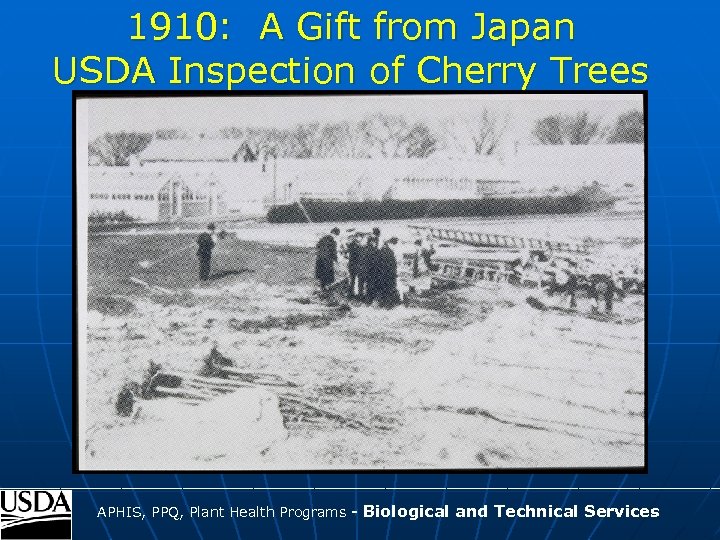
1910: A Gift from Japan USDA Inspection of Cherry Trees ____________________________________ APHIS, PPQ, Plant Health Programs - Biological and Technical Services
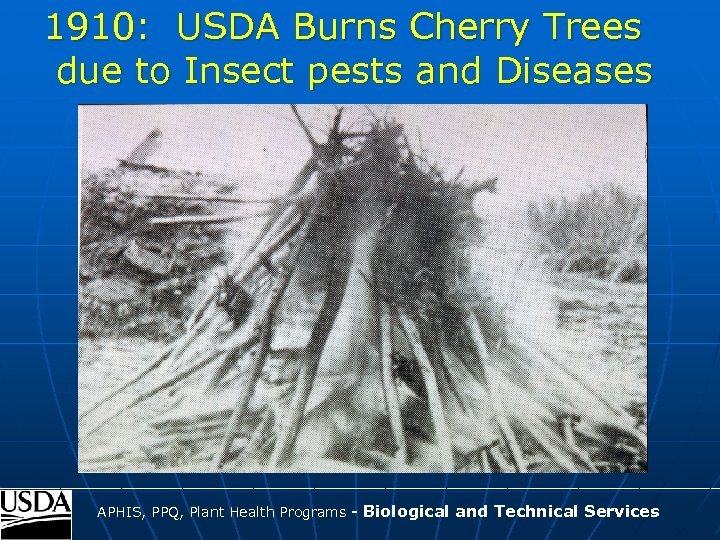
1910: USDA Burns Cherry Trees due to Insect pests and Diseases ____________________________________ APHIS, PPQ, Plant Health Programs - Biological and Technical Services
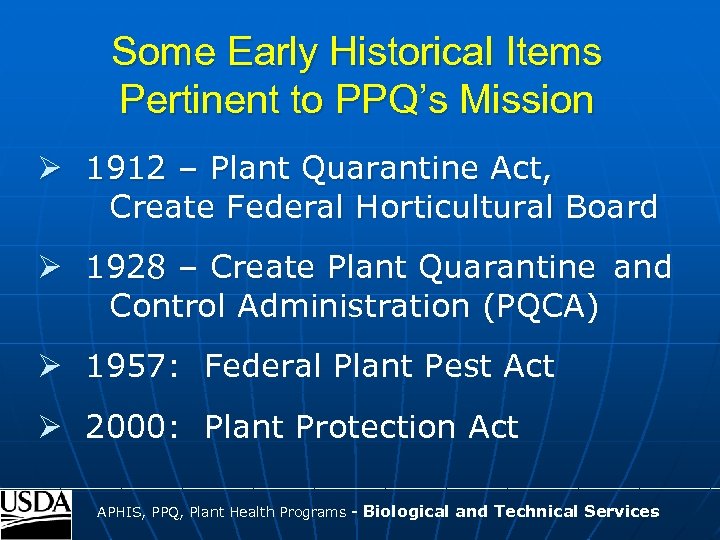
Some Early Historical Items Pertinent to PPQ’s Mission Ø 1912 – Plant Quarantine Act, Create Federal Horticultural Board Ø 1928 – Create Plant Quarantine and Control Administration (PQCA) Ø 1957: Federal Plant Pest Act Ø 2000: Plant Protection Act ____________________________________ APHIS, PPQ, Plant Health Programs - Biological and Technical Services
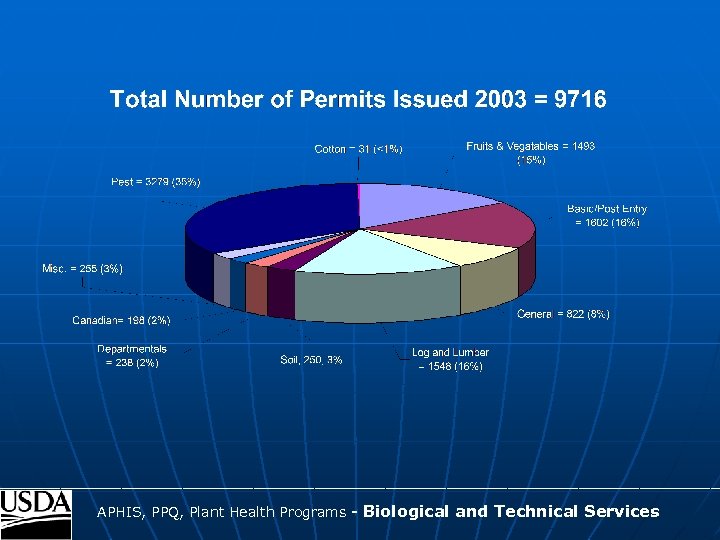
____________________________________ APHIS, PPQ, Plant Health Programs - Biological and Technical Services
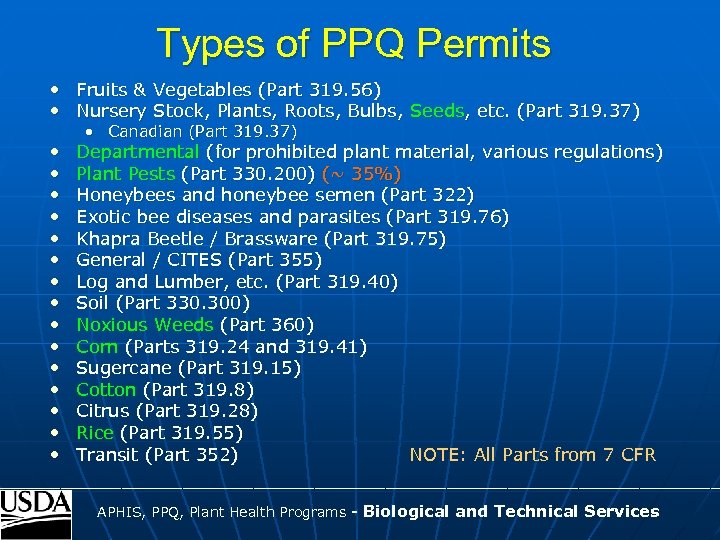
Types of PPQ Permits • Fruits & Vegetables (Part 319. 56) • Nursery Stock, Plants, Roots, Bulbs, Seeds, etc. (Part 319. 37) • • • • Canadian (Part 319. 37) Departmental (for prohibited plant material, various regulations) Plant Pests (Part 330. 200) (~ 35%) Honeybees and honeybee semen (Part 322) Exotic bee diseases and parasites (Part 319. 76) Khapra Beetle / Brassware (Part 319. 75) General / CITES (Part 355) Log and Lumber, etc. (Part 319. 40) Soil (Part 330. 300) Noxious Weeds (Part 360) Corn (Parts 319. 24 and 319. 41) Sugercane (Part 319. 15) Cotton (Part 319. 8) Citrus (Part 319. 28) Rice (Part 319. 55) Transit (Part 352) NOTE: All Parts from 7 CFR ____________________________________ APHIS, PPQ, Plant Health Programs - Biological and Technical Services
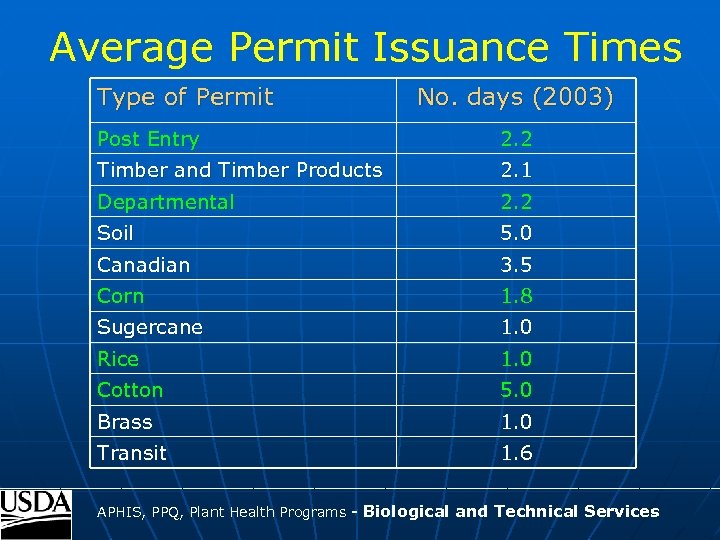
Average Permit Issuance Times Type of Permit No. days (2003) Post Entry 2. 2 Timber and Timber Products 2. 1 Departmental 2. 2 Soil 5. 0 Canadian 3. 5 Corn 1. 8 Sugercane 1. 0 Rice 1. 0 Cotton 5. 0 Brass 1. 0 Transit 1. 6 ____________________________________ APHIS, PPQ, Plant Health Programs - Biological and Technical Services
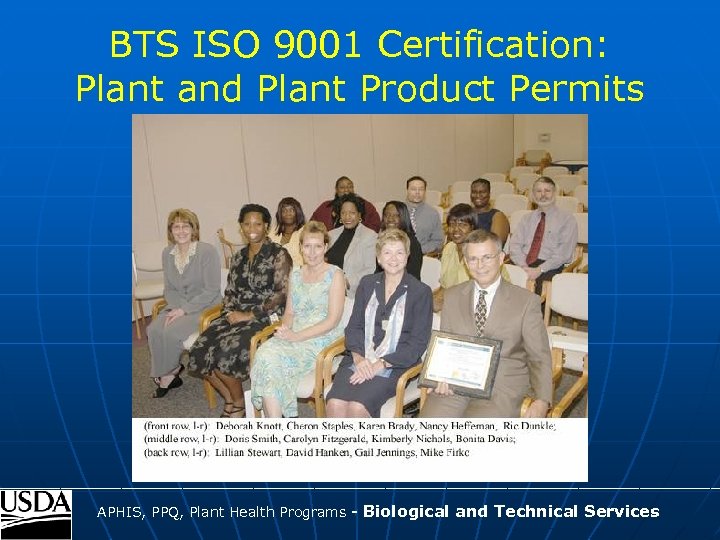
BTS ISO 9001 Certification: Plant and Plant Product Permits ____________________________________ APHIS, PPQ, Plant Health Programs - Biological and Technical Services
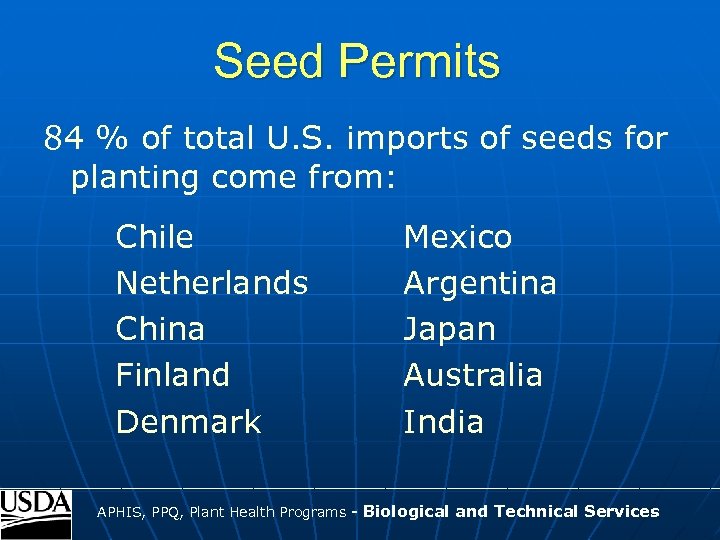
Seed Permits 84 % of total U. S. imports of seeds for planting come from: Chile Netherlands China Finland Denmark Mexico Argentina Japan Australia India ____________________________________ APHIS, PPQ, Plant Health Programs - Biological and Technical Services
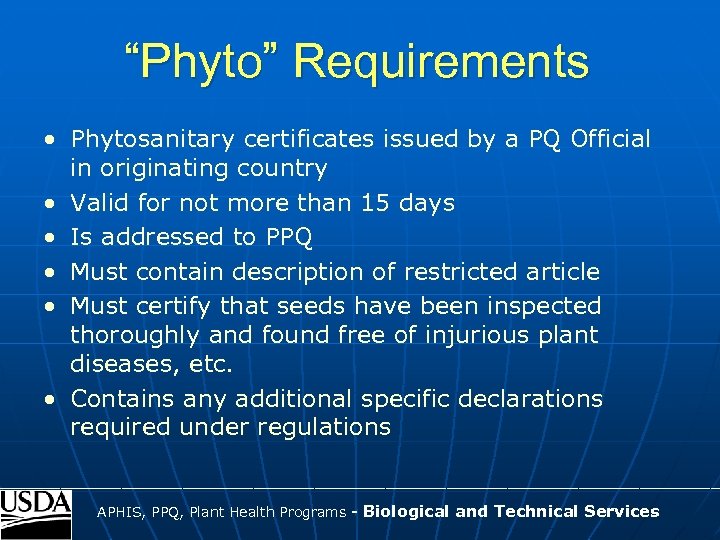
“Phyto” Requirements • Phytosanitary certificates issued by a PQ Official in originating country • Valid for not more than 15 days • Is addressed to PPQ • Must contain description of restricted article • Must certify that seeds have been inspected thoroughly and found free of injurious plant diseases, etc. • Contains any additional specific declarations required under regulations ____________________________________ APHIS, PPQ, Plant Health Programs - Biological and Technical Services
Plant Pest Permits and Select Agent Registration ____________________________________ APHIS, PPQ, Plant Health Programs - Biological and Technical Services
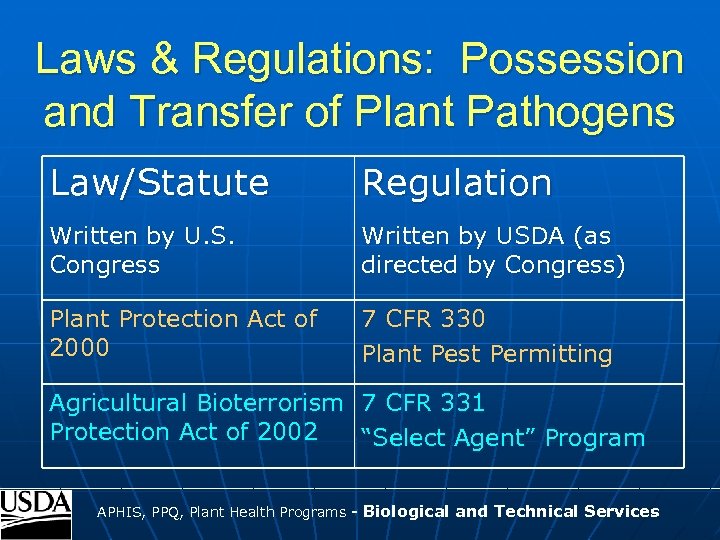
Laws & Regulations: Possession and Transfer of Plant Pathogens Law/Statute Regulation Written by U. S. Congress Written by USDA (as directed by Congress) Plant Protection Act of 2000 7 CFR 330 Plant Pest Permitting Agricultural Bioterrorism 7 CFR 331 Protection Act of 2002 “Select Agent” Program ____________________________________ APHIS, PPQ, Plant Health Programs - Biological and Technical Services
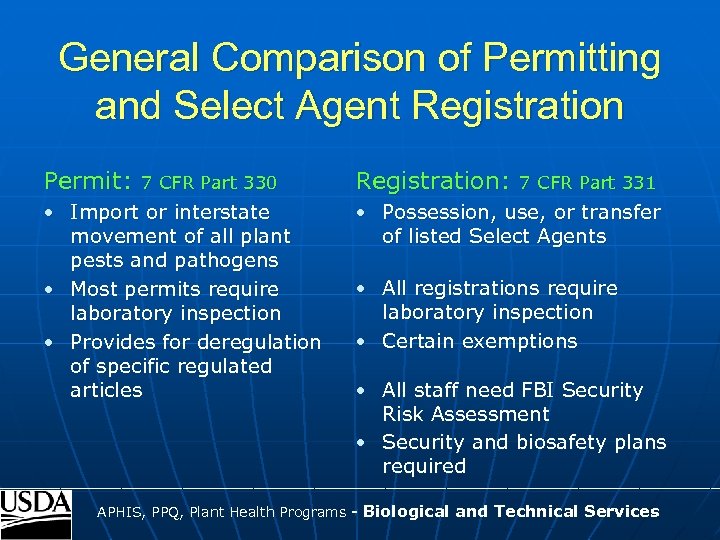
General Comparison of Permitting and Select Agent Registration Permit: 7 CFR Part 330 • Import or interstate movement of all plant pests and pathogens • Most permits require laboratory inspection • Provides for deregulation of specific regulated articles Registration: 7 CFR Part 331 • Possession, use, or transfer of listed Select Agents • All registrations require laboratory inspection • Certain exemptions • All staff need FBI Security Risk Assessment • Security and biosafety plans required ____________________________________ APHIS, PPQ, Plant Health Programs - Biological and Technical Services
Regarding possession, use, and transfer of listed agents: “… 7 CFR 331. 13(a)… incorporate(s) the existing permit requirements under the plant pest regulations in 7 CFR part 330. ” (Preamble to 7 CFR 331, p. 76918) ____________________________________ APHIS, PPQ, Plant Health Programs - Biological and Technical Services
From the U. S. Congress Plant Protection Act, 2000 (language carried over from Plant Pest Act, 1957) “… no person shall import, enter, export, or move in interstate commerce any plant pest, unless the importation, entry, exportation, or movement is authorized under general or specific permit…” ____________________________________ APHIS, PPQ, Plant Health Programs - Biological and Technical Services
Plant Pest Permits Required for: • All import and interstate movement of any plant pest or disease, including… • Plant material and specimens being moved for the purpose of pest or disease diagnosis • Intrastate movement of plant pests if the pest was moved originally into state under permit ____________________________________ APHIS, PPQ, Plant Health Programs - Biological and Technical Services
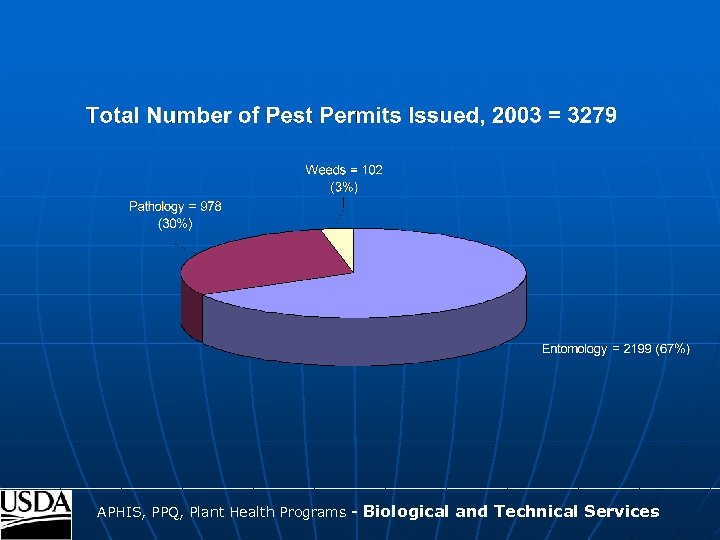
____________________________________ APHIS, PPQ, Plant Health Programs - Biological and Technical Services
Plant Pest Permits: Recent Change Stimuli (in chronological order) PPQ Safeguarding Report • Self-imposed ISO-9000 discipline • 9 -11 terrorist activities • Anthrax letters • ____________________________________ APHIS, PPQ, Plant Health Programs - Biological and Technical Services
Responses to Change Stimuli: Issuance of Plant Pest Permits • Applicant must sign permit conditions • Increased Laboratory Inspections • Essential prohibition on “Hand Carry” for importations NOTE: PPQ is in the process of drafted “new” permitting regulations (7 CFR Part 330) ____________________________________ APHIS, PPQ, Plant Health Programs - Biological and Technical Services
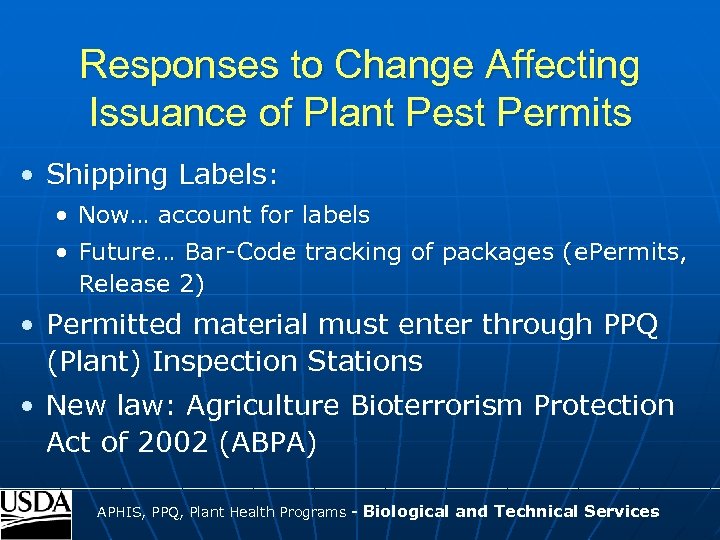
Responses to Change Affecting Issuance of Plant Pest Permits • Shipping Labels: • Now… account for labels • Future… Bar-Code tracking of packages (e. Permits, Release 2) • Permitted material must enter through PPQ (Plant) Inspection Stations • New law: Agriculture Bioterrorism Protection Act of 2002 (ABPA) ____________________________________ APHIS, PPQ, Plant Health Programs - Biological and Technical Services
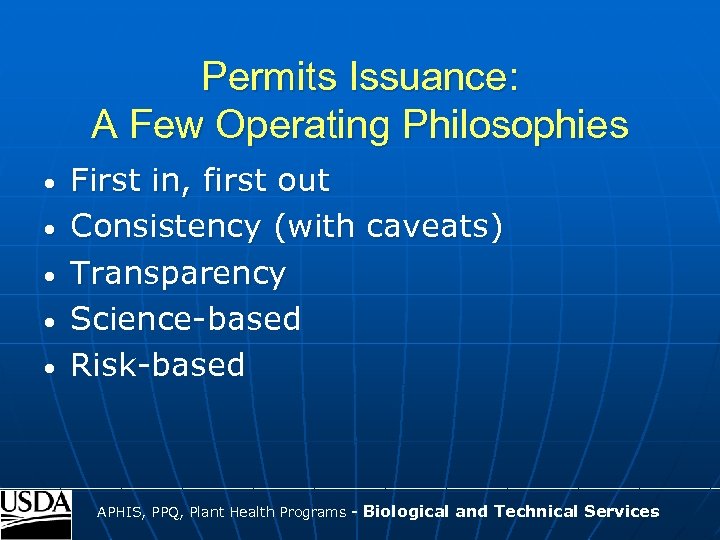
Permits Issuance: A Few Operating Philosophies • • • First in, first out Consistency (with caveats) Transparency Science-based Risk-based ____________________________________ APHIS, PPQ, Plant Health Programs - Biological and Technical Services
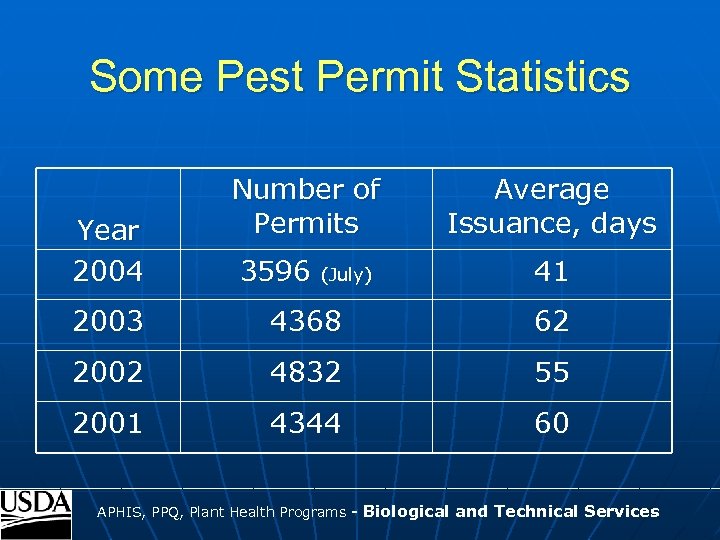
Some Pest Permit Statistics Year 2004 Number of Permits 3596 (July) Average Issuance, days 41 2003 4368 62 2002 4832 55 2001 4344 60 ____________________________________ APHIS, PPQ, Plant Health Programs - Biological and Technical Services
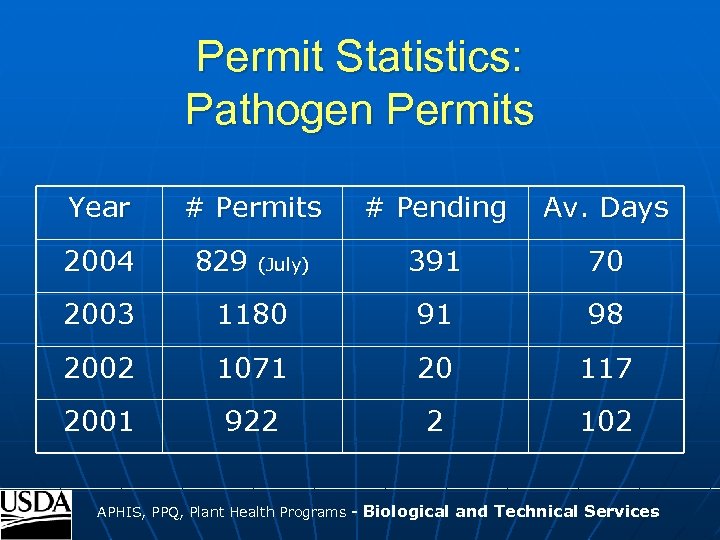
Permit Statistics: Pathogen Permits Year 2004 # Permits 829 (July) # Pending Av. Days 391 70 2003 1180 91 98 2002 1071 20 117 2001 922 2 102 ____________________________________ APHIS, PPQ, Plant Health Programs - Biological and Technical Services
Steps We’re Taking to Improve Efficiency and Response Time • e. Permits (current data base = JPS) • • For the first time – a single APHIS Permit Data Base (PPQ, VS, BRS, other USDA Agencies ? ? ) ISO 9001 • Currently certified: Plant & Plant Products • Currently preparing for audit: • • Plant Pest Permits PPQ’s Select Agent Program NIS’ “Urgent” Process Transit Permits ____________________________________ APHIS, PPQ, Plant Health Programs - Biological and Technical Services
Steps We’re Taking to Improve Efficiency and Response Time • • Permits for Widely Prevalent Plant Pathogens Agreements with APS (American Phytopathological Society) for construction of State-by-state lists of widely prevalent pathogens (WPP, fungi, viruses, bacteria and mycoplasmas) • Creation of New Permitting Process for WPP • • State pre-approval only for interstate movement of domestic isolates not intended for field studies ____________________________________ APHIS, PPQ, Plant Health Programs - Biological and Technical Services
Permit Requirements (in part) • PPQ Form 599 Label on Exterior of All Packages • Package addressed to inspection station identified on 599 label for PPQ Inspection/Clearance • Adequate Packaging to Contain Enclosed Organisms • Valid Permit • Valid delivery address as identified on permit ____________________________________ APHIS, PPQ, Plant Health Programs - Biological and Technical Services
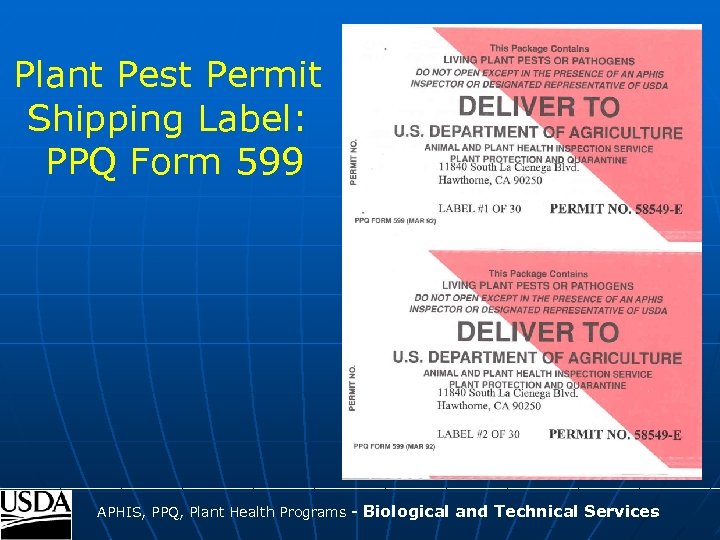
Plant Pest Permit Shipping Label: PPQ Form 599 ____________________________________ APHIS, PPQ, Plant Health Programs - Biological and Technical Services
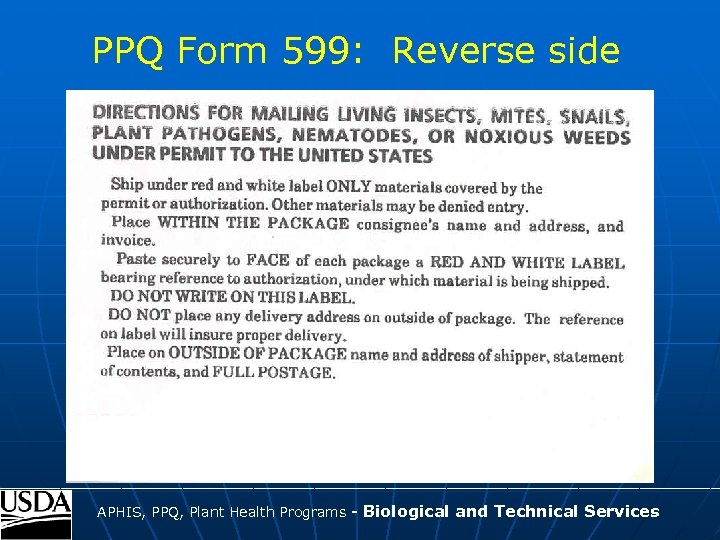
PPQ Form 599: Reverse side ____________________________________ APHIS, PPQ, Plant Health Programs - Biological and Technical Services
Import of Plant Pests: DHS-CBP Role • Administrative Processing Only – Not Inspection • Risks associated with most permits – CBP instructed not to open in unsecured location. • All Permitted Packages Held for USDA Clearance (BEFORE) Customs Clearance • PPQ Inspection Station Routing Critical ____________________________________ APHIS, PPQ, Plant Health Programs - Biological and Technical Services
Import of Plant Pests: Carrier Expectations/Processing n n Fed. Ex does not include permit information on manifest • we would like this info on manifest to facilitate clearance Fed. Ex will not guarantee port of entry • If package not addressed to Inspection Station Fedex must reroute for USDA clearance, then back to port of entry for Customs clearance – costs, delays • Will not guarantee overnight delivery when routed to PPQ Inspection Station – 1 to 2 day delay ____________________________________ APHIS, PPQ, Plant Health Programs - Biological and Technical Services
Additional Challenges • CBP’s Automated Targeting System • CBP targets USDA permitted material • • Fish and Wildlife Service Inspectors Food and Drug Administration Inspectors ____________________________________ APHIS, PPQ, Plant Health Programs - Biological and Technical Services
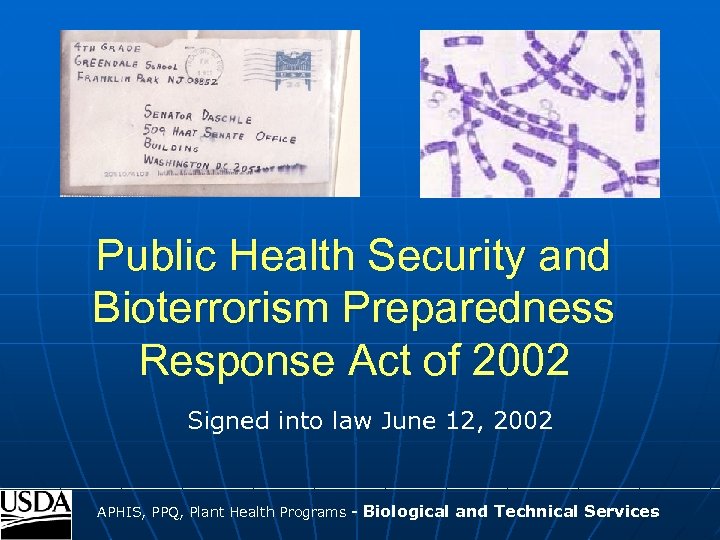
Public Health Security and Bioterrorism Preparedness Response Act of 2002 Signed into law June 12, 2002 ____________________________________ APHIS, PPQ, Plant Health Programs - Biological and Technical Services
The Act Required USDA-APHIS and HHSCDC to Write and Implement New Regulations Within About Two Months Interim Final Rules: Possession, Use and Transfer of Biological Agents and Toxins • 7 CFR Part 331 - Plant Protection & Quarantine • 9 CFR Part 121 - Veterinary Services • 42 CFR Part 73 - Centers for Disease Control and Prevention ____________________________________ APHIS, PPQ, Plant Health Programs - Biological and Technical Services
Public Health Security and Bioterrorism Preparedness Response Act of 2002 Purpose: To improve the ability of the United States to prevent, prepare for, and respond to bioterrorism and other public health emergencies - Title II, Subtitle B cited as… Agricultural Bioterrorism Protection Act of 2002 ____________________________________ APHIS, PPQ, Plant Health Programs - Biological and Technical Services
Mandate to Create a List of Select Agents (from ABPA) “LIST OF BIOLOGICAL AGENTS AND TOXINS. — The Secretary of Agriculture shall by regulation establish and maintain a list of each biological agent and each toxin that the Secretary determines has the potential to pose a severe threat to animal or plant health, or to animal or plant products. ” ____________________________________ APHIS, PPQ, Plant Health Programs - Biological and Technical Services
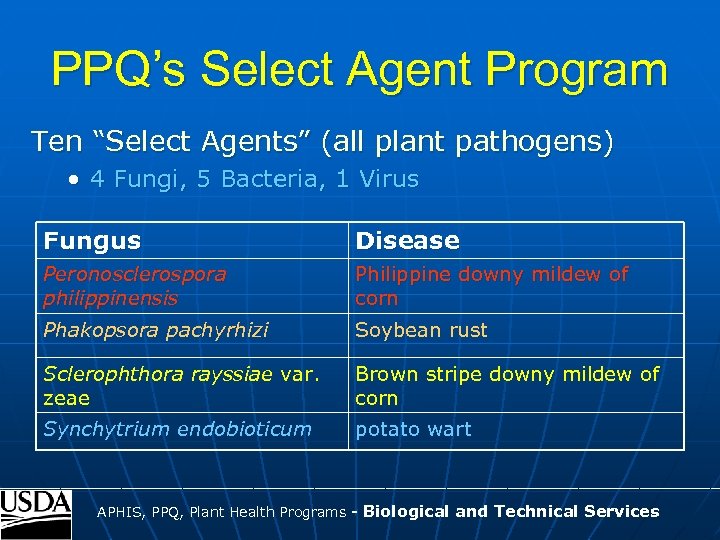
PPQ’s Select Agent Program Ten “Select Agents” (all plant pathogens) • 4 Fungi, 5 Bacteria, 1 Virus Fungus Disease Peronosclerospora philippinensis Philippine downy mildew of corn Phakopsora pachyrhizi Soybean rust Sclerophthora rayssiae var. zeae Brown stripe downy mildew of corn Synchytrium endobioticum potato wart ____________________________________ APHIS, PPQ, Plant Health Programs - Biological and Technical Services
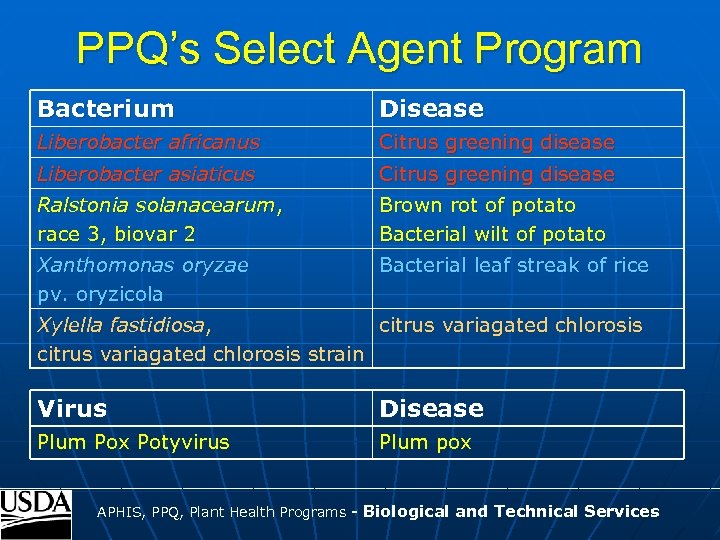
PPQ’s Select Agent Program Bacterium Disease Liberobacter africanus Citrus greening disease Liberobacter asiaticus Citrus greening disease Ralstonia solanacearum, race 3, biovar 2 Brown rot of potato Bacterial wilt of potato Xanthomonas oryzae pv. oryzicola Bacterial leaf streak of rice Xylella fastidiosa, citrus variagated chlorosis strain Virus Disease Plum Pox Potyvirus Plum pox ____________________________________ APHIS, PPQ, Plant Health Programs - Biological and Technical Services
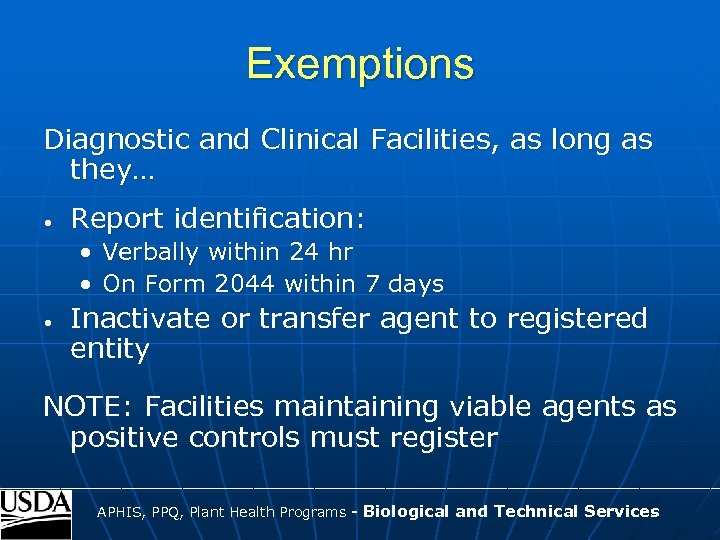
Exemptions Diagnostic and Clinical Facilities, as long as they… • Report identification: • Verbally within 24 hr • On Form 2044 within 7 days • Inactivate or transfer agent to registered entity NOTE: Facilities maintaining viable agents as positive controls must register ____________________________________ APHIS, PPQ, Plant Health Programs - Biological and Technical Services
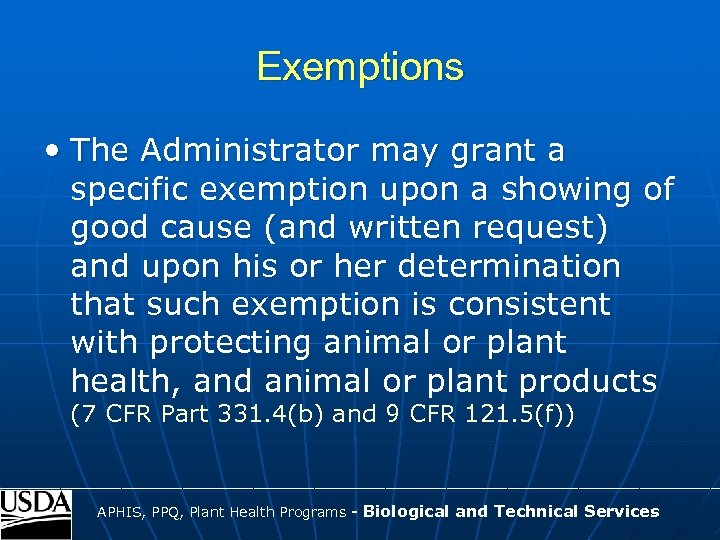
Exemptions • The Administrator may grant a specific exemption upon a showing of good cause (and written request) and upon his or her determination that such exemption is consistent with protecting animal or plant health, and animal or plant products (7 CFR Part 331. 4(b) and 9 CFR 121. 5(f)) ____________________________________ APHIS, PPQ, Plant Health Programs - Biological and Technical Services
Transfers • Both sender and receiver must be registered or exempt • Transfer must be submitted and approved prior to transfer • Applies to both Intra- and Interstate Transfer, and Import • At this point, no regulatory requirements regarding export (under OGC review) ____________________________________ APHIS, PPQ, Plant Health Programs - Biological and Technical Services
Civil & Criminal Penalties v v v Violation of any provisions of the regulations: up to $250, 000 (civil or criminal) for an individual and up to $500, 000 (criminal) for any other person (i. e. , an entity) Transfer of an agent or toxin listed in 7 CFR 331, 9 CFR 121, and/or 42 CFR 73 to an unregistered person: civil money penalty listed above and/or imprisonment for up to 5 years (10 yrs if criminal) Unregistered persons possessing an agent or toxin listed in 7 CFR 331, 9 CFR 121, and/or 42 CFR 73: civil money penalty listed above and/or imprisonment for up to 5 years (10 yrs if criminal) ____________________________________ APHIS, PPQ, Plant Health Programs - Biological and Technical Services
New USDA-APHIS Forms • APHIS Form 2040: Application for Laboratory Registration • APHIS Form 2041: Report of Transfer • APHIS Form 2042: Request for Exemption • APHIS Form 2043: Report of Theft, loss, or Release • APHIS Form 2044: Report of Identification ____________________________________ APHIS, PPQ, Plant Health Programs - Biological and Technical Services
Web Information www. aphis. usda. gov/ppq/permits Contact Information Biological and Technical Services, PPQ, APHIS 4700 River Road Unit 133 Riverdale, MD 20737 -1236 Phone (301) 734 -5519 Fax (301) 734 -8700 ____________________________________ APHIS, PPQ, Plant Health Programs - Biological and Technical Services
____________________________________ APHIS, PPQ, Plant Health Programs - Biological and Technical Services
Скачать презентацию PPQ s Biological and Technical Services BTS Michael J
d3d8a3d994c633cdace7d3924ec6079d.ppt