


 Скачать презентацию PPP AMERICAS EVENT The management context of the
b27bdec89b298a28de75297bf2b62cca.ppt
- Количество слайдов: 11
 PPP AMERICAS EVENT The management context of the protected areas in Brazil and the partnership with the private sector. Uruguai, 13 to 15, april 2015 Ministério do Meio Ambiente
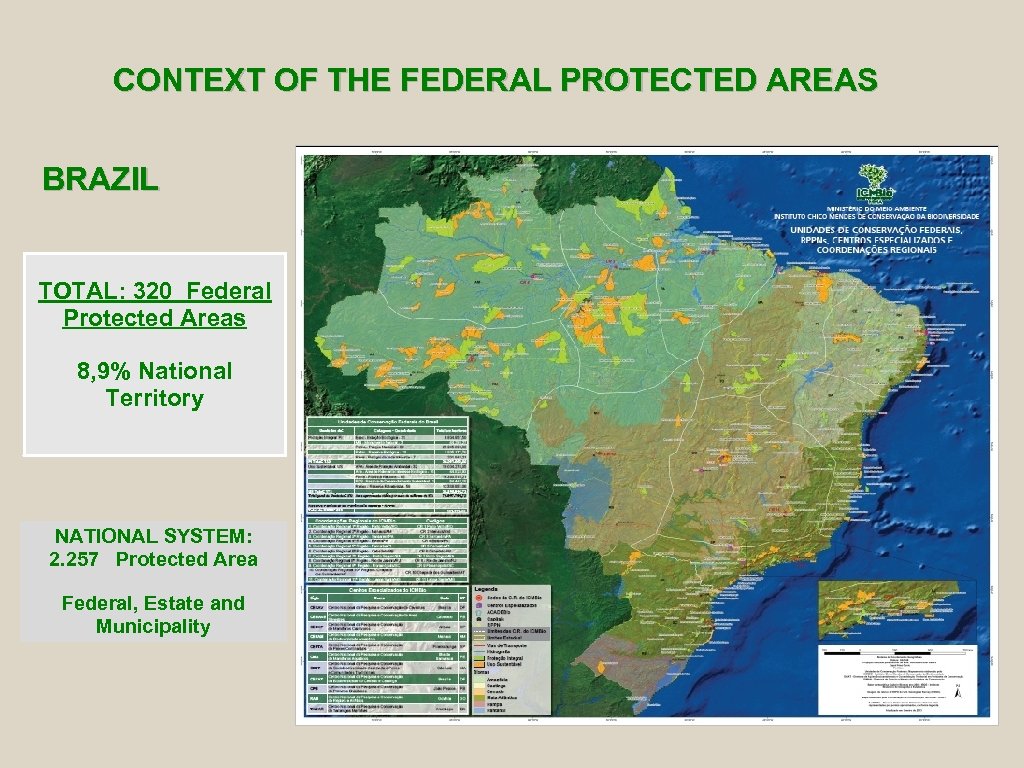 CONTEXT OF THE FEDERAL PROTECTED AREAS BRAZIL TOTAL: 320 Federal Protected Areas 8, 9% National Territory NATIONAL SYSTEM: 2. 257 Protected Area Federal, Estate and Municipality
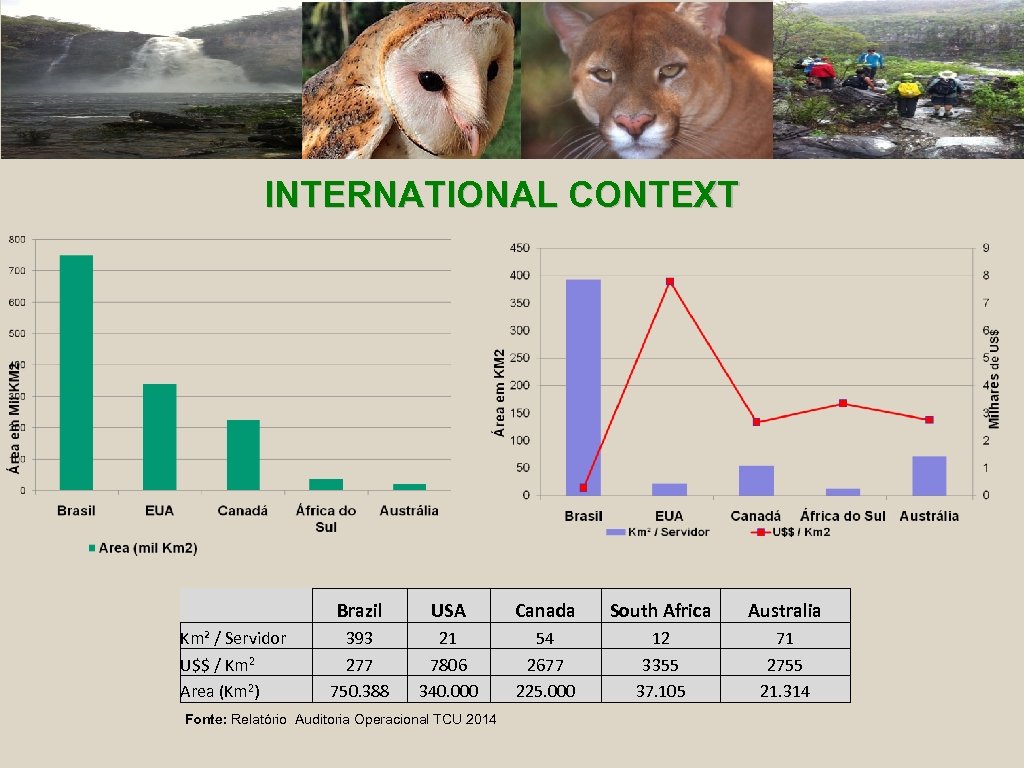 INTERNATIONAL CONTEXT Km² / Servidor U$$ / Km 2 Area (Km 2) Brazil USA Canada South Africa Australia 393 277 750. 388 21 7806 340. 000 54 2677 225. 000 12 3355 37. 105 71 2755 21. 314 Fonte: Relatório Auditoria Operacional TCU 2014
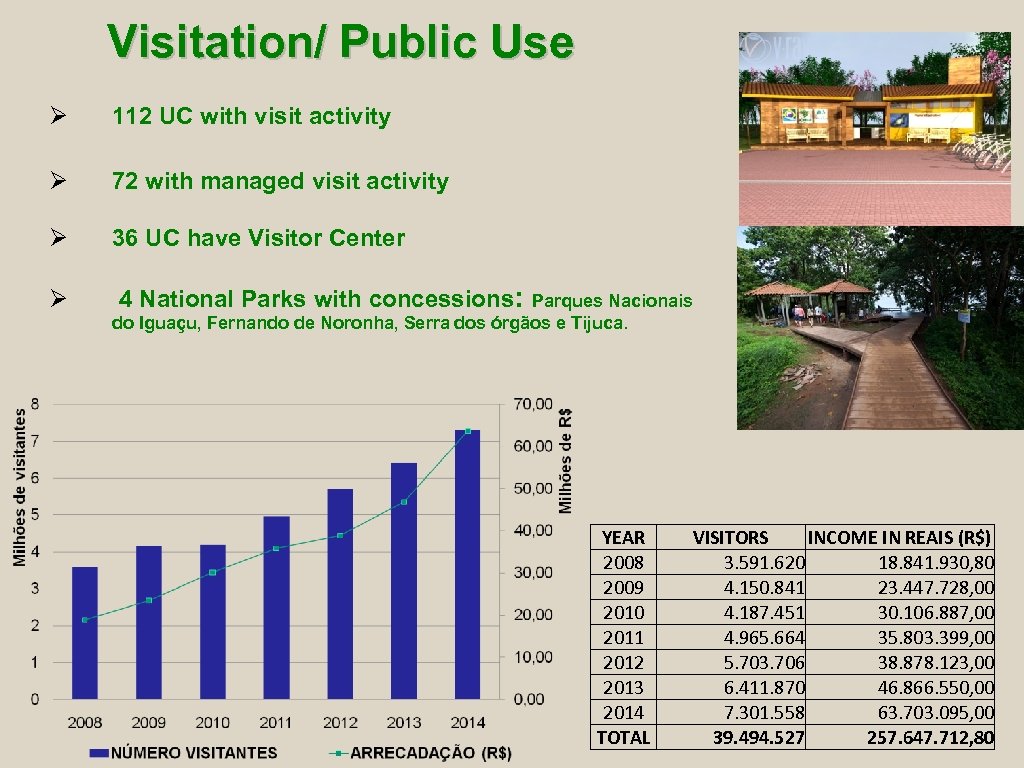 Visitation/ Public Use 112 UC with visit activity 72 with managed visit activity 36 UC have Visitor Center 4 National Parks with concessions: Parques Nacionais do Iguaçu, Fernando de Noronha, Serra dos órgãos e Tijuca. YEAR 2008 2009 2010 2011 2012 2013 2014 TOTAL VISITORS INCOME IN REAIS (R$) 3. 591. 620 18. 841. 930, 80 4. 150. 841 23. 447. 728, 00 4. 187. 451 30. 106. 887, 00 4. 965. 664 35. 803. 399, 00 5. 703. 706 38. 878. 123, 00 6. 411. 870 46. 866. 550, 00 7. 301. 558 63. 703. 095, 00 39. 494. 527 257. 647. 712, 80
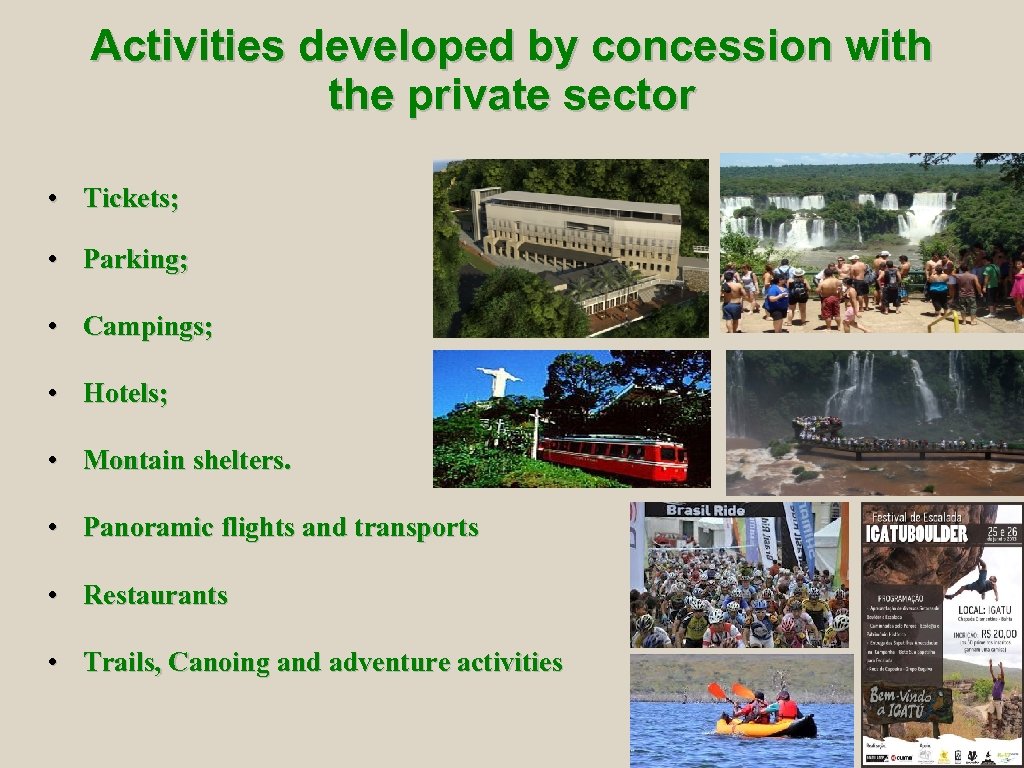 Activities developed by concession with the private sector • Tickets; • Parking; • Campings; • Hotels; • Montain shelters. • Panoramic flights and transports • Restaurants • Trails, Canoing and adventure activities
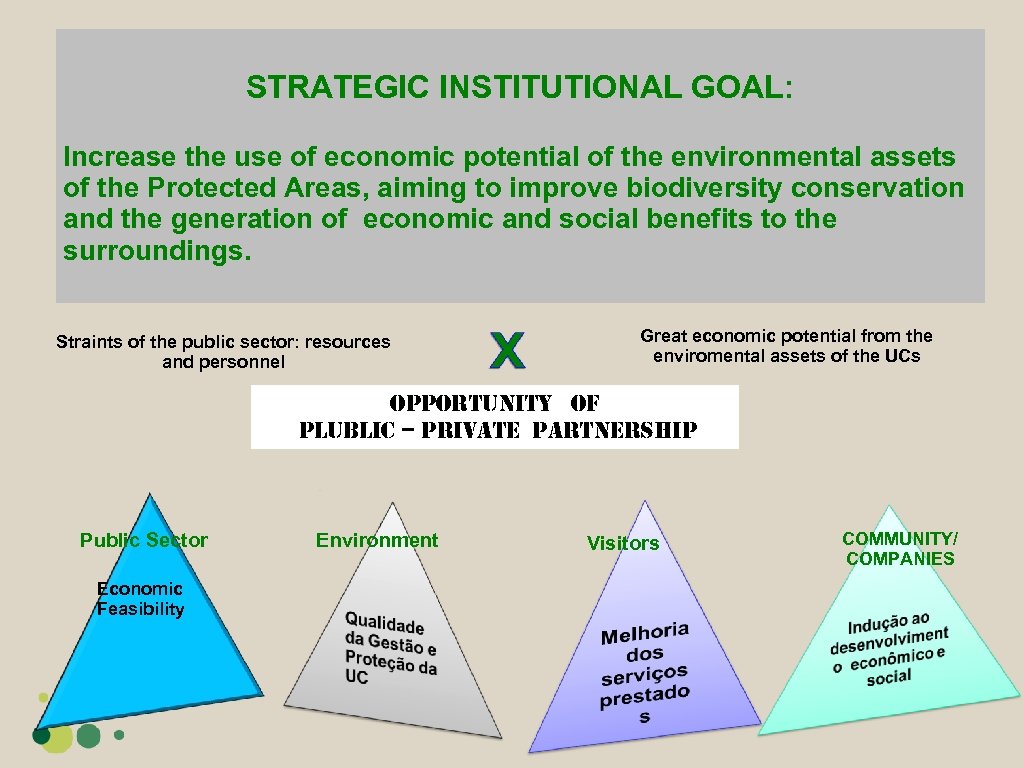 STRATEGIC INSTITUTIONAL GOAL: Increase the use of economic potential of the environmental assets of the Protected Areas, aiming to improve biodiversity conservation and the generation of economic and social benefits to the surroundings. Straints of the public sector: resources and personnel Great economic potential from the enviromental assets of the UCs Opp. Ort. Unit. Y OF pl. Ublic – private partnership Public Sector Economic Feasibility Environment Visitors COMMUNITY/ COMPANIES
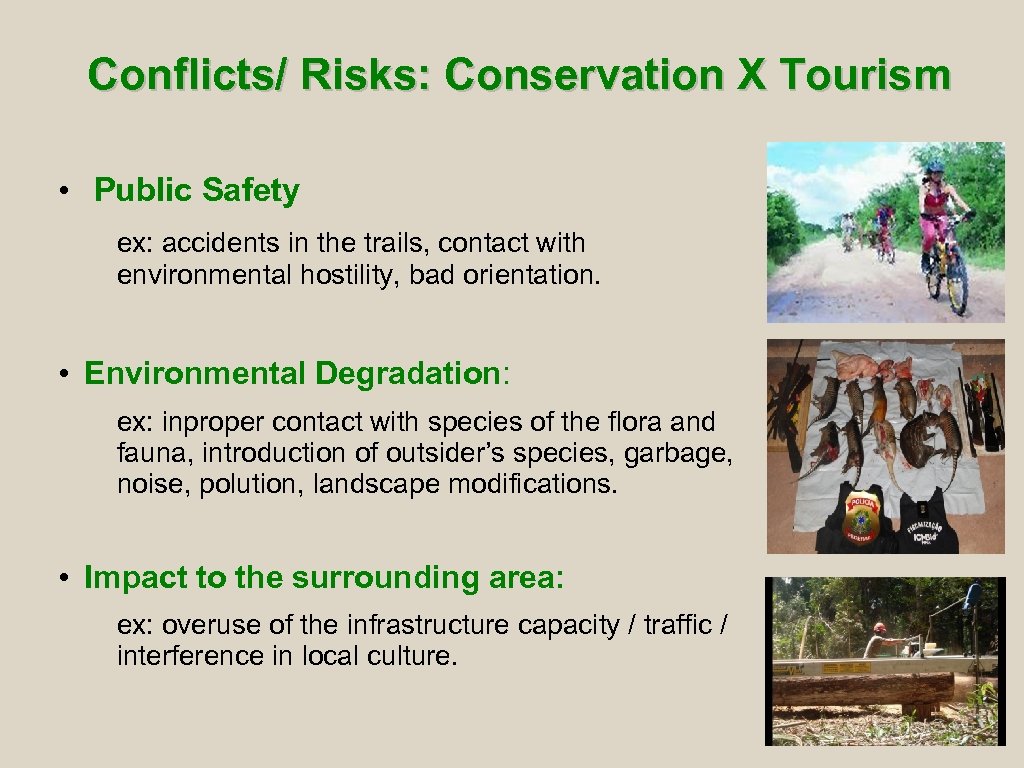 Conflicts/ Risks: Conservation X Tourism • Public Safety ex: accidents in the trails, contact with environmental hostility, bad orientation. • Environmental Degradation: ex: inproper contact with species of the flora and fauna, introduction of outsider’s species, garbage, noise, polution, landscape modifications. • Impact to the surrounding area: ex: overuse of the infrastructure capacity / traffic / interference in local culture.
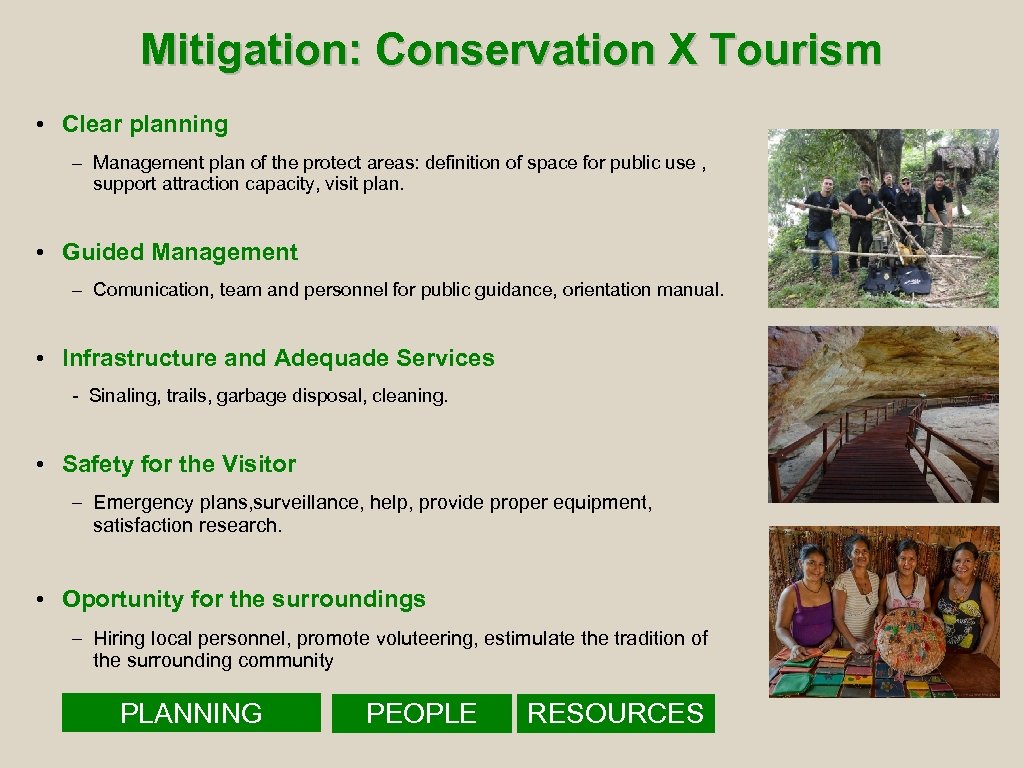 Mitigation: Conservation X Tourism • Clear planning – Management plan of the protect areas: definition of space for public use , support attraction capacity, visit plan. • Guided Management – Comunication, team and personnel for public guidance, orientation manual. • Infrastructure and Adequade Services - Sinaling, trails, garbage disposal, cleaning. • Safety for the Visitor – Emergency plans, surveillance, help, provide proper equipment, satisfaction research. • Oportunity for the surroundings – Hiring local personnel, promote voluteering, estimulate the tradition of the surrounding community PLANNING PEOPLE RESOURCES
 Consolidation of the Public-Private arrangements The Main Problems / Challenges • Overcome the reactive culture of “privatization”. • Market consolidation: safety and attractiveness for investments. • Establishment of a National Policy of Partnerships for the management of the Protect Areas: regulation tools / procedures / responsibilities / competence boudaries. • Qualify the public managers: team qualified as Regulater and Surveil roles. • Innovative strategies of the partnerships: hability to deal with the adversities of the scenario of the protected areas. • Availability of the income received with partnerships to invest in managment improvement of the protect áreas (actually these funds are not fully available, due to treasury restrictions)
 Risks and mitigating actions associated with the private sector involvement /service delivery Unclear rules on the contract: management difficulties and conflict on the execution of partnership contracts: • Transparency, plenty publicity and previous public audiences, accountability: . • Legal assurance. Interest conflict: between public, private, surrounding community and visitors: • Clear responsibility of the parts involved • Appropriate strategies to share activities and responsibilities • Involvement of the surrounding community in all stages of the process Fragilities in management: contract’s surveillance and monitoring • Qualified personnel for the contract’s management and monitoring Economic disbalance of the business: • Technical security of the feasibility studies • Periodic reevaluation of the economic balance of the contract
 THANK YOU! E-mail assessoria. diplan@icmbio. gov. br 55 61 2028 -9579