 Скачать презентацию Power Point presentation accompanying the paper The Library
128b946db336c55f70f5a1394e62f9aa.ppt
- Количество слайдов: 33



Power. Point presentation accompanying the paper: The Library of the Dead Sea Scroll Qumran Community Scriptorium: Politics, Theology, and Halakhah of the DSS Essene sect compared with Normative Rabbinic Halakhah, Customs, and Tradition, by David Levy presented at the 43 rd Annual Convention of the Association of Jewish Libraries, Cleveland, OH, June 24, 2008 1
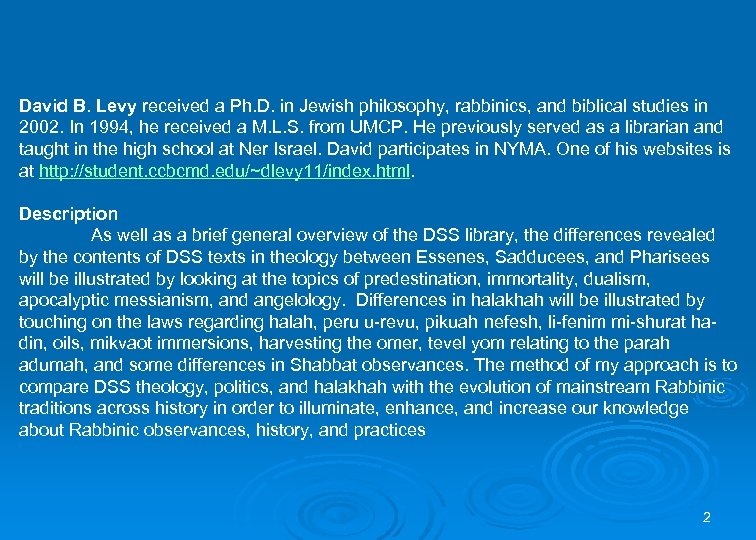
David B. Levy received a Ph. D. in Jewish philosophy, rabbinics, and biblical studies in 2002. In 1994, he received a M. L. S. from UMCP. He previously served as a librarian and taught in the high school at Ner Israel. David participates in NYMA. One of his websites is at http: //student. ccbcmd. edu/~dlevy 11/index. html. Description As well as a brief general overview of the DSS library, the differences revealed by the contents of DSS texts in theology between Essenes, Sadducees, and Pharisees will be illustrated by looking at the topics of predestination, immortality, dualism, apocalyptic messianism, and angelology. Differences in halakhah will be illustrated by touching on the laws regarding halah, peru u-revu, pikuah nefesh, li-fenim mi-shurat hadin, oils, mikvaot immersions, harvesting the omer, tevel yom relating to the parah adumah, and some differences in Shabbat observances. The method of my approach is to compare DSS theology, politics, and halakhah with the evolution of mainstream Rabbinic traditions across history in order to illuminate, enhance, and increase our knowledge about Rabbinic observances, history, and practices 2
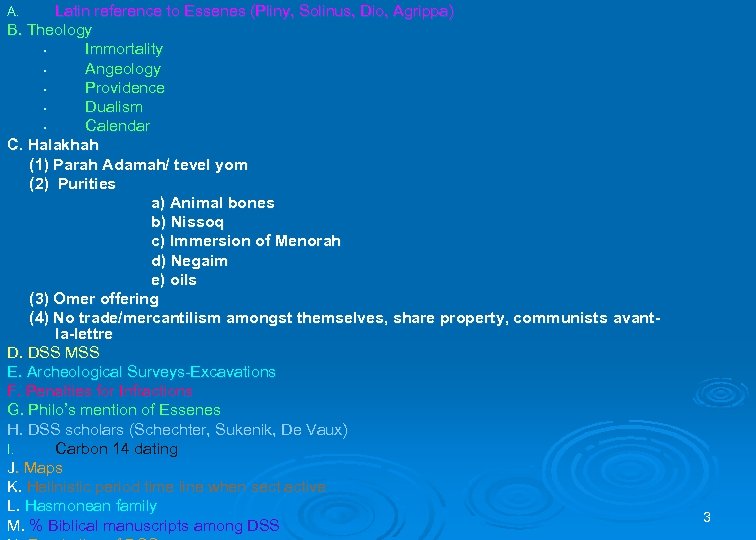
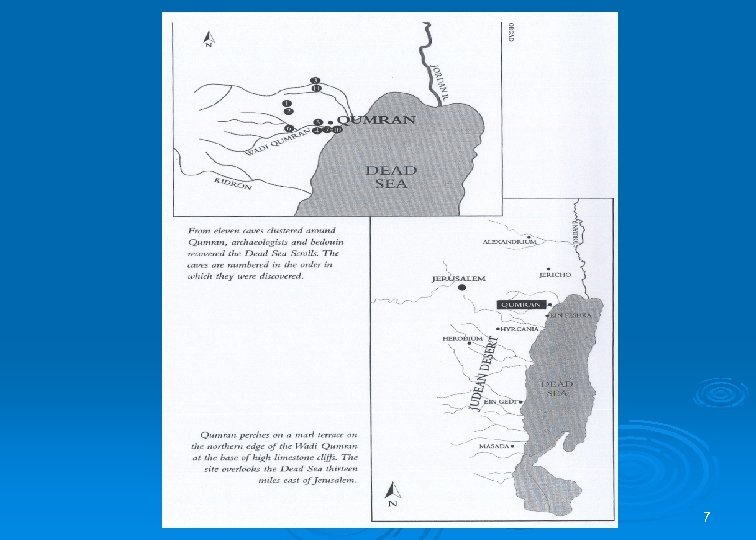
Latin reference to Essenes (Pliny, Solinus, Dio, Agrippa) B. Theology • Immortality • Angeology • Providence • Dualism • Calendar C. Halakhah (1) Parah Adamah/ tevel yom (2) Purities a) Animal bones b) Nissoq c) Immersion of Menorah d) Negaim e) oils (3) Omer offering (4) No trade/mercantilism amongst themselves, share property, communists avantla-lettre D. DSS MSS E. Archeological Surveys-Excavations F. Penalties for Infractions G. Philo’s mention of Essenes H. DSS scholars (Schechter, Sukenik, De Vaux) I. Carbon 14 dating J. Maps K. Hellnistic period time line when sect active L. Hasmonean family M. % Biblical manuscripts among DSS A. 3
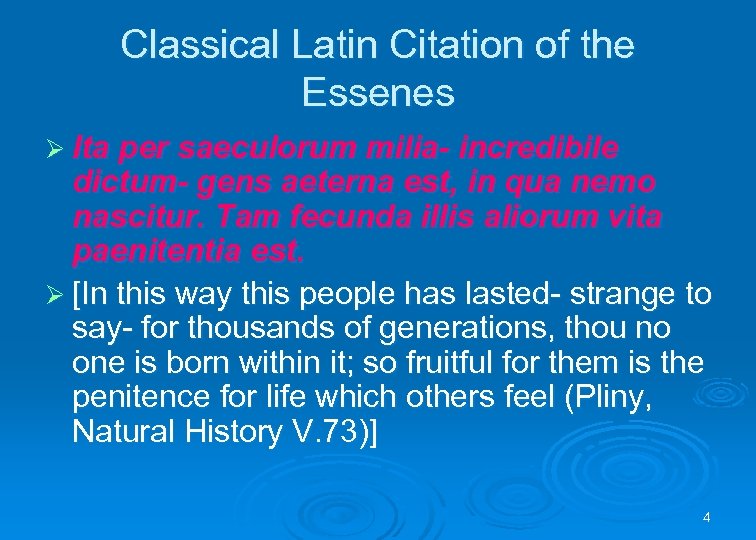
Classical Latin Citation of the Essenes Ø Ita per saeculorum milia- incredibile dictum- gens aeterna est, in qua nemo nascitur. Tam fecunda illis aliorum vita paenitentia est. Ø [In this way this people has lasted- strange to say- for thousands of generations, thou no one is born within it; so fruitful for them is the penitence for life which others feel (Pliny, Natural History V. 73)] 4
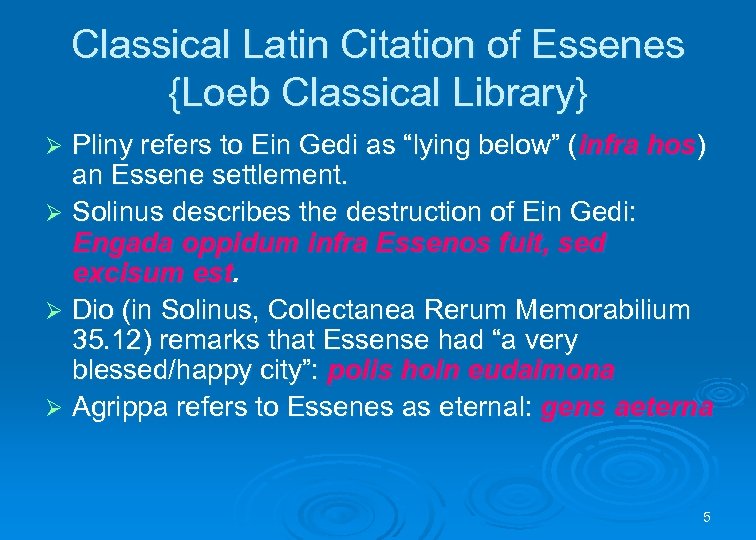
Classical Latin Citation of Essenes {Loeb Classical Library} Pliny refers to Ein Gedi as “lying below” (infra hos) an Essene settlement. Ø Solinus describes the destruction of Ein Gedi: Engada oppidum infra Essenos fuit, sed excisum est. Ø Dio (in Solinus, Collectanea Rerum Memorabilium 35. 12) remarks that Essense had “a very blessed/happy city”: polis holn eudaimona Ø Agrippa refers to Essenes as eternal: gens aeterna Ø 5
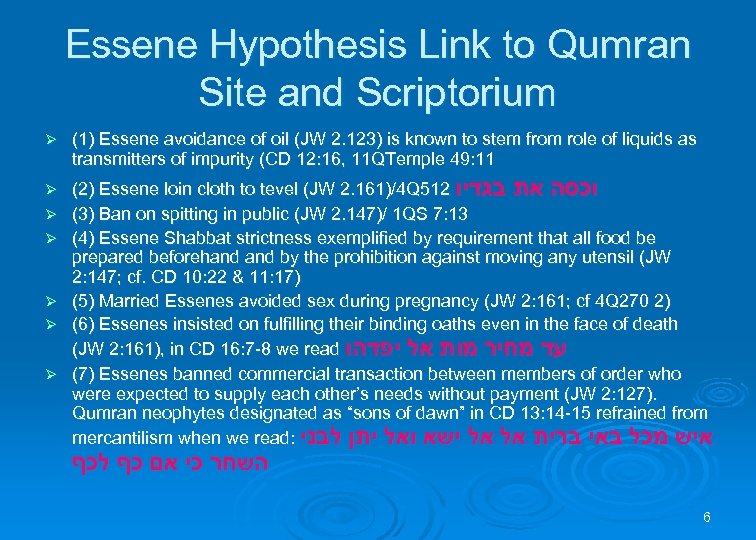
Essene Hypothesis Link to Qumran Site and Scriptorium Ø Ø Ø Ø (1) Essene avoidance of oil (JW 2. 123) is known to stem from role of liquids as transmitters of impurity (CD 12: 16, 11 QTemple 49: 11 (2) Essene loin cloth to tevel (JW 2. 161)/4 Q 512 וכסה את בגדיו (3) Ban on spitting in public (JW 2. 147)/ 1 QS 7: 13 (4) Essene Shabbat strictness exemplified by requirement that all food be prepared beforehand by the prohibition against moving any utensil (JW 2: 147; cf. CD 10: 22 & 11: 17) (5) Married Essenes avoided sex during pregnancy (JW 2: 161; cf 4 Q 270 2) (6) Essenes insisted on fulfilling their binding oaths even in the face of death (JW 2: 161), in CD 16: 7 -8 we read עד מחיר מות אל יפדהו (7) Essenes banned commercial transaction between members of order who were expected to supply each other’s needs without payment (JW 2: 127). Qumran neophytes designated as “sons of dawn” in CD 13: 14 -15 refrained from mercantilism when we read: איש מכל באי ברית אל אל ישא ואל יתן לבני השחר כי אם כף לכף 6
7
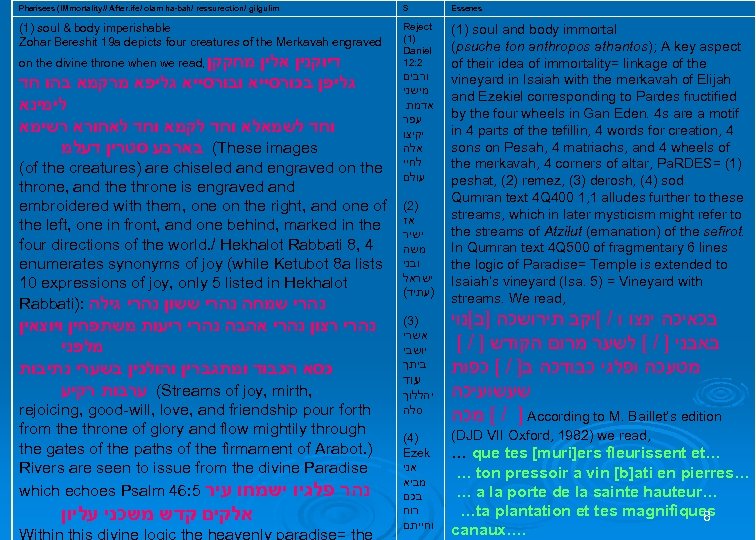
Pharisees (IMmortality// After. ife/ olam ha-bah/ ressurection/ gilgulim S Essenes (1) soul & body imperishable Zohar Bereshit 19 a depicts four creatures of the Merkavah engraved Reject (1) Daniel 12: 2 (1) soul and body immortal (psuche ton anthropos athantos); A key aspect of their idea of immortality= linkage of the vineyard in Isaiah with the merkavah of Elijah and Ezekiel corresponding to Pardes fructified by the four wheels in Gan Eden. 4 s are a motif in 4 parts of the tefillin, 4 words for creation, 4 sons on Pesah, 4 matriachs, and 4 wheels of the merkavah, 4 corners of altar, Pa. RDES= (1) peshat, (2) remez, (3) derosh, (4) sod Qumran text 4 Q 400 1, 1 alludes further to these streams, which in later mysticism might refer to the streams of Atzilut (emanation) of the sefirot. In Qumran text 4 Q 500 of fragmentary 6 lines the logic of Paradise= Temple is extended to Isaiah’s vineyard (Isa. 5) = Vineyard with streams. We read, on the divine throne when we read, מחקקן דיוקנין אלין גליפן בכורסייא ובורסייא גליפא מרקמא בהו חד לימינא וחד לשמאלא וחד לקמא וחד לאחורא רשימא ( בארבע סטרין דעלמ These images (of the creatures) are chiseled and engraved on the throne, and the throne is engraved and embroidered with them, one on the right, and one of the left, one in front, and one behind, marked in the four directions of the world. / Hekhalot Rabbati 8, 4 enumerates synonyms of joy (while Ketubot 8 a lists 10 expressions of joy, only 5 listed in Hekhalot Rabbati): נהרי שמחה נהרי ששון נהרי גילה נהרי רצון נהרי אהבה נהרי ריעות משתפחין ויוצאין מלפני כסא הכבוד ומתגברין והולכין בשערי נתיבות ( ערבות רקיע Streams of joy, mirth, rejoicing, good-will, love, and friendship pour forth from the throne of glory and flow mightily through the gates of the paths of the firmament of Arabot. ) Rivers are seen to issue from the divine Paradise which echoes Psalm 46: 5 נהר פלגיו ישמחו עיר אלקים קדש משכני עליון Within this divine logic the heavenly paradise= the ורבים מישני אדמת עפר יקיצו אלה לחיי עולם (2) אז ישיר משה ובני ישראל ( )עתיד (3) אשרי יושבי ביתך עוד יהללוך סלה (4) Ezek אני מביא בכם רוח וחייתם בכאיכה ינצו ו / [יקב תירושכה ]ב[נוי [ / ] באבני ] / [ לשער מרום הקודש מטעכה ופלגי כבודכה ב] / [ כפות שעשועיכה ] / [ מכה According to M. Baillet’s edition (DJD VII Oxford, 1982) we read, … que tes [muri]ers fleurissent et… … ton pressoir a vin [b]ati en pierres… … a la porte de la sainte hauteur… …ta plantation et tes magnifiques 8 canaux….
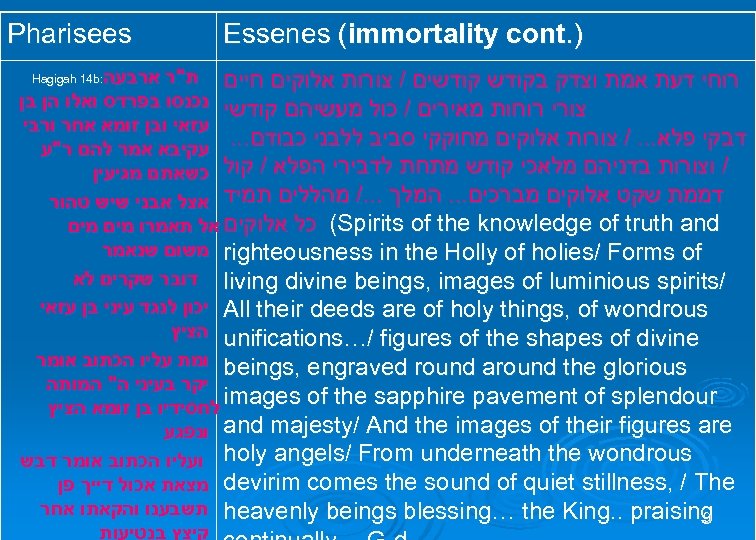
Pharisees Essenes (immortality cont. ) רוחי דעת אמת וצדק בקודשים / צורות אלוקים חיים ת"ר ארבעה צורי רוחות מאירים / כול מעשיהם קודשי נכנסו בפרדס ואלו הן בן עזאי ובן זומא אחר ורבי . . . דבקי פלא. . . / צורות אלוקים מחוקקי סביב ללבני כבודם עקיבא אמר להם ר"ע / וצורות בדניהם מלאכי קודש מתחת לדבירי הפלא / קול כשאתם מגיעין דממת שקט אלוקים מברכים. . . המלך. . . / מהללים תמיד אצל אבני שיש טהור ( כל אלוקים אל תאמרו מים Spirits of the knowledge of truth and משום שנאמר righteousness in the Holly of holies/ Forms of דובר שקרים לא living divine beings, images of luminious spirits/ יכון לנגד עיני בן עזאי All their deeds are of holy things, of wondrous הציץ unifications…/ figures of the shapes of divine ומת עליו הכתוב אומר beings, engraved round around the glorious יקר בעיני ה" המותה images of the sapphire pavement of splendour לחסידיו בן זומא הציץ ונפגע and majesty/ And the images of their figures are ועליו הכתוב אומר דבש holy angels/ From underneath the wondrous מצאת אכול דייך פן devirim comes the sound of quiet stillness, / The תשבענו והקאתו אחר heavenly beings blessing… the King. . praising 9 קיצץ בנטיעות Hagigah 14 b:
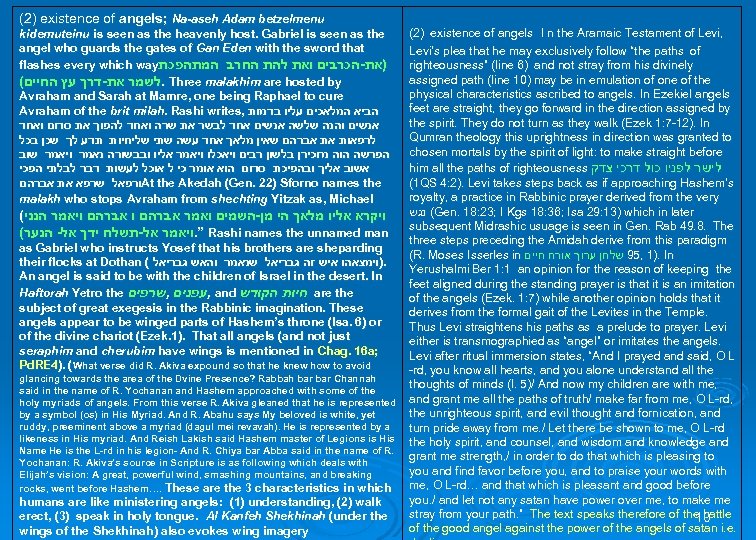
(2) existence of angels; Na-aseh Adam betzelmenu Na-aseh kidemuteinu is seen as the heavenly host. Gabriel is seen as the angel who guards the gates of Gan Eden with the sword that flashes every which way )את-הכרבים ואת להת החרב המתהפכת ( . לשמר את-דרך עץ החיים Three malakhim are hosted by Avraham and Sarah at Mamre, one being Raphael to cure Mamre, Avraham of the brit milah. Rashi writes, הביא המלאכים עליו בדמות milah. אנשים והנה שלשה אנשים אחד לבשר את שרה ואחד להפוך את סדום ואחד לרפאות את אברהם שאין מלאך אחד עשה שתי שליחיות תדע לך שכן בכל הפרשה הוה מזכירן בלשון רבים ויאכלו ויאמר אליו ובבשורה נאמר ויאמר שוב אשוב אליך ובהפיכת סדום הוא אומר כי ל אוכל לעשות דבר לבלתי הפכי ורפאל שרפא את אברהם At the Akedah (Gen. 22) Sforno names the ורפאל At malakh who stops Avraham from shechting Yitzak as, Michael ( ויקרא אליו מלאך הי מן-השמים ואמר אברהם ויאמר הנני ( ”. ויאמר אל-תשלח ידך אל- הנער Rashi names the unnamed man as Gabriel who instructs Yosef that his brothers are sheparding their flocks at Dothan ( . )וימצאהו איש זה גבריאל שנאמר והאש גבריאל . )וימצאהו An angel is said to be with the children of Israel in the desert. In Haftorah Yetro the , עפנים , שרפים and חיות הקודש are the subject of great exegesis in the Rabbinic imagination. These angels appear to be winged parts of Hashem’s throne (Isa. 6) or (Isa. of the divine chariot (Ezek. 1). That all angels (and not just seraphim and cherubim have wings is mentioned in Chag. 16 a; Chag. Pd. RE 4). (What verse did R. Akiva expound so that he knew how to avoid Pd. RE 4). glancing towards the area of the Dvine Presence? Rabbah bar Channah said in the name of R. Yochanan and Hashem approached with some of the holy myriads of angels. From this verse R. Akiva gleaned that he is represented by a symbol (os) in His Myriad. And R. Abahu says My beloved is white, yet (os) ruddy, preeminent above a myriad (dagul mei revavah). He is represented by a (dagul revavah). likeness in His myriad. And Reish Lakish said Hashem master of Legions is His Name He is the L-rd in his legion- And R. Chiya bar Abba said in the name of R. Yochanan: R. Akiva’s source in Scripture is as following which deals with Yochanan: Elijah’s vision: A great, powerful wind, smashing mountains, and breaking rocks, went before Hashem…. These are the 3 characteristics in which Hashem…. humans are like ministering angels: (1) understanding, (2) walk erect, (3) speak in holy tongue. Al Kanfeh Shekhinah (under the wings of the Shekhinah) also evokes wing imagery Shekhinah) (2) existence of angels I n the Aramaic Testament of Levi, Levi’s plea that he may exclusively follow “the paths of righteousness” (line 6) and not stray from his divinely assigned path (line 10) may be in emulation of one of the physical characteristics ascribed to angels. In Ezekiel angels feet are straight, they go forward in the direction assigned by the spirit. They do not turn as they walk (Ezek 1: 7 -12). In Qumran theology this uprightness in direction was granted to chosen mortals by the spirit of light: to make straight before him all the paths of righteousness לישר לפניו כול דרכי צדק (1 QS 4: 2). Levi takes steps back as if approaching Hashem’s royalty, a practice in Rabbinic prayer derived from the very ( נגש Gen. 18: 23; I Kgs 18: 36; Isa 29: 13) which in later subsequent Midrashic usuage is seen in Gen. Rab 49. 8. The three steps preceding the Amidah derive from this paradigm (R. Moses Isserles in . )1 , 59 שלחן ערוך אורח חיים In Yerushalmi Ber 1: 1 an opinion for the reason of keeping the feet aligned during the standing prayer is that it is an imitation of the angels (Ezek. 1: 7) while another opinion holds that it derives from the formal gait of the Levites in the Temple. Thus Levi straightens his paths as a prelude to prayer. Levi either is transmographied as “angel” or imitates the angels. Levi after ritual immersion states, “And I prayed and said, O L -rd, you know all hearts, and you alone understand all the thoughts of minds (l. 5)/ And now my children are with me, and grant me all the paths of truth/ make far from me, O L-rd, the unrighteous spirit, and evil thought and fornication, and turn pride away from me. / Let there be shown to me, O L-rd the holy spirit, and counsel, and wisdom and knowledge and grant me strength, / in order to do that which is pleasing to you and find favor before you, and to praise your words with me, O L-rd… and that which is pleasant and good before you. / and let not any satan have power over me, to make me stray from your path. ” The text speaks therefore of the battle 10 of the good angel against the power of the angels of satan i. e.
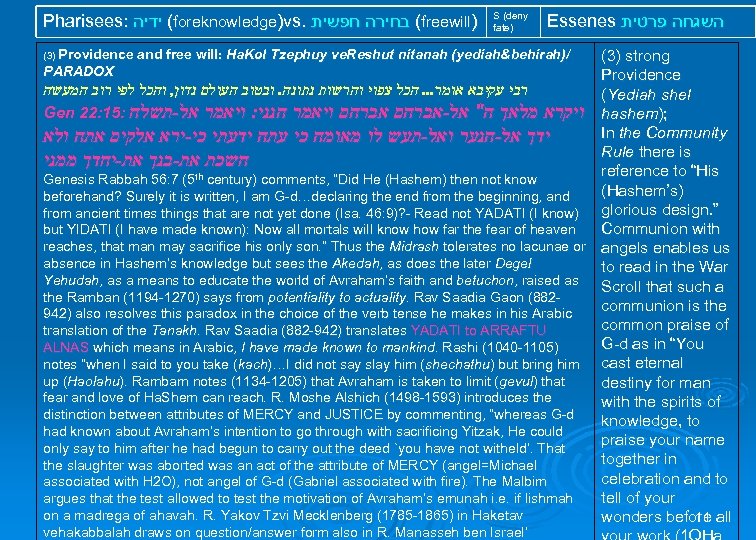
Pharisees: ( ידיה foreknowledge)vs. ( בחירה חפשית freewill) (3) Providence S (deny fate) Essenes השגחה פרטית and free will: Ha. Kol Tzephuy ve. Reshut nitanah (yediah&behirah)/ (3) strong PARADOX Providence רבי עקיבא אומר. . . הכל צפוי והרשות נתונה. ובטוב העולם נדון, והכל לפי רוב המעשה (Yediah shel Gen 22: 15: ויקרא מלאך ה" אל-אברהם ויאמר הנני: ויאמר אל-תשלח hashem); In the Community ידך אל-הנער ואל-תעש לו מאומה כי עתה ידעתי כי-ירא אלקים אתה ולא Rule there is חשכת את-בנך את-יחדך ממני reference to “His Genesis Rabbah 56: 7 (5 th century) comments, “Did He (Hashem) then not know (Hashem’s) beforehand? Surely it is written, I am G-d…declaring the end from the beginning, and glorious design. ” from ancient times things that are not yet done (Isa. 46: 9)? - Read not YADATI (I know) Communion with but YIDATI (I have made known): Now all mortals will know how far the fear of heaven reaches, that man may sacrifice his only son. ” Thus the Midrash tolerates no lacunae or angels enables us absence in Hashem’s knowledge but sees the Akedah, as does the later Degel to read in the War Yehudah, as a means to educate the world of Avraham’s faith and betuchon, raised as Scroll that such a the Ramban (1194 -1270) says from potentiality to actuality. Rav Saadia Gaon (882 communion is the 942) also resolves this paradox in the choice of the verb tense he makes in his Arabic common praise of translation of the Tanakh. Rav Saadia (882 -942) translates YADATI to ARRAFTU G-d as in “You ALNAS which means in Arabic, I have made known to mankind. Rashi (1040 -1105) cast eternal notes “when I said to you take (kach)…I did not say slay him (shechathu) but bring him up (Haolahu). Rambam notes (1134 -1205) that Avraham is taken to limit (gevul) that destiny for man fear and love of Ha. Shem can reach. R. Moshe Alshich (1498 -1593) introduces the with the spirits of distinction between attributes of MERCY and JUSTICE by commenting, “whereas G-d knowledge, to had known about Avraham’s intention to go through with sacrificing Yitzak, He could praise your name only say to him after he had begun to carry out the deed `you have not witheld’. That together in the slaughter was aborted was an act of the attribute of MERCY (angel=Michael celebration and to associated with H 2 O), not angel of G-d (Gabriel associated with fire). The Malbim tell of your argues that the test allowed to test the motivation of Avraham’s emunah i. e. if lishmah on a madrega of ahavah. R. Yakov Tzvi Mecklenberg (1785 -1865) in Haketav wonders before all 11 vehakabbalah draws on question/answer form also in R. Manasseh ben Israel’
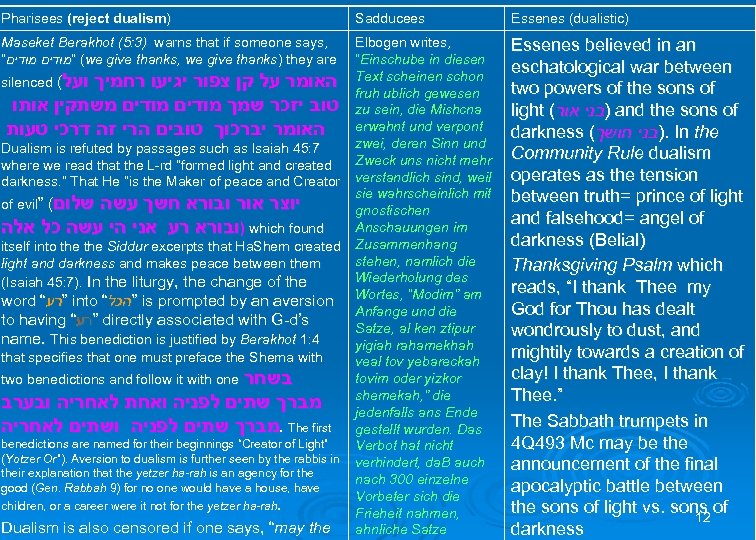
Pharisees (reject dualism) Sadducees Essenes (dualistic) Maseket Berakhot (5: 3) warns that if someone says, “ ( ”מודים we give thanks, we give thanks) they are Elbogen writes, “Einschube in diesen Text scheinen schon fruh ublich gewesen zu sein, die Mishcna erwahnt und verpont zwei, deren Sinn und Zweck uns nicht mehr verstandlich sind, weil sie wahrscheinlich mit gnostischen Anschauungen im Zusammenhang stehen, namlich die Wiederholung des Wortes, “Modim” am Anfange und die Satze, al ken ztipur yigiah rahamekhah veal tov yebareckah tovim oder yizkor shemekah, ” die jedenfalls ans Ende gestellt wurden. Das Verbot hat nicht verhindert, da. B auch nach 300 einzelne Vorbeter sich die Frieheit nahmen, ahnliche Satze Essenes believed in an eschatological war between two powers of the sons of light ( )בני אור and the sons of darkness ( . )בני חושך In the Community Rule dualism operates as the tension between truth= prince of light and falsehood= angel of darkness (Belial) Thanksgiving Psalm which reads, “I thank Thee my God for Thou has dealt wondrously to dust, and mightily towards a creation of clay! I thank Thee, I thank Thee. ” The Sabbath trumpets in 4 Q 493 Mc may be the announcement of the final apocalyptic battle between the sons of light vs. sons of 12 darkness silenced ( ועל האומר על קן צפור יגיעו רחמיך טוב יזכר שמך מודים משתקין אותו האומר יברכוך טובים הרי זה דרכי טעות Dualism is refuted by passages such as Isaiah 45: 7 where we read that the L-rd “formed light and created darkness. ” That He “is the Maker of peace and Creator of evil” ( שלום יוצר אור ובורא חשך עשה )ובורא רע אני הי עשה כל אלה which found itself into the Siddur excerpts that Ha. Shem created light and darkness and makes peace between them (Isaiah 45: 7). In the liturgy, the change of the word “ ”רע into “ ”הכל is prompted by an aversion to having “ ”רע directly associated with G-d’s name. This benediction is justified by Berakhot 1: 4 that specifies that one must preface the Shema with two benedictions and follow it with one בשחר מברך שתים לפניה ואחת לאחריה ובערב . מברך שתים לפניה ושתים לאחריה The first benedictions are named for their beginnings “Creator of Light” (Yotzer Or”). Aversion to dualism is further seen by the rabbis in Or”). their explanation that the yetzer ha-rah is an agency for the good (Gen. Rabbah 9) for no one would have a house, have (Gen. children, or a career were it not for the yetzer ha-rah. Dualism is also censored if one says, “may the
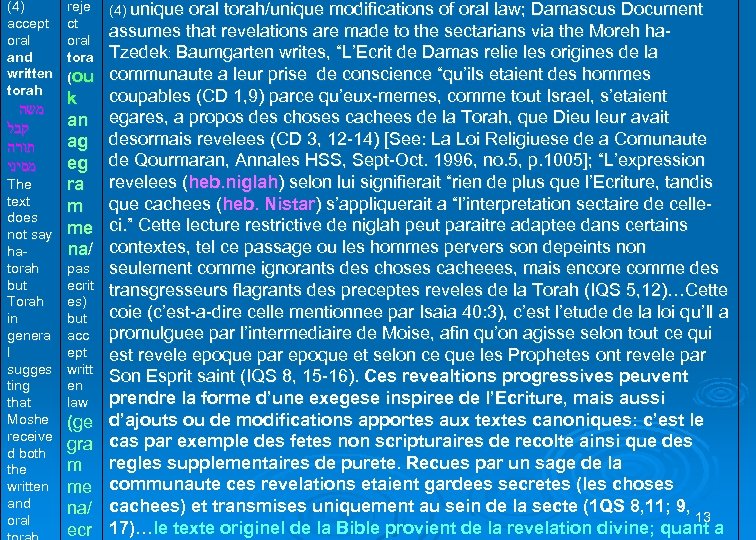
(4) accept oral and written torah משה קבל תורה מסיני The text does not say hatorah but Torah in genera l sugges ting that Moshe receive d both the written and oral reje ct oral tora (ou k an ag eg ra m me na/ pas ecrit es) but acc ept writt en law (ge gra m me na/ ecr (4) unique oral torah/unique modifications of oral law; Damascus Document assumes that revelations are made to the sectarians via the Moreh ha. Tzedek: Baumgarten writes, “L’Ecrit de Damas relie les origines de la communaute a leur prise de conscience “qu’ils etaient des hommes coupables (CD 1, 9) parce qu’eux-memes, comme tout Israel, s’etaient egares, a propos des choses cachees de la Torah, que Dieu leur avait desormais revelees (CD 3, 12 -14) [See: La Loi Religiuese de a Comunaute de Qourmaran, Annales HSS, Sept-Oct. 1996, no. 5, p. 1005]; “L’expression revelees (heb. niglah) selon lui signifierait “rien de plus que l’Ecriture, tandis que cachees (heb. Nistar) s’appliquerait a “l’interpretation sectaire de celleci. ” Cette lecture restrictive de niglah peut paraitre adaptee dans certains contextes, tel ce passage ou les hommes pervers son depeints non seulement comme ignorants des choses cacheees, mais encore comme des transgresseurs flagrants des preceptes reveles de la Torah (IQS 5, 12)…Cette coie (c’est-a-dire celle mentionnee par Isaia 40: 3), c’est l’etude de la loi qu’Il a promulguee par l’intermediaire de Moise, afin qu’on agisse selon tout ce qui est revele epoque par epoque et selon ce que les Prophetes ont revele par Son Esprit saint (IQS 8, 15 -16). Ces revealtions progressives peuvent prendre la forme d’une exegese inspiree de l’Ecriture, mais aussi d’ajouts ou de modifications apportes aux textes canoniques: c’est le cas par exemple des fetes non scripturaires de recolte ainsi que des regles supplementaires de purete. Recues par un sage de la communaute ces revelations etaient gardees secretes (les choses cachees) et transmises uniquement au sein de la secte (1 QS 8, 11; 9, 13 17)…le texte originel de la Bible provient de la revelation divine; quant a
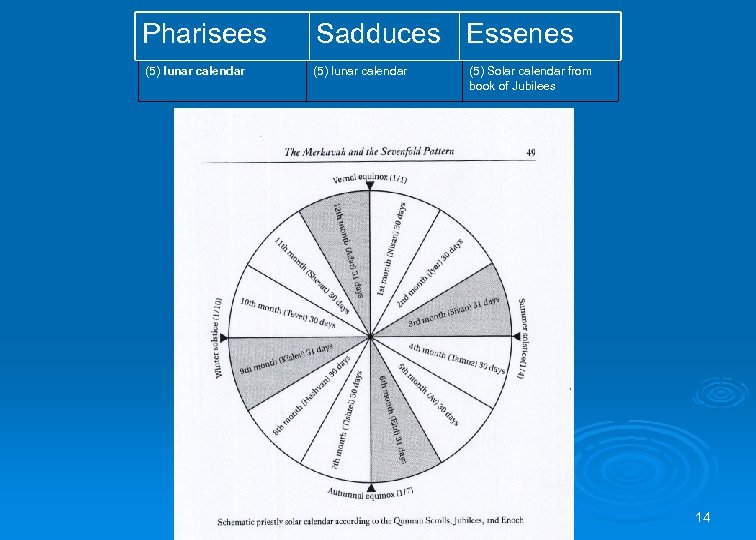
Pharisees Sadduces Essenes (5) lunar calendar (5) Solar calendar from book of Jubilees 14
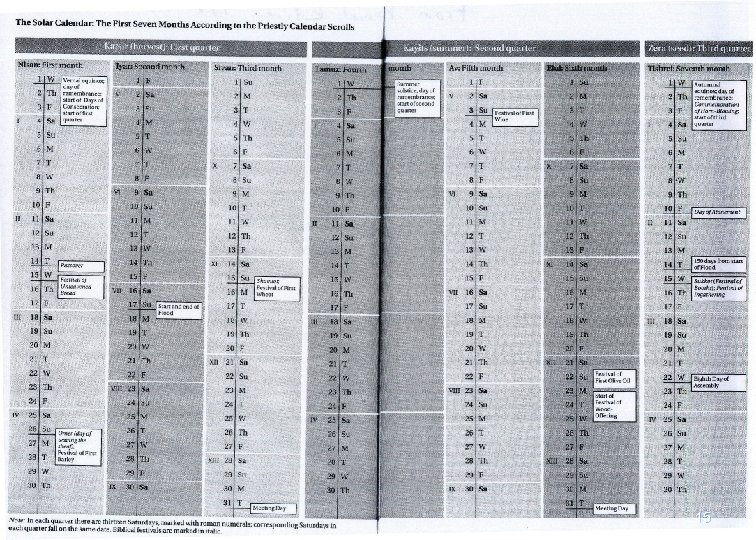
15
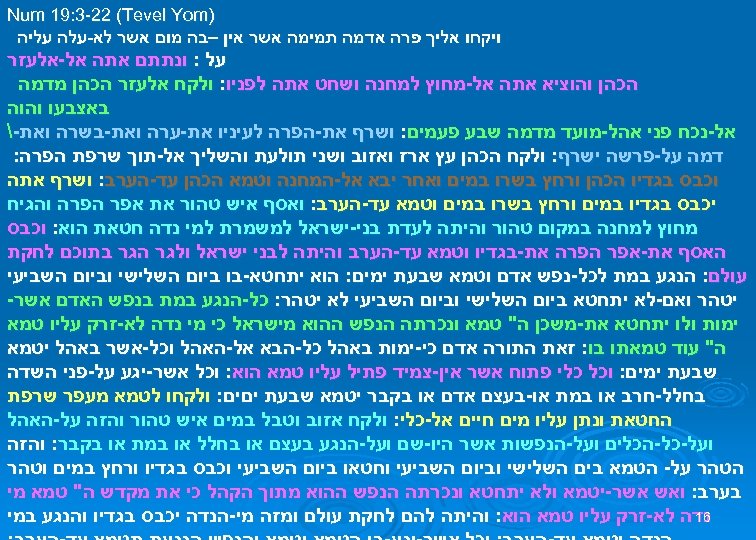
) Num 19: 3 -22 (Tevel Yom ויקחו אליך פרה אדמה תמימה אשר אין –בה מום אשר לא-עלה עליה על : ונתתם אתה אל-אלעזר הכהן והוציא אתה אל-מחוץ למחנה ושחט אתה לפניו: ולקח אלעזר הכהן מדמה באצבעו והוה אל-נכח פני אהל-מועד מדמה שבע פעמים: ושרף את-הפרה לעיניו את-ערה ואת-בשרה ואת- דמה על-פרשה ישרף: ולקח הכהן עץ ארז ואזוב ושני תולעת והשליך אל-תוך שרפת הפרה: וכבס בגדיו הכהן ורחץ בשרו במים ואחר יבא אל-המחנה וטמא הכהן עד-הערב: ושרף אתה יכבס בגדיו במים ורחץ בשרו במים וטמא עד-הערב: ואסף איש טהור את אפר הפרה והגיח מחוץ למחנה במקום טהור והיתה לעדת בני-ישראל למשמרת למי נדה חטאת הוא: וכבס האסף את-אפר הפרה את-בגדיו וטמא עד-הערב והיתה לבני ישראל ולגר הגר בתוכם לחקת עולם: הנגע במת לכל-נפש אדם וטמא שבעת ימים: הוא יתחטא-בו ביום השלישי וביום השביעי יטהר ואם-לא יתחטא ביום השלישי וביום השביעי לא יטהר: כל-הנגע במת בנפש האדם אשר- ימות ולו יתחטא את-משכן ה" טמא ונכרתה הנפש ההוא מישראל כי מי נדה לא-זרק עליו טמא ה" עוד טמאתו בו: זאת התורה אדם כי-ימות באהל כל-הבא אל-האהל וכל-אשר באהל יטמא שבעת ימים: וכל כלי פתוח אשר אין-צמיד פתיל עליו טמא הוא: וכל אשר-יגע על-פני השדה בחלל-חרב או במת או-בעצם אדם או בקבר יטמא שבעת יםים: ולקחו לטמא מעפר שרפת החטאת ונתן עליו מים חיים אל-כלי: ולקח אזוב וטבל במים איש טהור והזה על-האהל ועל-כל-הכלים ועל-הנפשות אשר היו-שם ועל-הנגע בעצם או בחלל או במת או בקבר: והזה הטהר על- הטמא בים השלישי וביום השביעי וחטאו ביום השביעי וכבס בגדיו ורחץ במים וטהר בערב: ואש אשר-יטמא ולא יתחטא ונכרתה הנפש ההוא מתוך הקהל כי את מקדש ה" טמא מי נדה לא-זרק עליו טמא הוא: והיתה להם לחקת עולם ומזה מי-הנדה יכבס בגדיו והנגע במי 61
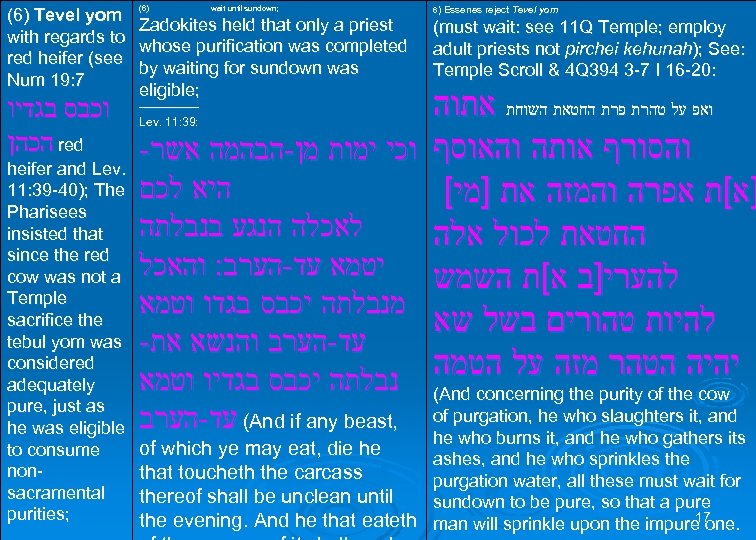
(6) Tevel yom with regards to red heifer (see Num 19: 7 וכבס בגדיו הכהן red heifer and Lev. 11: 39 -40); The Pharisees insisted that since the red cow was not a Temple sacrifice the tebul yom was considered adequately pure, just as he was eligible to consume nonsacramental purities; (6) wait until sundown; Zadokites held that only a priest whose purification was completed by waiting for sundown was eligible; -------Lev. 11: 39: - וכי ימות מן-הבהמה אשר היא לכם לאכלה הנגע בנבלתה יטמא עד-הערב: והאכל מנבלתה יכבס בגדו וטמא - עד-הערב והנשא את נבלתה יכבס בגדיו וטמא ( עד-הערב And if any beast, 6) Essenes reject Tevel yom (must wait: see 11 Q Temple; employ adult priests not pirchei kehunah); See: Temple Scroll & 4 Q 394 3 -7 I 16 -20: ואפ על טהרת פרת החטאת השוחת אתוה והסורף אותה והאוסף [ ]א[ת אפרה והמזה את ]מי החטאת לכול אלה להערי]ב א[ת השמש להיות טהורים בשל שא יהיה הטהר מזה על הטמה (And concerning the purity of the cow of purgation, he who slaughters it, and he who burns it, and he who gathers its of which ye may eat, die he ashes, and he who sprinkles the that toucheth the carcass purgation water, all these must wait for thereof shall be unclean until sundown to be pure, so that a pure 17 the evening. And he that eateth man will sprinkle upon the impure one.
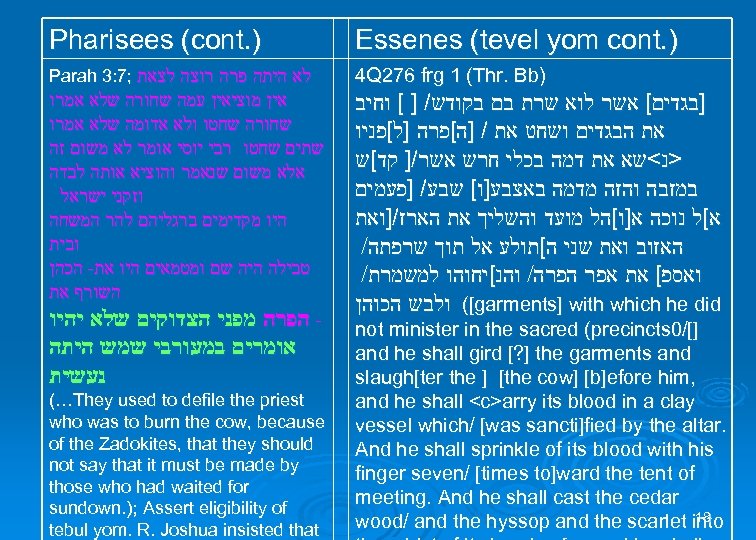
Pharisees (cont. ) Essenes (tevel yom cont. ) Parah 3: 7; לא היתה פרה רוצה לצאת 4 Q 276 frg 1 (Thr. Bb) אין מוציאין עמה שחורה שלא אמרו שחורה שחטו ולא אדומה שלא אמרו שתים שחטו רבי יוסי אומר לא משום זה אלא משום שנאמר והוציא אותה לבדה וזקני ישראל היו מקדימים ברגליהם להר המשחה ובית טבילה היה שם ומטמאים היו את- הכהן השורף את - הפרה מפני הצדוקים שלא יהיו ]בגדים[ אשר לוא שרת בם בקודש/ ] [ וחיב את הבגדים ושחט את / ]ה[פרה ]ל[פניו >נ<שא את דמה בכלי חרש אשר/] קד[ש במזבה והזה מדמה באצבע]ו[ שבע/ ]פעמים א[ל נוכה א]ו[הל מועד והשליך את הארז/]ואת / האזוב ואת שני ה[תולע אל תוך שרפתה / ואספ[ את אפר הפרה/ והנ[יחוהו למשמרת [( ולבש הכוהן garments] with which he did אומרים במעורבי שמש היתה נעשית (…They used to defile the priest who was to burn the cow, because of the Zadokites, that they should not say that it must be made by those who had waited for sundown. ); Assert eligibility of tebul yom. R. Joshua insisted that not minister in the sacred (precincts 0/[] and he shall gird [? ] the garments and slaugh[ter the ] [the cow] [b]efore him, and he shall <c>arry its blood in a clay vessel which/ [was sancti]fied by the altar. And he shall sprinkle of its blood with his finger seven/ [times to]ward the tent of meeting. And he shall cast the cedar 18 wood/ and the hyssop and the scarlet into
![4 Q 277 frg. 1 (Thr B) (Essenes on tevel yom continued) ][האזוב ואת](https://present5.com/presentation/128b946db336c55f70f5a1394e62f9aa/image-19.jpg "4 Q 277 frg. 1 (Thr B) (Essenes on tevel yom continued) ][האזוב ואת")
4 Q 277 frg. 1 (Thr B) (Essenes on tevel yom continued) ][האזוב ואת ]שני התולעת/ ][איש טהור מכול טמאת ערב ]/ ][הכוהן המכפר בדם הפרה וכול ]/א[ת כלי [החלמה אשר כפרו בם את משפט ה]טמאה ? ורחץ[/ במים ]וט[מה עג ה]ער[ב והנוג]ע ב[לחת מי הגדה יט]מא ואל יז[/ איש א]ת[ מי הנדה על [ טמאי נ]פש[כיא איש כוהן טהור ]רק הוא יזה[/ על[יהן כי]א מ[כפר הוא על הטמ]א ועלול אל יז על הטמא ו]המקבלים[/ את מי ]הג[דה יאבואו במים ויט]ה[רו מטמאת הנפש ב ] ומכל[/ ]טמאה[ אחרת ]ויז[רוק עליהם ]הכוהן את מי הגדה לטהר]ם כיא לוא[/ ]יתקדשו[ כיא אם ]י[טהרו וט]הור[ בשרהם וכל אשר יגע ]בו[/ הזב את[ זובו /[ ואי]ן[ ידיו שט]ו[פות במים יטמא[/ ] מש[כבו ומוש]בו [ נגעו] [ זובו מגע טמאת]ו ][( וט[מה עד ]ה[ערב והנושא ]את ב[גדיו ורח[ץ וטמא עד ה]ע[רב the hyssop and the [scarlet ]/ [] a man purified from any impurity (which lasts till) evening []/[] the priest who purges with the blood of the cow. And all [] the clay [vessels] with [whi]ch they purged the state [of impurity. He shall bathe]/ in water and [be im]pure until the ev[en]ing. One who touché[s the] wetness of the purification water becomes im[pure. Let no man sprinkle]/ the purification water upon those defiled by a c[orpse] except for a priest who is pure. [Only he/ [upon] them, fo[r he is per]forming a purgation rite for the impure. A child shall not sprinkle upon the impure. And [those who receive]/ the [pur]ification water shall (first 0 immerse themselves in water and be cleansed of the corpse defilement [ and of every]/other [defilement]: (then) let the [pri]est [spr]inkle the purification water upon them to purify [them, for they cannot]/ be sanctified] unless they are cleansed and their flesh is c[lean]. And anyone touched by one/ [who has] a flux [ ] and his hands were not rinsed in water becomes [unclean]/ [ ] and his bedand his seat [ ] touched [ ] his flux [ ] the touch of [his] uncleanliness/ [ and he shall be im]pure until evening, and he who carries his [g]arments shall [bat]he and be [] impure until evening 19
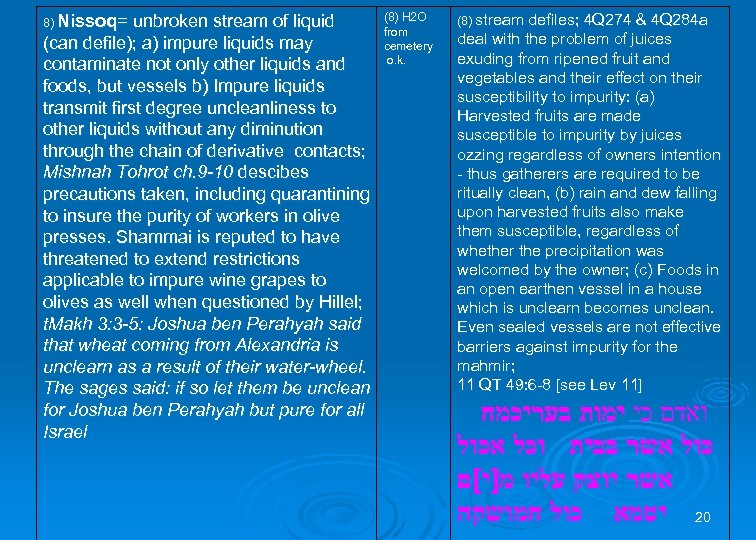
8) Nissoq= unbroken stream of liquid (can defile); a) impure liquids may contaminate not only other liquids and foods, but vessels b) Impure liquids transmit first degree uncleanliness to other liquids without any diminution through the chain of derivative contacts; Mishnah Tohrot ch. 9 -10 descibes precautions taken, including quarantining to insure the purity of workers in olive presses. Shammai is reputed to have threatened to extend restrictions applicable to impure wine grapes to olives as well when questioned by Hillel; t. Makh 3: 3 -5: Joshua ben Perahyah said that wheat coming from Alexandria is unclearn as a result of their water-wheel. The sages said: if so let them be unclean for Joshua ben Perahyah but pure for all Israel (8) H 2 O from cemetery o. k. (8) stream defiles; 4 Q 274 & 4 Q 284 a deal with the problem of juices exuding from ripened fruit and vegetables and their effect on their susceptibility to impurity: (a) Harvested fruits are made susceptible to impurity by juices ozzing regardless of owners intention - thus gatherers are required to be ritually clean, (b) rain and dew falling upon harvested fruits also make them susceptible, regardless of whether the precipitation was welcomed by the owner; (c) Foods in an open earthen vessel in a house which is unclearn becomes unclean. Even sealed vessels are not effective barriers against impurity for the mahmir; 11 QT 49: 6 -8 [see Lev 11] ואדם כי ימות בעריכמח כול אשר בבית וכל אכול אשר יוצק עליו מ]י[ם 02 יטמא כול חמושקה
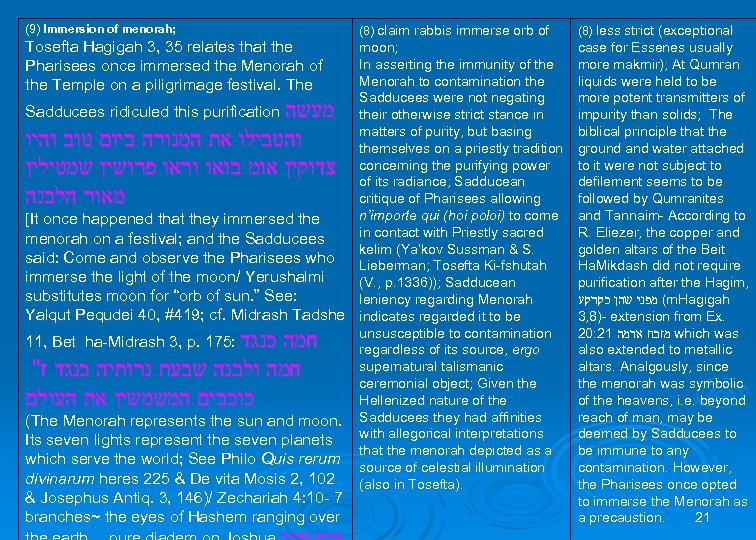
(9) Immersion of menorah; Tosefta Hagigah 3, 35 relates that the Pharisees once immersed the Menorah of the Temple on a piligrimage festival. The (8) claim rabbis immerse orb of moon; In asserting the immunity of the Menorah to contamination the Sadducees were not negating Sadducees ridiculed this purification their otherwise strict stance in matters of purity, but basing themselves on a priestly tradition concerning the purifying power of its radiance; Sadducean critique of Pharisees allowing n’importe qui (hoi poloi) to come [It once happened that they immersed the in contact with Priestly sacred menorah on a festival; and the Sadducees kelim (Ya’kov Sussman & S. said: Come and observe the Pharisees who Lieberman; Tosefta Ki-fshutah immerse the light of the moon/ Yerushalmi (V. , p. 1336)); Sadducean substitutes moon for “orb of sun. ” See: leniency regarding Menorah Yalqut Pequdei 40, #419; cf. Midrash Tadshe indicates regarded it to be unsusceptible to contamination 11, Bet ha-Midrash 3, p. 175: regardless of its source, ergo supernatural talismanic ceremonial object; Given the Hellenized nature of the (The Menorah represents the sun and moon. Sadducees they had affinities with allegorical interpretations Its seven lights represent the seven planets that the menorah depicted as a which serve the world; See Philo Quis rerum source of celestial illumination divinarum heres 225 & De vita Mosis 2, 102 (also in Tosefta). מעשה והטבילו את המנורה ביום טוב והיו צדוקין אומ בואו וראו פרושין שמטילין מאור הלבנה חמה כנגד " חמה ולבנה שבעת נרותיה כנגד ז כוכבים המשמשין את העולם & Josephus Antiq. 3, 146)/ Zechariah 4: 10 - 7 branches~ the eyes of Hashem ranging over (8) less strict (exceptional case for Essenes usually more makmir); At Qumran liquids were held to be more potent transmitters of impurity than solids; The biblical principle that the ground and water attached to it were not subject to defilement seems to be followed by Qumranites and Tannaim- According to R. Eliezer, the copper and golden altars of the Beit Ha. Mikdash did not require purification after the Hagim, ( מפני שהן כקרקע m. Hagigah 3, 8)- extension from Ex. 20: 21 מזבח אדמה which was also extended to metallic altars. Analgously, since the menorah was symbolic of the heavens, i. e. beyond reach of man, may be deemed by Sadducees to be immune to any contamination. However, the Pharisees once opted to immerse the Menorah as a precaustion. 21
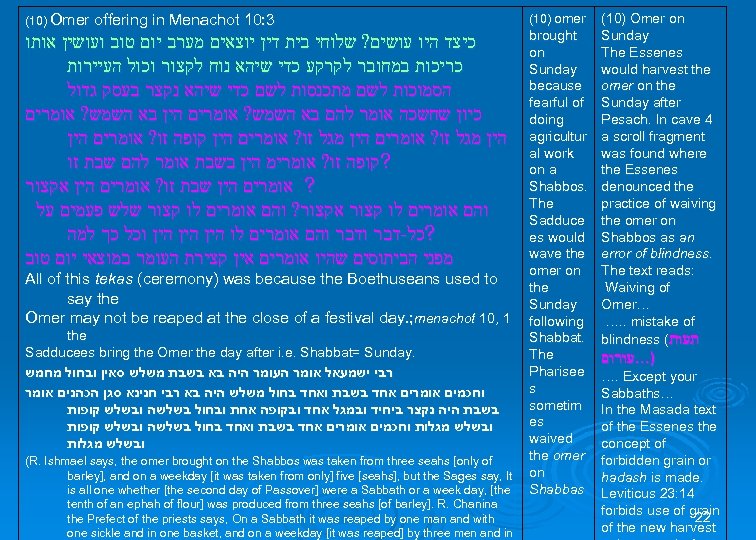
(10) Omer offering in Menachot 10: 3 כיצד היו עושים? שלוחי בית דין יוצאים מערב יום טוב ועושין אותו כריכות במחובר לקרקע כדי שיהא נוח לקצור וכול העיירות הסמוכות לשם מתכנסות לשם כדי שיהא נקצר בעסק גדול כיון שחשכה אומר להם בא השמש? אומרים הין בא השמש? אומרים הין מגל זו? אומרים הין קופה זו? אומרים הין ? קופה זו? אומרימ הין בשבת אומר להם שבת זו ? אומרים הין שבת זו? אומרים הין אקצור והם אומרים לו קצור אקצור? והם אומרים לו קצור שלש פעמים על ? כל-דבר והם אומרים לו הין הין וכל כך למה מפני הביתוסים שהיו אומרים אין קצירת העומר במוצאי יום טוב All of this tekas (ceremony) was because the Boethuseans used to say the Omer may not be reaped at the close of a festival day. ; menachot 10, 1 the Sadducees bring the Omer the day after i. e. Shabbat= Sunday. רבי ישמעאל אומר העומר היה בא בשבת משלש סאין ובחול מחמש וחכמים אומרים אחד בשבת ואחד בחול משלש היה בא רבי חנינא סגן הכהנים אומר בשבת היה נקצר ביחיד ובמגל אחד ובקופה אחת ובחול בשלשה ובשלש קופות ובשלש מגלות וחכמים אומרים אחד בשבת ואחד בחול בשלשה ובשלש קופות ובשלש מגלות (R. Ishmael says, the omer brought on the Shabbos was taken from three seahs [only of barley], and on a weekday [it was taken from only] five [seahs], but the Sages say, It [seahs], is all one whether [the second day of Passover] were a Sabbath or a week day, [the tenth of an ephah of flour] was produced from three seahs [of barley]. R. Chanina the Prefect of the priests says, On a Sabbath it was reaped by one man and with one sickle and in one basket, and on a weekday [it was reaped] by three men and in (10) omer (10) Omer on brought Sunday on The Essenes Sunday would harvest the because omer on the fearful of Sunday after doing Pesach. In cave 4 agricultur a scroll fragment al work was found where on a the Essenes Shabbos. denounced the The practice of waiving Sadduce the omer on es would Shabbos as an wave the error of blindness. omer on The text reads: the Waiving of Sunday Omer… following …. . mistake of Shabbat. blindness ( תעות The )…עורום Pharisee …. Except your s Sabbaths… sometim In the Masada text es of the Essenes the waived concept of the omer forbidden grain or on hadash is made. Shabbas Leviticus 23: 14 forbids use of grain 22 of the new harvest
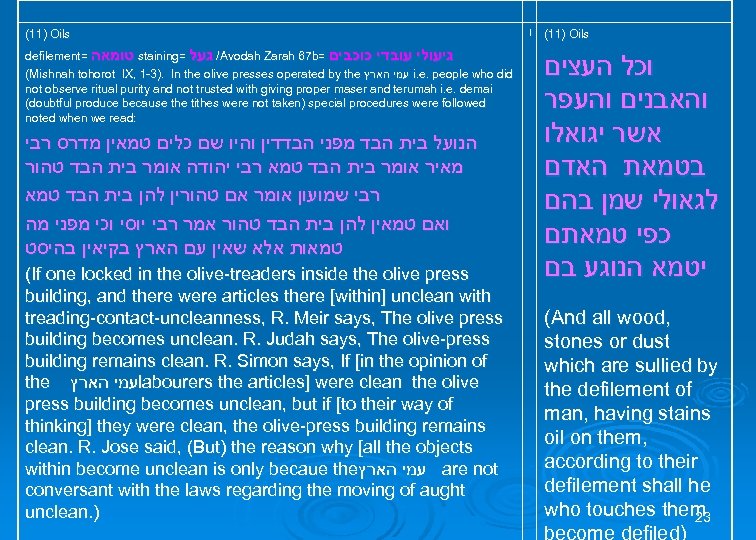
(11) Oils defilement= טומאה staining= / געל Avodah Zarah 67 b= גיעולי עובדי כוכבים /Avodah (Mishnah tohorot IX, 1 -3). In the olive presses operated by the עמי הארץ i. e. people who did not observe ritual purity and not trusted with giving proper maser and terumah i. e. demai (doubtful produce because the tithes were not taken) special procedures were followed noted when we read: הנועל בית הבד מפני הבדדין והיו שם כלים טמאין מדרס רבי מאיר אומר בית הבד טמא רבי יהודה אומר בית הבד טהור רבי שמועון אומר אם טהורין להן בית הבד טמא ואם טמאין להן בית הבד טהור אמר רבי יוסי וכי מפני מה טמאות אלא שאין עם הארץ בקיאין בהיסט (If one locked in the olive-treaders inside the olive press building, and there were articles there [within] unclean with treading-contact-uncleanness, R. Meir says, The olive press building becomes unclean. R. Judah says, The olive-press building remains clean. R. Simon says, If [in the opinion of the עמי הארץ labourers the articles] were clean the olive press building becomes unclean, but if [to their way of thinking] they were clean, the olive-press building remains clean. R. Jose said, (But) the reason why [all the objects within become unclean is only becaue the עמי הארץ are not conversant with the laws regarding the moving of aught unclean. ) l (11) Oils וכל העצים והאבנים והעפר אשר יגואלו בטמאת האדם לגאולי שמן בהם כפי טמאתם יטמא הנוגע בם (And all wood, stones or dust which are sullied by the defilement of man, having stains oil on them, according to their defilement shall he who touches them 23
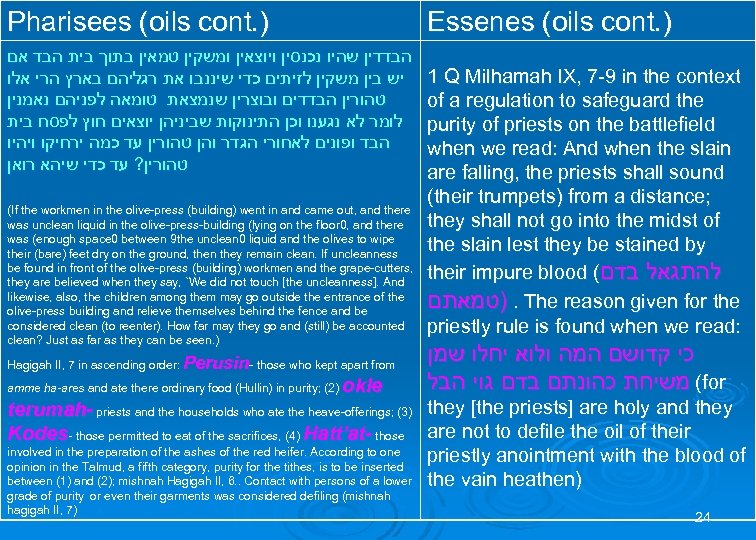
Pharisees (oils cont. ) Essenes (oils cont. ) הבדדין שהיו נכנסין ויוצאין ומשקין טמאין בתוך בית הבד אם יש בין משקין לזיתים כדי שיננבו את רגליהם בארץ הרי אלו טהורין הבדדים ובוצרין שנמצאת טומאה לפניהם נאמנין לומר לא נגענו וכן התינוקות שביניהן יוצאים חוץ לפסח בית הבד ופונים לאחורי הגדר והן טהורין עד כמה ירחיקו ויהיו טהורין? עד כדי שיהא רואן (If the workmen in the olive-press (building) went in and came out, and there was unclean liquid in the olive-press-building (lying on the floor 0, and there was (enough space 0 between 9 the unclean 0 liquid and the olives to wipe their (bare) feet dry on the ground, then they remain clean. If uncleanness be found in front of the olive-press (building) workmen and the grape-cutters, they are believed when they say, `We did not touch [the uncleanness]. And likewise, also, the children among them may go outside the entrance of the olive-press building and relieve themselves behind the fence and be considered clean (to reenter). How far may they go and (still) be accounted clean? Just as far as they can be seen. ) Hagigah II, 7 in ascending order: Perusin- those who kept apart from amme ha-ares and ate there ordinary food (Hullin) in purity; (2) ha-ares (Hullin) okle 1 Q Milhamah IX, 7 -9 in the context of a regulation to safeguard the purity of priests on the battlefield when we read: And when the slain are falling, the priests shall sound (their trumpets) from a distance; they shall not go into the midst of the slain lest they be stained by their impure blood ( להתגאל בדם . )טמאתם The reason given for the priestly rule is found when we read: כי קדושם המה ולוא יחלו שמן ( משיחת כהונתם בדם גוי הבל for terumah- priests and the households who ate the heave-offerings; (3) they [the priests] are holy and they Kodes- those permitted to eat of the sacrifices, (4) Hatt’at- those are not to defile the oil of their involved in the preparation of the ashes of the red heifer. According to one priestly anointment with the blood of opinion in the Talmud, a fifth category, purity for the tithes, is to be inserted between (1) and (2); mishnah Hagigah II, 6. . Contact with persons of a lower the vain heathen) grade of purity or even their garments was considered defiling (mishnah hagigah II, 7) 24
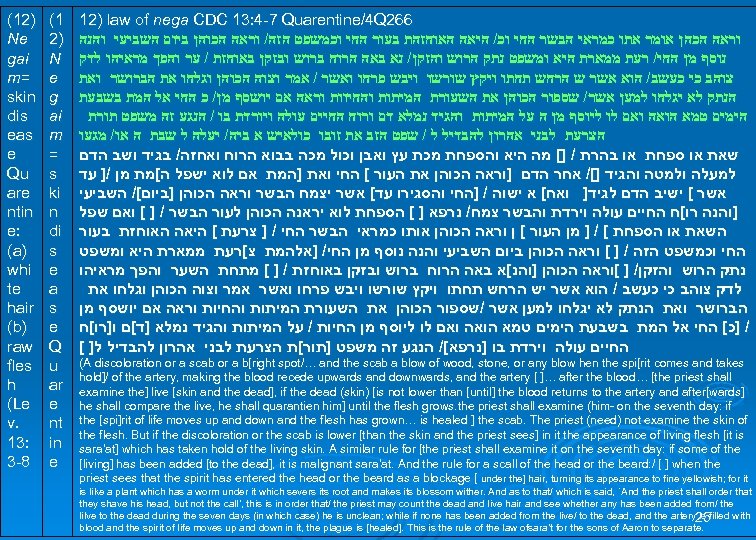
(12) Ne gai m= skin dis eas e Qu are ntin e: (a) whi te hair (b) raw fles h (Le v. 13: 3 -8 (1 2) N e g ai m = s ki n di s e a s e Q u ar e nt in e 12) law of nega CDC 13: 4 -7 Quarentine/4 Q 266 וראה הכהן אומר אתו כמראי הבשר החי וכ/ היאה האוחזהת בעור החי וכמשפט הזה/ וראה הכוהן ביום השביעי והנה נוסף מן החי/ רעת ממארת היא ומשפט נתק הרוש והזקן/ נא באה הרוח ברוש ובזקן באוחזת / ער והפך מראיהו לדק צוהב כי כעשב/ הוא אשר ש הרחש תחתו ויקץ שורשו ויבש פרחו ואשר / אמר וצוה הכוהן וגלחו את הברושר ואת הנתק לא יגלחו למען אשר/ שספור הכוהן את השעורת המיתות והחיוות וראה אם יושסף מן/ כ החי אל המת בשבעת הימים טמא הואה ואם לו ליוסף מן ה על המיתות והגיד נמלא דם ורוח החיים עולה ויורדת בו / הנגע זה משפט תורת הצרעת לבני אהרון להבדיל ל / שפט הזב את זובו כולאיש א ביה/ יעלה ל שבת ה או/ מגעו שאת או ספחת או בהרת / ][ מה היא והספחת מכת עץ ואבן וכול מכה בבוא הרוח ואחזה/ בגיד ושב הדם למעלה ולמטה והגיד ][/ אחר הדם ]וראה הכוהן את העור [ החי ואת ]המת אם לוא ישפל ה[מת מן /] עד אשר [ ישיב הדם לגיד] ואח[ א ישוה / ]החי והסגירו עד[ אשר יצמח הבשר וראה הכוהן ]ביום[/ השביעי ]והנה רו[ח החיים עולה וירדת והבשר צמח/ נרפא ] [ הספחת לוא יראנה הכוהן לעור הבשר / ] [ ואם שפל השאת או הספחת [ / ] מן העור [ ן וראה הכוהן אותו כמראי הבשר החי / ] צרעת [ היאה האוחזת בעור החי וכמשפט הזה / ] [ וראה הכוהן ביום השביעי והנה נוסף מן החי/ ]אלהמת צ[רעת ממארת היא ומשפט נתק הרוש והזקן/ ] [וראה הכוהן ]והנ[א באה הרוח ברוש ובזקן באוחזת / ] [ מתחת השער והפך מראיהו לדק צוהב כי כעשב / הוא אשר יש הרחש תחתו ויקץ שורשו ויבש פרחו ואשר אמר וצוה הכוהן וגלחו את הברושר ואת הנתק לא יגלחו למען אשר /שספור הכוהן את השעורת המיתות והחיות וראה אם יושסף מן / ]כ[ החי אל המת בשבעת הימים טמא הואה ואם לו ליוסף מן החיות / על המיתות והגיד נמלא ]ד[ם ו]רו[ח [ ] החיים עולה וירדת בו ]נרפא[/ הנגע זה משפט ]תור[ת הצרעת לבני אהרון להבדיל ל (A discoloration or a scab or a b[right spot/… and the scab a blow of wood, stone, or any blow hen the spi[rit comes and takes hold]/ of the artery, making the blood recede upwards and downwards, and the artery [ ]… after the blood… [the priest shall examine the] live [skin and the dead], if the dead (skin) [is not lower than [until] the blood returns to the artery and after[wards] he shall compare the live, he shall quarantien him] until the flesh grows. the priest shall examine (him- on the seventh day: if the [spi]rit of life moves up and down and the flesh has grown… is healed ] the scab. The priest (need) not examine the skin of [spi]rit the flesh. But if the discoloration or the scab is lower [than the skin and the priest sees] in it the appearance of living flesh [it is sara’at] which has taken hold of the living skin. A similar rule for [the priest shall examine it on the seventh day: if some of the sara’at] [living] has been added [to the dead], it is malignant sara’at. And the rule for a scall of the head or the beard: / [ ] when the sara’at. priest sees that the spirit has entered the head or the beard as a blockage [ under the] hair, turning its appearance to fine yellowish; for it is like a plant which has a worm under it which severs its root and makes its blossom wither. And as to that/ which is said, `And the priest shall order that they shave his head, but not the call’, this is in order that/ the priest may count the dead and live hair and see whether any has been added from/ the lilve to the dead during the seven days (in which case) he is unclean; while if none has been added from the live/ to the dead, and the artery 25 filled with is blood and the spirit of life moves up and down in it, the plague is [healed]. This is the rule of the law ofsara’t for the sons of Aaron to separate.
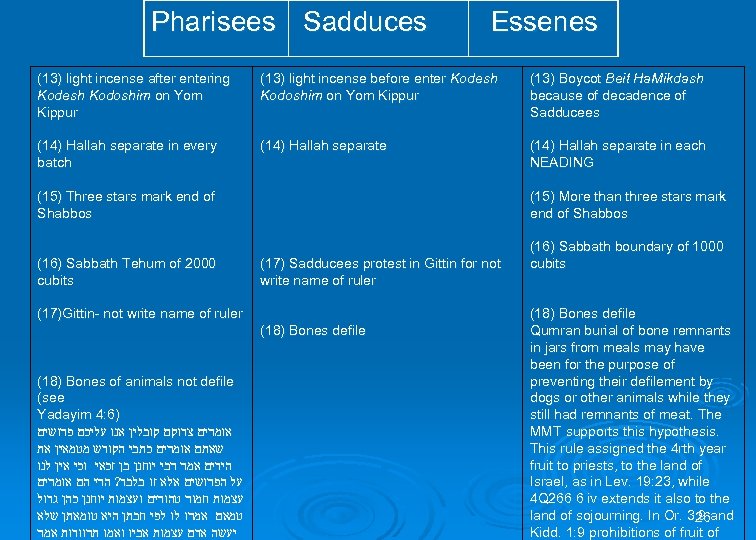
Pharisees Sadduces Essenes (13) light incense after entering Kodesh Kodoshim on Yom Kippur (13) light incense before enter Kodesh Kodoshim on Yom Kippur (13) Boycot Beit Ha. Mikdash because of decadence of Sadducees (14) Hallah separate in every batch (14) Hallah separate in each NEADING (15) Three stars mark end of Shabbos (16) Sabbath Tehum of 2000 cubits (15) More than three stars mark end of Shabbos (17) Sadducees protest in Gittin for not write name of ruler (17)Gittin- not write name of ruler (18) Bones defile (18) Bones of animals not defile (see Yadayim 4: 6) אומרים צדוקם קובלין אנו עליכם פרושים שאתם אומרים כתבי הקודש מטמאין את הידים אמר רבי יוחנן בן זכאי וכי אין לנו על הפרושים אלא זו בלבד? הרי הם אומרים עצמות חמור טהורים ועצמות יוחנן כהן גדול טמאם אמרו לו לפי חבתן היא טומאתן שלא יעשה אדם עצמות אביו ואמו תרוודות אמר (16) Sabbath boundary of 1000 cubits (18) Bones defile Qumran burial of bone remnants in jars from meals may have been for the purpose of preventing their defilement by dogs or other animals while they still had remnants of meat. The MMT supports this hypothesis. This rule assigned the 4 rth year fruit to priests, to the land of Israel, as in Lev. 19: 23, while 4 Q 266 6 iv extends it also to the land of sojourning. In Or. 3: 9 and 26 Kidd. 1: 9 prohibitions of fruit of
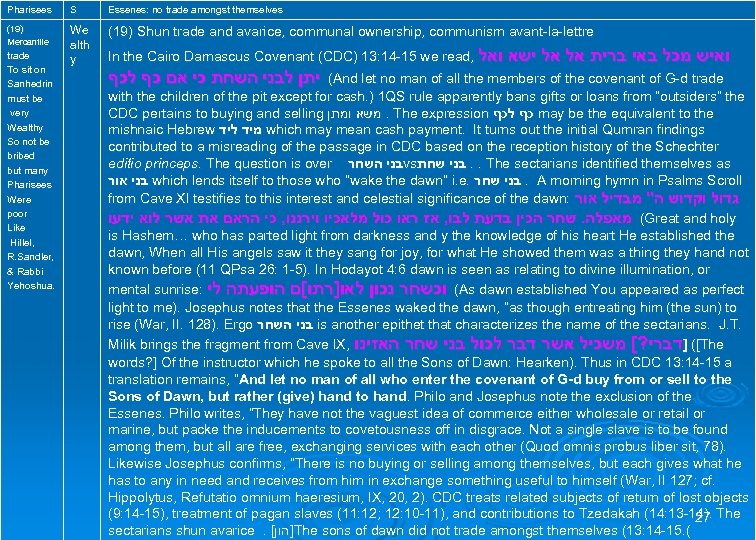
Pharisees S Essenes: no trade amongst themselves Essenes: (19) Mercantile We alth y (19) Shun trade and avarice, communal ownership, communism avant-la-lettre trade To sit on Sanhedrin must be very Wealthy So not be bribed but many Pharisees Were poor Like Hillel, R. Sandler, & Rabbi Yehoshua. In the Cairo Damascus Covenant (CDC) 13: 14 -15 we read, ואל יתן לבני השחת כי אם כף לכף ואיש מכל באי ברית אל אל ישא (And let no man of all the members of the covenant of G-d trade with the children of the pit except for cash. ) 1 QS rule apparently bans gifts or loans from “outsiders” the CDC pertains to buying and selling . משא ומתן The expression כף לכף may be the equivalent to the mishnaic Hebrew מיד ליד which may mean cash payment. It turns out the initial Qumran findings contributed to a misreading of the passage in CDC based on the reception history of the Schechter editio princeps. The question is over בני השחר vs . . בני שחת The sectarians identified themselves as בני אור which lends itself to those who “wake the dawn” i. e. . בני שחר A morning hymn in Psalms Scroll from Cave XI testifies to this interest and celestial significance of the dawn: גדול וקדוש ה" מבדיל אור ( מאפלה. שחר הכין בדעת לבו, אז ראו כול מלאכיו וירננו, כי הראם את אשר לוא ידעו Great and holy is Hashem… who has parted light from darkness and y the knowledge of his heart He established the dawn, When all His angels saw it they sang for joy, for what He showed them was a thing they hand not known before (11 QPsa 26: 1 -5). In Hodayot 4: 6 dawn is seen as relating to divine illumination, or mental sunrise: ( וכשחר נכון לאו]רתו[ם הופעתה לי As dawn established You appeared as perfect light to me). Josephus notes that the Essenes waked the dawn, “as though entreating him (the sun) to rise (War, II. 128). Ergo בני השחר is another epithet that characterizes the name of the sectarians. J. T. Milik brings the fragment from Cave IX, [( ]דברי? [ משכיל אשר דבר לכול בני שחר האזינו The words? ] Of the instructor which he spoke to all the Sons of Dawn: Hearken). Thus in CDC 13: 14 -15 a translation remains, “And let no man of all who enter the covenant of G-d buy from or sell to the Sons of Dawn, but rather (give) hand to hand. Philo and Josephus note the exclusion of the Essenes. Philo writes, “They have not the vaguest idea of commerce either wholesale or retail or marine, but packe the inducements to covetousness off in disgrace. Not a single slave is to be found among them, but all are free, exchanging services with each other (Quod omnis probus liber sit, 78). Likewise Josephus confirms, “There is no buying or selling among themselves, but each gives what he has to any in need and receives from him in exchange something useful to himself (War, II 127; cf. Hippolytus, Refutatio omnium haeresium, IX, 20, 2). CDC treats related subjects of return of lost objects (9: 14 -15), treatment of pagan slaves (11: 12; 12: 10 -11), and contributions to Tzedakah (14: 13 -14). The 27 sectarians shun avarice. [ ]הון The sons of dawn did not trade amongst themselves (13: 14 -15. (
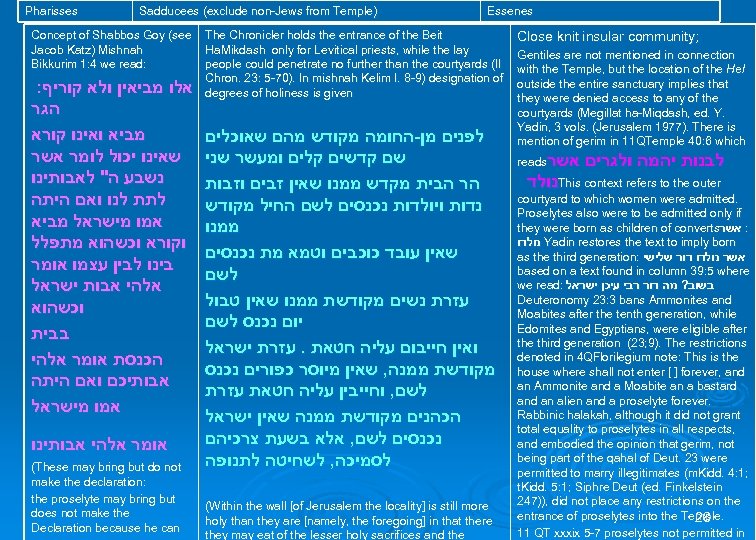
Pharisses Sadducees (exclude non-Jews from Temple) Concept of Shabbos Goy (see Jacob Katz) Mishnah Bikkurim 1: 4 we read: : אלו מביאין ולא קוריף הגר מביא ואינו קורא שאינו יכול לומר אשר נשבע ה" לאבותינו לתת לנו ואם היתה אמו מישראל מביא וקורא וכשהוא מתפלל בינו לבין עצמו אומר אלהי אבות ישראל וכשהוא בבית הכנסת אומר אלהי אבותיכם ואם היתה אמו מישראל אומר אלהי אבותינו (These may bring but do not make the declaration: the proselyte may bring but does not make the Declaration because he can Essenes The Chronicler holds the entrance of the Beit Ha. Mikdash only for Levitical priests, while the lay people could penetrate no further than the courtyards (II Chron. 23: 5 -70). In mishnah Kelim I. 8 -9) designation of Chron. degrees of holiness is given לפנים מן-החומה מקודש מהם שאוכלים שם קדשים קלים ומעשר שני הר הבית מקדש ממנו שאין זבים וזבות נדות ויולדות נכנסים לשם החיל מקודש ממנו שאין עובד כוכבים וטמא מת נכנסים לשם עזרת נשים מקודשת ממנו שאין טבול יום נכנס לשם ואין חייבום עליה חטאת. עזרת ישראל מקודשת ממנה, שאין מיוסר כפורים נכנס לשם, וחייבין עליה חטאת עזרת הכהנים מקודשת ממנה שאין ישראל נכנסים לשם, אלא בשעת צרכיהם לסמיכה, לשחיטה לתנופה (Within the wall [of Jerusalem the locality] is still more holy than they are [namely, the foregoing] in that there they may eat of the lesser holy sacrifices and the Close knit insular community; Gentiles are not mentioned in connection with the Temple, but the location of the Hel outside the entire sanctuary implies that they were denied access to any of the courtyards (Megillat ha-Miqdash, ed. Y. (Megillat ha-Miqdash, Yadin, 3 vols. (Jerusalem 1977). There is Yadin, mention of gerim in 11 QTemple 40: 6 which reads אשר לבנות יהמה ולגרים נולד This context refers to the outer courtyard to which women were admitted. Proselytes also were to be admitted only if they were born as children of converts : אשר converts אשר נולדו Yadin restores the text to imply born as the third generation: אשר נולדו דור שלישי based on a text found in column 39: 5 where we read: בשוב? מה דור רבי עיכן ישראל ? בשוב Deuteronomy 23: 3 bans Ammonites and Moabites after the tenth generation, while Edomites and Egyptians, were eligible after the third generation (23; 9). The restrictions denoted in 4 QFlorilegium note: This is the house where shall not enter [ ] forever, and an Ammonite and a Moabite an a bastard an alien and a proselyte forever. Rabbinic halakah, although it did not grant halakah, total equality to proselytes in all respects, and embodied the opinion that gerim, not gerim, being part of the qahal of Deut. 23 were permitted to marry illegitimates (m. Kidd. 4: 1; (m. Kidd. t. Kidd. 5: 1; Siphre Deut (ed. Finkelstein t. Kidd. 247)), did not place any restrictions on the entrance of proselytes into the Temple. 28 11 QT xxxix 5 -7 proselytes not permitted in
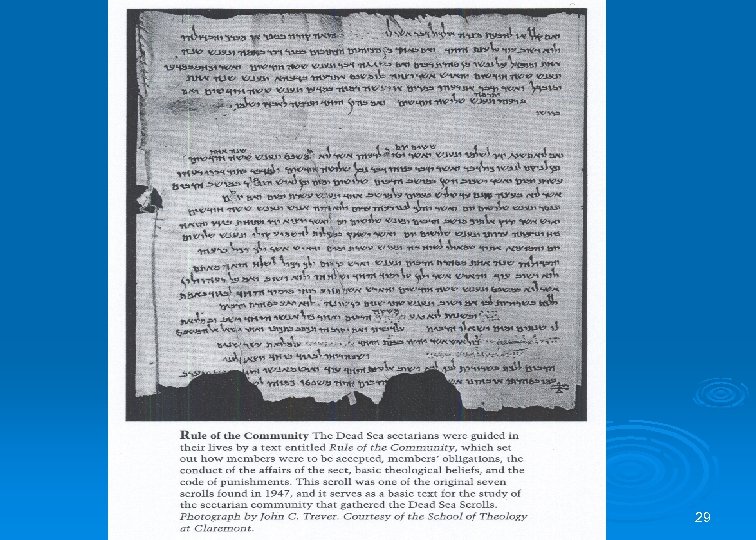
29
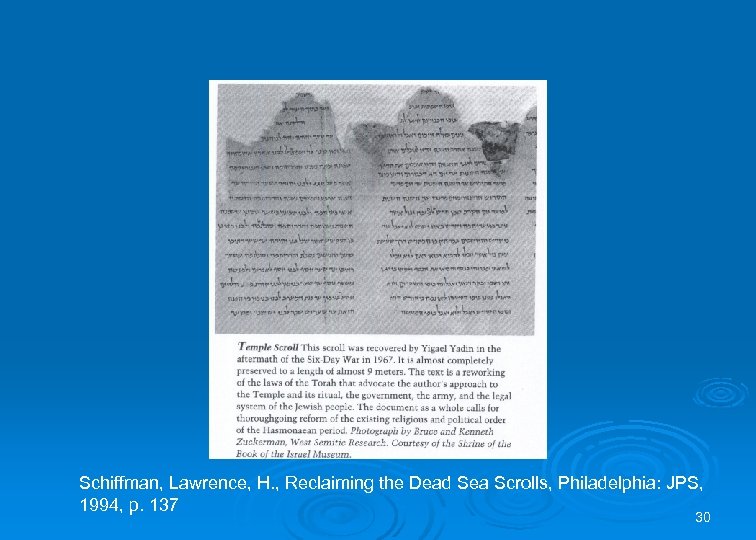
Schiffman, Lawrence, H. , Reclaiming the Dead Sea Scrolls, Philadelphia: JPS, 1994, p. 137 30
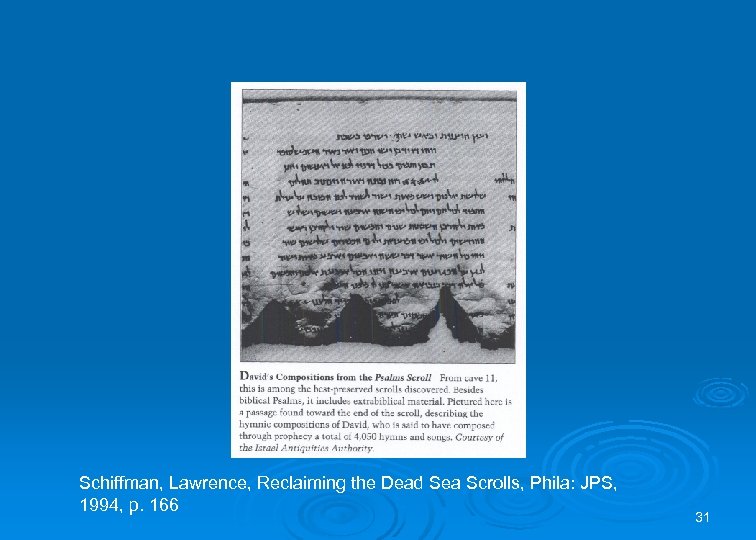
Schiffman, Lawrence, Reclaiming the Dead Sea Scrolls, Phila: JPS, 1994, p. 166 31
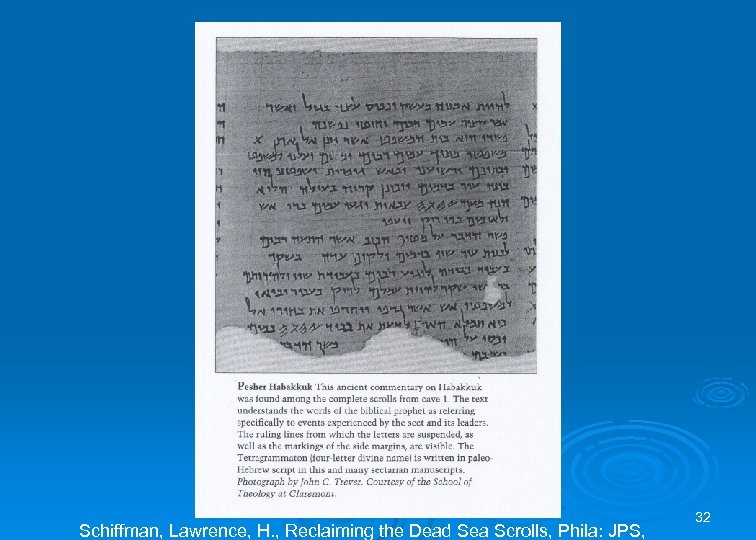
Schiffman, Lawrence, H. , Reclaiming the Dead Sea Scrolls, Phila: JPS, 32
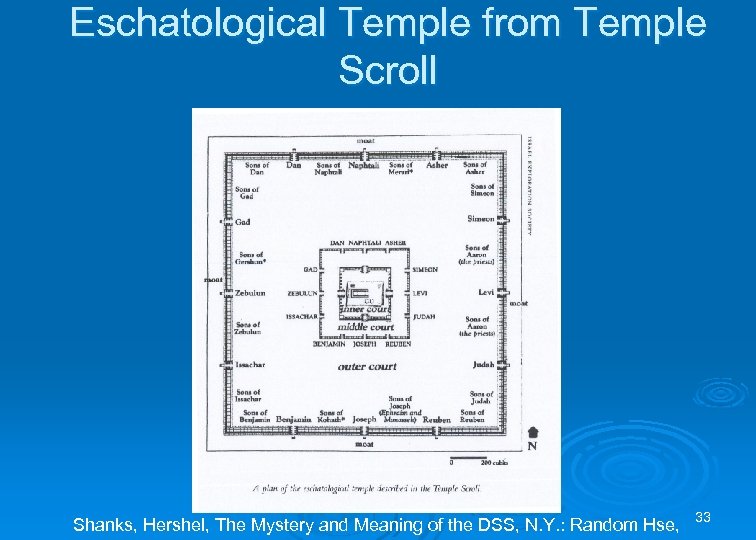
Eschatological Temple from Temple Scroll Shanks, Hershel, The Mystery and Meaning of the DSS, N. Y. : Random Hse, 33
Скачать презентацию Power Point presentation accompanying the paper The Library
128b946db336c55f70f5a1394e62f9aa.ppt