

Power. Point®






Power. Point® Lecture Slides prepared by Leslie Hendon, University of Alabama, Birmingham 15 PART 1 HUMAN The ANATOMY Autonomic fifth edition Nervous System and Visceral Sensory Neurons Copyright © 2008 Pearson Education, Inc. , MARIEB | MALLATT | WILHELM publishing as Benjamin Cummings
The ANS and Visceral Sensory Neurons § The ANS – a system of motor neurons § Innervates § Smooth muscle § Cardiac muscle § Glands Copyright © 2008 Pearson Education, Inc. , publishing as Benjamin Cummings
The ANS and Visceral Sensory Neurons § The ANS – a system of motor neurons § Regulates visceral functions § Heart rate § Blood pressure § Digestion § Urination § The ANS is the § General visceral motor division of the PNS Copyright © 2008 Pearson Education, Inc. , publishing as Benjamin Cummings
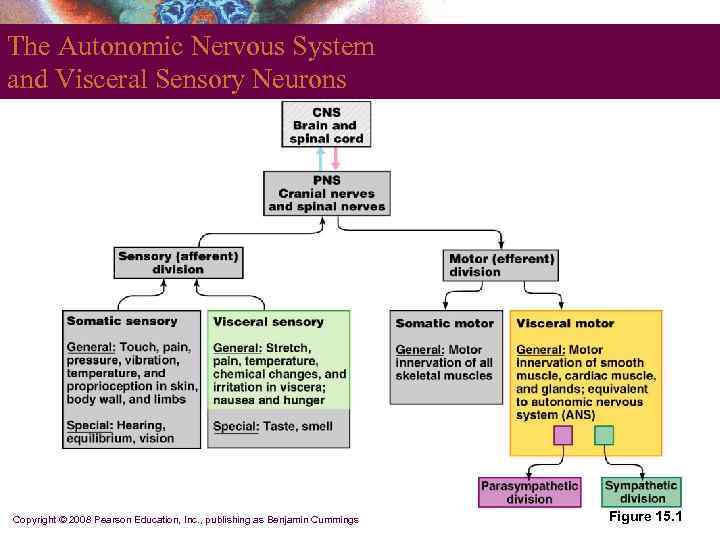
The Autonomic Nervous System and Visceral Sensory Neurons Copyright © 2008 Pearson Education, Inc. , publishing as Benjamin Cummings Figure 15. 1
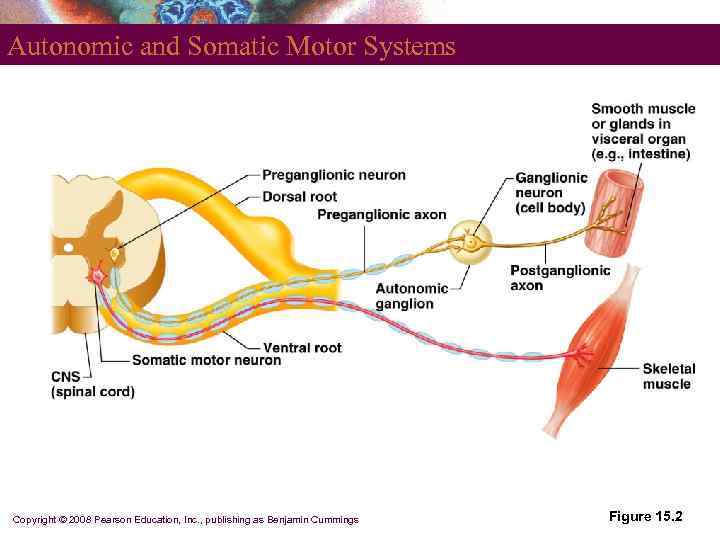
Comparison of Autonomic and Somatic Motor Systems § Somatic motor system § One motor neuron extends from the CNS to skeletal muscle § Axons are well myelinated, conduct impulses rapidly Copyright © 2008 Pearson Education, Inc. , publishing as Benjamin Cummings
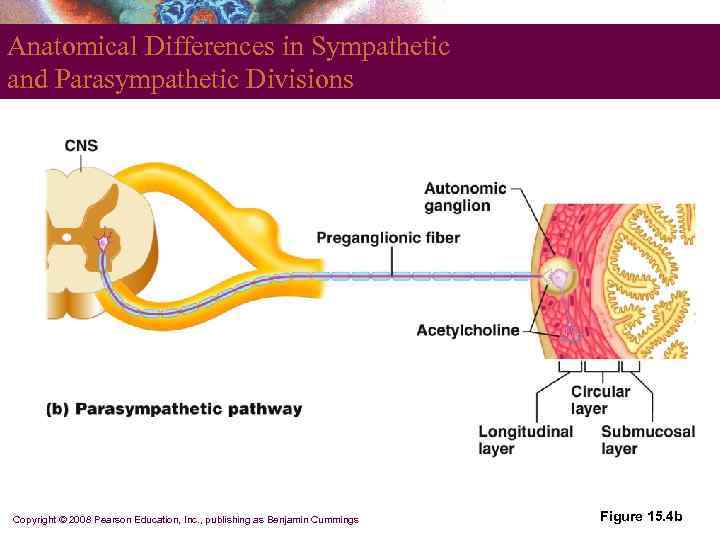
Comparison of Autonomic and Somatic Motor Systems § Autonomic nervous system § Chain of two motor neurons § Preganglionic neuron § Ganglionic neuron § Conduction is slower than somatic nervous system due to § Thinly myelinated or unmyelinated axons § Motor neuron synapses in a ganglion Copyright © 2008 Pearson Education, Inc. , publishing as Benjamin Cummings
Autonomic and Somatic Motor Systems Copyright © 2008 Pearson Education, Inc. , publishing as Benjamin Cummings Figure 15. 2
Divisions of the Autonomic Nervous System § Sympathetic and parasympathetic divisions § Chains of two motor neurons § Innervate mostly the same structures § Cause opposite effects Copyright © 2008 Pearson Education, Inc. , publishing as Benjamin Cummings
Divisions of the Autonomic Nervous System § Sympathetic – “fight, flight, or fright” § Activated during EXTREME situations § Exercise § Excitement § Emergencies § Parasympathetic – “rest and digest” § Concerned with conserving energy Copyright © 2008 Pearson Education, Inc. , publishing as Benjamin Cummings
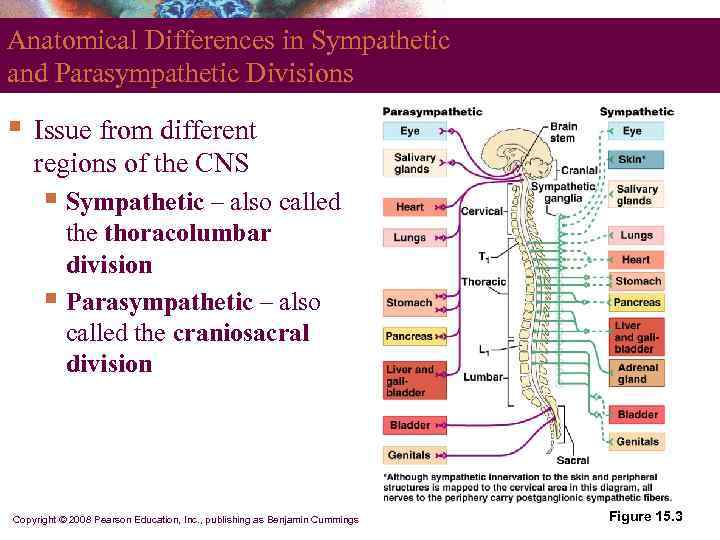
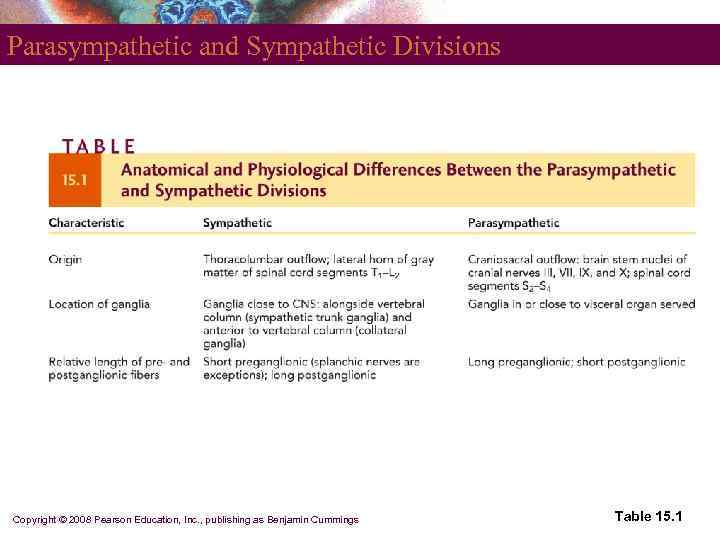
Anatomical Differences in Sympathetic and Parasympathetic Divisions § Issue from different regions of the CNS § Sympathetic – also called the thoracolumbar division § Parasympathetic – also called the craniosacral division Copyright © 2008 Pearson Education, Inc. , publishing as Benjamin Cummings Figure 15. 3
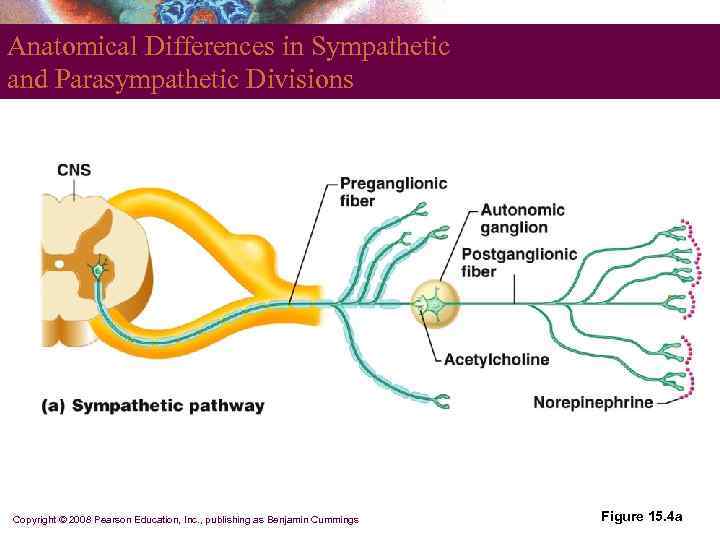
Anatomical Differences in Sympathetic and Parasympathetic Divisions § Length of postganglionic fibers § Sympathetic – long postganglionic fibers § Parasympathetic – short postganglionic fibers § Branching of axons § Sympathetic axons – highly branched § Influences many organs § Parasympathetic axons – few branches § Localized effect Copyright © 2008 Pearson Education, Inc. , publishing as Benjamin Cummings
Anatomical Differences in Sympathetic and Parasympathetic Divisions § Neurotransmitter released by postganglionic axons § Sympathetic – § most release norepinephrine (adrenergic) § Parasympathetic – § release acetylcholine (cholinergic) Copyright © 2008 Pearson Education, Inc. , publishing as Benjamin Cummings
Anatomical Differences in Sympathetic and Parasympathetic Divisions Copyright © 2008 Pearson Education, Inc. , publishing as Benjamin Cummings Figure 15. 4 a
Anatomical Differences in Sympathetic and Parasympathetic Divisions Copyright © 2008 Pearson Education, Inc. , publishing as Benjamin Cummings Figure 15. 4 b
Parasympathetic and Sympathetic Divisions Copyright © 2008 Pearson Education, Inc. , publishing as Benjamin Cummings Table 15. 1
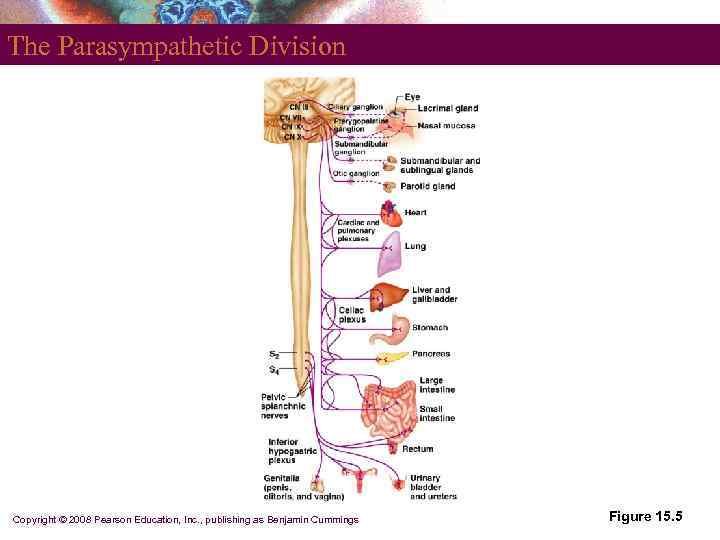
The Parasympathetic Division § Cranial outflow § Comes from the brain § Innervates § Organs of the head, neck, thorax, and abdomen § Sacral outflow § Innervation supplies § Remaining abdominal and pelvic organs Copyright © 2008 Pearson Education, Inc. , publishing as Benjamin Cummings
The Parasympathetic Division Copyright © 2008 Pearson Education, Inc. , publishing as Benjamin Cummings Figure 15. 5
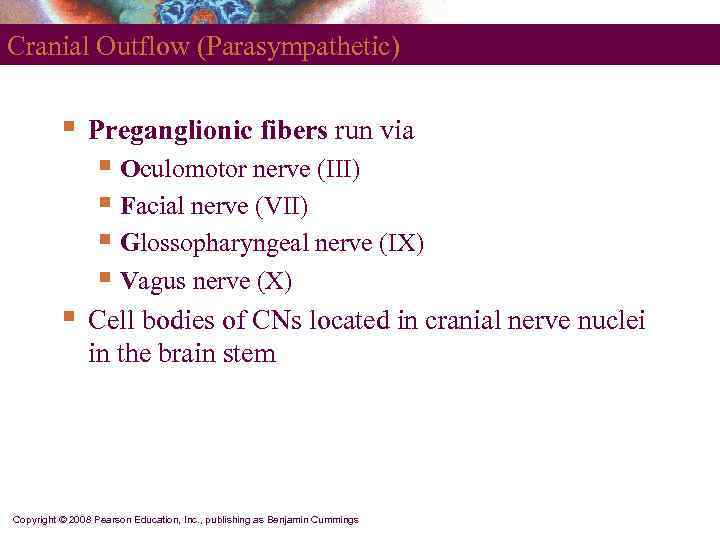
Cranial Outflow (Parasympathetic) § Preganglionic fibers run via § Oculomotor nerve (III) § Facial nerve (VII) § Glossopharyngeal nerve (IX) § Vagus nerve (X) § Cell bodies of CNs located in cranial nerve nuclei in the brain stem Copyright © 2008 Pearson Education, Inc. , publishing as Benjamin Cummings
Outflow via the Oculomotor Nerve (III) § Parasympathetic fibers innervate smooth muscles in the eye § Cause pupil constriction § Preganglionic cell bodies § Located in the oculomotor nucleus in the midbrain § Ganglionic cell bodies § Lie in the ciliary ganglion Copyright © 2008 Pearson Education, Inc. , publishing as Benjamin Cummings
Outflow via the Facial Nerve (VII) § Parasympathetic fibers stimulate secretion of glands in the head § Lacrimal nucleus § Located in the pons § Synapse in the pterygopalatine ganglion § Superior salivatory nucleus § Located in the pons § Synapse in the submandibular ganglion Copyright © 2008 Pearson Education, Inc. , publishing as Benjamin Cummings
Outflow via the Glossopharyngeal Nerve (IX) § Parasympathetic fibers § Stimulate secretion of glands in the head § Lacrimal nucleus – located in the pons § Synapse in the pterygopalatine ganglion § Superior salivatory nucleus – located in the pons § Synapse in the submandibular ganglion Copyright © 2008 Pearson Education, Inc. , publishing as Benjamin Cummings
Outflow via the Vagus Nerve (X) § Fibers innervate visceral organs of the thorax and most of the abdomen § Stimulates § Digestion, reduction in heart rate and reduction in blood pressure § Preganglionic cell bodies § Located in dorsal motor nucleus in the medulla § Ganglionic neurons § Confined within the walls of organs being innervated Copyright © 2008 Pearson Education, Inc. , publishing as Benjamin Cummings
Path of the Vagus Nerve § Sends branches through § Autonomic nerve plexuses § Cardiac plexus § Pulmonary plexus § Esophageal plexus § Celiac plexus § Superior mesenteric plexus Copyright © 2008 Pearson Education, Inc. , publishing as Benjamin Cummings
Path of the Vagus Nerve Copyright © 2008 Pearson Education, Inc. , publishing as Benjamin Cummings Figure 15. 6
Power. Point® Lecture Slides prepared by Leslie Hendon, University of Alabama, Birmingham 15 PART 2 HUMAN The ANATOMY Autonomic fifth edition Nervous System and Visceral Sensory Neurons Copyright © 2008 Pearson Education, Inc. , MARIEB | MALLATT | WILHELM publishing as Benjamin Cummings
Sacral Outflow § Emerges from S 2–S 4 § Innervates organs of the pelvis and lower abdomen § Preganglionic cell bodies § Located in visceral motor region of spinal gray matter Copyright © 2008 Pearson Education, Inc. , publishing as Benjamin Cummings
Sacral Outflow § Axons run in ventral roots to ventral rami § Form splanchnic nerves § Run through the inferior hypogastric plexus Copyright © 2008 Pearson Education, Inc. , publishing as Benjamin Cummings
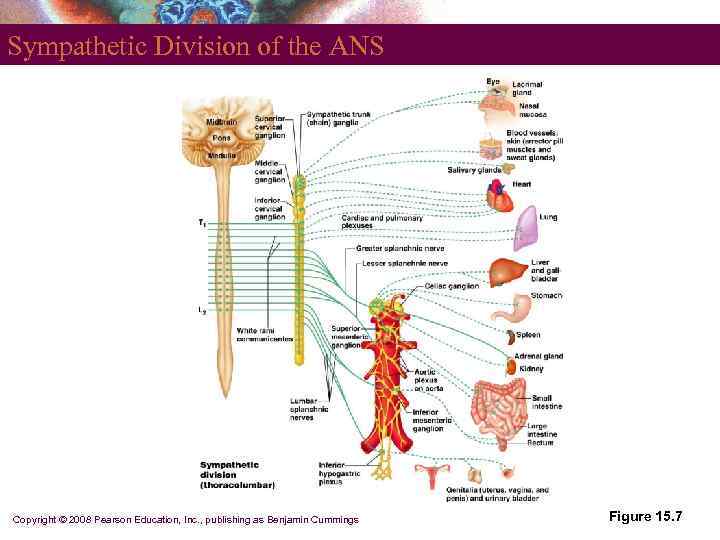
The Sympathetic Division § Basic organization § Issues from T 1–L 2 § Preganglionic fibers form the lateral gray horn § Supplies visceral organs and structures of superficial body regions § Contains more ganglia than the parasympathetic division Copyright © 2008 Pearson Education, Inc. , publishing as Benjamin Cummings
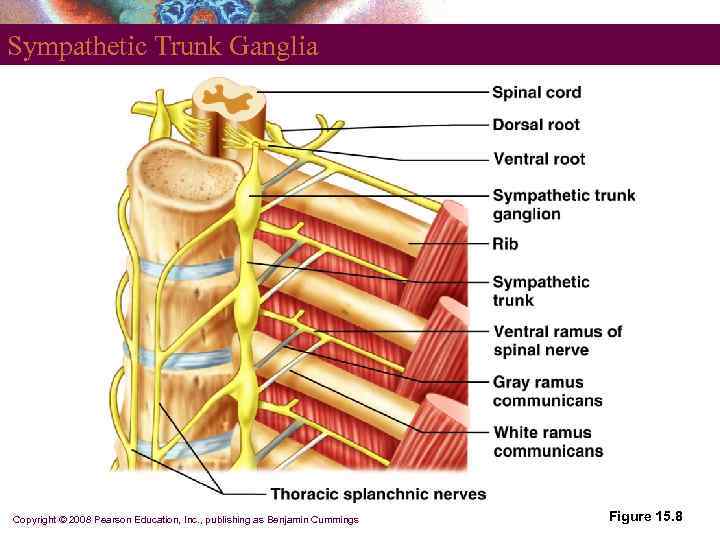
Sympathetic Trunk Ganglia § Located on both sides of the vertebral column § Linked by short nerves into sympathetic trunks Copyright © 2008 Pearson Education, Inc. , publishing as Benjamin Cummings
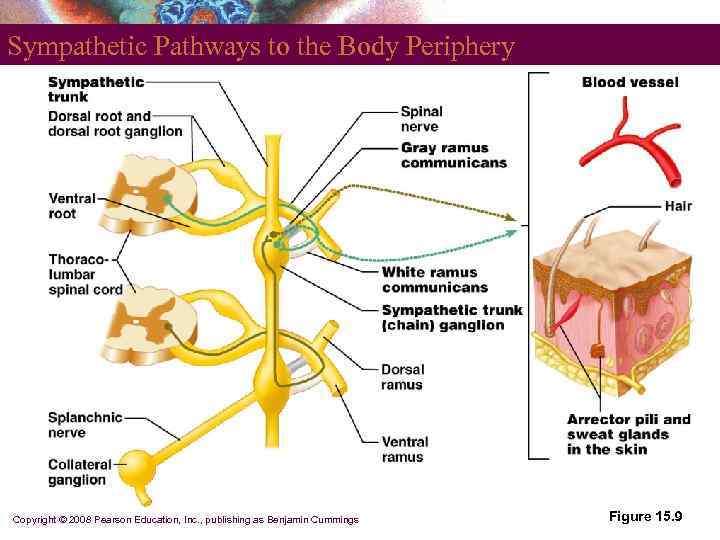
Sympathetic Trunk Ganglia § Joined to ventral rami by white and gray rami communicantes § Fusion of ganglia fewer ganglia than spinal nerves Copyright © 2008 Pearson Education, Inc. , publishing as Benjamin Cummings
Sympathetic Trunk Ganglia Copyright © 2008 Pearson Education, Inc. , publishing as Benjamin Cummings Figure 15. 8
Prevertebral Ganglia § Unpaired, not segmentally arranged § Occur only in abdomen and pelvis § Lie anterior to the vertebral column § Main ganglia § Celiac, superior mesenteric, inferior mesenteric, and inferior hypogastric ganglia Copyright © 2008 Pearson Education, Inc. , publishing as Benjamin Cummings
Sympathetic Division of the ANS Copyright © 2008 Pearson Education, Inc. , publishing as Benjamin Cummings Figure 15. 7
Sympathetic Pathways to the Body Periphery § Innervate § Sweat glands § Arrector pili muscles § Peripheral blood vessels Copyright © 2008 Pearson Education, Inc. , publishing as Benjamin Cummings
Sympathetic Pathways to the Body Periphery Copyright © 2008 Pearson Education, Inc. , publishing as Benjamin Cummings Figure 15. 9
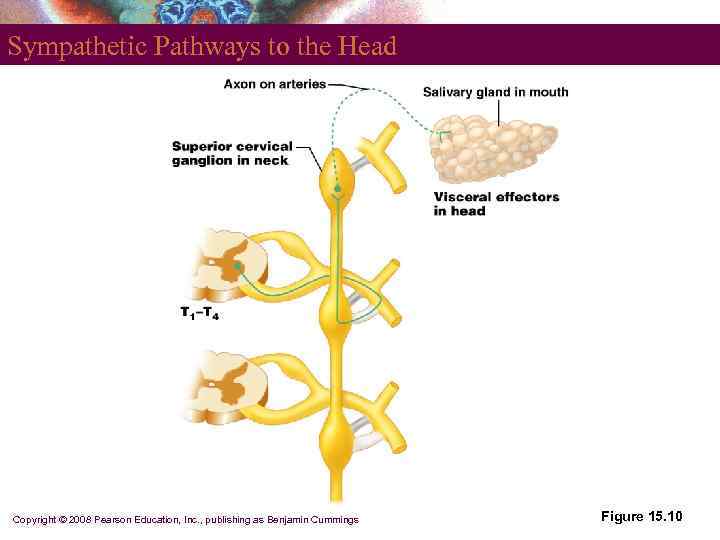
Sympathetic Pathways to the Head § Preganglionic fibers originate in spinal cord at T 1 –T 4 § Fibers ascend in the sympathetic trunk § Synapse in superior cervical ganglion Copyright © 2008 Pearson Education, Inc. , publishing as Benjamin Cummings
Sympathetic Pathways to the Head § Postganglionic fibers associate with large arteries § Carried by these structures to § Glands § Smooth muscle § Vessels throughout the head Copyright © 2008 Pearson Education, Inc. , publishing as Benjamin Cummings
Sympathetic Pathways to the Head Copyright © 2008 Pearson Education, Inc. , publishing as Benjamin Cummings Figure 15. 10
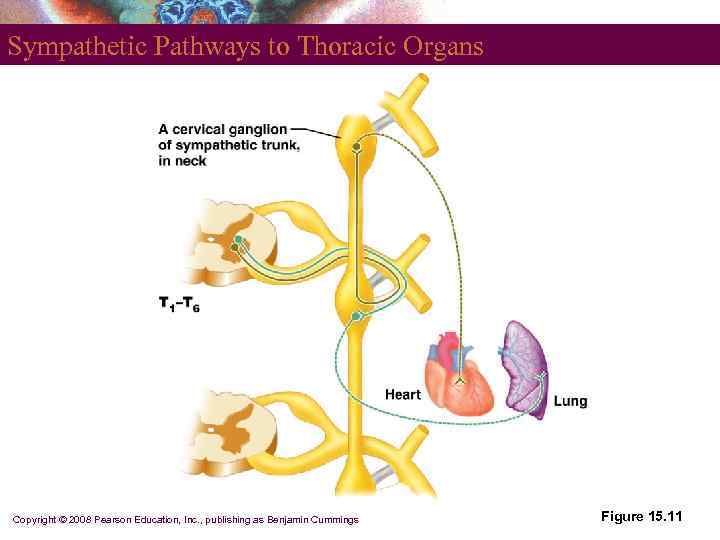
Sympathetic Pathways to Thoracic Organs § Preganglionic fibers originate at spinal levels T 1– T 6 § Some fibers synapse in nearest sympathetic trunk ganglion § Postganglionic fibers run directly to the organ supplied Copyright © 2008 Pearson Education, Inc. , publishing as Benjamin Cummings
Sympathetic Pathways to Thoracic Organs § Sympathetic fibers to heart have a less direct route § Functions § Increase heart rate § Dilate bronchioles § Dilate blood vessels to the heart wall § Inhibit muscles and glands in the esophagus and digestive system Copyright © 2008 Pearson Education, Inc. , publishing as Benjamin Cummings
Sympathetic Pathways to Thoracic Organs Copyright © 2008 Pearson Education, Inc. , publishing as Benjamin Cummings Figure 15. 11
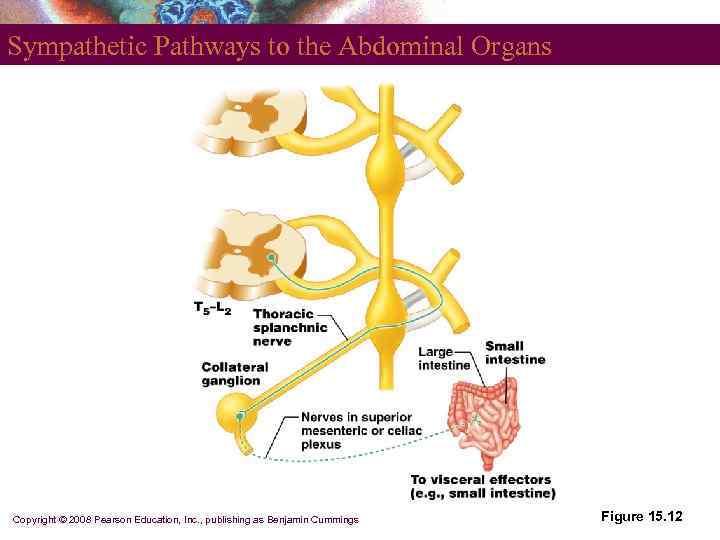
Sympathetic Pathways to Abdominal Organs § Preganglionic fibers originate in spinal cord (T 5– L 2) § Pass through adjacent sympathetic trunk ganglia § Then travel in thoracic splanchnic nerves § Synapse in prevertebral ganglia on the abdominal aorta § Celiac and superior mesenteric ganglia § Inhibit activity of muscles and glands in visceral organs Copyright © 2008 Pearson Education, Inc. , publishing as Benjamin Cummings
Sympathetic Pathways to the Abdominal Organs Copyright © 2008 Pearson Education, Inc. , publishing as Benjamin Cummings Figure 15. 12
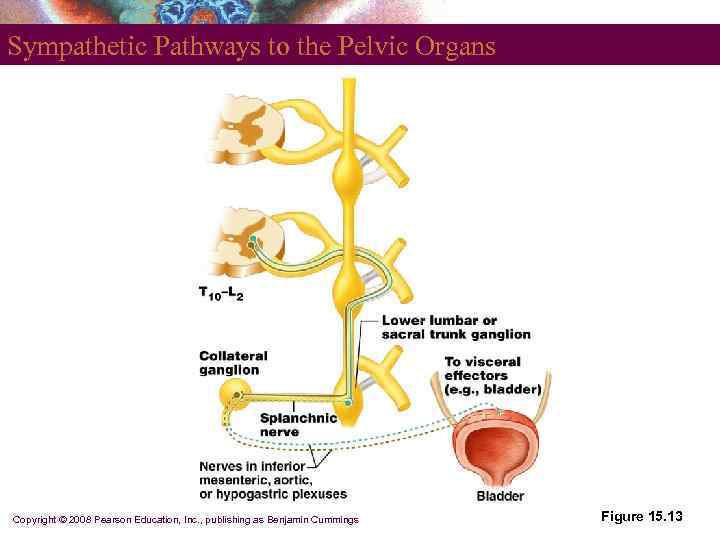
Sympathetic Pathways to the Pelvic Organs § Preganglionic fibers originate in spinal cord (T 10 –L 2) § Some fibers synapse in sympathetic trunk § Other preganglionic fibers synapse in prevertebral ganglia § Postganglionic fibers proceed from plexuses to pelvic organs Copyright © 2008 Pearson Education, Inc. , publishing as Benjamin Cummings
Sympathetic Pathways to the Pelvic Organs Copyright © 2008 Pearson Education, Inc. , publishing as Benjamin Cummings Figure 15. 13
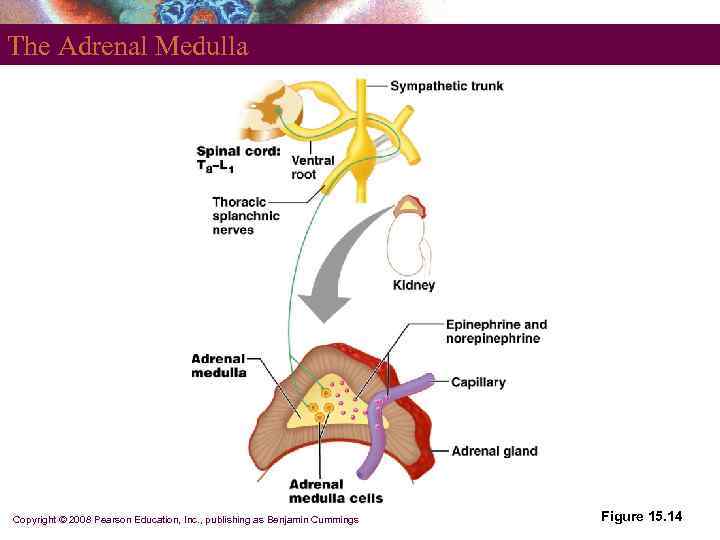
The Role of the Adrenal Medulla in the Sympathetic Division § Major organ of the sympathetic nervous system § Constitutes largest sympathetic ganglia § Secretes great quantities of norepinephrine and adrenaline § Stimulated to secrete by preganglionic sympathetic fibers Copyright © 2008 Pearson Education, Inc. , publishing as Benjamin Cummings
The Adrenal Medulla Copyright © 2008 Pearson Education, Inc. , publishing as Benjamin Cummings Figure 15. 14
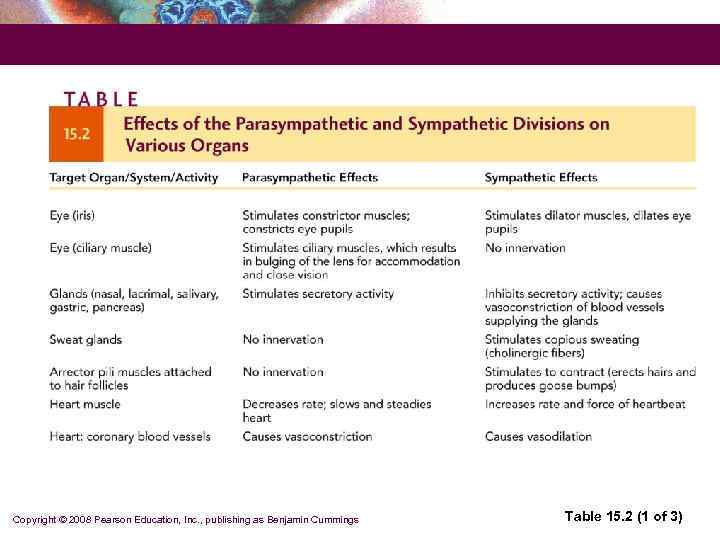
Copyright © 2008 Pearson Education, Inc. , publishing as Benjamin Cummings Table 15. 2 (1 of 3)
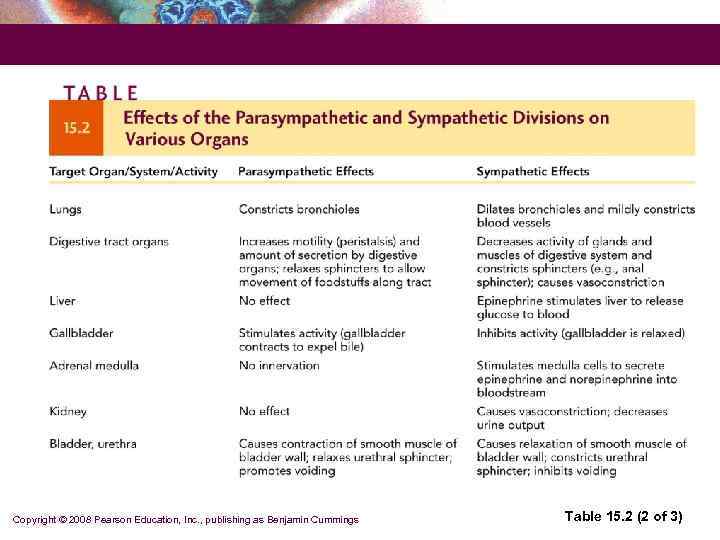
Copyright © 2008 Pearson Education, Inc. , publishing as Benjamin Cummings Table 15. 2 (2 of 3)
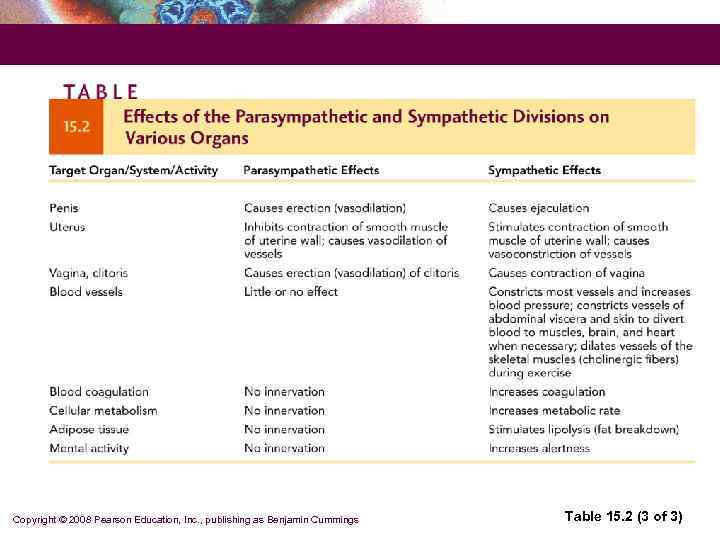
Copyright © 2008 Pearson Education, Inc. , publishing as Benjamin Cummings Table 15. 2 (3 of 3)
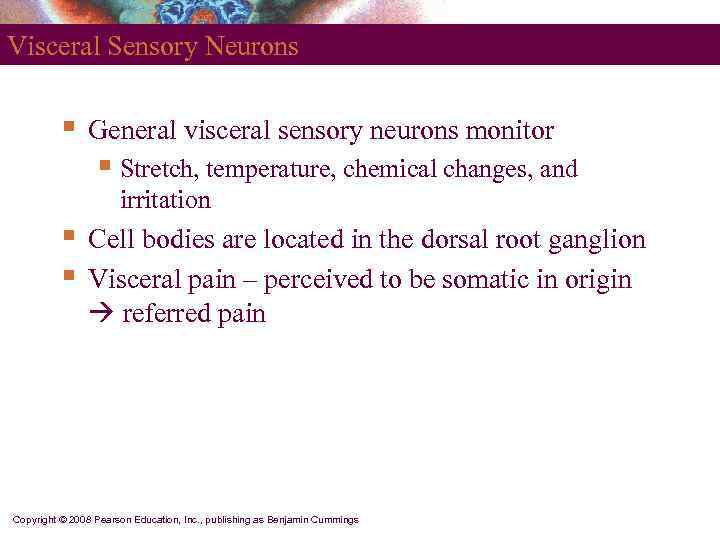
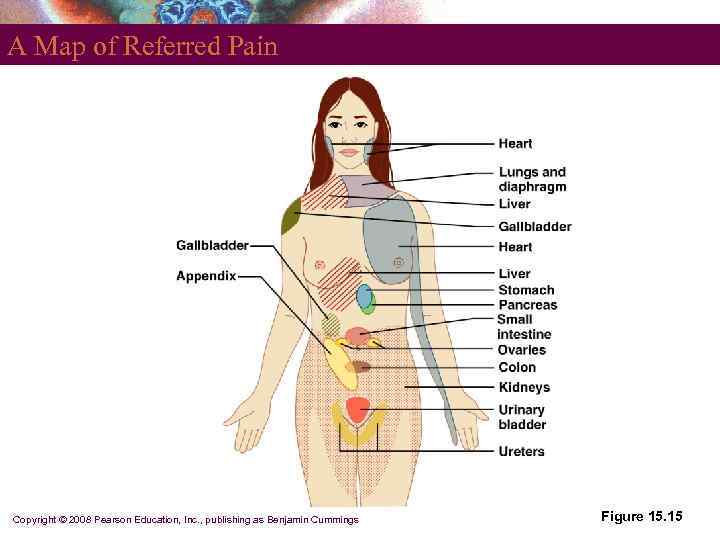
Visceral Sensory Neurons § General visceral sensory neurons monitor § Stretch, temperature, chemical changes, and irritation § Cell bodies are located in the dorsal root ganglion § Visceral pain – perceived to be somatic in origin referred pain Copyright © 2008 Pearson Education, Inc. , publishing as Benjamin Cummings
A Map of Referred Pain Copyright © 2008 Pearson Education, Inc. , publishing as Benjamin Cummings Figure 15. 15
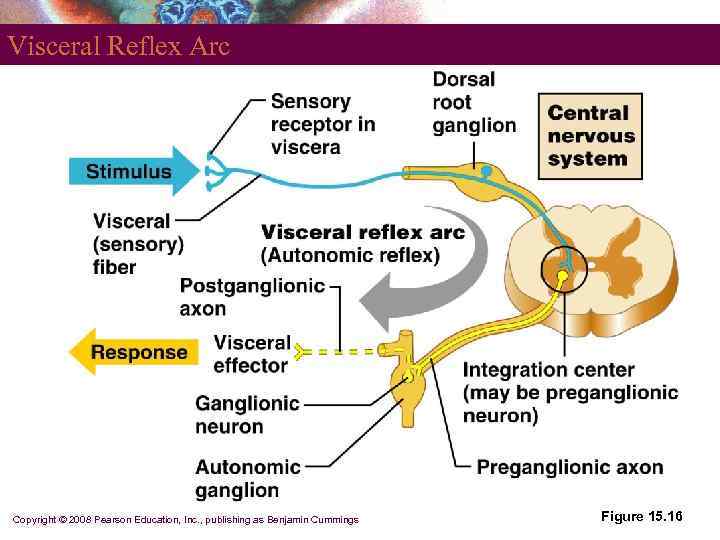
Visceral Reflexes § Visceral sensory and autonomic neurons § Participate in visceral reflex arcs § Defecation reflex § Micturition reflex § Some are simple spinal reflexes § Others do not involve the CNS § Strictly peripheral reflexes Copyright © 2008 Pearson Education, Inc. , publishing as Benjamin Cummings
Visceral Reflex Arc Copyright © 2008 Pearson Education, Inc. , publishing as Benjamin Cummings Figure 15. 16
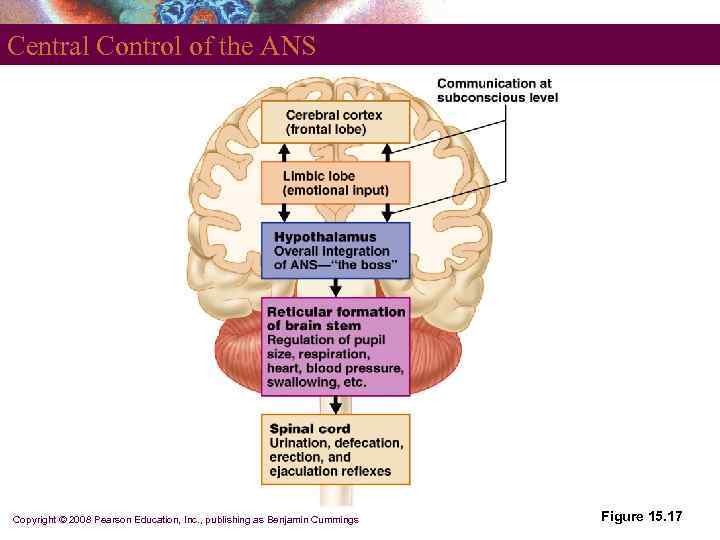
Central Control of the ANS § Control by the brain stem and spinal cord § Reticular formation exerts most direct influence § Medulla oblongata § Periaqueductal gray matter § Control by the hypothalamus and amygdala § Hypothalamus – the main integration center of the ANS § Amygdala – main limbic region for emotions § Control by the cerebral cortex Copyright © 2008 Pearson Education, Inc. , publishing as Benjamin Cummings
Central Control of the ANS Copyright © 2008 Pearson Education, Inc. , publishing as Benjamin Cummings Figure 15. 17
Disorders of the Autonomic Nervous System § Raynaud’s disease – characterized by constriction of blood vessels § Provoked by exposure to cold or by emotional stress § Hypertension – high blood pressure § Can result from overactive sympathetic vasoconstriction Copyright © 2008 Pearson Education, Inc. , publishing as Benjamin Cummings
Disorders of the Autonomic Nervous System § Mass reflex reaction § Uncontrolled activation of autonomic and somatic motor neurons § Affects quadriplegics and paraplegics § Achalasia of the cardia § Defect in the autonomic innervation of the esophagus Copyright © 2008 Pearson Education, Inc. , publishing as Benjamin Cummings
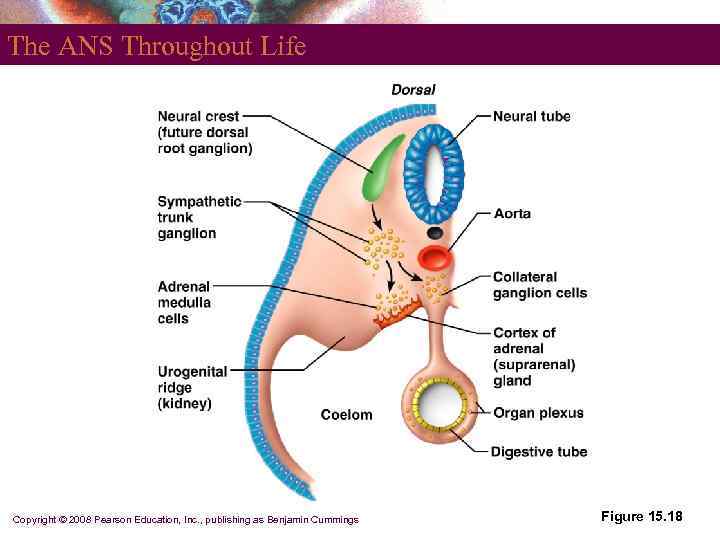
The ANS Throughout Life § Preganglionic neurons of the ANS develop from the neural tube § Ganglionic neurons develop from the neural crest § Development of the sympathetic division § Some cells migrate ventrally § Form the sympathetic trunk ganglia § Other cells migrate § Form the prevertebral ganglia Copyright © 2008 Pearson Education, Inc. , publishing as Benjamin Cummings
The ANS Throughout Life Copyright © 2008 Pearson Education, Inc. , publishing as Benjamin Cummings Figure 15. 18
The ANS Throughout Life § Efficiency of the ANS declines with advancing age § Constipation due to reduced mobility of gastrointestinal (GI) tract § Dry eyes due to reduced tear formation Copyright © 2008 Pearson Education, Inc. , publishing as Benjamin Cummings