


 Скачать презентацию Power and Cooling at Texas Advanced Computing Center
034684f84c3b20653fea2a4849e593dd.ppt
- Количество слайдов: 15
 Power and Cooling at Texas Advanced Computing Center Tommy Minyard, Ph. D. Director of Advanced Computing Systems 42 nd HPC User Forum September 8, 2011
 TACC Mission & Strategy The mission of the Texas Advanced Computing Center is to enable scientific discovery and enhance society through the application of advanced computing technologies. To accomplish this mission, TACC: – Evaluates, acquires & operates advanced computing systems – Provides training, consulting, and documentation to users – Collaborates with researchers to apply advanced computing techniques – Conducts research & development to produce new computational technologies Resources & Services Research & Development
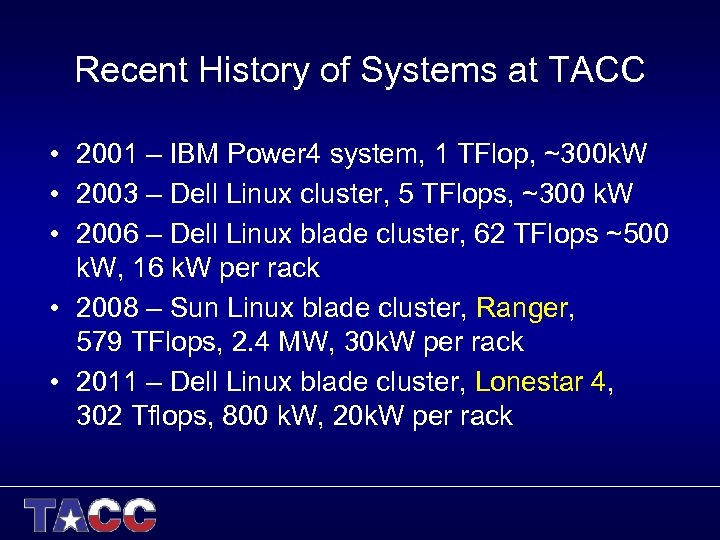 Recent History of Systems at TACC • 2001 – IBM Power 4 system, 1 TFlop, ~300 k. W • 2003 – Dell Linux cluster, 5 TFlops, ~300 k. W • 2006 – Dell Linux blade cluster, 62 TFlops ~500 k. W, 16 k. W per rack • 2008 – Sun Linux blade cluster, Ranger, 579 TFlops, 2. 4 MW, 30 k. W per rack • 2011 – Dell Linux blade cluster, Lonestar 4, 302 Tflops, 800 k. W, 20 k. W per rack
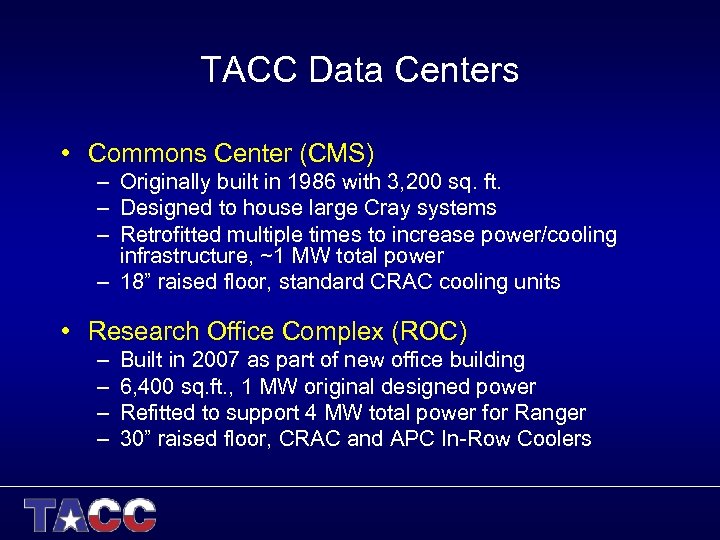 TACC Data Centers • Commons Center (CMS) – Originally built in 1986 with 3, 200 sq. ft. – Designed to house large Cray systems – Retrofitted multiple times to increase power/cooling infrastructure, ~1 MW total power – 18” raised floor, standard CRAC cooling units • Research Office Complex (ROC) – – Built in 2007 as part of new office building 6, 400 sq. ft. , 1 MW original designed power Refitted to support 4 MW total power for Ranger 30” raised floor, CRAC and APC In-Row Coolers
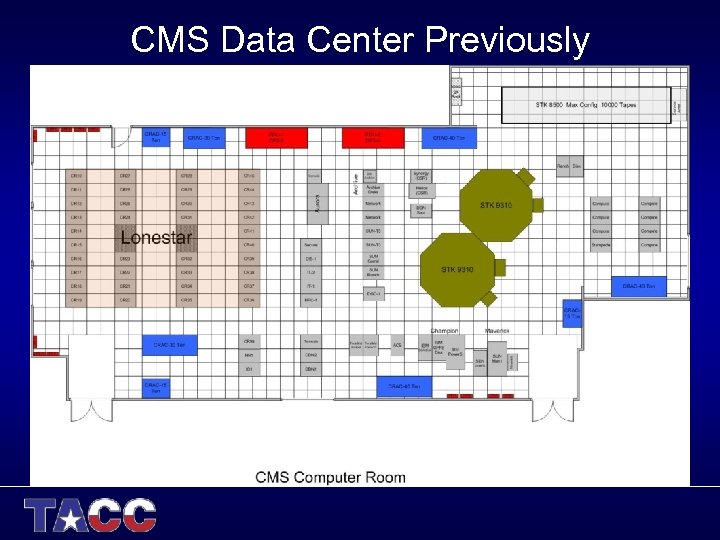 CMS Data Center Previously
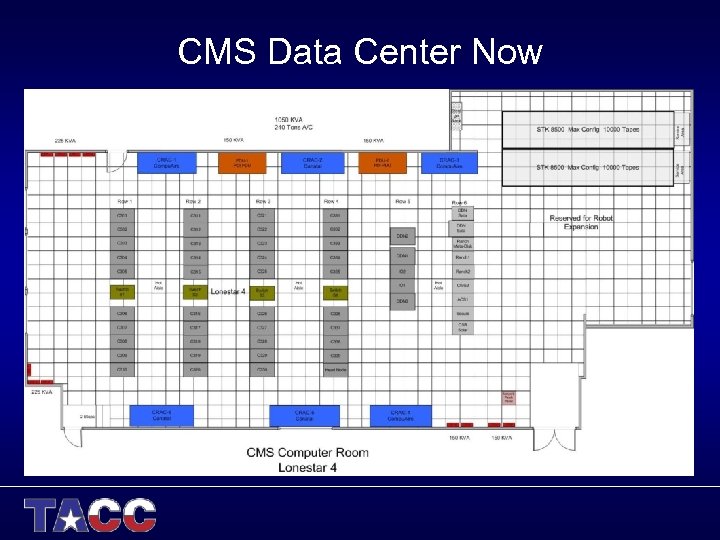 CMS Data Center Now
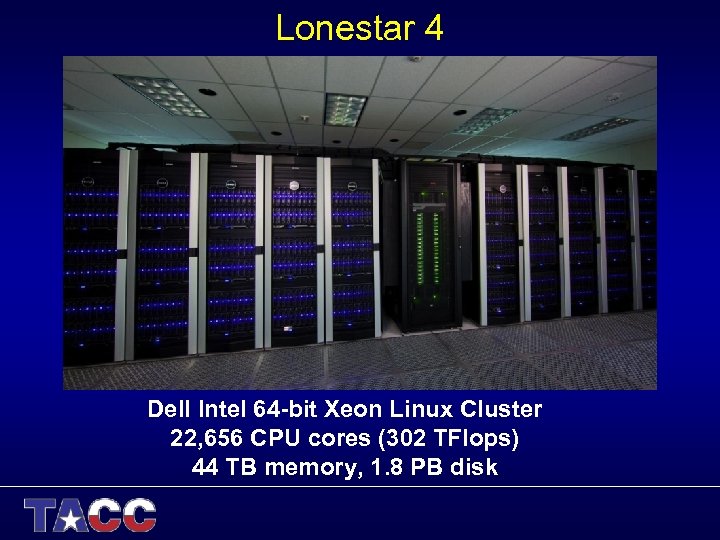 Lonestar 4 Dell Intel 64 -bit Xeon Linux Cluster 22, 656 CPU cores (302 TFlops) 44 TB memory, 1. 8 PB disk
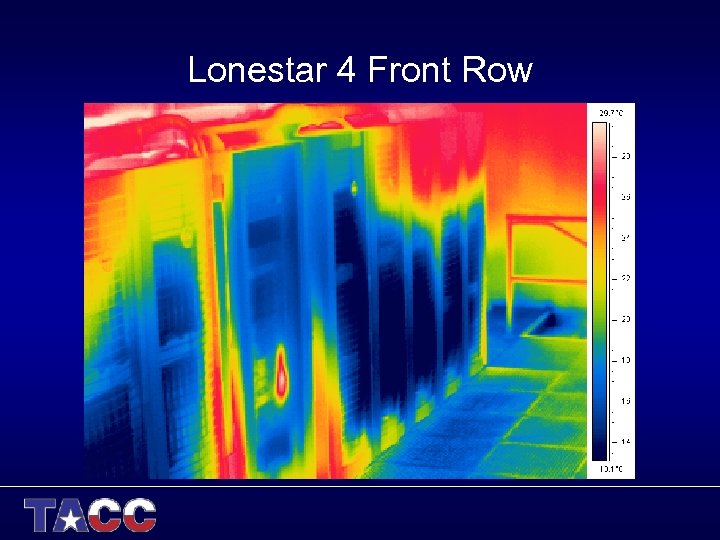 Lonestar 4 Front Row
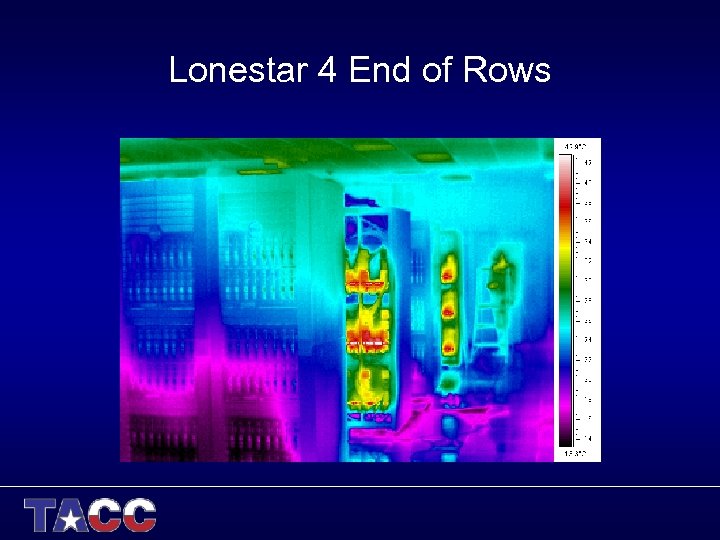 Lonestar 4 End of Rows
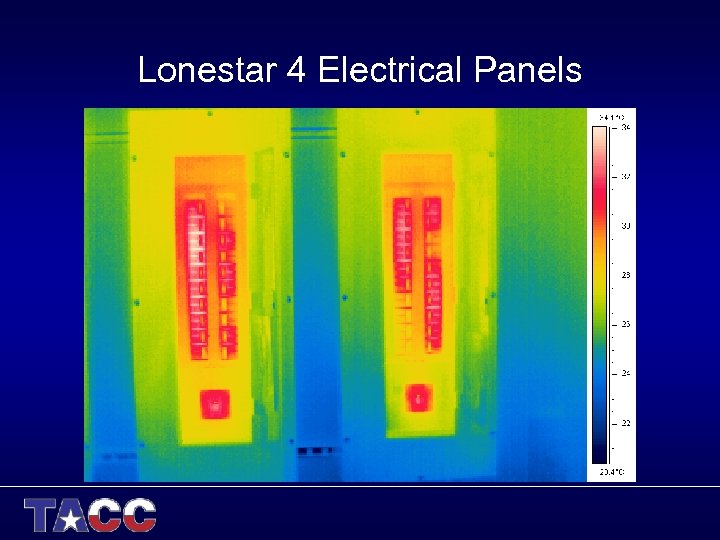 Lonestar 4 Electrical Panels
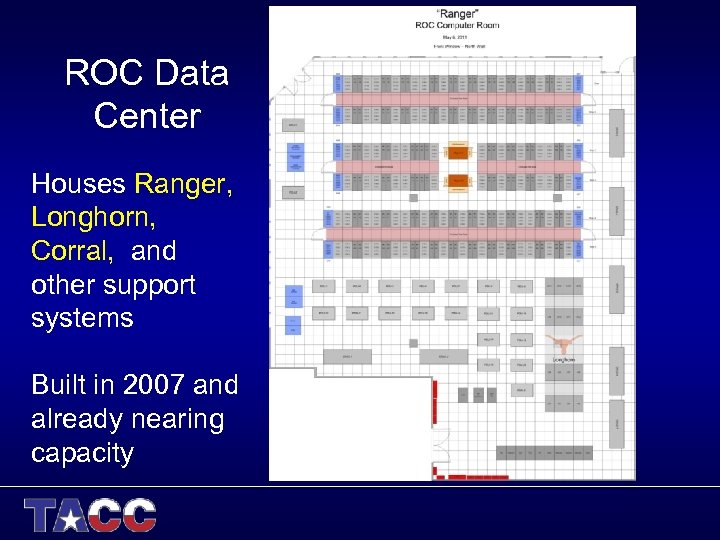 ROC Data Center Houses Ranger, Longhorn, Corral, and other support systems Built in 2007 and already nearing capacity
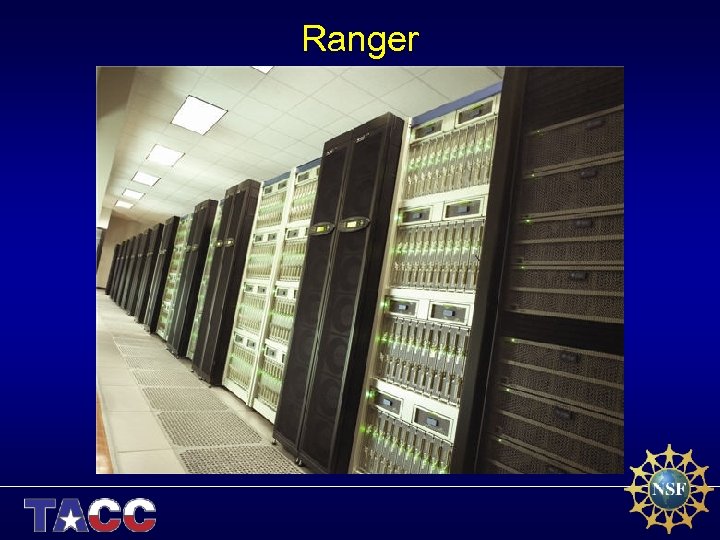 Ranger
 Data Center of the Future • Exploring flexible and efficient data center designs • Planning for 50 k. W per rack, 10 MW total system power in the near future • Prefer 480 V power distribution to racks • Exotic cooling ideas not excluded – Thermal storage tanks – Immersion cooling
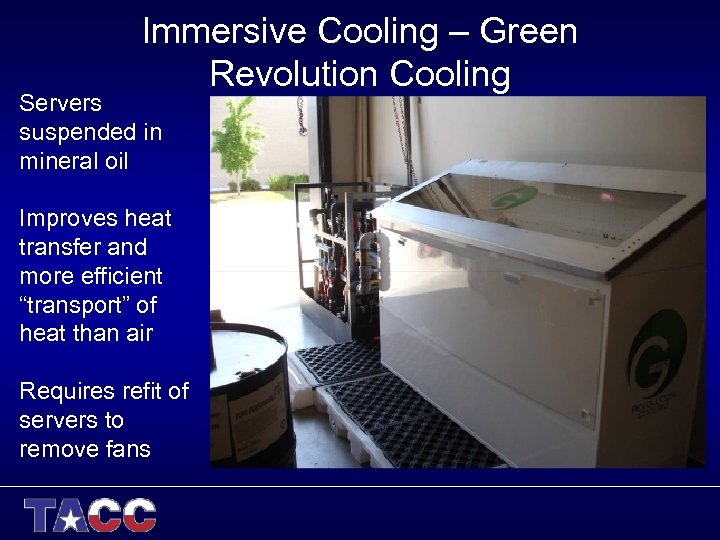 Immersive Cooling – Green Revolution Cooling Servers suspended in mineral oil Improves heat transfer and more efficient “transport” of heat than air Requires refit of servers to remove fans
 Summary • Data center/rack power densities increasing • Efficiency of delivering power and cooling the heat generated becoming substantial • Air cooling reaching limits of cooling capability • Future data centers will require more “exotic” or customized cooling solutions for very high power density