


 Скачать презентацию Poverty International Trade Agenda Oxfam n
e75ad4d8aed1f8d515d8f9d95f71763b.ppt
- Количество слайдов: 53
 Poverty & International Trade
 Agenda Oxfam n Let’s talk about globalization n Let’s talk about poverty n Connections between trade and poverty n Solutions n Jeopardy! n Get involved n
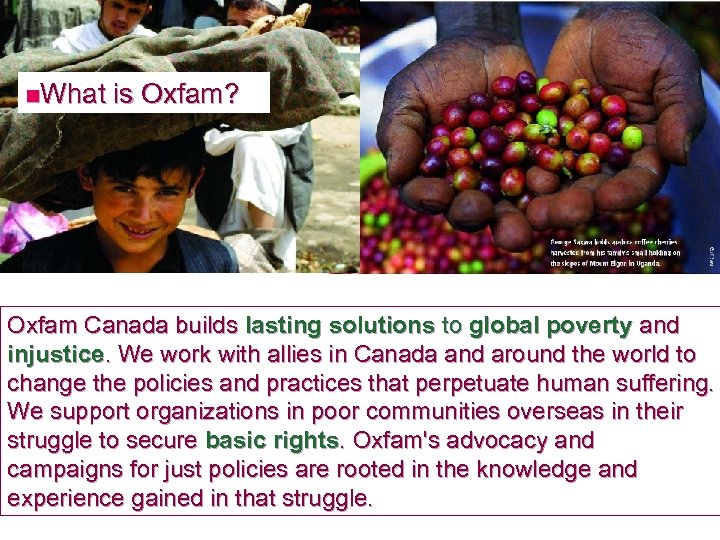 n. What Introduction is Oxfam? Oxfam Canada builds lasting solutions to global poverty and injustice. We work with allies in Canada and around the world to change the policies and practices that perpetuate human suffering. We support organizations in poor communities overseas in their struggle to secure basic rights. Oxfam's advocacy and campaigns for just policies are rooted in the knowledge and experience gained in that struggle.
 The Label Game n n n Find a partner Check the clothing tag at the back of each other’s garments. Identify the country where the clothing was made, and write that down on the Post-It note. One person take both Post-It notes and place them on the map
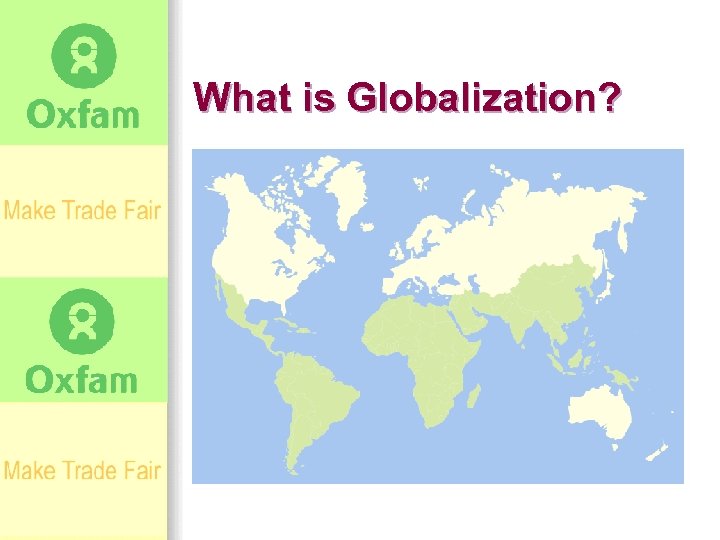 What is Globalization?
 The Story of the Strawberry…
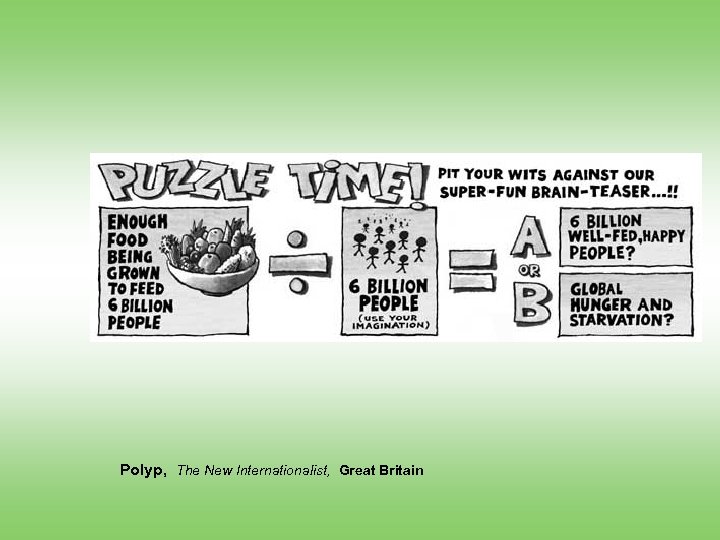 Polyp, The New Internationalist, Great Britain
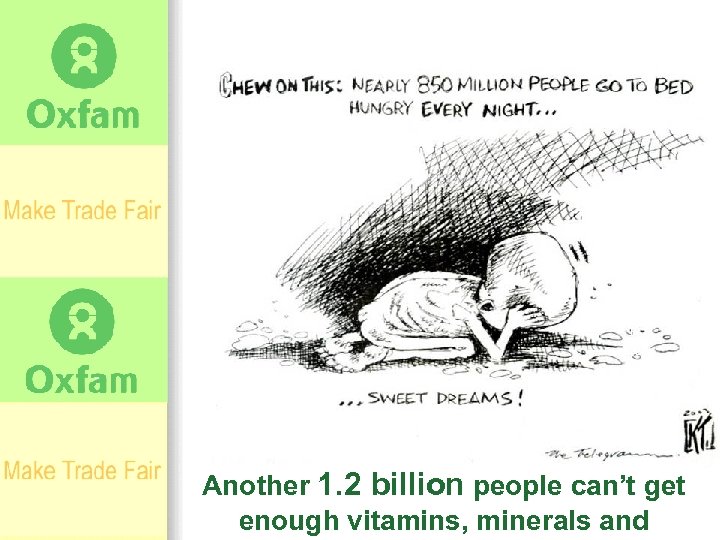 K. T. , The Telegram, Newfoundland Another 1. 2 billion people can’t get enough vitamins, minerals and
 Almost one person in three is affected by malnutrition.
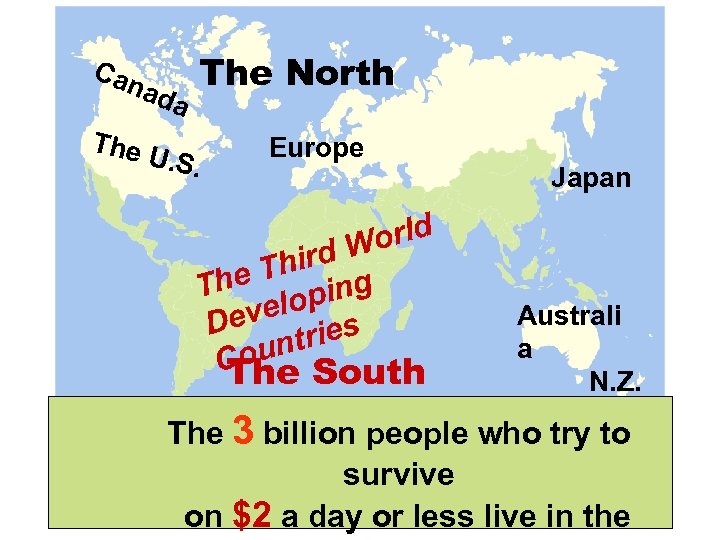 Can ada The U The North . S. Europe orld ird W e Th ing Th elop Dev tries oun C The South Japan Australi a N. Z. The 3 billion people who try to survive on $2 a day or less live in the
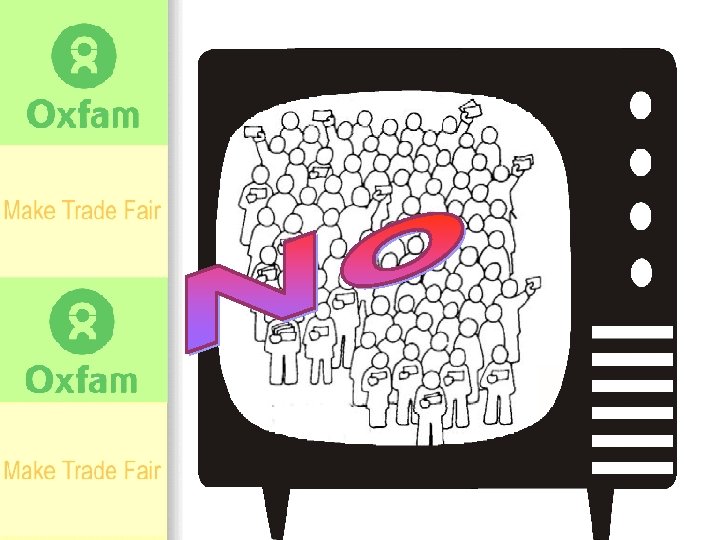
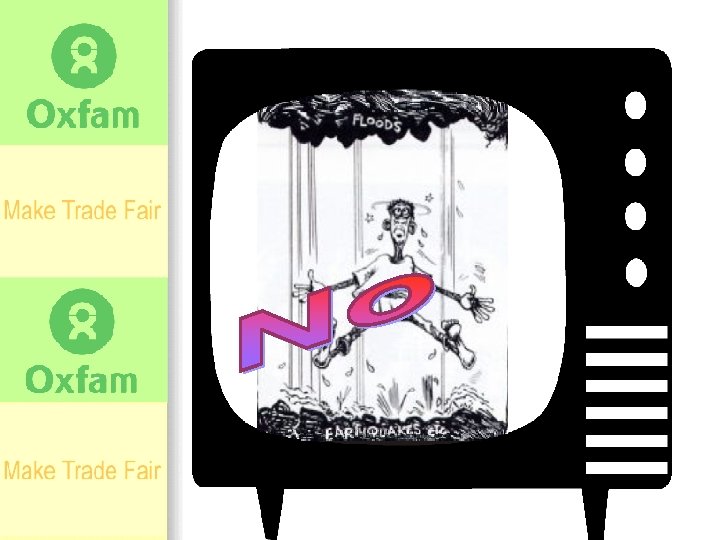
 The biggest reason for hunger is POVERTY.
 Q. But what does trade have to do with poverty?
 The Great Trade Robbery Unfair Trade Rules n Trade barriers into rich countries n. When poor countries send goods to rich countries, they face tariff barriers that are four times as high as rich countries face when sending their goods to poor countries. These barriers cost poor countries 100 billion dollars a year – twice as much as they receive in aid.
 The Great Trade Robbery Unfair Trade Practices n SUBSIDIES n. For the time being, let’s stick to talking about subsidies…
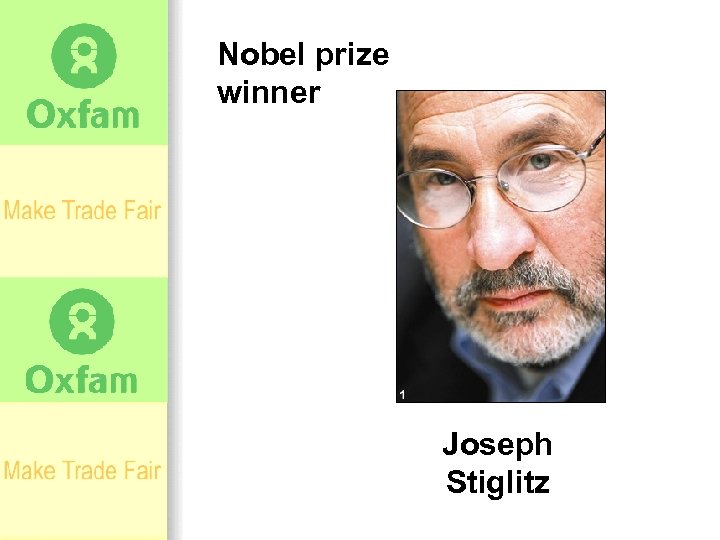 Nobel prize winner Joseph Stiglitz
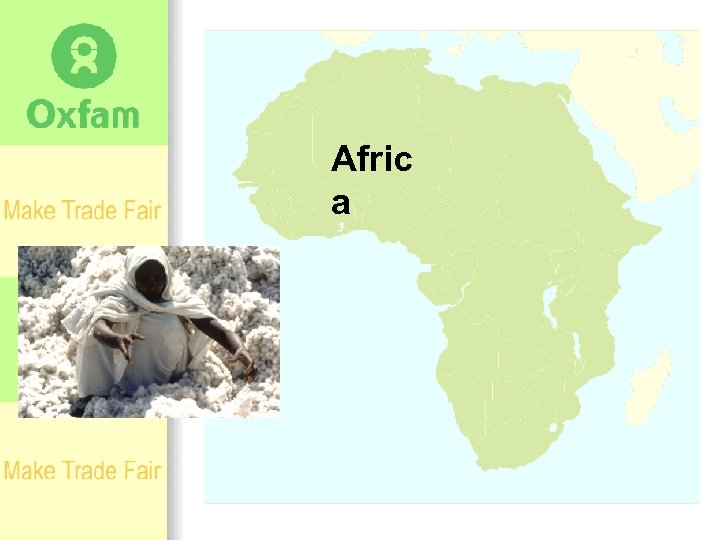 Afric a
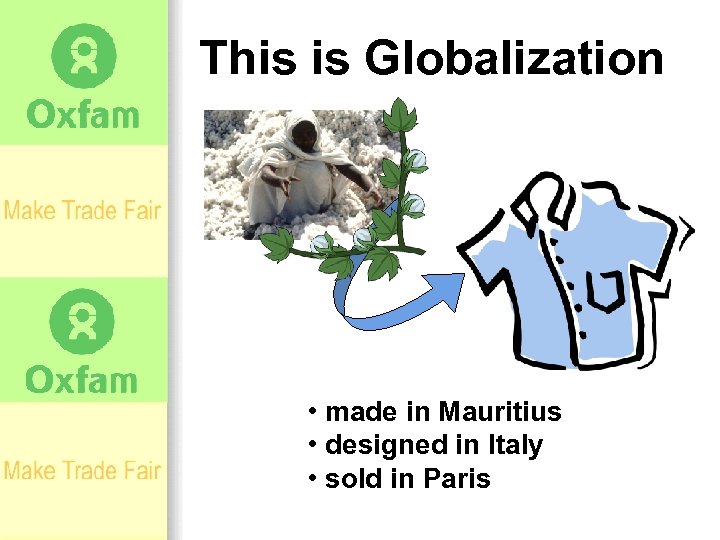 This is Globalization • made in Mauritius • designed in Italy • sold in Paris
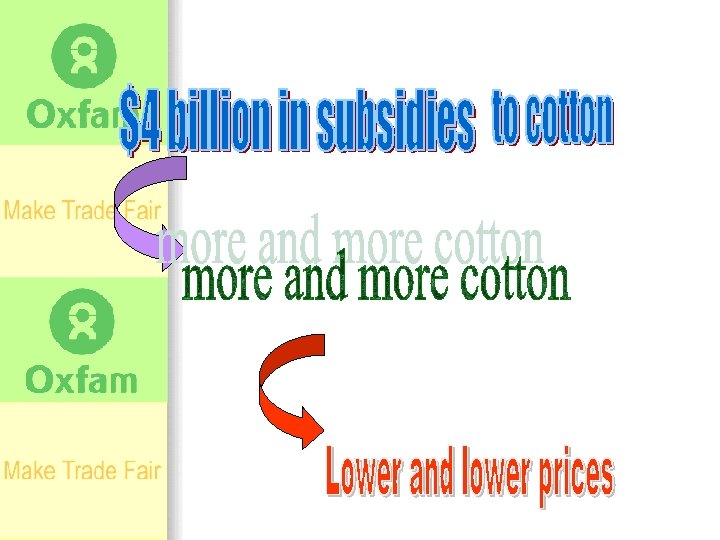
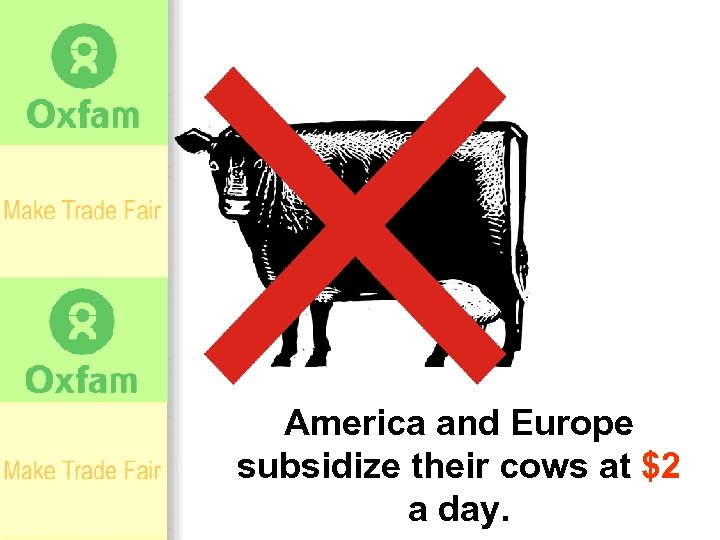 America and Europe subsidize their cows at $2 a day.
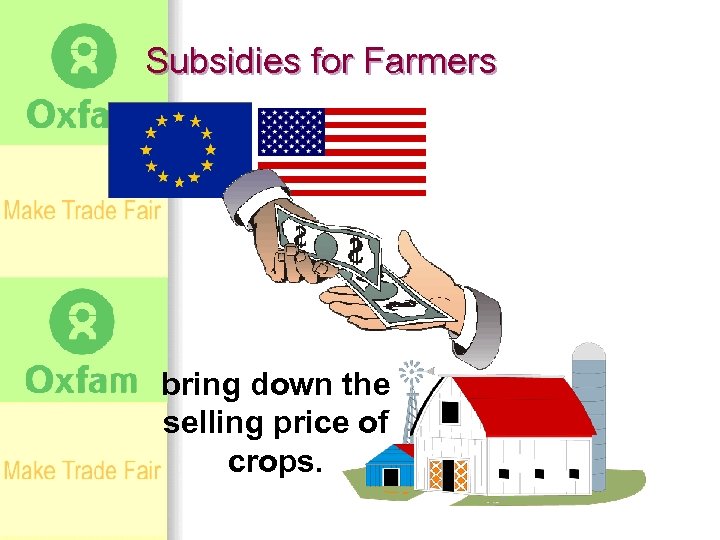 Subsidies for Farmers bring down the selling price of crops.
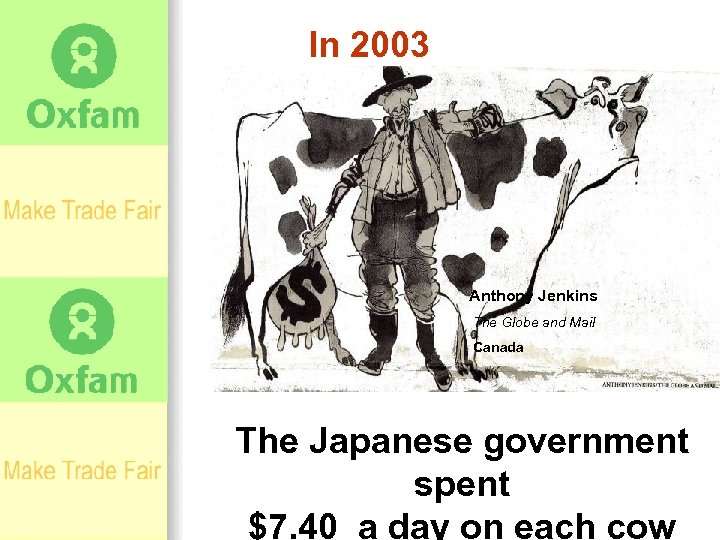 In 2003 Anthony Jenkins The Globe and Mail Canada The Japanese government spent $7. 40 a day on each cow
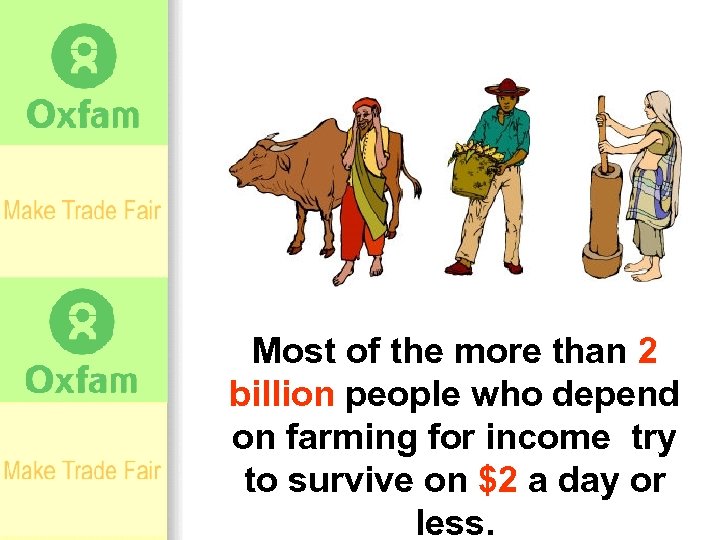 Most of the more than 2 billion people who depend on farming for income try to survive on $2 a day or less.
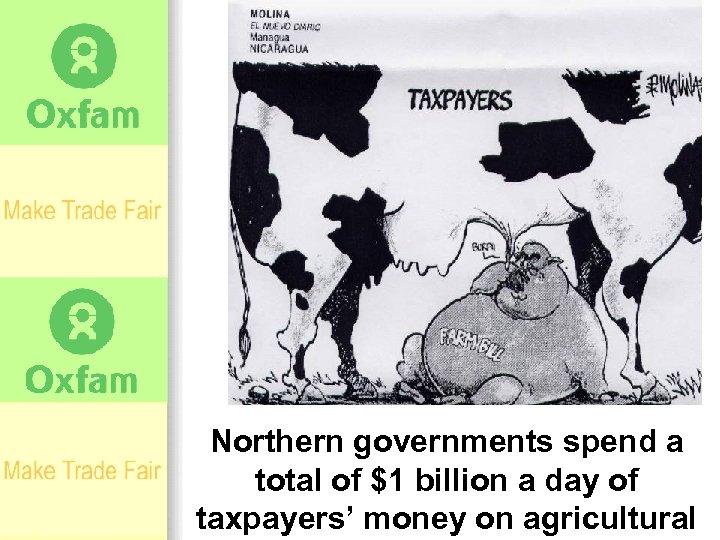 Northern governments spend a total of $1 billion a day of taxpayers’ money on agricultural
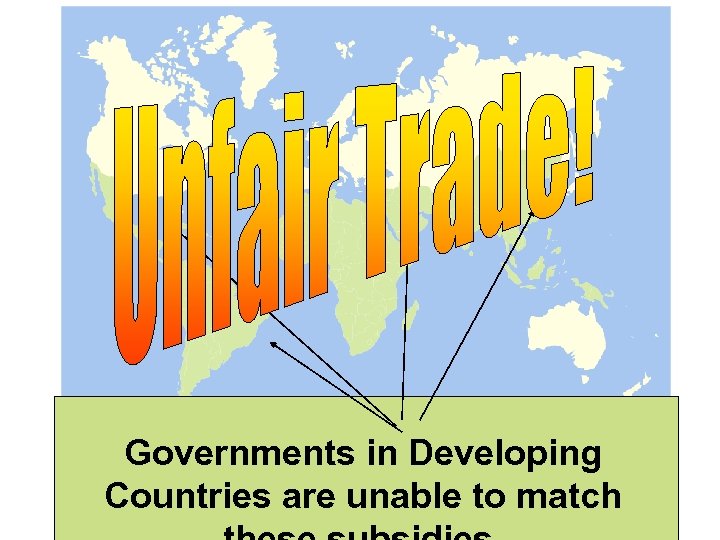 Governments in Developing Countries are unable to match
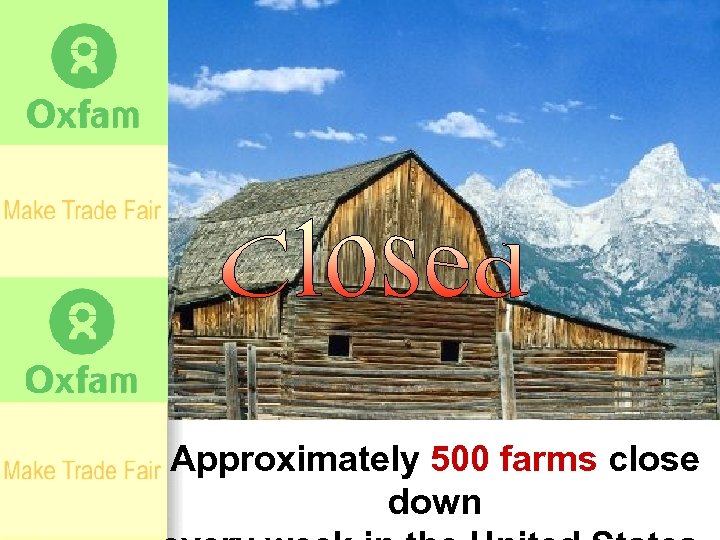 Approximately 500 farms close down
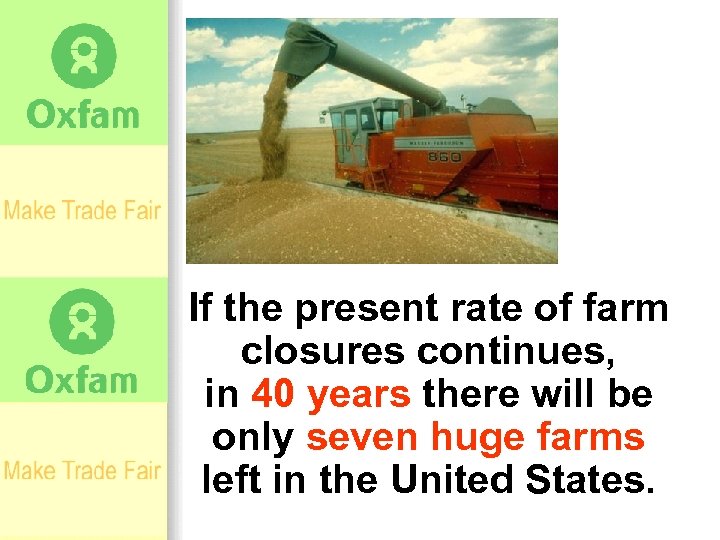 If the present rate of farm closures continues, in 40 years there will be only seven huge farms left in the United States.
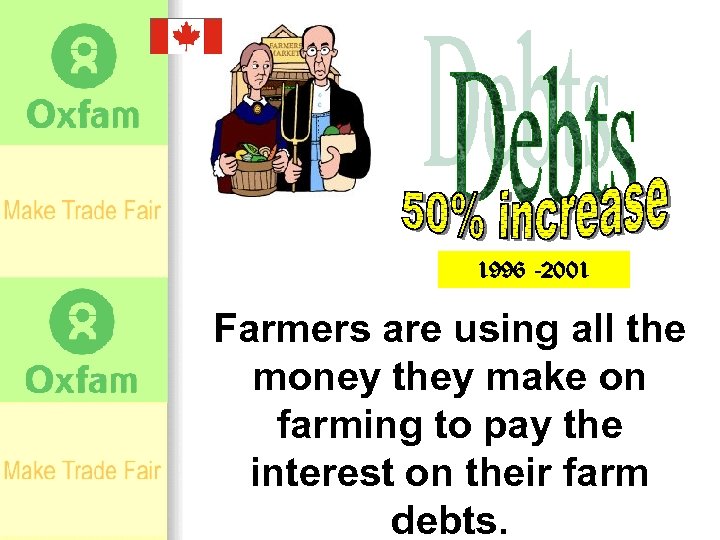 1996 -2001 Farmers are using all the money they make on farming to pay the interest on their farm debts.
 Subsidies are not working for most farmers.
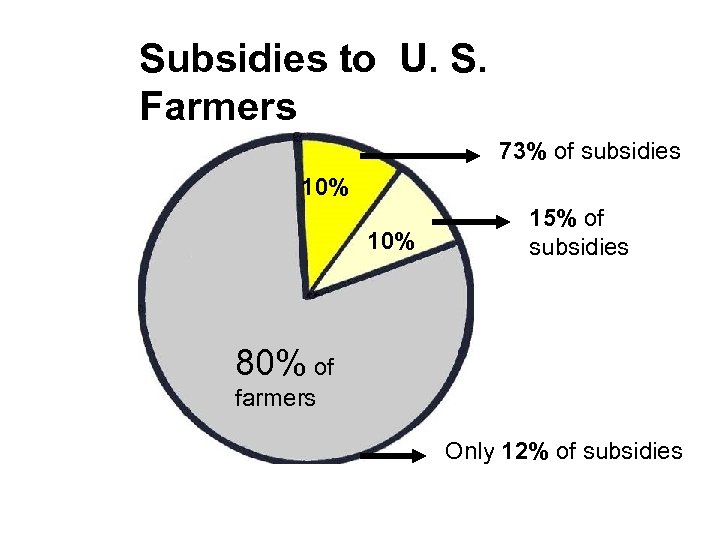 Subsidies to U. S. Farmers 73% of subsidies 10% 15% of subsidies 80% of farmers Only 12% of subsidies
 Subsidies are huge. Most of the money is going to very few American farmers.
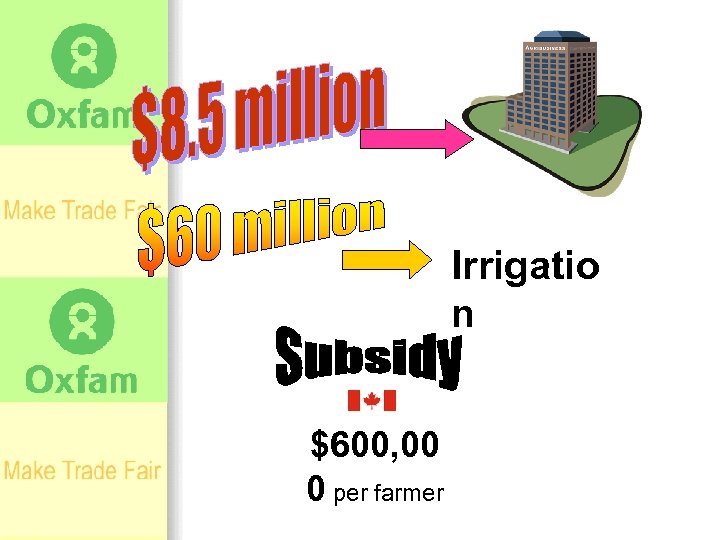 Irrigatio n $600, 00 0 per farmer
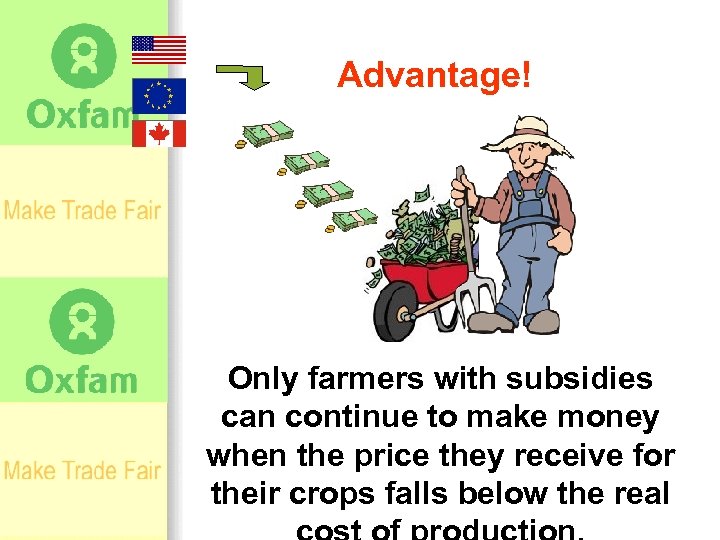 Advantage! Only farmers with subsidies can continue to make money when the price they receive for their crops falls below the real
 What distinguishes highly subsidized farms from other farms? • They are very large. • They are often owned by corporations. • They grow crops for export.
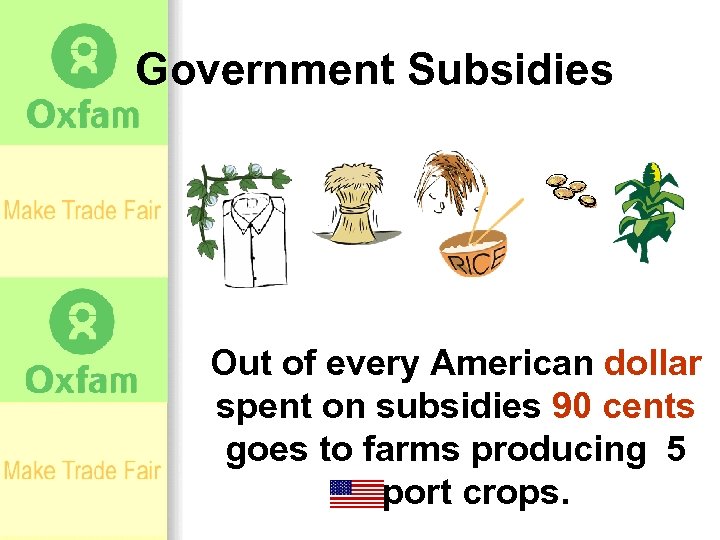 Government Subsidies Out of every American dollar spent on subsidies 90 cents goes to farms producing 5 export crops.
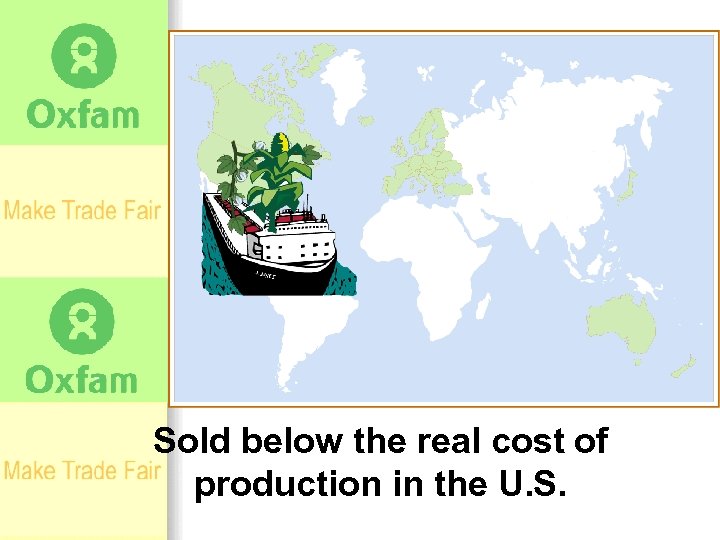 Sold below the real cost of production in the U. S.
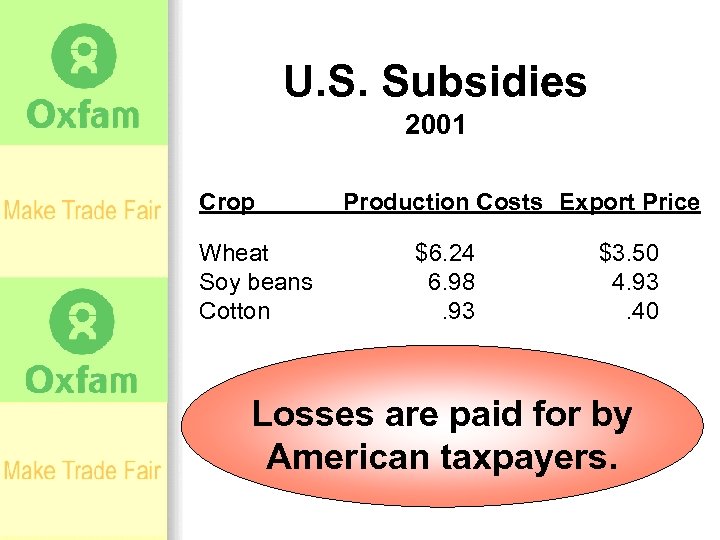 U. S. Subsidies 2001 Crop Wheat Soy beans Cotton Production Costs Export Price $6. 24 6. 98. 93 $3. 50 4. 93. 40 Losses are paid for by American taxpayers.
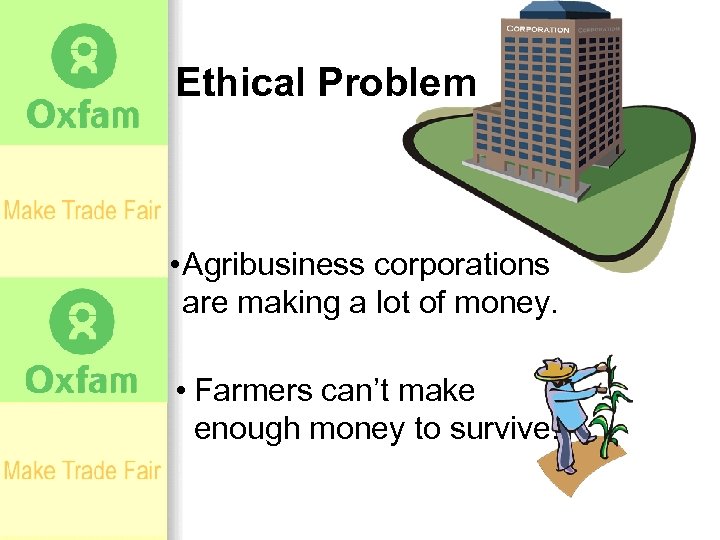 Ethical Problem • Agribusiness corporations are making a lot of money. • Farmers can’t make enough money to survive.
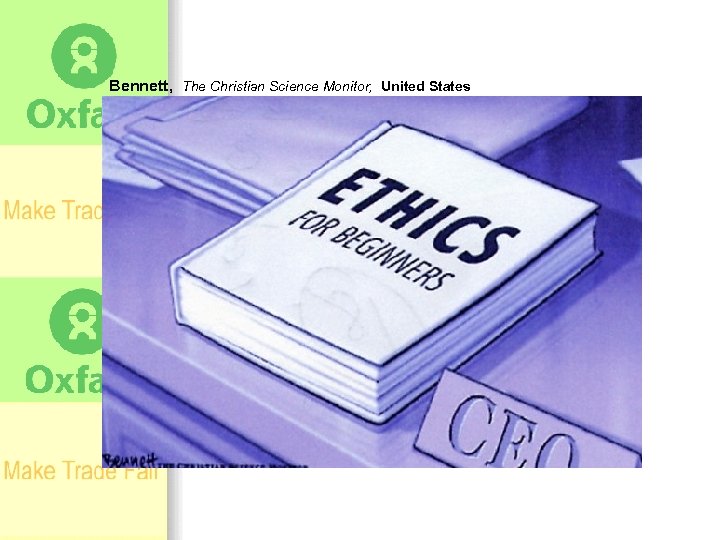 Bennett, The Christian Science Monitor, United States
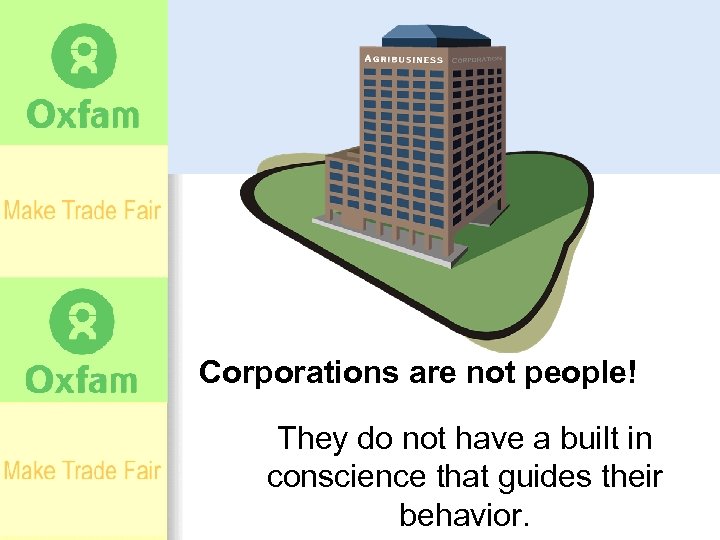 Corporations are not people! They do not have a built in conscience that guides their behavior.
 Profits! Growth!
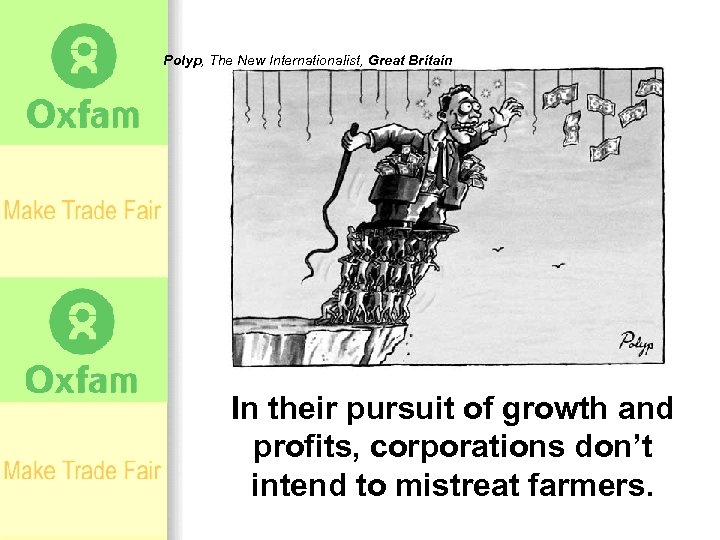 Polyp, The New Internationalist, Great Britain In their pursuit of growth and profits, corporations don’t intend to mistreat farmers.
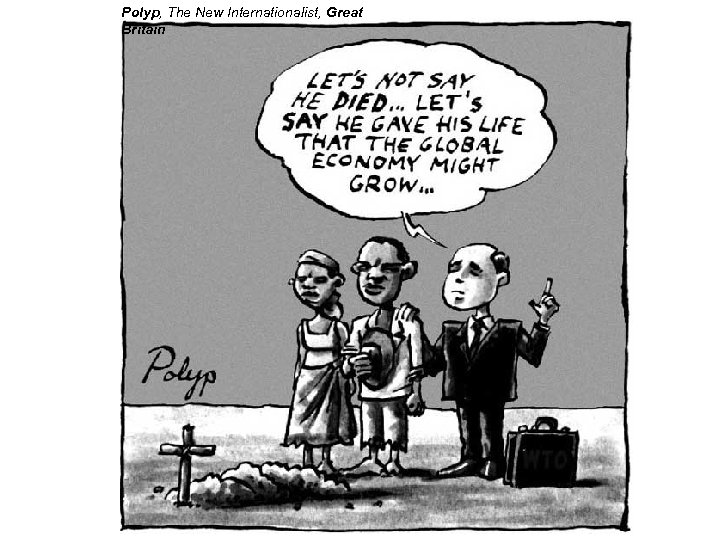 Polyp, The New Internationalist, Great Britain
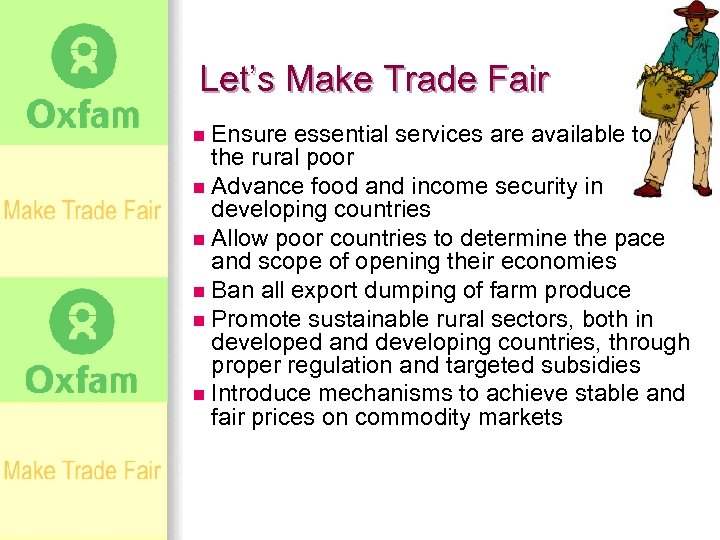 Let’s Make Trade Fair n Ensure essential services are available to the rural poor n Advance food and income security in developing countries n Allow poor countries to determine the pace and scope of opening their economies n Ban all export dumping of farm produce n Promote sustainable rural sectors, both in developed and developing countries, through proper regulation and targeted subsidies n Introduce mechanisms to achieve stable and fair prices on commodity markets
 Sign the BIG NOISE Petition!!
 JEOPARDY!
 What you can do n Be a conscientious consumer. l l n Be aware. Use your brain. l l n Get educated: read the news, go online Talk about issues with your friends (and enemies) Act locally l l n Read the label Buy fair trade Volunteer Support a cause you believe in, any way you can Act globally l Write letters
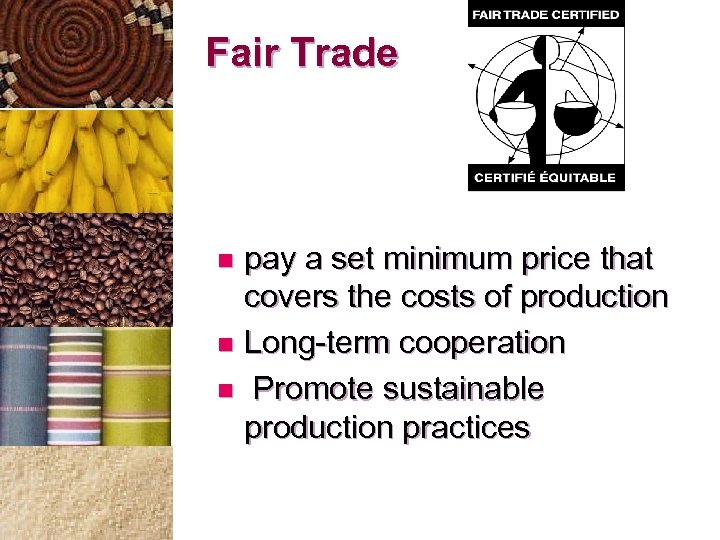 Fair Trade pay a set minimum price that covers the costs of production n Long-term cooperation n Promote sustainable production practices n
 For more information… n Oxfam Edmonton chapter: edmontonvolunteers@oxfam. ca l www. maketradefair. com l www. oxfam. ca l www. transfair. ca l