


 Скачать презентацию Potential Cost and Impact of DSM Role of
2d6bcaef285318c8b452a082ffb5afdc.ppt
- Количество слайдов: 48
 Potential, Cost, and Impact of DSM: Role of Load Research and Evaluation, Monitoring, and Verification (EM&V) Dr Amol Phadke, LBNL NPTI DSM Training Workshop Nov 2010
 Outline Estimating DSM Potential: Role Load Research DSM Costs – Simple ways to compare with supply side resources Estimating DSM Impact: Role of EM&V Putting in all together – Super Efficient Equipment Program by BEE (presentation on behalf of Dr Garg, BEE)
 DSM Potential Estimate and Load Research : Hands on exercise What is the morning peak contribution of electric water heaters in § Your city § Your state § Overall in India If all electric water heaters are replaced by either solar or gas water heaters, how much peak power will be saved Any guess for India peak demand § 100 MW, 500 MW, 2000 MW, 5000 MW, 20, 000 MW? ? ?
 Key information needed Consumption § k. Wh Number of water heaters (penetration) Usage pattern Future trends
 Load Research Basics Need to sample – surveying all consumers not possible and not needed Are customers being surveyed similar to your customer base in general ? Deciding the use of meters, survey questions, bill information, system data
 Load Research: Hands on Exercise Estimate the penetration per household and usage (number of hours per year) of the following appliances § § § § Lights (CLFs, tube lights, incandescent) Fans TV AC Water heater Refrigerator Computer Estimate the average morning (9 -10 am)and evening peak demand (8 pm) of households in the group Max in the group and min in the group
 Demand Side Power Purchase: Basics Demand side Power Purchase is a bundled set of energy efficiency (EE) programs that are designed to deliver the energy and capacity equivalent of a power purchase on the supply side. – purchase “negawatts” and “negawatt-hours” that are functionally equivalent to the kilowatts and kilowatt-hours procured – Can resemble a conventional peaking power purchase by emphasizing efficiency measures (and demand response) that reduce electricity during periods of peak power consumption. – Can resemble a base-load power purchase emphasizing measures to reduce consumption during all hours of the day.
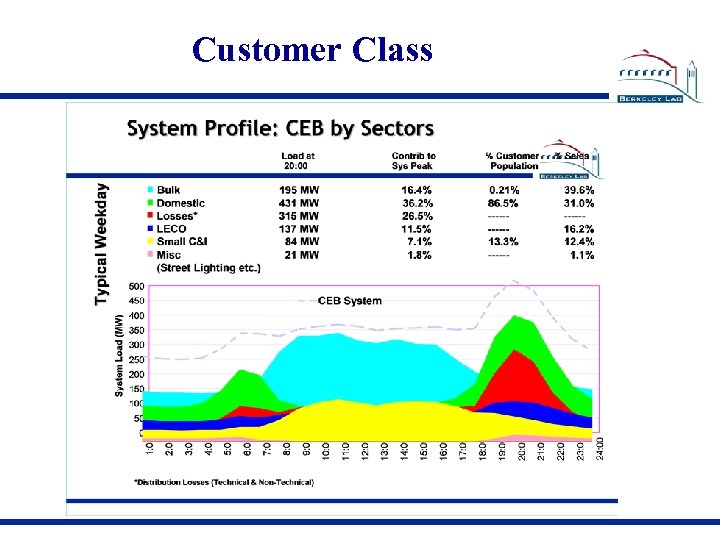
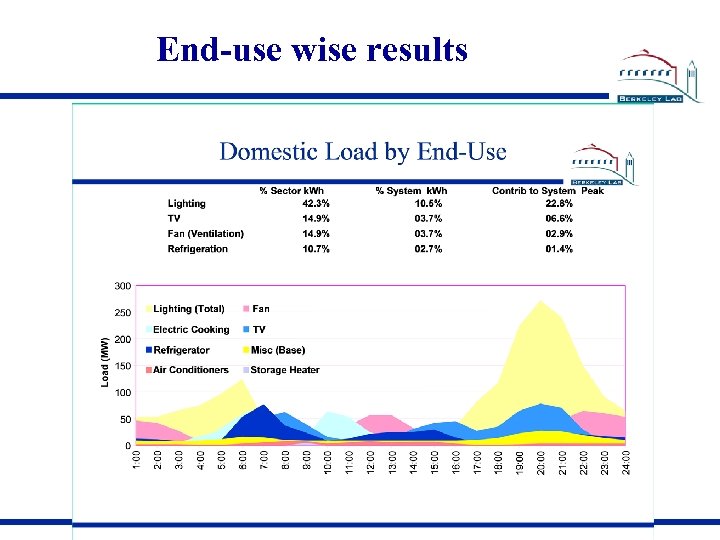
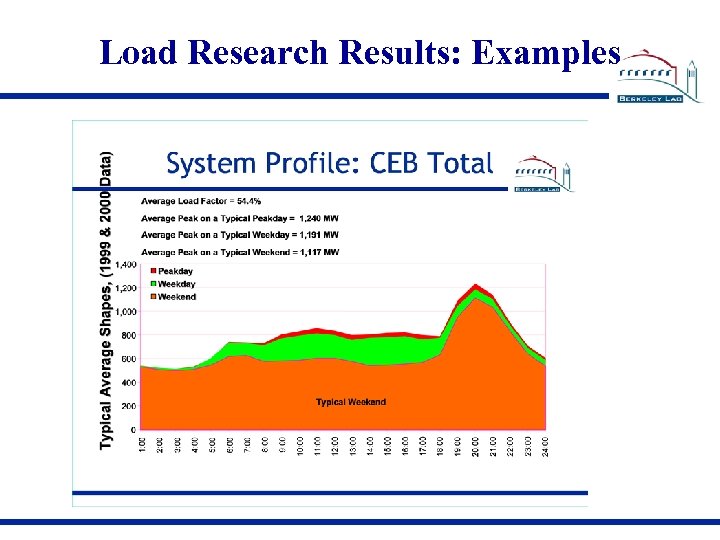 Load Research Results: Examples
 Customer Class
 End-use wise results
 DSM – Simple Ways to Compare With Supply Side Resources
 Will you Approve This Peak Load Power Purchase? One year contract 500 MW during the four hours of evening peak over the year = 730 GWh Mysterious Regular Rs/Unit 1. 2 5 Total Cost Rs Cr/ Year 88 Cr. 365 Cr.
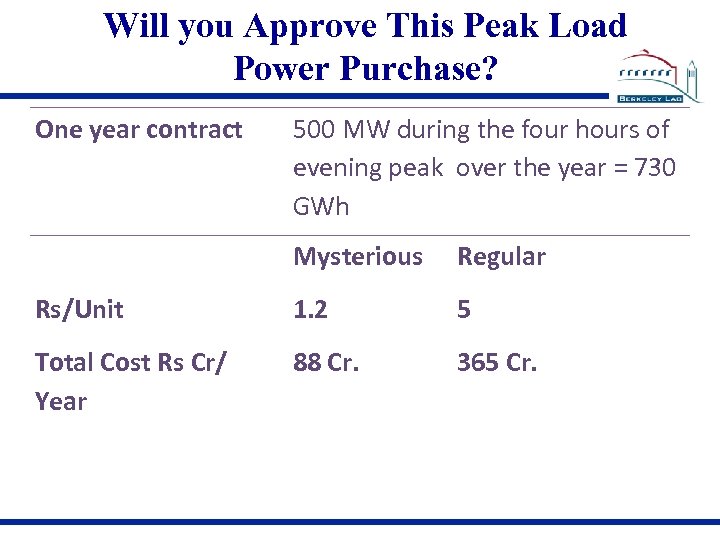
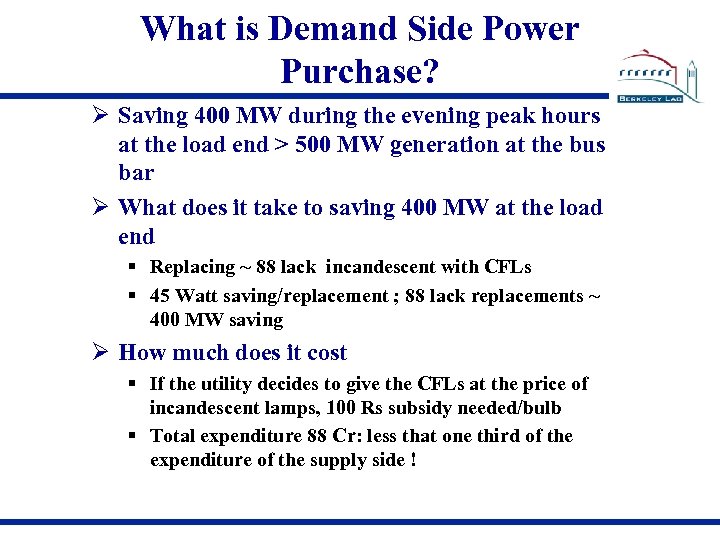 What is Demand Side Power Purchase? Saving 400 MW during the evening peak hours at the load end > 500 MW generation at the bus bar What does it take to saving 400 MW at the load end § Replacing ~ 88 lack incandescent with CFLs § 45 Watt saving/replacement ; 88 lack replacements ~ 400 MW saving How much does it cost § If the utility decides to give the CFLs at the price of incandescent lamps, 100 Rs subsidy needed/bulb § Total expenditure 88 Cr: less that one third of the expenditure of the supply side !
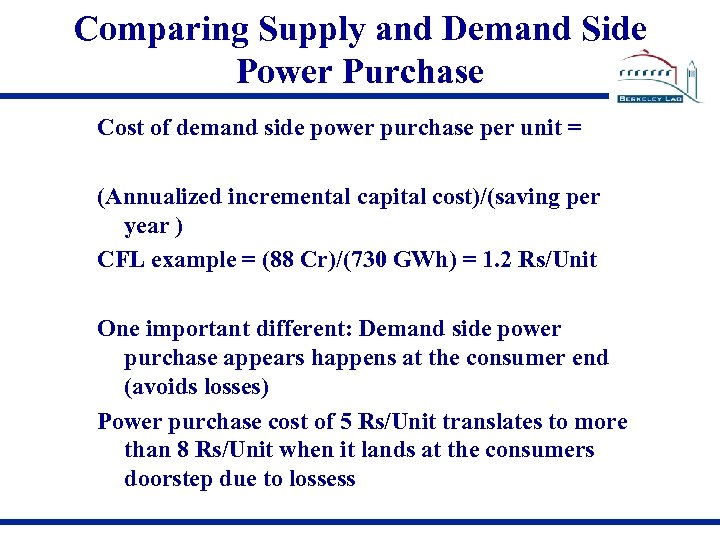 Comparing Supply and Demand Side Power Purchase Cost of demand side power purchase per unit = (Annualized incremental capital cost)/(saving per year ) CFL example = (88 Cr)/(730 GWh) = 1. 2 Rs/Unit One important different: Demand side power purchase appears happens at the consumer end (avoids losses) Power purchase cost of 5 Rs/Unit translates to more than 8 Rs/Unit when it lands at the consumers doorstep due to lossess
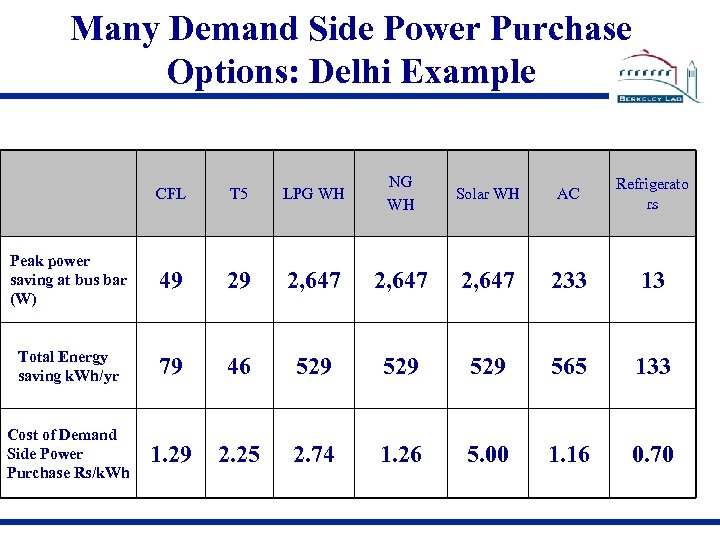 Many Demand Side Power Purchase Options: Delhi Example CFL T 5 LPG WH NG WH Solar WH AC Refrigerato rs Peak power saving at bus bar (W) 49 29 2, 647 233 13 Total Energy saving k. Wh/yr 79 46 529 529 565 133 Cost of Demand Side Power Purchase Rs/k. Wh 1. 29 2. 25 2. 74 1. 26 5. 00 1. 16 0. 70
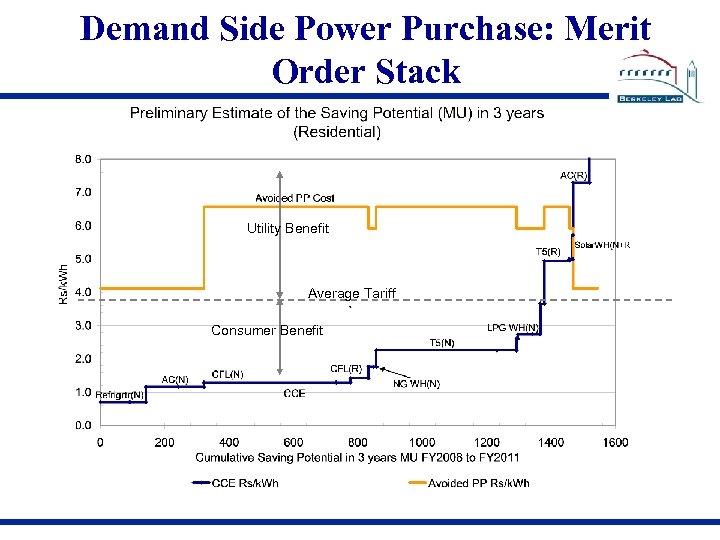 Demand Side Power Purchase: Merit Order Stack Utility Benefit Average Tariff Consumer Benefit
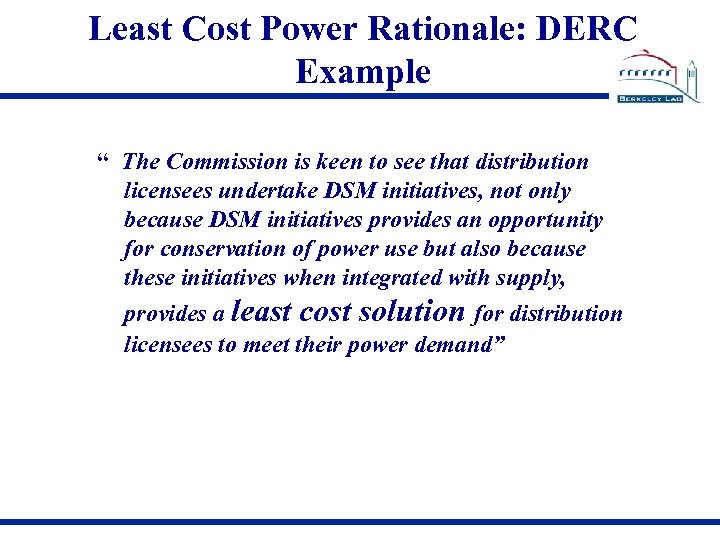 Least Cost Power Rationale: DERC Example “ The Commission is keen to see that distribution licensees undertake DSM initiatives, not only because DSM initiatives provides an opportunity for conservation of power use but also because these initiatives when integrated with supply, provides a least cost solution for distribution licensees to meet their power demand”
 ARR and Tariff Impact of Demand Side Power purchase
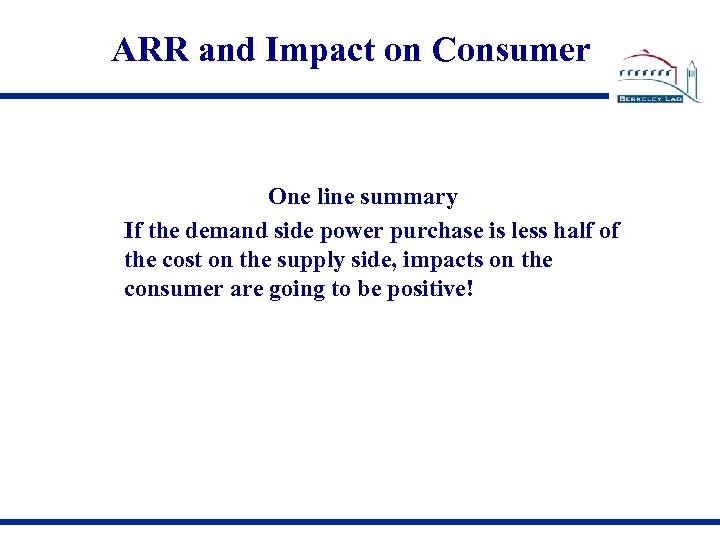 ARR and Impact on Consumer One line summary If the demand side power purchase is less half of the cost on the supply side, impacts on the consumer are going to be positive!
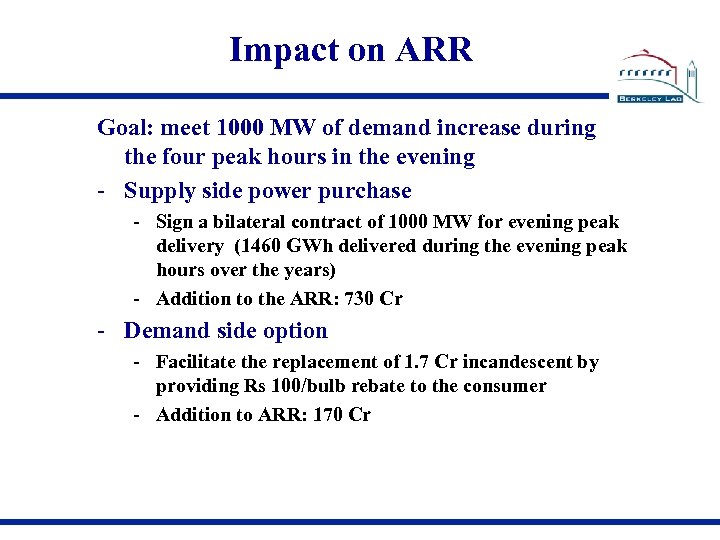 Impact on ARR Goal: meet 1000 MW of demand increase during the four peak hours in the evening - Supply side power purchase - Sign a bilateral contract of 1000 MW for evening peak delivery (1460 GWh delivered during the evening peak hours over the years) - Addition to the ARR: 730 Cr - Demand side option - Facilitate the replacement of 1. 7 Cr incandescent by providing Rs 100/bulb rebate to the consumer - Addition to ARR: 170 Cr
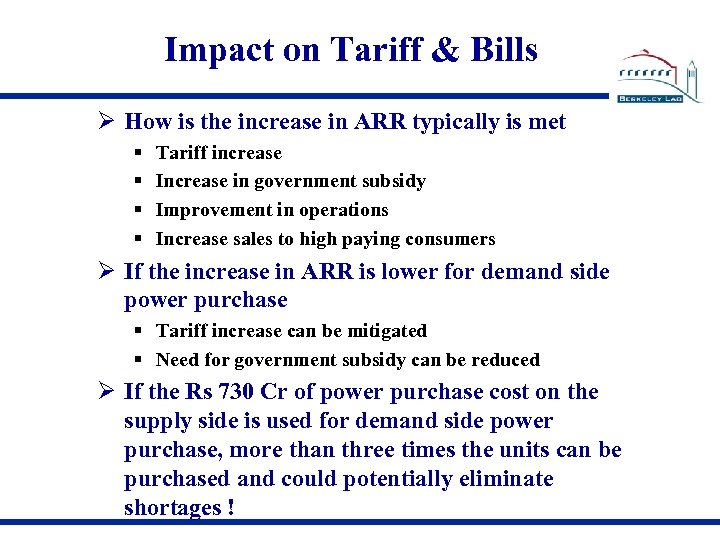 Impact on Tariff & Bills How is the increase in ARR typically is met § § Tariff increase Increase in government subsidy Improvement in operations Increase sales to high paying consumers If the increase in ARR is lower for demand side power purchase § Tariff increase can be mitigated § Need for government subsidy can be reduced If the Rs 730 Cr of power purchase cost on the supply side is used for demand side power purchase, more than three times the units can be purchased and could potentially eliminate shortages !
 IV: Implementing Demand Side Power purchase
 Topics Covered Role of Regulators Role of Utilities and Implementation Models for Demand Side Power purchase Next Steps and Potential Agenda
 Role of Regulators Establish clear goals for DSM power purchase based on potential estimates Allocate resources from ARR for DSM power purchase Provide guidance/regulation to facilitate implementation of DSM power purchase Tariff options for promoting demand side power prucahse (can either viewed as pumped storage or peak power purchase)
 MEASURING IMPACT OF DSM: ROLE OF EM&V
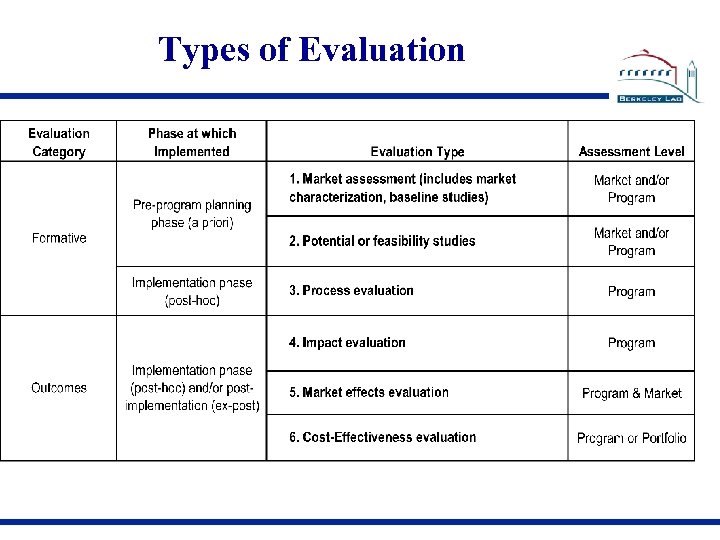 Types of Evaluation
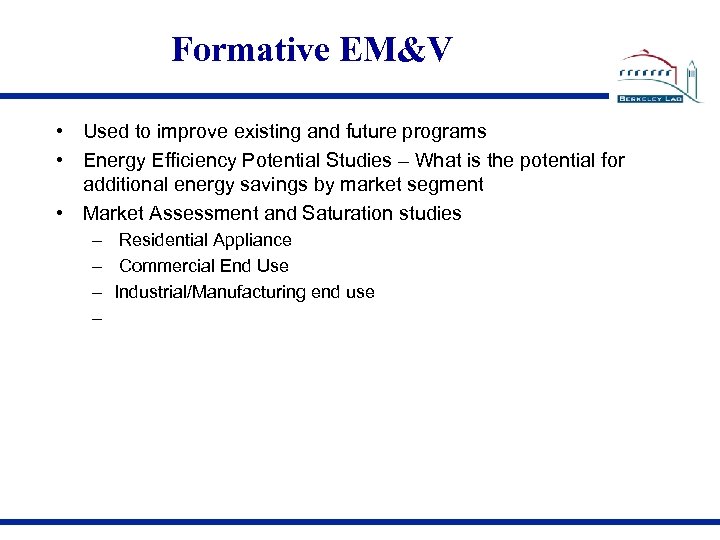 Formative EM&V • Used to improve existing and future programs • Energy Efficiency Potential Studies – What is the potential for additional energy savings by market segment • Market Assessment and Saturation studies – Residential Appliance – Commercial End Use – Industrial/Manufacturing end use –
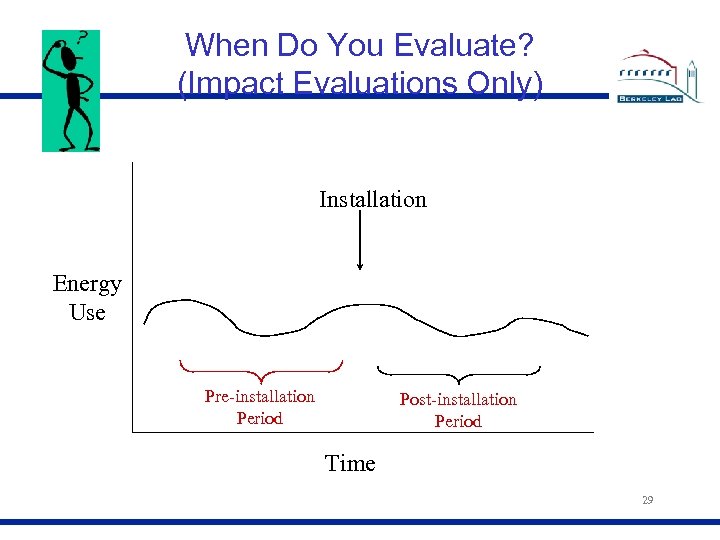
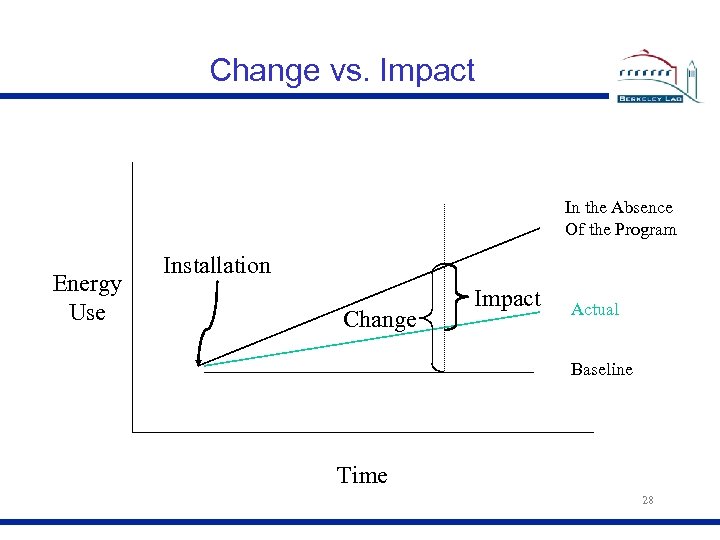 Change vs. Impact In the Absence Of the Program Energy Use Installation Change Impact Actual Baseline Time 28
 When Do You Evaluate? (Impact Evaluations Only) Installation Energy Use Pre-installation Period Post-installation Period Time 29
 DSM Programme in India - Concept of SEEP Presentation by Dr Sandeep Garg Energy Economist Bureau of Energy Efficiency 30
 The Appliance EE Challenge: Global appliance electricity consumption expected to double in 25 years Four appliance categories, each with major efficiency potential, constitute about two-fifths of residential consumption. TWh Source: LBNL, May
 Savings Potential in Appliances Saving potential in household and commercial appliance is about 57 B KWh per year in 2013. Source: Prayas Energy Group 32
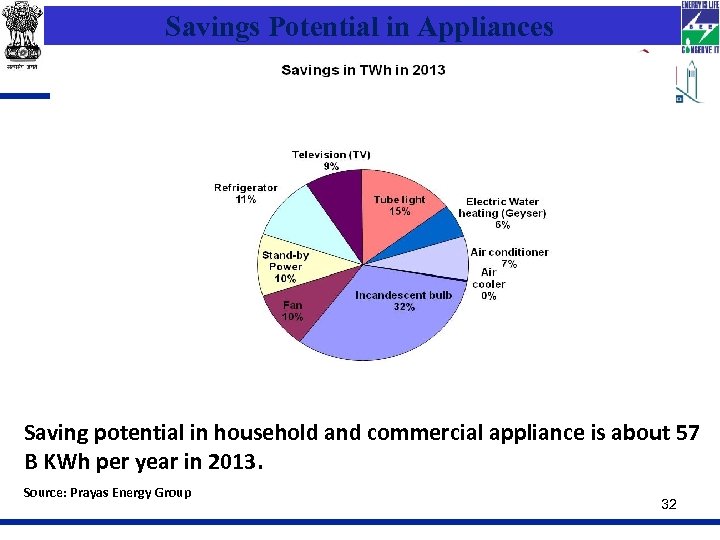
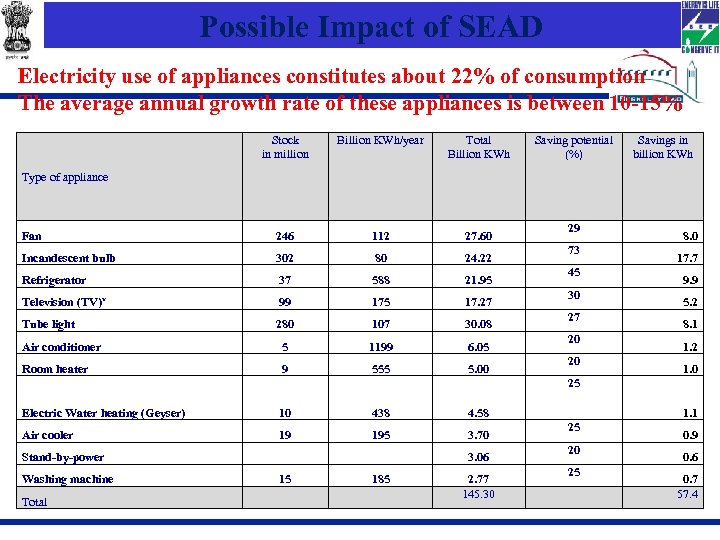 Possible Impact of SEAD Electricity use of appliances constitutes about 22% of consumption The average annual growth rate of these appliances is between 10 -15% Stock in million Billion KWh/year Total Billion KWh Fan 246 112 27. 60 Incandescent bulb 302 80 24. 22 Refrigerator 37 588 21. 95 Saving potential (%) Savings in billion KWh Type of appliance Television (TV)* 99 175 17. 27 Tube light 280 107 30. 08 Air conditioner 5 1199 6. 05 Room heater 9 555 5. 00 29 8. 0 73 17. 7 45 9. 9 30 5. 2 27 8. 1 20 1. 2 20 1. 0 25 Electric Water heating (Geyser) Air cooler 10 19 438 195 Stand-by-power Washing machine Total 4. 58 3. 70 3. 06 15 185 2. 77 145. 30 1. 1 25 0. 9 20 0. 6 25 33 0. 7 57. 4
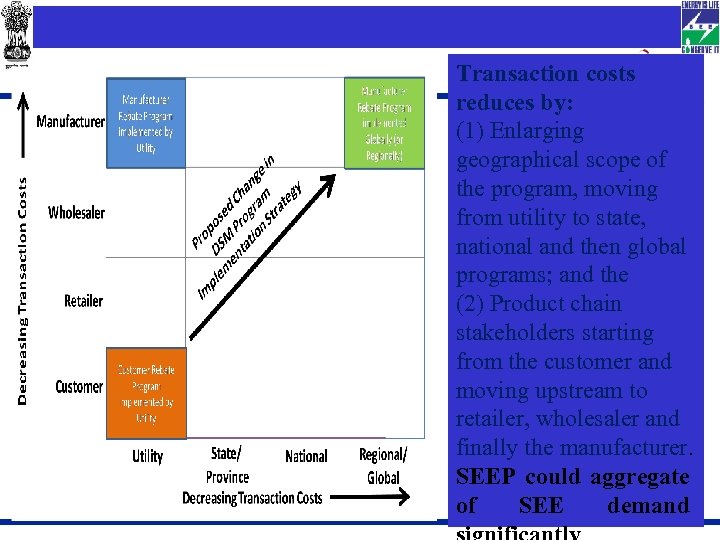 Impact of SEEP on DSM Programme Transaction costs reduces by: (1) Enlarging geographical scope of the program, moving from utility to state, national and then global programs; and the (2) Product chain stakeholders starting from the customer and moving upstream to retailer, wholesaler and finally the manufacturer. SEEP could aggregate 34 of SEE demand
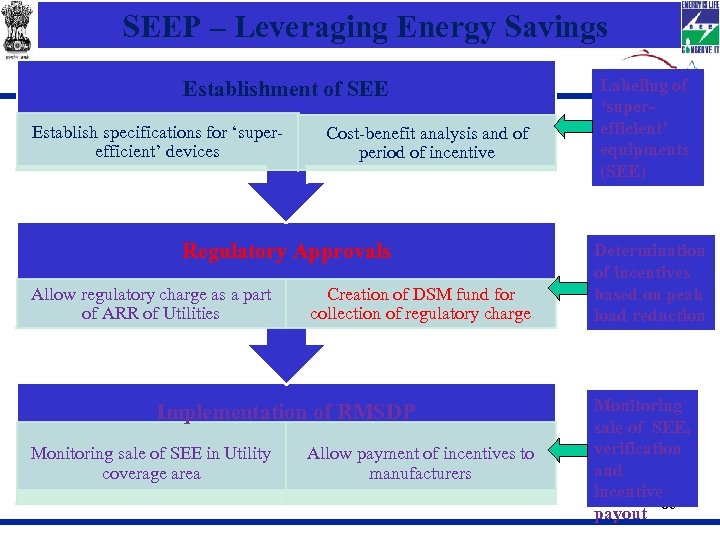 SEEP – Leveraging Energy Savings Establishment of SEE Establish specifications for ‘superefficient’ devices Cost-benefit analysis and of period of incentive Regulatory Approvals Allow regulatory charge as a part of ARR of Utilities Creation of DSM fund for collection of regulatory charge Implementation of RMSDP Monitoring sale of SEE in Utility coverage area Allow payment of incentives to manufacturers Labeling of ‘superefficient’ equipments (SEE) Determination of incentives based on peak load reduction Monitoring sale of SEE, verification and incentive 35 payout
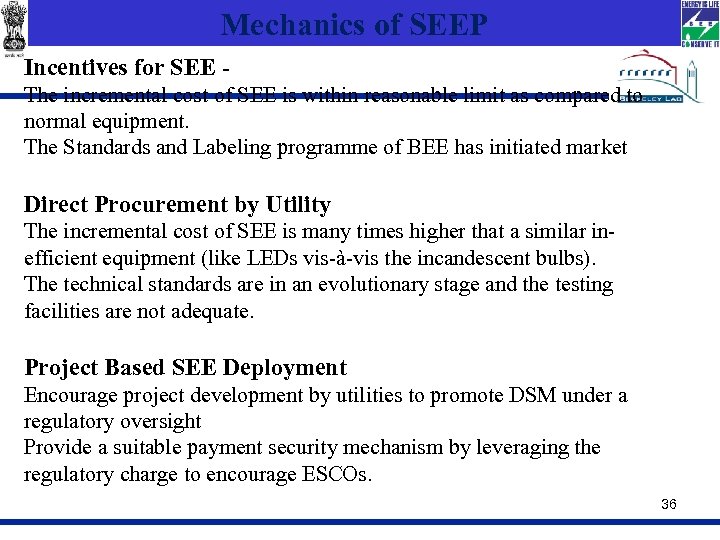 Mechanics of SEEP Incentives for SEE The incremental cost of SEE is within reasonable limit as compared to normal equipment. The Standards and Labeling programme of BEE has initiated market Direct Procurement by Utility The incremental cost of SEE is many times higher that a similar inefficient equipment (like LEDs vis-à-vis the incandescent bulbs). The technical standards are in an evolutionary stage and the testing facilities are not adequate. Project Based SEE Deployment Encourage project development by utilities to promote DSM under a regulatory oversight Provide a suitable payment security mechanism by leveraging the regulatory charge to encourage ESCOs. 36
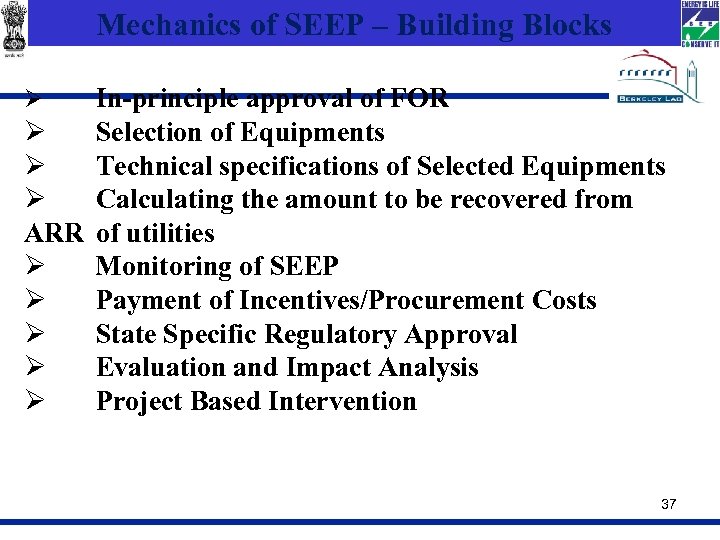 Mechanics of SEEP – Building Blocks In-principle approval of FOR Selection of Equipments Technical specifications of Selected Equipments Calculating the amount to be recovered from ARR of utilities Monitoring of SEEP Payment of Incentives/Procurement Costs State Specific Regulatory Approval Evaluation and Impact Analysis Project Based Intervention 37
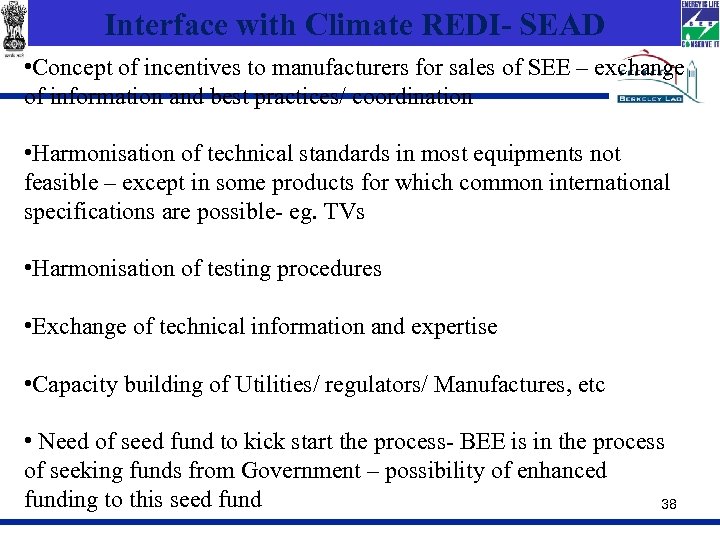 Interface with Climate REDI- SEAD • Concept of incentives to manufacturers for sales of SEE – exchange of information and best practices/ coordination • Harmonisation of technical standards in most equipments not feasible – except in some products for which common international specifications are possible- eg. TVs • Harmonisation of testing procedures • Exchange of technical information and expertise • Capacity building of Utilities/ regulators/ Manufactures, etc • Need of seed fund to kick start the process- BEE is in the process of seeking funds from Government – possibility of enhanced funding to this seed fund 38
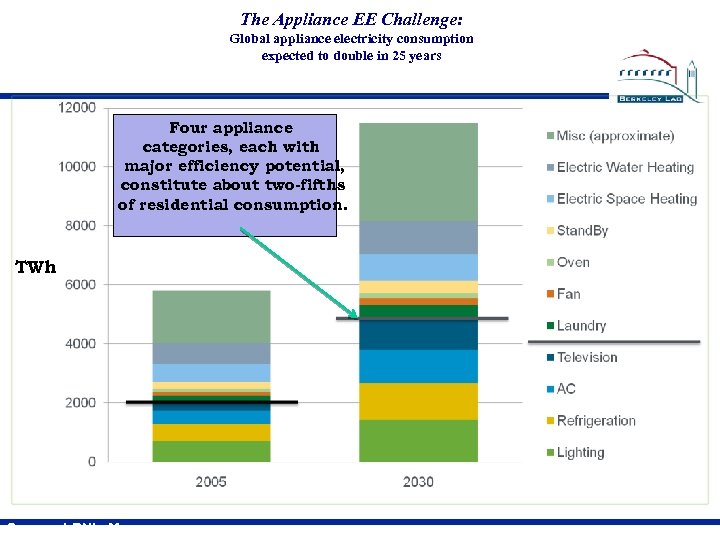
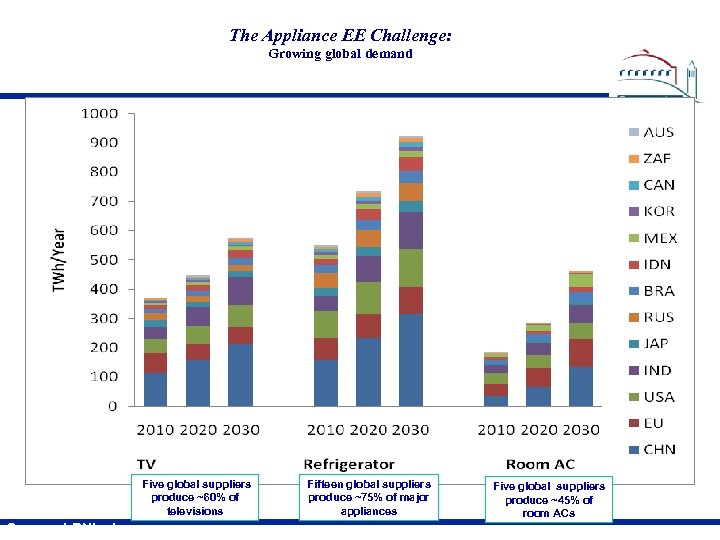 The Appliance EE Challenge: Growing global demand Five global suppliers produce ~60% of televisions Source: LBNL, June Fifteen global suppliers produce ~75% of major appliances Five global suppliers produce ~45% of room ACs
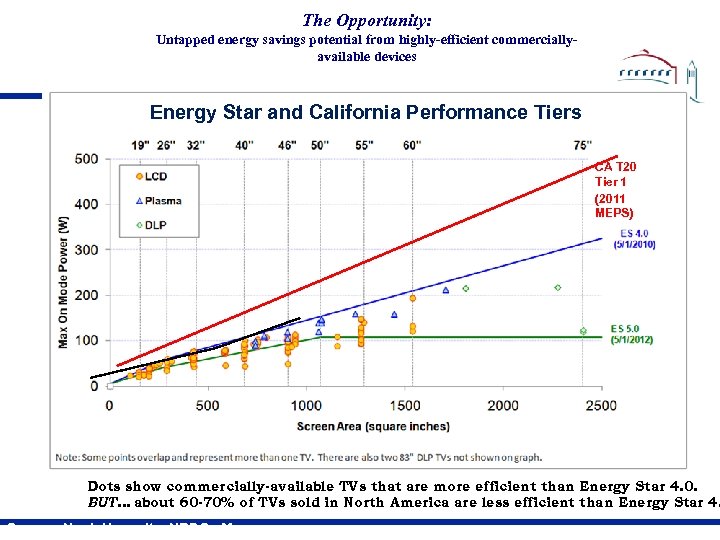 The Opportunity: Untapped energy savings potential from highly-efficient commerciallyavailable devices Energy Star and California Performance Tiers CA T 20 Tier 1 (2011 MEPS) Dots show commercially-available TVs that are more efficient than Energy Star 4. 0. BUT… about 60 -70% of TVs sold in North America are less efficient than Energy Star 4. Source: Noah Horowitz, NRDC, May
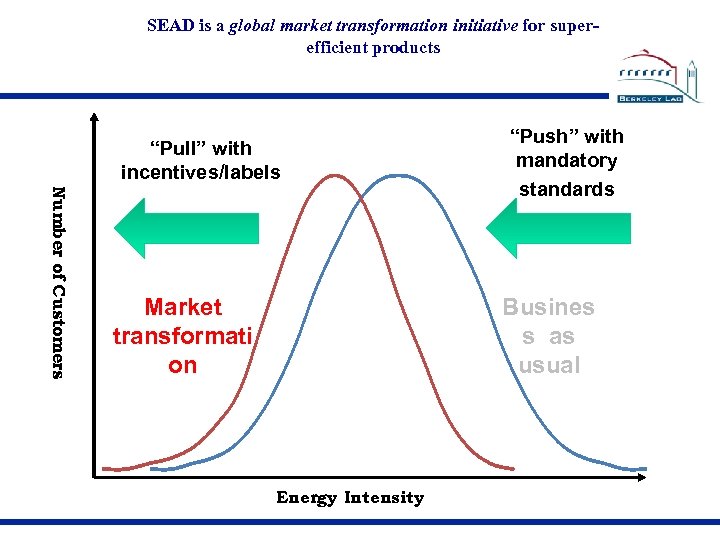 SEAD is a global market transformation initiative for superefficient products “Pull” with incentives/labels Number of Customers Market transformati on “Push” with mandatory standards Busines s as usual Energy Intensity
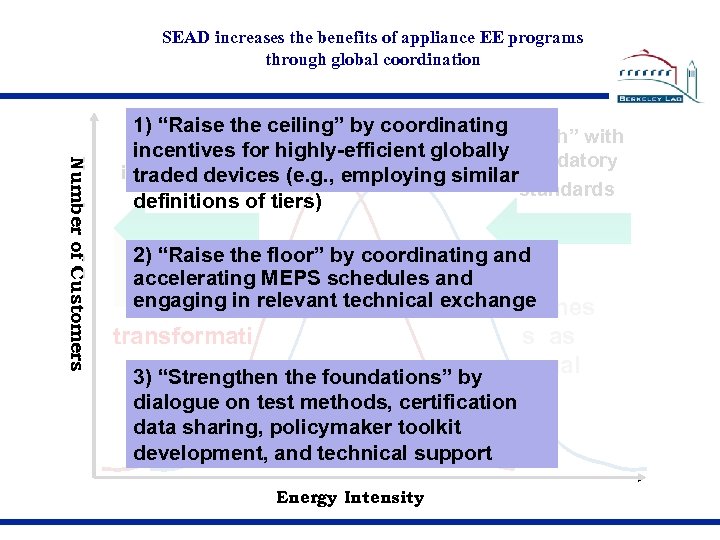 SEAD increases the benefits of appliance EE programs through global coordination Number of Customers 1) “Raise the ceiling” by coordinating “Push” with “Pull” with highly-efficient globally incentives for mandatory incentives/labels (e. g. , employing similar traded devices standards definitions of tiers) 2) “Raise the floor” by coordinating and accelerating MEPS schedules and engaging in relevant technical exchange Market Busines transformati on 3) “Strengthen the foundations” by s as usual dialogue on test methods, certification data sharing, policymaker toolkit development, and technical support Energy Intensity
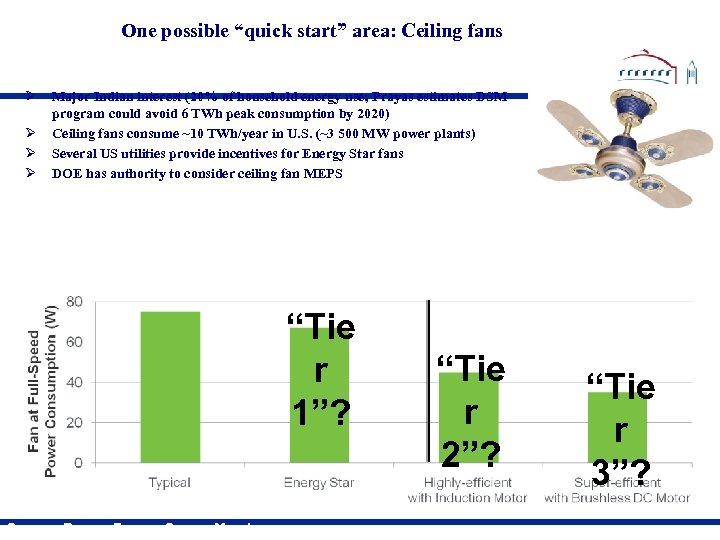 One possible “quick start” area: Ceiling fans Major Indian interest (20% of household energy use; Prayas estimates DSM program could avoid 6 TWh peak consumption by 2020) Ceiling fans consume ~10 TWh/year in U. S. (~3 500 MW power plants) Several US utilities provide incentives for Energy Star fans DOE has authority to consider ceiling fan MEPS “Tie r 1”? Source: Prayas Energy Group, March “Tie r 2”? “Tie r 3”?
 End-use Efficiency Lowers Electricity Sales and Can Lower Utility Revenue l Increasing efficiency of use amounts to asking utility companies to reduce sales of their product l How are utility companies to be compensated for existing capacity and slower growth in future assets? l Not a problem in India because electricity shortage means saved electricity can be sold to another customer, but first cost is an issue l Maharashtra Electricity Regulatory Commission has allowed utility companies to pass along all costs of demand-side management programs to customers
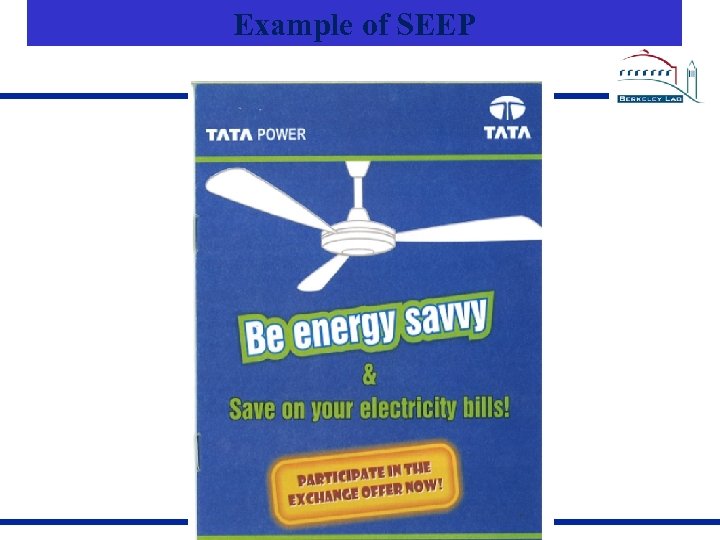 Example of SEEP
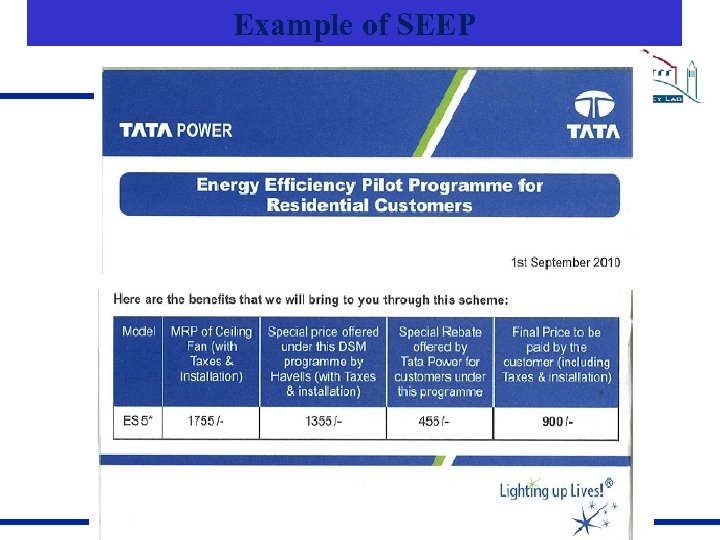 Example of SEEP
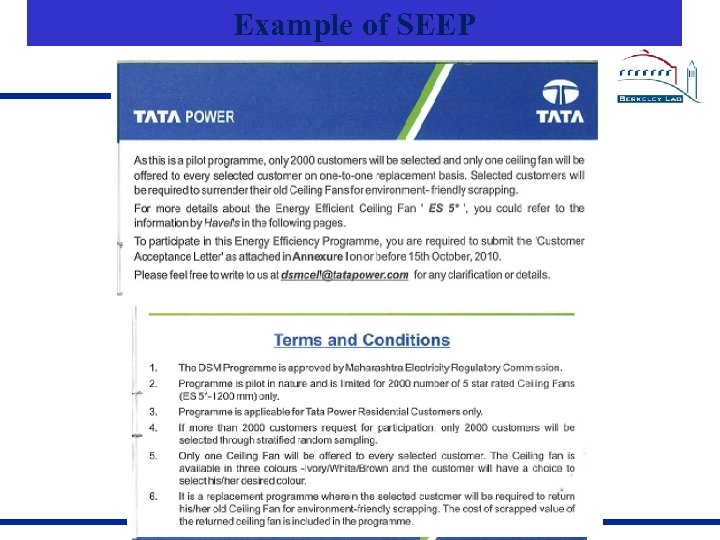 Example of SEEP
 Contact information: Sandeep Garg (sgarg@beenet. in) Bureau of Energy Efficiency (Ministry of Power, Govt. of India) 4 th Floor, Sewa Bhawan R. K. Puram New Delhi – 110066 www. bee-india. nic. in 48