 Скачать презентацию Postharvest Losses of Fruits and Vegetables Yoram Fuchs
7aa54c3a518ef29bf2b329b92f019a94.ppt
- Количество слайдов: 32



Postharvest Losses of Fruits and Vegetables Yoram Fuchs Dept. of Postharvest Science of Fresh Produce ARO, The Volcani Center, Bet Dagan, Israel
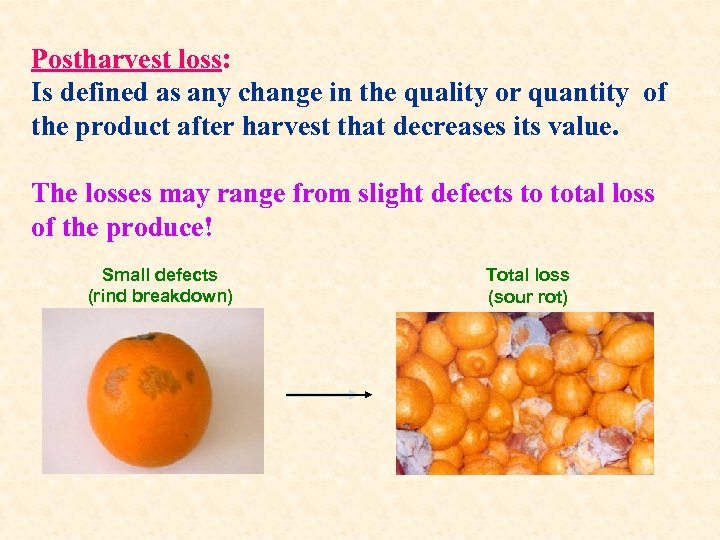
Postharvest loss: Is defined as any change in the quality or quantity of the product after harvest that decreases its value. The losses may range from slight defects to total loss of the produce! Small defects (rind breakdown) Total loss (sour rot)
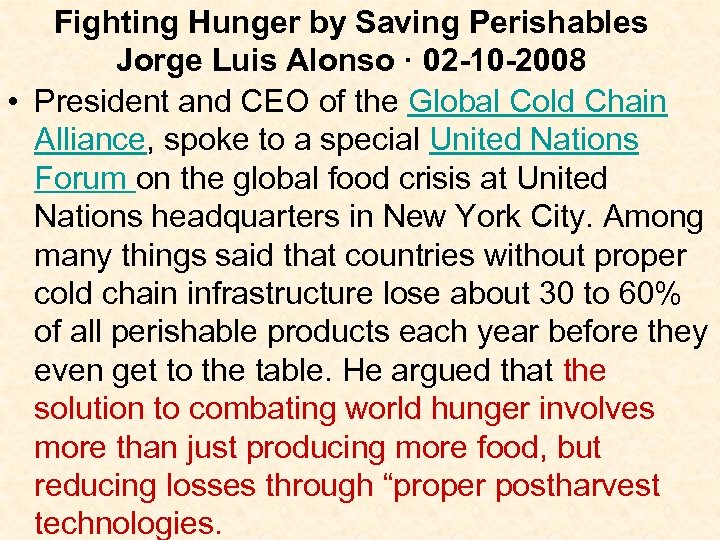
Fighting Hunger by Saving Perishables Jorge Luis Alonso · 02 -10 -2008 • President and CEO of the Global Cold Chain Alliance, spoke to a special United Nations Forum on the global food crisis at United Nations headquarters in New York City. Among many things said that countries without proper cold chain infrastructure lose about 30 to 60% of all perishable products each year before they even get to the table. He argued that the solution to combating world hunger involves more than just producing more food, but reducing losses through “proper postharvest technologies.
• The primary goals of research on postharvest biology and technology of fresh produce are to reduce losses in quantity and quality and to maintain safety between harvest and consumption sites. THE STRATEGIES FOR ATTAINING THESE GOALS INCLUDE:
(1) Growing cultivars that have good flavor and nutritional quality plus long postharvest-life potential when harvested at optimum maturity (2) using an integrated crop management system that maximizes yield without sacrificing quality (3) using optimal postharvest handling practices to maintain quality and safety of the food products.
• The postharvest story starts at production. Therefore, efforts should be made to integrate production with postharvest management. • Food loss reduction is normally less costly than equivalent increases (in quantity) in food production. • There is a need for a sound foundation in developing integrated postharvest management systems for fruit and vegetables, with proper infrastructural facilities and logistic support. • The idea is to try, as far as possible, to maintain the initial product quality. • Usually there are both losses in quantity and in quality
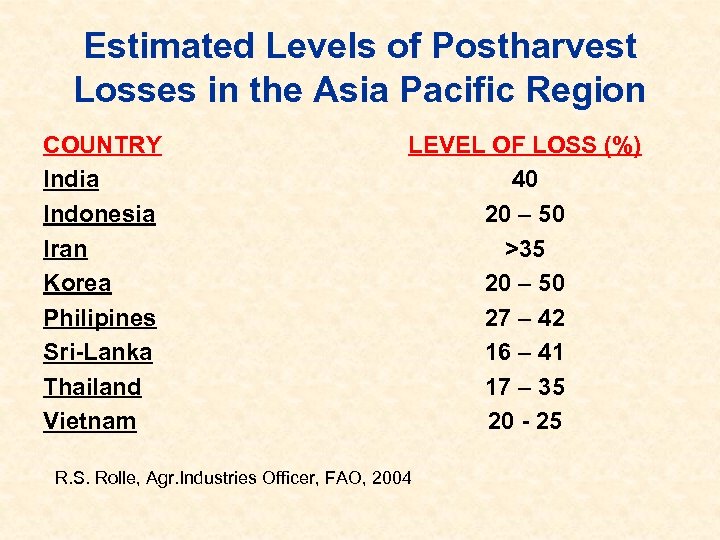
Estimated Levels of Postharvest Losses in the Asia Pacific Region COUNTRY India Indonesia Iran Korea Philipines Sri-Lanka Thailand Vietnam LEVEL OF LOSS (%) 40 20 – 50 >35 20 – 50 27 – 42 16 – 41 17 – 35 20 - 25 R. S. Rolle, Agr. Industries Officer, FAO, 2004
CAUSES OF POSTHARVEST LOSSES • External factors Mechanical injuries Parasitic diseases • Internal factors Physiological deterioration
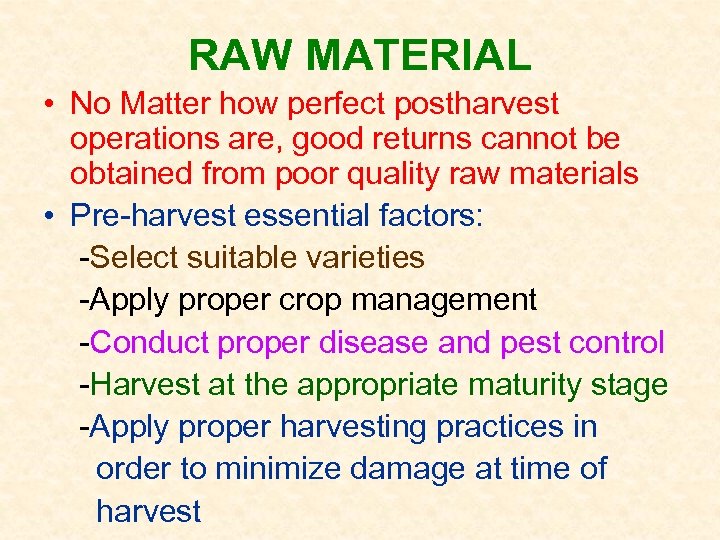
RAW MATERIAL • No Matter how perfect postharvest operations are, good returns cannot be obtained from poor quality raw materials • Pre-harvest essential factors: -Select suitable varieties -Apply proper crop management -Conduct proper disease and pest control -Harvest at the appropriate maturity stage -Apply proper harvesting practices in order to minimize damage at time of harvest
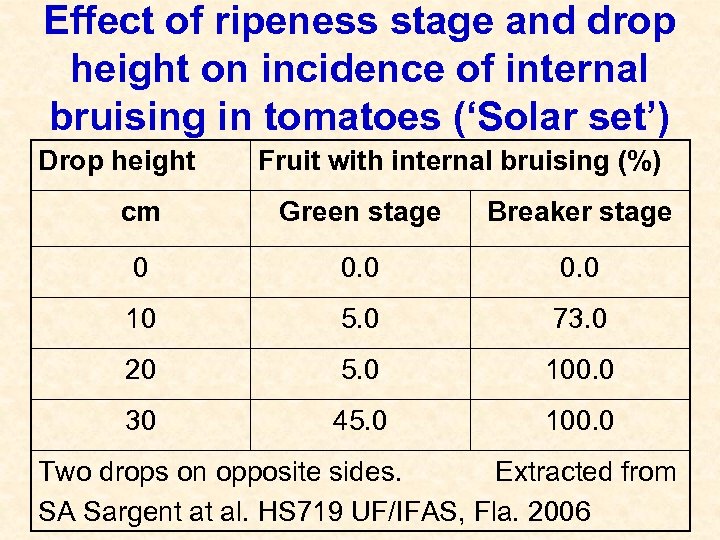
Effect of ripeness stage and drop height on incidence of internal bruising in tomatoes (‘Solar set’) Drop height Fruit with internal bruising (%) cm Green stage Breaker stage 0 0. 0 10 5. 0 73. 0 20 5. 0 100. 0 30 45. 0 100. 0 Two drops on opposite sides. Extracted from SA Sargent at al. HS 719 UF/IFAS, Fla. 2006
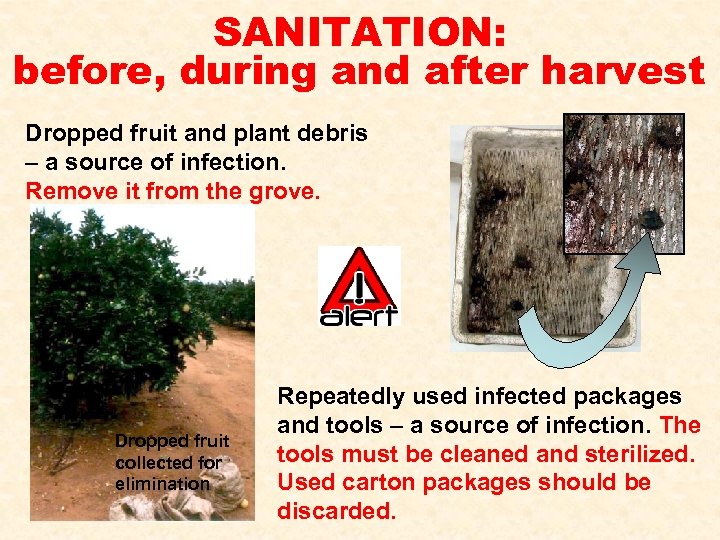
SANITATION: before, during and after harvest Dropped fruit and plant debris – a source of infection. Remove it from the grove. Dropped fruit collected for elimination Repeatedly used infected packages and tools – a source of infection. The tools must be cleaned and sterilized. Used carton packages should be discarded.
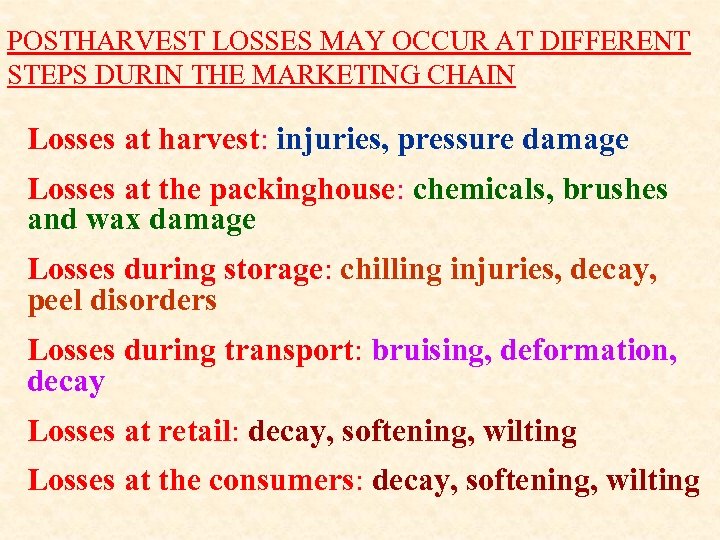
POSTHARVEST LOSSES MAY OCCUR AT DIFFERENT STEPS DURIN THE MARKETING CHAIN Losses at harvest: injuries, pressure damage Losses at the packinghouse: chemicals, brushes and wax damage Losses during storage: chilling injuries, decay, peel disorders Losses during transport: bruising, deformation, decay Losses at retail: decay, softening, wilting Losses at the consumers: decay, softening, wilting
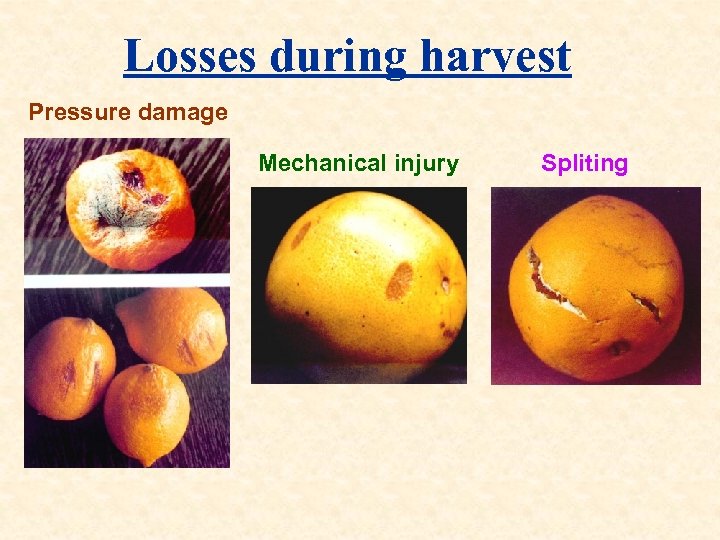
Losses during harvest Pressure damage Mechanical injury Spliting
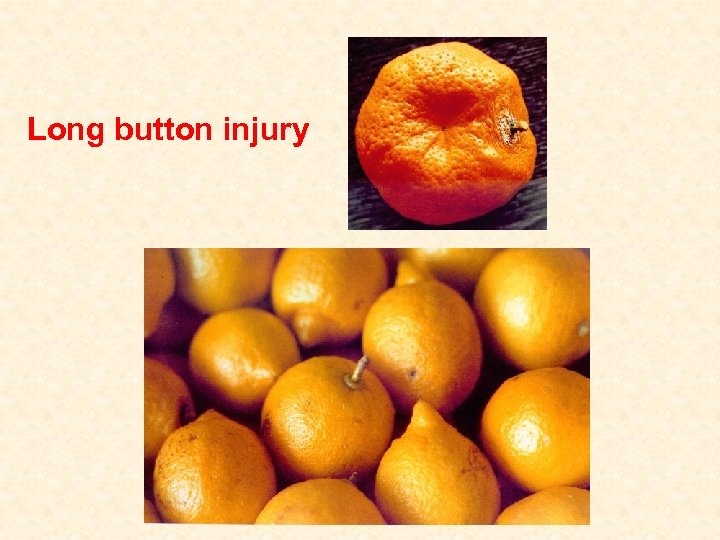
Long button injury
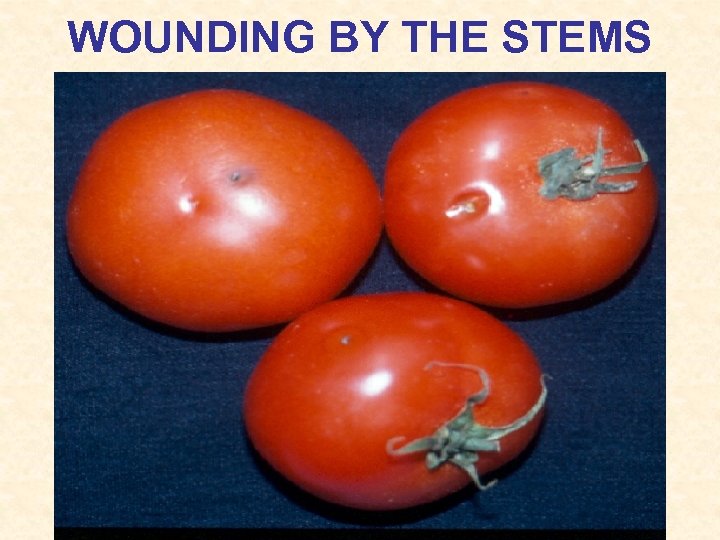
WOUNDING BY THE STEMS
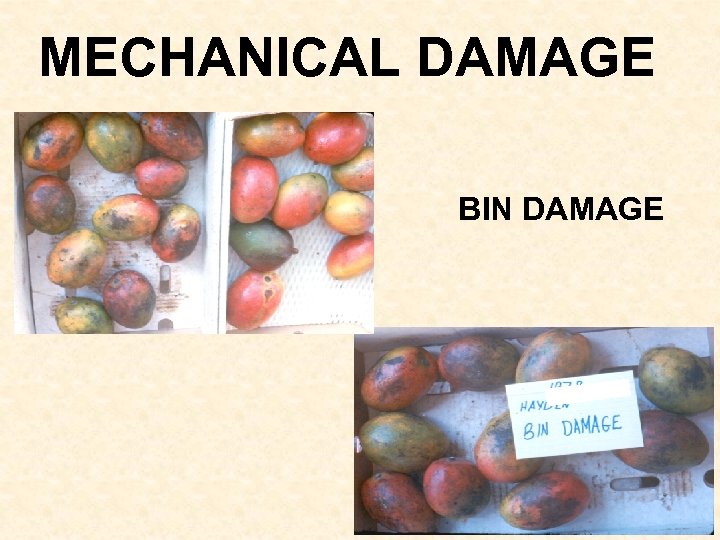
MECHANICAL DAMAGE BIN DAMAGE
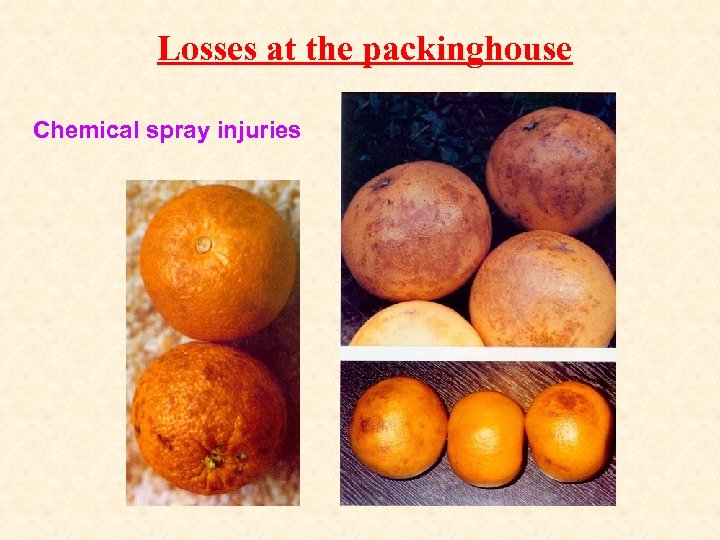
Losses at the packinghouse Chemical spray injuries
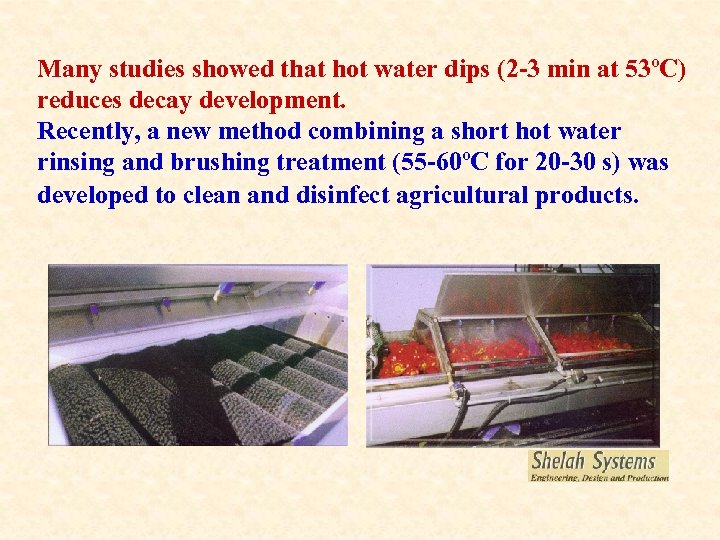
Many studies showed that hot water dips (2 -3 min at 53ºC) reduces decay development. Recently, a new method combining a short hot water rinsing and brushing treatment (55 -60ºC for 20 -30 s) was developed to clean and disinfect agricultural products.
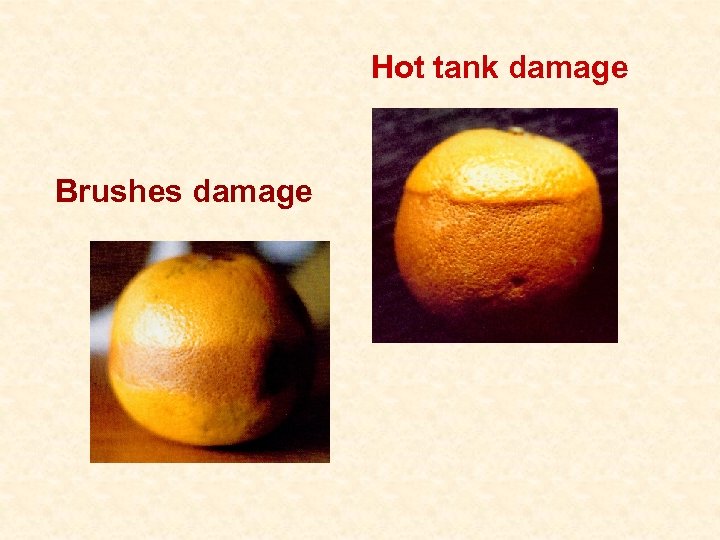
Hot tank damage Brushes damage
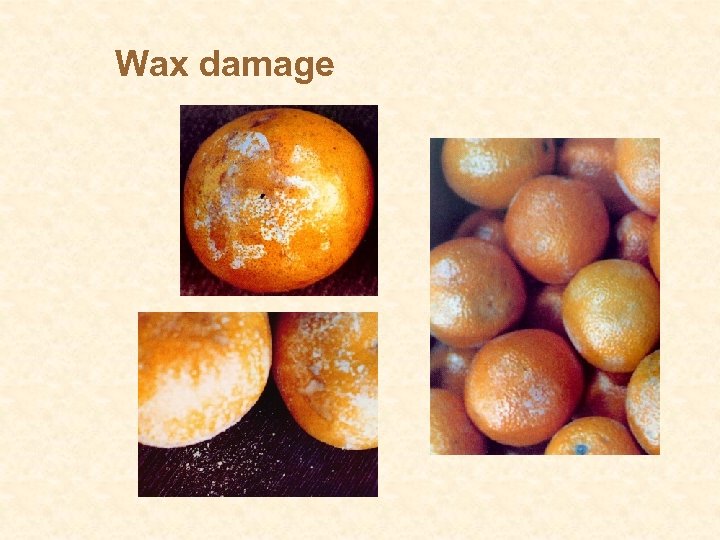
Wax damage
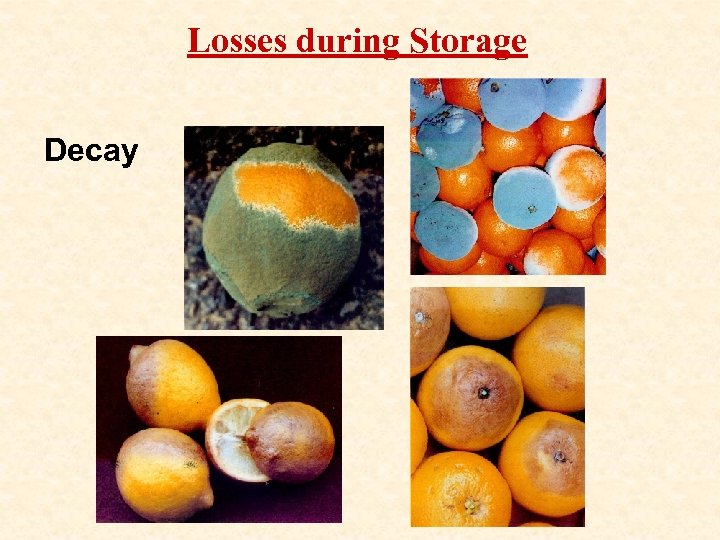
Losses during Storage Decay
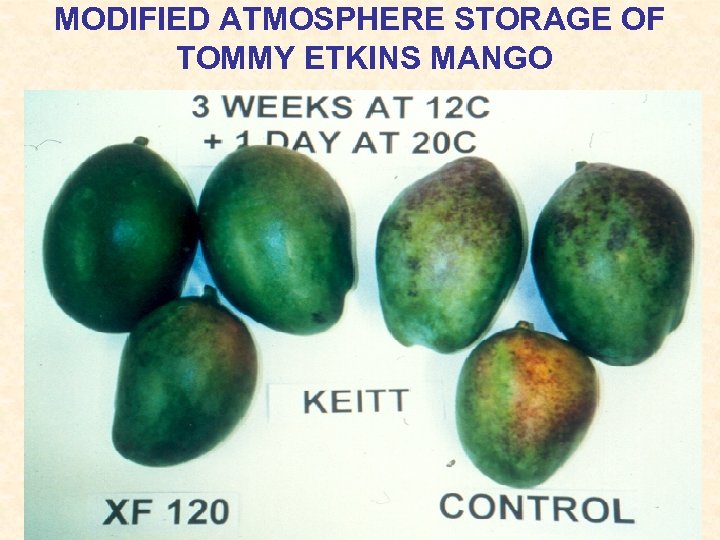
MODIFIED ATMOSPHERE STORAGE OF TOMMY ETKINS MANGO
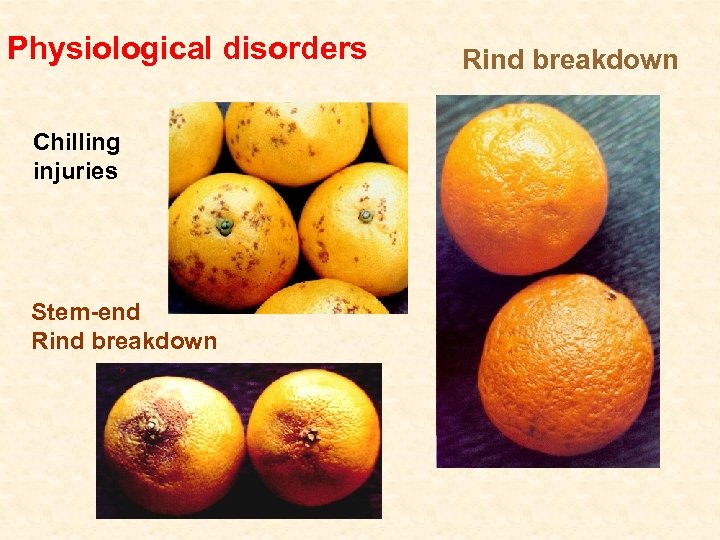
Physiological disorders Chilling injuries Stem-end Rind breakdown
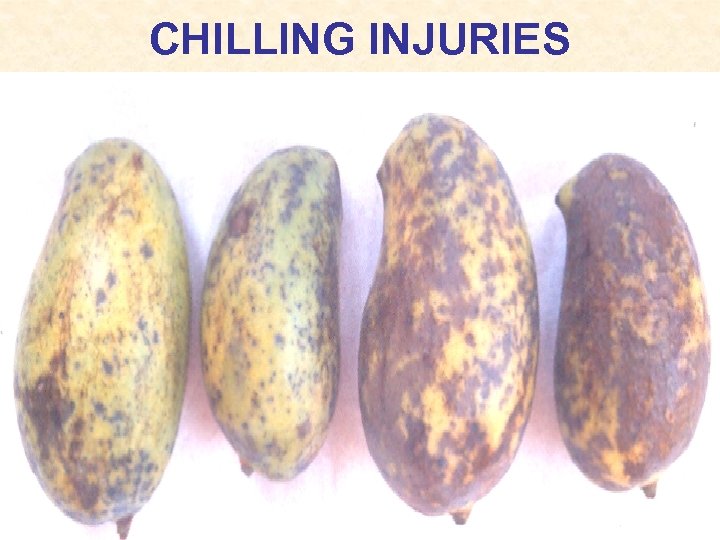
CHILLING INJURIES
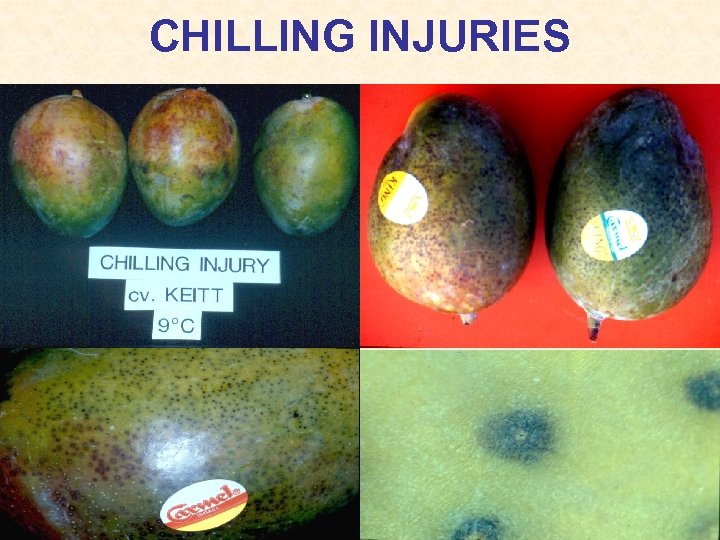
CHILLING INJURIES
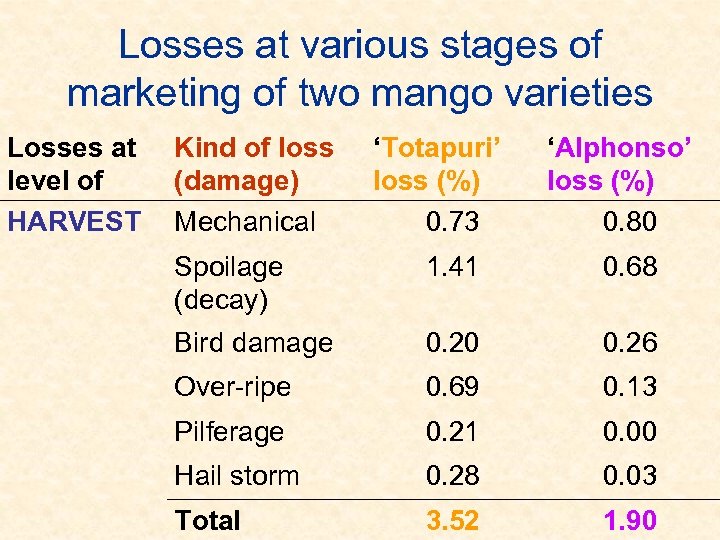
Losses at various stages of marketing of two mango varieties Losses at level of HARVEST Kind of loss (damage) Mechanical ‘Totapuri’ loss (%) 0. 73 ‘Alphonso’ loss (%) 0. 80 Spoilage (decay) 1. 41 0. 68 Bird damage 0. 20 0. 26 Over-ripe 0. 69 0. 13 Pilferage 0. 21 0. 00 Hail storm 0. 28 0. 03 Total 3. 52 1. 90
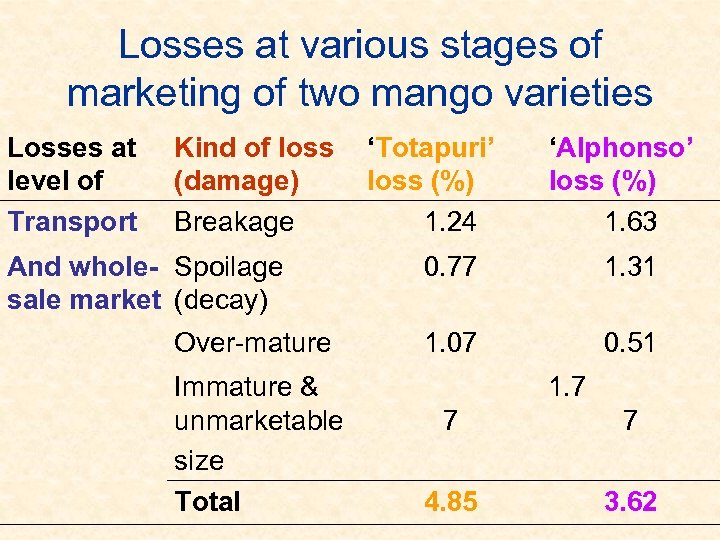
Losses at various stages of marketing of two mango varieties Losses at level of Transport Kind of loss (damage) Breakage And whole- Spoilage sale market (decay) Over-mature Immature & unmarketable size Total ‘Totapuri’ loss (%) 1. 24 ‘Alphonso’ loss (%) 1. 63 0. 77 1. 31 1. 07 0. 51 1. 7 7 7 4. 85 3. 62
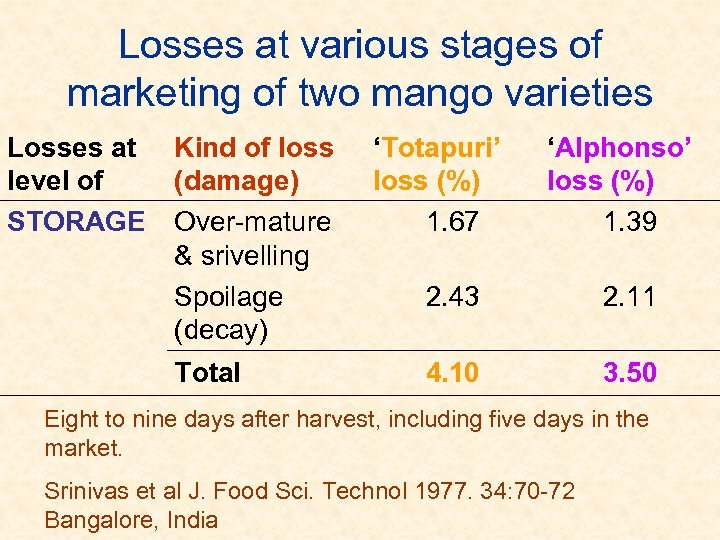
Losses at various stages of marketing of two mango varieties Losses at level of STORAGE Kind of loss (damage) Over-mature & srivelling Spoilage (decay) Total ‘Totapuri’ loss (%) 1. 67 ‘Alphonso’ loss (%) 1. 39 2. 43 2. 11 4. 10 3. 50 Eight to nine days after harvest, including five days in the market. Srinivas et al J. Food Sci. Technol 1977. 34: 70 -72 Bangalore, India
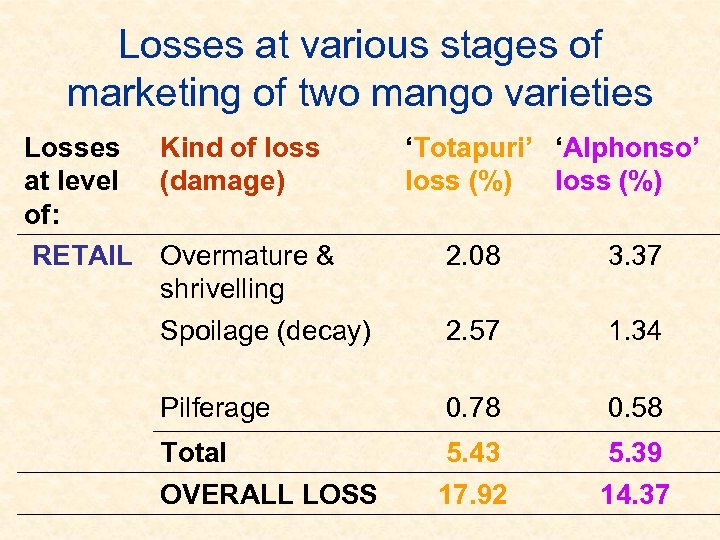
Losses at various stages of marketing of two mango varieties Losses Kind of loss at level (damage) of: RETAIL Overmature & shrivelling Spoilage (decay) ‘Totapuri’ ‘Alphonso’ loss (%) 2. 08 3. 37 2. 57 1. 34 Pilferage 0. 78 0. 58 Total OVERALL LOSS 5. 43 17. 92 5. 39 14. 37
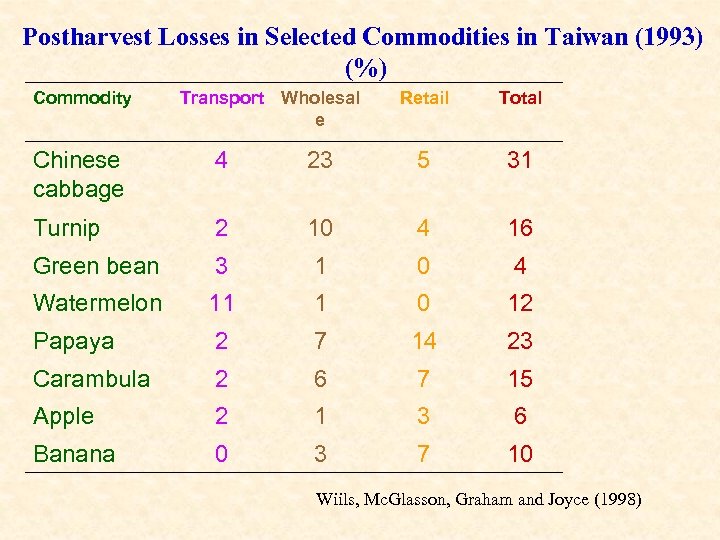
Postharvest Losses in Selected Commodities in Taiwan (1993) (%) Commodity Transport Wholesal e Retail Total Chinese cabbage 4 23 5 31 Turnip 2 10 4 16 Green bean 3 1 0 4 Watermelon 11 1 0 12 Papaya 2 7 14 23 Carambula 2 6 7 15 Apple 2 1 3 6 Banana 0 3 7 10 Wiils, Mc. Glasson, Graham and Joyce (1998)
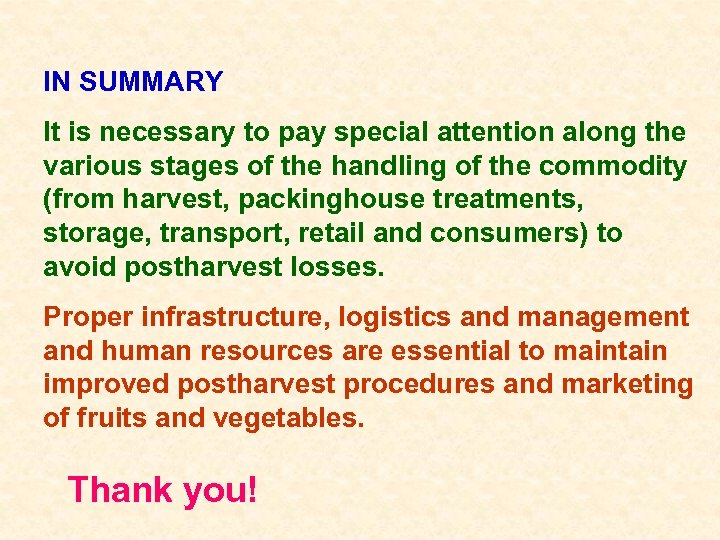
IN SUMMARY It is necessary to pay special attention along the various stages of the handling of the commodity (from harvest, packinghouse treatments, storage, transport, retail and consumers) to avoid postharvest losses. Proper infrastructure, logistics and management and human resources are essential to maintain improved postharvest procedures and marketing of fruits and vegetables. Thank you!
Fighting Hunger by Saving Perishables Jorge Luis Alonso · 02 -10 -2008 • President and CEO of the Global Cold Chain Alliance, spoke to a special United Nations Forum on the global food crisis at United Nations headquarters in New York City. Among many things said that countries without proper cold chain infrastructure lose about 30 to 60% of all perishable products each year before they even get to the table. He argued that the solution to combating world hunger involves more than just producing more food, but reducing losses through “proper postharvest technologies.
Скачать презентацию Postharvest Losses of Fruits and Vegetables Yoram Fuchs
7aa54c3a518ef29bf2b329b92f019a94.ppt