Скачать презентацию POST-WWII TO PRESENT DAY THE MIDDLE EAST
09464383b369acc1994edbd5d9c6f943.ppt
- Количество слайдов: 18
 POST-WWII TO PRESENT DAY THE MIDDLE EAST
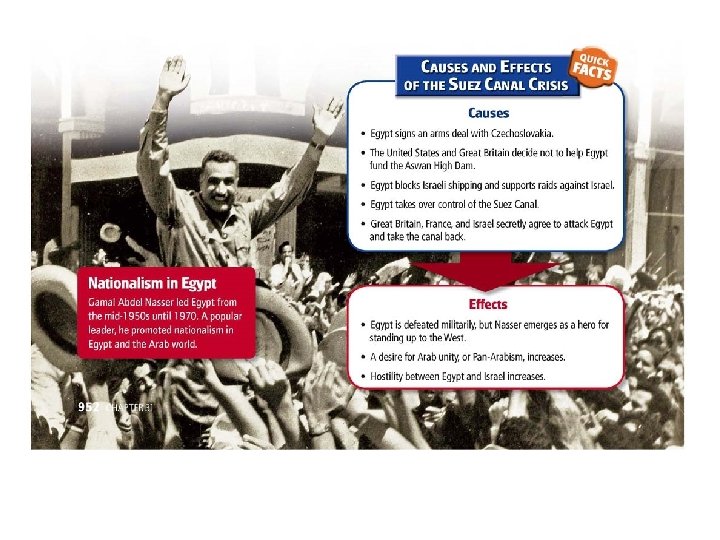
 • Egypt not fully independent – British troops occupied the Suez Canal – As a result, Abdul Nasser seizes power in a military coup in 1952 • Once in power, Nasser refused to join the Baghdad Pact, a U. S. led alliance against communism in the Middle East – When Nasser asked Western countries to sell him weapons, they refused • Gets them from Soviet-controlled Czechoslovakia – The U. S. and British responded by refusing to loan Egypt money to build the Aswan Dam on the Nile River
 • Angry, Nasser seizes the Suez Canal, which was owned by an international company controlled by Britain and France – Great Britain, France, and Israel attack Egypt – The Soviet Union threatens to come to the aid of Egypt and the U. S. pressures Britain, France, and Israel to withdraw from Egypt • Nasser promotes Pan-Arabism = Arab unity – Wants to unite the Arab world, works hard to destroy Israel
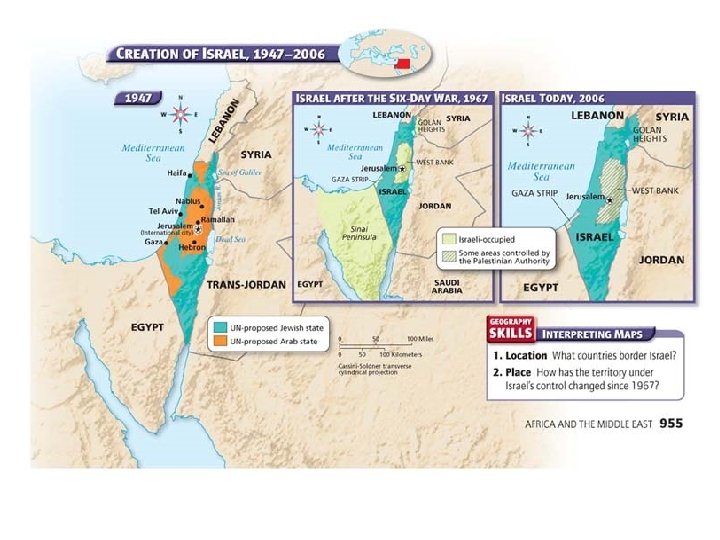
 • In 1948 the United Nations creates the Jewish state of Israel – The problem is that Palestinians already live there, Arab neighbors see this as a betrayal, especially Egypt • The UN proposed a partition of Palestine into a Jewish and an Arab state – The next day several Arab nations invade, however the invasion fails – the first Arab-Israeli war • They still refuse to recognize Israel’s right to exist • One result of this war was that the proposed Arab state didn’t come into existence
 • Six Day War (1967) – Egypt blockades Israel, and fearing an attack, Israel strikes first – Israel breaks through the blockade and seizes new territory • Sinai Peninsula, West Bank, Golan Heights, Gaza Strip, and occupies Jerusalem – Israel triples its size, some Arab nations still want their land returned • Massacre at the Munich Olympics in 1972 – Terrorists seize eleven Olympians, two are killed immediately – The other nine die with several terrorists in a shoot out at the airport
 • OPEC formed in 1960 = the Organization of Petroleum Exporting Countries – Increase prices when upset about Western foreign policy in the Middle East • Yom Kippur War (1973) – Egypt and Syria launch a surprise attack against Israel on a Jewish holy day • In the beginning the Arab force was able to make gains – The Israelis are able to push back the invading force with U. S. support • Arab members of OPEC place an oil embargo on countries supporting Israel
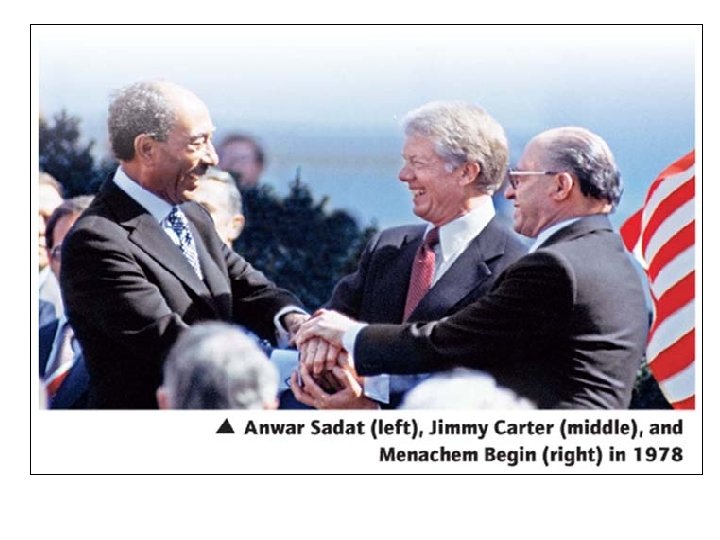
 • Camp David Accords (1978) – President Carter meets with Anwar Sadat of Egypt and Prime Minister Begin of Israel – They sign the Camp David Accords, a peace treaty that ends the state of war between them • Egypt recognizes Israel and Israel return the Sinai Peninsula – Both Sadat and Begin are later assassinated • Palestinian Unrest – PLO = Palestine Liberation Organization, formed 1964 • Pledge to destroy Israel and replace it with a Palestinian state • Led by Yasser Arafat, launches attacks against Israel
 – Intifada = rebellion based on resentment of Israeli occupation (1987) • Palestinian youths battle Israeli troops in widespread street violence • Fighting continues until the early 1990 s – Oslo Accords (1993) = Arafat and Israeli prime minister Rabin negotiate an agreement to end the violence • Called for Palestinians to gradually gain control over governing the West Bank and Gaza • Peace undermined - militant group Hamas launches suicide bombings in Israel and an Israeli religious fanatic assassinates Rabin
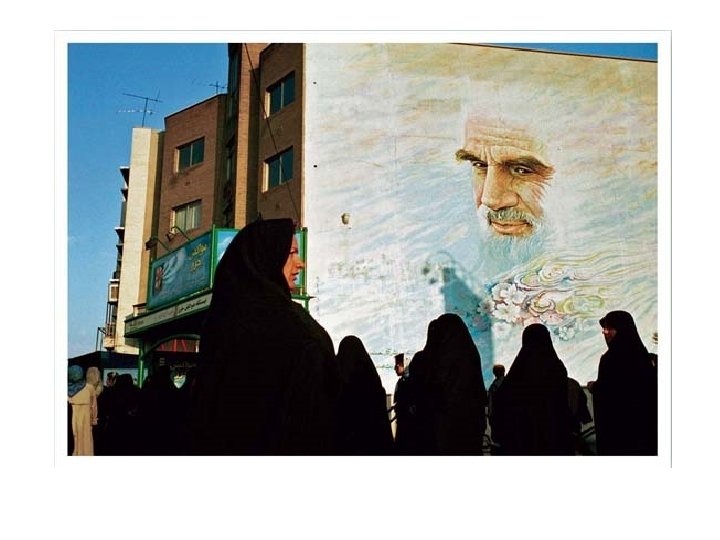
 – A second intifada began in 2000, with Hamas sending suicide bombers into Israel and Israel responding by sending troops in the West Bank and Gaza • Revolution in Iran and hostage crisis (1979) – Iran had been the chief ally of the U. S. in the Middle East • However many Muslims view the new Iranian civilization as being based on greed and materialism and too western, which they blamed as American influence – Ayatollah Khomeini leads a revolution, overthrows the gov’t, and sets up an Islamic republic • Enforced strict religious and social laws, anti. Western foreign policy
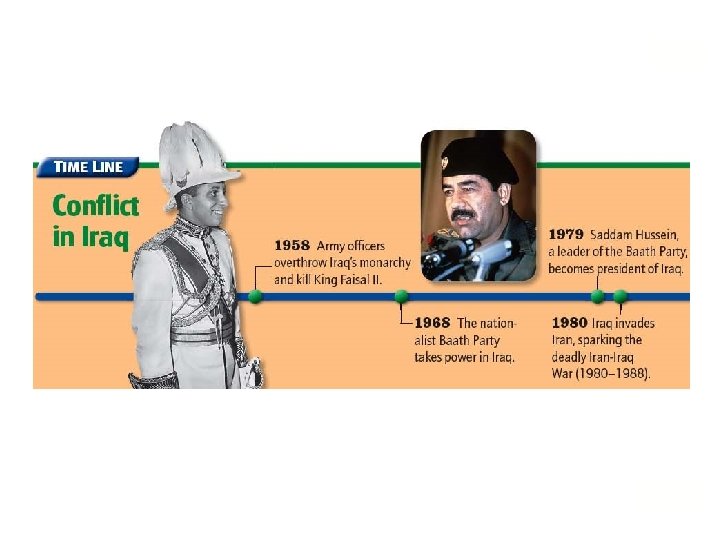
 • The shah goes to the U. S. for medical treatment, angers the Iranians – 52 Americans are then seized in Tehran from the U. S. embassy and held hostage for over a year • They are released the day Reagan becomes president • Iran-Iraq War (1980 -1988) – Iran = Shiites, Iran = Sunnis – Saddam Hussein invades Iran for territory • Due to border disputes and Iran’s new gov’t calling for revolution among Iraq’s Shiite population – Uses poison gas and children to clear minefields
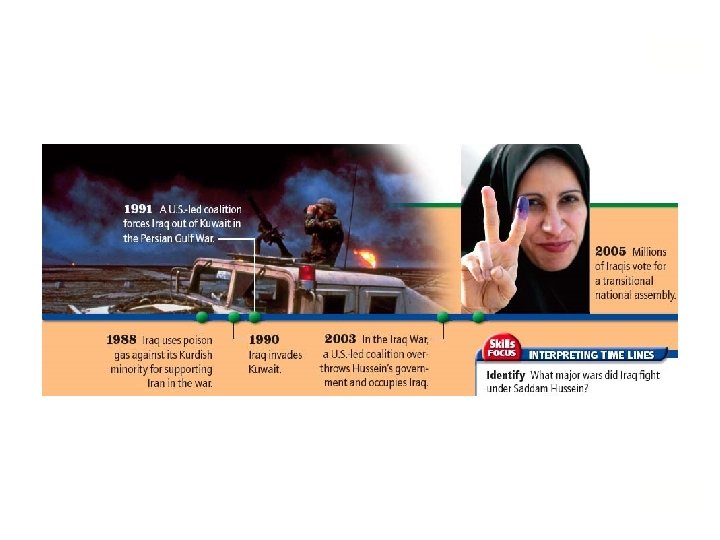
 • Persian Gulf War (1990) – Iraq invades Kuwait for its oil fields – Desert Storm – U. S. leads an international force that frees Kuwait • Iraq must destroy its chemical weapons • Current war in Iraq – U. S. calls for invasion because Iraq is suspected of having chemical weapons – War starts in March 2003, ends? – Saddam Hussein is removed from power and executed – Currently there have been ______ deaths and ______ wounded
 • Afghanistan invaded by the U. S. in 2001 after being accused of sheltering Osama bin Laden and al-Qaeda – The Taliban gov’t collapses, American forces still fighting there • Rise of Islamic fundamentalism – Movement to reorder gov’t and society according to Islamic laws – Islamists believe that Muslim countries have strayed from the true path of Islam by following Western influences • Islamic militants/extremists use violence to try and bring about changes – Goal is to remove all Western influence in Muslim nations