


 Скачать презентацию Post-War Japanese Government Surrender Occupation and Punishment
0a2c915ccb9cb2b57a519b726dbd1be5.ppt
- Количество слайдов: 28
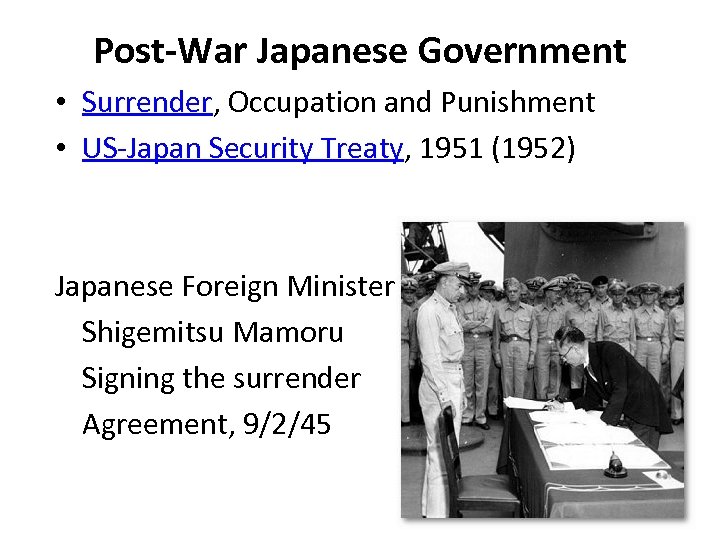 Post-War Japanese Government • Surrender, Occupation and Punishment • US-Japan Security Treaty, 1951 (1952) Japanese Foreign Minister Shigemitsu Mamoru Signing the surrender Agreement, 9/2/45
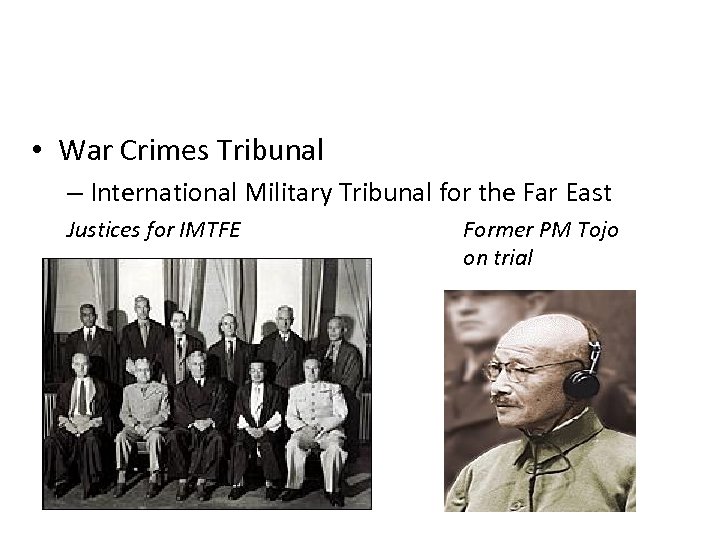 • War Crimes Tribunal – International Military Tribunal for the Far East Justices for IMTFE Former PM Tojo on trial
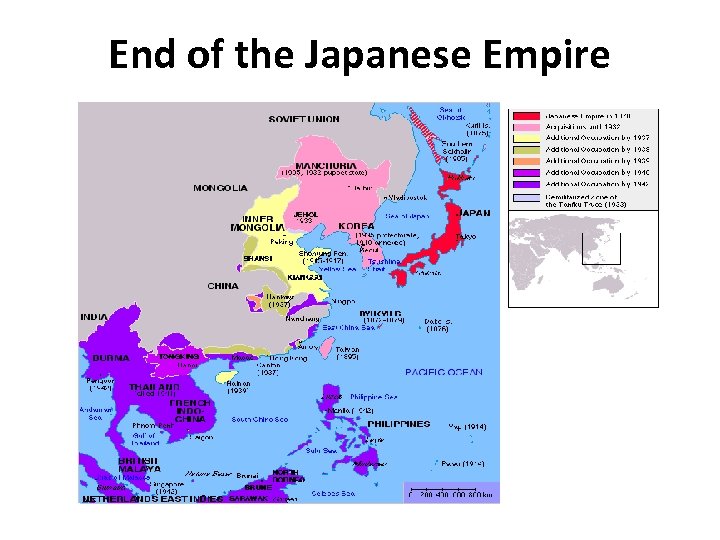 End of the Japanese Empire
 Demilitarization • Article 9. Aspiring sincerely to an international peace based on justice and order, the Japanese people forever renounce war as a sovereign right of the nation and the threat or use of force as means of settling international disputes. In order to accomplish the aim of the preceding paragraph, land, sea, and air forces, as well as other war potential, will never be maintained. The right of belligerency of the state will not be recognized.
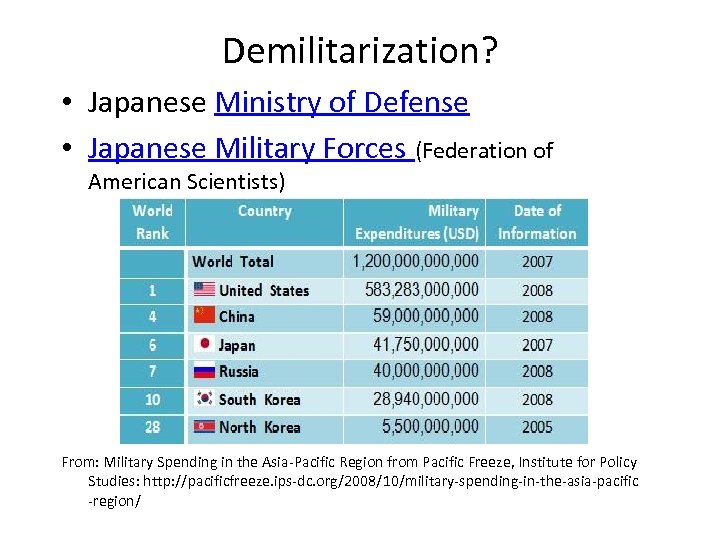 Demilitarization? • Japanese Ministry of Defense • Japanese Military Forces (Federation of American Scientists) From: Military Spending in the Asia-Pacific Region from Pacific Freeze, Institute for Policy Studies: http: //pacificfreeze. ips-dc. org/2008/10/military-spending-in-the-asia-pacific -region/
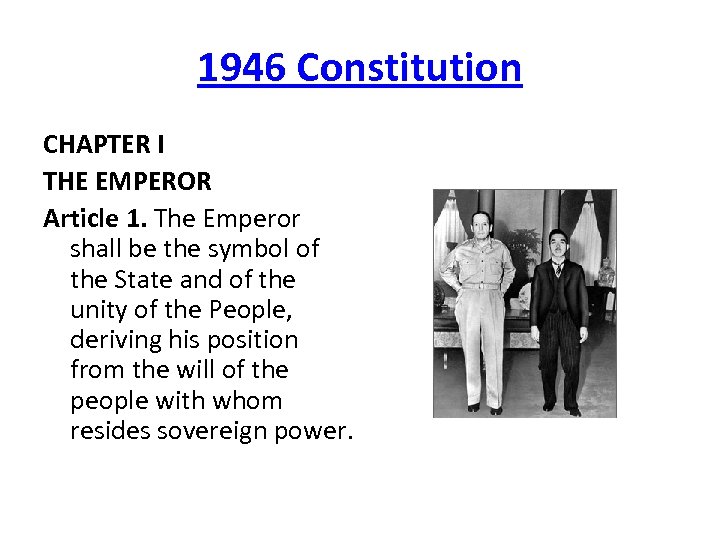 1946 Constitution CHAPTER I THE EMPEROR Article 1. The Emperor shall be the symbol of the State and of the unity of the People, deriving his position from the will of the people with whom resides sovereign power.
 Post-War Governmental Structure Diet • House of Councillors • House of Representatives (1996 System) – 300 from single member districts – 180 from proportional representation
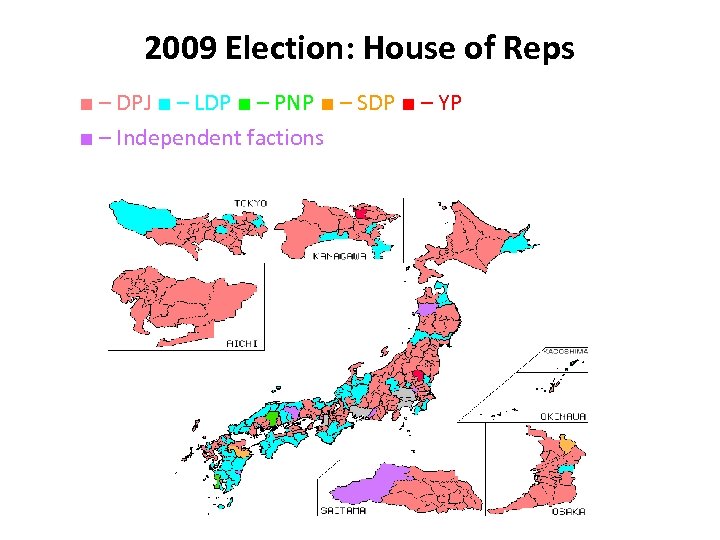 2009 Election: House of Reps ■ – DPJ ■ – LDP ■ – PNP ■ – SDP ■ – YP ■ – Independent factions
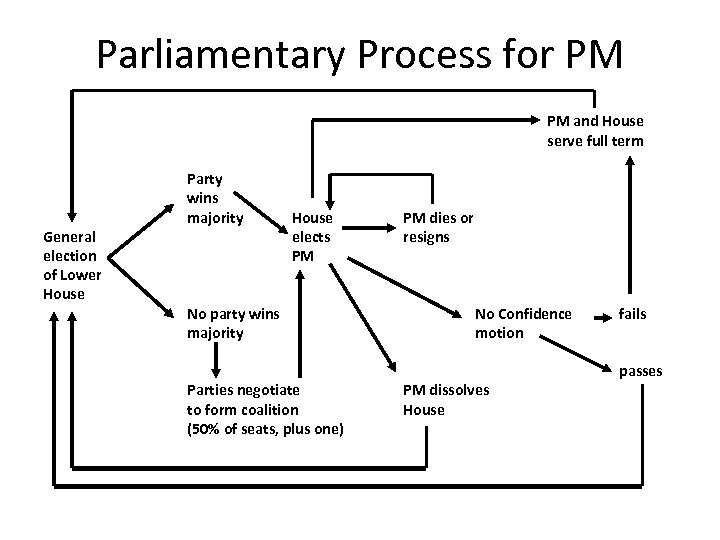 Parliamentary Process for PM PM and House serve full term General election of Lower House Party wins majority House elects PM No party wins majority Parties negotiate to form coalition (50% of seats, plus one) PM dies or resigns No Confidence motion PM dissolves House fails passes
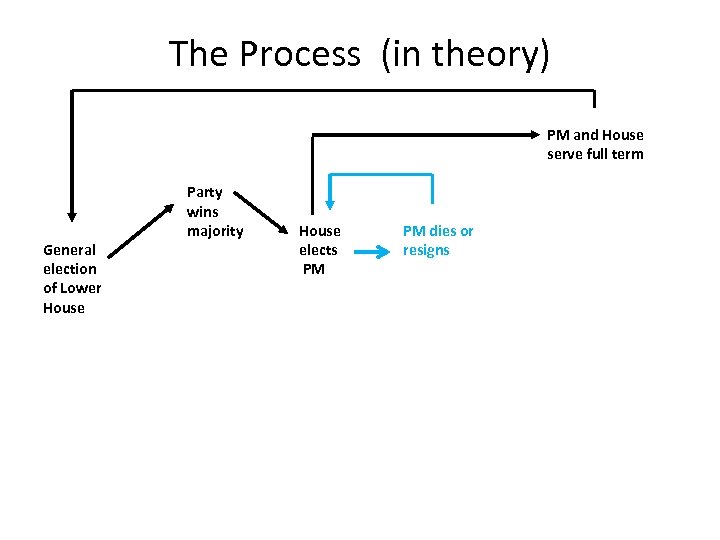 The Process (in theory) PM and House serve full term General election of Lower House Party wins majority House elects PM PM dies or resigns
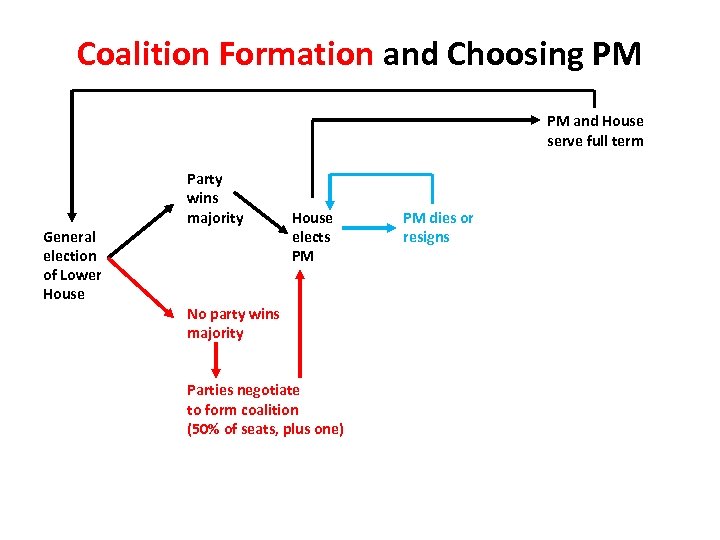 Coalition Formation and Choosing PM PM and House serve full term General election of Lower House Party wins majority House elects PM No party wins majority Parties negotiate to form coalition (50% of seats, plus one) PM dies or resigns
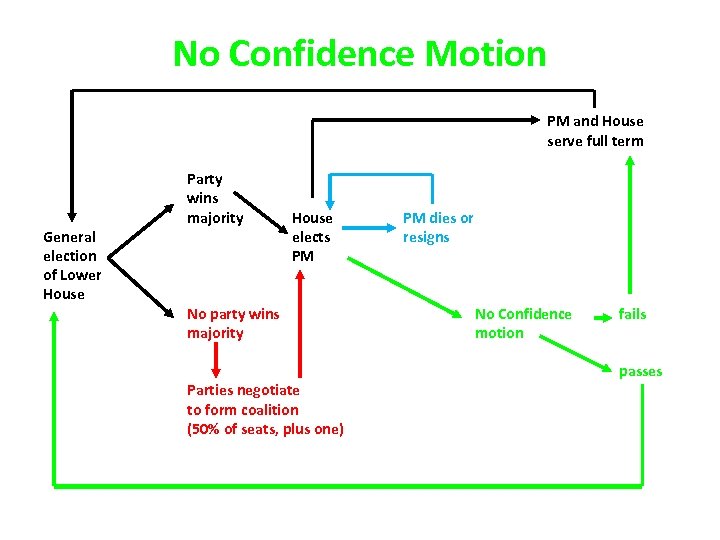 No Confidence Motion PM and House serve full term General election of Lower House Party wins majority House elects PM No party wins majority Parties negotiate to form coalition (50% of seats, plus one) PM dies or resigns No Confidence motion fails passes
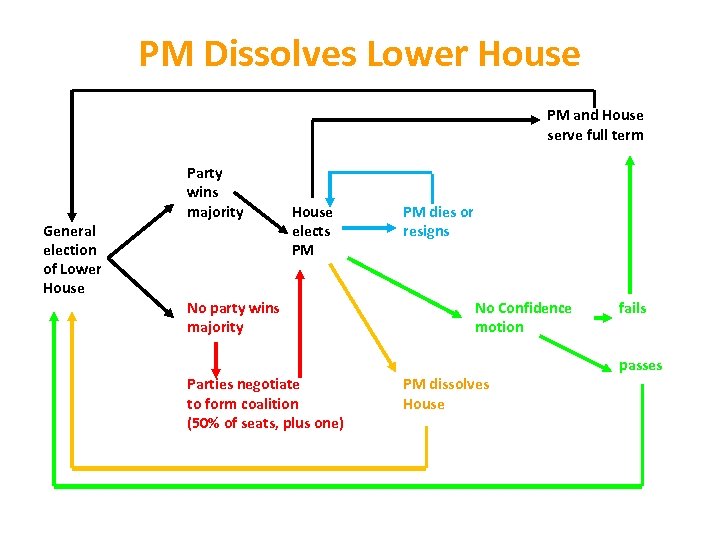 PM Dissolves Lower House PM and House serve full term General election of Lower House Party wins majority House elects PM No party wins majority Parties negotiate to form coalition (50% of seats, plus one) PM dies or resigns No Confidence motion PM dissolves House fails passes
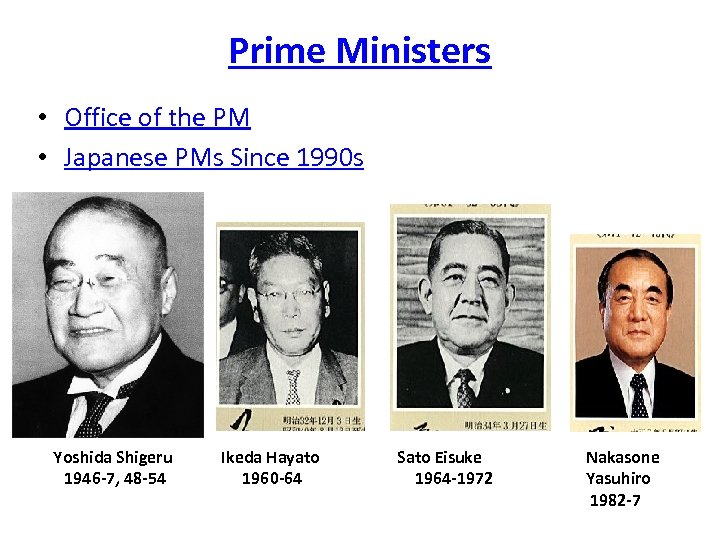 Prime Ministers • Office of the PM • Japanese PMs Since 1990 s Yoshida Shigeru 1946 -7, 48 -54 Ikeda Hayato 1960 -64 Sato Eisuke 1964 -1972 Nakasone Yasuhiro 1982 -7
 Cabinet and Ministries – Cabinet Office – Ministry of Foreign Affairs – Ministry of Economy, Trade, and Industry (formerly MITI) – Ministry of Finance – Ministry of Defense – Ministry of Health, Labour, and Welfare
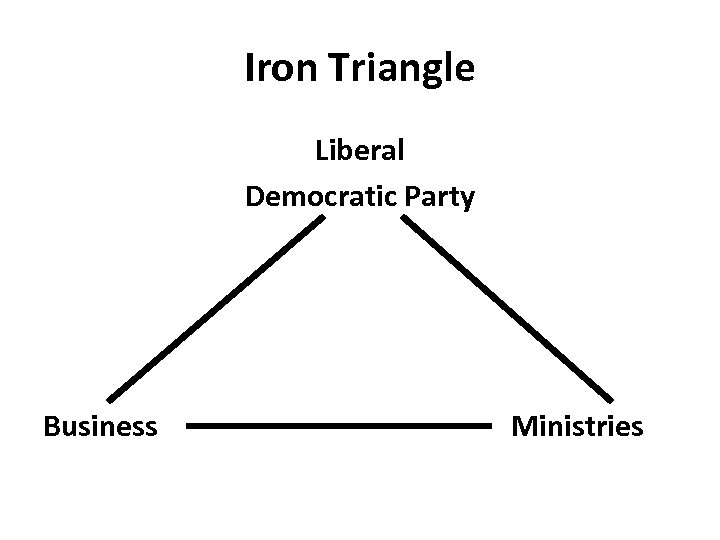 Iron Triangle Liberal Democratic Party Business Ministries
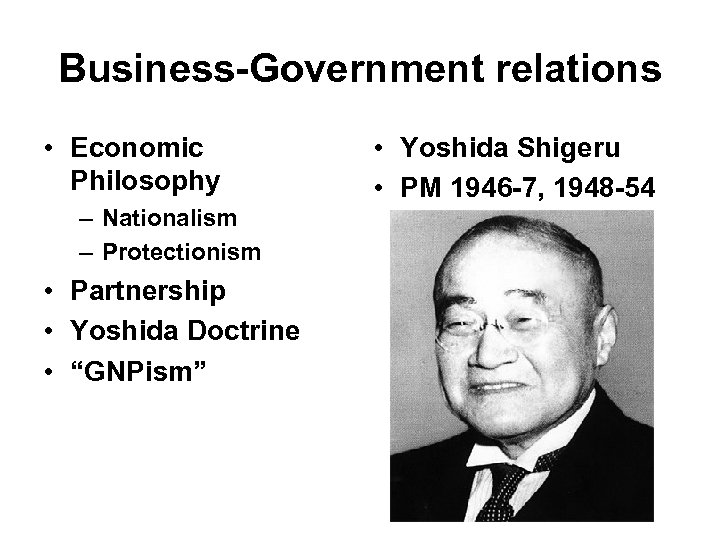 Business-Government relations • Economic Philosophy – Nationalism – Protectionism • Partnership • Yoshida Doctrine • “GNPism” • Yoshida Shigeru • PM 1946 -7, 1948 -54
 Administrative Guidance Ministry of Economy, Trade, and Industry formerly Ministry of International Trade and Industry (MITI) • The Visible Hand?
 1955 System • LDP: Liberal Democratic Party • JSP/SDP: Social Democratic Party • LDP in power from: – 1955 -1993; – 1994 -2009; – 2012 -present
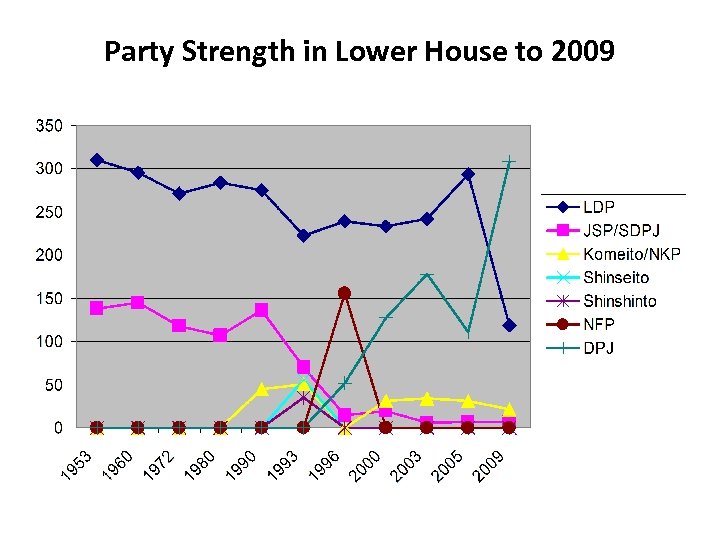 Party Strength in Lower House to 2009
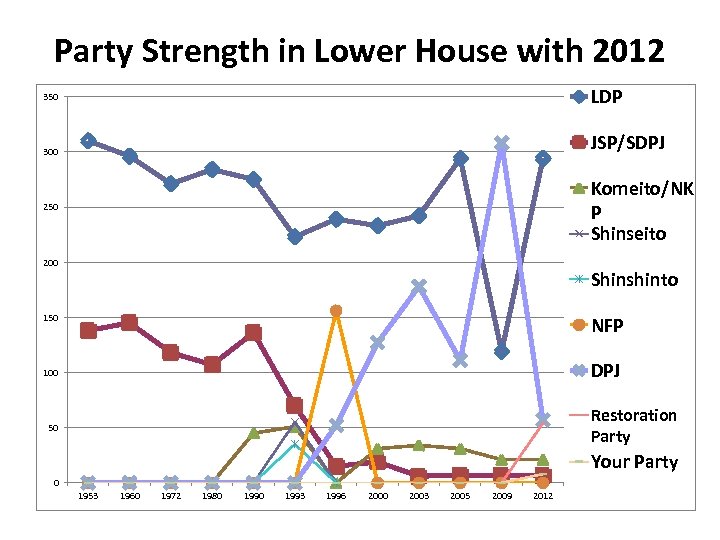 Party Strength in Lower House with 2012 LDP 350 JSP/SDPJ 300 Komeito/NK P Shinseito 250 200 Shinshinto 150 NFP DPJ 100 Restoration Party 50 Your Party 0 1953 1960 1972 1980 1993 1996 2000 2003 2005 2009 2012
 Explaining LDP Domination 1. Iron Triangle 2. Factions: Habatsu 3. Campaign Money 1. Construction, rice 4. Opposition Weakness and policies 1. Marxism, anti-US alliance 5. Rural Vote
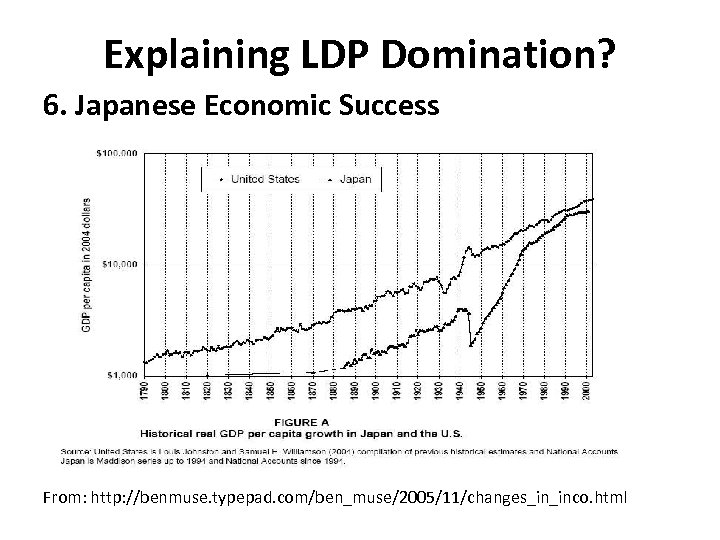 Explaining LDP Domination? 6. Japanese Economic Success From: http: //benmuse. typepad. com/ben_muse/2005/11/changes_in_inco. html
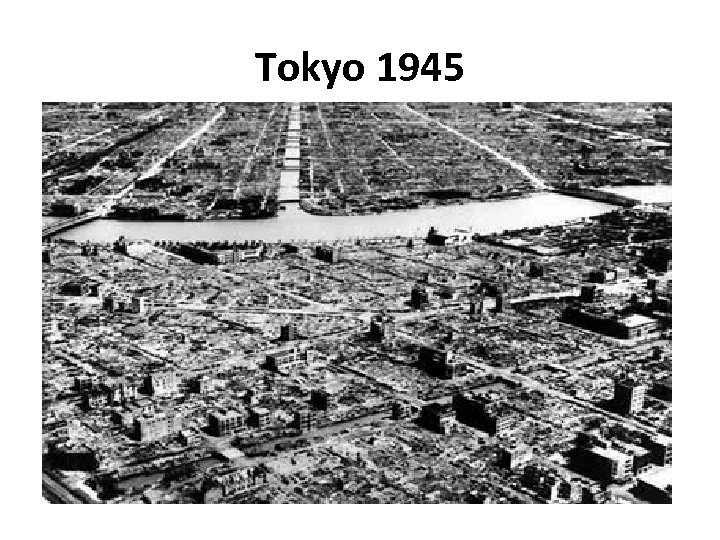 Tokyo 1945
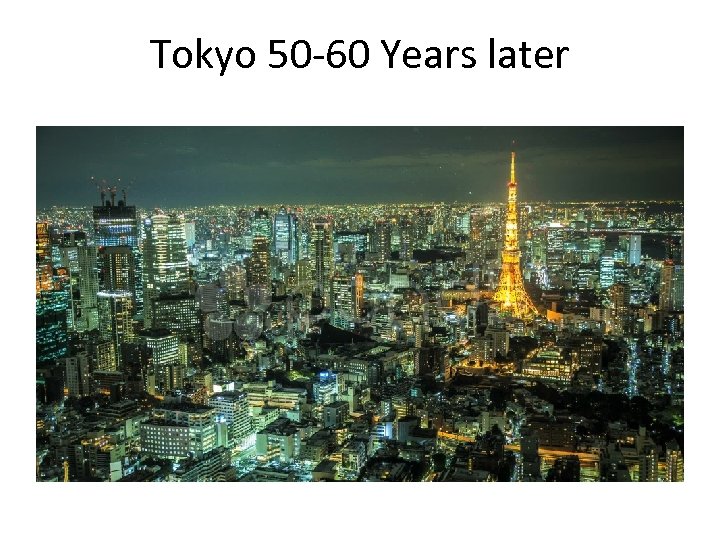 Tokyo 50 -60 Years later
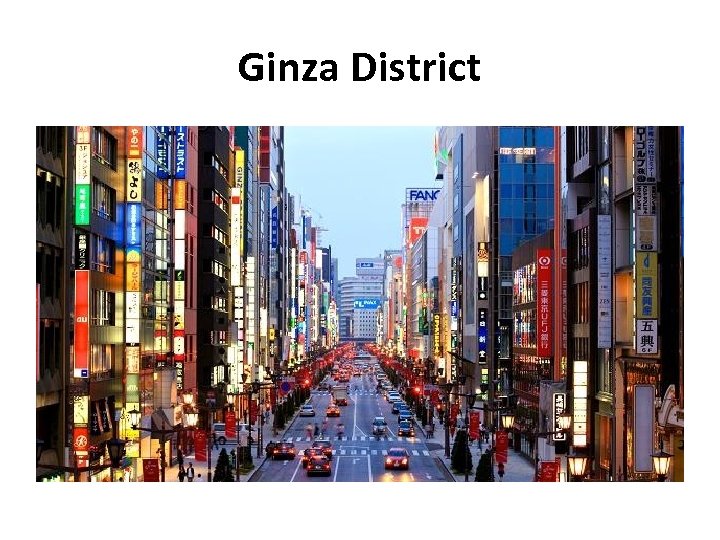 Ginza District
 Explaining LDP Domination? 7. Consensus Politics One and ½ Party System
 The Questions • Can LDP domination last forever? • Can Japan ever develop a competitive twoparty system?