 Скачать презентацию Post-Fukushima Daiichi Accident Implications for Global Use of
0d811e9230850f5a3f6db2ca2edd7d53.ppt
- Количество слайдов: 33



Post-Fukushima Daiichi Accident: Implications for Global Use of Nuclear Power Charles D. Ferguson, Ph. D. President Federation of American Scientists Presentation to Program on U. S. -Japan Relations, Weatherhead Center for International Affairs, Harvard University November 1, 2011
Outline of Presentation • World use of nuclear power • Problems at Fukushima Daiichi Nuclear Power Plant • Reactions from various countries, especially Germany • Potential changes to Japan’s energy policy and nuclear power industry • U. S. Nuclear Regulatory Commission Task Force’s recommendations • U. S. Blue Ribbon Commission’s recommendations • Next steps for nuclear power and implications for safety, education, economics, and waste disposal
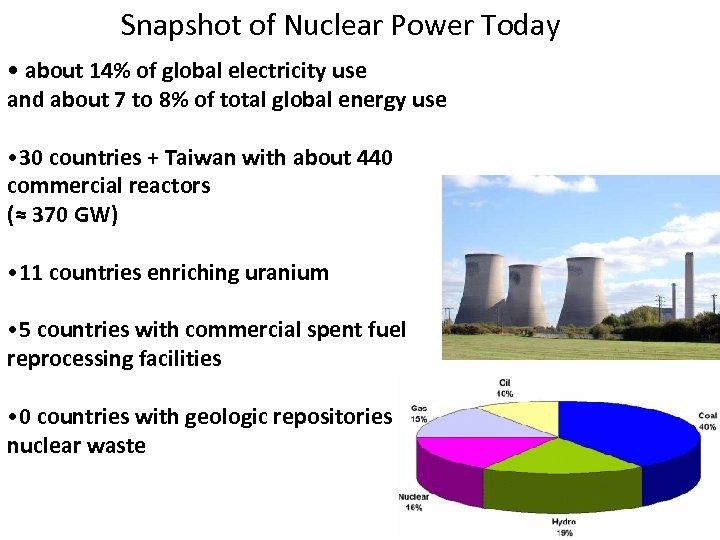
Snapshot of Nuclear Power Today • about 14% of global electricity use and about 7 to 8% of total global energy use • 30 countries + Taiwan with about 440 commercial reactors (≈ 370 GW) • 11 countries enriching uranium • 5 countries with commercial spent fuel reprocessing facilities • 0 countries with geologic repositories for nuclear waste
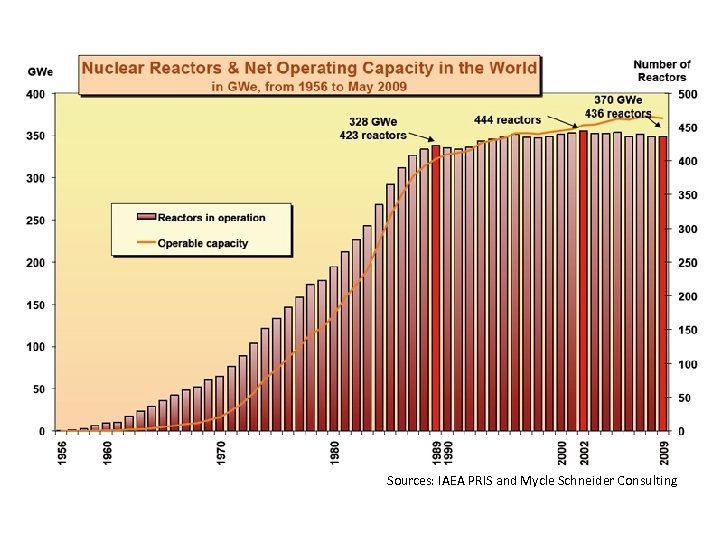
Sources: IAEA PRIS and Mycle Schneider Consulting
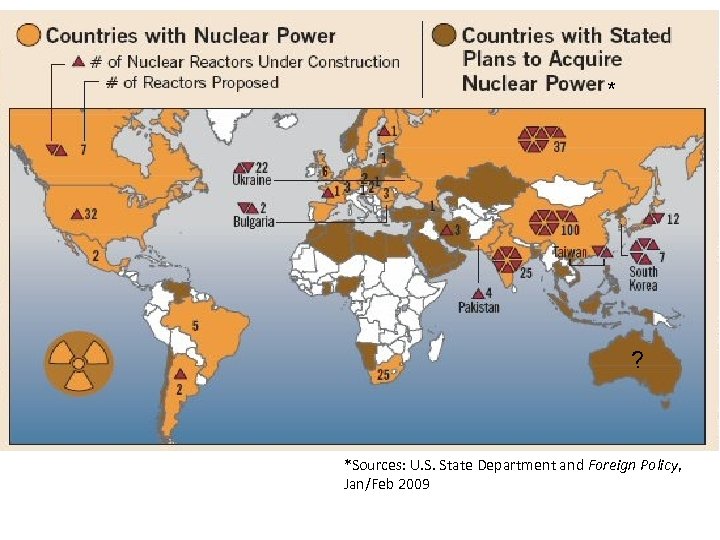
* ? *Sources: U. S. State Department and Foreign Policy, Jan/Feb 2009
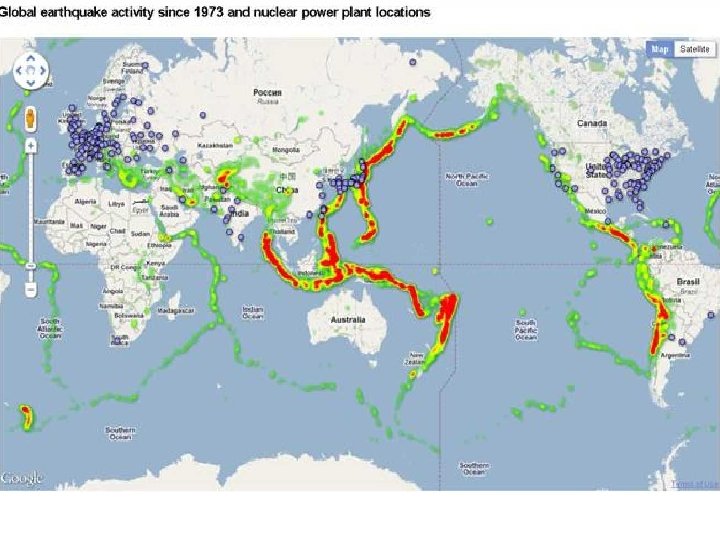
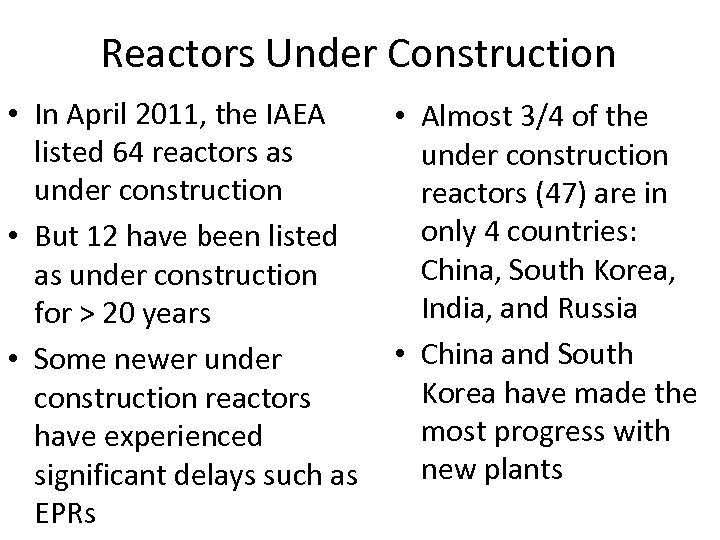
Reactors Under Construction • In April 2011, the IAEA listed 64 reactors as under construction • But 12 have been listed as under construction for > 20 years • Some newer under construction reactors have experienced significant delays such as EPRs • Almost 3/4 of the under construction reactors (47) are in only 4 countries: China, South Korea, India, and Russia • China and South Korea have made the most progress with new plants
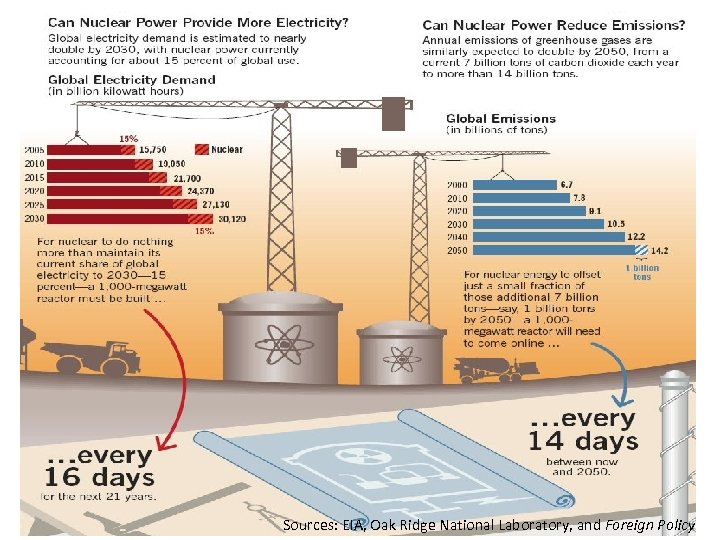
Sources: EIA, Oak Ridge National Laboratory, and Foreign Policy
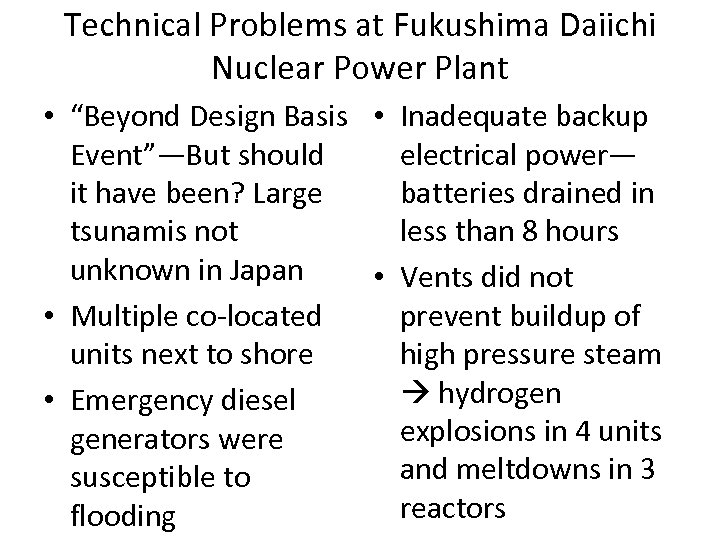
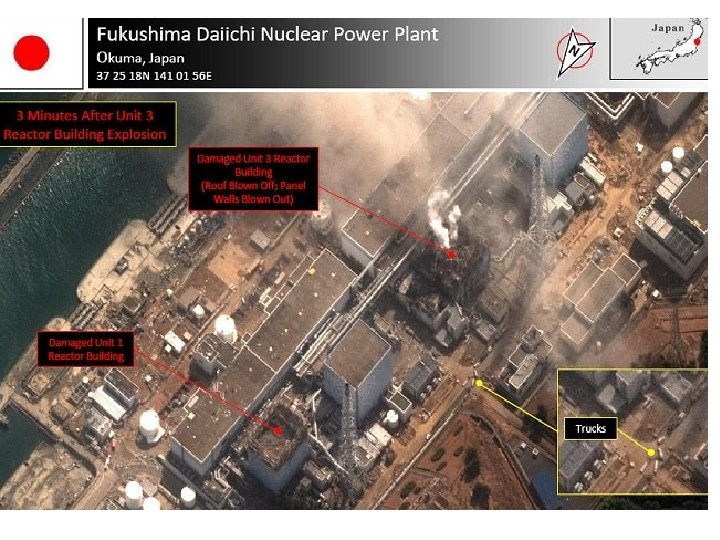
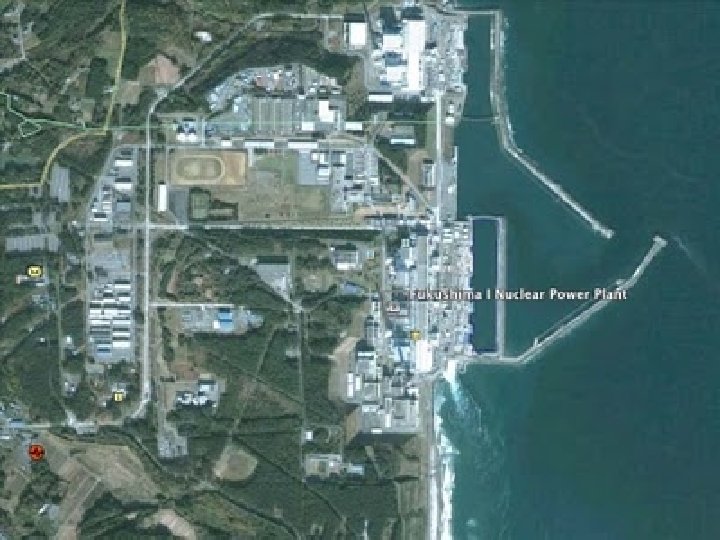
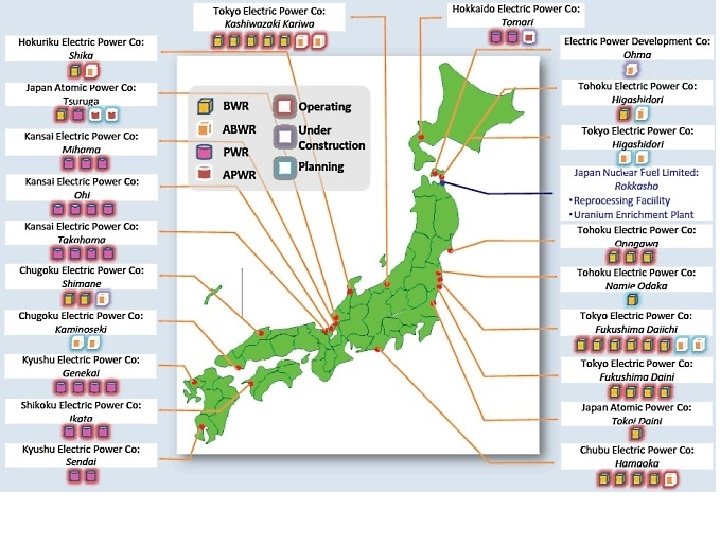
Technical Problems at Fukushima Daiichi Nuclear Power Plant • “Beyond Design Basis • Inadequate backup Event”—But should electrical power— it have been? Large batteries drained in tsunamis not less than 8 hours unknown in Japan • Vents did not • Multiple co-located prevent buildup of units next to shore high pressure steam hydrogen • Emergency diesel explosions in 4 units generators were and meltdowns in 3 susceptible to reactors flooding
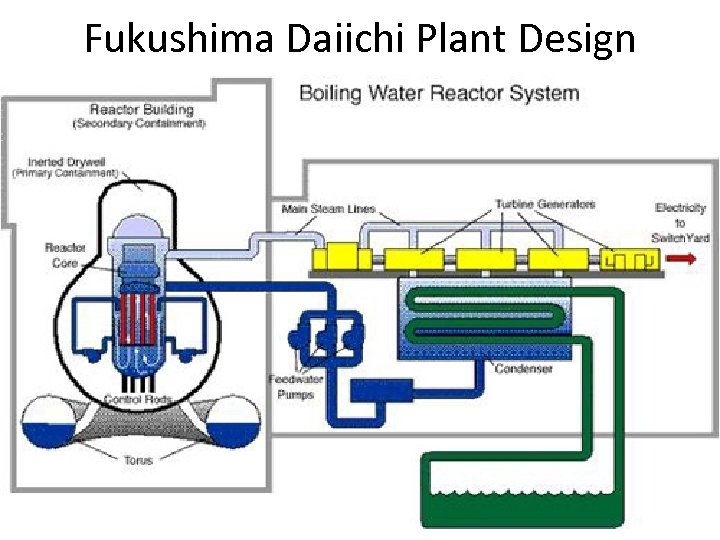
Fukushima Daiichi Plant Design
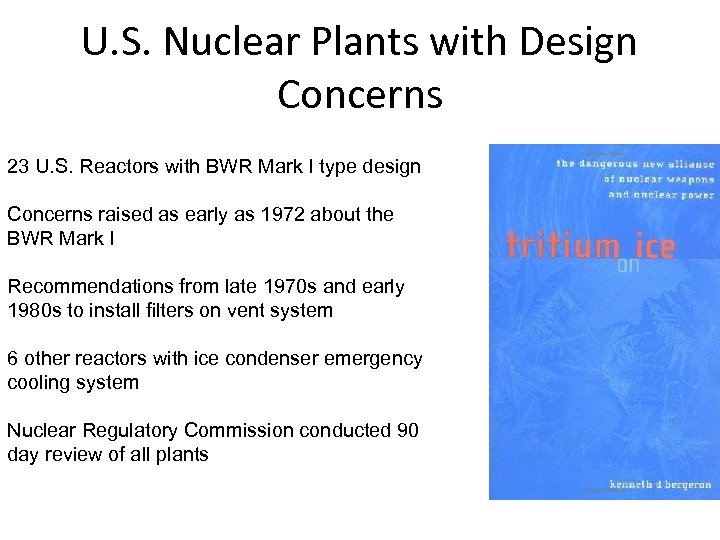
U. S. Nuclear Plants with Design Concerns 23 U. S. Reactors with BWR Mark I type design Concerns raised as early as 1972 about the BWR Mark I Recommendations from late 1970 s and early 1980 s to install filters on vent system 6 other reactors with ice condenser emergency cooling system Nuclear Regulatory Commission conducted 90 day review of all plants
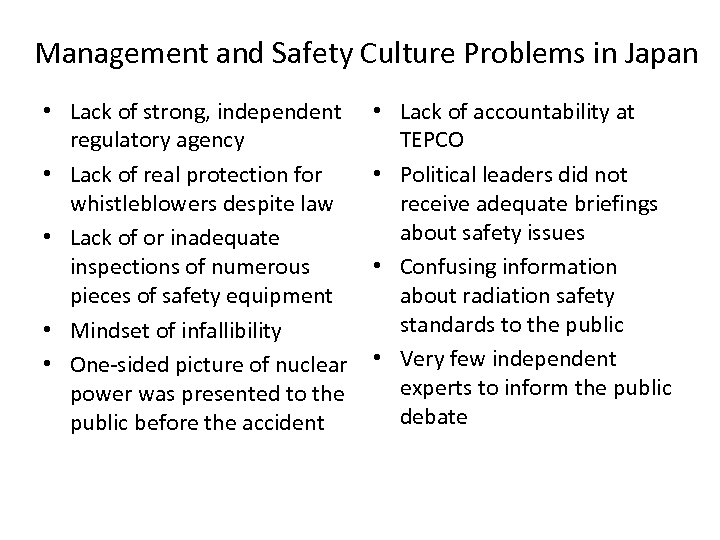
Management and Safety Culture Problems in Japan • Lack of strong, independent regulatory agency • Lack of real protection for whistleblowers despite law • Lack of or inadequate inspections of numerous pieces of safety equipment • Mindset of infallibility • One-sided picture of nuclear power was presented to the public before the accident • Lack of accountability at TEPCO • Political leaders did not receive adequate briefings about safety issues • Confusing information about radiation safety standards to the public • Very few independent experts to inform the public debate
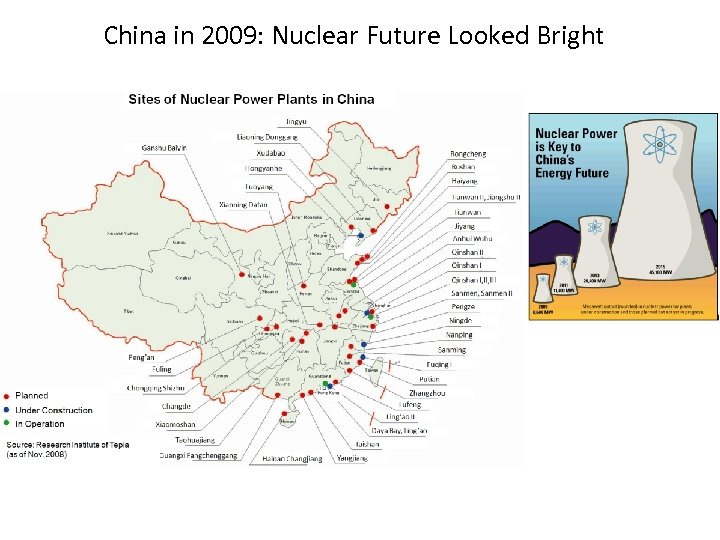
China in 2009: Nuclear Future Looked Bright
Reactions from Various Countries • Polls showed decrease of public support— generally not surprising • Countries against became more against • Countries in favor stayed in favor except for Japan, which reversed its position • U. S. still in favor but economics are the main problem for new nuclear • Positive sign: Beijing temporarily halted construction needs to deal with “safety gap” • China is building too fast and has not kept pace with training high quality workforce
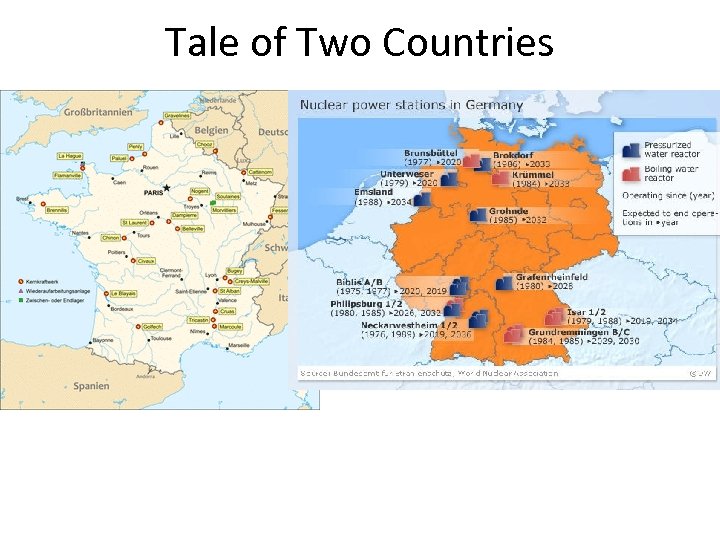
Tale of Two Countries
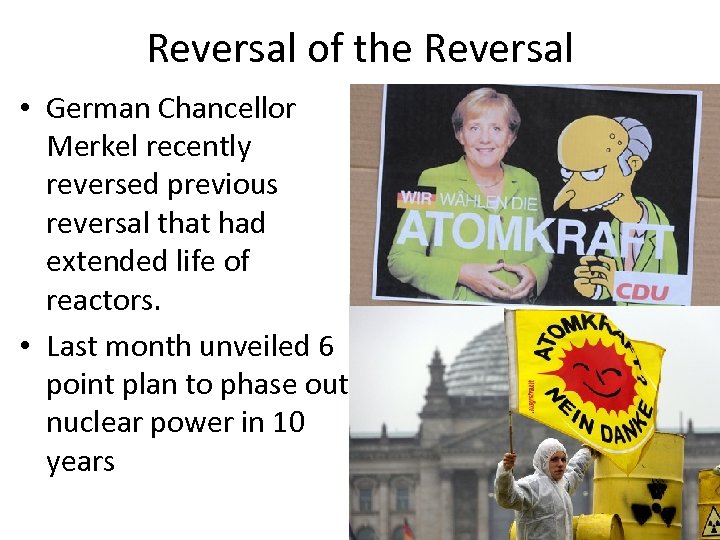
Reversal of the Reversal • German Chancellor Merkel recently reversed previous reversal that had extended life of reactors. • Last month unveiled 6 point plan to phase out nuclear power in 10 years
More Reactions in Europe • Switzerland decided to phase out nuclear power by 2030 • Italy has pulled back from considering new build— referendum in June was very negative • Germany has experienced the most negative response—hundreds of thousands protested
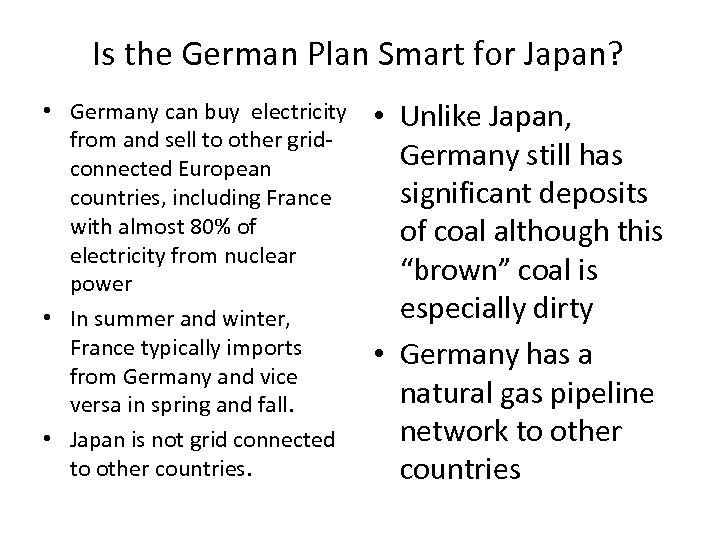
Is the German Plan Smart for Japan? • Germany can buy electricity from and sell to other gridconnected European countries, including France with almost 80% of electricity from nuclear power • In summer and winter, France typically imports from Germany and vice versa in spring and fall. • Japan is not grid connected to other countries. • Unlike Japan, Germany still has significant deposits of coal although this “brown” coal is especially dirty • Germany has a natural gas pipeline network to other countries
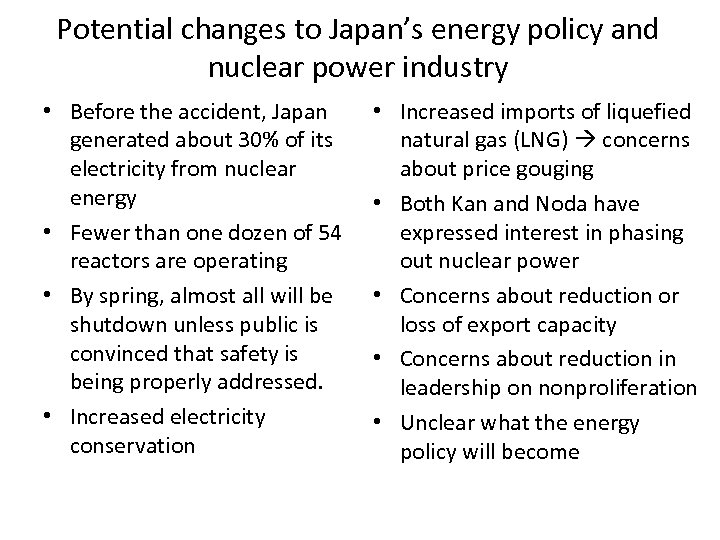
Potential changes to Japan’s energy policy and nuclear power industry • Before the accident, Japan generated about 30% of its electricity from nuclear energy • Fewer than one dozen of 54 reactors are operating • By spring, almost all will be shutdown unless public is convinced that safety is being properly addressed. • Increased electricity conservation • Increased imports of liquefied natural gas (LNG) concerns about price gouging • Both Kan and Noda have expressed interest in phasing out nuclear power • Concerns about reduction or loss of export capacity • Concerns about reduction in leadership on nonproliferation • Unclear what the energy policy will become
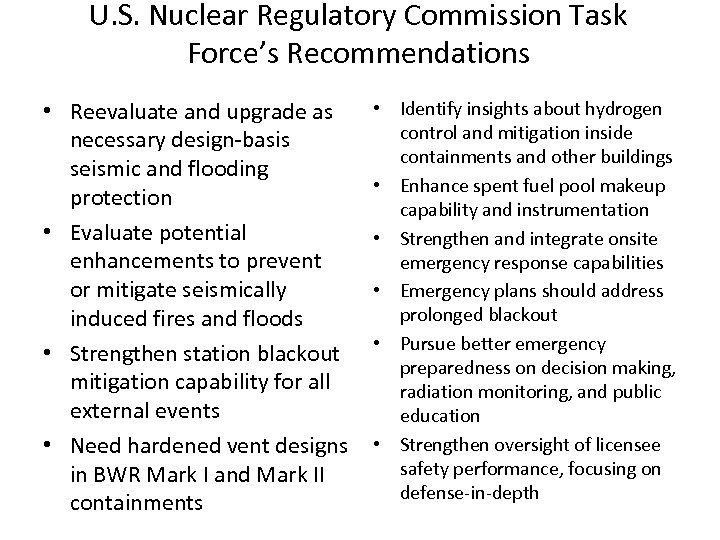
U. S. Nuclear Regulatory Commission Task Force’s Recommendations • Reevaluate and upgrade as necessary design-basis seismic and flooding protection • Evaluate potential enhancements to prevent or mitigate seismically induced fires and floods • Strengthen station blackout mitigation capability for all external events • Need hardened vent designs in BWR Mark I and Mark II containments • Identify insights about hydrogen control and mitigation inside containments and other buildings • Enhance spent fuel pool makeup capability and instrumentation • Strengthen and integrate onsite emergency response capabilities • Emergency plans should address prolonged blackout • Pursue better emergency preparedness on decision making, radiation monitoring, and public education • Strengthen oversight of licensee safety performance, focusing on defense-in-depth
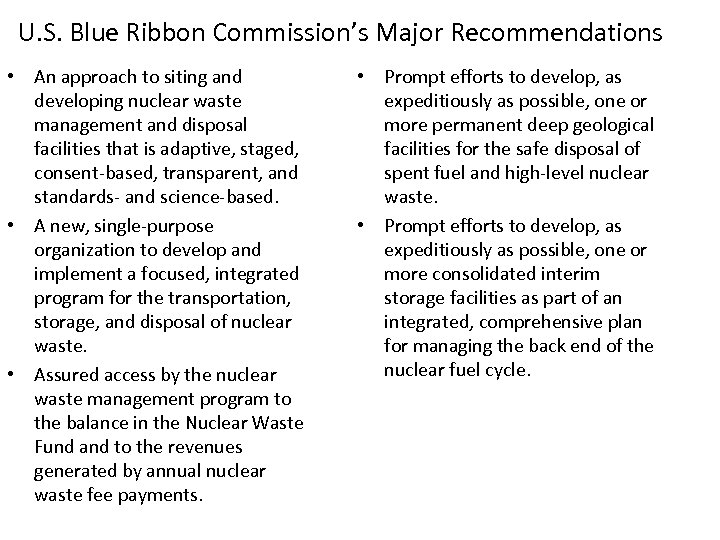
U. S. Blue Ribbon Commission’s Major Recommendations • An approach to siting and developing nuclear waste management and disposal facilities that is adaptive, staged, consent-based, transparent, and standards- and science-based. • A new, single-purpose organization to develop and implement a focused, integrated program for the transportation, storage, and disposal of nuclear waste. • Assured access by the nuclear waste management program to the balance in the Nuclear Waste Fund and to the revenues generated by annual nuclear waste fee payments. • Prompt efforts to develop, as expeditiously as possible, one or more permanent deep geological facilities for the safe disposal of spent fuel and high-level nuclear waste. • Prompt efforts to develop, as expeditiously as possible, one or more consolidated interim storage facilities as part of an integrated, comprehensive plan for managing the back end of the nuclear fuel cycle.
BRC Recommendations (continued) • Stable, long-term support for research, development, and demonstration (RD&D) on advanced reactor and fuel cycle technologies that have the potential to offer substantial benefits relative to currently available technologies and for related workforce needs and skills development. • International leadership to address global nonproliferation concerns and improve the safety and security of nuclear facilities and materials worldwide.
Next Steps: Safety • Need for strong, independent regulatory agencies • Need to instill safety culture among all workers and plant management • Need for safety retrofits where needed and phase outs of oldest plants —esp. BWR Mark I • Need for greater international cooperation
Next Steps: Education • Need for better and • Need to more transparent inform/educate information to the political leadership— public don’t hide bad news • Develop clear means to communicate complex technical concepts such as radiation exposure and dose
Next Steps: Economics • Estimate the external • Phase out subsidies costs (including for mature industries climate change, such as nuclear other forms of power? ? pollution, security, • Compete energy etc. ) for each energy options on an even source economic playing • Include these costs field into the price
Next Steps: Waste Disposal • Continue R&D into potential proliferationresistant means (including pyroprocessing) to recycle fissionable materials and dispose of HLW • Continue R&D into fast reactor technologies • Move forward with interim spent fuel storage using dry storage casks • In parallel, develop geologic repository for permanent storage of HLW and ILW
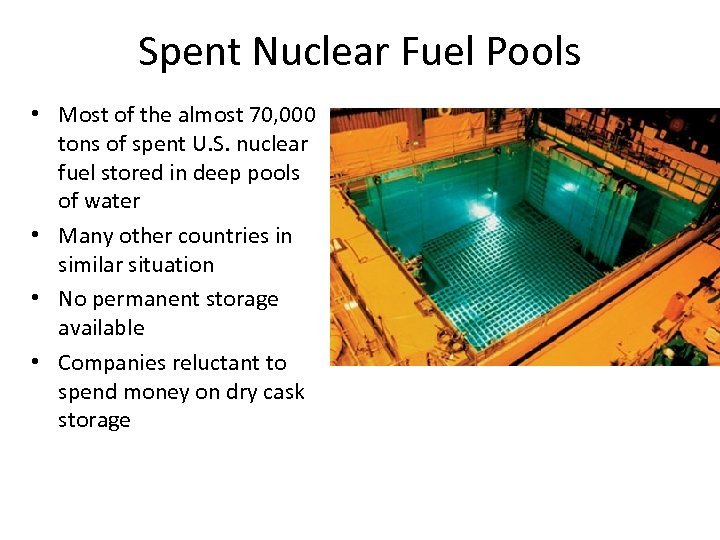
Spent Nuclear Fuel Pools • Most of the almost 70, 000 tons of spent U. S. nuclear fuel stored in deep pools of water • Many other countries in similar situation • No permanent storage available • Companies reluctant to spend money on dry cask storage
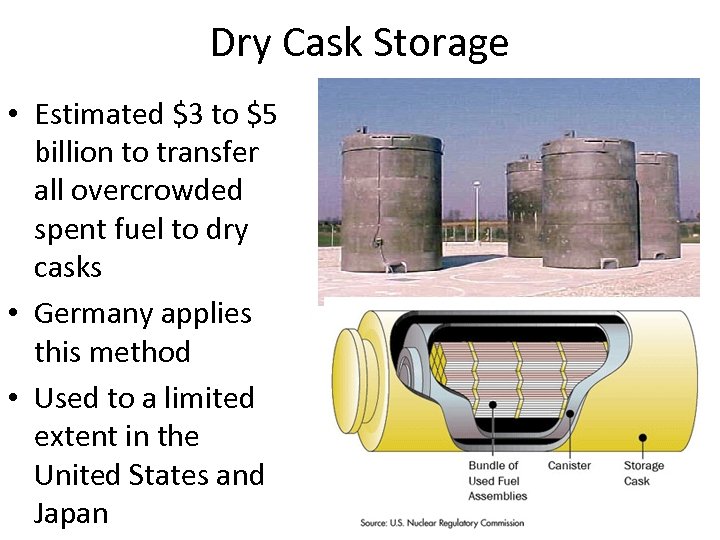
Dry Cask Storage • Estimated $3 to $5 billion to transfer all overcrowded spent fuel to dry casks • Germany applies this method • Used to a limited extent in the United States and Japan
Use of Plutonium-based Fuels • Reactor #3 at Fukushima was recently fueled with mixed oxide (MOX) fuel, which contains plutonium oxide • Japan has invested about $28 billion in a plutonium recycling program • U. S. has refrained from reprocessing spent fuel to use plutonium since the Carter administration • But the United States has planned to dispose of weapons-grade Pu by using MOX this may change
Thank You Very Much for Your Attention For more information about the Federation of American Scientists, please see: www. fas. org For more info on nuclear energy
Скачать презентацию Post-Fukushima Daiichi Accident Implications for Global Use of
0d811e9230850f5a3f6db2ca2edd7d53.ppt