


 Скачать презентацию Portfolios after the fun Peter Holland Fidelity 1
4ec0a0d92854d9a6cb0d79c8f09bbb34.ppt
- Количество слайдов: 15
 Portfolios after the fun Peter Holland Fidelity 1
 It’s the people, stupid! • We are very clever – Large spreadsheets – Information overload • But also very dumb (greed/fear) - The origins of today’s problems What will the “industry” do? What ought the “industry” do? The “Octopus” solution 2
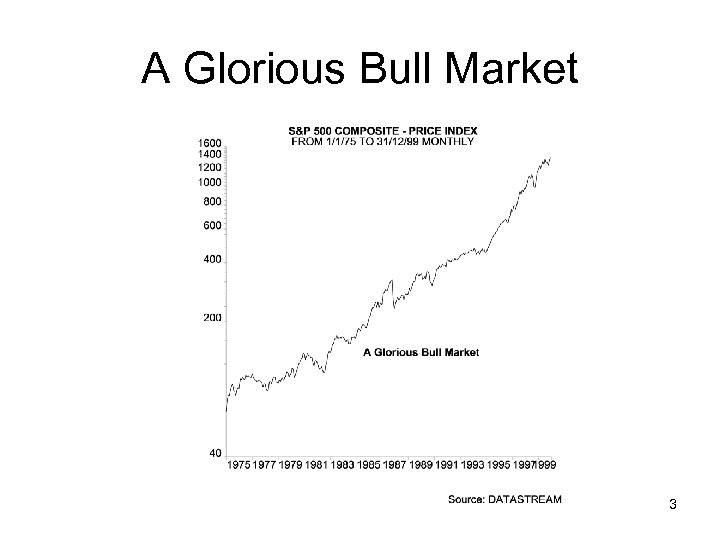 A Glorious Bull Market 3
 The Bull Market • Valuation driven – Transition to low inflation world • Equities became the asset class of choice • Bonds & Property were for wimps • “Greed” took over – Benchmarking became the norm – Ownership replaced by derivatives, “vehicles”, “products” – Timescales contracted – Confidence increased 4
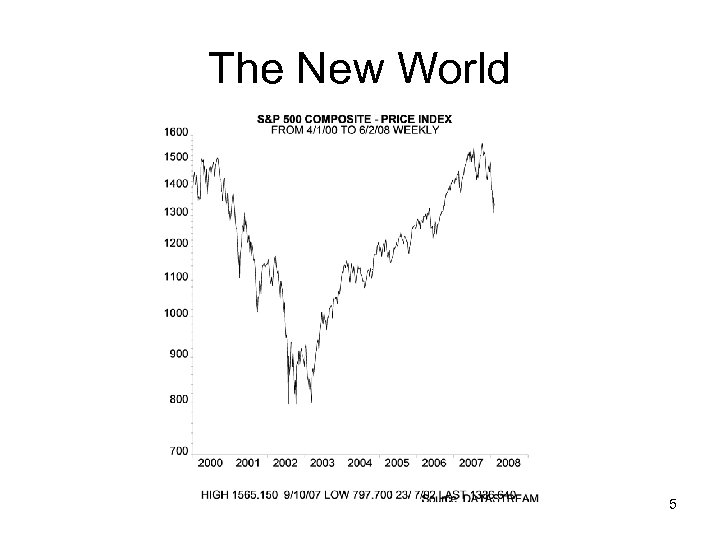 The New World 5
 What went wrong? • Sub-Prime, credit etc – – The “engine” was forgotten The “back testing” was unrealistic Investors were confused by complexity Risk was moved, not eliminated (moved to the ignorant) • Economic or Behavioural? – – – Incentives – bankers – “products” not loans Front end fees/profits preferred to sound lending Rating agencies – paid by the “product” generators The short term “rear mirror” view of risk The great fee conspiracy (fees change behaviour, risk perception) • The world of investment management couldn’t cope with lower nominal returns. 4% from bonds; 7/8% equities – inadequate! 6
 The benchmarking cancer • • Benchmarks drive manager behaviour Incentives – “benchmark risk” takes over Timescales shrink Losing money is irrelevant All judgements are relative The economic driver is lost Managers become obsessed with the “big bets” Pensions: – Liability calculation change – benchmark – portfolio – “Process costs” are high • Why does conservatism appear after markets fall? 7
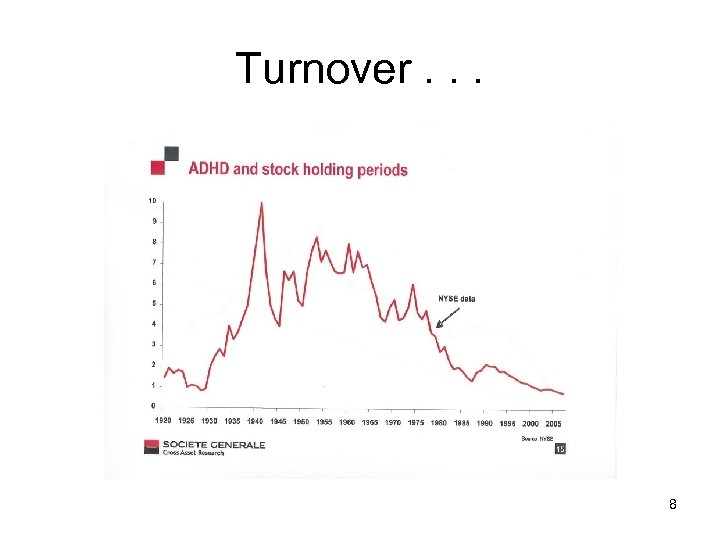 Turnover. . . 8
 Fixing it? • Identify the cash generative capacity of asset classes. – Align expectations (no free lunch) • Get real on fees – Total return of 8% minus 1. 5 -2% fees? ? ? • Fix incentive issues – Bank loan officers, rating agencies, fee-greed • Fix the rear view mirror! – LTCM modelling, eg – The world changes – annoying but true • Benchmarking behaviour should change – Measurement role only • Investment timescale; asset ownership 9
 The reality. . . • Regulatory expansion & conservatism – Based on the recent past (not the future risks) – Portfolios will become more “conservative” • • • Equities, Property, Bonds Hedge Funds/Private Equity The DB trend (vs DC) New asset classes (commodities, weather/carbon/forex trading!) Fees will remain too high in relation to actual returns Absolute Return investing? The Philosopher’s Stone – a portfolio for all times? Ownership & economic driven investment? Fees, vested interest, complexity? 10
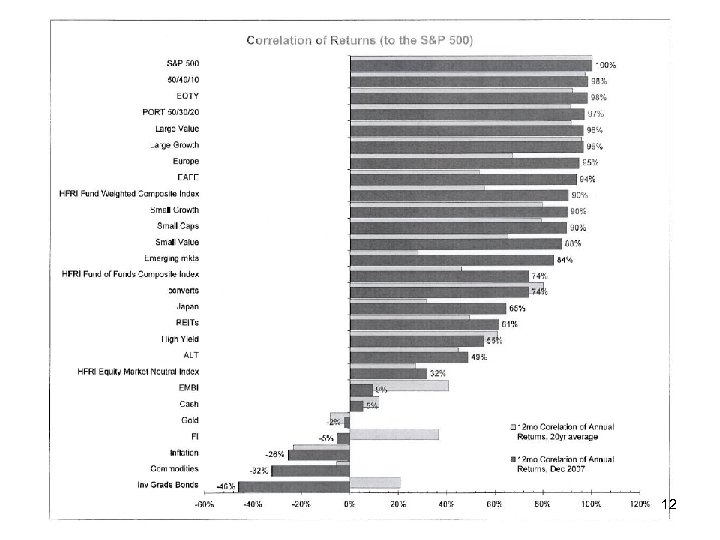
 The Octopus’ Assumptions • • • Macro driven Economic returns (the “engine”) matter The AWFUL TRUTH – cheap, simple, long term is GOOD. Cash income matters Past correlations, little help – Economics behind correlations matter – Current & future correlations matter • • No “long term” asset profile (the world changes) Major asset moves needed occasionally Cash/Benchmark for measurement only Asset ranges set – Equities, 25 -75%, Bonds, 0 -50%, Property, 0 -50%, Cash, 0 -25% etc – Continuous review (not quarterly) 11
 12
12
 Octopus contd • Today’s world – – – – Global ($) growth driver is “new world” not “old world” Em market equities are less risky than generally perceived Material shortages will remain for a while “Old world” inflation is picking up Developed mkts – inflation linked bonds are good (fixed, bad) Equities are good value Geographical approach to equities is ill conceived • Sectors, types, stock specific, balance sheet etc matter • Utilities, resources, infrastructure • Currency – I have no skill • Humility 13
 So far. . . • Octopus benchmarks – Cash plus 3. 5% and my “Institutional” benchmark: – 25% UK equities, 20% ex UK equities, 20% fixed interest, 20% index linked, 15% property • Vehicles: ETFs, closed end funds, stocks (for “tilts”), cash • Outcome (sinception) +3. 6% ve benchmark & +6. 1% vs cash. Since July 2004. Very early days! 14
 Conclusions • Markets are dealing with the excesses – Root problems are human not statistical • Dealing with greed, poor incentives, high fees is TOUGH. Losses and chaos will purge some of this but far from all • Conservatism (voluntary and regulatory) will increase till markets do better • Many liability driven funds will (and ought to) close down the risks (DB>DC; buy-outs) 15