


 Скачать презентацию PORT OF LAKE CHARLES CITY DOCKS
3d68118fce18667f26bc990c0b91d072.ppt
- Количество слайдов: 18
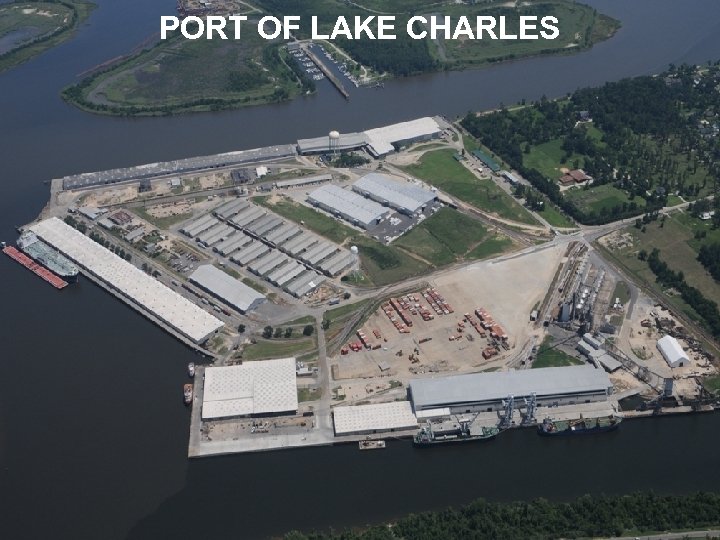 PORT OF LAKE CHARLES
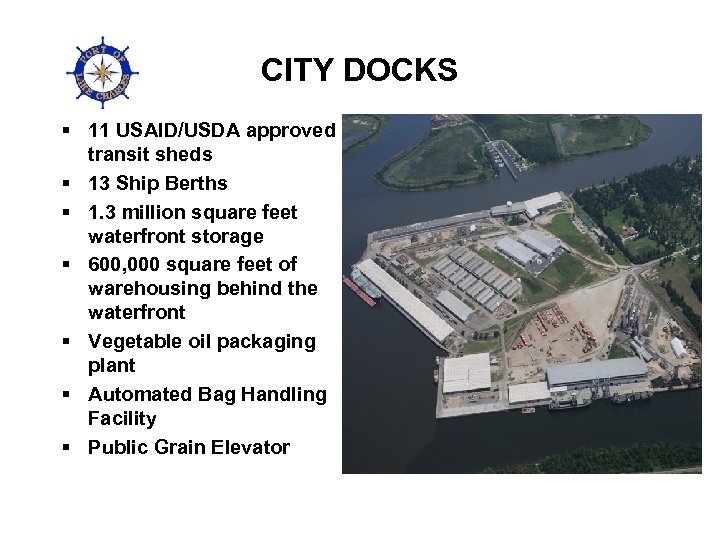 CITY DOCKS § 11 USAID/USDA approved transit sheds § 13 Ship Berths § 1. 3 million square feet waterfront storage § 600, 000 square feet of warehousing behind the waterfront § Vegetable oil packaging plant § Automated Bag Handling Facility § Public Grain Elevator
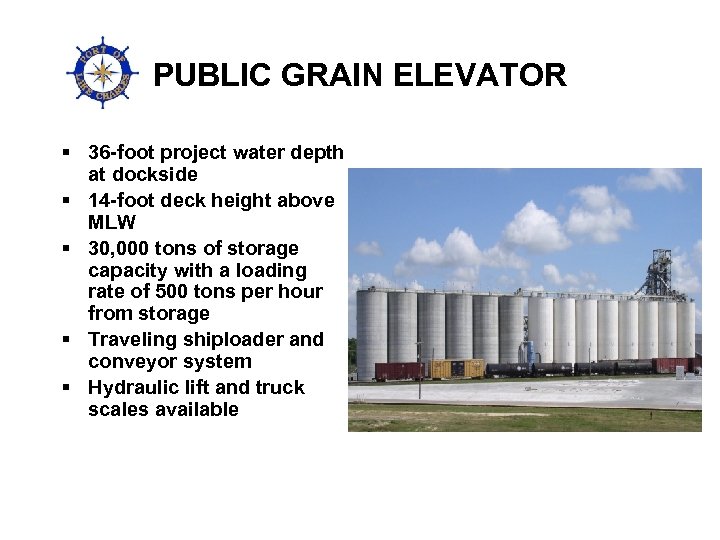 PUBLIC GRAIN ELEVATOR § 36 -foot project water depth at dockside § 14 -foot deck height above MLW § 30, 000 tons of storage capacity with a loading rate of 500 tons per hour from storage § Traveling shiploader and conveyor system § Hydraulic lift and truck scales available
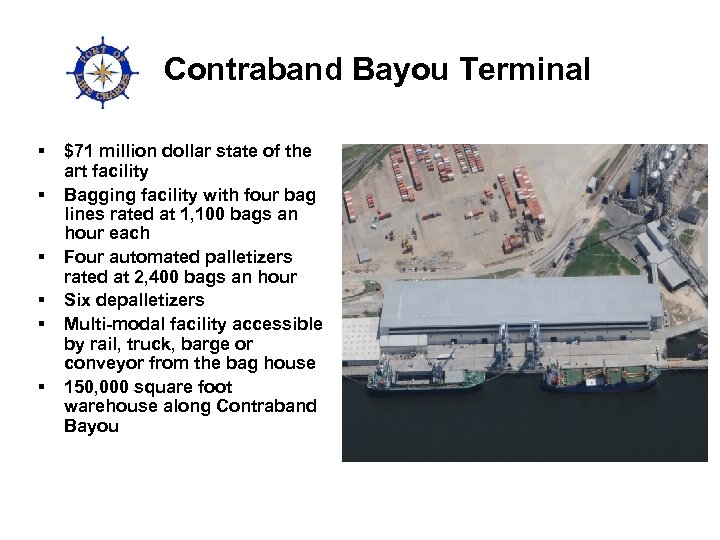 Contraband Bayou Terminal § § § $71 million dollar state of the art facility Bagging facility with four bag lines rated at 1, 100 bags an hour each Four automated palletizers rated at 2, 400 bags an hour Six depalletizers Multi-modal facility accessible by rail, truck, barge or conveyor from the bag house 150, 000 square foot warehouse along Contraband Bayou
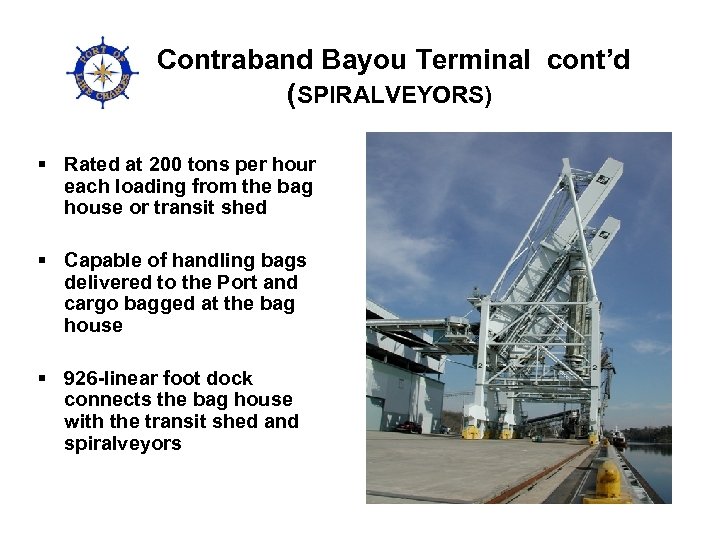 Contraband Bayou Terminal cont’d (SPIRALVEYORS) § Rated at 200 tons per hour each loading from the bag house or transit shed § Capable of handling bags delivered to the Port and cargo bagged at the bag house § 926 -linear foot dock connects the bag house with the transit shed and spiralveyors
 Port Conditions with Handling USAID/USDA Cargo • Time – receiving and shipping cargo, sufficient storage space • Large amount of rail car receiving capabilities • Adequate pallets in volume and condition • Labor Force – substantial workforce for labor intensive cargo • Programs – cargo/shed condition, pest control- rodents, insects, etc (waterfront storage) • Delays– vessel delays, weather delays, hurricanes ( Out of port’s control)
 Operating Procedures § § § § Solicitation Awards Port Identification numbers issued for each Notice to Delivery (ND) Assigns warehouse location for each ND Receives KC-366 from vendor advising rail car number, commodity, and amount Rail cars/trucks are tracked daily by traffic department Railcars/trucks received, cargo placed on pallets and positioned FAS Over/short/damage reports on received cargo Weekly inventory and inspections of cargo and warehouses Berth application submitted by carrier Cargo released by USDA FGIS inspects cargo Carrier notified cargo available for receipt Carrier inspects commodities Carrier accepts commodities Cargo loaded to vessel on arrival
 Cargo/Shed Condition & Prevention Program • The Port spends over $500, 000/annually on cargo/shed condition program • The Port spends $300, 000/annually on prevention programs • The Port performs a physical walkthrough of all the transit sheds where cargo is located on a daily basis. • Cargo is monitored daily for damages (tears, busted bags, mold, etc. ) • Transit Sheds are cleaned on daily basis and checked for leaks, damages, broken doors, etc. • Liquid baiting is placed throughout all transit sheds along with snap traps which are placed around the cargo. • Sheds without cargo have daily baiting and trapping procedures. • A routine fogging of the transit sheds is performed on a weekly basis with an approved insecticide. • Bait is placed under the docks on a monthly basis. All baits are approved by the EPA. • All transit sheds are inspected monthly (without prior notice) by a USDA inspector.
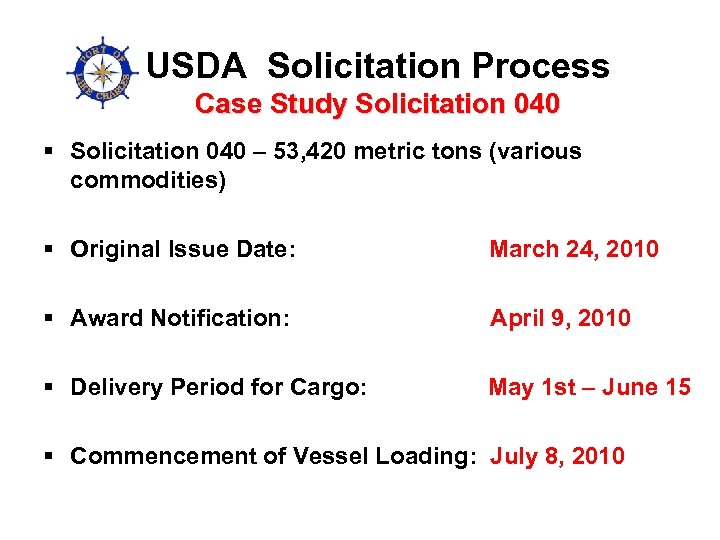 USDA Solicitation Process Case Study Solicitation 040 § Solicitation 040 – 53, 420 metric tons (various commodities) § Original Issue Date: March 24, 2010 § Award Notification: April 9, 2010 § Delivery Period for Cargo: May 1 st – June 15 § Commencement of Vessel Loading: July 8, 2010
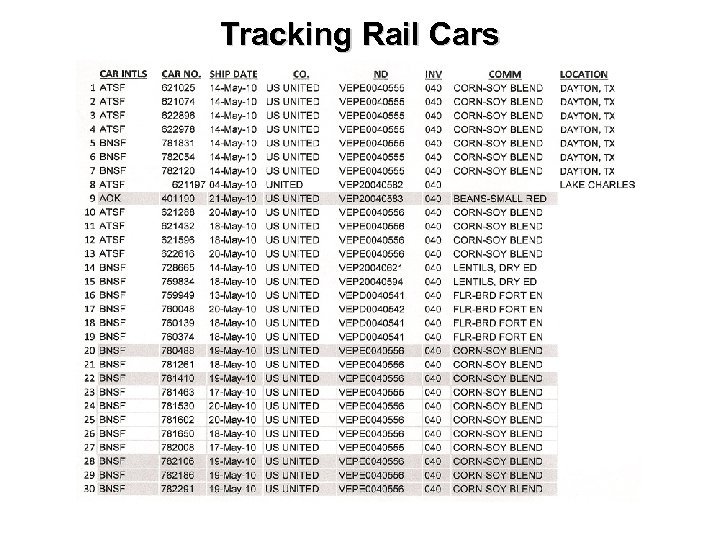 Tracking Rail Cars
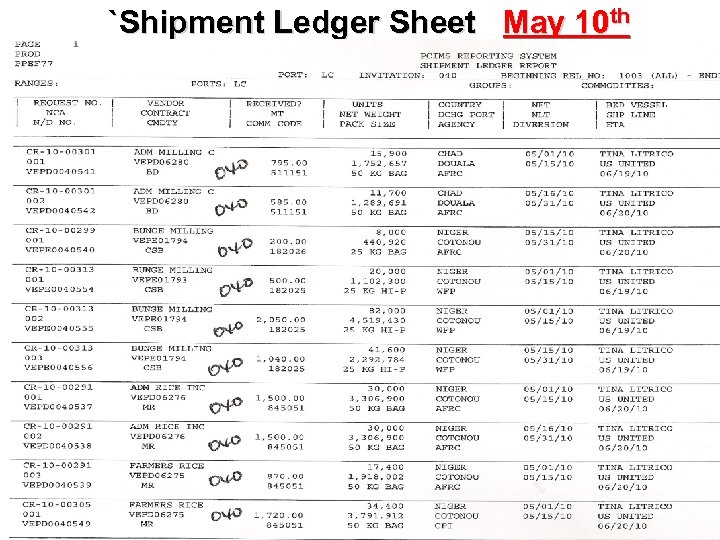 `Shipment Ledger Sheet May 10 th
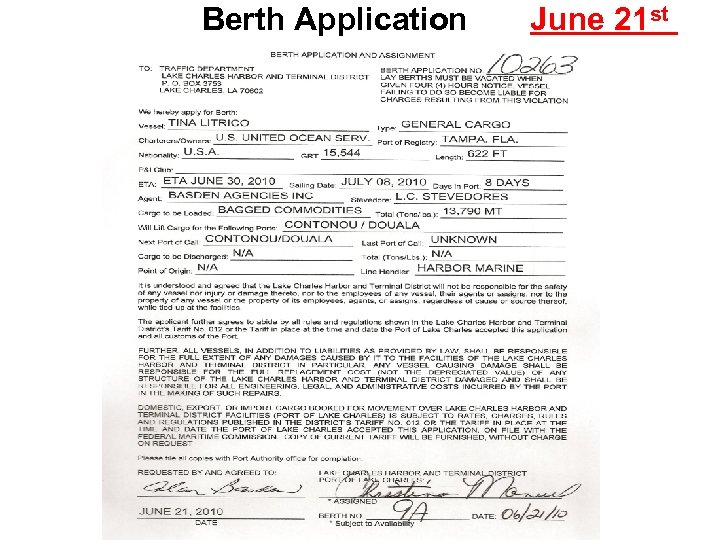 Berth Application June 21 st
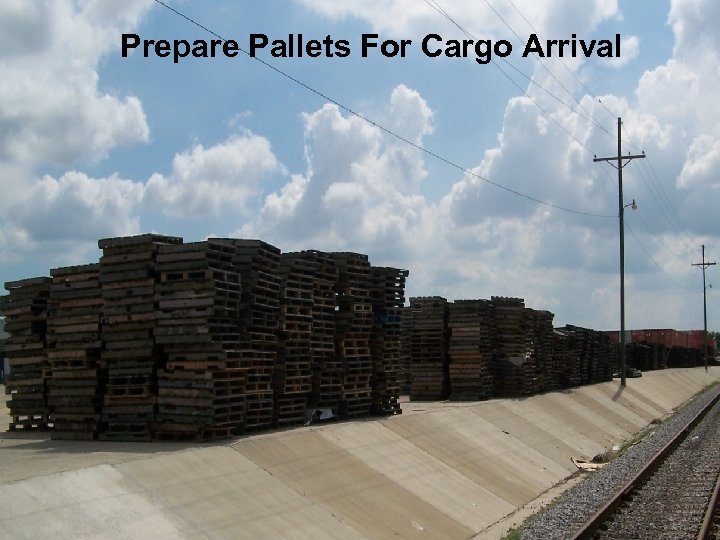 Prepare Pallets For Cargo Arrival
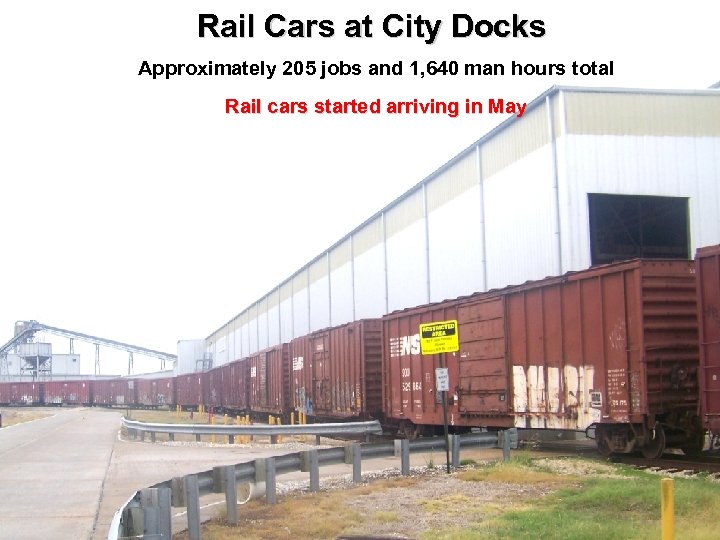 Rail Cars at City Docks Approximately 205 jobs and 1, 640 man hours total Rail cars started arriving in May
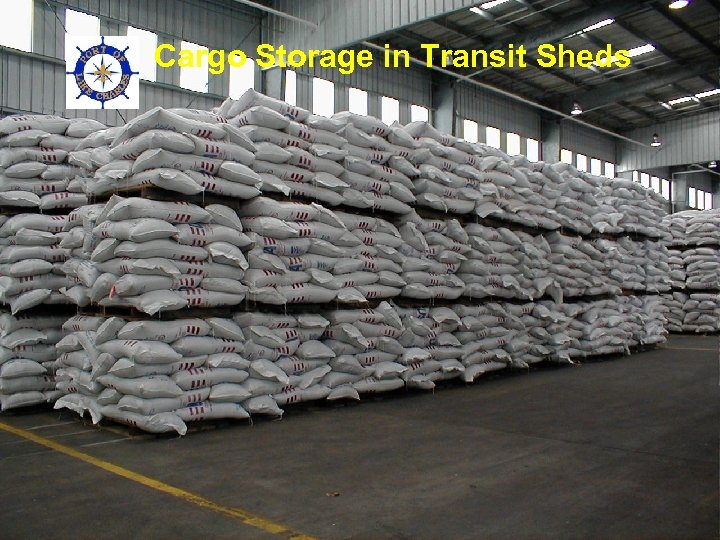 Cargo Storage in Transit Sheds
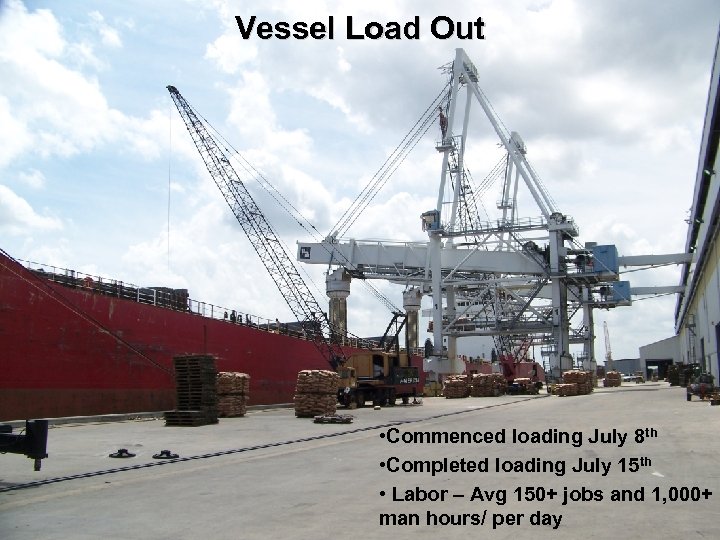 Vessel Load Out • Commenced loading July 8 th • Completed loading July 15 th • Labor – Avg 150+ jobs and 1, 000+ man hours/ per day
 Conclusion • Solicitation 040 originally released March 24 th • Port received award notification April 9 th • Cargo began arriving in May (unloading rail cars & trucks for storage) • Vessel original ETA June 30 th • Vessel Delayed until July 8 th • Vessel completed loading on July 15 th • Cargo was stored in waterfront warehouses from May – July 15 th
 Thank you