Скачать презентацию Populist Movement Notes Video The Wizard of Oz
3c95540b80be38a8351c8154cff3bc44.ppt
- Количество слайдов: 16
 Populist Movement Notes Video: “The Wizard of Oz” Real Meaning? Homework: Guided Reading 13. 3
 Setting the Stage • With the rich getting richer on the backs of the working class in both the industrialized east and the farmlands of the west, it was inevitable that some form of organization was needed to protect against oppression. The Western farmers would attempt this by using their great numbers.
 Farmers Problems • common problems in south and west - declining prices - high interest rates - high debt
![Farmers Organize • chief villains = RRs [overcharge] and banks [high interest rates] •](https://present5.com/presentation/3c95540b80be38a8351c8154cff3bc44/image-4.jpg "Farmers Organize • chief villains = RRs [overcharge] and banks [high interest rates] •") Farmers Organize • chief villains = RRs [overcharge] and banks [high interest rates] • 1867: National Grange of the Patrons of Husbandry -secret societies (local chapters w/ passwords and rituals) -politics and economics main topics • lobbied state gov’t for regulation - Granger Laws, estab’d maximum shipping rates • pooled resources to buy jointly shared farming necessities • alliances entered political arena - won seats in state gov’t voice for the farmers
Farmers Organize • chief villains = RRs [overcharge] and banks [high interest rates] • 1867: National Grange of the Patrons of Husbandry -secret societies (local chapters w/ passwords and rituals) -politics and economics main topics • lobbied state gov’t for regulation - Granger Laws, estab’d maximum shipping rates • pooled resources to buy jointly shared farming necessities • alliances entered political arena - won seats in state gov’t voice for the farmers
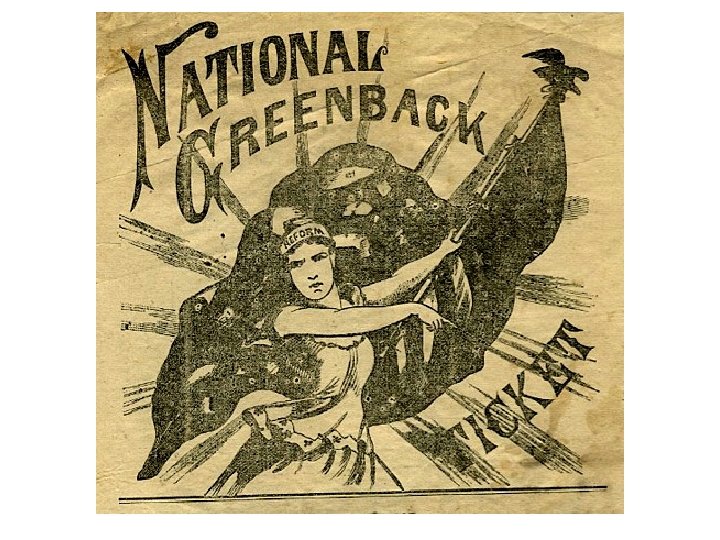
 Creating Inflation • farmers’ common problem = debt • attack nation's monetary system • 1873: Congress declared all federal $ must be backed by gold - limited money supply and benefited the wealthy • farmers wanted inflation to challenge policy AND pay off debt
 Creating Inflation • idea #1 print greenback dollars NOT backed by gold - created Greenback Party • idea # 2 bimetallism - print $ backed by gold AND silver - 1 lb. of silver = 1 oz. of gold - popular because people confident in $ backed by something of value
 Birth of the Populists • Populist Party reforms: 1. free coinage of silver 2. graduated income tax = wealthier pay higher % in taxes 3. constitutional amendment for direct election of Senators 4. initiative: citizens directly introduce topic to be debated by gov’t 5. referendum: allow citizens to vote on a bill 6. recall: people end elected official's term before it expired
 Birth of the Populists • 1892: Populists ran James Weaver for President - did not win - over million pop votes and 22 electoral votes [4 states] • result: 3 rd parties ACTUALLY play a role - ideas discussed at national level • Panic of 1893: increased # of unemployed gave momentum
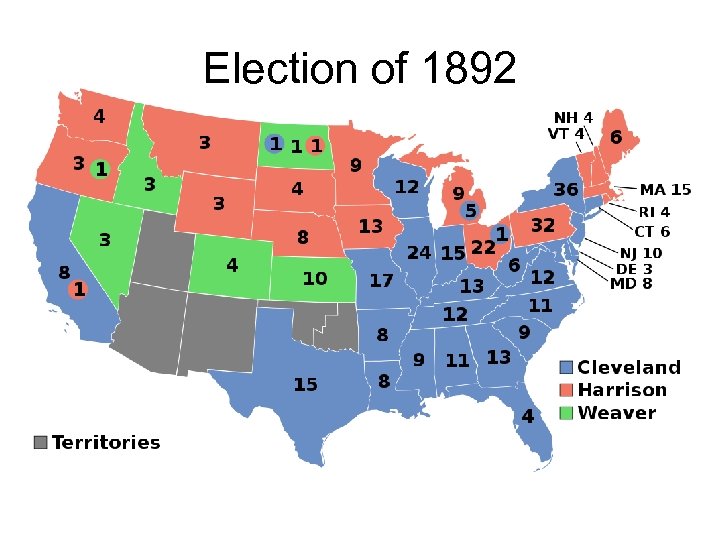 Election of 1892
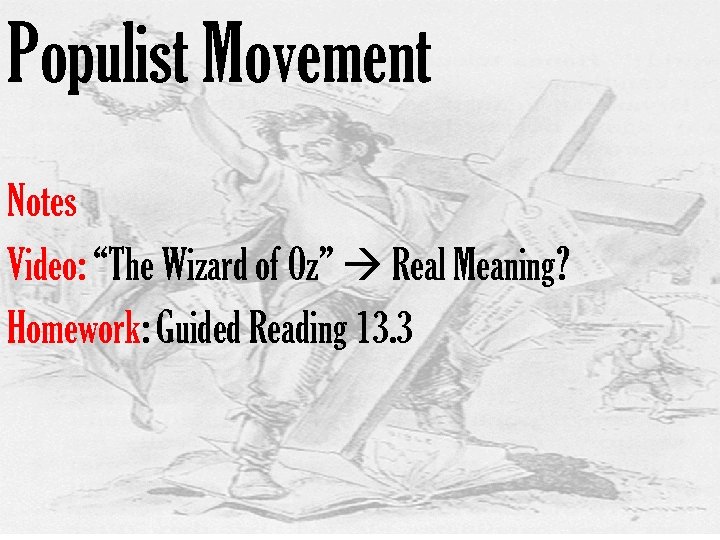
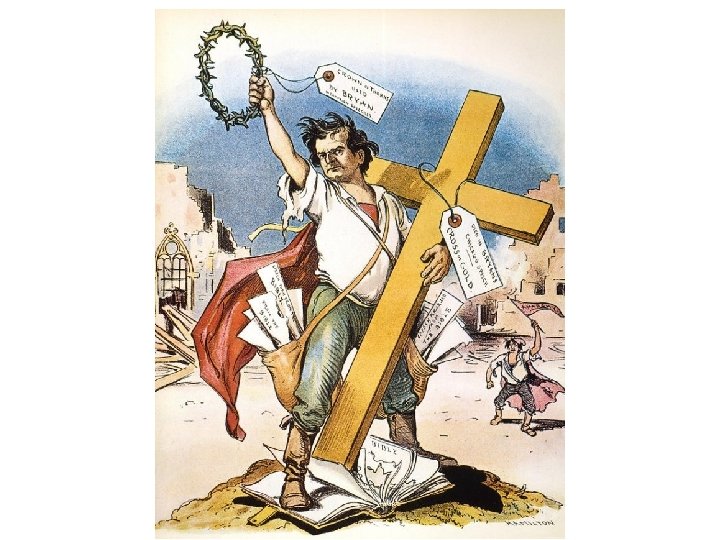
 Election of 1896 William Jennings Bryan “the Great Commoner" (Democrat) • great orator (speaking skills) • defender of the farmer • supported by Democratic voters of South and West • “Cross of Gold” speech demanded free coinage of silver "You shall not crucify mankind upon a cross of gold!" • received Democratic nomination AND Populist Party nomination • revolutionized campaigning - nationwide circuit twenty to thirty speeches per day
 Election of 1896 William Mc. Kinley (Republican ) • support by wealthy eastern establishment • Marc Hanna (wealthy industrialist from Cleveland) wanted Mc. Kinley elected - free coinage of silver would ruin America • ran campaign based on fear WJB victory. Mc. Kinley campaigned from his home, leaving the politicking for the party hacks. Bryan. • Mc. Kinley beat Bryan by an electoral vote margin of 271 to 176
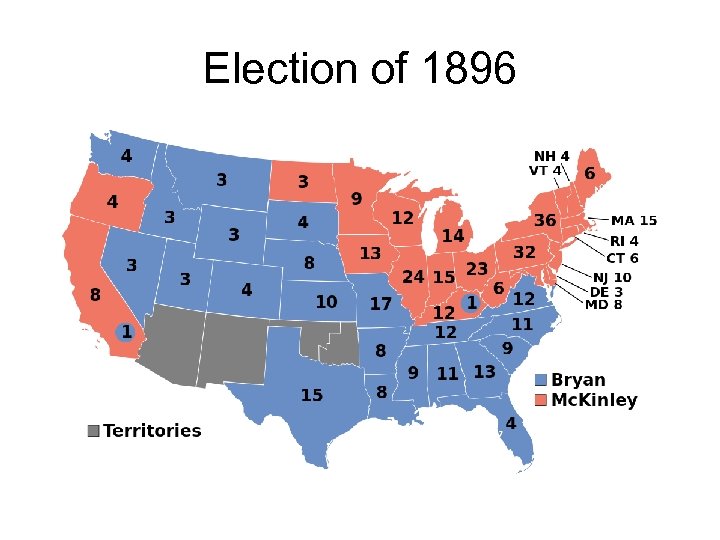 Election of 1896
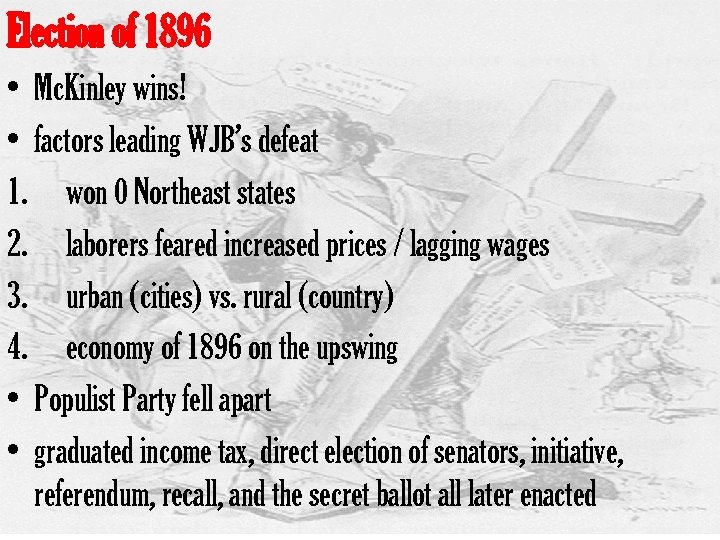 Election of 1896 • Mc. Kinley wins! • factors leading WJB’s defeat 1. won 0 Northeast states 2. laborers feared increased prices / lagging wages 3. urban (cities) vs. rural (country) 4. economy of 1896 on the upswing • Populist Party fell apart • graduated income tax, direct election of senators, initiative, referendum, recall, and the secret ballot all later enacted