 Скачать презентацию POM FINAL EXAM REVISION 2013 Kotler Brown Adam
d312215b713b4e08692b688fc57c23b2.ppt
- Количество слайдов: 73




POM FINAL EXAM REVISION 2013 Kotler, Brown, Adam & Armstrong: International Marketing 3 e © 2006 Pearson Education Australia
EXAM FORMAT 1. Section I: Word/ phrase finding ( 2 marks each = 20 marks) 1. Example: The IMC budget is spent based on how much the company can spend is called “. . ” 2. the answer is “affordable method) 2. 3. Section II: MCQs ( 2 marks each = 30 marks) Section III: Written answers (10 marks each = 30 marks) – see the SLIDES 1. Question 1 & 3: Chapter 8 2. Question 2: Chapter 9 4. Section IV: Case study: 20 marks (Chapter 12&13) Kotler, Adam, Brown & Armstrong: International Marketing 3 e © 2006 Pearson Education Australia 2
Chapter 8 Products: goods, services and experiences Kotler, Brown, Adam & Armstrong: International Marketing 3 e © 2006 Pearson Education Australia
Chapter 8 Products: goods, services and experiences Kotler, Brown, Adam & Armstrong: International Marketing 3 e © 2006 Pearson Education Australia
What is a Product? A product is anything that can be offered to a market for attention, acquisition, use or consumption that might satisfy a want or need. Marketing management need to think about their product offerings on three levels: 1. The most basic level is the core product, which addresses the question: What is the buyer really buying? 2. Actual products may have as many as five characteristics: a quality level, features, styling, a brand name, & packaging 3. Augmented product, additional consumer services and benefits built around the core and actual products Kotler, Adam, Brown & Armstrong: International Marketing 3 e © 2006 Pearson Education Australia 5
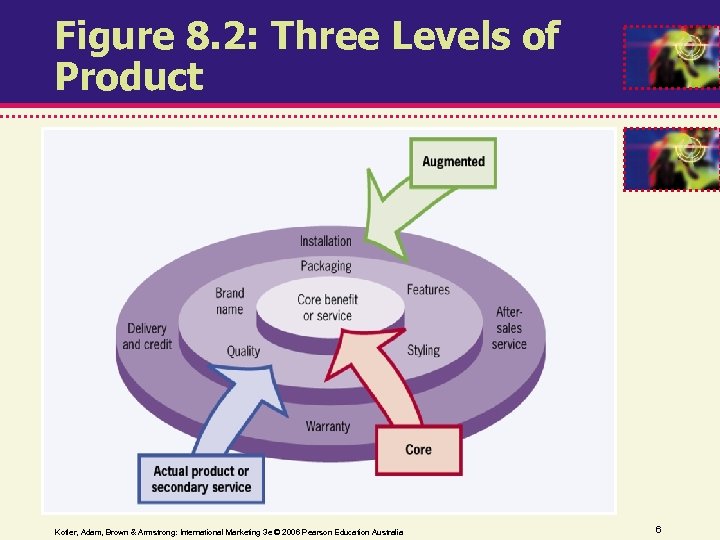
Figure 8. 2: Three Levels of Product Kotler, Adam, Brown & Armstrong: International Marketing 3 e © 2006 Pearson Education Australia 6
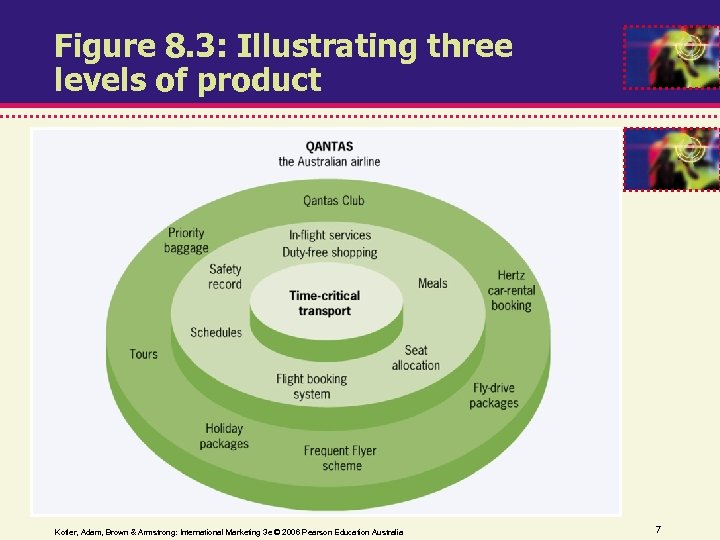
Figure 8. 3: Illustrating three levels of product Kotler, Adam, Brown & Armstrong: International Marketing 3 e © 2006 Pearson Education Australia 7
Services Service organisations offer customers something that is intangible: the interaction does not result in the ownership of anything that endures Services are responsible for over 70%of ‘total value added’ and over 80% of ‘total employment’ in Australia Kotler, Adam, Brown & Armstrong: International Marketing 3 e © 2006 Pearson Education Australia 8
Characteristics of Services Intangibility High involvement and personal nature Variability Synchronous delivery and consumption Perishability Kotler, Adam, Brown & Armstrong: International Marketing 3 e © 2006 Pearson Education Australia 9
Service Quality Measures Service consumption mostly involves people in service encounters, services are experiential in nature and often require special measures to assess quality such as mystery shoppers Kotler, Adam, Brown & Armstrong: International Marketing 3 e © 2006 Pearson Education Australia 10
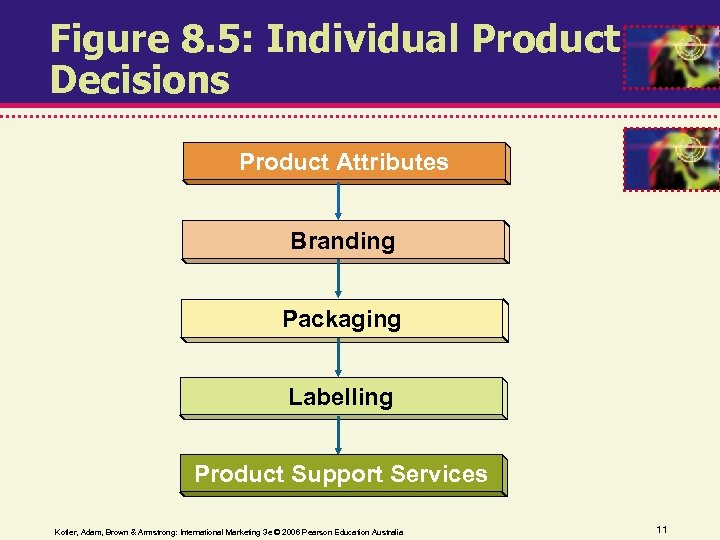
Figure 8. 5: Individual Product Decisions Product Attributes Branding Packaging Labelling Product Support Services Kotler, Adam, Brown & Armstrong: International Marketing 3 e © 2006 Pearson Education Australia 11
Product Attribute Decisions Product quality: the ability of a product to perform its functions; it includes the product’s durability, reliability, precision, ease of operation and repair, and other valued attributes Strategic quality involves gaining an edge over competitors by consistently offering products and services that give customers better quality ‘quality is not a problem to be solved; it is a competitive opportunity’ Kotler, Adam, Brown & Armstrong: International Marketing 3 e © 2006 Pearson Education Australia 12
Product Attribute Decisions Product feature: a product can be offered with varying features. From a basic model to a higher level e. g. car industry Product design: the process of designing a product’s style and function Kotler, Adam, Brown & Armstrong: International Marketing 3 e © 2006 Pearson Education Australia 13
Branding is a major strategic decision Branding requires long-term marketing investment, especially for advertising, promotion and packaging Powerful brands gain brand recognition and can command consumer loyalty Companies that develop brands with strong consumer franchise are protected against competitors strategies. Such companies have high brand equity Kotler, Adam, Brown & Armstrong: International Marketing 3 e © 2006 Pearson Education Australia 14
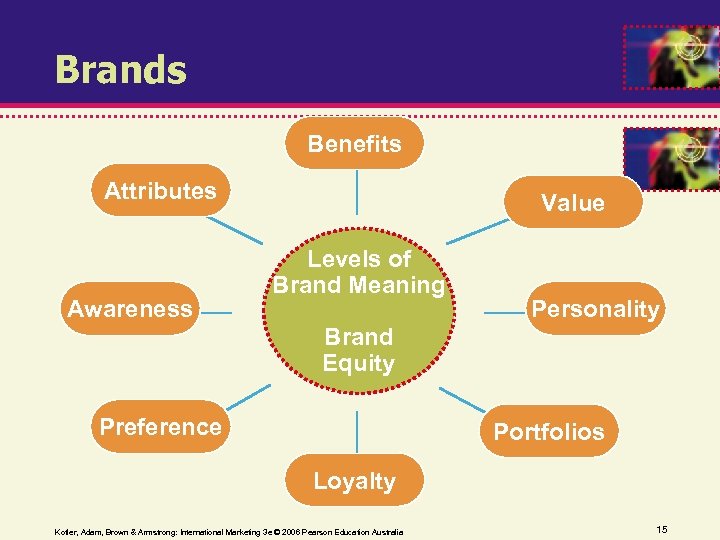
Brands Benefits Attributes Awareness Value Levels of Brand Meaning Personality Brand Equity Preference Portfolios Loyalty Kotler, Adam, Brown & Armstrong: International Marketing 3 e © 2006 Pearson Education Australia 15
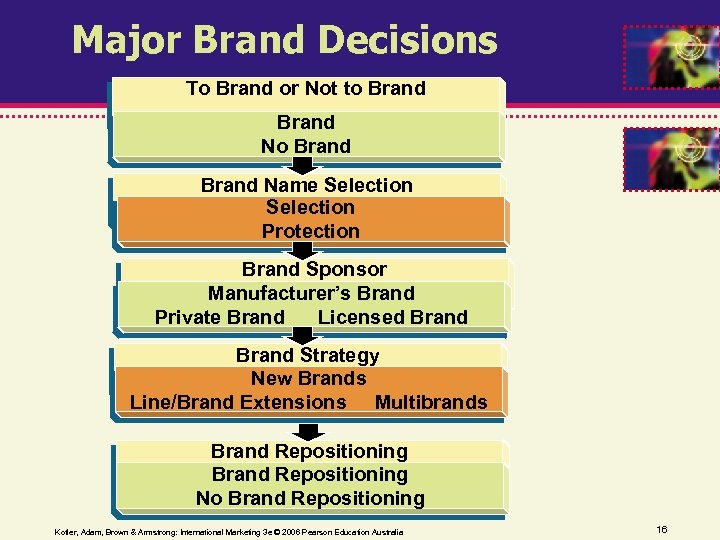
Major Brand Decisions To Brand or Not to Brand Name Selection Protection Brand Sponsor Manufacturer’s Brand Private Brand Licensed Brand Strategy New Brands Line/Brand Extensions Multibrands Brand Repositioning No Brand Repositioning Kotler, Adam, Brown & Armstrong: International Marketing 3 e © 2006 Pearson Education Australia 16
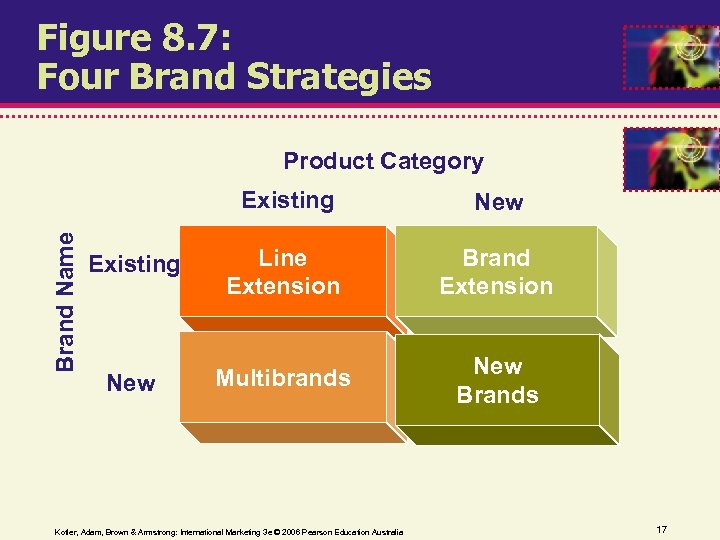
Figure 8. 7: Four Brand Strategies Product Category Brand Name Existing New Existing Line Extension Brand Extension New Multibrands New Brands Kotler, Adam, Brown & Armstrong: International Marketing 3 e © 2006 Pearson Education Australia 17
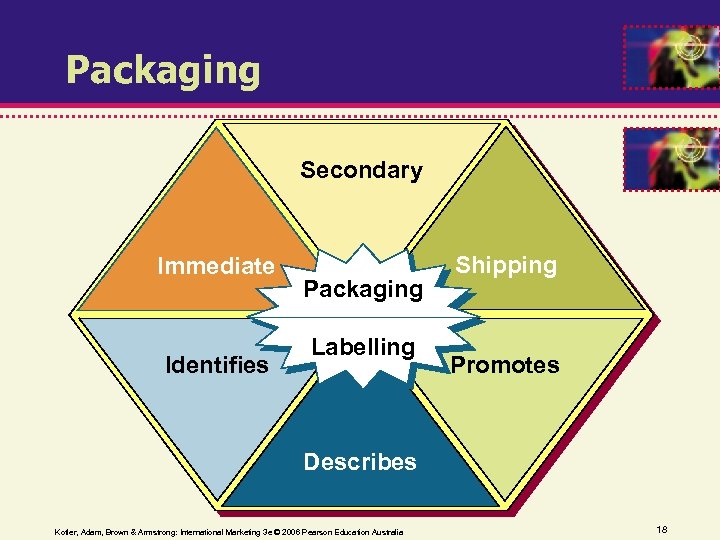
Packaging Secondary Immediate Identifies Packaging Labelling Shipping Promotes Describes Kotler, Adam, Brown & Armstrong: International Marketing 3 e © 2006 Pearson Education Australia 18
Chapter 9 New products Kotler, Brown, Adam & Armstrong: International Marketing 3 e © 2006 Pearson Education Australia
The Product Lifecycle (PLC) After launching the new product, management wants the product to enjoy a long and happy life. Although it does not expect the product to sell forever, management wants to earn a decent profit to cover all the effort and risk that went into it. Management is aware that each product will have a life cycle, although the exact shape and length is not known in advance. Kotler, Adam, Brown & Armstrong: International Marketing 3 e © 2006 Pearson Education Australia 20
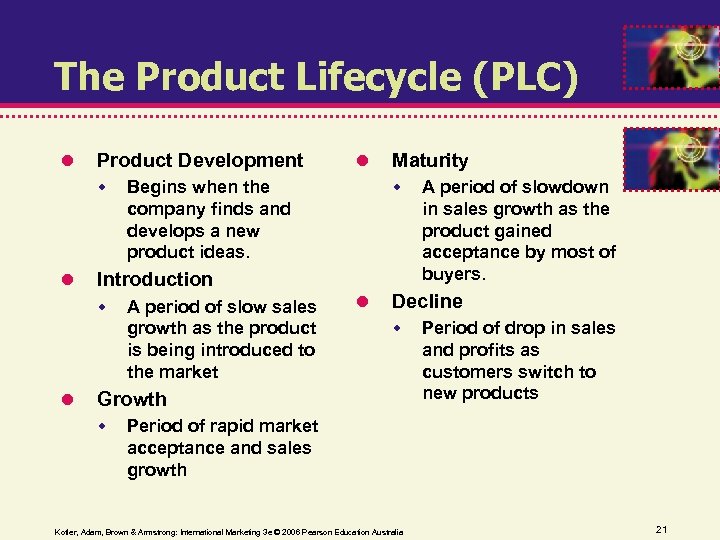
The Product Lifecycle (PLC) Product Development Begins when the company finds and develops a new product ideas. A period of slow sales growth as the product is being introduced to the market Maturity Introduction Decline Growth A period of slowdown in sales growth as the product gained acceptance by most of buyers. Period of drop in sales and profits as customers switch to new products Period of rapid market acceptance and sales growth Kotler, Adam, Brown & Armstrong: International Marketing 3 e © 2006 Pearson Education Australia 21
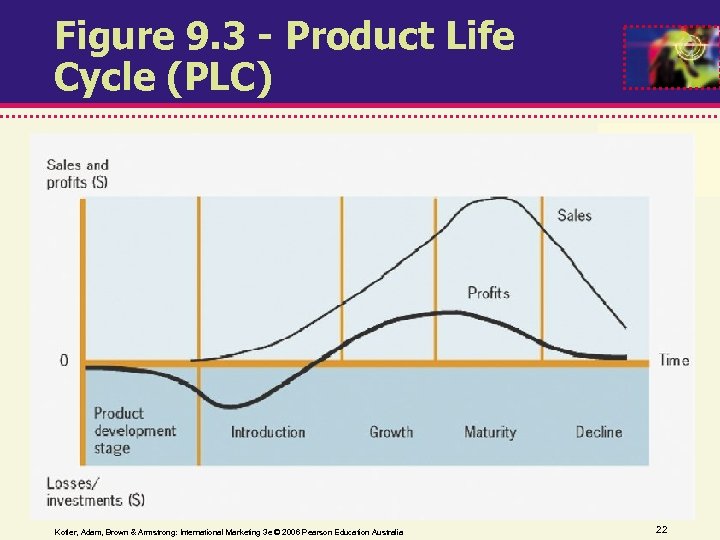
Figure 9. 3 - Product Life Cycle (PLC) Kotler, Adam, Brown & Armstrong: International Marketing 3 e © 2006 Pearson Education Australia 22
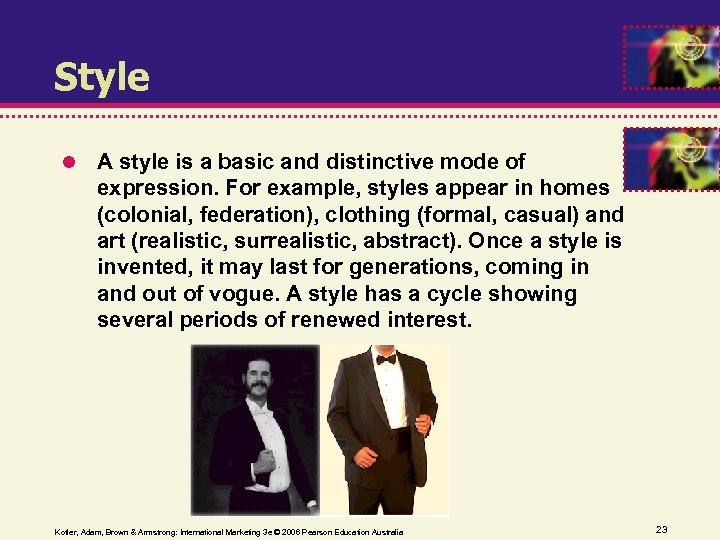
Style A style is a basic and distinctive mode of expression. For example, styles appear in homes (colonial, federation), clothing (formal, casual) and art (realistic, surrealistic, abstract). Once a style is invented, it may last for generations, coming in and out of vogue. A style has a cycle showing several periods of renewed interest. Kotler, Adam, Brown & Armstrong: International Marketing 3 e © 2006 Pearson Education Australia 23
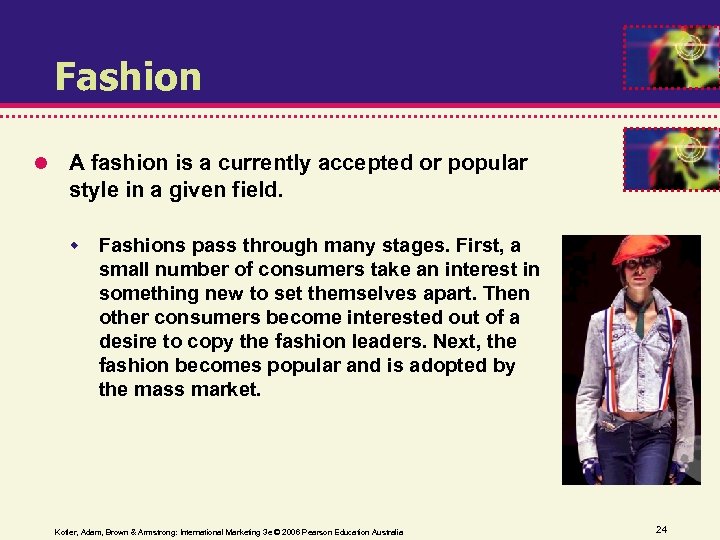
Fashion A fashion is a currently accepted or popular style in a given field. Fashions pass through many stages. First, a small number of consumers take an interest in something new to set themselves apart. Then other consumers become interested out of a desire to copy the fashion leaders. Next, the fashion becomes popular and is adopted by the mass market. Kotler, Adam, Brown & Armstrong: International Marketing 3 e © 2006 Pearson Education Australia 24
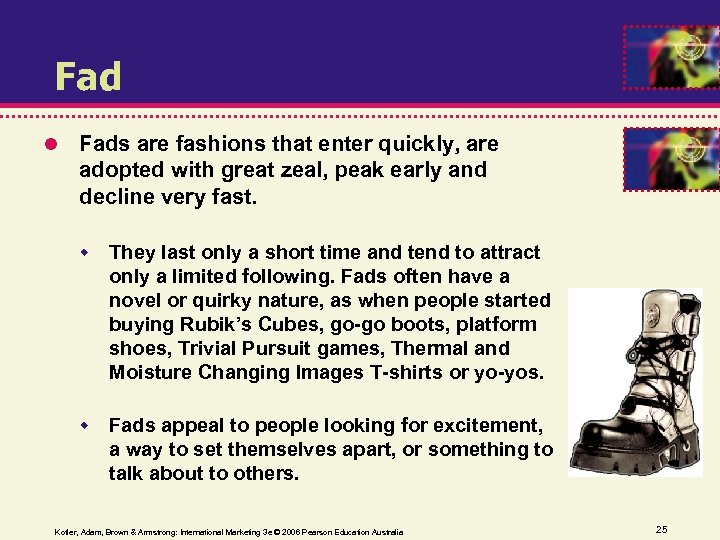
Fad Fads are fashions that enter quickly, are adopted with great zeal, peak early and decline very fast. They last only a short time and tend to attract only a limited following. Fads often have a novel or quirky nature, as when people started buying Rubik’s Cubes, go-go boots, platform shoes, Trivial Pursuit games, Thermal and Moisture Changing Images T-shirts or yo-yos. Fads appeal to people looking for excitement, a way to set themselves apart, or something to talk about to others. Kotler, Adam, Brown & Armstrong: International Marketing 3 e © 2006 Pearson Education Australia 25
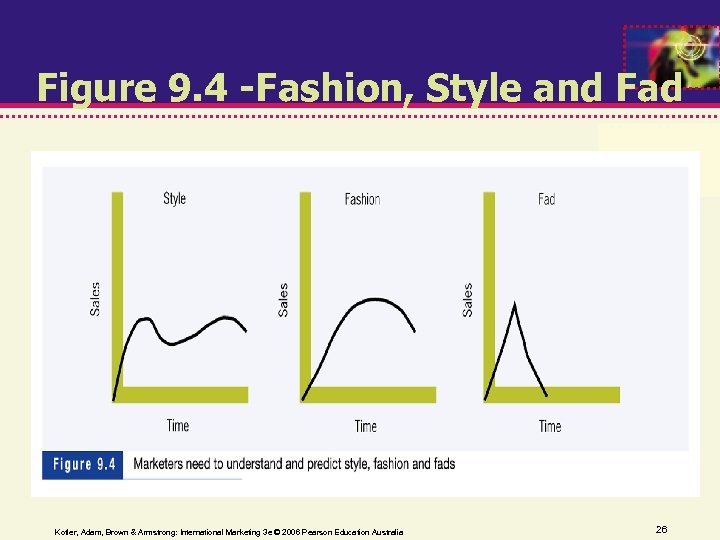
Figure 9. 4 -Fashion, Style and Fad Kotler, Adam, Brown & Armstrong: International Marketing 3 e © 2006 Pearson Education Australia 26
PLC Concept: Application The PLC concept can be applied by marketers as a useful framework for describing how products and markets work. 1. But using the PLC concept forecasting product performance or for developing marketing strategies presents some practical problems. 2. For example, managers may have trouble identifying which stage of the PLC the product is in, pinpointing when the product moves into the next stage, and determining the factors that affect the product’s movement through the stages. 3. In practice, it is difficult to forecast the sales level at each PLC stage, the length of each stage and the shape of the PLC curve. 4. Yet, when used carefully, the PLC concept can help in developing good marketing strategies for different stages of the product life cycle. Kotler, Adam, Brown & Armstrong: International Marketing 3 e © 2006 Pearson Education Australia 27
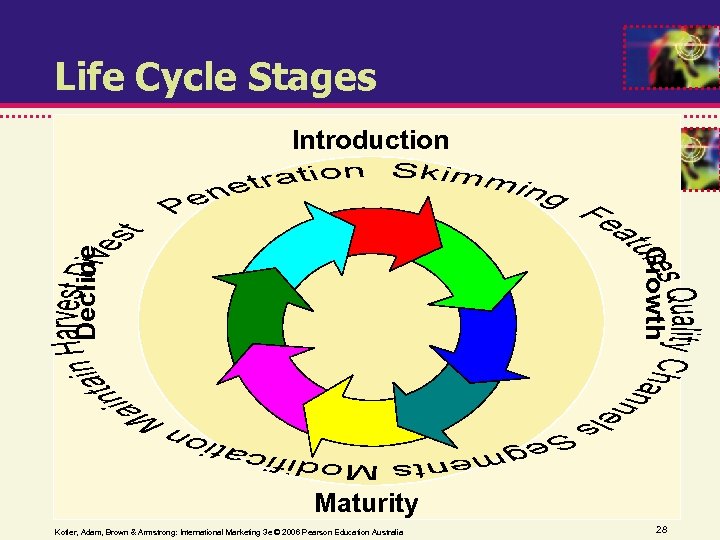
Life Cycle Stages Growth Decline Introduction Maturity Kotler, Adam, Brown & Armstrong: International Marketing 3 e © 2006 Pearson Education Australia 28
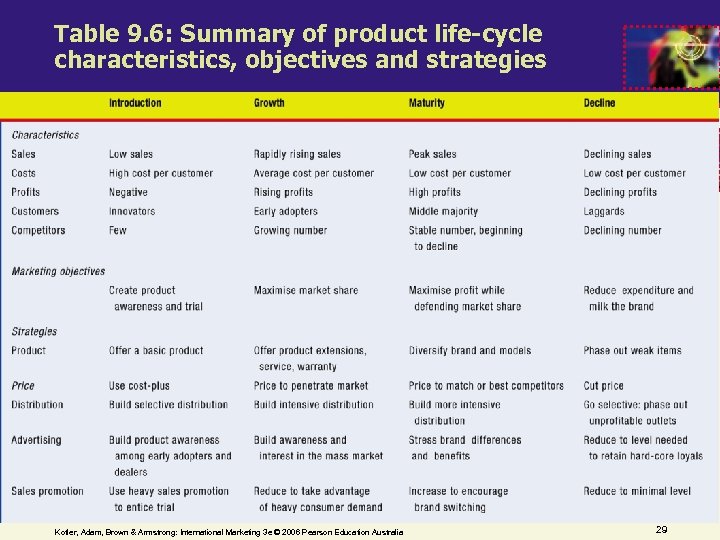
Table 9. 6: Summary of product life-cycle characteristics, objectives and strategies Kotler, Adam, Brown & Armstrong: International Marketing 3 e © 2006 Pearson Education Australia 29
Power. Point to accompany Philip Kotler, Stewart Adam, Linden Brown & Gary Armstrong Kotler, Brown, Adam & Armstrong: International Marketing 3 e © 2006 Pearson Education Australia
Chapter 12 IMC: advertising and public relations Kotler, Brown, Adam & Armstrong: International Marketing 3 e © 2006 Pearson Education Australia
Integrated Marketing Communication (IMC) IMC entails co-ordinating the organisation’s promotional efforts using such major communication elements as: advertising, sales promotion, public relations, direct and online marketing, and personal selling. An organisation’s integrated marketing communication program consists of a specific blend of the above mentioned elements that will most effectively meet objectives such as to inform, persuade, and remind consumers as well as to reinforce their attitudes and perceptions. Kotler, Adam, Brown & Armstrong: International Marketing 3 e © 2006 Pearson Education Australia 32
Steps in developing integrated marketing communication Marketers need to understand how communication works Communication involves nine elements The two major parties are the sender and the receiver of the information Two major communications tools are the message and media Four major communication functions are encoding, decoding, response and feedback Kotler, Adam, Brown & Armstrong: International Marketing 3 e © 2006 Pearson Education Australia 33
Elements in the communications process 1. Sender: The party sending the message to another party 2. Encoding: The process of putting thought into symbolic form 3. Message: The set of symbols that the sender transmits- the actual advertisement. 4. Media: The communication channels through which the message moves from sender to receiver 5. Decoding: The process by which the receiver assigns meaning to the symbols encoded by the sender-a consumer watches the ad and interprets the words and illustrations it contains. Kotler, Adam, Brown & Armstrong: International Marketing 3 e © 2006 Pearson Education Australia 34
Elements in the communications process 6. Receiver: The party receiving the message sent by another party-the consumer who watches the ad. 7. Response: The reactions of the receiver after being exposed to the message-any of hundreds of possible responses. 8. Feedback: That part of the receiver's response communicated back to the sender- research shows that consumers like and remember the ad. 9. Noise: The unplanned static or distortion during the communication process that results in the receiver getting a different message from the one which the sender sent Kotler, Adam, Brown & Armstrong: International Marketing 3 e © 2006 Pearson Education Australia 35
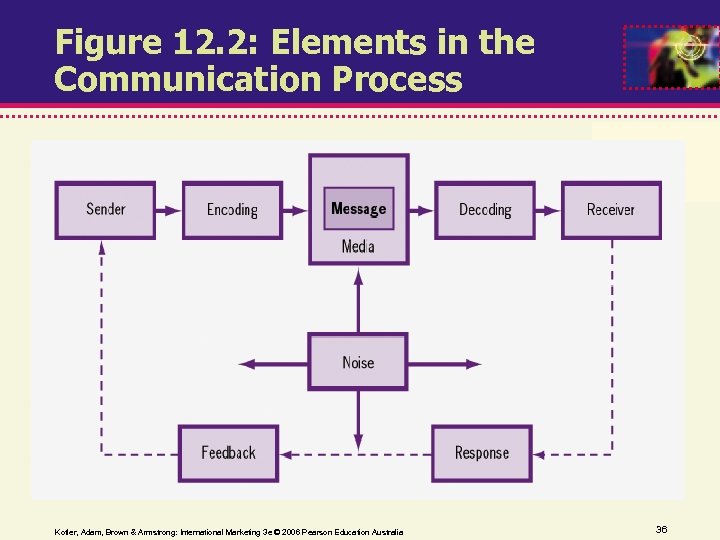
Figure 12. 2: Elements in the Communication Process Kotler, Adam, Brown & Armstrong: International Marketing 3 e © 2006 Pearson Education Australia 36
Decisions in Developing IMC 1. Identifying The Target Audience 2. Determine Response Sought 3. Selecting a Message 4. Selecting a Media 5. Selecting a Message Source 6. Collecting Feedback Kotler, Adam, Brown & Armstrong: International Marketing 3 e © 2006 Pearson Education Australia 37
Decisions in developing IMC 1. Identifying The Target Audience • A marketing communicator starts with a clear target audience in mind. The audience may be potential buyers or current users, those who make the buying decision or those who influence it. The audience may be individuals, groups, special publics or the general public Kotler, Adam, Brown & Armstrong: International Marketing 3 e © 2006 Pearson Education Australia 38
Decisions in developing IMC 2. Determine Response Sought • • • Awareness Knowledge Liking preference Conviction Purchase Kotler, Adam, Brown & Armstrong: International Marketing 3 e © 2006 Pearson Education Australia 39
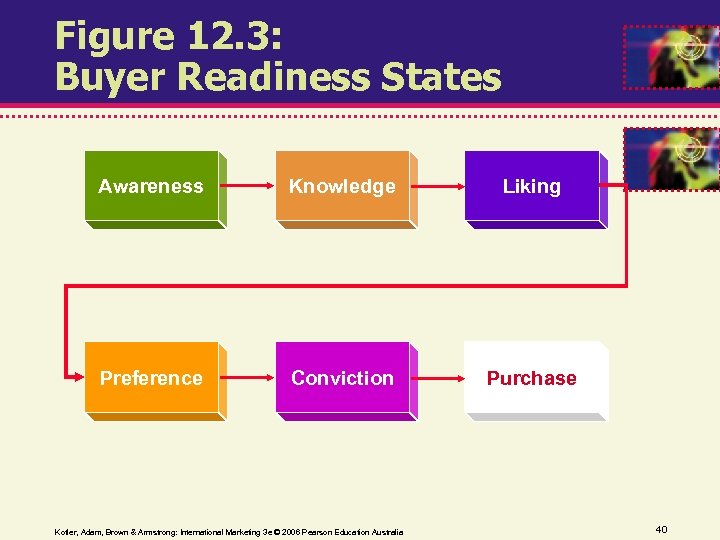
Figure 12. 3: Buyer Readiness States Awareness Knowledge Liking Preference Conviction Purchase Kotler, Adam, Brown & Armstrong: International Marketing 3 e © 2006 Pearson Education Australia 40
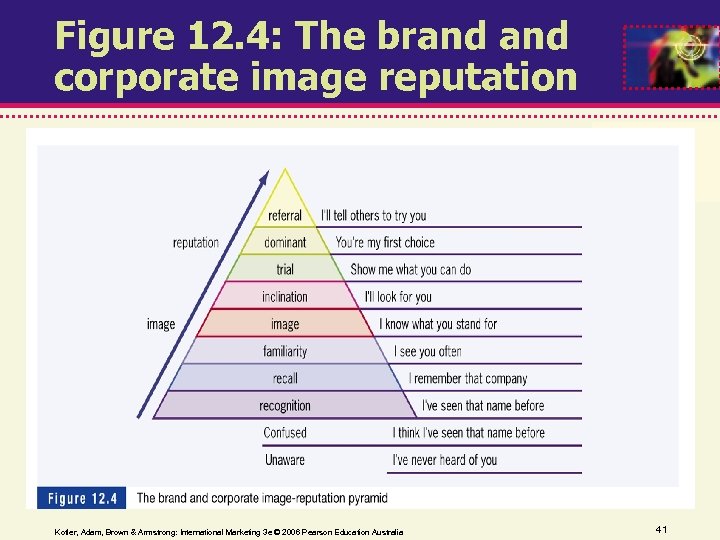
Figure 12. 4: The brand corporate image reputation Kotler, Adam, Brown & Armstrong: International Marketing 3 e © 2006 Pearson Education Australia 41
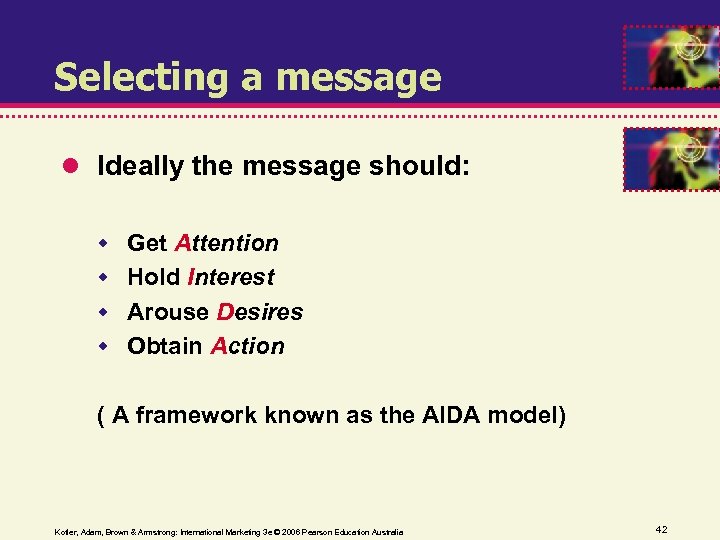
Selecting a message Ideally the message should: Get Attention Hold Interest Arouse Desires Obtain Action ( A framework known as the AIDA model) Kotler, Adam, Brown & Armstrong: International Marketing 3 e © 2006 Pearson Education Australia 42
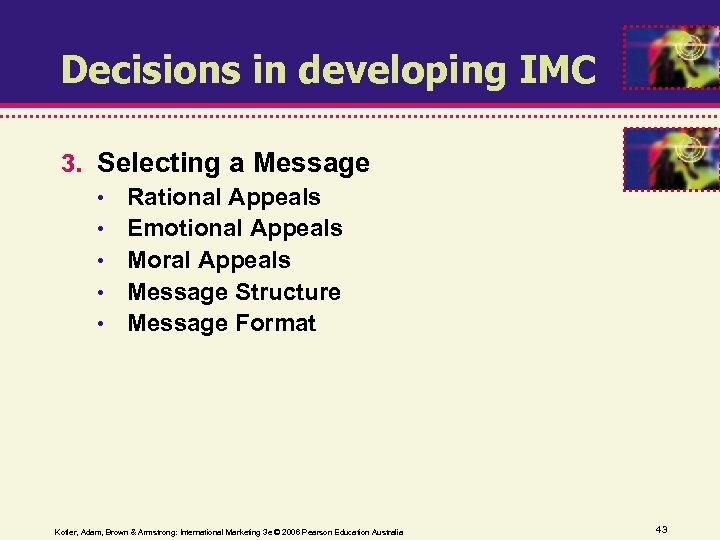
Decisions in developing IMC 3. Selecting a Message • • • Rational Appeals Emotional Appeals Moral Appeals Message Structure Message Format Kotler, Adam, Brown & Armstrong: International Marketing 3 e © 2006 Pearson Education Australia 43
Decisions in developing IMC 4. Selecting Media Personal Communication channels Non-personal communication channels Kotler, Adam, Brown & Armstrong: International Marketing 3 e © 2006 Pearson Education Australia 44
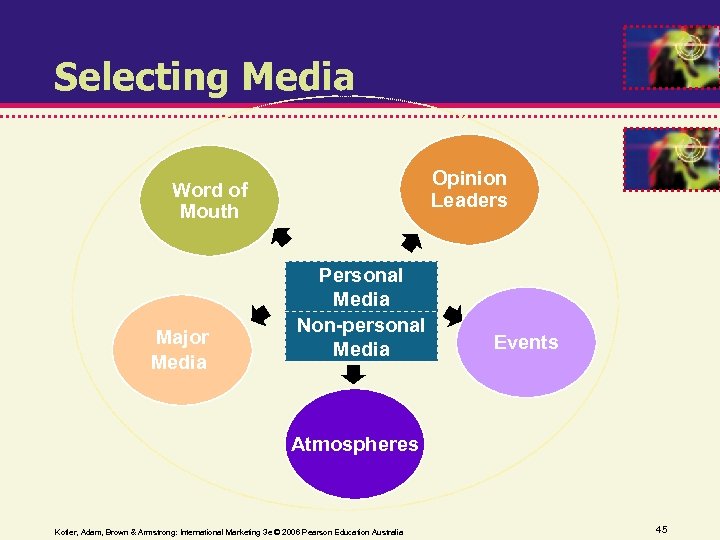
Selecting Media Opinion Leaders Word of Mouth Major Media Personal Media Non-personal Media Events Atmospheres Kotler, Adam, Brown & Armstrong: International Marketing 3 e © 2006 Pearson Education Australia 45
Decisions in developing IMC 5. Selecting the message source • The message’s impact on the audience is also affected by how the audience views the sender. Messages delivered by highly credible sources are more persuasive Kotler, Adam, Brown & Armstrong: International Marketing 3 e © 2006 Pearson Education Australia 46
Decisions in developing IMC 6. Collecting Feedback After sending the message, the communicator must gauge its effect on the target audience This involves asking the target audience whether they remember the message, how many times they saw it, what points they recall, how they felt about the message, and their past and present attitudes towards the product and company Kotler, Adam, Brown & Armstrong: International Marketing 3 e © 2006 Pearson Education Australia 47
Setting the IMC budget Four common methods used to set the total budget for advertising: 1. affordable method, 2. percentage-of-sales method, 3. competitive-parity method 4. objective-and-task method Kotler, Adam, Brown & Armstrong: International Marketing 3 e © 2006 Pearson Education Australia 48
Setting the IMC Mix The marketing organisation must now divide the total marketing communication budget among the major marketing communication categories specific media, tools and technologies: 1. 2. 3. 4. media advertising public relations, sales promotion direct and online marketing and personal selling It must blend the mix of marketing communication so that it will enable it to achieve its marketing objectives. Companies within the same industry differ greatly in how they design their IMC mixes. Kotler, Adam, Brown & Armstrong: International Marketing 3 e © 2006 Pearson Education Australia 49
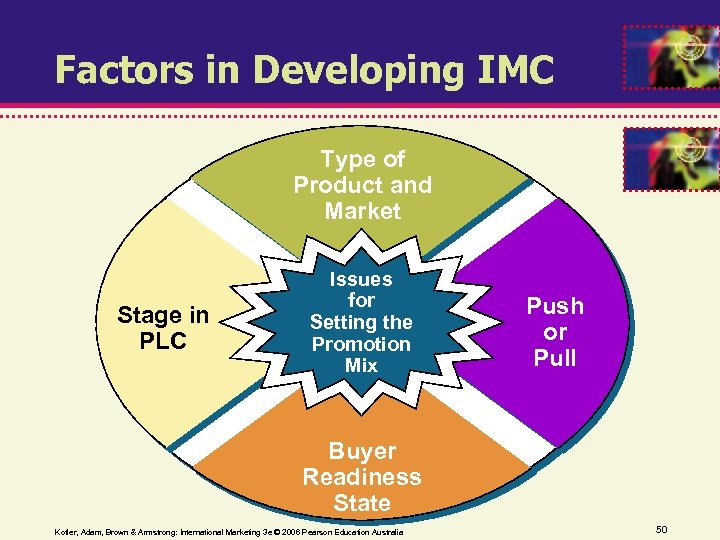
Factors in Developing IMC Type of Product and Market Stage in PLC Issues for Setting the Promotion Mix Push or Pull Buyer Readiness State Kotler, Adam, Brown & Armstrong: International Marketing 3 e © 2006 Pearson Education Australia 50
Major decisions in advertising 1. Objective Setting 2. Budget Decisions 3. Message Decisions 4. Media Decisions Kotler, Adam, Brown & Armstrong: International Marketing 3 e © 2006 Pearson Education Australia 51
Major decisions in advertising 1. Objective Setting An advertising objective is a specific communication task to be accomplished with a specific target audience during a specific period of time. Advertising objectives can be classified by purpose: whether their aim is to inform, persuade or remind Kotler, Adam, Brown & Armstrong: International Marketing 3 e © 2006 Pearson Education Australia 52
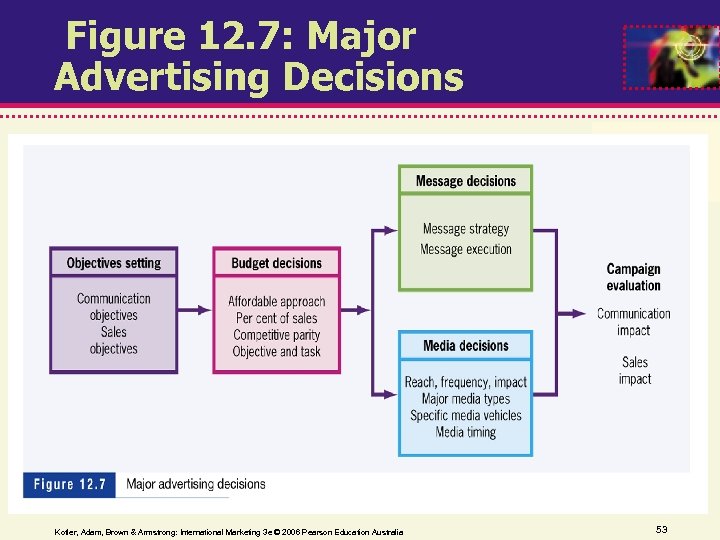
Figure 12. 7: Major Advertising Decisions Kotler, Adam, Brown & Armstrong: International Marketing 3 e © 2006 Pearson Education Australia 53
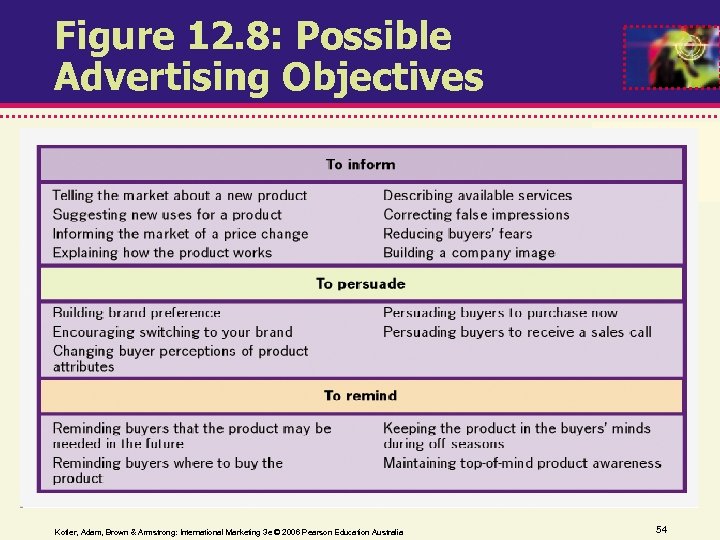
Figure 12. 8: Possible Advertising Objectives Kotler, Adam, Brown & Armstrong: International Marketing 3 e © 2006 Pearson Education Australia 54
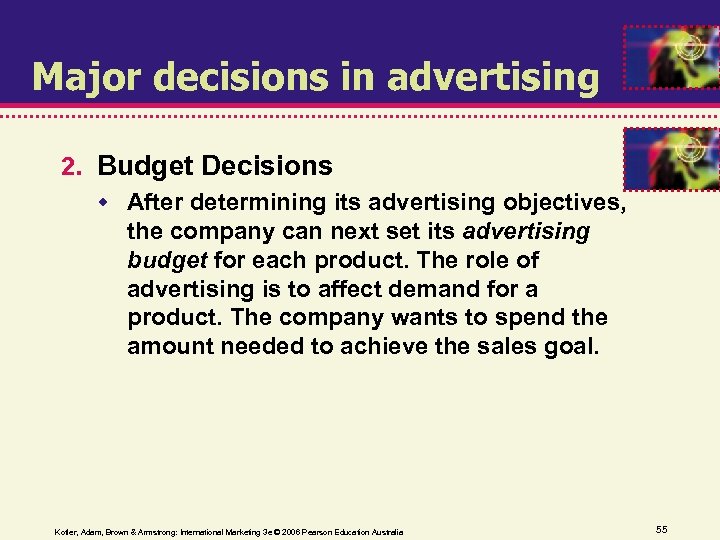
Major decisions in advertising 2. Budget Decisions After determining its advertising objectives, the company can next set its advertising budget for each product. The role of advertising is to affect demand for a product. The company wants to spend the amount needed to achieve the sales goal. Kotler, Adam, Brown & Armstrong: International Marketing 3 e © 2006 Pearson Education Australia 55
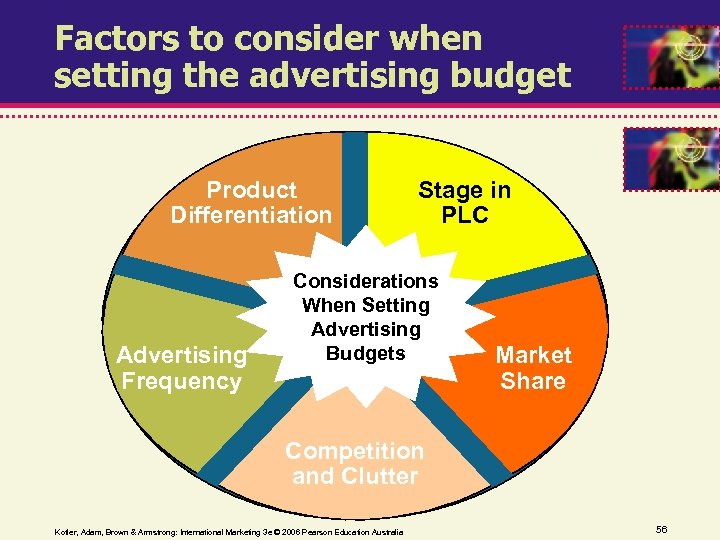
Factors to consider when setting the advertising budget Product Differentiation Advertising Frequency Stage in PLC Considerations When Setting Advertising Budgets Market Share Competition and Clutter Kotler, Adam, Brown & Armstrong: International Marketing 3 e © 2006 Pearson Education Australia 56
Major Advertising Decisions 3. Advertising Strategy A large advertising budget does not guarantee a successful advertising campaign. Two advertisers can spend the same amount on advertising yet have very different results The first step in creating effective advertising messages is to decide what general message will be communicated to consumers Kotler, Adam, Brown & Armstrong: International Marketing 3 e © 2006 Pearson Education Australia 57
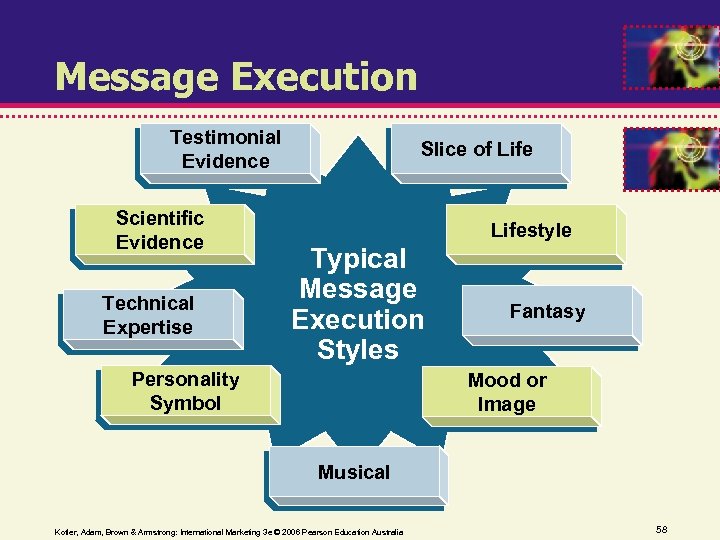
Message Execution Testimonial Evidence Scientific Evidence Technical Expertise Slice of Lifestyle Typical Message Execution Styles Personality Symbol Fantasy Mood or Image Musical Kotler, Adam, Brown & Armstrong: International Marketing 3 e © 2006 Pearson Education Australia 58
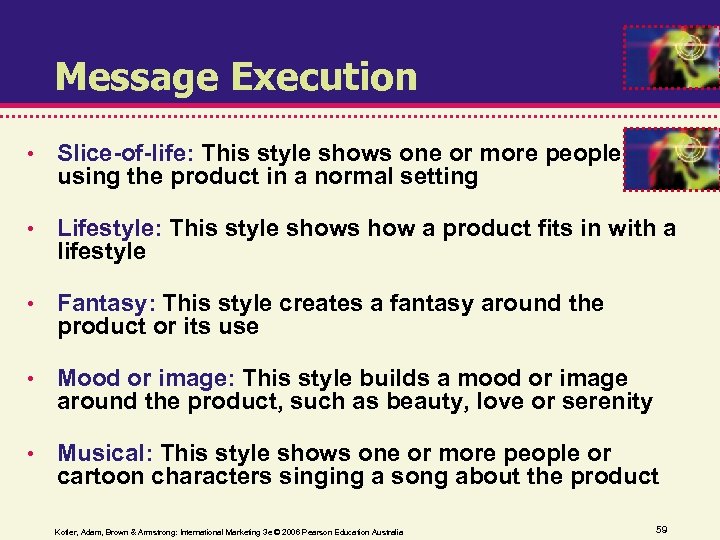
Message Execution • Slice-of-life: This style shows one or more people using the product in a normal setting • Lifestyle: This style shows how a product fits in with a lifestyle Fantasy: This style creates a fantasy around the product or its use • Mood or image: This style builds a mood or image around the product, such as beauty, love or serenity • • Musical: This style shows one or more people or cartoon characters singing a song about the product Kotler, Adam, Brown & Armstrong: International Marketing 3 e © 2006 Pearson Education Australia 59
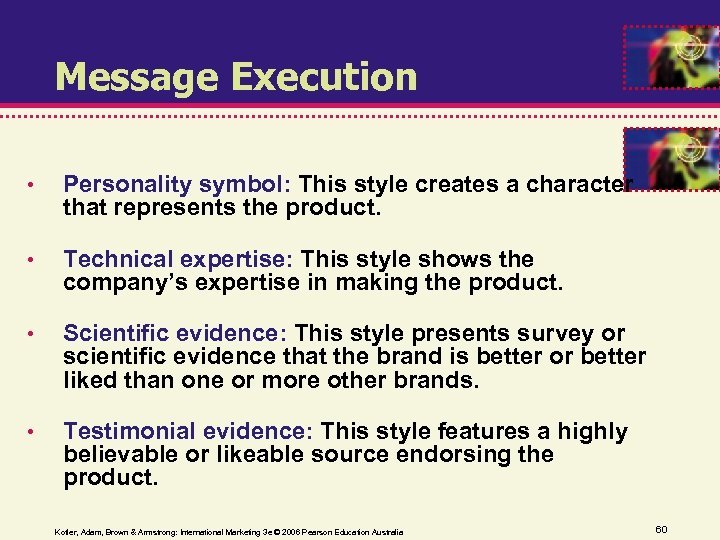
Message Execution • Personality symbol: This style creates a character that represents the product. • Technical expertise: This style shows the company’s expertise in making the product. • Scientific evidence: This style presents survey or scientific evidence that the brand is better or better liked than one or more other brands. • Testimonial evidence: This style features a highly believable or likeable source endorsing the product. Kotler, Adam, Brown & Armstrong: International Marketing 3 e © 2006 Pearson Education Australia 60
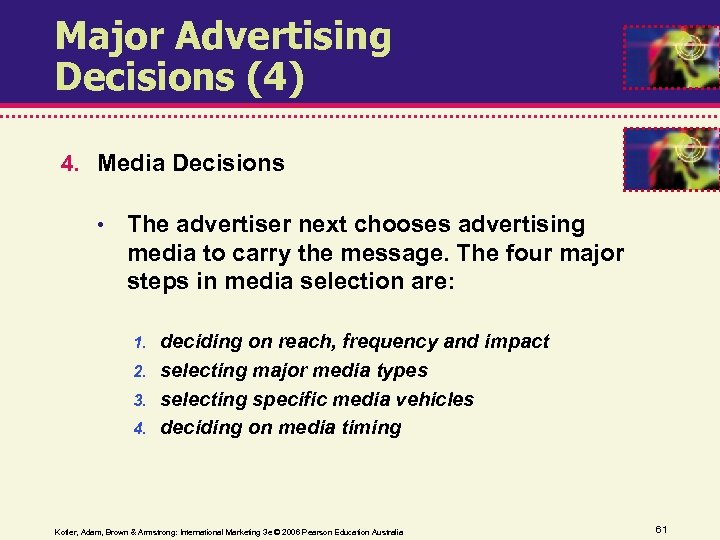
Major Advertising Decisions (4) 4. Media Decisions • The advertiser next chooses advertising media to carry the message. The four major steps in media selection are: deciding on reach, frequency and impact 2. selecting major media types 3. selecting specific media vehicles 4. deciding on media timing 1. Kotler, Adam, Brown & Armstrong: International Marketing 3 e © 2006 Pearson Education Australia 61
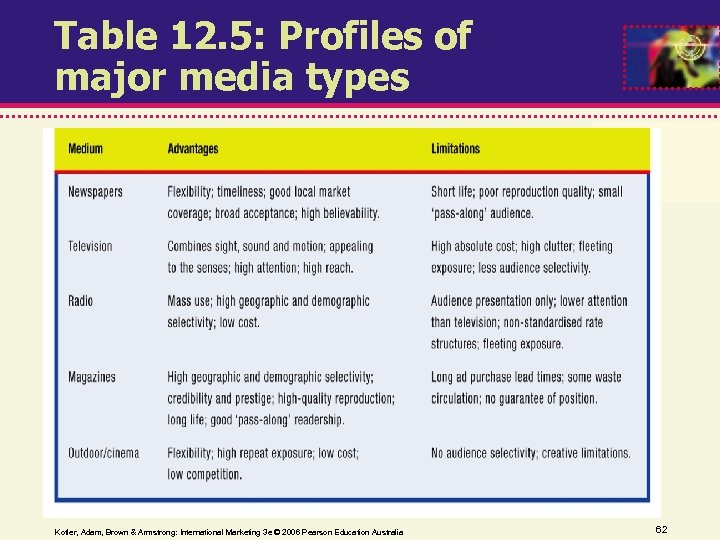
Table 12. 5: Profiles of major media types Kotler, Adam, Brown & Armstrong: International Marketing 3 e © 2006 Pearson Education Australia 62
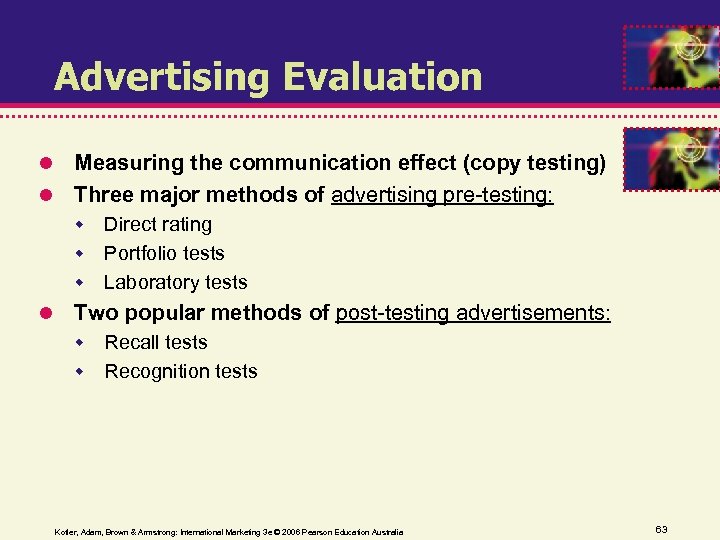
Advertising Evaluation Measuring the communication effect (copy testing) Three major methods of advertising pre-testing: Direct rating Portfolio tests Laboratory tests Two popular methods of post-testing advertisements: Recall tests Recognition tests Kotler, Adam, Brown & Armstrong: International Marketing 3 e © 2006 Pearson Education Australia 63
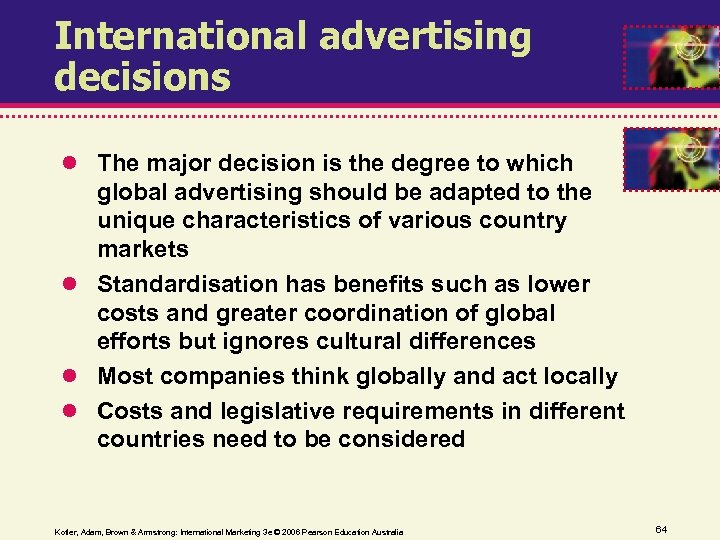
International advertising decisions The major decision is the degree to which global advertising should be adapted to the unique characteristics of various country markets Standardisation has benefits such as lower costs and greater coordination of global efforts but ignores cultural differences Most companies think globally and act locally Costs and legislative requirements in different countries need to be considered Kotler, Adam, Brown & Armstrong: International Marketing 3 e © 2006 Pearson Education Australia 64
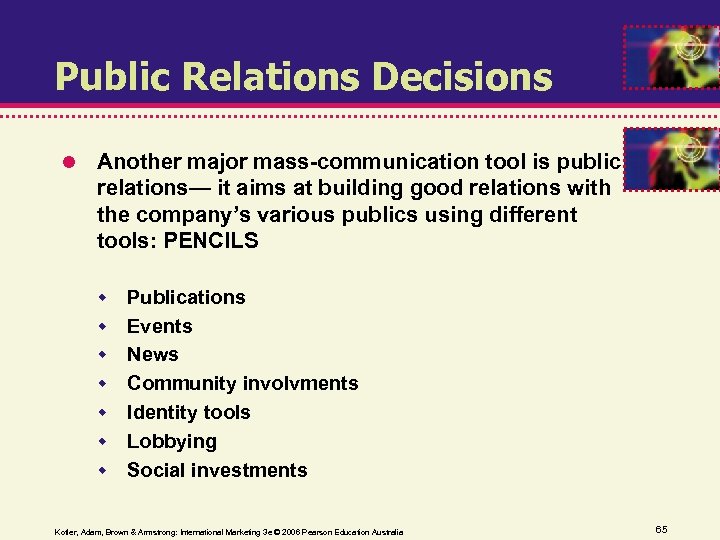
Public Relations Decisions Another major mass-communication tool is public relations— it aims at building good relations with the company’s various publics using different tools: PENCILS Publications Events News Community involvments Identity tools Lobbying Social investments Kotler, Adam, Brown & Armstrong: International Marketing 3 e © 2006 Pearson Education Australia 65
Socially Responsible Marketing Communication Advertising Companies must avoid false or deceptive advertising. Advertisers must not create ads that have the capacity to deceive. Sellers must avoid bait-and-switch advertising that attracts buyers under false pretences Personal selling Companies must ensure their salespeople follow the rule of ‘fair competition’ when they sell the products directly Kotler, Adam, Brown & Armstrong: International Marketing 3 e © 2006 Pearson Education Australia 66
Chapter 13 IMC: Sales promotion and personal selling Kotler, Brown, Adam & Armstrong: International Marketing 3 e © 2006 Pearson Education Australia
Sales Promotion Sales promotion is the act of influencing customer/consumer perception and behaviour to build market share and sales which reinforces brand image 1. Sales promotion is a term that is closely linked with direct and online marketing, but has its origins in FMCG. 2. Although the term has as many confused meanings as the term direct marketing itself, nearly all marketing scientists and practitioners agree on what sales promotion tools do. 3. The term covers a range of incentives that are used with products promoted via either mass media advertising or by direct and online methods. Kotler, Adam, Brown & Armstrong: International Marketing 3 e © 2006 Pearson Education Australia 68
Sales Promotion The main tools falling into this category include: 1. samples 2. redeemable coupons 3. cash-back offers 4. cents-off deals or price packs 5. premium offers 6. advertising specialties 7. patronage rewards 8. point-of-purchase (POP) promotions 9. contests and games of chance and skill Kotler, Adam, Brown & Armstrong: International Marketing 3 e © 2006 Pearson Education Australia 69
Purpose of Sales Promotion Sellers use sales promotions to attract new triers, to reward brand-loyal customers and thereby retain them, to reduce the time between purchases, and even to turn light users into medium or heavy users. The aim might also be to regain past purchasers who have ceased buying. New triers of a product category fall into one of three groups: non-users loyal users of another brand switchers. Kotler, Adam, Brown & Armstrong: International Marketing 3 e © 2006 Pearson Education Australia 70
Setting Sales Promotion Objectives Sales promotion objectives are as varied as the methods used. Sellers may use consumer promotions to increase short-term sales or to help build long-term market share. The objective may be one of the following: 1. to entice consumers to try a new product or brand 2. to lure consumers away from competitors’ products or brands 3. to get consumers to ‘load up’ on a mature product 4. to hold and reward loyal customers. Kotler, Adam, Brown & Armstrong: International Marketing 3 e © 2006 Pearson Education Australia 71
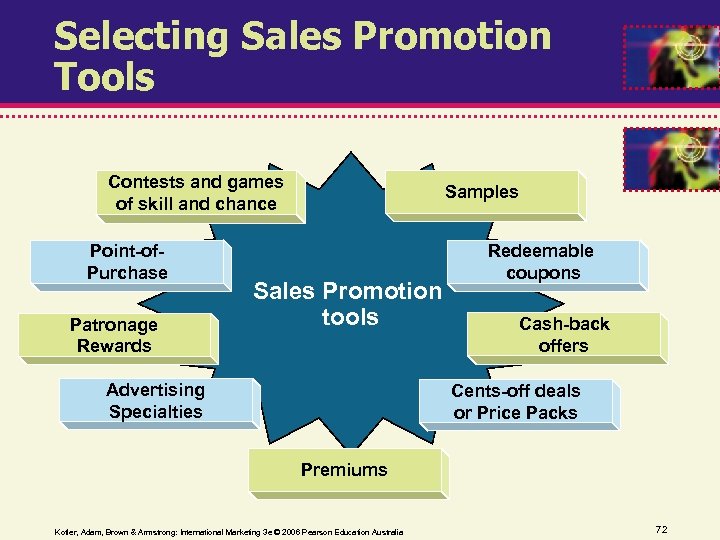
Selecting Sales Promotion Tools Contests and games of skill and chance Point-of. Purchase Patronage Rewards Samples Sales Promotion tools Advertising Specialties Redeemable coupons Cash-back offers Cents-off deals or Price Packs Premiums Kotler, Adam, Brown & Armstrong: International Marketing 3 e © 2006 Pearson Education Australia 72
Developing sales promotion programs A number of decisions must be made in order to define the full sales promotion program: Size of the incentive How to promote and distribute the program The length of the promotion Sales promotion budgeting Kotler, Adam, Brown & Armstrong: International Marketing 3 e © 2006 Pearson Education Australia 73
Скачать презентацию POM FINAL EXAM REVISION 2013 Kotler Brown Adam
d312215b713b4e08692b688fc57c23b2.ppt