 Скачать презентацию Polytrauma Rehabilitation A New Model of Care Rose
1c78bf02291ea081033e063100f14903.ppt
- Количество слайдов: 17



Polytrauma Rehabilitation: A New Model of Care Rose Collins, Ph. D. Minneapolis VA Medical Center VA Psychology Leadership Conference/ APA April 28, 2006
Objectives n Polytrauma: Definition and patterns n Paradigm of Care n Psychology in Polytrauma Care n Treatment Issues and Considerations n Future Concerns and Directions
TBI, Blast Injury & Polytrauma n TBI in peacetime: civilian vs. military n n n Mechanism: MVA, falls Incidence TBI in combat: n n n Mechanism: Blast Incidence Blast injury sequelae: Polytrauma
Common Sequelae of Blast Injury n n n n Brain injury Amputation Fractures Wounds Psychological. PTSD Crush injuries Burns Auditory/vestibular n n n n Eye, orbit, face, Dental Renal Respiratory Cardiac and vascular Gastrointestinal Pain Peripheral nerve
Polytrauma: Definition n Trauma to several body areas or organ systems n Occur at the same time n One or more is life threatening
TBI in Combat Settings n New mechanism of injury n New constellation of injuries n Challenges to TBI rehabilitation n New expertise and new model of care
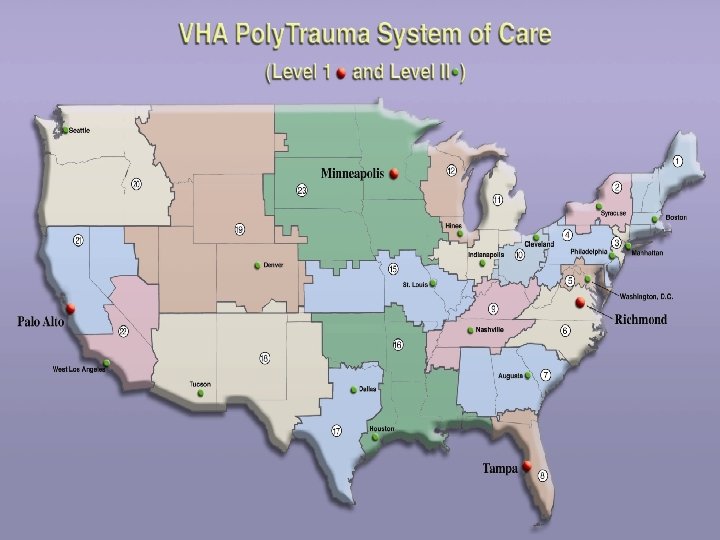
Polytrauma Rehabilitation Centers (PRC) Level I n New patterns of injury new paradigm of care n “Brain Injury Plus” n Brain injury drives the care process n Integrate care for complex polytrauma in single location—simultaneous tx of mult injuries n Higher level of medical acuity n Sequence and integrate treatment to meet patient need n Coordinated team effort with expanded team of consultants
Extensive Team of Consultants n n n n Anesthesiology Audiology Chaplin Services Dentistry Driver Rehabilitation Gastroenterology General Surgery Infectious Disease Medicine Neurology Neuro-ophthalmology Neurosurgery Nutritionist n n n Optometry Oral and Maxillofacial Surgery Orthopedics Orthotics Otolaryngology Pharmacy Plastic Surgery Prosthetics Psychiatry Pulmonology Radiology Urology
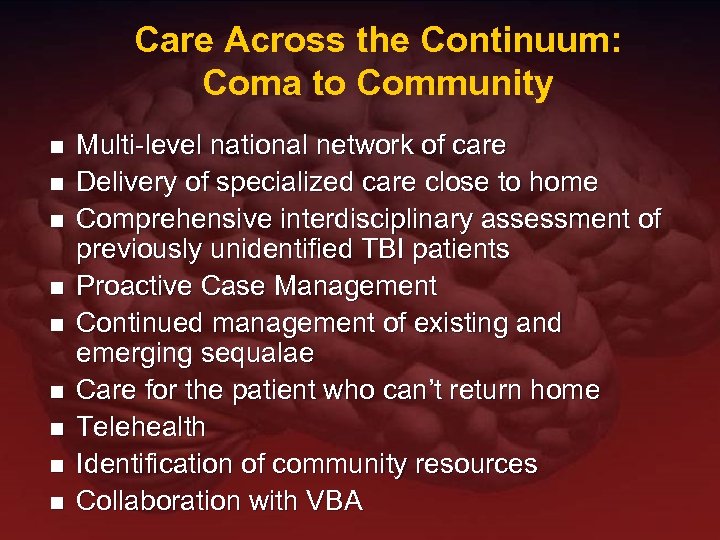
Care Across the Continuum: Coma to Community n n n n n Multi-level national network of care Delivery of specialized care close to home Comprehensive interdisciplinary assessment of previously unidentified TBI patients Proactive Case Management Continued management of existing and emerging sequalae Care for the patient who can’t return home Telehealth Identification of community resources Collaboration with VBA
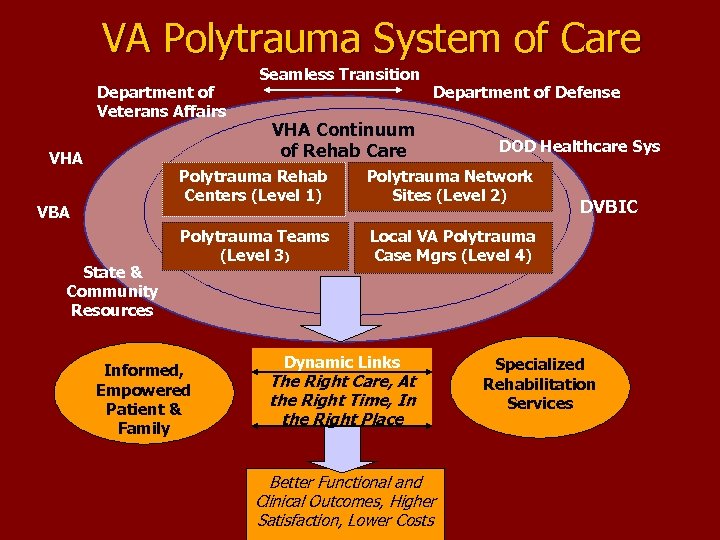
VA Polytrauma System of Care Department of Veterans Affairs VHA Seamless Transition Department of Defense VHA Continuum of Rehab Care DOD Healthcare Sys Polytrauma Rehab Centers (Level 1) VBA State & Community Resources Polytrauma Network Sites (Level 2) Polytrauma Teams (Level 3) Local VA Polytrauma Case Mgrs (Level 4) Informed, Empowered Patient & Family Dynamic Links The Right Care, At the Right Time, In the Right Place Better Functional and Clinical Outcomes, Higher Satisfaction, Lower Costs DVBIC Specialized Rehabilitation Services
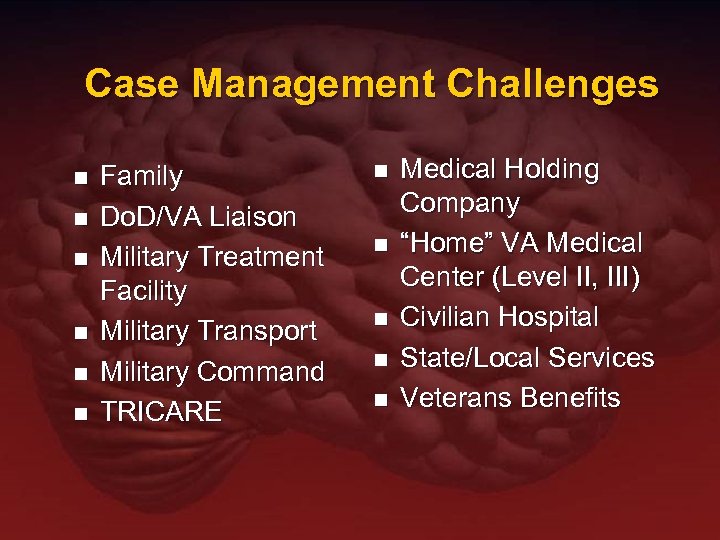
Case Management Challenges n n n Family Do. D/VA Liaison Military Treatment Facility Military Transport Military Command TRICARE n n n Medical Holding Company “Home” VA Medical Center (Level II, III) Civilian Hospital State/Local Services Veterans Benefits
Psychology in Polytrauma Rehabilitation n n n n Integrated, active, interdisciplinary team member Combat Stress and PTSD Complex Pain syndromes Behavioral management, adherence Depression, Suicide Intimacy Provider stress Education to mental health staff, nursing, and all hospital staff, Level II sites
Family Issues n Multiple stressors Away from home, support systems n Care of other children, aging parents n Job loss, financial strain n Adjusting to VA and rehab environment n Duration, intensity & fluctuation of medical course n Expectations: Advocacy vs entitlement n
Family Issues Role strain and change n Stress, trauma n Political context n Anger, grief and loss n Guilt n “Ambiguous loss” (Boss, 1999; 2006) n Depression, anxiety n Stress increases at transfer to Level 2 n
Treatment Considerations n n n n Pathologizing family vs family stress theory Psychodynamic interpretations, motivated forgetting Group size, duration Directive, active, concrete, metaphor Multi-modal education and treatment Adjusting “to” and “with” cognitive impairments Acceptance vs status quo Assistance: increasing dependency vs support for independence
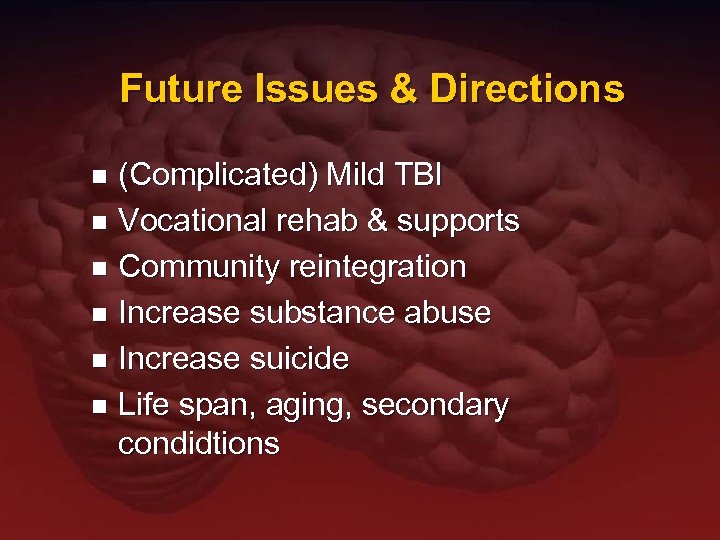
Future Issues & Directions (Complicated) Mild TBI n Vocational rehab & supports n Community reintegration n Increase substance abuse n Increase suicide n Life span, aging, secondary condidtions n
Скачать презентацию Polytrauma Rehabilitation A New Model of Care Rose
1c78bf02291ea081033e063100f14903.ppt