 Скачать презентацию Polysaccharides Quantitative analysis Done by Naizabayeva D
Naizabayeva D. Polysaccharides.pptx
- Количество слайдов: 10



* Polysaccharides: Quantitative analysis Done by: Naizabayeva D. Accepted by: Kenzhebayeva S. S.
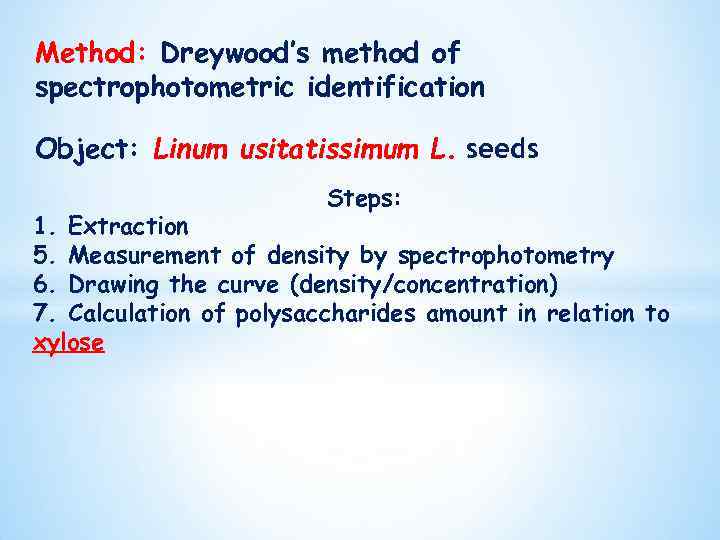
Method: Dreywood’s method of spectrophotometric identification Object: Linum usitatissimum L. seeds Steps: 1. Extraction 5. Measurement of density by spectrophotometry 6. Drawing the curve (density/concentration) 7. Calculation of polysaccharides amount in relation to xylose
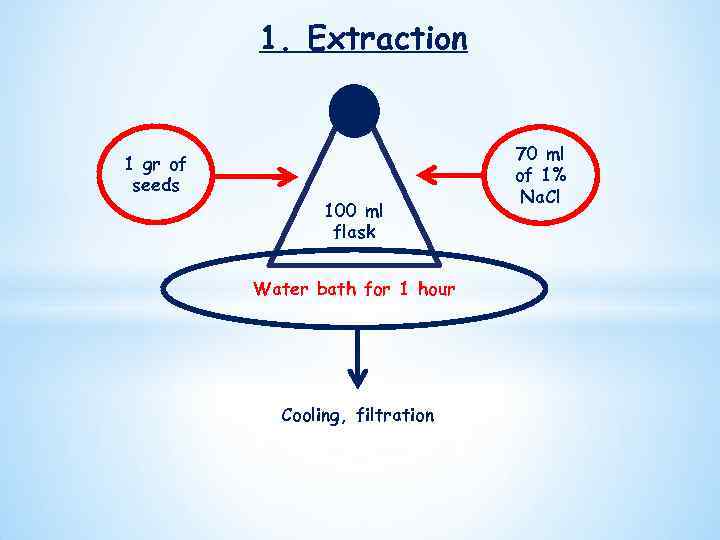
1. Extraction 1 gr of seeds 100 ml flask Water bath for 1 hour Cooling, filtration 70 ml of 1% Na. Cl
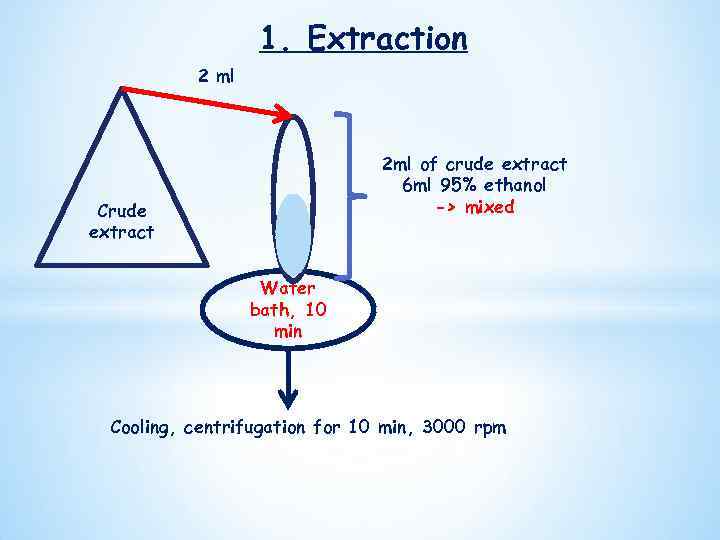
1. Extraction 2 ml 2 ml of crude extract 6 ml 95% ethanol -> mixed Crude extract Water bath, 10 min Cooling, centrifugation for 10 min, 3000 rpm
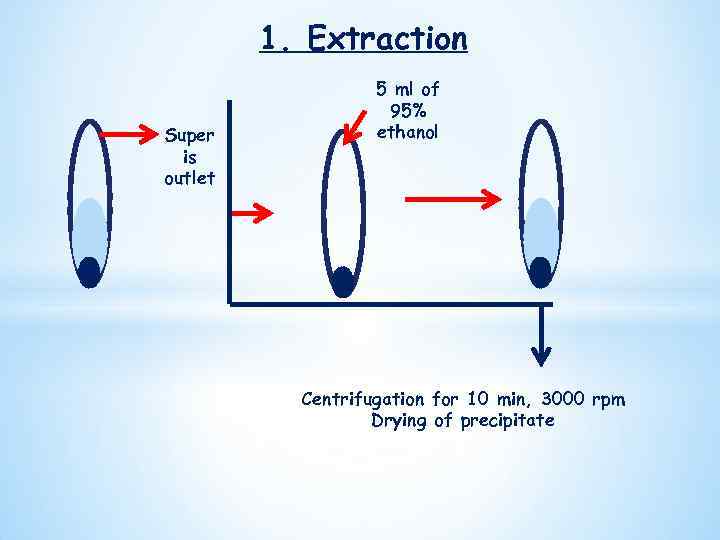
1. Extraction Super is outlet 5 ml of 95% ethanol Centrifugation for 10 min, 3000 rpm Drying of precipitate
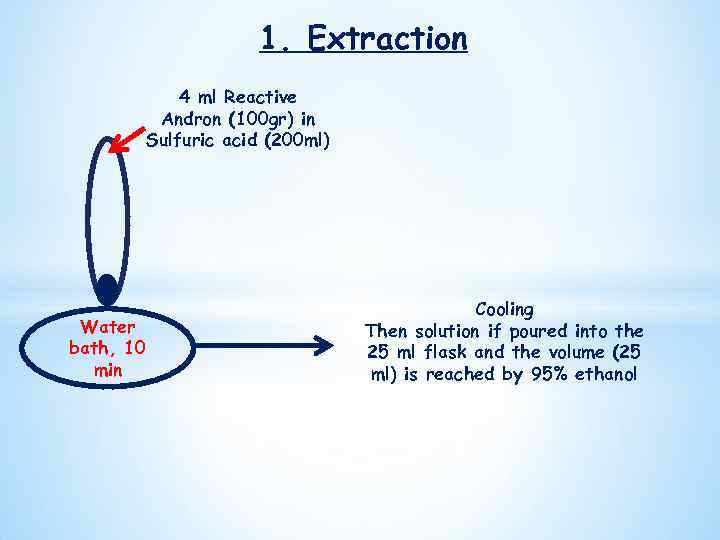
1. Extraction 4 ml Reactive Andron (100 gr) in Sulfuric acid (200 ml) Water bath, 10 min Cooling Then solution if poured into the 25 ml flask and the volume (25 ml) is reached by 95% ethanol
2. Measurement of density by spectrophotometry Optical density measurement is provided in 10 mm cuvets Wavelength – 430 nm Reference – 4 ml of reagent (antron +H 2 SO 4) which pass the same conditions, provided for sample
3. Calibration curve (density/concentration) Calibration curve is drawn due to relation of density with known concentration of xylose. All conditions and steps are the same as for the samples.
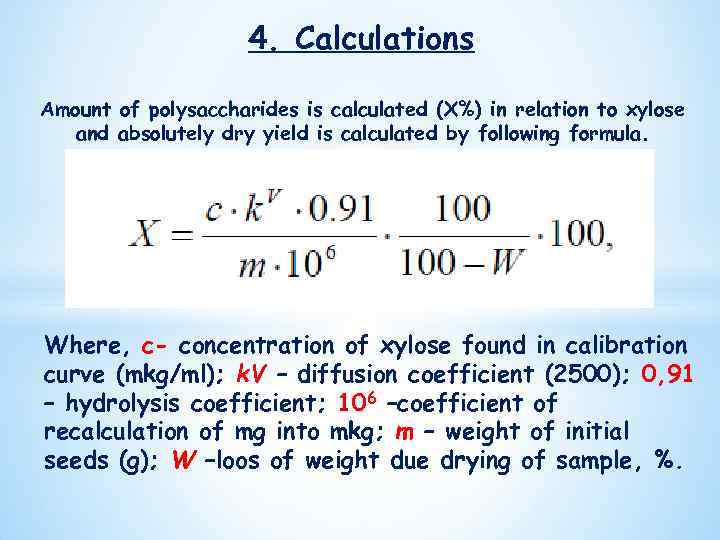
4. Calculations Amount of polysaccharides is calculated (X%) in relation to xylose and absolutely dry yield is calculated by following formula. Where, c- concentration of xylose found in calibration curve (mkg/ml); k. V – diffusion coefficient (2500); 0, 91 – hydrolysis coefficient; 106 –coefficient of recalculation of mg into mkg; m – weight of initial seeds (g); W –loos of weight due drying of sample, %.
Conclusion This method if considered to be standard for quantitative analysis of polysaccharides of plant nature. The advantage is the availability of reagents and simplicity Disadvantage is the being time consuming, and need a lot of manipulations.
Скачать презентацию Polysaccharides Quantitative analysis Done by Naizabayeva D
Naizabayeva D. Polysaccharides.pptx