


 Скачать презентацию Polyclinic Polyclinic A polyclinic or policlinic is
Polyclinic.pptx
- Количество слайдов: 9
 Polyclinic
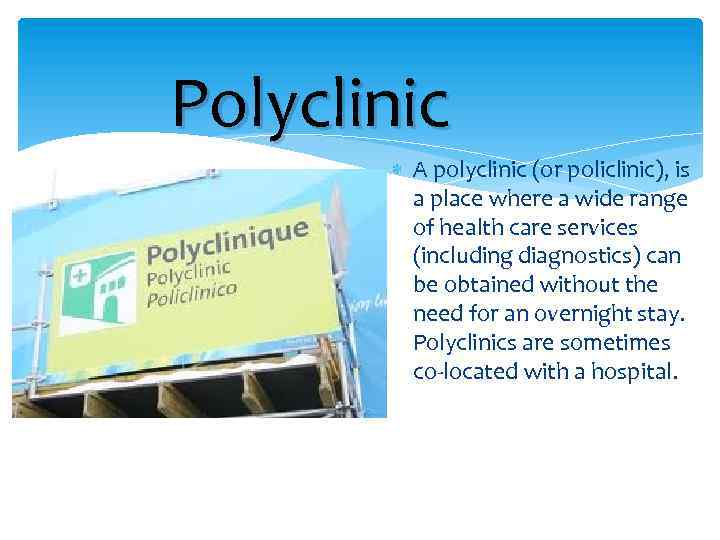 Polyclinic A polyclinic (or policlinic), is a place where a wide range of health care services (including diagnostics) can be obtained without the need for an overnight stay. Polyclinics are sometimes co-located with a hospital.
 Etymology Greek polis city, klinike (techne) "(practice) at the sickbed, " from klinikos "of the bed, " kline "bed, couch, that on which one lies". Literally city-clinic, in fact "a clinic held in a private house".
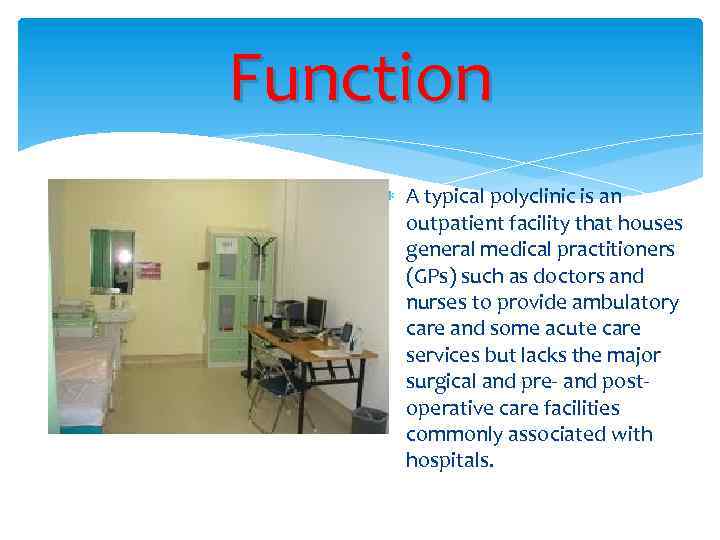 Function A typical polyclinic is an outpatient facility that houses general medical practitioners (GPs) such as doctors and nurses to provide ambulatory care and some acute care services but lacks the major surgical and pre- and postoperative care facilities commonly associated with hospitals.
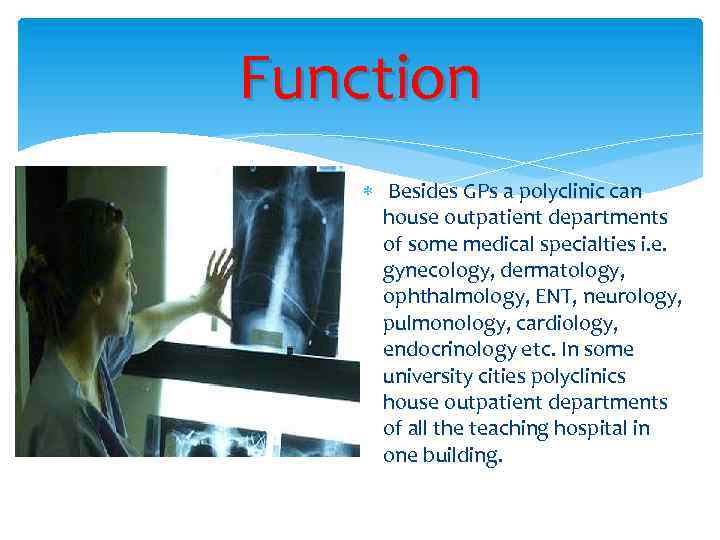 Function Besides GPs a polyclinic can house outpatient departments of some medical specialties i. e. gynecology, dermatology, ophthalmology, ENT, neurology, pulmonology, cardiology, endocrinology etc. In some university cities polyclinics house outpatient departments of all the teaching hospital in one building.
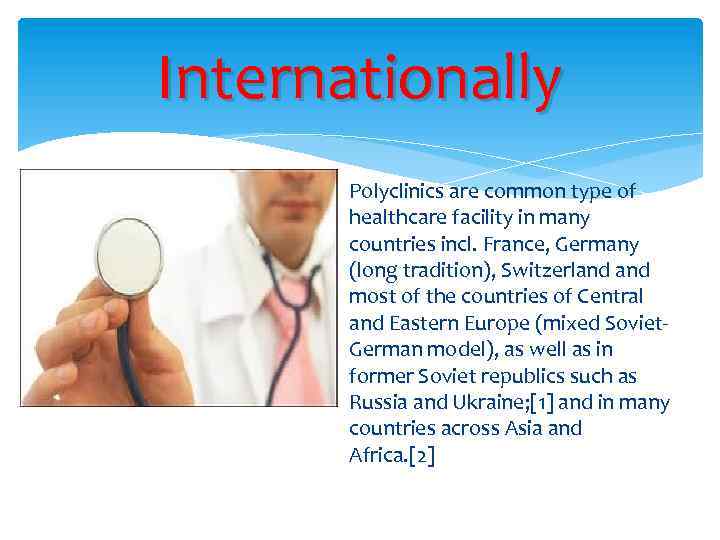 Internationally Polyclinics are common type of healthcare facility in many countries incl. France, Germany (long tradition), Switzerland most of the countries of Central and Eastern Europe (mixed Soviet. German model), as well as in former Soviet republics such as Russia and Ukraine; [1] and in many countries across Asia and Africa. [2]
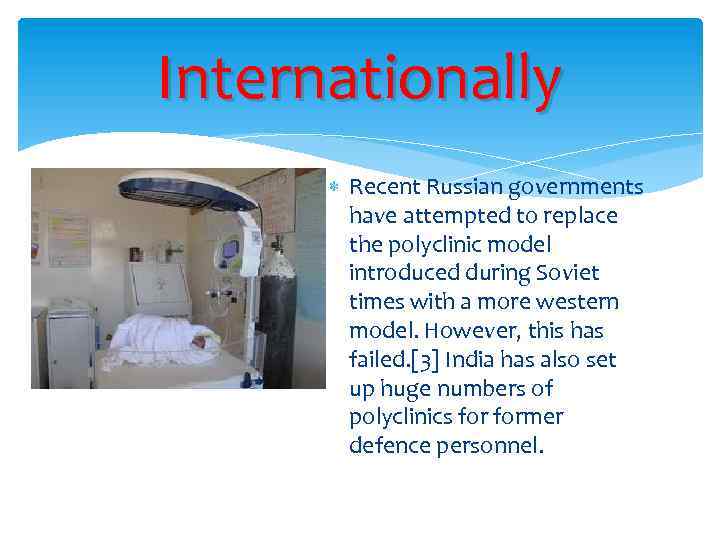 Internationally Recent Russian governments have attempted to replace the polyclinic model introduced during Soviet times with a more western model. However, this has failed. [3] India has also set up huge numbers of polyclinics former defence personnel.
 Internationally The network envisages 426 polyclinics in 343 districts of the country which will benefit about 33 lakh (3. 3 million) ex-servicemen residing in remote and far-flung areas. [4] Polyclinics are also the backbone of Cuba's primary care system and have been credited with a role in improving that nation's health indicators. [5]
 Than k you for y atten our tion