 Скачать презентацию Politics without politicians ENA conference Freiburg August 2011
13660a0d59d1720209fa4502f5eb9e65.ppt
- Количество слайдов: 33



Politics without politicians ENA conference, Freiburg, August 2011
Politics without politicians Workshop ENA 2011 Citizens for Direct Democracy, task force of Democratie. nu, Belgium Paul Nollen, paul. nollen@skynet. be Alexandre Zénon, zenon. alex@gmail. com
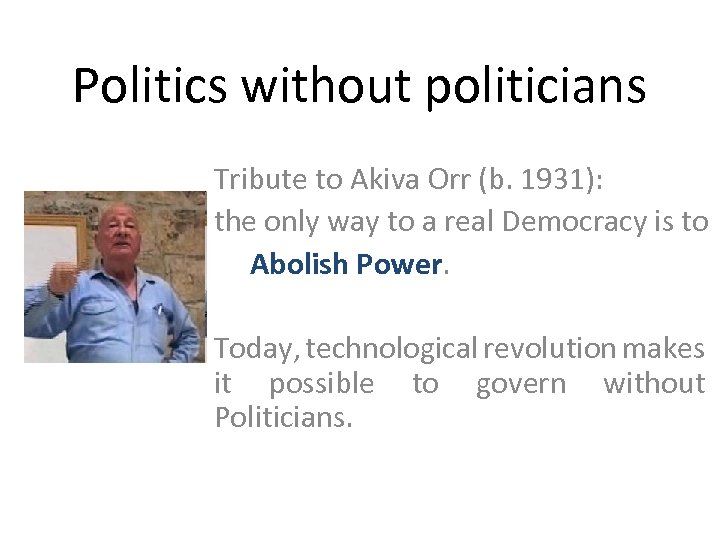
Politics without politicians Tribute to Akiva Orr (b. 1931): the only way to a real Democracy is to Abolish Power. Today, technological revolution makes it possible to govern without Politicians.
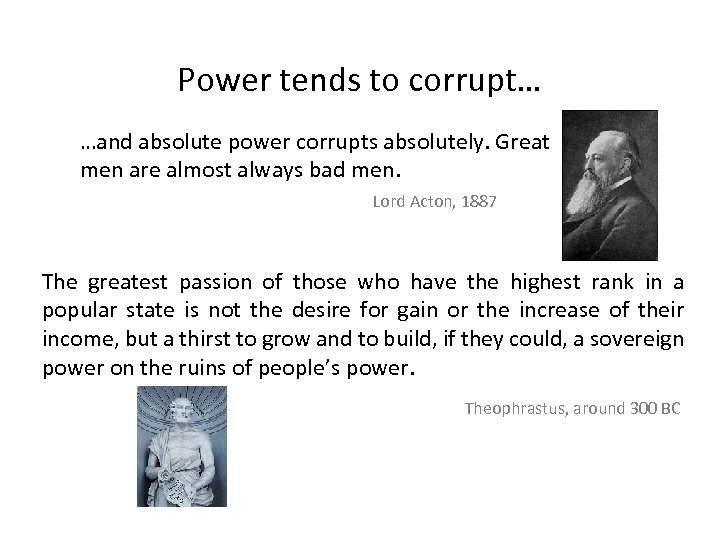
Power tends to corrupt… …and absolute power corrupts absolutely. Great men are almost always bad men. Lord Acton, 1887 The greatest passion of those who have the highest rank in a popular state is not the desire for gain or the increase of their income, but a thirst to grow and to build, if they could, a sovereign power on the ruins of people’s power. Theophrastus, around 300 BC
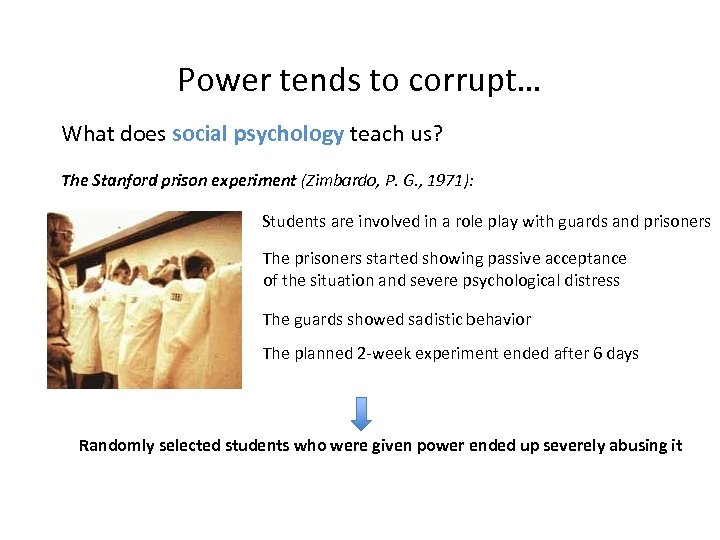
Power tends to corrupt… What does social psychology teach us? The Stanford prison experiment (Zimbardo, P. G. , 1971): Students are involved in a role play with guards and prisoners The prisoners started showing passive acceptance of the situation and severe psychological distress The guards showed sadistic behavior The planned 2 -week experiment ended after 6 days Randomly selected students who were given power ended up severely abusing it
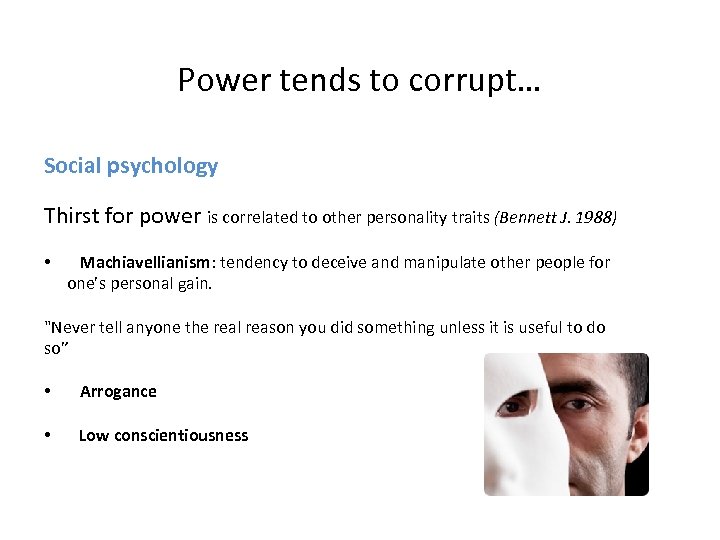
Power tends to corrupt… Social psychology Thirst for power is correlated to other personality traits (Bennett J. 1988) • Machiavellianism: tendency to deceive and manipulate other people for one’s personal gain. "Never tell anyone the real reason you did something unless it is useful to do so” • Arrogance • Low conscientiousness
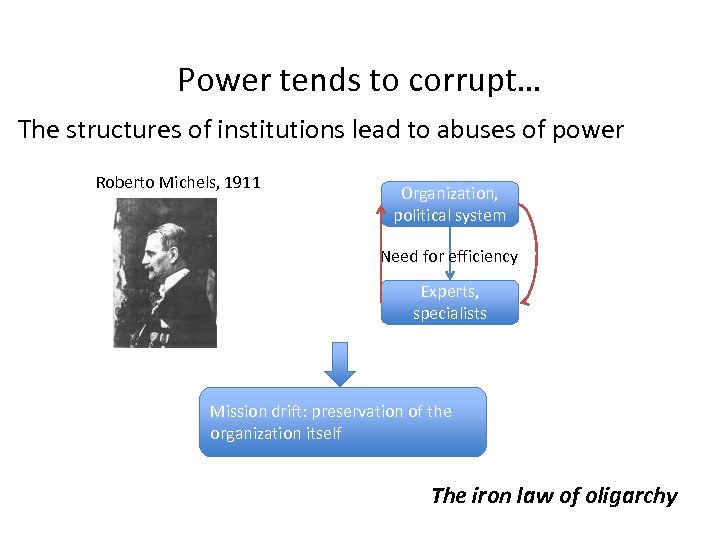
Power tends to corrupt… The structures of institutions lead to abuses of power Roberto Michels, 1911 Organization, political system Need for efficiency Experts, specialists Mission drift: preservation of the organization itself The iron law of oligarchy
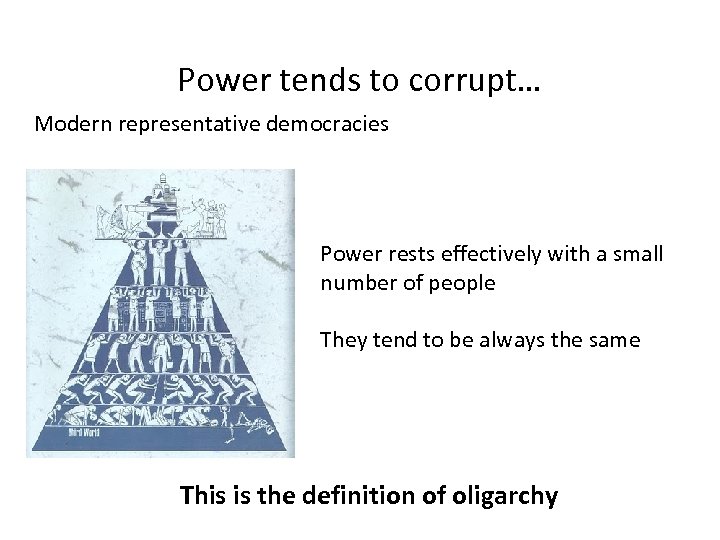
Power tends to corrupt… Modern representative democracies Power rests effectively with a small number of people They tend to be always the same This is the definition of oligarchy
Power tends to corrupt… Why elections invariably lead to oligarchy? • We don’t really have a choice: there is little difference between the viable candidates (ex: 2 party system in the US) • Parties make deals influencing their program after elections to form majorities • Our power is extremely limited in time: every 4 -5 years and nothing in between -> no intervention possible • Money influences the result overwhelmingly: campaign contribution, media ownership, lobbying (EU 2008 lobbies spending from 50 biggest corporations: 13, 351, 000 -14, 501, 000 Euro) + undeclared amount! • The choice is difficult: an enormous amount of variables to take into account, including psychological variables (e. g. “Is he a trustworthy? Is he lying? , etc…”)
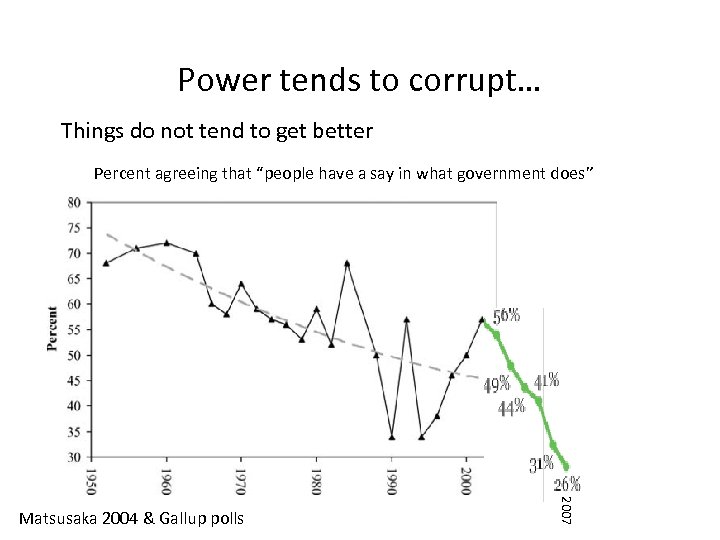
Power tends to corrupt… Things do not tend to get better Percent agreeing that “people have a say in what government does” 2007 Matsusaka 2004 & Gallup polls
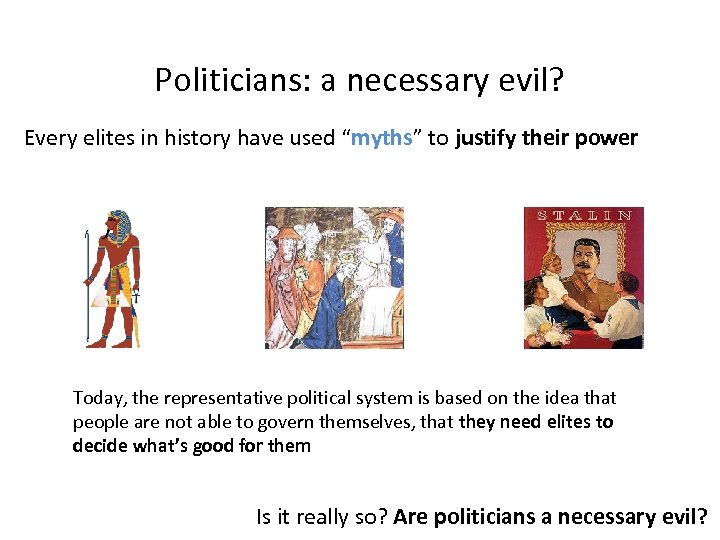
Politicians: a necessary evil? Every elites in history have used “myths” to justify their power Today, the representative political system is based on the idea that people are not able to govern themselves, that they need elites to decide what’s good for them Is it really so? Are politicians a necessary evil?
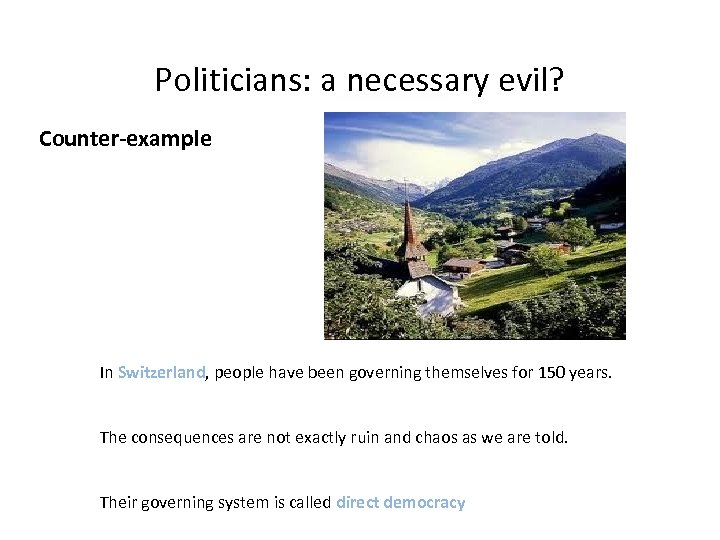
Politicians: a necessary evil? Counter-example In Switzerland, people have been governing themselves for 150 years. The consequences are not exactly ruin and chaos as we are told. Their governing system is called direct democracy
Direct Democracy What is direct democracy? Democracy = power to the people What we usually call democracy is not democracy. It is particracy, oligarchy Direct means without intermediary, or forced representation People take power back in their hands
Direct Democracy Why? Solution against the abuses of power Real representativeness: the point of view of each citizen is taken into account in each single decision, if they want to Efficiency: wisdom of crowds
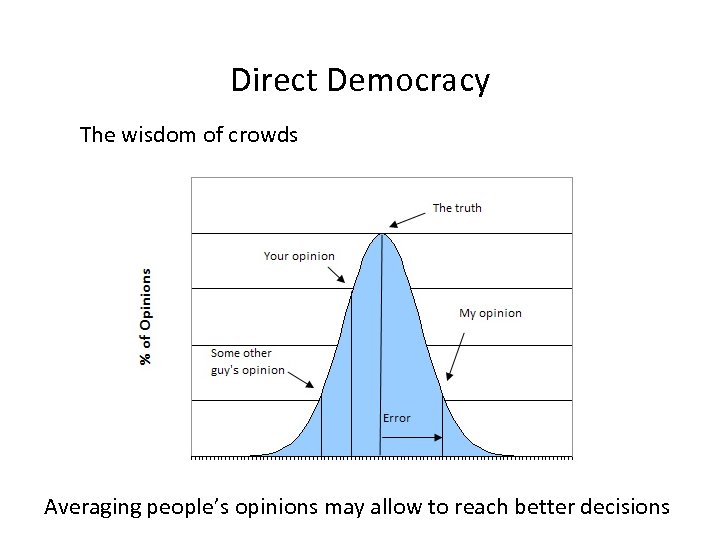
Direct Democracy The wisdom of crowds Averaging people’s opinions may allow to reach better decisions
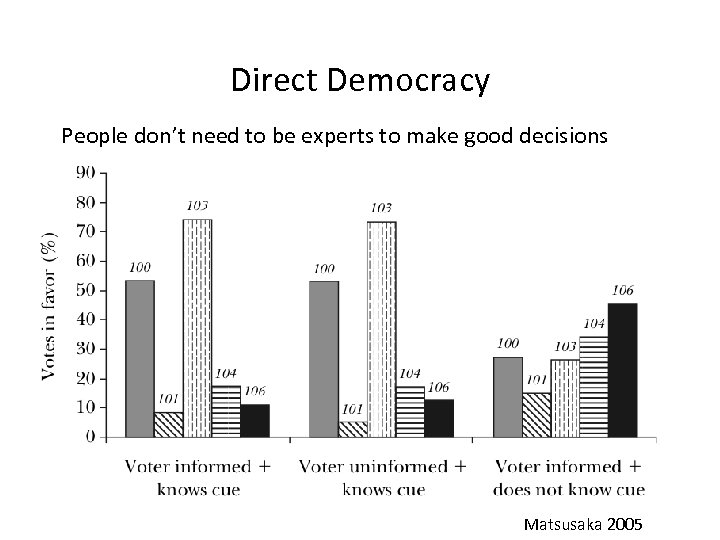
Direct Democracy People don’t need to be experts to make good decisions Matsusaka 2005
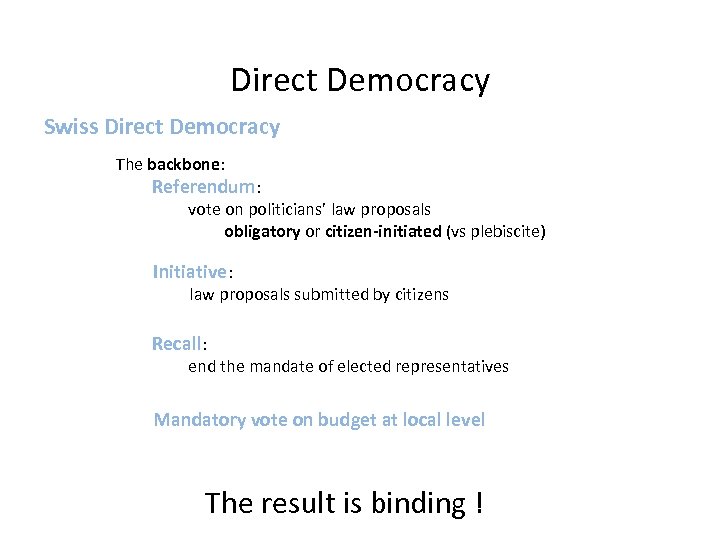
Direct Democracy Swiss Direct Democracy The backbone: Referendum: vote on politicians’ law proposals obligatory or citizen-initiated (vs plebiscite) Initiative: law proposals submitted by citizens Recall: end the mandate of elected representatives Mandatory vote on budget at local level The result is binding !
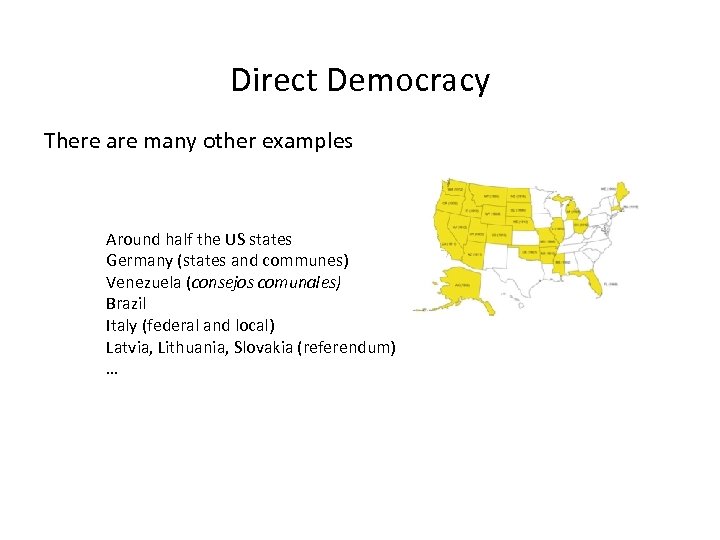
Direct Democracy There are many other examples Around half the US states Germany (states and communes) Venezuela (consejos comunales) Brazil Italy (federal and local) Latvia, Lithuania, Slovakia (referendum) …
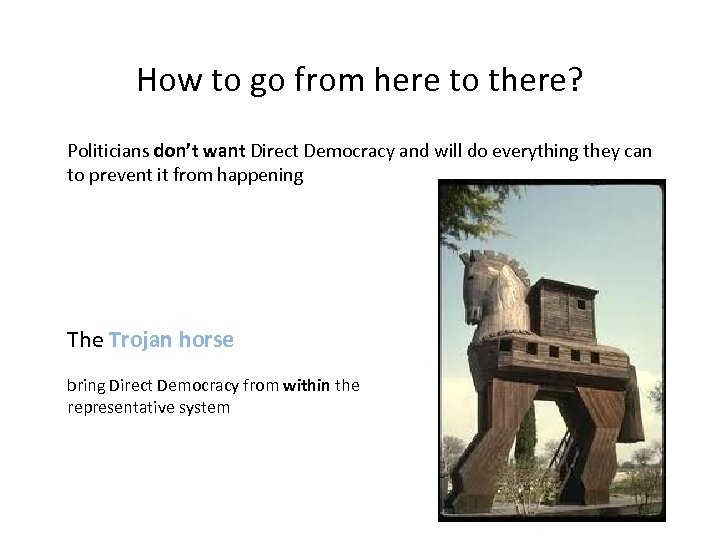
How to go from here to there? Politicians don’t want Direct Democracy and will do everything they can to prevent it from happening The Trojan horse bring Direct Democracy from within the representative system
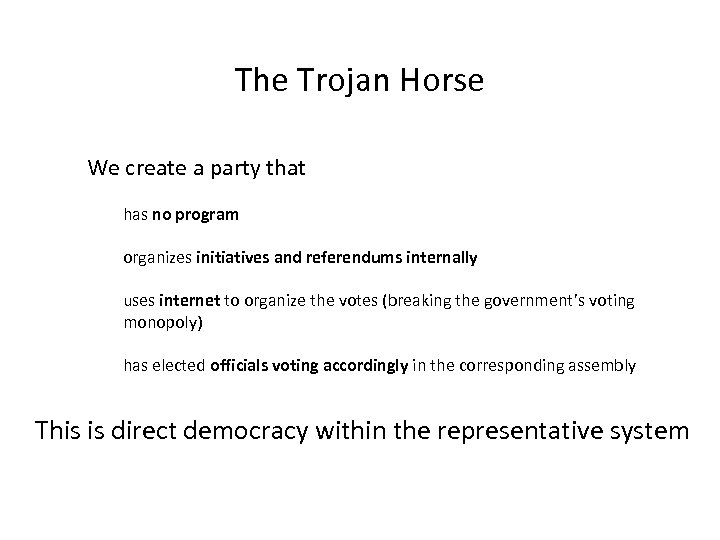
The Trojan Horse We create a party that has no program organizes initiatives and referendums internally uses internet to organize the votes (breaking the government’s voting monopoly) has elected officials voting accordingly in the corresponding assembly This is direct democracy within the representative system
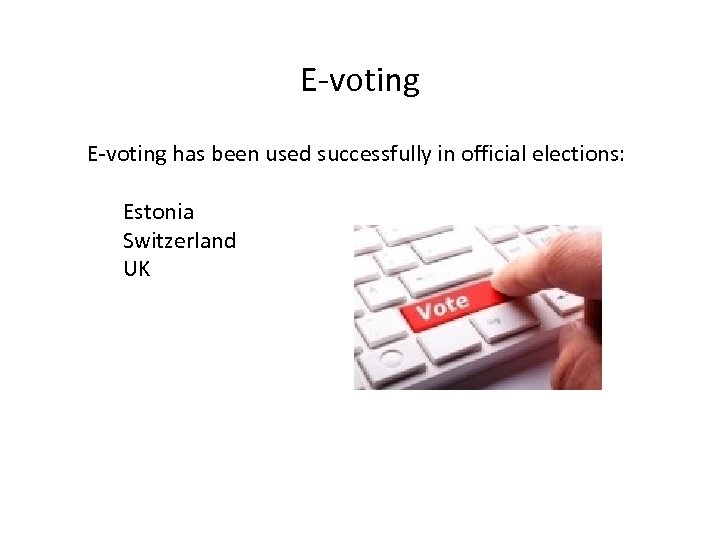
E-voting has been used successfully in official elections: Estonia Switzerland UK
E-voting Pros and cons Speed Cost Potentially the fastest means of policy decision-making Could potentially be too fast => prevents thorough debate Potentially the cheapest method Campaigns needed to explain and convince could be expensive Representativeness Maximum representation if citizens participate directly and vote via delegates Reliability/security Can allow real auditability Could exclude people that don’t have easy access to computers Still some security concerns at the level of personal computers Trust Can be fully open and accessible to anyone’s scrutiny People might not trust something they don’t clearly understand
E 2 D international Electronic Direct Democracy Group of several political initiatives in the world sharing the same objectives and approach
E 2 D international Manifesto Right to vote. Every citizen of the jurisdiction, recognized by law, has the right to vote on every proposed Issue. Every citizen is allowed one vote […]. Voting is made available electronically […] to all citizens of the jurisdiction on website(s) hosted by the respective Party. Voters can change their vote on any current issue before final vote count […].
E 2 D international Manifesto Right to propose law Every citizen of the jurisdiction must be given an equal chance to propose an Issue for debate and voting. When a new law is proposed by a sufficiently large group of citizens then people are allowed to vote on it, just like in referenda. Each party can decide how they wish to sort out issues for debate and voting. (e. g. the criteria can be subject to a citizens referendum, ranking system, etc. ).
E 2 D international Manifesto Political neutrality of the party The Party is not governed by any principles other than Direct Democracy. Once established, voting citizens will decide the direction of the Party in the democratic manner stated above. Only official members of the Party may vote on internal party issues; The party is also strongly encouraged to present for voting any Bill proposed by currently elected officials in the Legislature.
E 2 D international Manifesto Political neutrality of representatives, always When a party representative is elected into legislature, the representative must always vote in accordance to the Party’s official position (results of the vote by the citizens). As an individual member of the party, a representative may vote any way he/she wishes and try to persuade, through logic, other members to vote likewise. Party representatives must commit (e. g. signing a legal waiver, etc. ) to respecting the Party’s official position once voted into the legislature, otherwise they must resign from their position (if allowed by law) and possibly face legal action. In the case that a representative must vote on a Bill on which the Party has not reached an official position, the representative must abstain from voting.
E 2 D international Manifesto Voting by proxy (delegation) It is recommended that voting by proxy (delegation) be allowed whereby a citizen may cast a vote on behalf of another citizen, as long as there is an official and public (or accountable) agreement between the citizens; ensuring maximum participation. The direct Member’s vote can always override the delegate's vote and a Member can change their delegate at any time. Any citizen has the right to become a delegate. = Liquid democracy
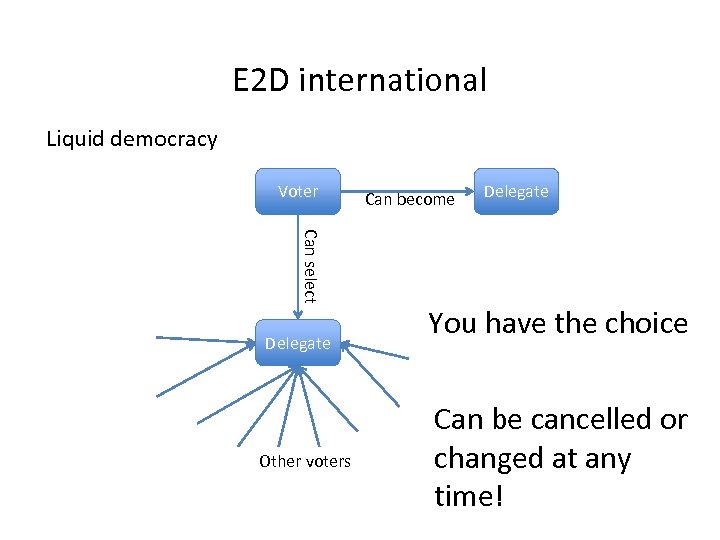
E 2 D international Liquid democracy Voter Can select Delegate Other voters Can become Delegate You have the choice Can be cancelled or changed at any time!
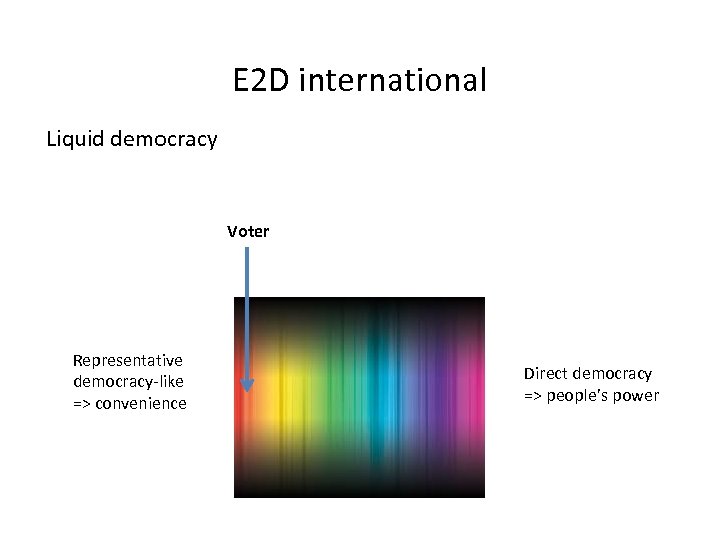
E 2 D international Liquid democracy Voter Representative democracy-like => convenience Direct democracy => people’s power
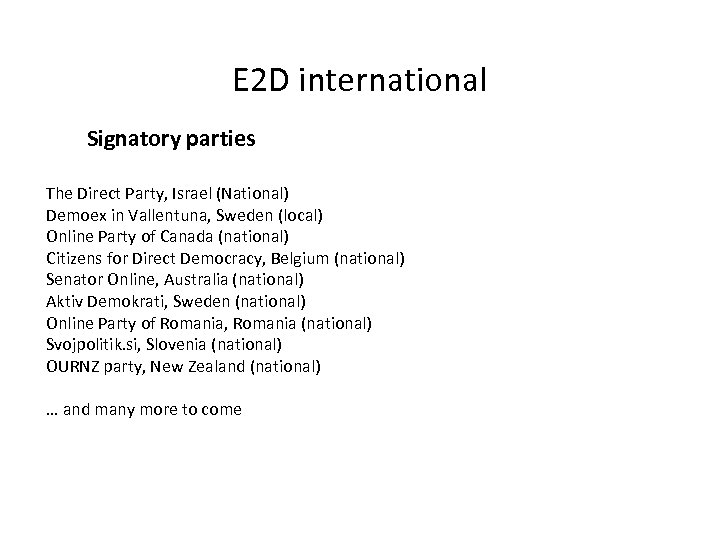
E 2 D international Signatory parties The Direct Party, Israel (National) Demoex in Vallentuna, Sweden (local) Online Party of Canada (national) Citizens for Direct Democracy, Belgium (national) Senator Online, Australia (national) Aktiv Demokrati, Sweden (national) Online Party of Romania, Romania (national) Svojpolitik. si, Slovenia (national) OURNZ party, New Zealand (national) … and many more to come
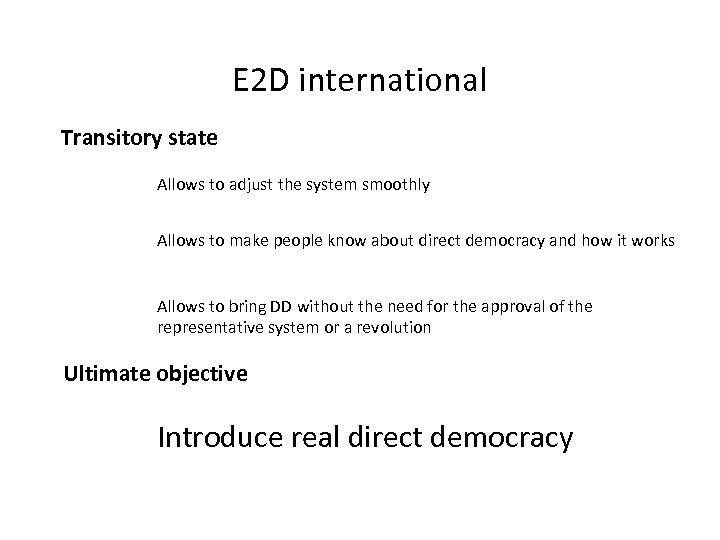
E 2 D international Transitory state Allows to adjust the system smoothly Allows to make people know about direct democracy and how it works Allows to bring DD without the need for the approval of the representative system or a revolution Ultimate objective Introduce real direct democracy
Questions to debate • Do you believe we need to keep some sort of representative system? Do we need politicians? • Is the trojan horse strategy (E 2 D) a viable approach? Which obstacles do you anticipate? • Would you propose another strategy to evolve to politics without politicians?
Скачать презентацию Politics without politicians ENA conference Freiburg August 2011
13660a0d59d1720209fa4502f5eb9e65.ppt