


 Скачать презентацию POLITICS IN THE GILDED AGE Origins of
df068b49c97a6cc9b316373af9910b42.ppt
- Количество слайдов: 61
 POLITICS IN THE GILDED AGE
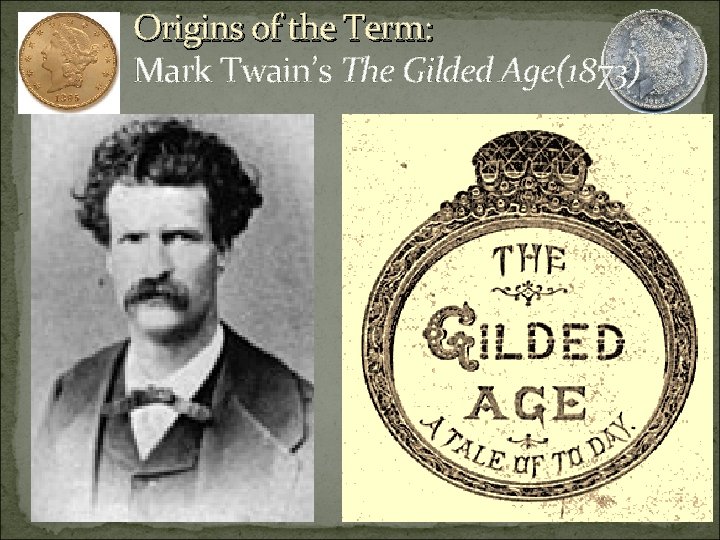 Origins of the Term: Mark Twain’s The Gilded Age(1873)
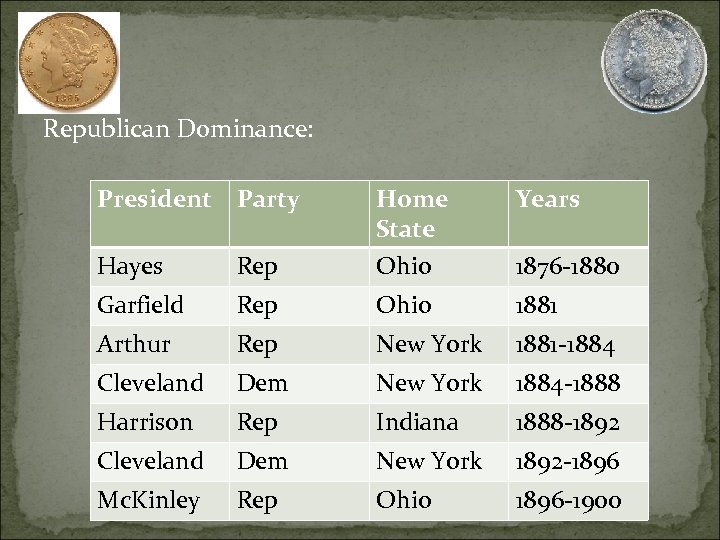 Republican Dominance: President Party Hayes Rep Home State Ohio Years Garfield Rep Ohio 1881 Arthur Rep New York 1881 -1884 Cleveland Dem New York 1884 -1888 Harrison Rep Indiana 1888 -1892 Cleveland Dem New York 1892 -1896 Mc. Kinley Rep Ohio 1896 -1900 1876 -1880
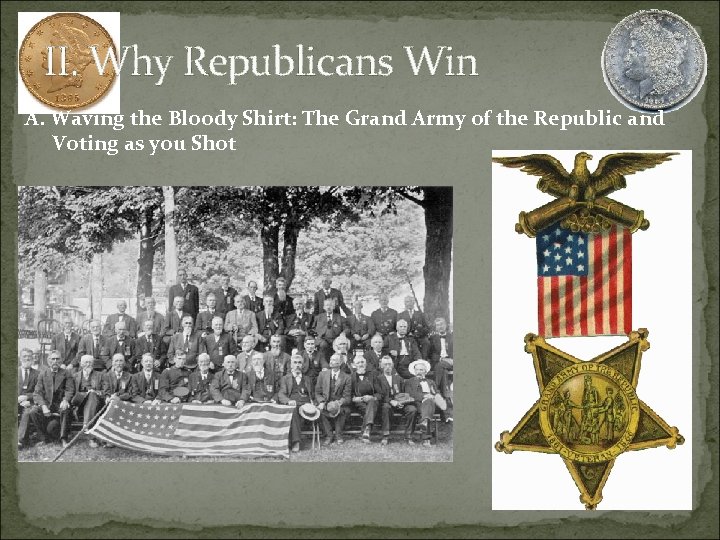 II. Why Republicans Win A. Waving the Bloody Shirt: The Grand Army of the Republic and Voting as you Shot
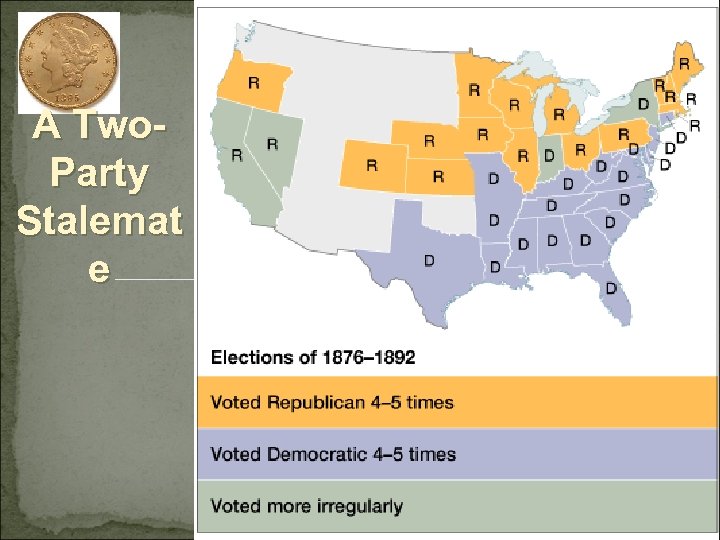 A Two. Party Stalemat e
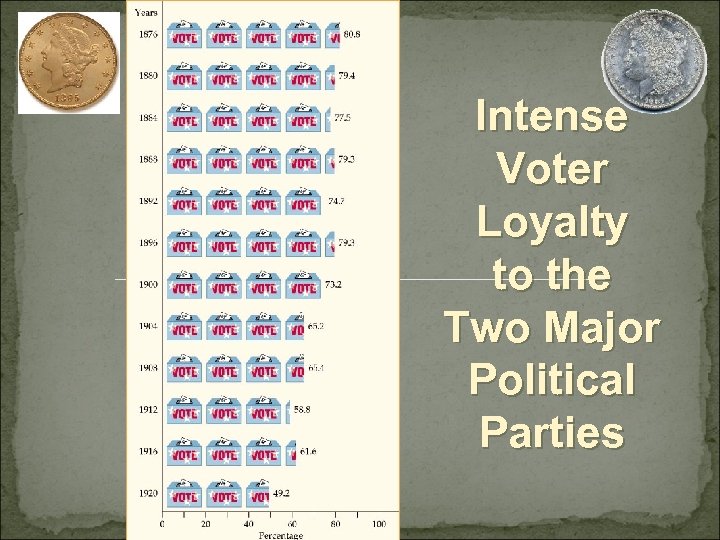 Intense Voter Loyalty to the Two Major Political Parties
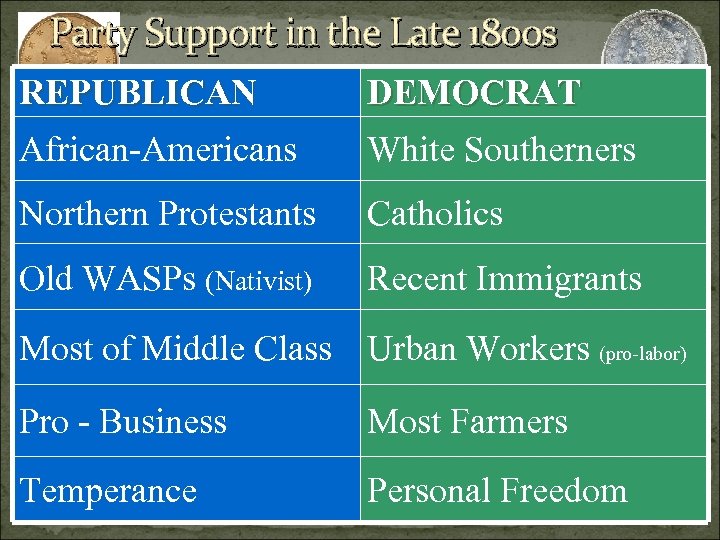 Party Support in the Late 1800 s REPUBLICAN DEMOCRAT African-Americans White Southerners Northern Protestants Catholics Old WASPs (Nativist) Recent Immigrants Most of Middle Class Urban Workers (pro-labor) Pro - Business Most Farmers Temperance Personal Freedom
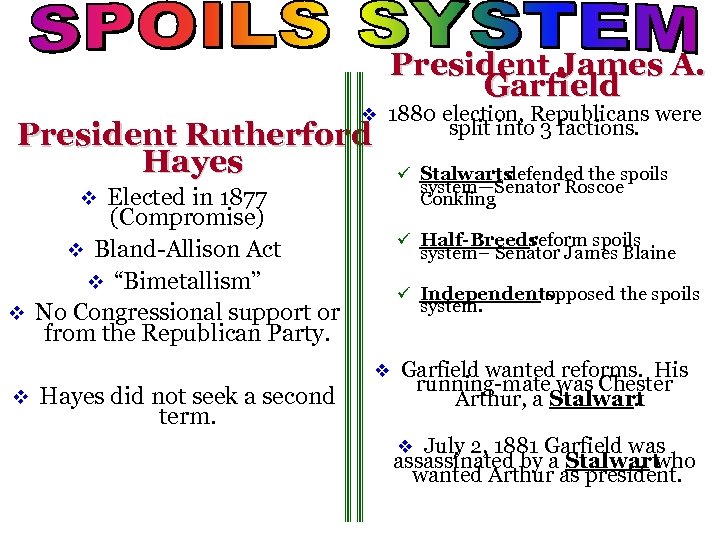 President James A. Garfield v President Rutherford Hayes 1880 election, Republicans were split into 3 factions. ü Stalwarts defended the spoils system—Senator Roscoe Conkling Elected in 1877 (Compromise) v Bland-Allison Act v “Bimetallism” v No Congressional support or from the Republican Party. v ü Half-Breeds reform spoils system– Senator James Blaine ü Independents opposed the spoils system. v v Hayes did not seek a second term. Garfield wanted reforms. His running-mate was Chester Arthur, a Stalwart. v July 2, 1881 Garfield was assassinated by a Stalwart who wanted Arthur as president.
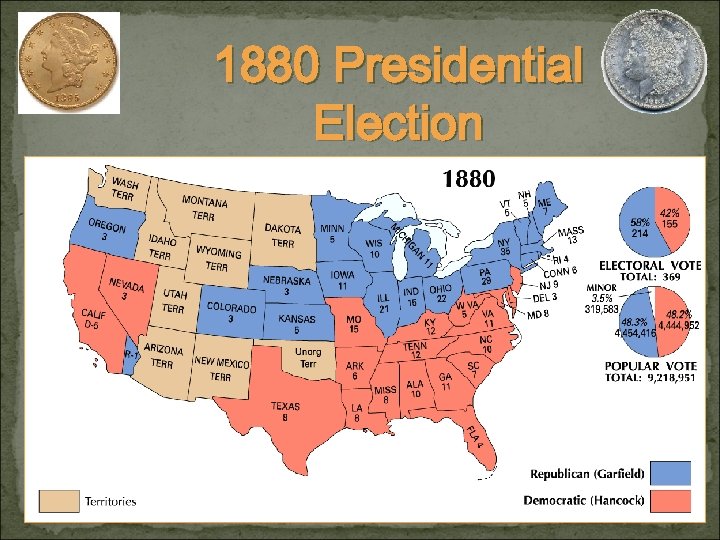 1880 Presidential Election
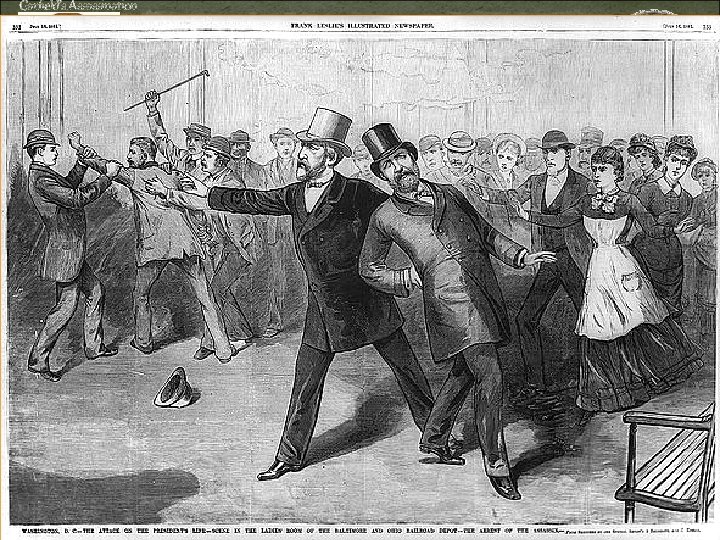 Garfield’s Assassination
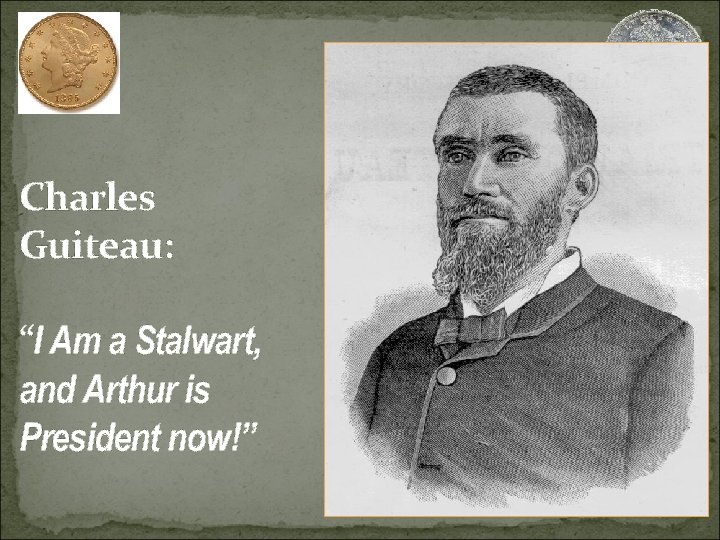 Charles Guiteau: “I Am a Stalwart, and Arthur is President now!”
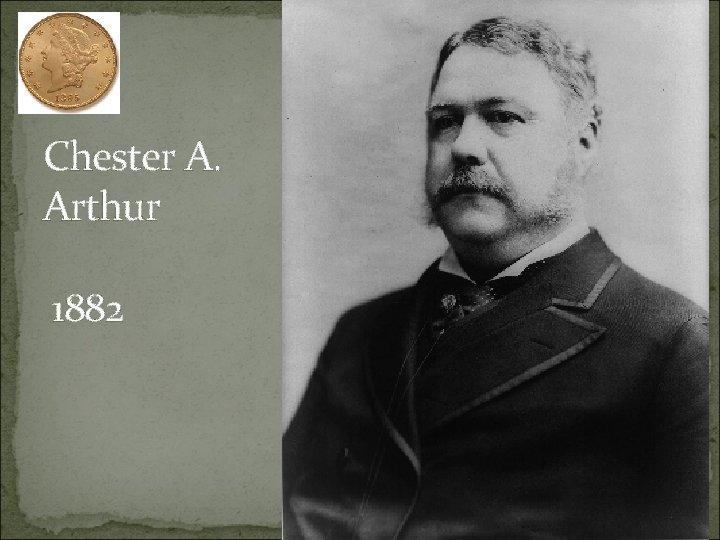 Chester A. Arthur 1882
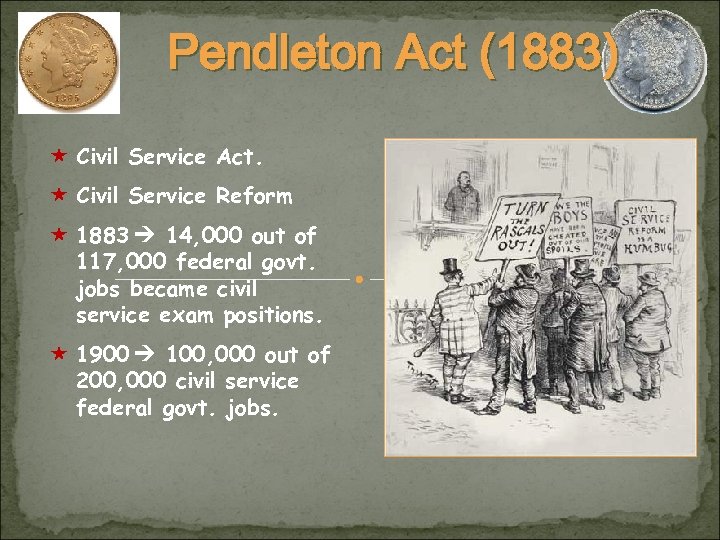 Pendleton Act (1883) « Civil Service Act. « Civil Service Reform « 1883 14, 000 out of 117, 000 federal govt. jobs became civil service exam positions. « 1900 100, 000 out of 200, 000 civil service federal govt. jobs.
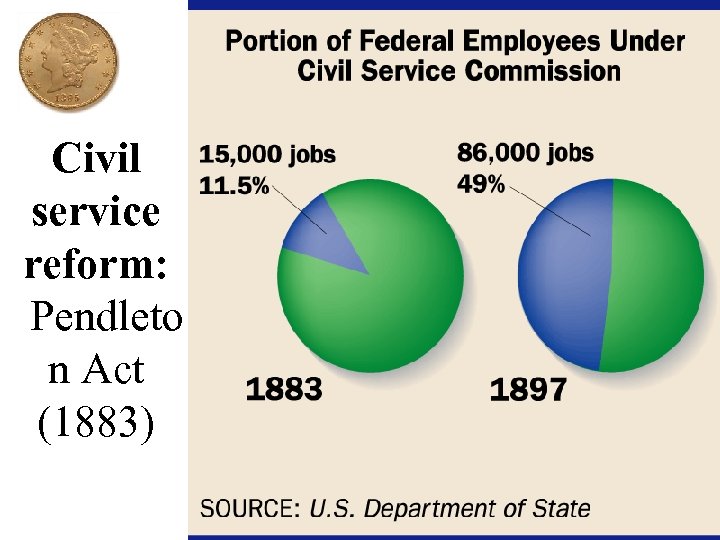 Civil service reform: Pendleto n Act (1883)
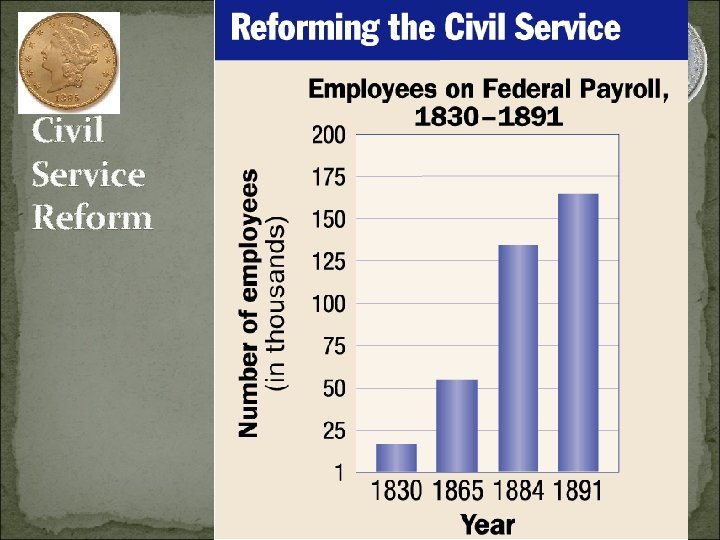 Civil Service Reform
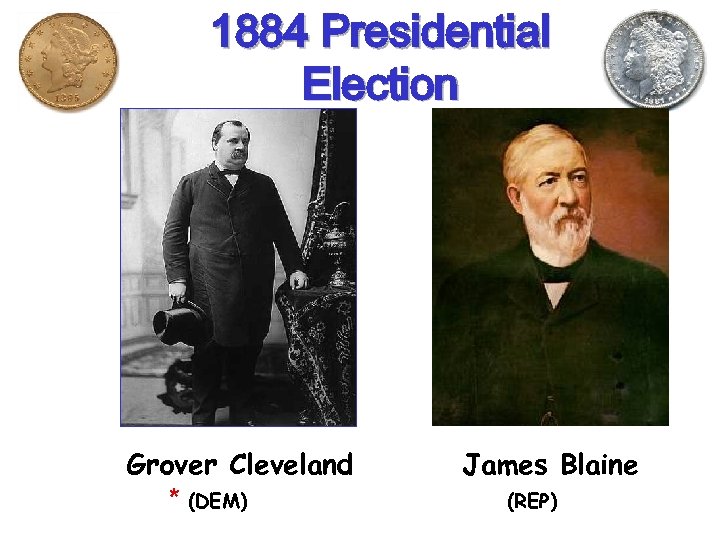 1884 Presidential Election Grover Cleveland * (DEM) James Blaine (REP)
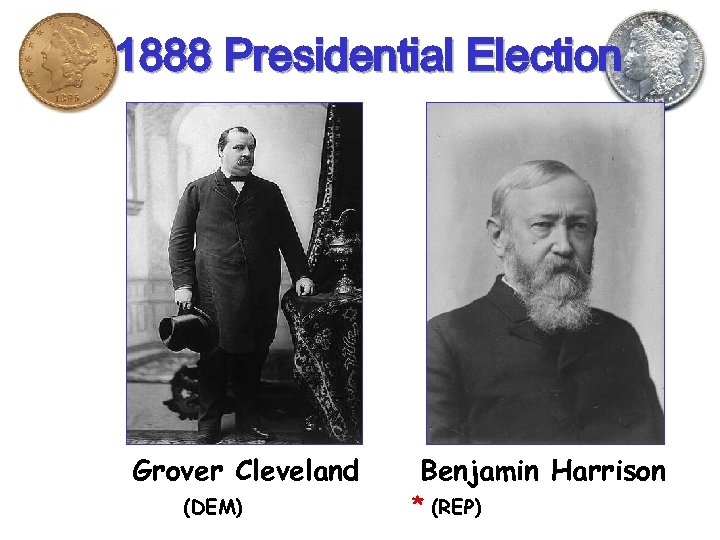 1888 Presidential Election Grover Cleveland (DEM) Benjamin Harrison * (REP)
 INTERSTATE COMMERCE COMMISSION – 1887 Investigate railroads

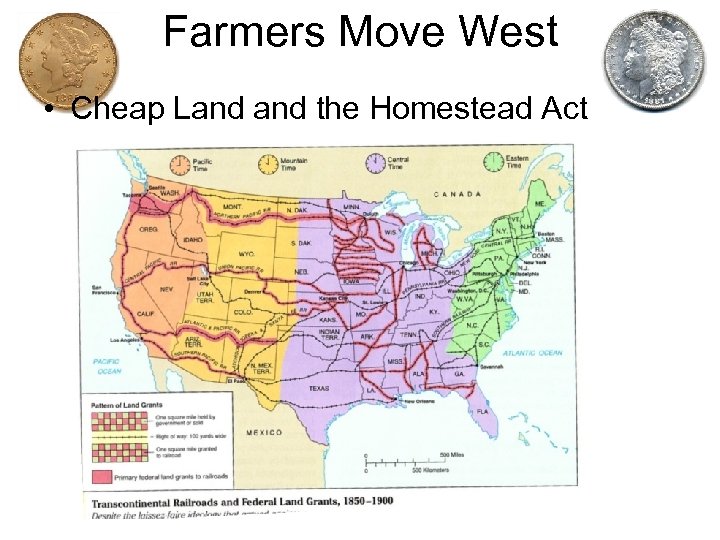 Farmers Move West • Cheap Land the Homestead Act
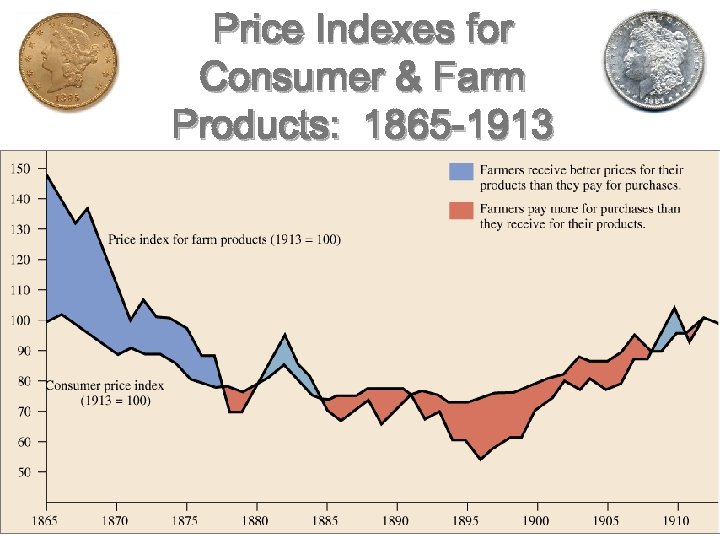 Price Indexes for Consumer & Farm Products: 1865 -1913
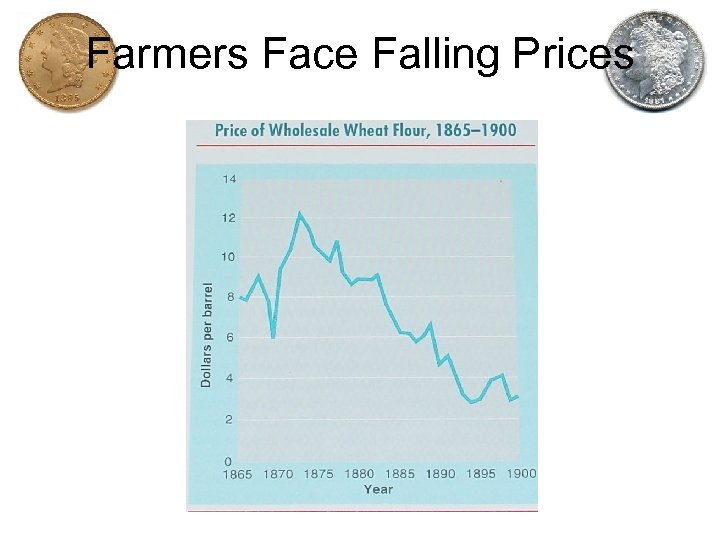 Farmers Face Falling Prices
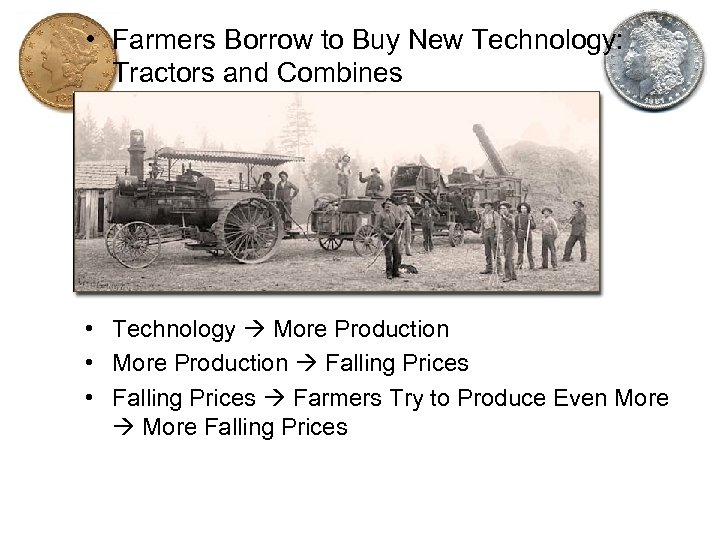 • Farmers Borrow to Buy New Technology: Tractors and Combines • Technology More Production • More Production Falling Prices • Falling Prices Farmers Try to Produce Even More Falling Prices
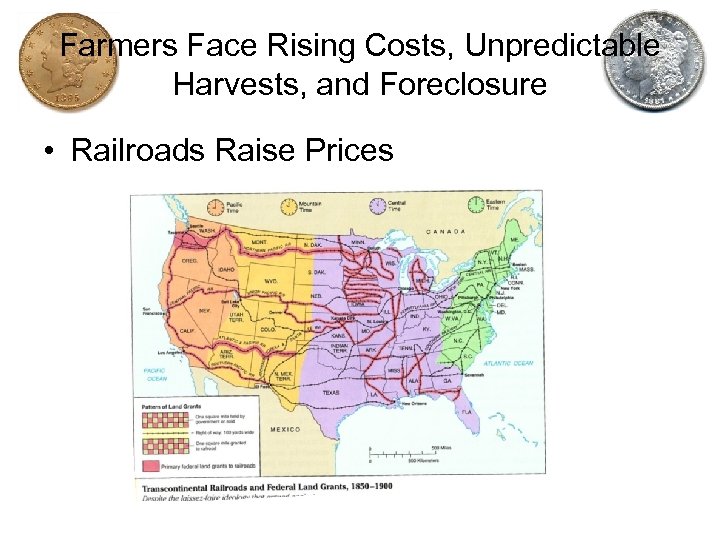 Farmers Face Rising Costs, Unpredictable Harvests, and Foreclosure • Railroads Raise Prices
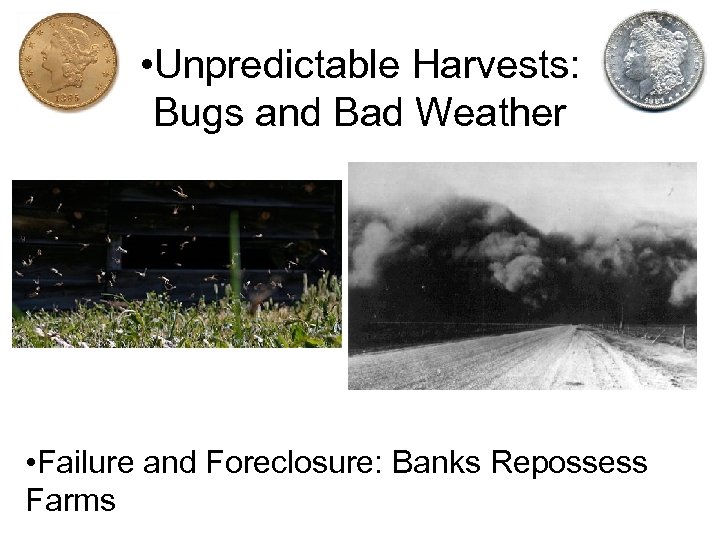 • Unpredictable Harvests: Bugs and Bad Weather • Failure and Foreclosure: Banks Repossess Farms
 II. Early Solutions Fail • The Granger Movement – Oliver H. Kelley – “Granger Laws” • Regulate Railroads – Educate Farmers – Greenback Party
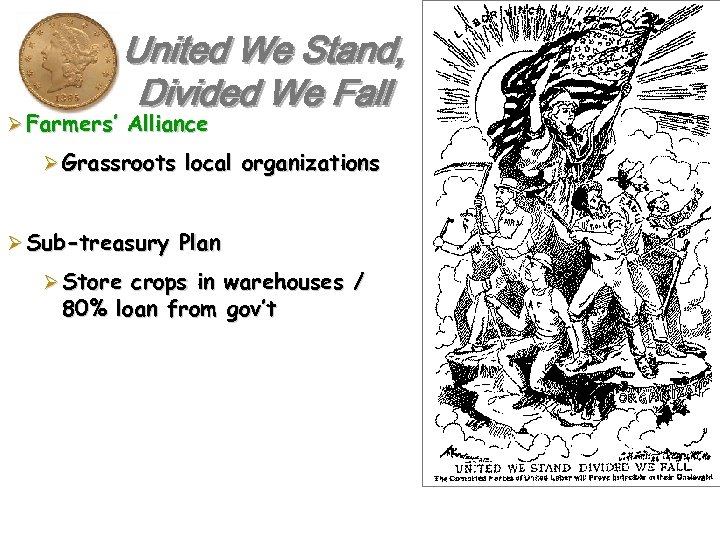 United We Stand, Divided We Fall Ø Farmers’ Alliance Ø Grassroots local organizations Ø Sub-treasury Plan Ø Store crops in warehouses / 80% loan from gov’t
 Omaha Platform of 1892 1. Unlimited coinage of silver 2. Govt. ownership of RRs 3. Sub-treasury Plan 4. Income Tax 5. 8 -hour work day for government employees.
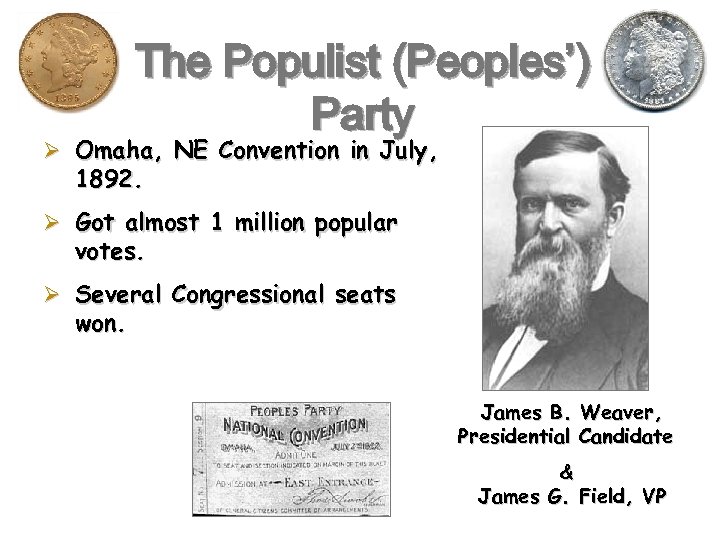 The Populist (Peoples’) Party Ø Omaha, NE Convention in July, 1892. Ø Got almost 1 million popular votes. Ø Several Congressional seats won. James B. Weaver, Presidential Candidate & James G. Field, VP
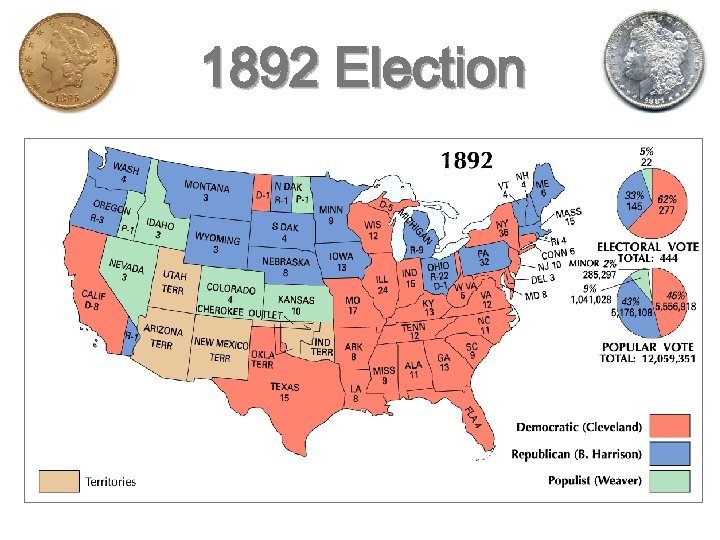 1892 Election

 Causes of the 1893 Panic Ø Began 10 days after Cleveland took office. 1. Several major corps. went bankrupt. § Over 16, 000 businesses disappeared. § Triggered a stock market crash. § Over-extended investments. 2. Bank failures followed causing a contraction of credit [nearly 500 banks closed]. 3. By 1895, unemployment reached 3 million. (20%) Ø Americans cried out for relief, but the Govt. continued its laissez faire policies!!
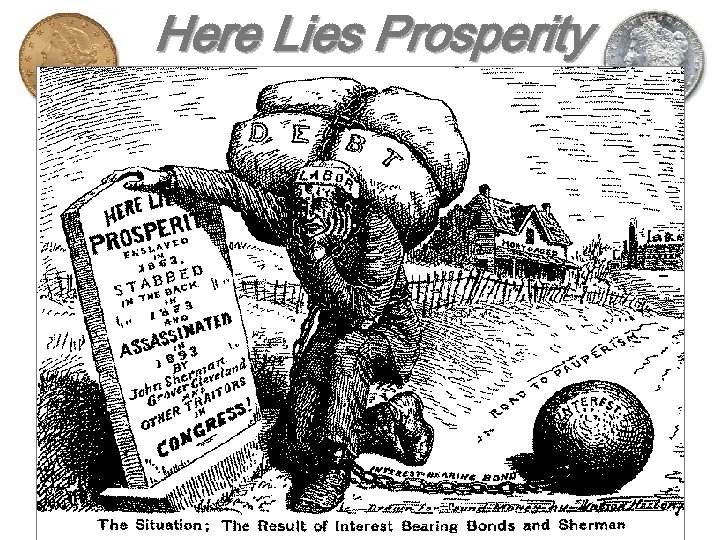 Here Lies Prosperity
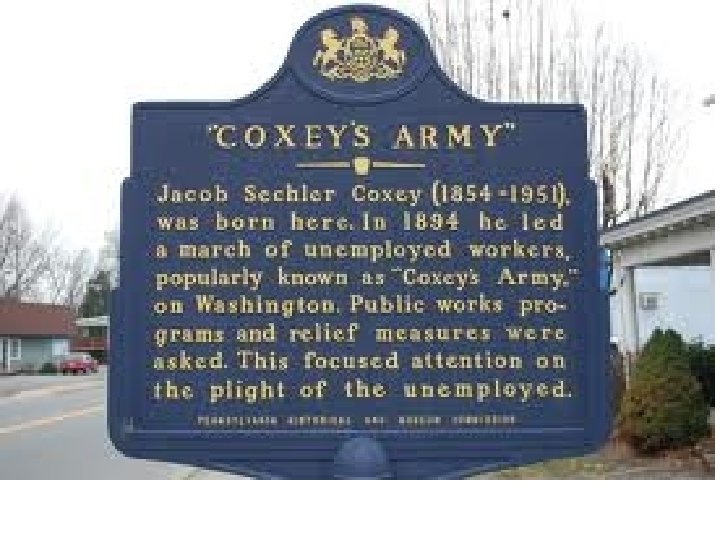
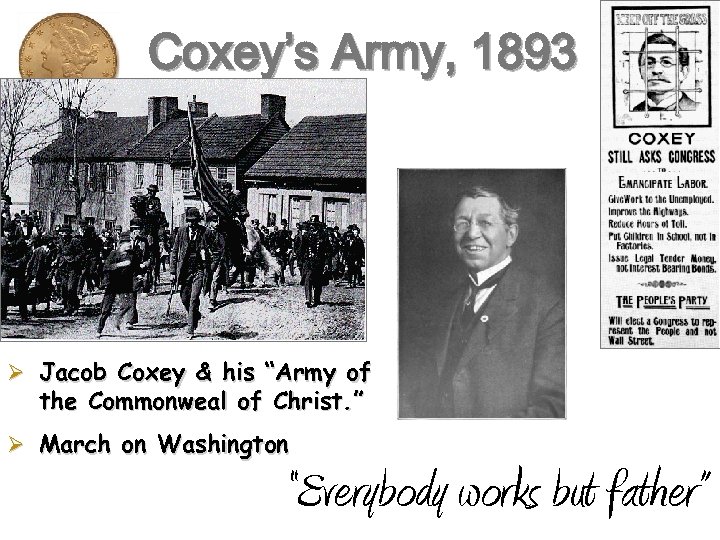 Coxey’s Army, 1893 Ø Jacob Coxey & his “Army of the Commonweal of Christ. ” Ø March on Washington “Everybody works but father”
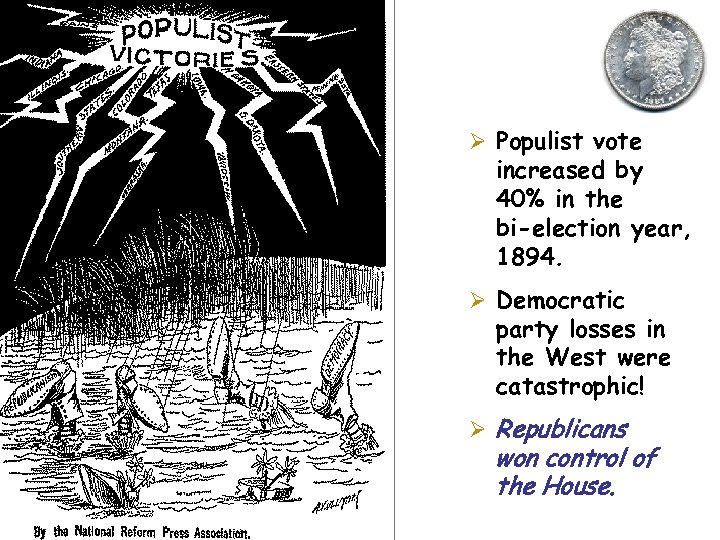 Ø Populist vote increased by 40% in the bi-election year, 1894. Ø Democratic party losses in the West were catastrophic! Ø Republicans won control of the House.
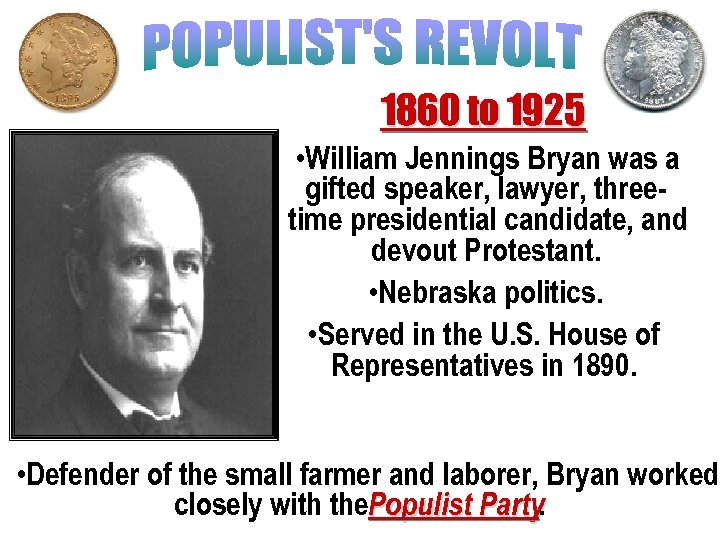 1860 to 1925 • William Jennings Bryan was a gifted speaker, lawyer, threetime presidential candidate, and devout Protestant. • Nebraska politics. • Served in the U. S. House of Representatives in 1890. • Defender of the small farmer and laborer, Bryan worked closely with the. Populist Party
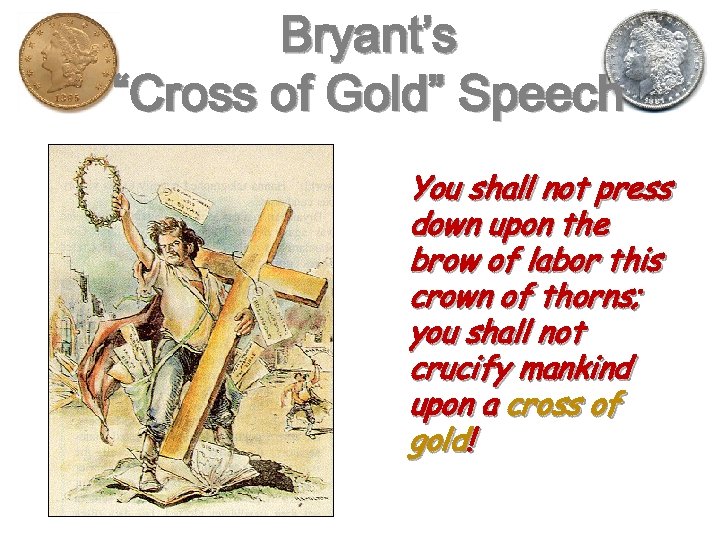 Bryant’s “Cross of Gold” Speech You shall not press down upon the brow of labor this crown of thorns; you shall not crucify mankind upon a cross of gold!
 • Argued the real” business men” were “ men farmers, agricultural workers, min and small town merchants.
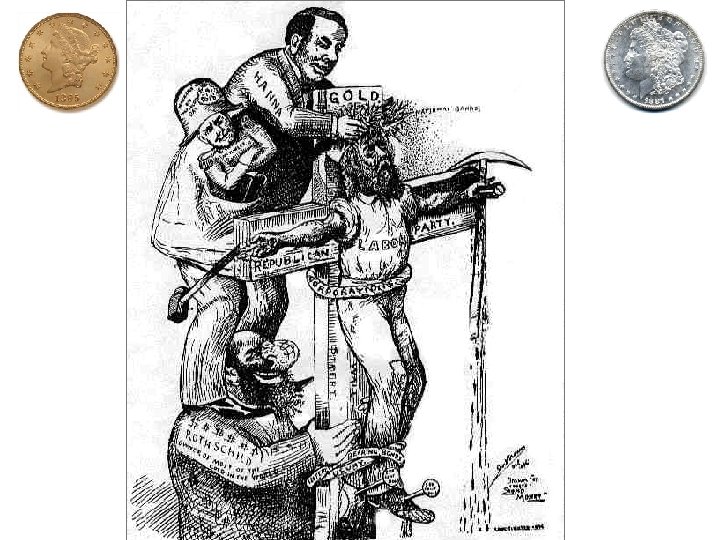
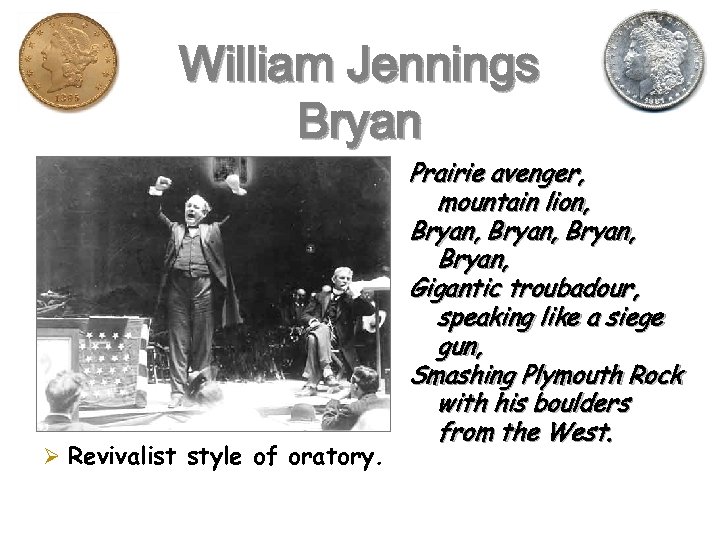 William Jennings Bryan Ø Revivalist style of oratory. Prairie avenger, mountain lion, Bryan, Gigantic troubadour, speaking like a siege gun, Smashing Plymouth Rock with his boulders from the West.
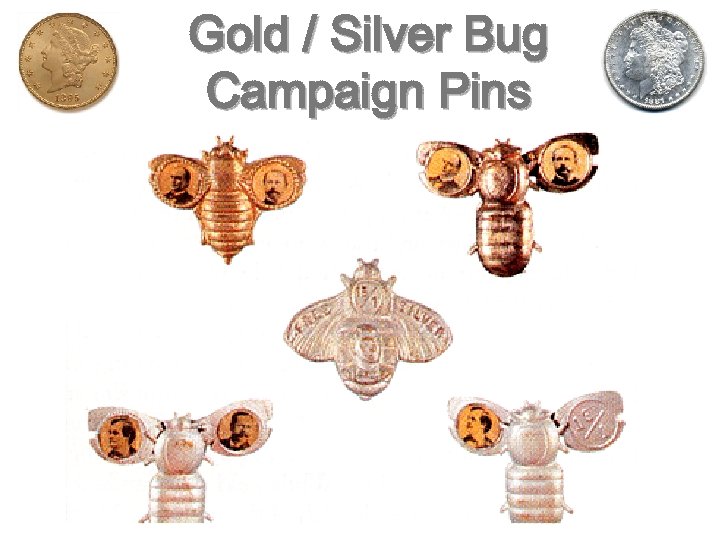 Gold / Silver Bug Campaign Pins
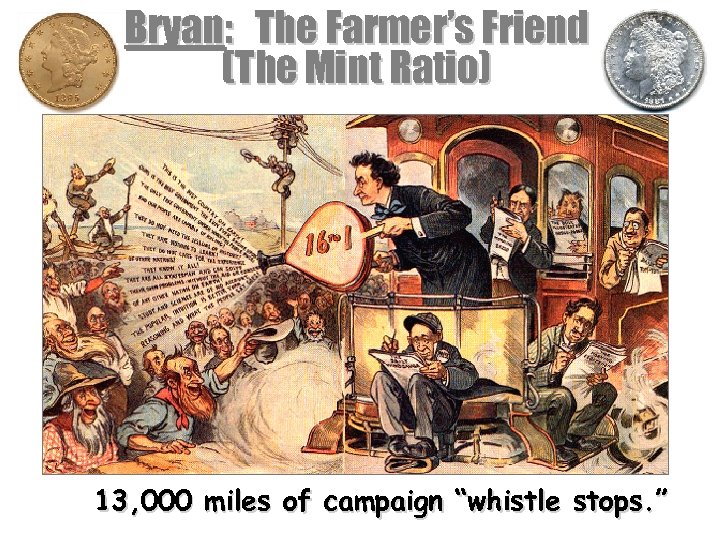 Bryan: The Farmer’s Friend (The Mint Ratio) 13, 000 miles of campaign “whistle stops. ”
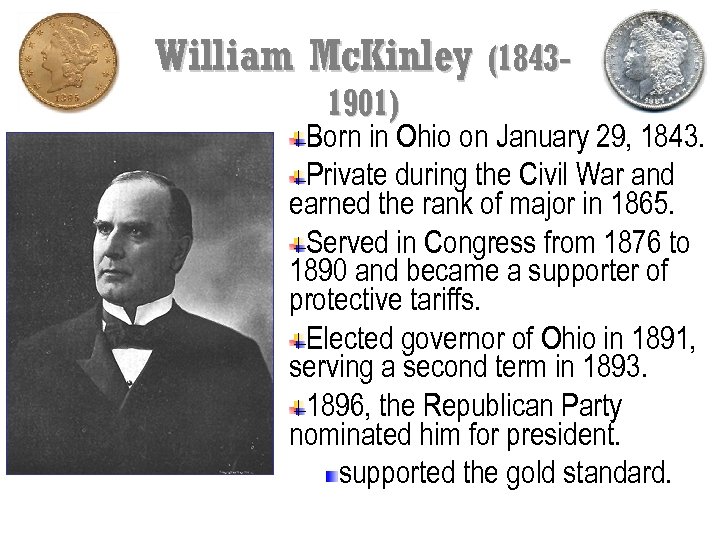 William Mc. Kinley (18431901) Born in Ohio on January 29, 1843. Private during the Civil War and earned the rank of major in 1865. Served in Congress from 1876 to 1890 and became a supporter of protective tariffs. Elected governor of Ohio in 1891, serving a second term in 1893. 1896, the Republican Party nominated him for president. supported the gold standard.
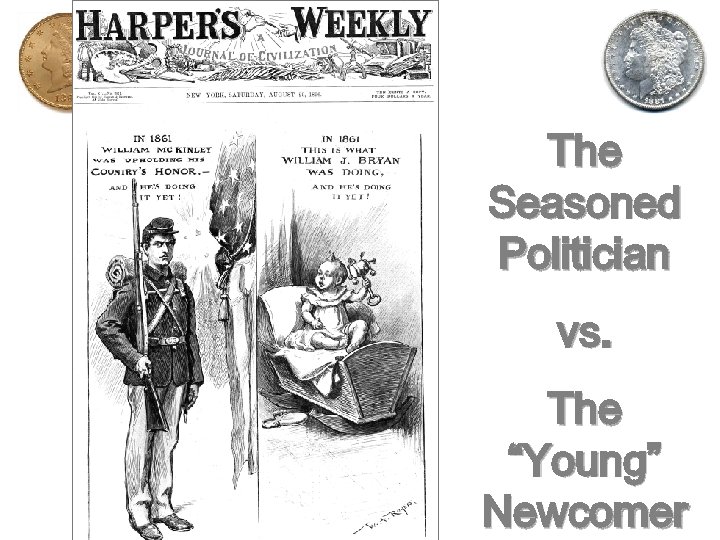 The Seasoned Politician vs. The “Young” Newcomer
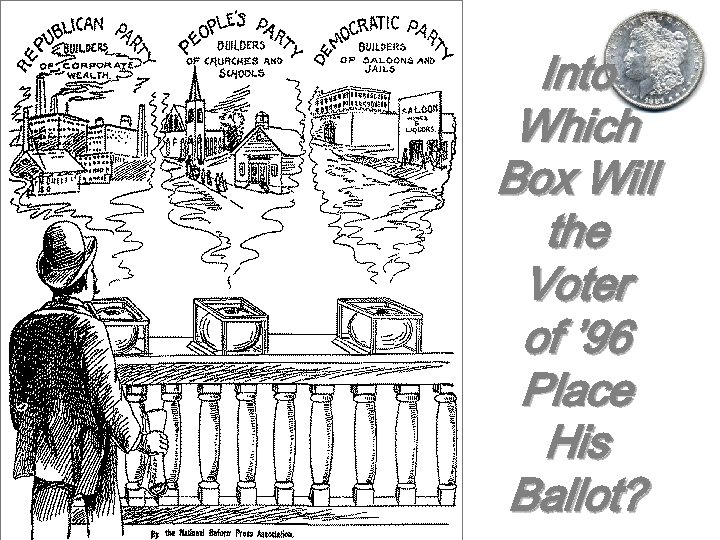 Into Which Box Will the Voter of ’ 96 Place His Ballot?
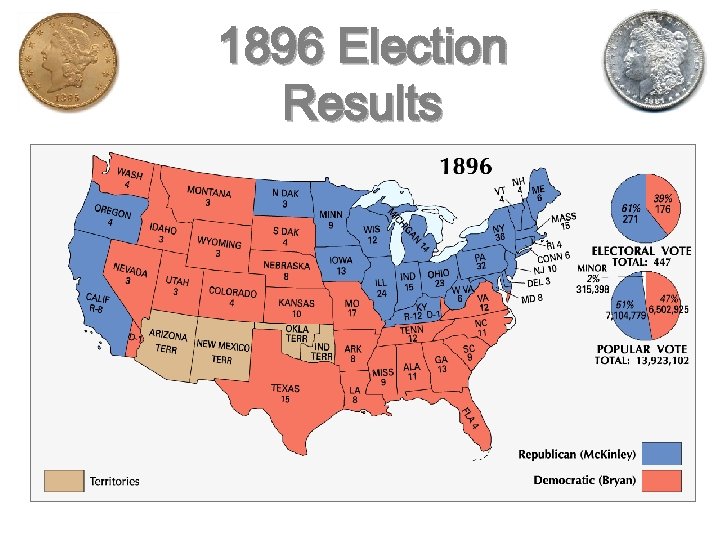 1896 Election Results
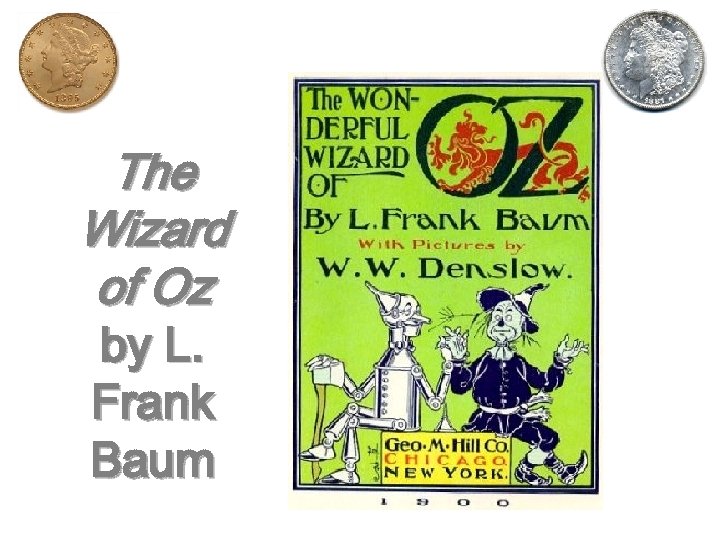 The Wizard of Oz by L. Frank Baum
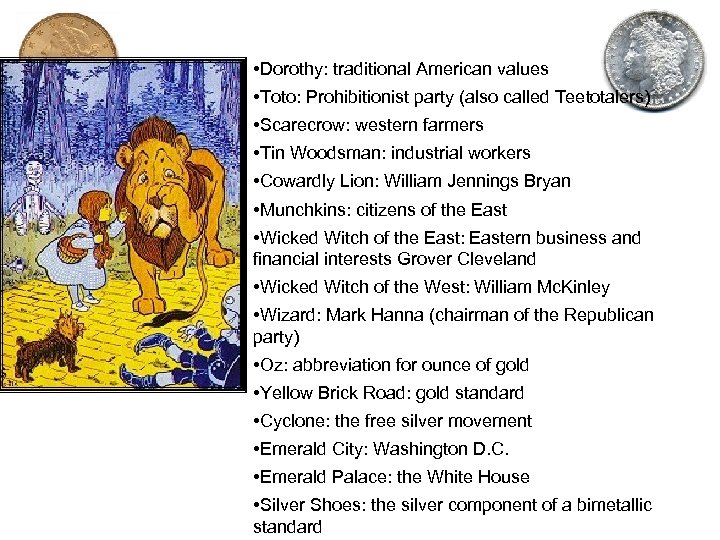 • Dorothy: traditional American values • Toto: Prohibitionist party (also called Teetotalers) • Scarecrow: western farmers • Tin Woodsman: industrial workers • Cowardly Lion: William Jennings Bryan • Munchkins: citizens of the East • Wicked Witch of the East: Eastern business and financial interests Grover Cleveland • Wicked Witch of the West: William Mc. Kinley • Wizard: Mark Hanna (chairman of the Republican party) • Oz: abbreviation for ounce of gold • Yellow Brick Road: gold standard • Cyclone: the free silver movement • Emerald City: Washington D. C. • Emerald Palace: the White House • Silver Shoes: the silver component of a bimetallic standard
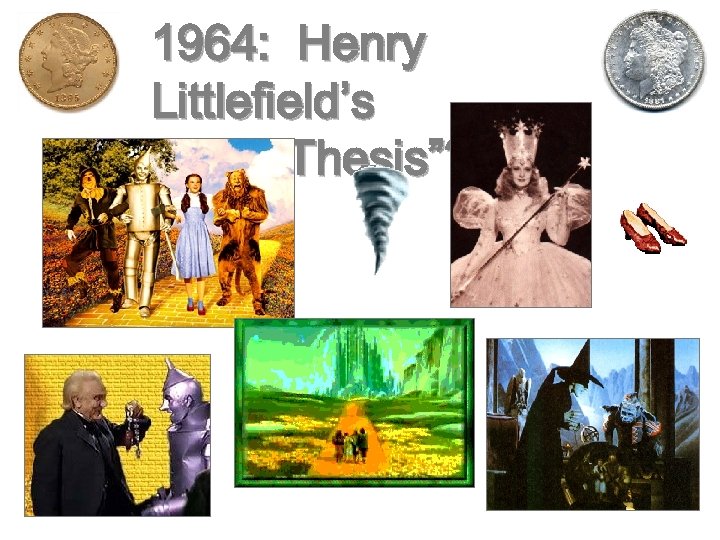 1964: Henry Littlefield’s “Thesis”?
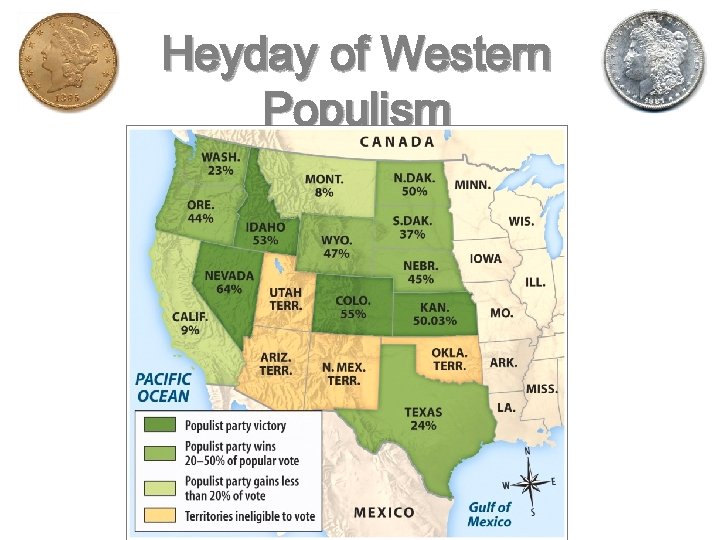 Heyday of Western Populism
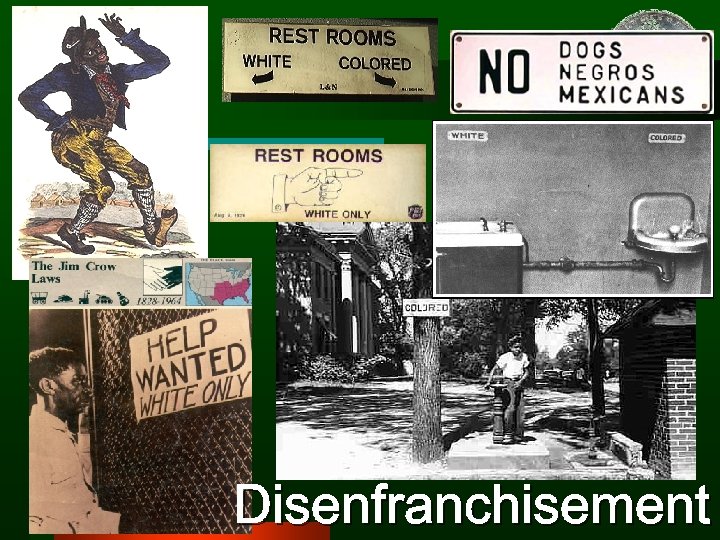 Disenfranchisement
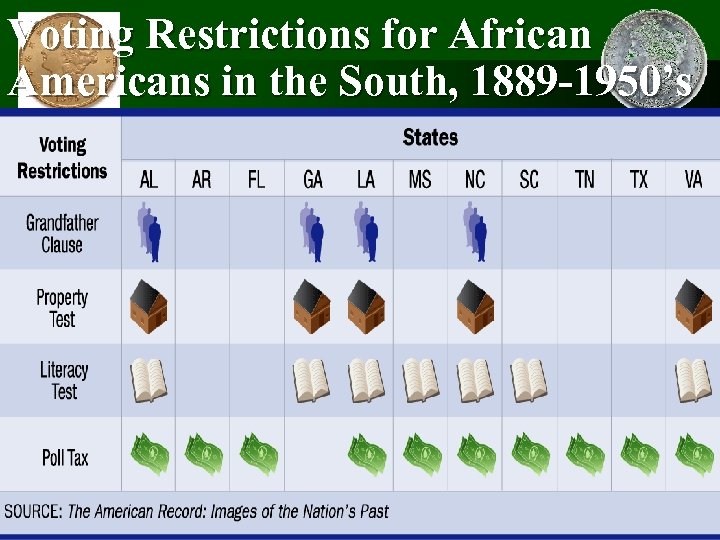 Voting Restrictions for African Americans in the South, 1889 -1950’s
 Plessy v. Ferguson The Supreme Court ruled segregation was legal in Plessy v. Ferguson. l They said that segregation was fair as long as “separate-but-equal” facilities were provided for African Americans. l In practice, the African American facilities were usually “separate-and-unequal. ” l It would take until the 1965, 100 years after the Civil War ended, for Jim Crow laws to be outlawed and blacks to finally realize legal equality in America. l
 ESSENTIAL QUESTION Booker T. Washington and W. E. B. Du Bois offered different strategies for dealing with the problems of poverty and discri-mination faced by black Americans at the end of the nineteenth and beginning of the twentieth centuries. How appropriate were each of these strategies (considering the context in which each was developed)?
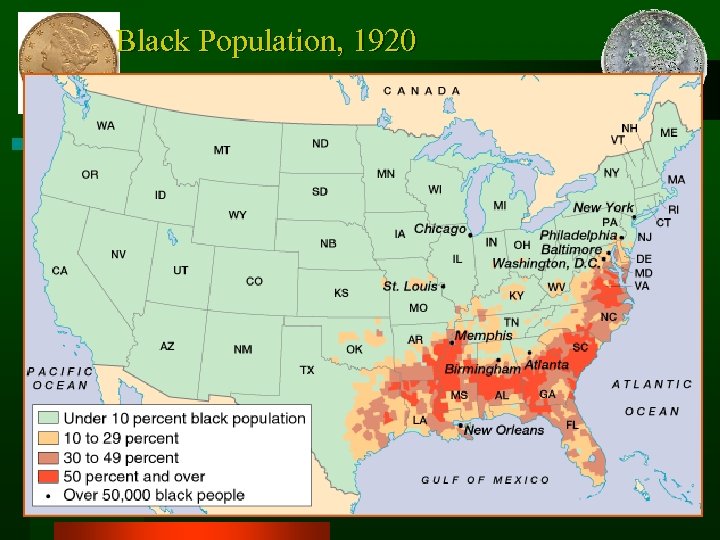 Black Population, 1920
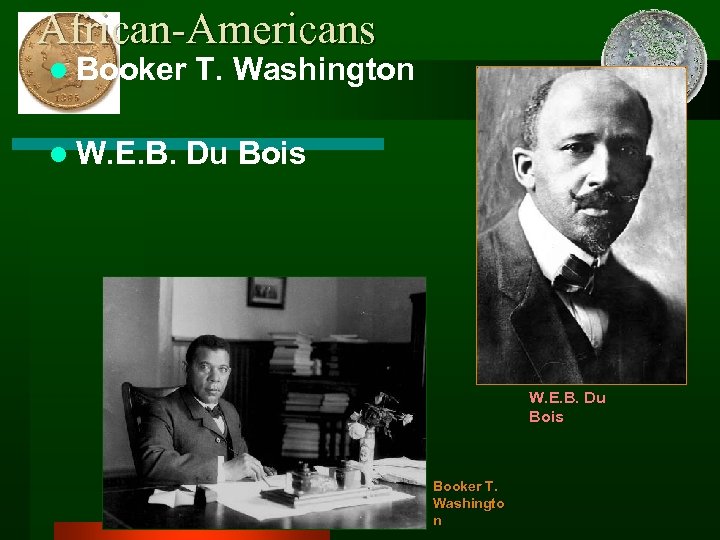 African-Americans l Booker l W. E. B. T. Washington Du Bois W. E. B. Du Bois Booker T. Washingto n
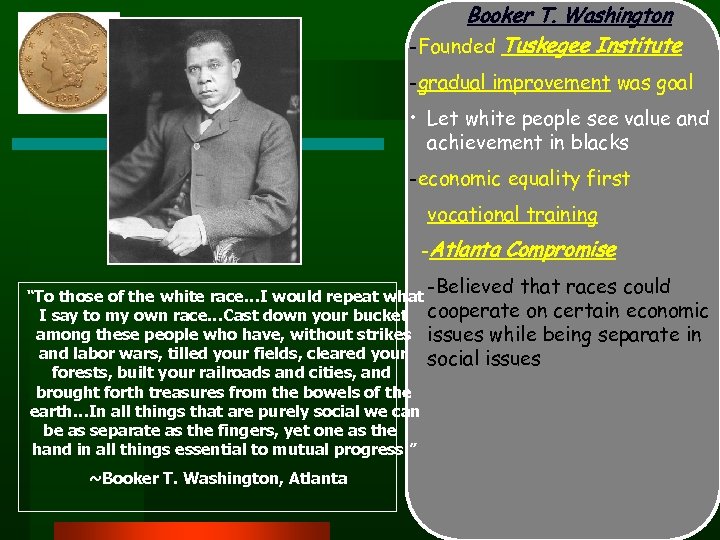 Booker T. Washington -Founded Tuskegee Institute -gradual improvement was goal • Let white people see value and achievement in blacks -economic equality first vocational training -Atlanta Compromise -Believed that races could “To those of the white race…I would repeat what I say to my own race…Cast down your bucket cooperate on certain economic among these people who have, without strikes issues while being separate in and labor wars, tilled your fields, cleared your social issues forests, built your railroads and cities, and brought forth treasures from the bowels of the earth…In all things that are purely social we can be as separate as the fingers, yet one as the hand in all things essential to mutual progress. ” ~Booker T. Washington, Atlanta
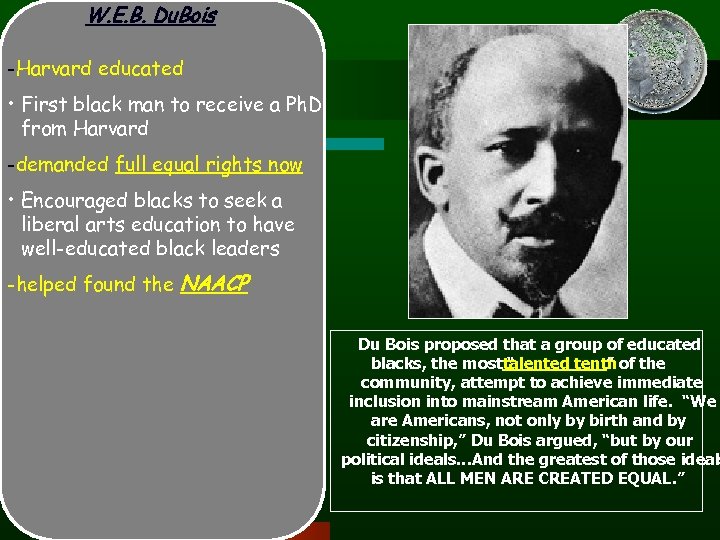 W. E. B. Du. Bois -Harvard educated • First black man to receive a Ph. D from Harvard -demanded full equal rights now • Encouraged blacks to seek a liberal arts education to have well-educated black leaders -helped found the NAACP Du Bois proposed that a group of educated blacks, the mosttalented tenth of the “ ” community, attempt to achieve immediate inclusion into mainstream American life. “We are Americans, not only by birth and by citizenship, ” Du Bois argued, “but by our political ideals…And the greatest of those ideals is that ALL MEN ARE CREATED EQUAL. ”