


 Скачать презентацию Politics in the Gilded Age Local Politics
6fa6ab269181ce615d48ae7819249e7e.ppt
- Количество слайдов: 23
 Politics in the Gilded Age
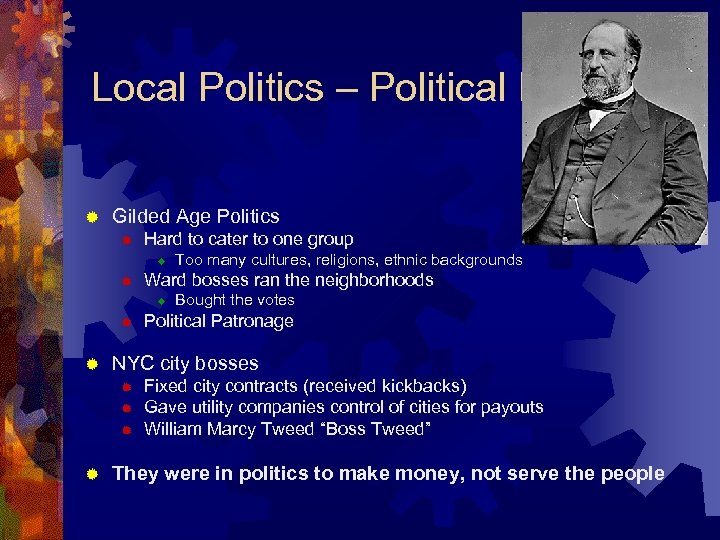 Local Politics – Political Machines ® Gilded Age Politics ® Hard to cater to one group ® ® Ward bosses ran the neighborhoods ® ® ® Bought the votes Political Patronage NYC city bosses ® ® Too many cultures, religions, ethnic backgrounds Fixed city contracts (received kickbacks) Gave utility companies control of cities for payouts William Marcy Tweed “Boss Tweed” They were in politics to make money, not serve the people
 Political Hollowness ® Political ideology regarding industry ® ® ® Style over substance in elections ® ® ® Popular notions of laissez-faire economics and “Social Darwinism” Little enforcement of antitrust laws ® United States v. E. C. Knight Co. - 1894 “wave the bloody shirt” Campaigns were shows – bands, fireworks, free beer Voter fraud ® ® Vote early and often Dead men casting votes
 Presidents of the Gilded Age ® Ulysses S Grant: 1869 -1877 - Republican ® Rutherford B. Hayes: 1877 -1881 - Rep ® James Garfield: 1881 -1882 - Rep ® Chester Arthur: 1882 -1885 -Rep ® Grover Cleveland: 1885 -1889 - Democrat ® Benjamin Harrison: 1889 -1893 - Rep ® Grover Cleveland: 1893 -1897 - Dem ® William Mc. Kinley: 1897 -1901 - Rep
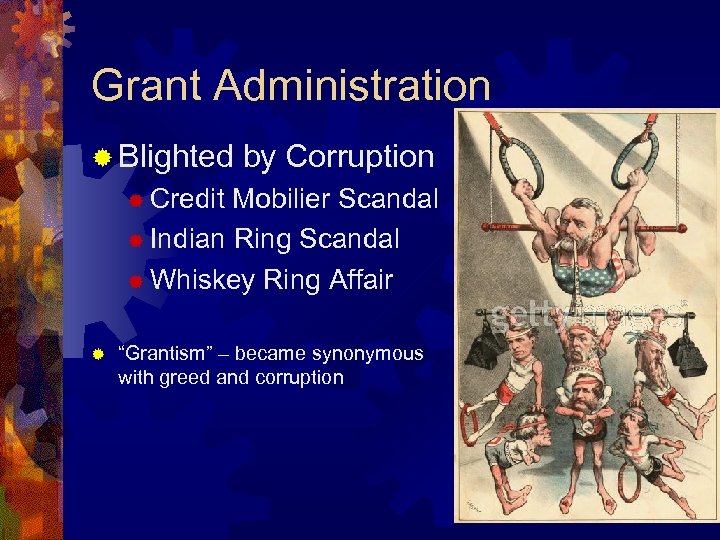 Grant Administration ® Blighted by Corruption ® Credit Mobilier Scandal ® Indian Ring Scandal ® Whiskey Ring Affair ® “Grantism” – became synonymous with greed and corruption
 Republicans Divided ® Stalwarts (Conservatives) ® ® ® Typically Radical republicans Supported Grant’s reelection Opposed Hayes and his troop withdrawal from the South Favored protective tariffs Favored political patronage Half-Breeds (Moderates) ® ® ® Supported Hayes’ lenient treatment of South Favored revenue tariffs only Favored civil service reform (remove political patronage)
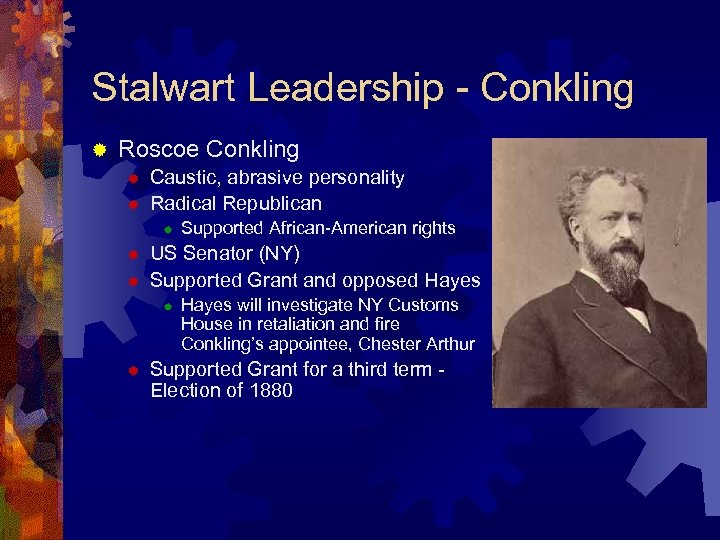 Stalwart Leadership - Conkling ® Roscoe Conkling ® ® Caustic, abrasive personality Radical Republican ® ® ® US Senator (NY) Supported Grant and opposed Hayes ® ® Supported African-American rights Hayes will investigate NY Customs House in retaliation and fire Conkling’s appointee, Chester Arthur Supported Grant for a third term Election of 1880
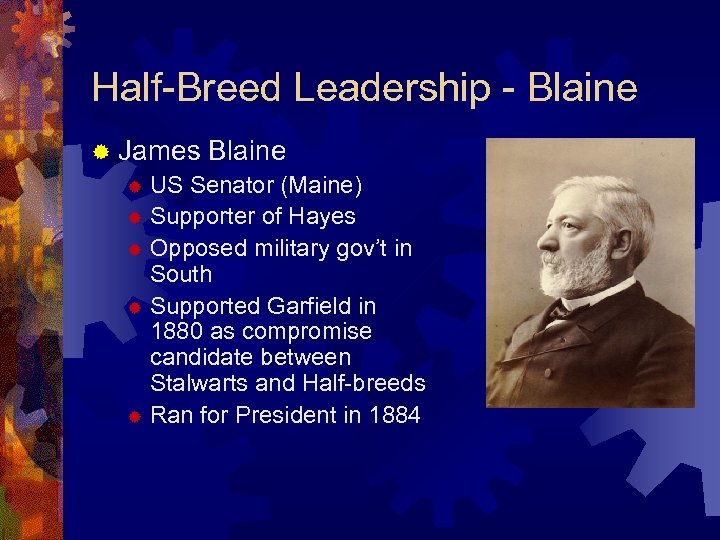 Half-Breed Leadership - Blaine ® James Blaine ® US Senator (Maine) ® Supporter of Hayes ® Opposed military gov’t in South ® Supported Garfield in 1880 as compromise candidate between Stalwarts and Half-breeds ® Ran for President in 1884
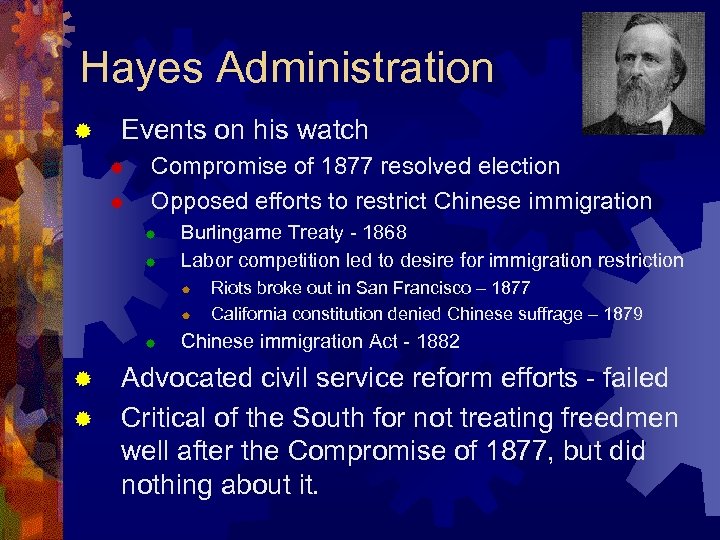 Hayes Administration ® Events on his watch ® ® Compromise of 1877 resolved election Opposed efforts to restrict Chinese immigration ® ® Burlingame Treaty - 1868 Labor competition led to desire for immigration restriction ® ® ® Riots broke out in San Francisco – 1877 California constitution denied Chinese suffrage – 1879 Chinese immigration Act - 1882 Advocated civil service reform efforts - failed ® Critical of the South for not treating freedmen well after the Compromise of 1877, but did nothing about it. ®
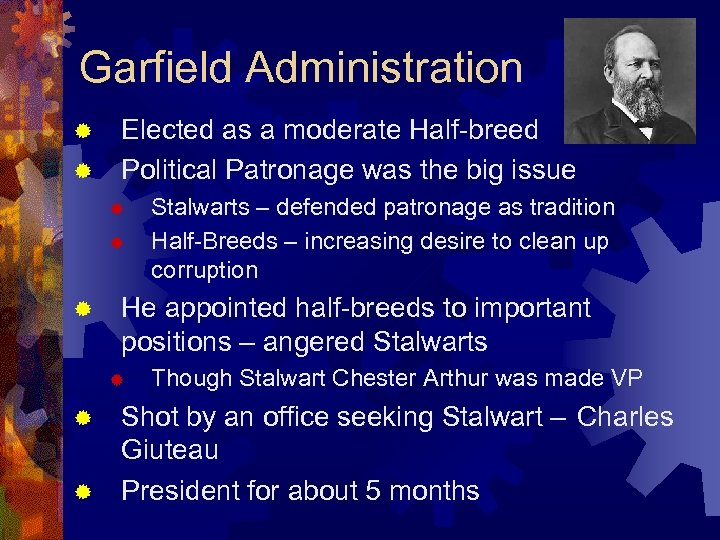 Garfield Administration Elected as a moderate Half-breed ® Political Patronage was the big issue ® ® Stalwarts – defended patronage as tradition Half-Breeds – increasing desire to clean up corruption He appointed half-breeds to important positions – angered Stalwarts ® Though Stalwart Chester Arthur was made VP Shot by an office seeking Stalwart – Charles Giuteau ® President for about 5 months ®
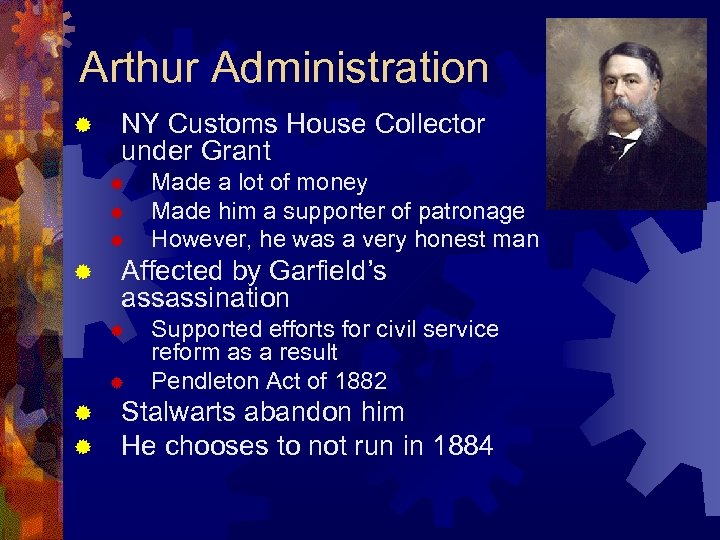 Arthur Administration ® NY Customs House Collector under Grant ® ® Affected by Garfield’s assassination ® ® Made a lot of money Made him a supporter of patronage However, he was a very honest man Supported efforts for civil service reform as a result Pendleton Act of 1882 Stalwarts abandon him He chooses to not run in 1884
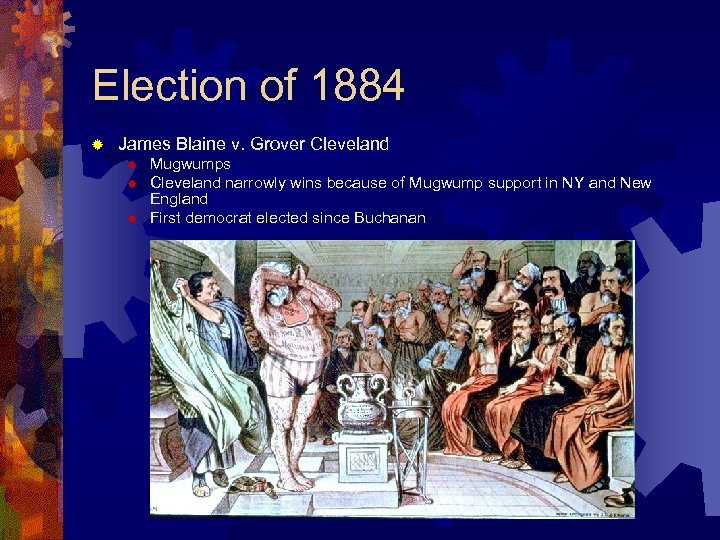 Election of 1884 ® James Blaine v. Grover Cleveland ® ® ® Mugwumps Cleveland narrowly wins because of Mugwump support in NY and New England First democrat elected since Buchanan
 Cleveland Administration Did not support civil service reform ® Opposed government economic assistance ® ® ® Vetoed legislation to provide seed to farmers in drought year Vetoed Civil War pension bills ® ® One provided benefits to vets who were disabled after the war Challenged the high protective tariff Forced railroad to return 81 million acres in land grants Signed into law… ® ® Interstate Commerce Act (1887) Dawes Act
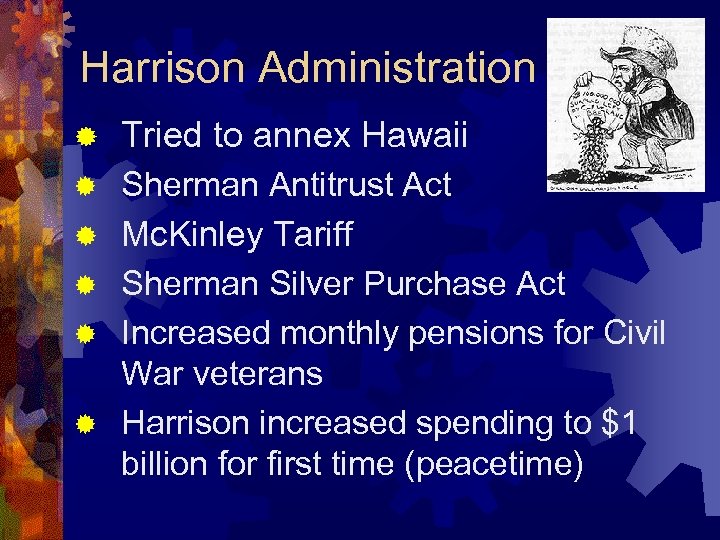 Harrison Administration ® Tried to annex Hawaii ® Sherman Antitrust Act Mc. Kinley Tariff Sherman Silver Purchase Act Increased monthly pensions for Civil War veterans Harrison increased spending to $1 billion for first time (peacetime) ® ®
 Cleveland Returns ® Panic of 1893 ® ® Cleveland’s Reaction ® ® ® Started with railroad bankruptcy, investors pulled their money Banks and railroads went bankrupt Unemployment rate reached 20% Don’t do much – market forces will fix themselves Repeal Sherman Silver Purchase Act Wilson-Gorman Tariff
 Cleveland (cont) ® Alienates ® Coxey’s the people Army - 1894 ® Pullman Strike – 1894
 Rural Politics in the Gilded Age
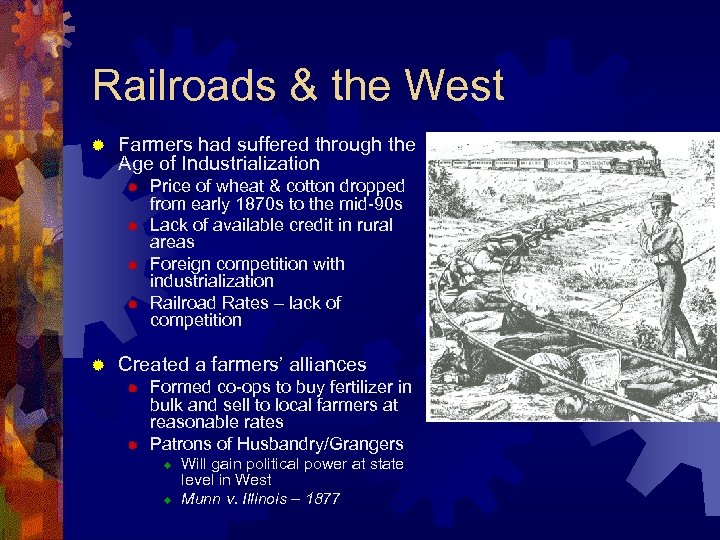 Railroads & the West ® Farmers had suffered through the Age of Industrialization ® ® ® Price of wheat & cotton dropped from early 1870 s to the mid-90 s Lack of available credit in rural areas Foreign competition with industrialization Railroad Rates – lack of competition Created a farmers’ alliances ® ® Formed co-ops to buy fertilizer in bulk and sell to local farmers at reasonable rates Patrons of Husbandry/Grangers ® ® Will gain political power at state level in West Munn v. Illinois – 1877
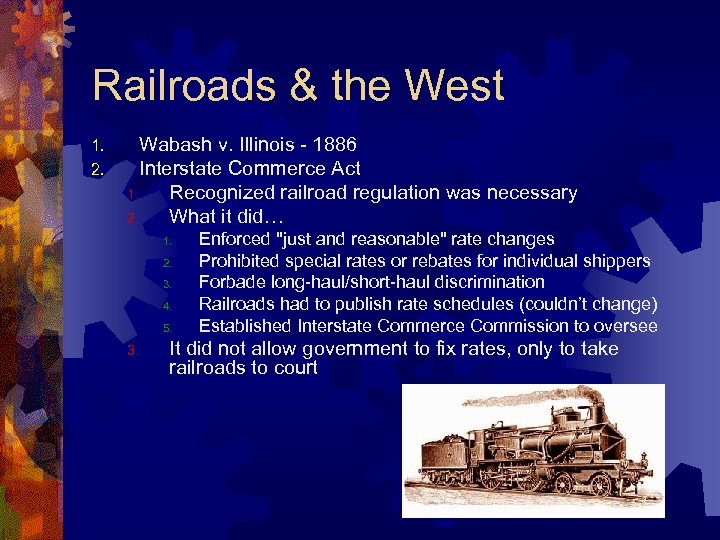 Railroads & the West 1. 2. Wabash v. Illinois - 1886 Interstate Commerce Act 1. Recognized railroad regulation was necessary 2. What it did… 1. 2. 3. 4. 5. 3. Enforced "just and reasonable" rate changes Prohibited special rates or rebates for individual shippers Forbade long-haul/short-haul discrimination Railroads had to publish rate schedules (couldn’t change) Established Interstate Commerce Commission to oversee It did not allow government to fix rates, only to take railroads to court
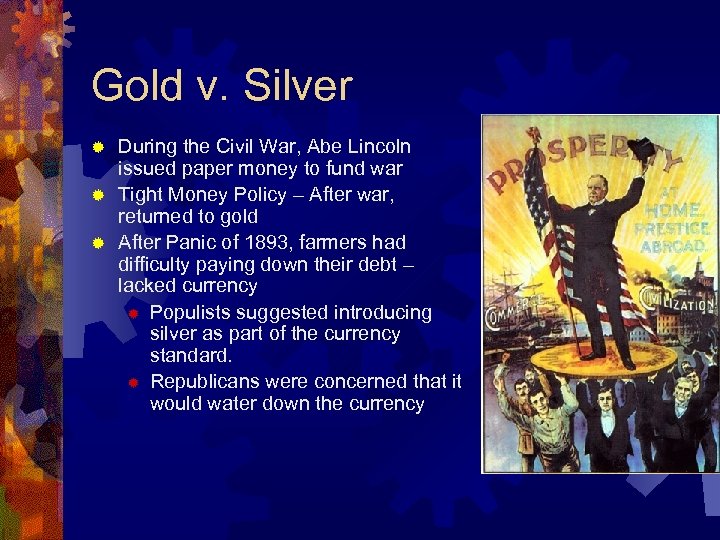 Gold v. Silver During the Civil War, Abe Lincoln issued paper money to fund war ® Tight Money Policy – After war, returned to gold ® After Panic of 1893, farmers had difficulty paying down their debt – lacked currency ® Populists suggested introducing silver as part of the currency standard. ® Republicans were concerned that it would water down the currency ®
 Populist Party ® Became ® Civil a national farmers’ movement War resentments hurt alliance ® West was most successful ® Farmers unite with labor Knights of Labor in 1892 to form the Populist Party
 Populist Platform – Omaha Platform ® Graduated Income tax ® National ownership of railroads, telegraph, and telephones ® Create credit with farmers ® To combat deflation: coin silver & increase money supply ® Popular election of senators
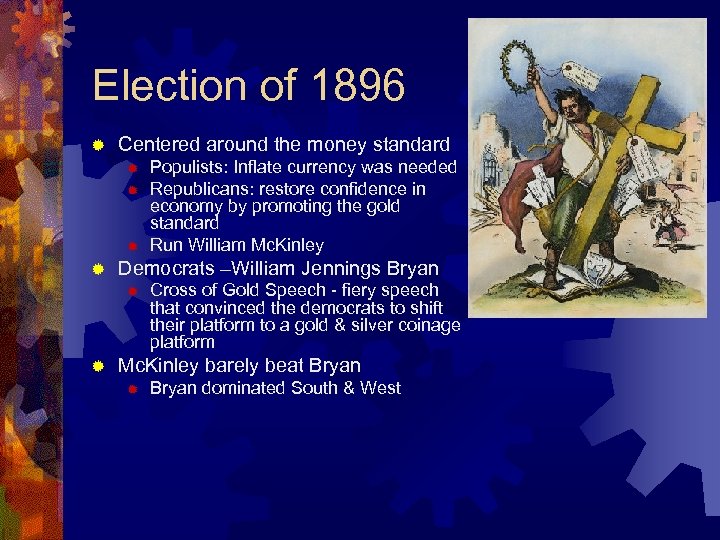 Election of 1896 ® Centered around the money standard ® ® Democrats –William Jennings Bryan ® ® Populists: Inflate currency was needed Republicans: restore confidence in economy by promoting the gold standard Run William Mc. Kinley Cross of Gold Speech - fiery speech that convinced the democrats to shift their platform to a gold & silver coinage platform Mc. Kinley barely beat Bryan ® Bryan dominated South & West