 Скачать презентацию Politics in Germany Historical Legacies Federal Republic
894e7fef5eab89a6e99b698a75cf98f5.ppt
- Количество слайдов: 23



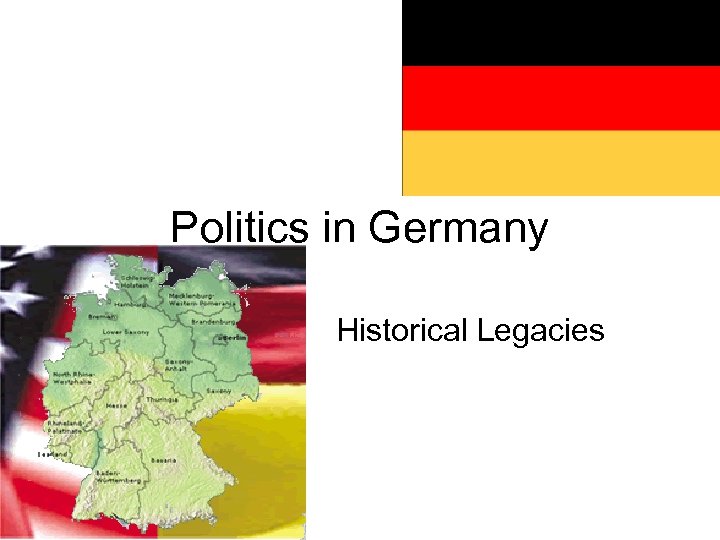
Politics in Germany Historical Legacies
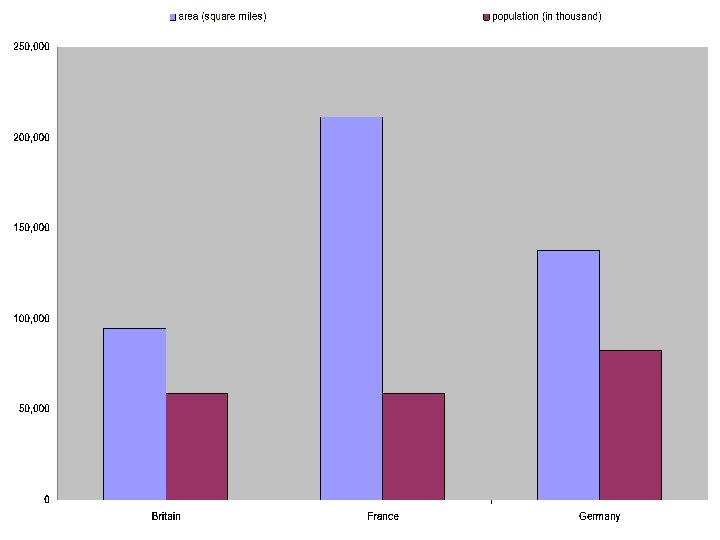
Federal Republic of Germany • Population: 82 million – The most populous country in Europe – except for Russia – 68 million in the former West Germany • Area: about 3 times that of Mississippi – Britain ~ 2/3 Germany – Germany ~ 2/3 France
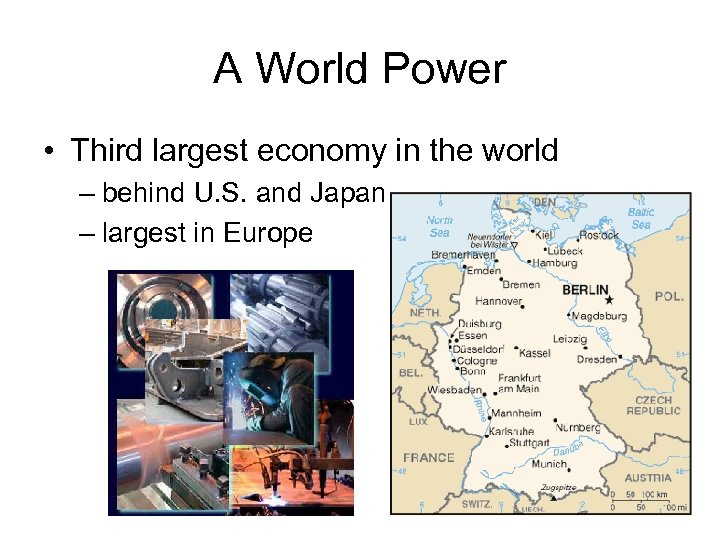
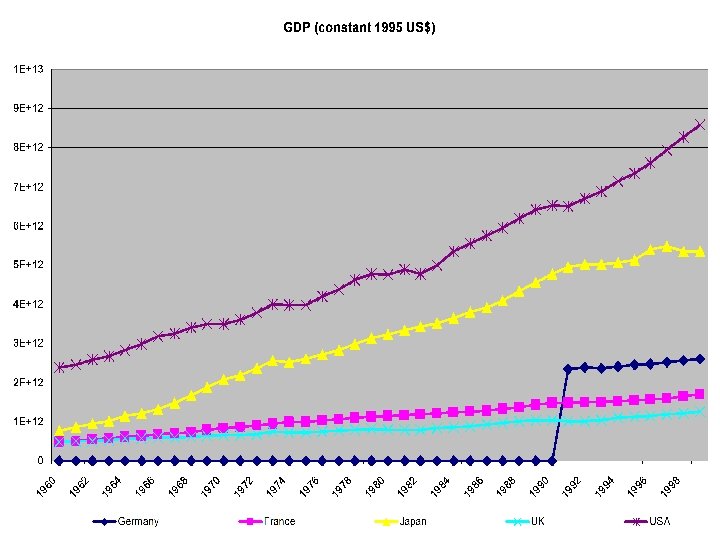
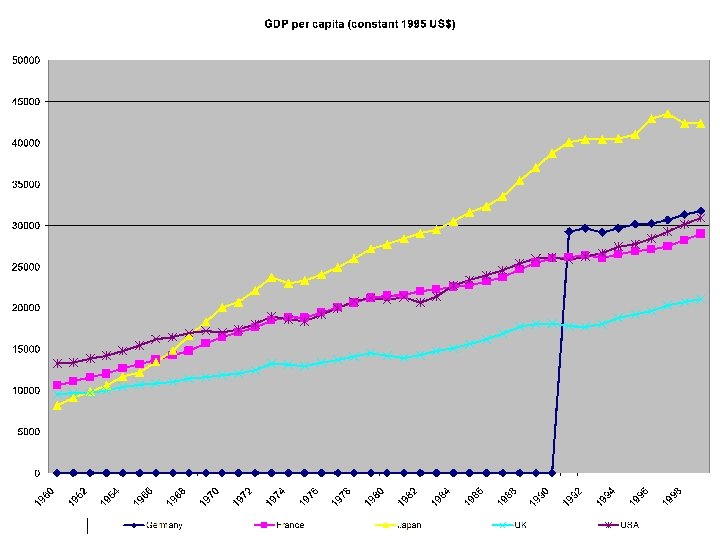
A World Power • Third largest economy in the world – behind U. S. and Japan – largest in Europe
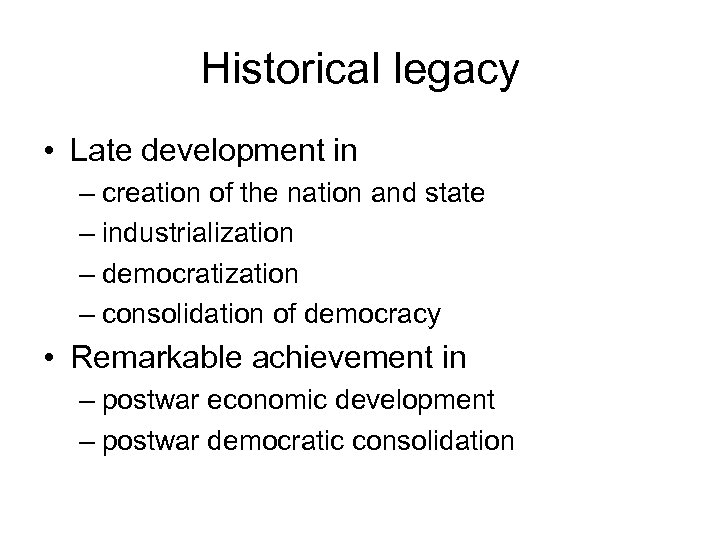
Historical legacy • Late development in – creation of the nation and state – industrialization – democratization – consolidation of democracy • Remarkable achievement in – postwar economic development – postwar democratic consolidation
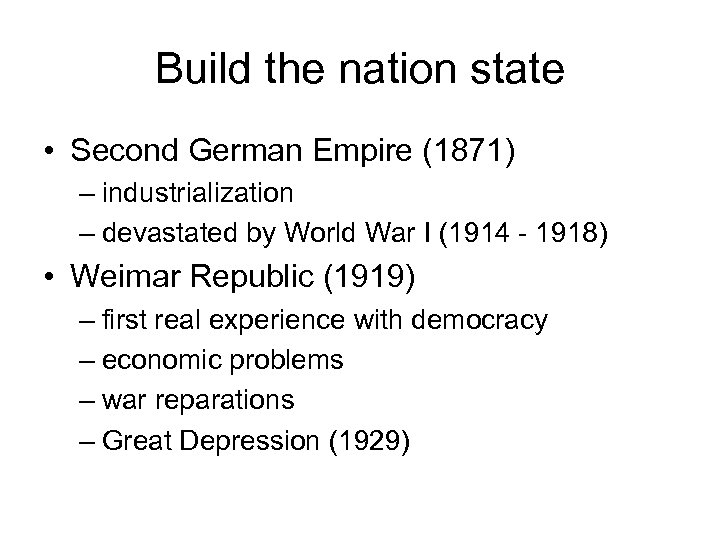
Build the nation state • Second German Empire (1871) – industrialization – devastated by World War I (1914 - 1918) • Weimar Republic (1919) – first real experience with democracy – economic problems – war reparations – Great Depression (1929)
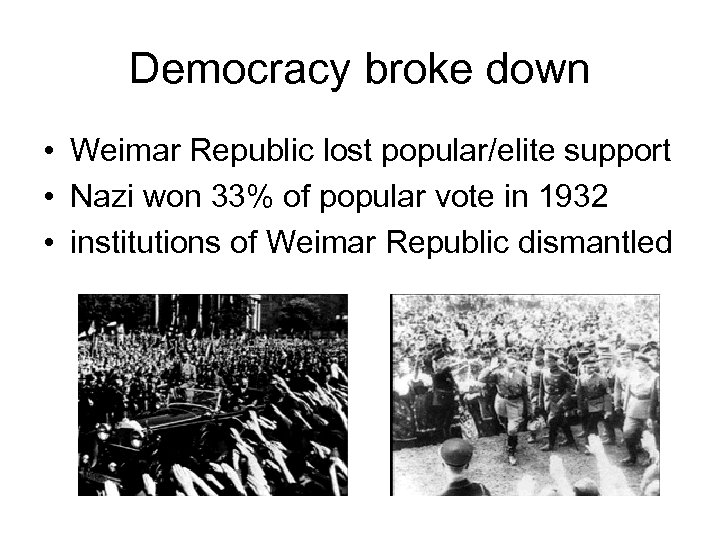
Democracy broke down • Weimar Republic lost popular/elite support • Nazi won 33% of popular vote in 1932 • institutions of Weimar Republic dismantled
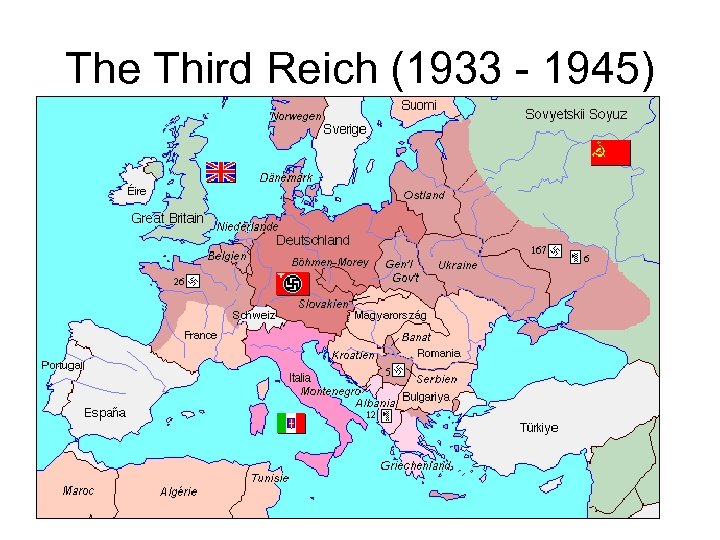
The Third Reich (1933 - 1945)
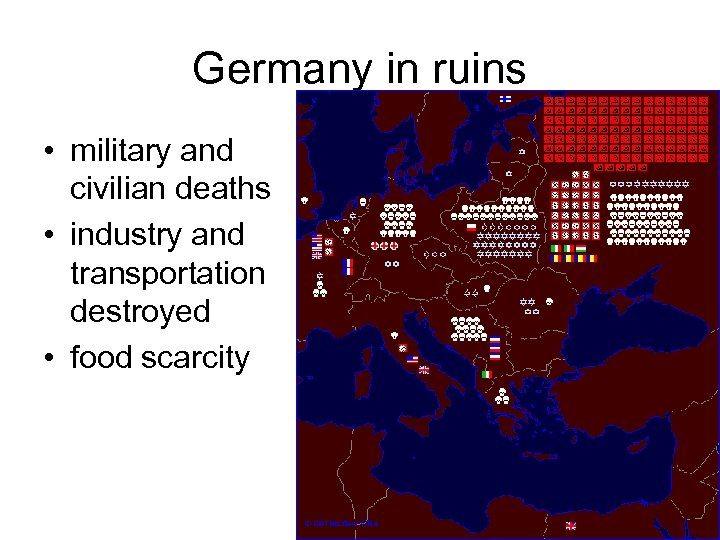
Germany in ruins • military and civilian deaths • industry and transportation destroyed • food scarcity
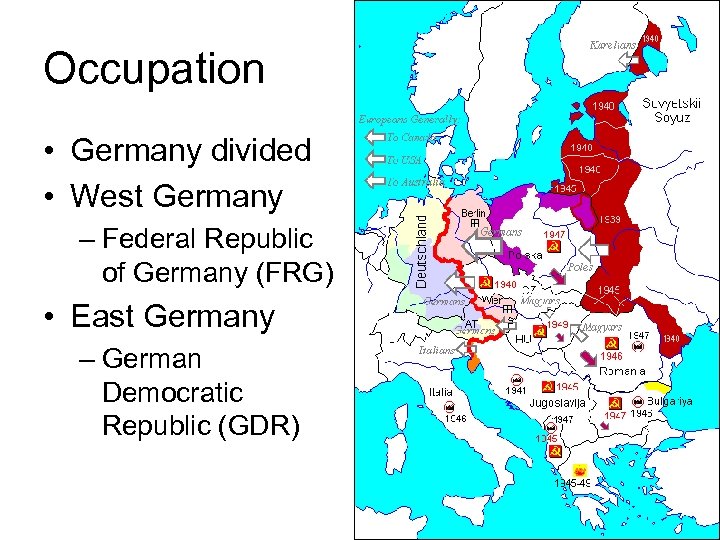
Occupation • Germany divided • West Germany – Federal Republic of Germany (FRG) • East Germany – German Democratic Republic (GDR)
East Germany, West Germany • Both were formed in 1949 – Basic Law of FRG (West Germany) • Both had economic miracle (1950 s - 70 s) – sustained & unprecedented economic growth – East Germany still lagged behind • Both were integrated into alliances – West: European Community & NATO – East: Warsaw Pact
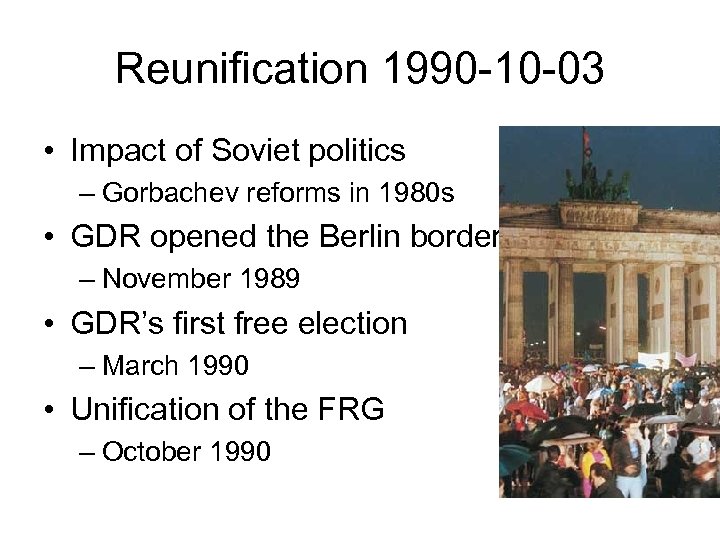
Reunification 1990 -10 -03 • Impact of Soviet politics – Gorbachev reforms in 1980 s • GDR opened the Berlin border – November 1989 • GDR’s first free election – March 1990 • Unification of the FRG – October 1990
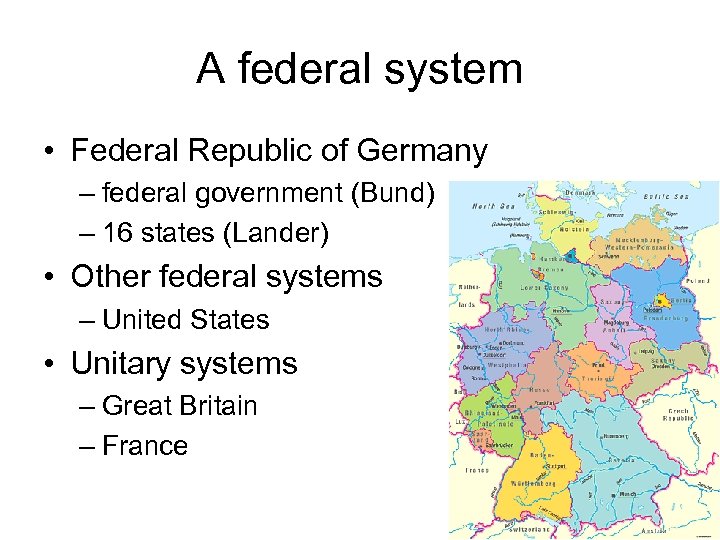
A federal system • Federal Republic of Germany – federal government (Bund) – 16 states (Lander) • Other federal systems – United States • Unitary systems – Great Britain – France
Federalism • Usually described as a division of power – spatial or territorial division – component units are geographically defined – states (e. g. , U. S. , India, Australia) – provinces (e. g. , Canada) – Lander (e. g. , Germany and Austria) – cantons (e. g. , Switzerland) – regions (e. g. , Belgium)
A federal system • Federal Republic is divided into 16 states – 10 states (Lander) in the West – 6 states (Lander) in the East • including Berlin – differences in historical traditions, social structure, dialect, and economy – state jurisdiction in education, culture, law enforcement, and regional planning – more governmental overlap than U. S.
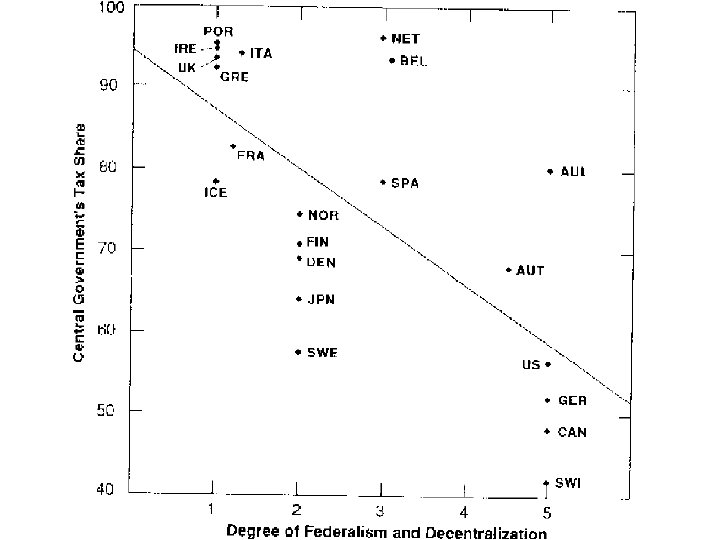
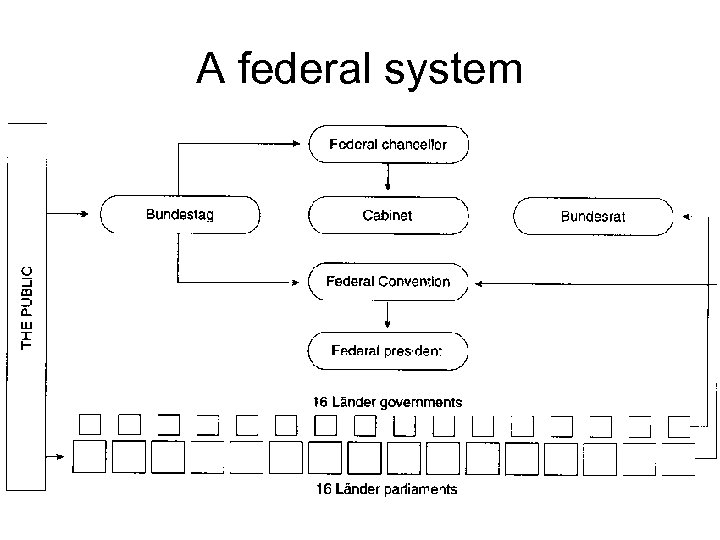
A federal system
A parliamentary system • central institution of the federal government • bicameral parliament – Bundestag (lower house) – Bundesrat (upper house) • Chancellor – chief executive • President (mostly ceremonial role)
A bicameral parliament • Bundestag – primary legislative body – 669 deputies – directly elected • Bundesrat – represent state governmts at the federal level – 69 members (3 - 6 per state) – appointed by state government
 Скачать презентацию Politics in Germany Historical Legacies Federal Republic
894e7fef5eab89a6e99b698a75cf98f5.ppt