 Скачать презентацию Political System Lecture 3 British Monarchs of
205904dcd0a37ceee03038b6bbd18d77.ppt
- Количество слайдов: 25



Political System Lecture 3.
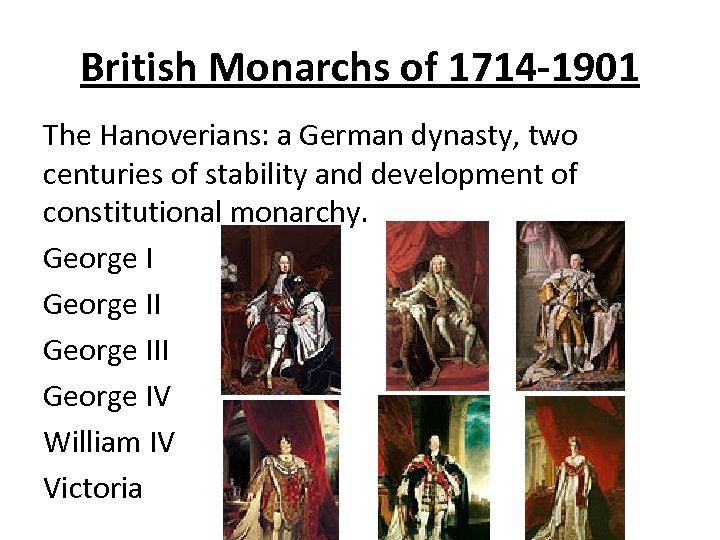
British Monarchs of 1714 -1901 The Hanoverians: a German dynasty, two centuries of stability and development of constitutional monarchy. George III George IV William IV Victoria
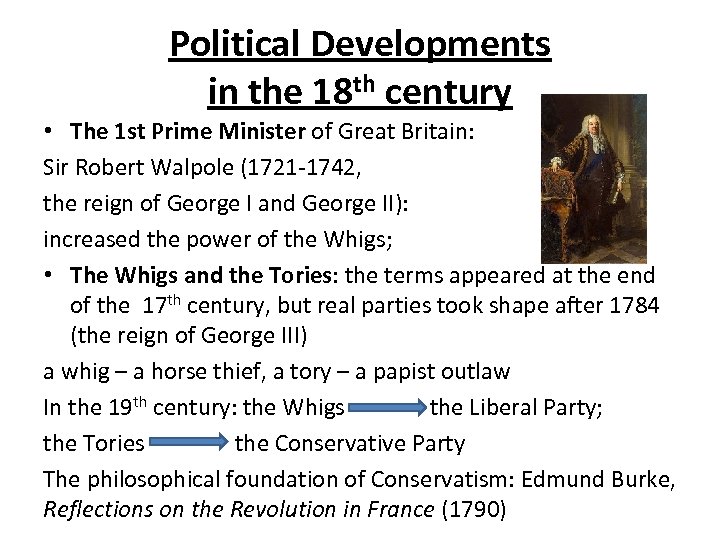
Political Developments in the 18 th century • The 1 st Prime Minister of Great Britain: Sir Robert Walpole (1721 -1742, the reign of George I and George II): increased the power of the Whigs; • The Whigs and the Tories: the terms appeared at the end of the 17 th century, but real parties took shape after 1784 (the reign of George III) a whig – a horse thief, a tory – a papist outlaw In the 19 th century: the Whigs the Liberal Party; the Tories the Conservative Party The philosophical foundation of Conservatism: Edmund Burke, Reflections on the Revolution in France (1790)
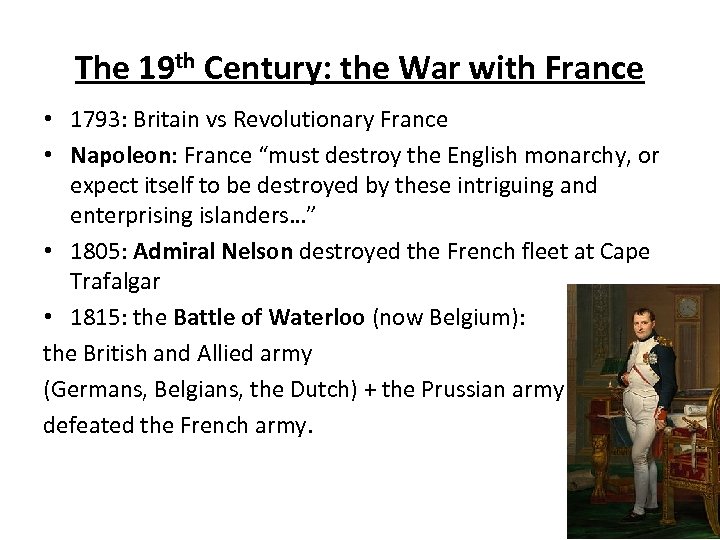
The 19 th Century: the War with France • 1793: Britain vs Revolutionary France • Napoleon: France “must destroy the English monarchy, or expect itself to be destroyed by these intriguing and enterprising islanders…” • 1805: Admiral Nelson destroyed the French fleet at Cape Trafalgar • 1815: the Battle of Waterloo (now Belgium): the British and Allied army (Germans, Belgians, the Dutch) + the Prussian army defeated the French army.
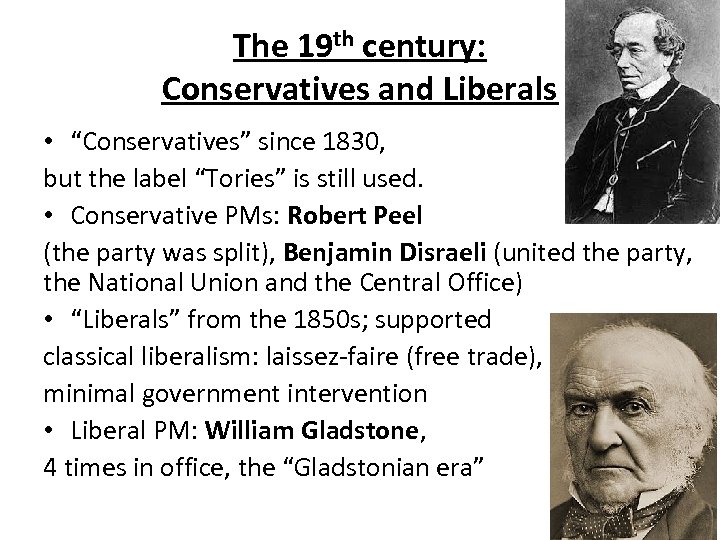
The 19 th century: Conservatives and Liberals • “Conservatives” since 1830, but the label “Tories” is still used. • Conservative PMs: Robert Peel (the party was split), Benjamin Disraeli (united the party, the National Union and the Central Office) • “Liberals” from the 1850 s; supported classical liberalism: laissez-faire (free trade), minimal government intervention • Liberal PM: William Gladstone, 4 times in office, the “Gladstonian era”
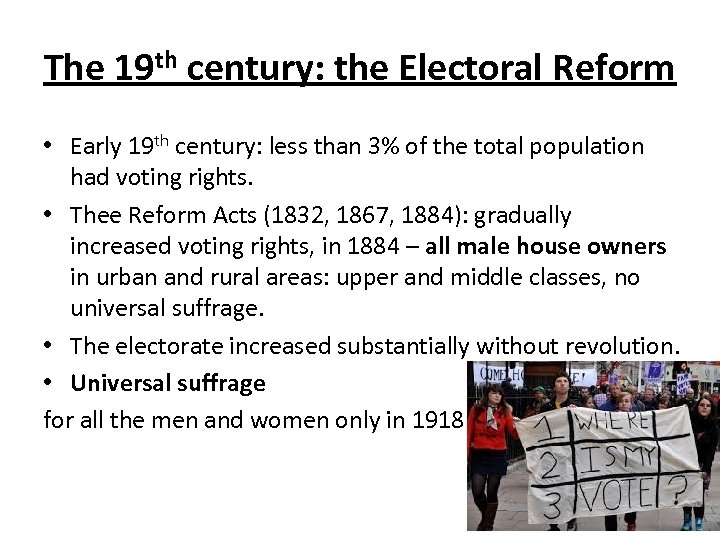
The 19 th century: the Electoral Reform • Early 19 th century: less than 3% of the total population had voting rights. • Thee Reform Acts (1832, 1867, 1884): gradually increased voting rights, in 1884 – all male house owners in urban and rural areas: upper and middle classes, no universal suffrage. • The electorate increased substantially without revolution. • Universal suffrage for all the men and women only in 1918
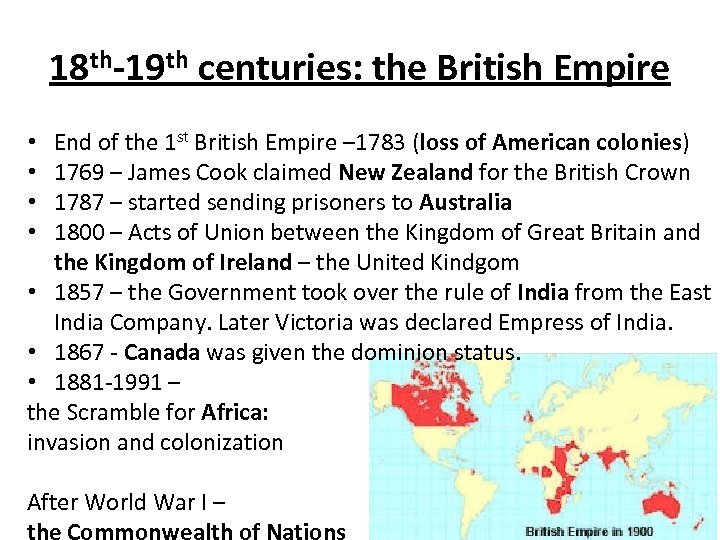
18 th-19 th centuries: the British Empire End of the 1 st British Empire – 1783 (loss of American colonies) 1769 – James Cook claimed New Zealand for the British Crown 1787 – started sending prisoners to Australia 1800 – Acts of Union between the Kingdom of Great Britain and the Kingdom of Ireland – the United Kindgom • 1857 – the Government took over the rule of India from the East India Company. Later Victoria was declared Empress of India. • 1867 - Canada was given the dominion status. • 1881 -1991 – the Scramble for Africa: invasion and colonization • • After World War I – the Commonwealth of Nations
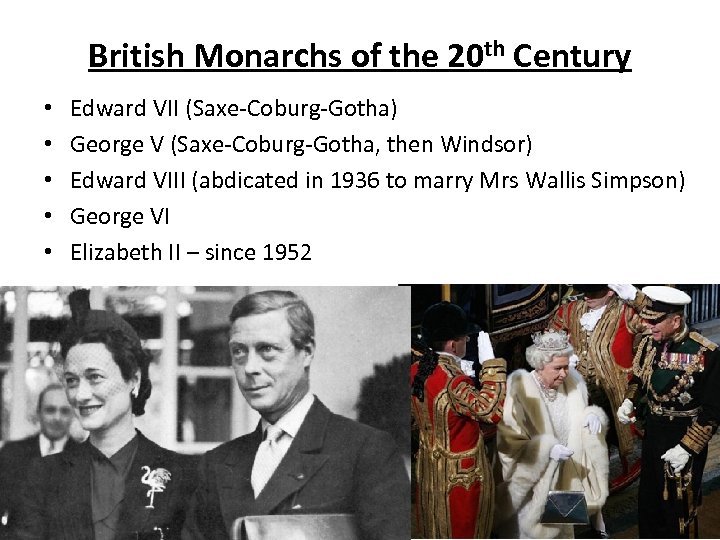
British Monarchs of the 20 th Century • • • Edward VII (Saxe-Coburg-Gotha) George V (Saxe-Coburg-Gotha, then Windsor) Edward VIII (abdicated in 1936 to marry Mrs Wallis Simpson) George VI Elizabeth II – since 1952
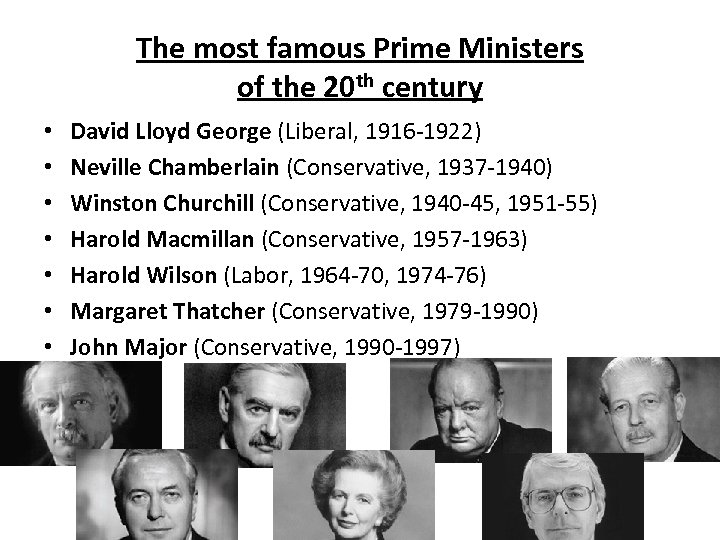
The most famous Prime Ministers of the 20 th century • • David Lloyd George (Liberal, 1916 -1922) Neville Chamberlain (Conservative, 1937 -1940) Winston Churchill (Conservative, 1940 -45, 1951 -55) Harold Macmillan (Conservative, 1957 -1963) Harold Wilson (Labor, 1964 -70, 1974 -76) Margaret Thatcher (Conservative, 1979 -1990) John Major (Conservative, 1990 -1997)
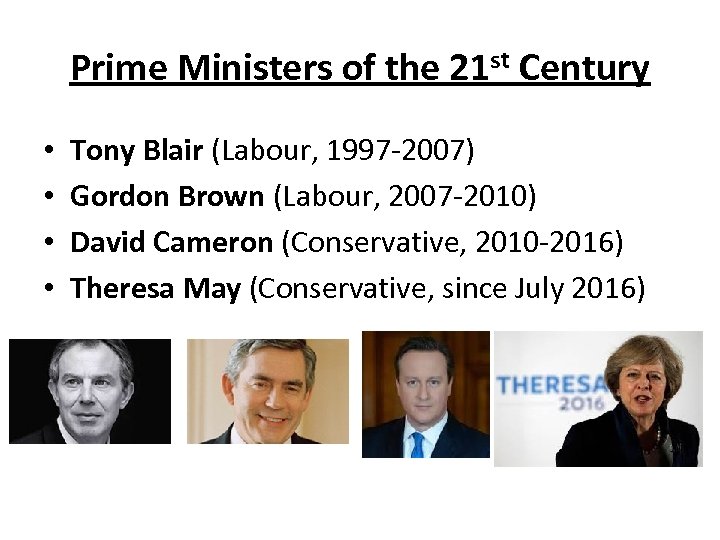
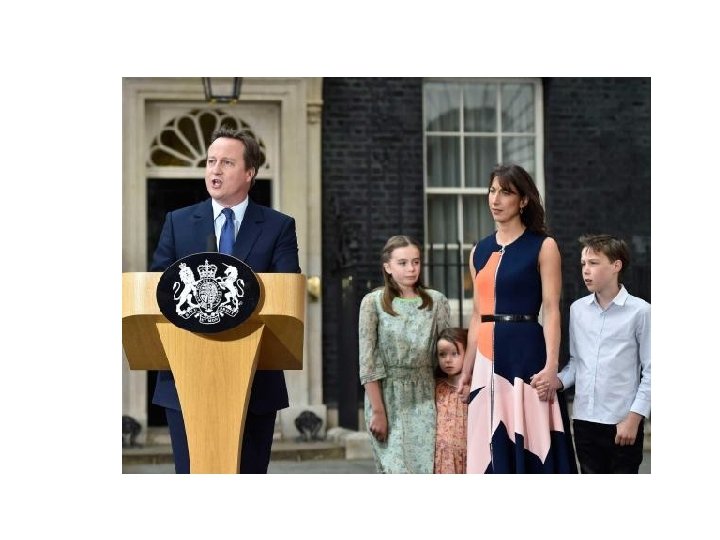
Prime Ministers of the 21 st Century • • Tony Blair (Labour, 1997 -2007) Gordon Brown (Labour, 2007 -2010) David Cameron (Conservative, 2010 -2016) Theresa May (Conservative, since July 2016)

British Constitution Uncodified: no single constitutional document Laws, conventions, precedent + common sense “What the Queen in Parliament Enacts is Law” Parliamentary sovereignty, the rule of law Theoretically, separation of government into executive, legislative, and judicial branches • In practice, fusion of executive and legislative branches • A unitary state, but in practice, devolution and the EU • • •
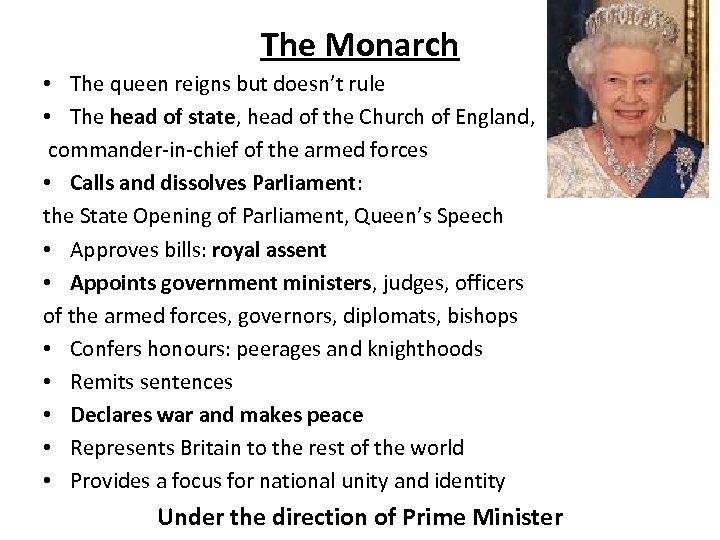
The Monarch • The queen reigns but doesn’t rule • The head of state, head of the Church of England, commander-in-chief of the armed forces • Calls and dissolves Parliament: the State Opening of Parliament, Queen’s Speech • Approves bills: royal assent • Appoints government ministers, judges, officers of the armed forces, governors, diplomats, bishops • Confers honours: peerages and knighthoods • Remits sentences • Declares war and makes peace • Represents Britain to the rest of the world • Provides a focus for national unity and identity Under the direction of Prime Minister
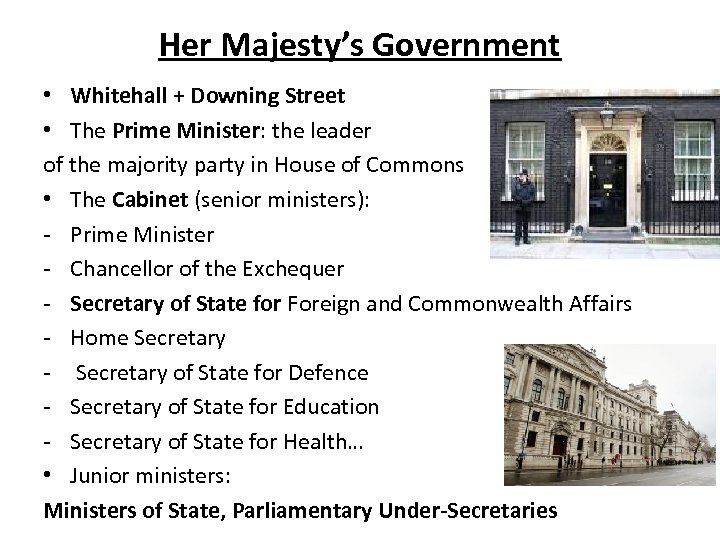
Her Majesty’s Government • Whitehall + Downing Street • The Prime Minister: the leader of the majority party in House of Commons • The Cabinet (senior ministers): - Prime Minister - Chancellor of the Exchequer - Secretary of State for Foreign and Commonwealth Affairs - Home Secretary - Secretary of State for Defence - Secretary of State for Education - Secretary of State for Health… • Junior ministers: Ministers of State, Parliamentary Under-Secretaries
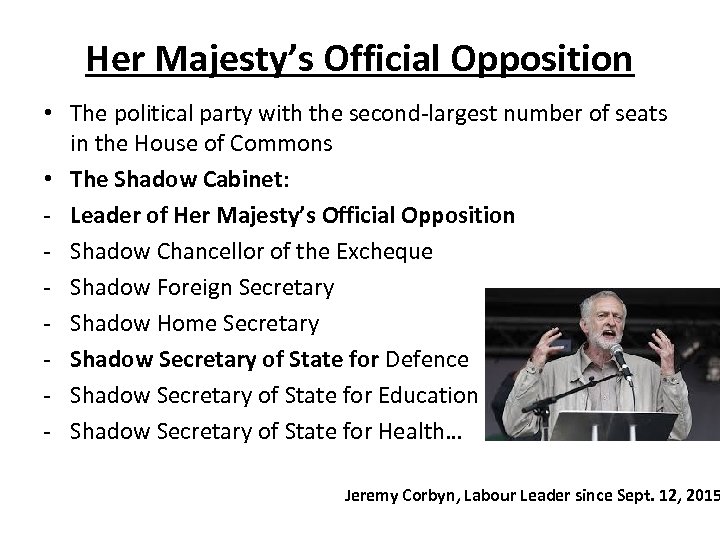
Her Majesty’s Official Opposition • The political party with the second-largest number of seats in the House of Commons • The Shadow Cabinet: - Leader of Her Majesty’s Official Opposition - Shadow Chancellor of the Excheque - Shadow Foreign Secretary - Shadow Home Secretary - Shadow Secretary of State for Defence - Shadow Secretary of State for Education - Shadow Secretary of State for Health… Jeremy Corbyn, Labour Leader since Sept. 12, 2015
The Civil Service • Helps the government of the day to develop and implement policies • A permanent body of officials, politically impartial (~450 people) • Cannot be Members of Parliament • The Cabinet Office • Permanent Secretary: the most senior civil service official in each ministry or department • The Civil Service does not include government ministers (politically appointed), managed by the Prime Minister
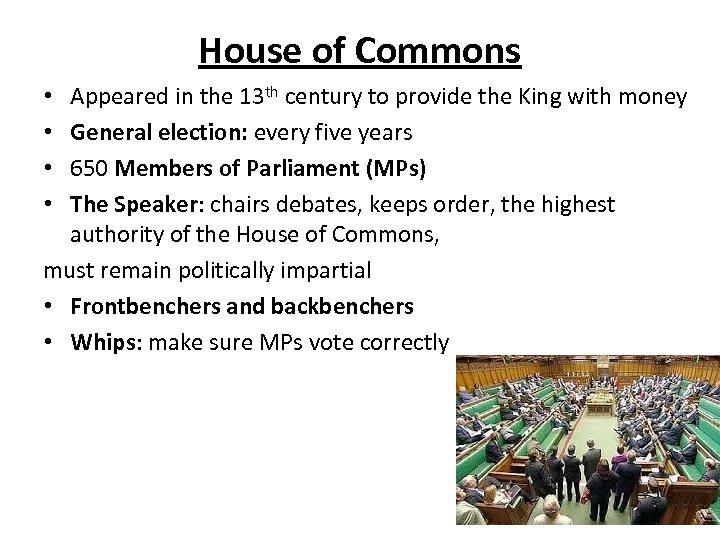
House of Commons Appeared in the 13 th century to provide the King with money General election: every five years 650 Members of Parliament (MPs) The Speaker: chairs debates, keeps order, the highest authority of the House of Commons, must remain politically impartial • Frontbenchers and backbenchers • Whips: make sure MPs vote correctly • •
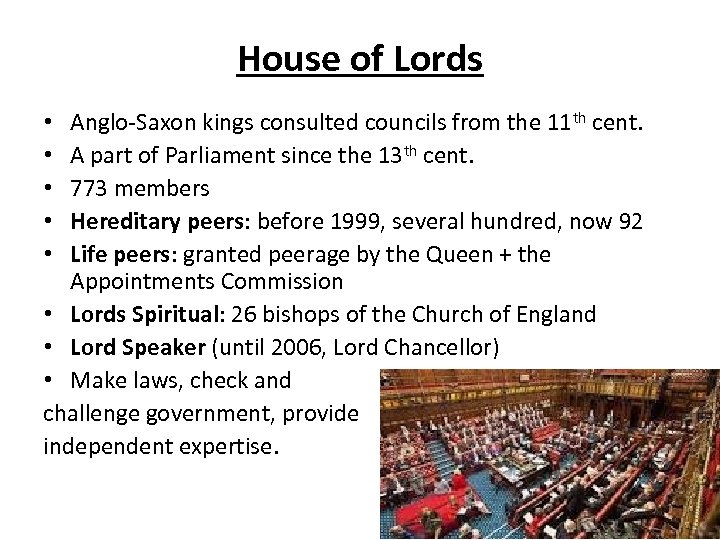
House of Lords Anglo-Saxon kings consulted councils from the 11 th cent. A part of Parliament since the 13 th cent. 773 members Hereditary peers: before 1999, several hundred, now 92 Life peers: granted peerage by the Queen + the Appointments Commission • Lords Spiritual: 26 bishops of the Church of England • Lord Speaker (until 2006, Lord Chancellor) • Make laws, check and challenge government, provide independent expertise. • • •
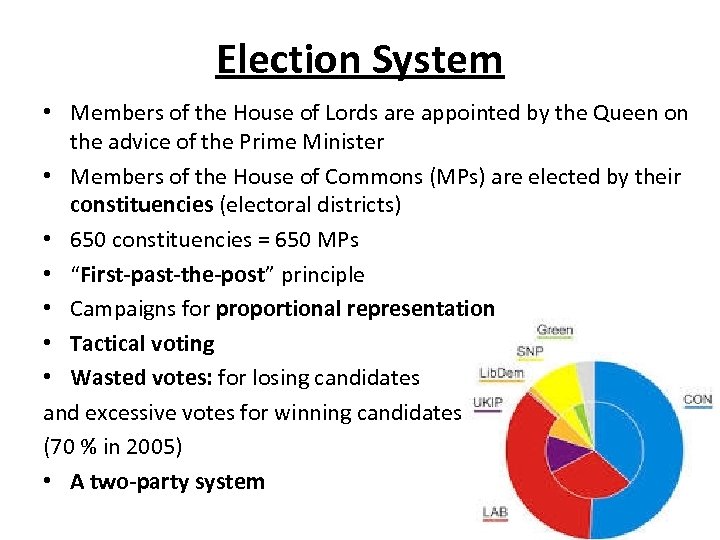
Election System • Members of the House of Lords are appointed by the Queen on the advice of the Prime Minister • Members of the House of Commons (MPs) are elected by their constituencies (electoral districts) • 650 constituencies = 650 MPs • “First-past-the-post” principle • Campaigns for proportional representation • Tactical voting • Wasted votes: for losing candidates and excessive votes for winning candidates (70 % in 2005) • A two-party system
The Conservatives • Founded in 1834 from the Tory Party • Center-right: low taxes and low government spending • Many Eurosceptics: promised a referendum on EU membership in their manifesto
The Labour • • • Founded in 1900, grew out of the trade union movement Center-left 1981 – split, the Social Democratic Party was formed “New Labour, New Life for Britain” (Tony Blair’s manifesto) Removed Clause 4 from the party constitution: “common ownership of the means of production, distribution, and exchange”, no longer socialist
The Liberal Democrats • Formed in 1988 from the Liberal Party and the Social Democratic Party • 57 seats in the House of Commons in 2010, only 8 seats in 2015
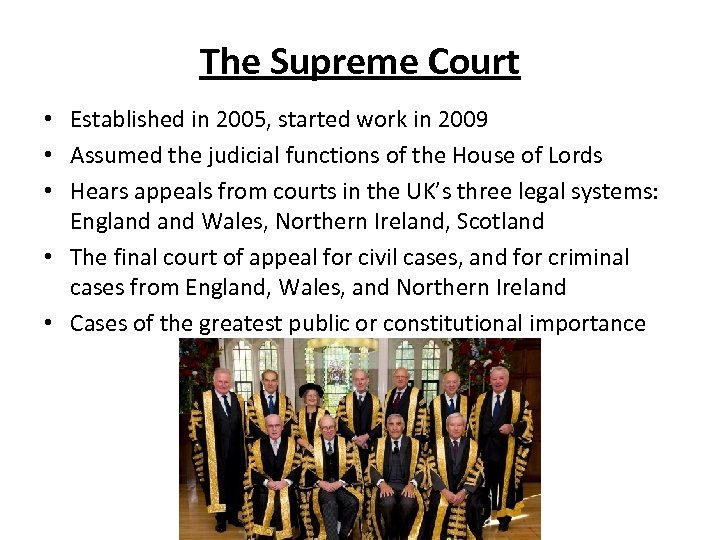
The Supreme Court • Established in 2005, started work in 2009 • Assumed the judicial functions of the House of Lords • Hears appeals from courts in the UK’s three legal systems: England Wales, Northern Ireland, Scotland • The final court of appeal for civil cases, and for criminal cases from England, Wales, and Northern Ireland • Cases of the greatest public or constitutional importance
The European Union • 1957 – Treaties of Rome: the European Economic Community and the Euratom (Germany, France, Italy, Belgium, the Netherlands, Luxemburg) • 1963, 1967 – the UK tried to join, but de Gaulle vetoed • 1973 – the UK, Denmark and Ireland joined the EEC • 1975 – a national referendum said “yes” to the UK membership in the EEC (60% of the votes) • 1992 – the Maastricht Treaty: the European Union (a political and monetary union), the single currency – Britain opted out • 2016 – a referendum promised in the Conservative manifesto. BREXIT
Thank you for your attention!
Скачать презентацию Political System Lecture 3 British Monarchs of
205904dcd0a37ceee03038b6bbd18d77.ppt