Скачать презентацию Political Science Scope and Methods Case Studies Comparing
8a48599fa4dc80414e1a789373671969.ppt
- Количество слайдов: 16
 Political Science Scope and Methods Case Studies, Comparing Cases, and Statistical Analysis
 Cases: From few to many l Last week: Experiments l This week: Everything else l Overview ¡ Case studies: what are they good for? ¡ Comparative method ¡ Large N analysis
 The logic of Degrees of Freedom l Lijphart: small-N analysis a way-station on the road to large-N studies l What does more cases buy us? Degrees of freedom ¡ Need as much (if not more) information as inferences ¡ Like equations and unknowns problem in algebra
 Case Studies l What are case studies good for? ¡ Theory generation? ¡ Theory testing: l Process Tracing (Van Evera) • Break down causal links; look for evidence • Multiple tests in a single case (? ) l Congruence Paradigm • Compare values of IV and DV to “normal” values Getting comparative…
 Comparative Method l Controlled comparison of cases ¡ Van Evera – skeptical ¡ Other authors – advocates l How do you pick cases to make the strongest inferences? ¡ How do you design a “strong test”? ¡ Case selection (more next week)
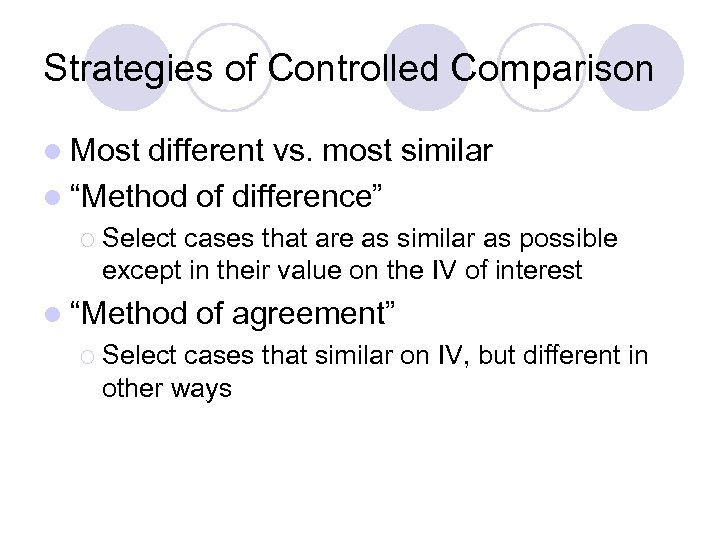 Strategies of Controlled Comparison l Most different vs. most similar l “Method of difference” ¡ Select cases that are as similar as possible except in their value on the IV of interest l “Method ¡ Select of agreement” cases that similar on IV, but different in other ways
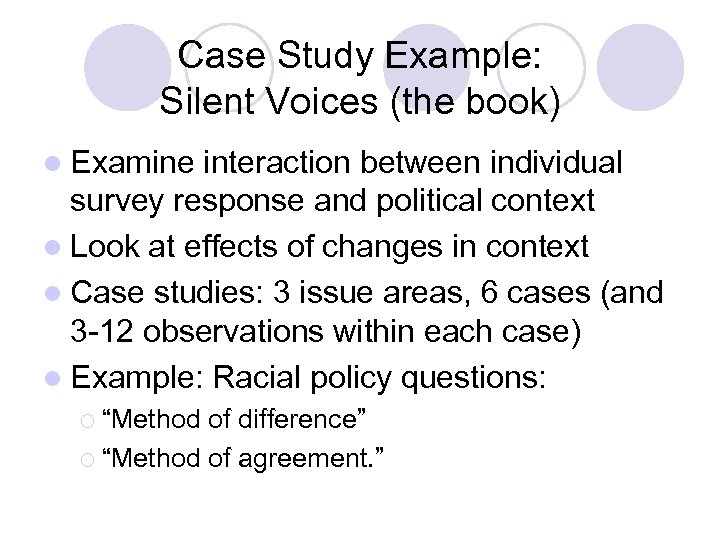 Case Study Example: Silent Voices (the book) l Examine interaction between individual survey response and political context l Look at effects of changes in context l Case studies: 3 issue areas, 6 cases (and 3 -12 observations within each case) l Example: Racial policy questions: ¡ “Method of difference” ¡ “Method of agreement. ”
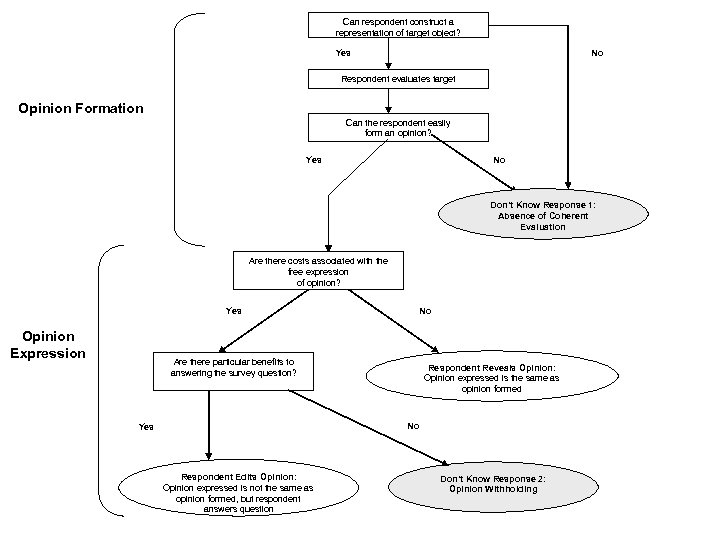 Can respondent construct a representation of target object? Yes No Respondent evaluates target Opinion Formation Can the respondent easily form an opinion? Yes No Don’t Know Response 1: Absence of Coherent Evaluation Are there costs associated with the free expression of opinion? Yes Opinion Expression No Are there particular benefits to answering the survey question? Respondent Reveals Opinion: Opinion expressed is the same as opinion formed No Yes Respondent Edits Opinion: Opinion expressed is not the same as opinion formed, but respondent answers question Don’t Know Response 2: Opinion Withholding
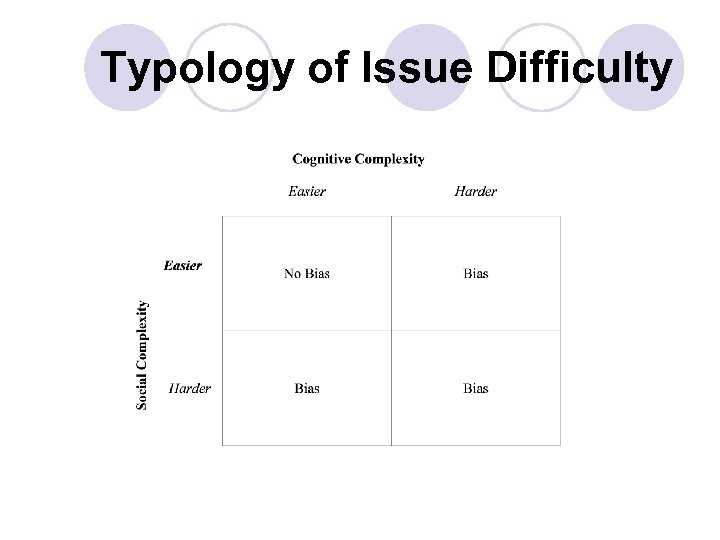 Typology of Issue Difficulty
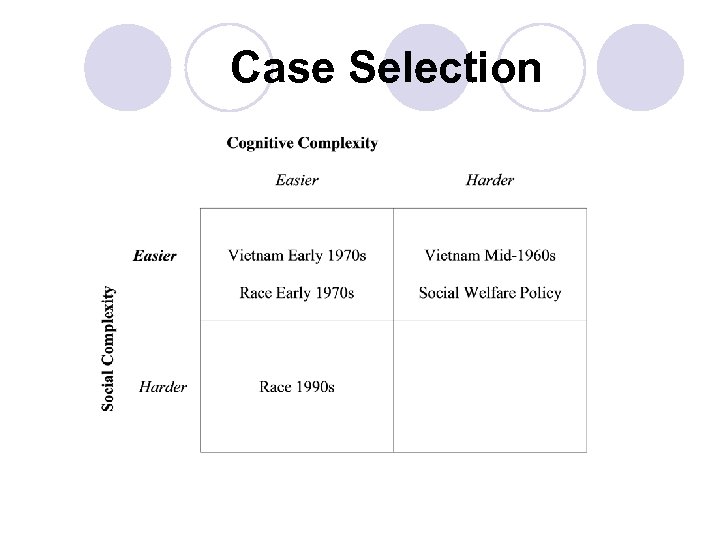 Case Selection
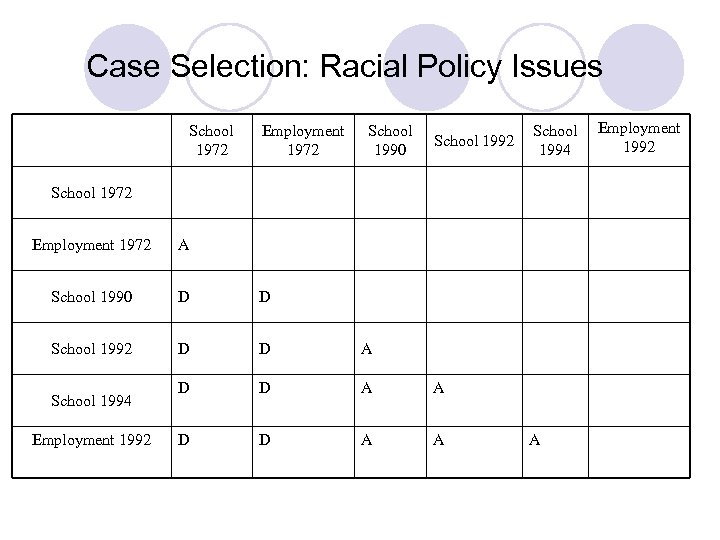 Case Selection: Racial Policy Issues School 1972 Employment 1972 School 1990 School 1992 School 1994 School 1972 Employment 1972 A School 1990 D D School 1992 D D A A School 1994 Employment 1992 A Employment 1992
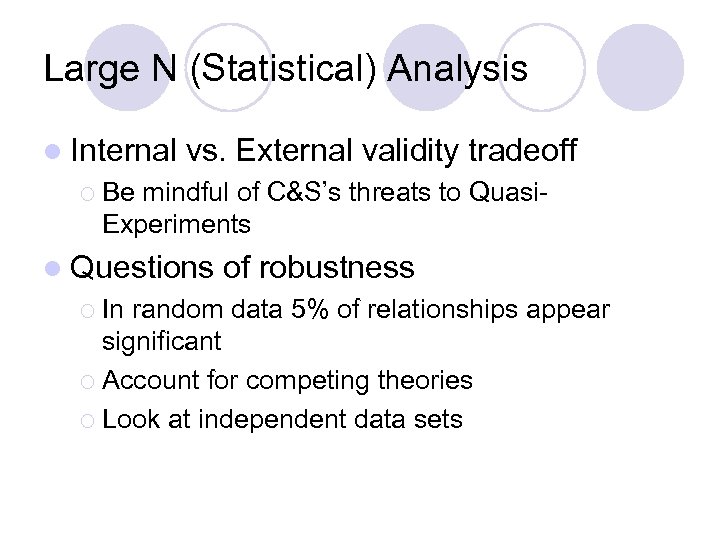 Large N (Statistical) Analysis l Internal vs. External validity tradeoff ¡ Be mindful of C&S’s threats to Quasi. Experiments l Questions ¡ In of robustness random data 5% of relationships appear significant ¡ Account for competing theories ¡ Look at independent data sets
 Large N (Statistical) Analysis (Cont. ) l Be honest about results ¡ Report l Art uncertainty and science