


 Скачать презентацию Political Parties What is a Political Party
0cbb8783ff9b93c32139e22749dbb901.ppt
- Количество слайдов: 10
 Political Parties
 What is a Political Party? § An organization of people § Share the same ideas of government § Members committed to party goals § Get candidates elected to office § Get laws passed to aid party goals
 Party Systems § Most countries have political parties § Party systems – One party – Two party – Multi-party
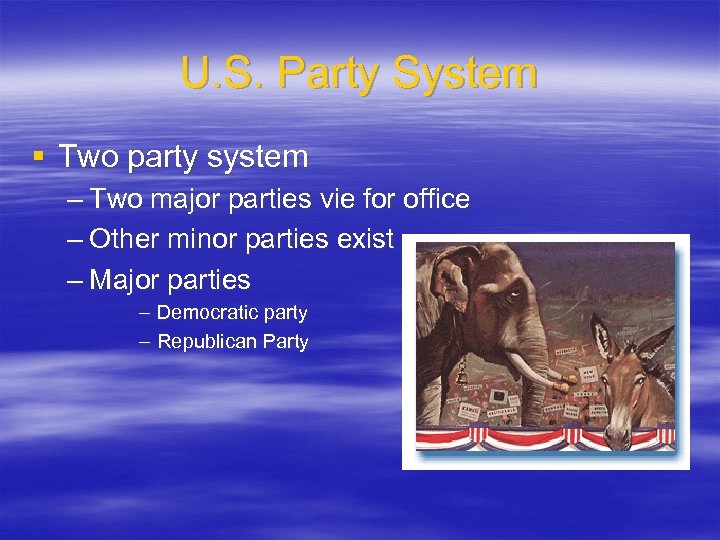 U. S. Party System § Two party system – Two major parties vie for office – Other minor parties exist – Major parties – Democratic party – Republican Party
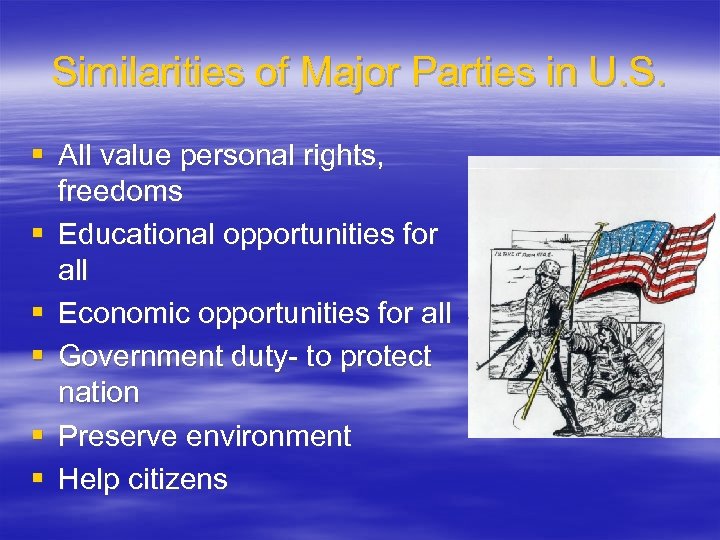 Similarities of Major Parties in U. S. § All value personal rights, freedoms § Educational opportunities for all § Economic opportunities for all § Government duty- to protect nation § Preserve environment § Help citizens
 Differences § Disagree on ways to meet goals § Example: – Democrats- government directly helps the poor – Republicans- government helps economy and poor get jobs
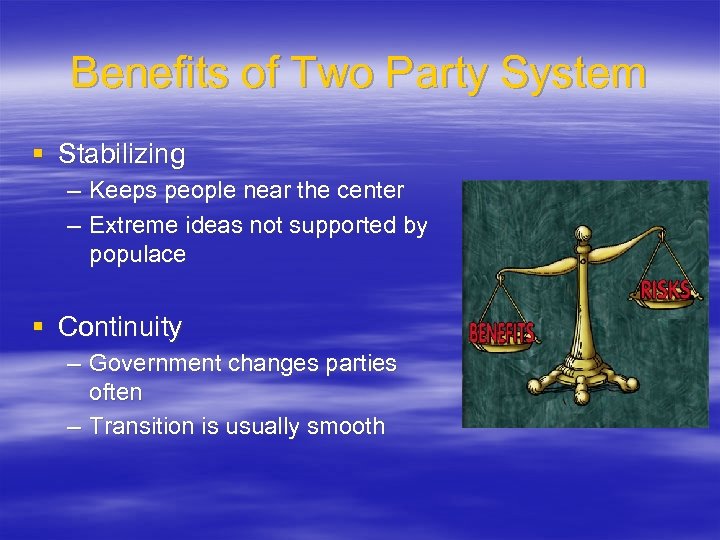 Benefits of Two Party System § Stabilizing – Keeps people near the center – Extreme ideas not supported by populace § Continuity – Government changes parties often – Transition is usually smooth
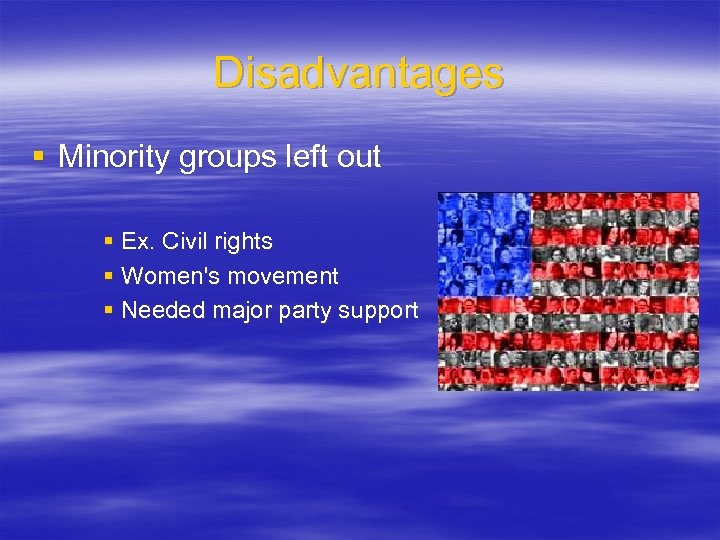 Disadvantages § Minority groups left out § Ex. Civil rights § Women's movement § Needed major party support
 Multi-Party System § § § Three or more parties- Japan, Israel Advantage- More voter choice Disadvantage- Voters divided § No party gets majority votes § Must form coalition government § Coalition may not work– 50 governments in Italy since W. W. II
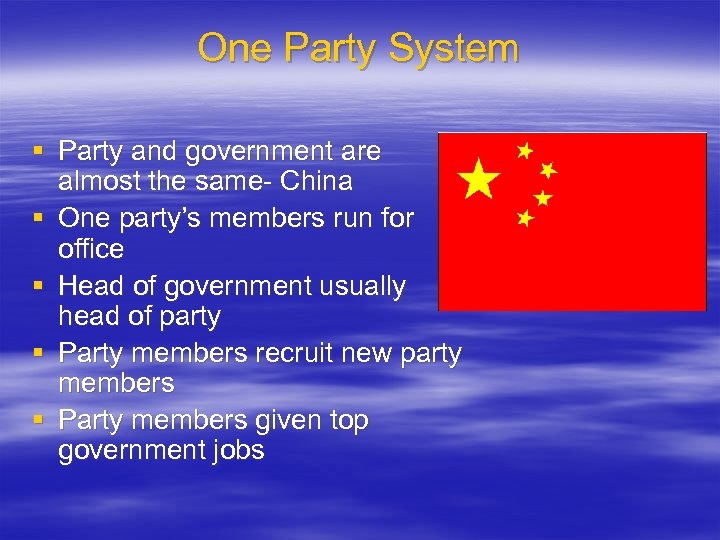 One Party System § Party and government are almost the same- China § One party’s members run for office § Head of government usually head of party § Party members recruit new party members § Party members given top government jobs