


 Скачать презентацию Policymaking Process A Primary Source Case Study
50e68ca5e71c67c86d24b7ada4503602.ppt
- Количество слайдов: 43
 Policymaking Process: A Primary Source Case Study
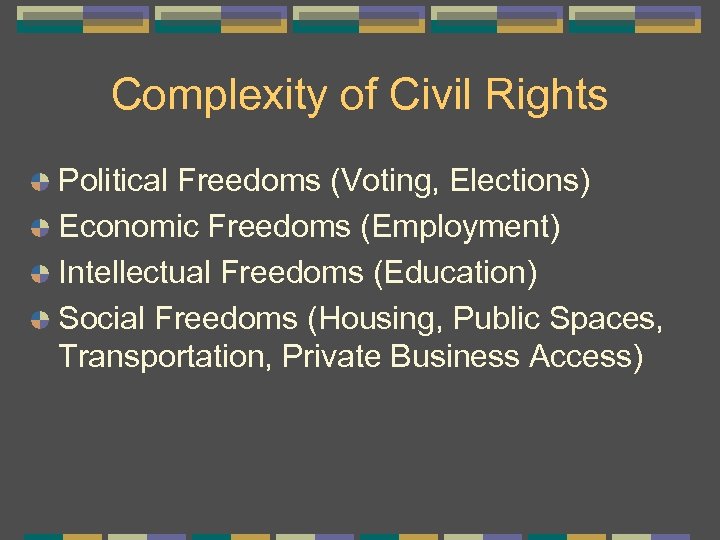 Complexity of Civil Rights Political Freedoms (Voting, Elections) Economic Freedoms (Employment) Intellectual Freedoms (Education) Social Freedoms (Housing, Public Spaces, Transportation, Private Business Access)
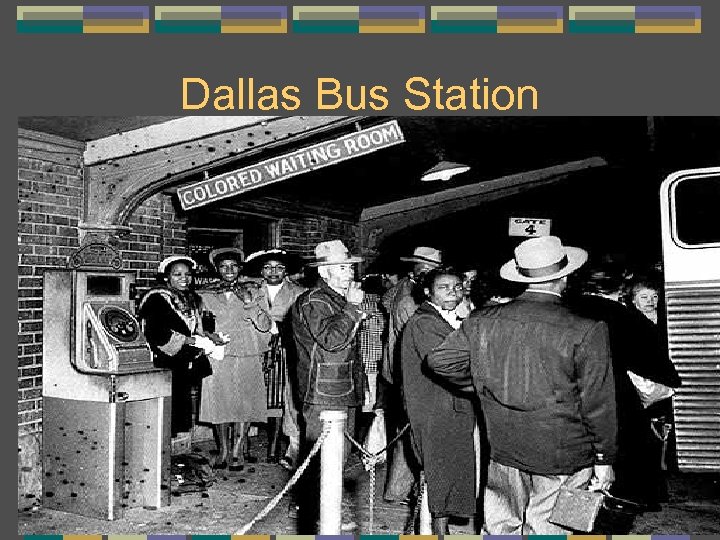 Dallas Bus Station
 Texas sign
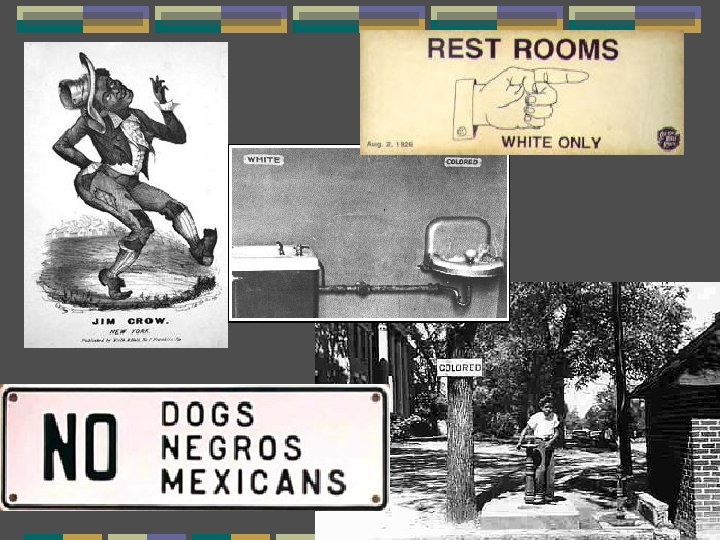
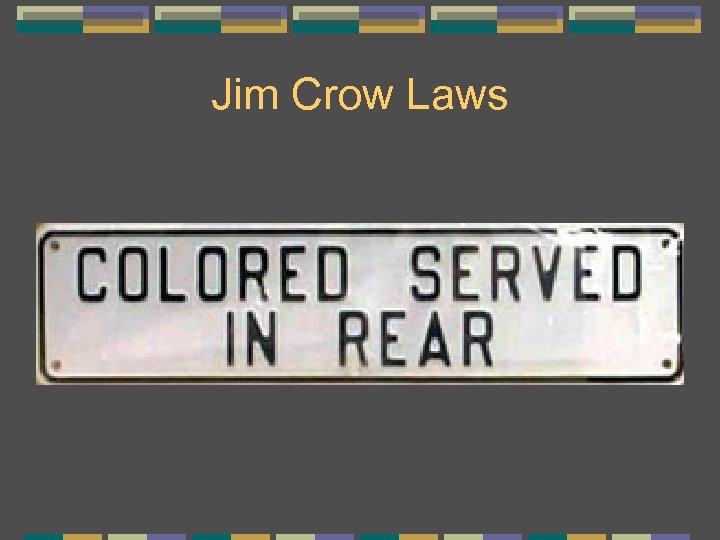 Jim Crow Laws
 Journal for multi media history (2012) www. albany. edu/
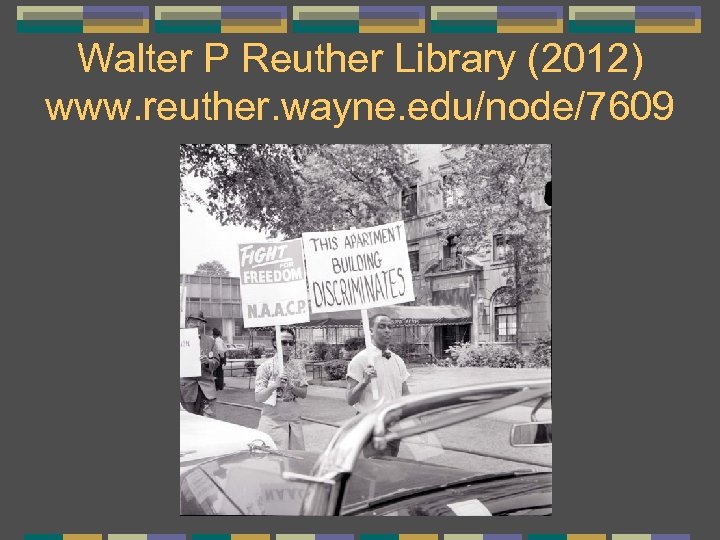 Walter P Reuther Library (2012) www. reuther. wayne. edu/node/7609
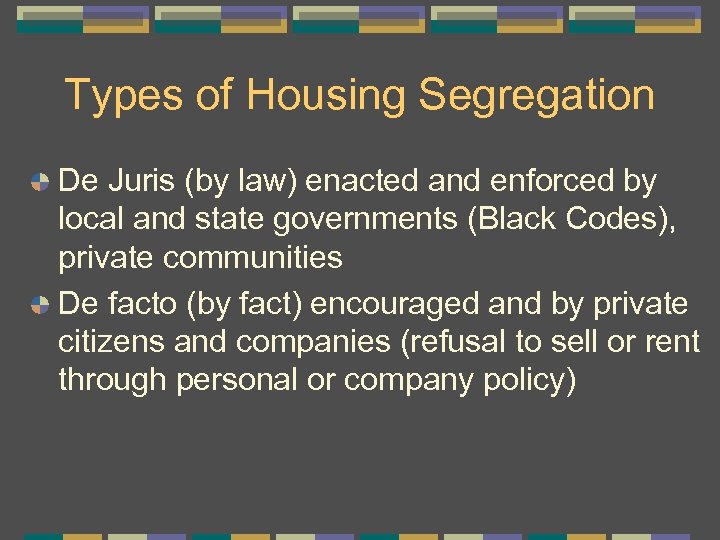 Types of Housing Segregation De Juris (by law) enacted and enforced by local and state governments (Black Codes), private communities De facto (by fact) encouraged and by private citizens and companies (refusal to sell or rent through personal or company policy)
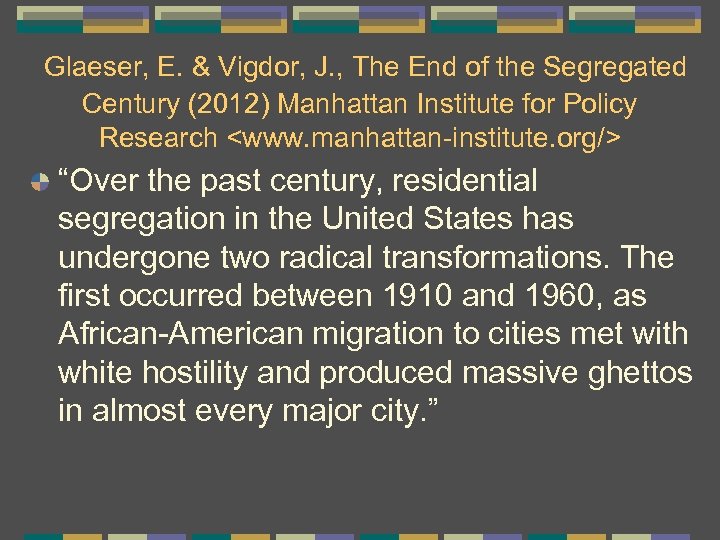 Glaeser, E. & Vigdor, J. , The End of the Segregated Century (2012) Manhattan Institute for Policy Research
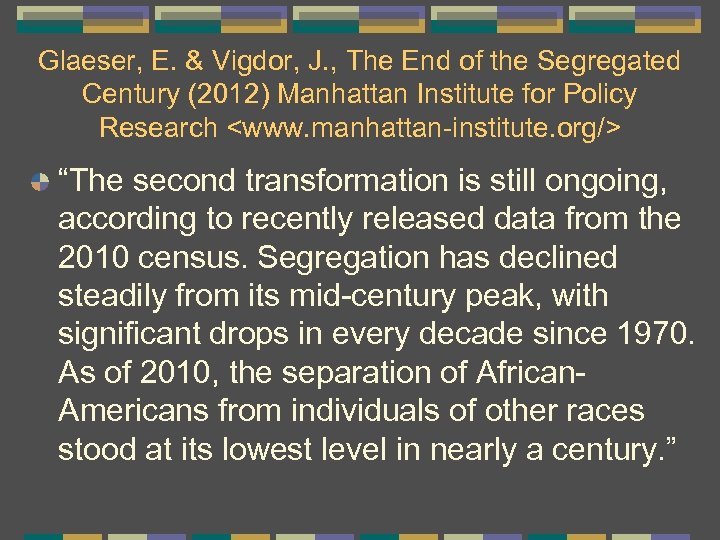 Glaeser, E. & Vigdor, J. , The End of the Segregated Century (2012) Manhattan Institute for Policy Research
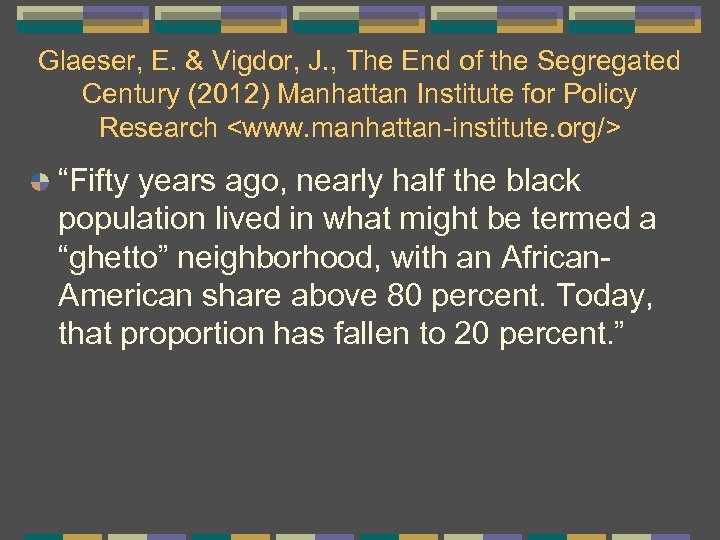 Glaeser, E. & Vigdor, J. , The End of the Segregated Century (2012) Manhattan Institute for Policy Research
 Federal Government In-action United States Government from 1780 s to early 1900 s took almost no action in building or monitoring residential housing as far as discrimination or funding.
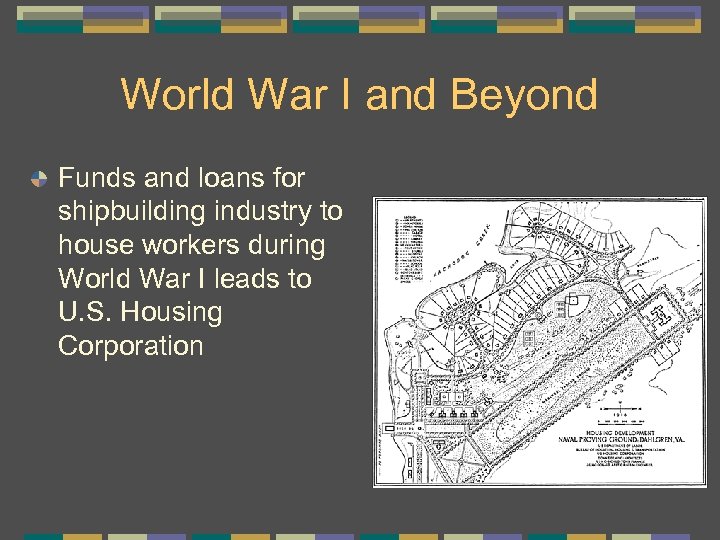 World War I and Beyond Funds and loans for shipbuilding industry to house workers during World War I leads to U. S. Housing Corporation
 Great Depression (1929 -1939) Programs initiated under Hoover in ‘ 31 -32 Federal Home Loan Bank System Reconstruction Finance Corporation Did not deal with discrimination but reflected increased economic influence of fed govt
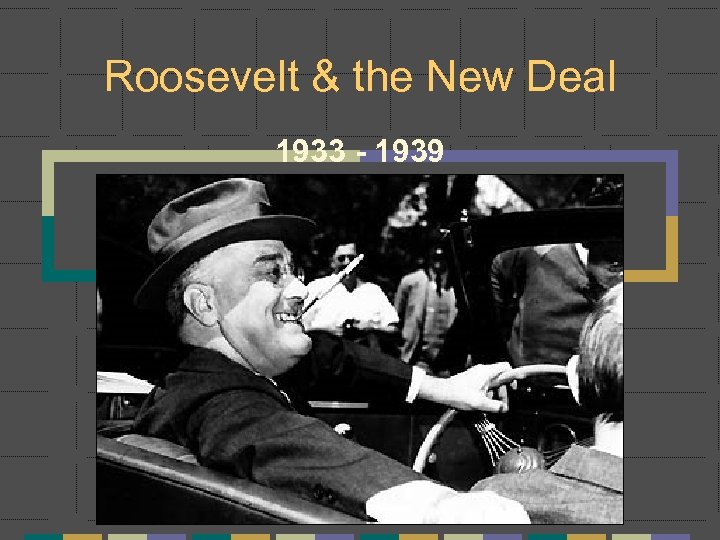 Roosevelt & the New Deal 1933 - 1939
 Providing Debt Relief Home Owner’s Loan Corporation (HOLC) –refinanced homeowner mortgages with longer payment terms and lower interest rates 1 out of every 5 mortgages in U. S. l Only for employed l 100, 000 foreclosures l Farm Credit Administration (FCA) – helped farmers refinance their mortgages
 Larger Role under Roosevelt National Housing Act of 1934 establishes Federal Housing Administration (under Executive Branch) = insurance National Housing Act (1937) – subsidized loans for builders willing to build low-cost housing (replace slums) Federal Loan Agency – 1939 reorganization
 World War II Ends in 1945 1942 Roosevelt had created National Housing Agency (NHA) by Executive Order [replaced by Housing and Home Finance Agency (HHFA) in 1947] Where are we going to house all the veterans? Housing Shortage!!!!!
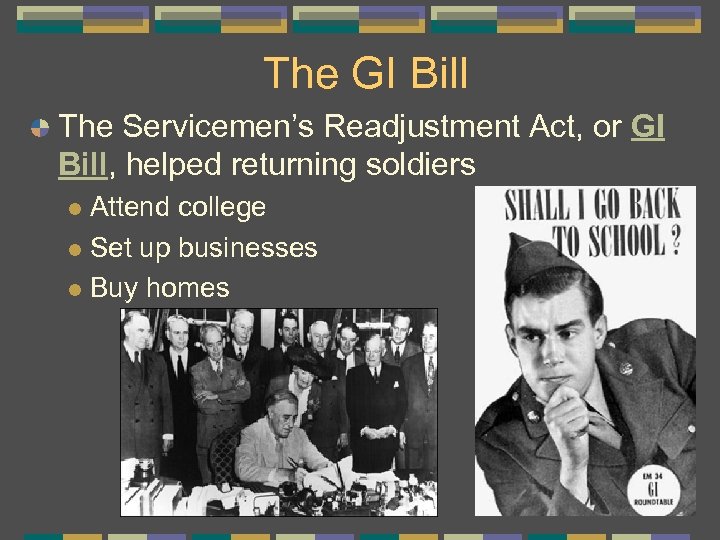 The GI Bill The Servicemen’s Readjustment Act, or GI Bill, helped returning soldiers Attend college l Set up businesses l Buy homes l
 Truman’s Domestic Program Truman tried to continue FDR’s New Deal programs Expansion of Social Security l Minimum wage from 40¢/hr to 75¢/hr l Public housing l Environmental and public works l National health insurance l Civil Rights Bill l Most rejected by Congress
 Truman’s 1949 Housing Act Extended $1 billion in loans to cities to redevelop slums and blighted lands Reauthorized building of 800, 000 low-rent public housing units Expanded loan programs In 1950 all programs cut back in scale and funding (gotta fight the Ruskies!!!)
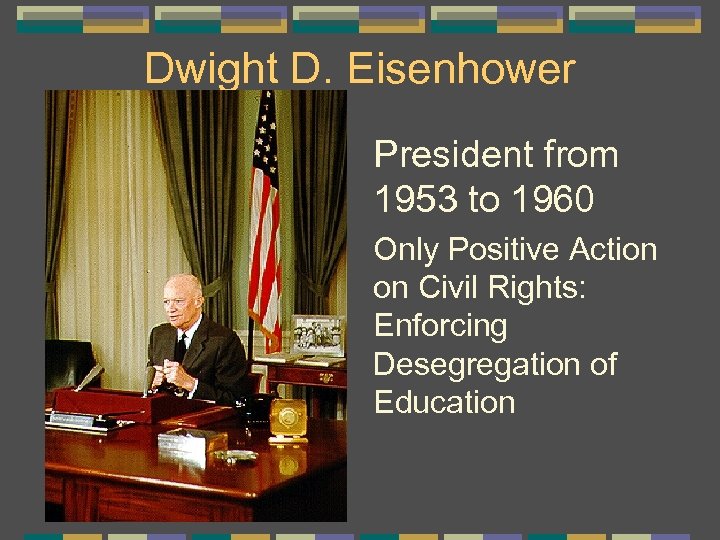 Dwight D. Eisenhower President from 1953 to 1960 Only Positive Action on Civil Rights: Enforcing Desegregation of Education
 Eisenhower’s Conservative Measures Ended government price and rent controls Vetoed a school construction bill Cut aid to public housing Small tax reductions Ended the Reconstruction Finance Corporation (RFC) Reduced aid to the TVA
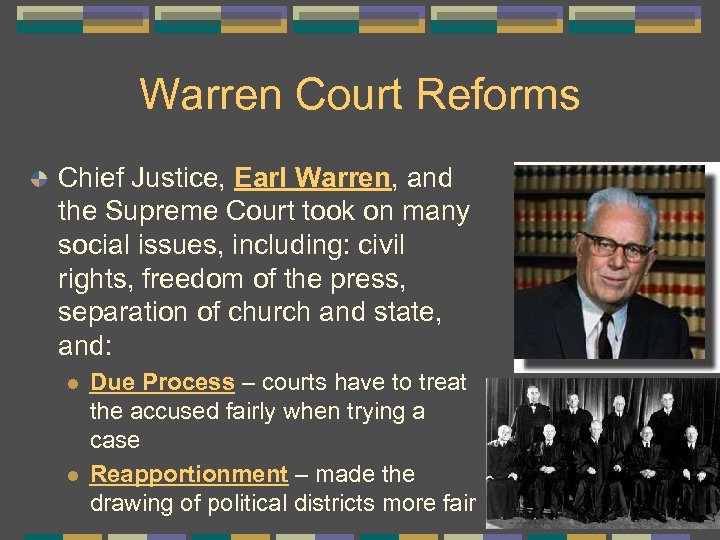 Warren Court Reforms Chief Justice, Earl Warren, and the Supreme Court took on many social issues, including: civil rights, freedom of the press, separation of church and state, and: l l Due Process – courts have to treat the accused fairly when trying a case Reapportionment – made the drawing of political districts more fair
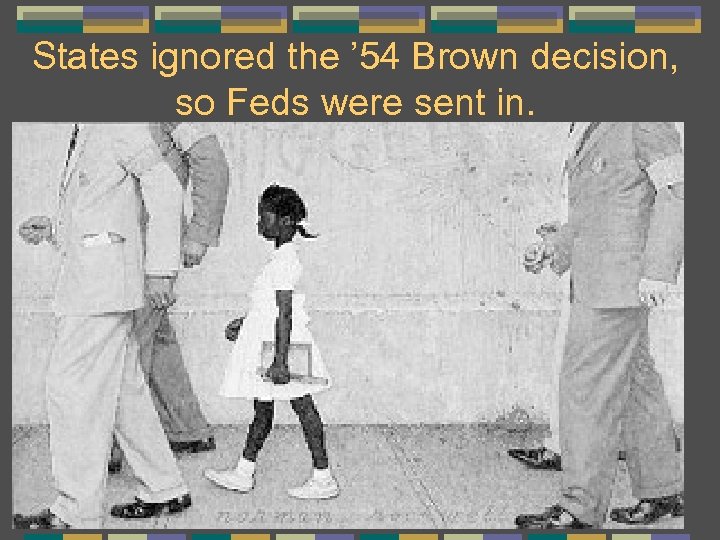 States ignored the ’ 54 Brown decision, so Feds were sent in.
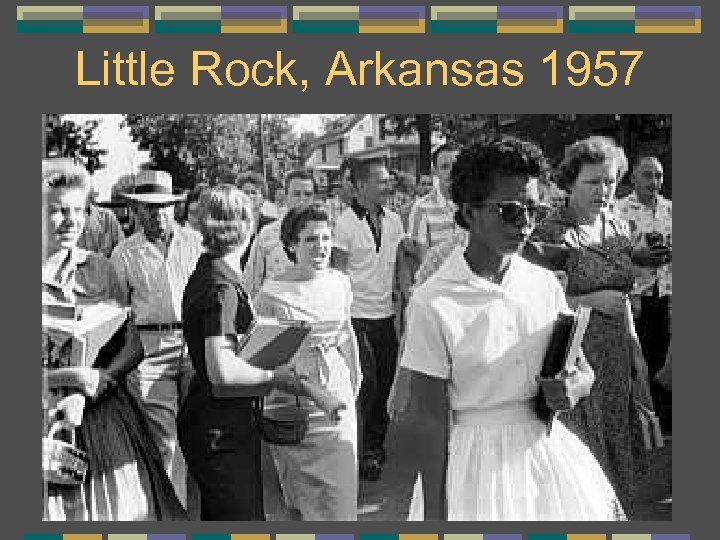 Little Rock, Arkansas 1957
 Poverty During the 50 s 1 in 5 Americans lived below the poverty line Michael Harrington wrote about them in The Other America l l l Single Mothers Elderly Minority Immigrants Rural Americans Appalachians Native Americans African Americans made 51% of what whites earned
 Decline of the Inner City Urban areas became home to poorer, less educated minorities Urban Renewal Programs designed to improve conditions by tearing down slums & building high-rise projects
 1957 Civil Rights Act Lyndon B. Johnson, as Senate majority leader, guides the passage of this bill that deals largely with voting rights Many southern Democrats opposed Johnson and many Texan constituents send mail to Johnson over the bill
 The New Frontier (1961 -1963) Kennedy’s agenda was known as the New Frontier. It focused on: Education l Health Insurance l Department of Urban Affairs l Migrant workers l Congress did not approve much of it
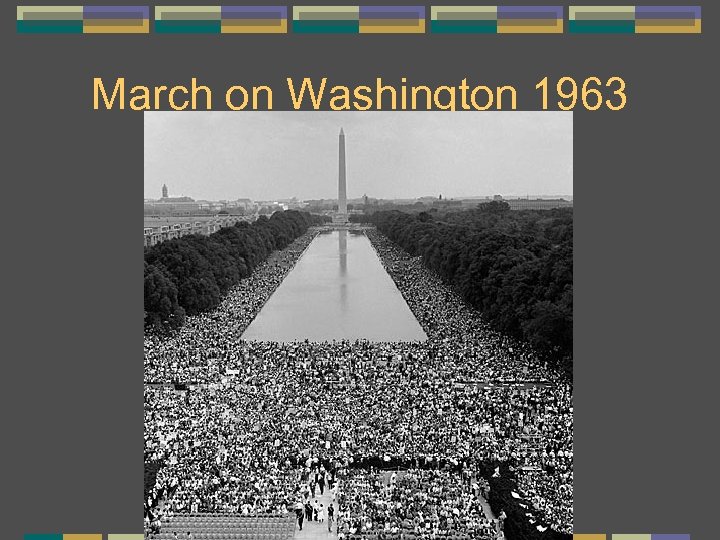
 March on Washington 1963 President Kennedy was pushing for a civil rights bill. To show support, 500, 000 African Americans went to Washington D. C.
 March on Washington 1963
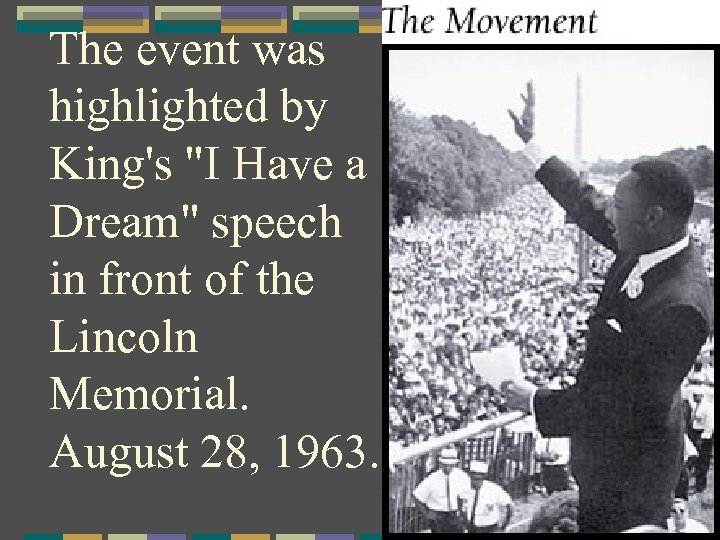 The event was highlighted by King's "I Have a Dream" speech in front of the Lincoln Memorial. August 28, 1963.
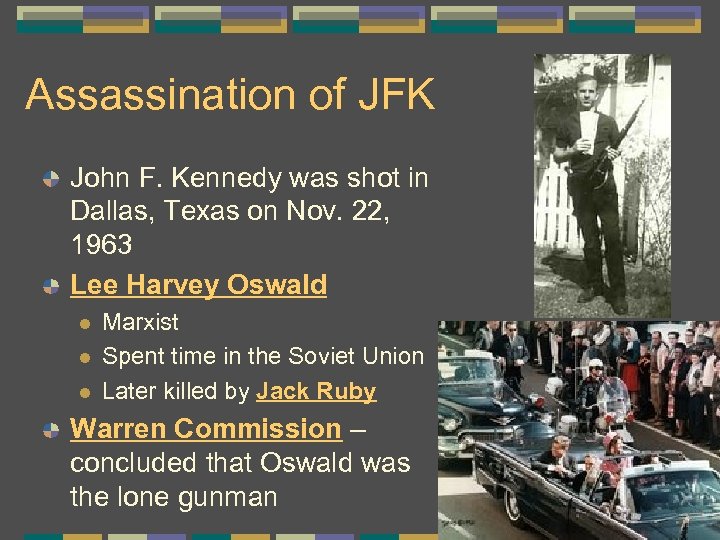 Assassination of JFK John F. Kennedy was shot in Dallas, Texas on Nov. 22, 1963 Lee Harvey Oswald l l l Marxist Spent time in the Soviet Union Later killed by Jack Ruby Warren Commission – concluded that Oswald was the lone gunman
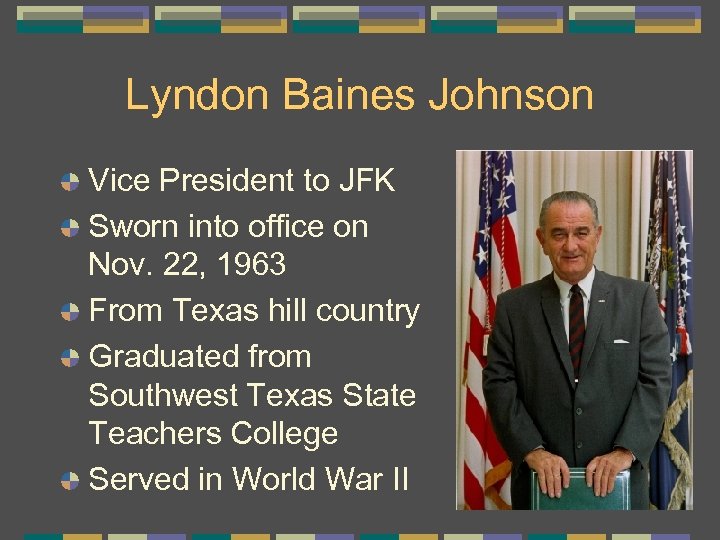 Lyndon Baines Johnson Vice President to JFK Sworn into office on Nov. 22, 1963 From Texas hill country Graduated from Southwest Texas State Teachers College Served in World War II
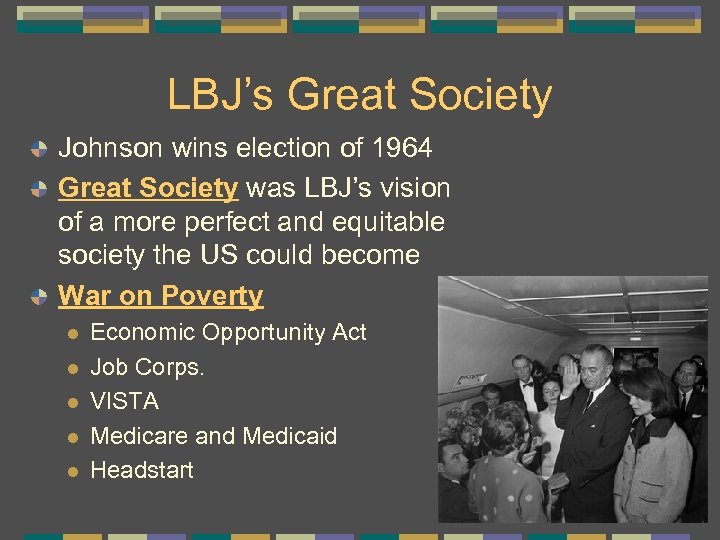 LBJ’s Great Society Johnson wins election of 1964 Great Society was LBJ’s vision of a more perfect and equitable society the US could become War on Poverty l l l Economic Opportunity Act Job Corps. VISTA Medicare and Medicaid Headstart
 Civil Rights Act of 1964 Banned segregation in public places such as restaurants, buses
 Lyndon B. Johnson ’ 63 -’ 68 Pushed Civil Rights Act through Congress Passed more procivil rights laws than any other president
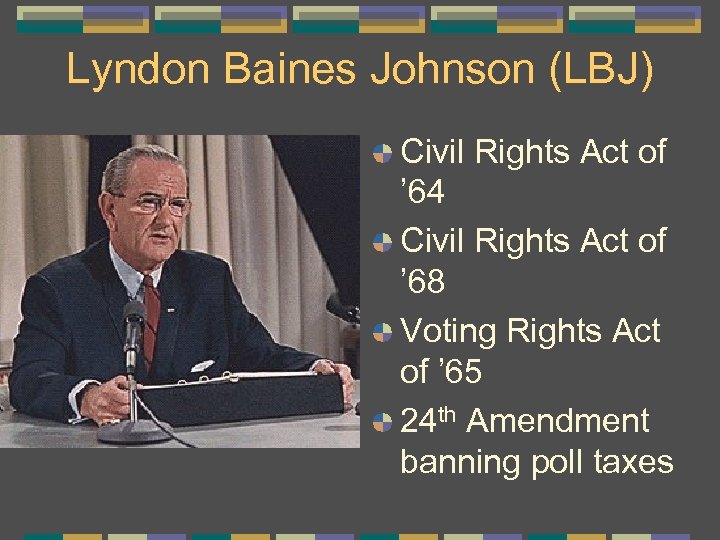 Lyndon Baines Johnson (LBJ) Civil Rights Act of ’ 64 Civil Rights Act of ’ 68 Voting Rights Act of ’ 65 24 th Amendment banning poll taxes
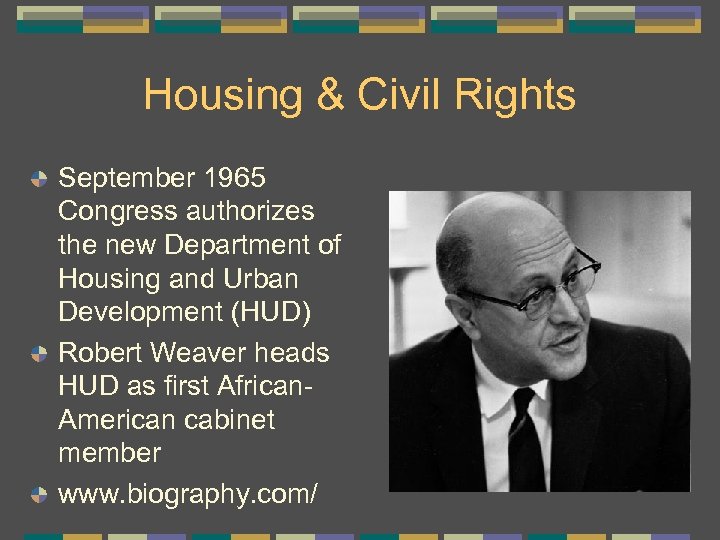 Housing & Civil Rights September 1965 Congress authorizes the new Department of Housing and Urban Development (HUD) Robert Weaver heads HUD as first African. American cabinet member www. biography. com/
 1960 s Housing Policy Task 1) Groups of 2 or 3 conduct policymaking investigation 2) Review exhibits of various documents and identify & explain their relation to important government concepts listed the guide 3) Return and obtain another exhibit, repeat 4) Complete the questions on their worksheet and be ready to share their findings in class
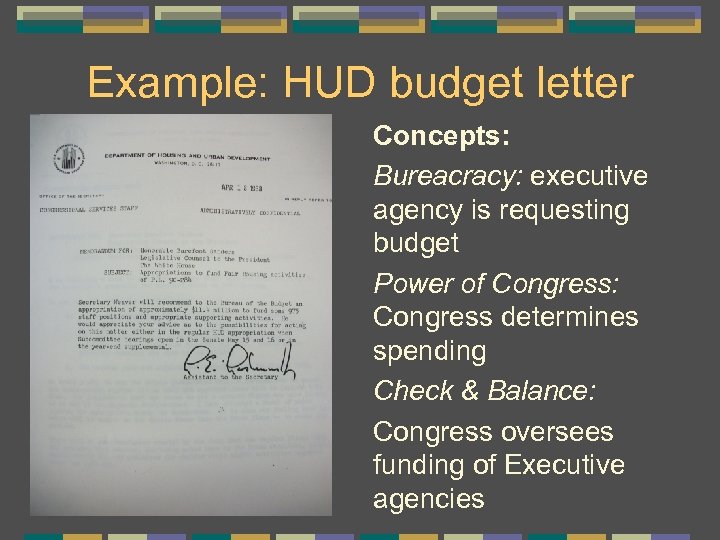 Example: HUD budget letter Concepts: Bureacracy: executive agency is requesting budget Power of Congress: Congress determines spending Check & Balance: Congress oversees funding of Executive agencies