 Скачать презентацию POLICY OBJECTIVES FOR THE DEVELOPMENT OF SKILLS RECOGNITION
4be010f418fa2b904cb9714cbba51aea.ppt
- Количество слайдов: 33



POLICY OBJECTIVES FOR THE DEVELOPMENT OF SKILLS RECOGNITION SYSTEMS AND HOW COUNTRIES IN ASIA AND THE PACIFIC ARE RESPONDING
1 SRI LANKA 2 SINGAPORE 3 HONG KONG 4 THE PHILIPPINES 5 VANUATU 6 THE MALDIVES
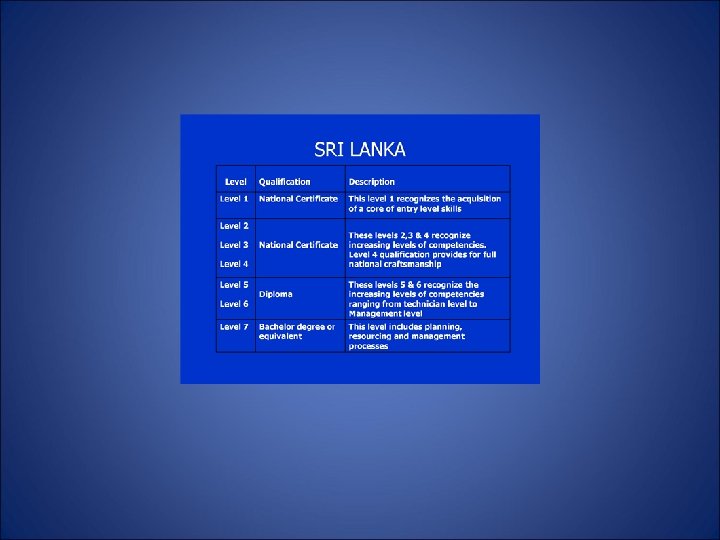
1 SRI LANKA National Vocational Qualifications Framework
POLICY OBJECTIVES: • To ensure national and international recognition of skills • To match the supply of skills training with market demand • To give recognition to qualifications acquired through the NVQ system • To create an internationally competitive workforce
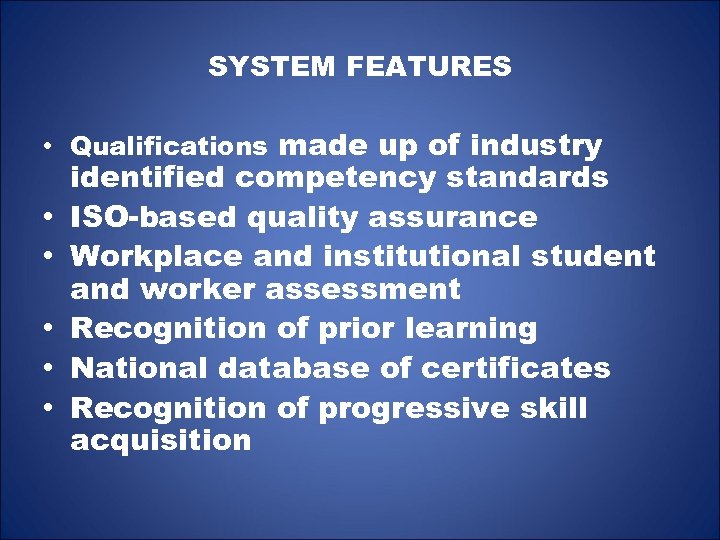
SYSTEM FEATURES • Qualifications made up of industry • • • identified competency standards ISO-based quality assurance Workplace and institutional student and worker assessment Recognition of prior learning National database of certificates Recognition of progressive skill acquisition
2 SINGAPORE Workforce Skills Qualifications System
POLICY OBJECTIVES • To support economic growth and • the national strategy for industry development by • bridging structural skills gaps and • providing ways for workers to be - trained for new jobs or - to upgrade existing skills
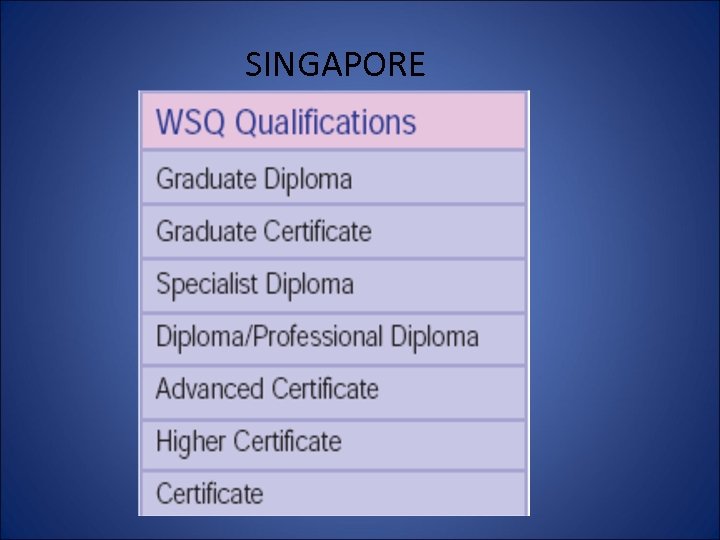
SINGAPORE
SYSTEM FEATURES • Qualifications developed by industry • Modular qualifications with industry knowledge and skills as well as generic and portable skills • Progressive statements of attainment • Monitoring of quality • Inclusion of employability skills
3 HONG KONG SAR, CHINA The Hong Kong Qualifications Framework
POLICY OBJECTIVES § To support Hong Kong’s transformation into a knowledge-based economy § To ensure that the local workforce is well equipped to enhance capabilities and competitiveness § To promote sustainable workforce development § To establish flexible pathways for workers and learners to upgrade skills and achieve career goals
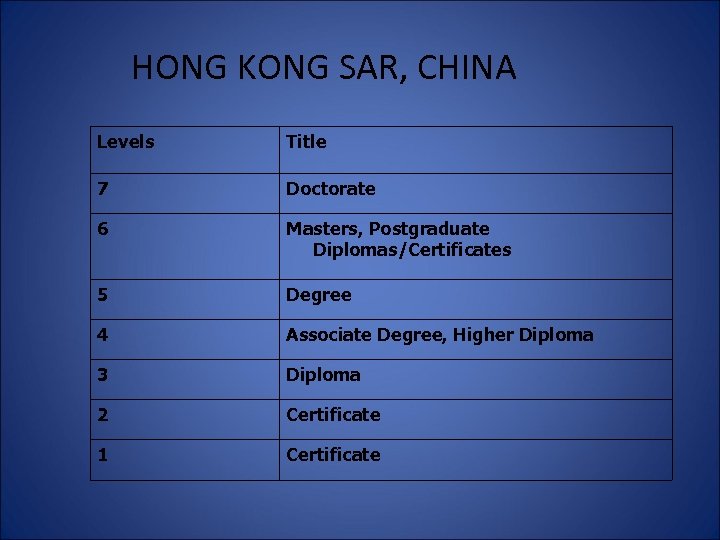
HONG KONG SAR, CHINA Levels Title 7 Doctorate 6 Masters, Postgraduate Diplomas/Certificates 5 Degree 4 Associate Degree, Higher Diploma 3 Diploma 2 Certificate 1 Certificate
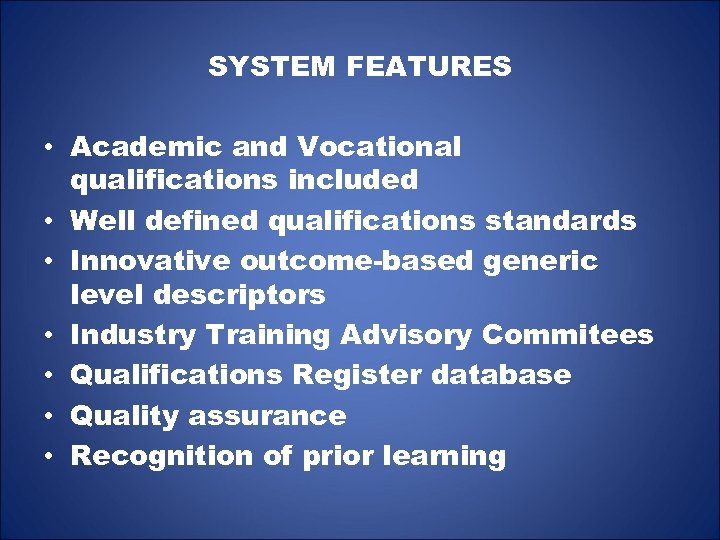
SYSTEM FEATURES • Academic and Vocational qualifications included • Well defined qualifications standards • Innovative outcome-based generic level descriptors • Industry Training Advisory Commitees • Qualifications Register database • Quality assurance • Recognition of prior learning
4 THE PHILIPPINES The Philippine TVET Qualifications Framework The Philippine National Qualifications Framework
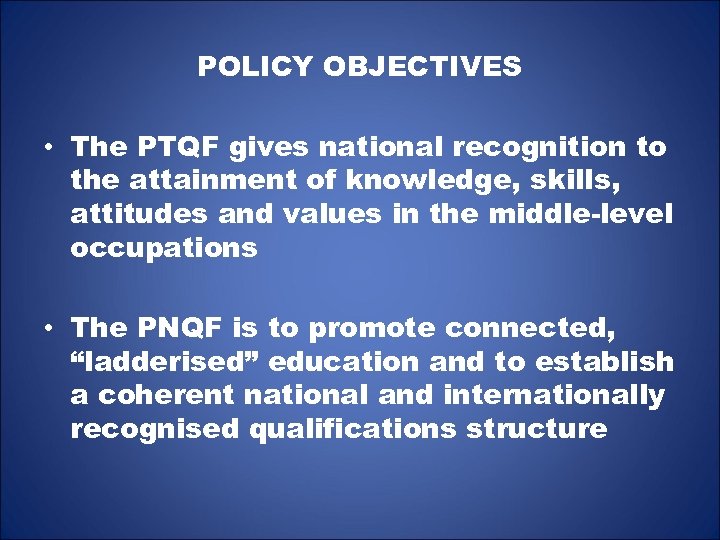
POLICY OBJECTIVES • The PTQF gives national recognition to the attainment of knowledge, skills, attitudes and values in the middle-level occupations • The PNQF is to promote connected, “ladderised” education and to establish a coherent national and internationally recognised qualifications structure
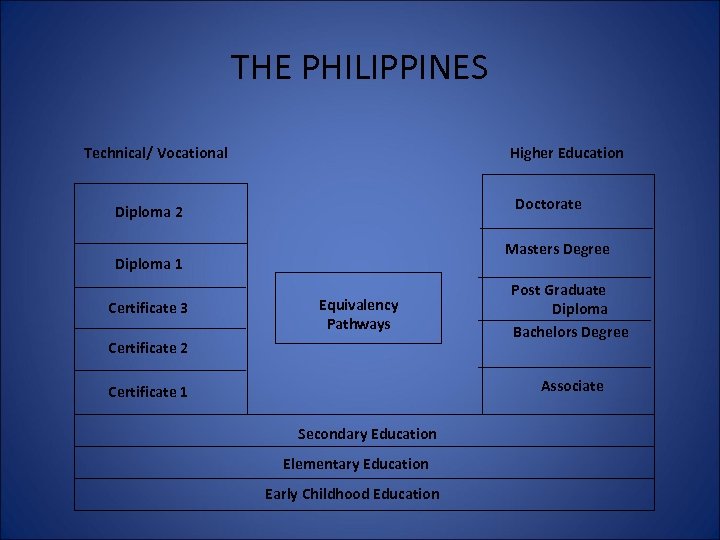
THE PHILIPPINES Technical/ Vocational Higher Education Doctorate Diploma 2 Masters Degree Diploma 1 Certificate 3 Equivalency Pathways Certificate 2 Post Graduate Diploma Bachelors Degree Associate Certificate 1 Secondary Education Elementary Education Early Childhood Education
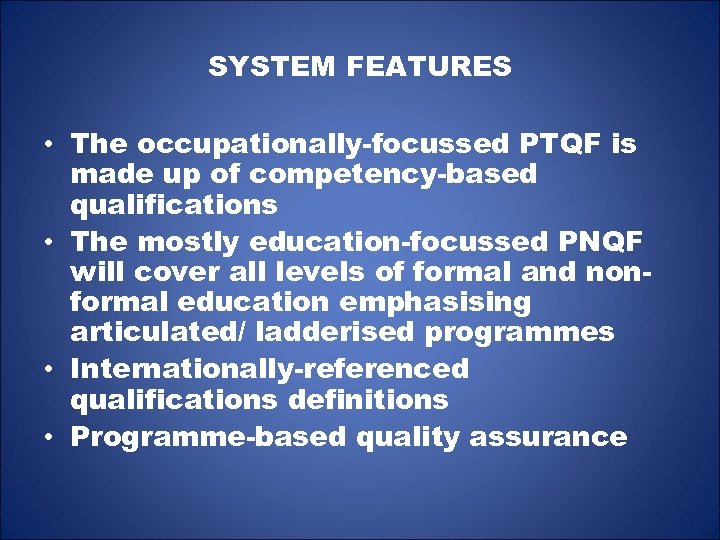
SYSTEM FEATURES • The occupationally-focussed PTQF is made up of competency-based qualifications • The mostly education-focussed PNQF will cover all levels of formal and nonformal education emphasising articulated/ ladderised programmes • Internationally-referenced qualifications definitions • Programme-based quality assurance
5 VANUATAU The Vanuatu Qualifications Framework
POLICY OBJECTIVES • To safeguard the standards of technical and vocational qualifications • To ensure TVET qualifications support Vanuatu’s economic future • To provide training options to allow achievement of career and personal ambitions
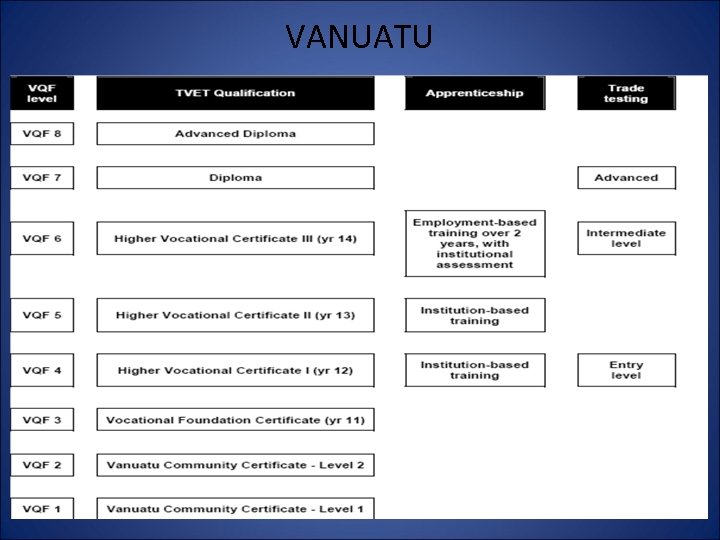
VANUATU
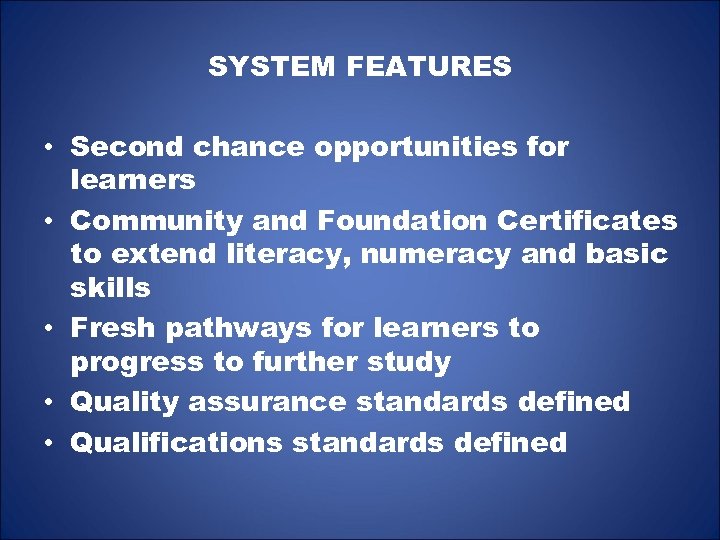
SYSTEM FEATURES • Second chance opportunities for learners • Community and Foundation Certificates to extend literacy, numeracy and basic skills • Fresh pathways for learners to progress to further study • Quality assurance standards defined • Qualifications standards defined
6 THE MALDIVES The Maldives National Qualifications Framework
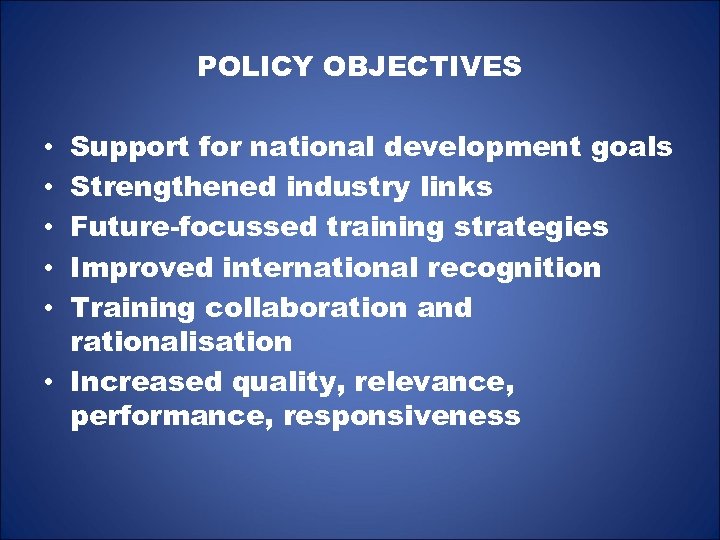
POLICY OBJECTIVES Support for national development goals Strengthened industry links Future-focussed training strategies Improved international recognition Training collaboration and rationalisation • Increased quality, relevance, performance, responsiveness • • •
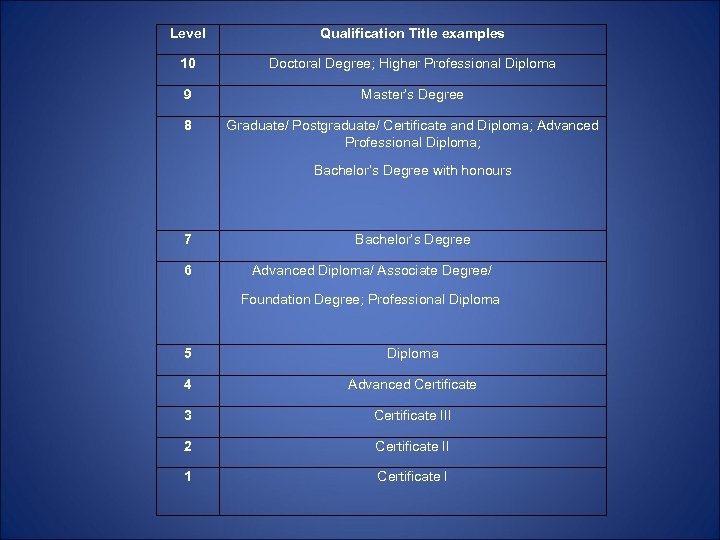
Level Qualification Title examples 10 Doctoral Degree; Higher Professional Diploma 9 Master’s Degree 8 Graduate/ Postgraduate/ Certificate and Diploma; Advanced Professional Diploma; Bachelor’s Degree with honours 7 6 Bachelor’s Degree Advanced Diploma/ Associate Degree/ Foundation Degree; Professional Diploma 5 Diploma 4 Advanced Certificate 3 Certificate III 2 Certificate II 1 Certificate I
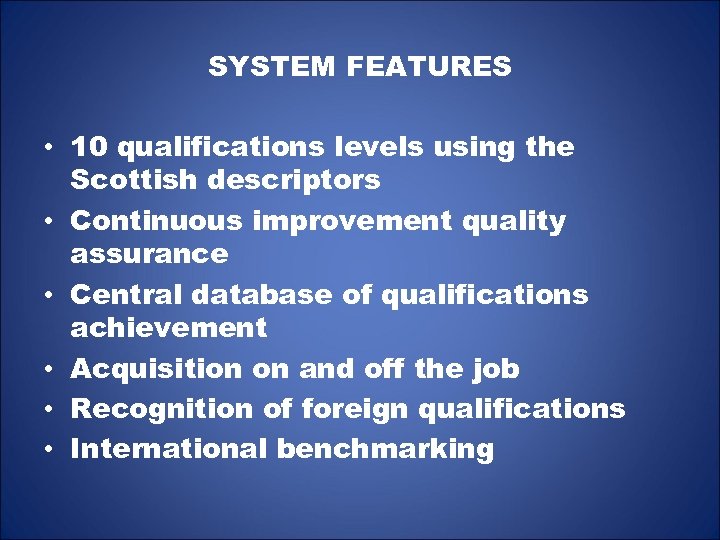
SYSTEM FEATURES • 10 qualifications levels using the Scottish descriptors • Continuous improvement quality assurance • Central database of qualifications achievement • Acquisition on and off the job • Recognition of foreign qualifications • International benchmarking
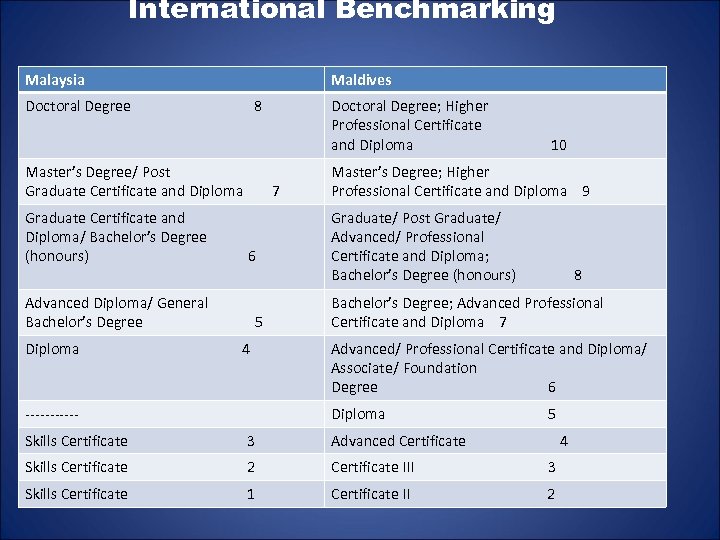
International Benchmarking Malaysia Maldives Doctoral Degree 8 Master’s Degree/ Post Graduate Certificate and Diploma/ Bachelor’s Degree (honours) 7 6 Advanced Diploma/ General Bachelor’s Degree Diploma Doctoral Degree; Higher Professional Certificate and Diploma 5 4 ------ 10 Master’s Degree; Higher Professional Certificate and Diploma 9 Graduate/ Post Graduate/ Advanced/ Professional Certificate and Diploma; Bachelor’s Degree (honours) 8 Bachelor’s Degree; Advanced Professional Certificate and Diploma 7 Advanced/ Professional Certificate and Diploma/ Associate/ Foundation Degree 6 Diploma 5 Skills Certificate 3 Advanced Certificate 4 Skills Certificate 2 Certificate III 3 Skills Certificate 1 Certificate II 2
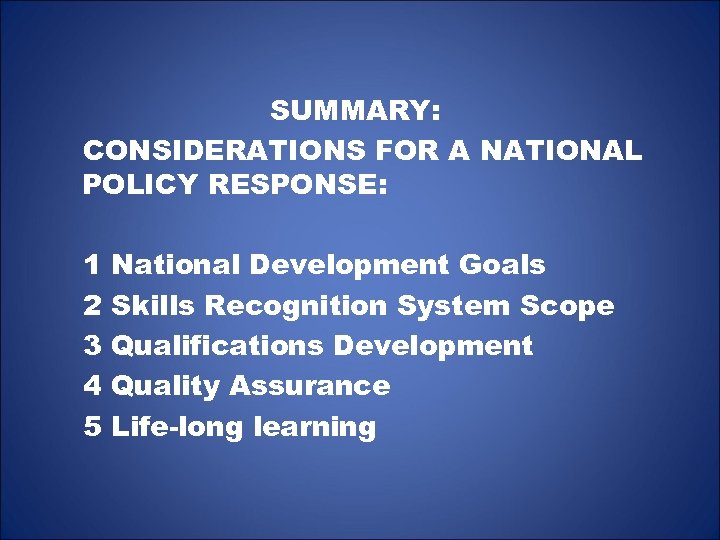
SUMMARY: CONSIDERATIONS FOR A NATIONAL POLICY RESPONSE: 1 2 3 4 5 National Development Goals Skills Recognition System Scope Qualifications Development Quality Assurance Life-long learning
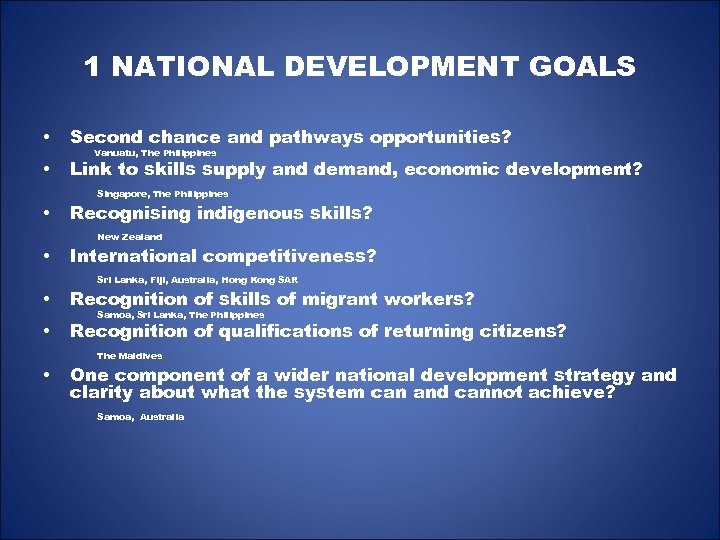
1 NATIONAL DEVELOPMENT GOALS • Second chance and pathways opportunities? • Link to skills supply and demand, economic development? Vanuatu, The Philippines Singapore, The Philippines • Recognising indigenous skills? New Zealand • International competitiveness? Sri Lanka, Fiji, Australia, Hong Kong SAR • Recognition of skills of migrant workers? • Recognition of qualifications of returning citizens? Samoa, Sri Lanka, The Philippines The Maldives • One component of a wider national development strategy and clarity about what the system can and cannot achieve? Samoa, Australia
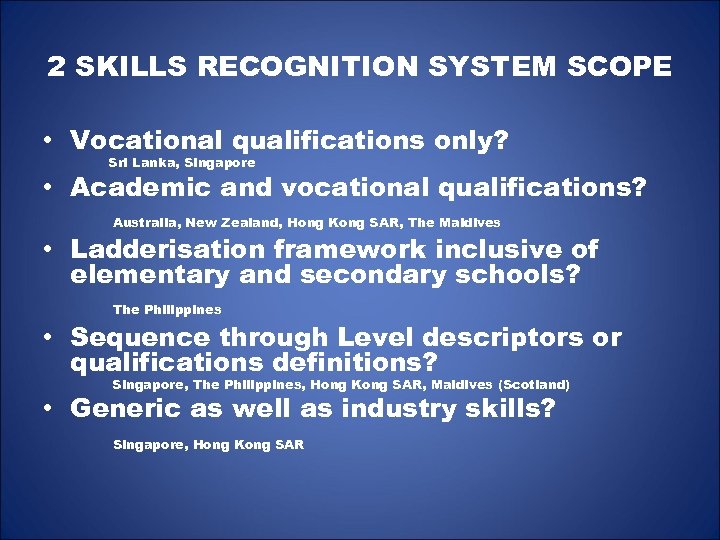
2 SKILLS RECOGNITION SYSTEM SCOPE • Vocational qualifications only? Sri Lanka, Singapore • Academic and vocational qualifications? Australia, New Zealand, Hong Kong SAR, The Maldives • Ladderisation framework inclusive of elementary and secondary schools? The Philippines • Sequence through Level descriptors or qualifications definitions? Singapore, The Philippines, Hong Kong SAR, Maldives (Scotland) • Generic as well as industry skills? Singapore, Hong Kong SAR
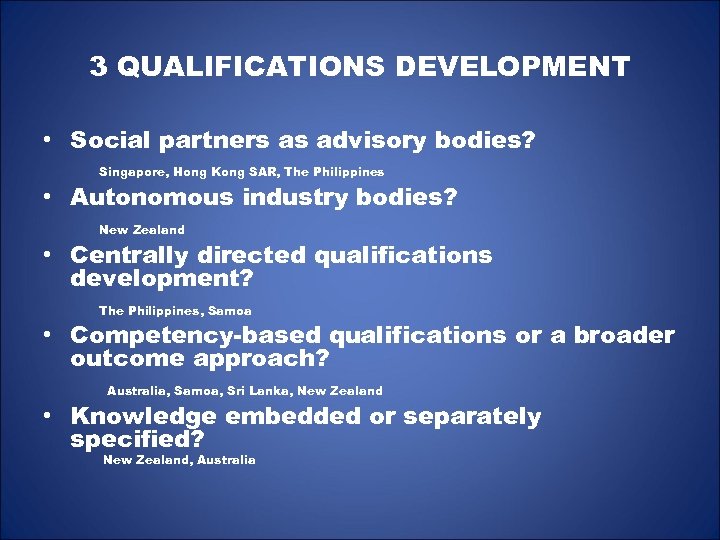
3 QUALIFICATIONS DEVELOPMENT • Social partners as advisory bodies? Singapore, Hong Kong SAR, The Philippines • Autonomous industry bodies? New Zealand • Centrally directed qualifications development? The Philippines, Samoa • Competency-based qualifications or a broader outcome approach? Australia, Samoa, Sri Lanka, New Zealand • Knowledge embedded or separately specified? New Zealand, Australia
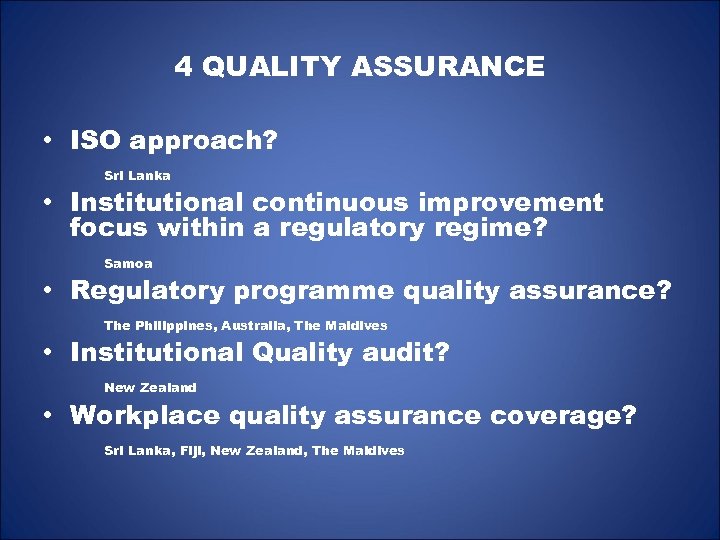
4 QUALITY ASSURANCE • ISO approach? Sri Lanka • Institutional continuous improvement focus within a regulatory regime? Samoa • Regulatory programme quality assurance? The Philippines, Australia, The Maldives • Institutional Quality audit? New Zealand • Workplace quality assurance coverage? Sri Lanka, Fiji, New Zealand, The Maldives
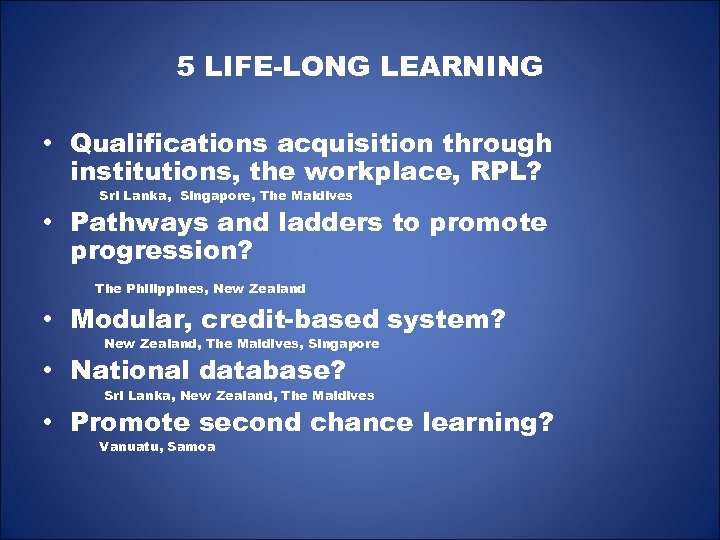
5 LIFE-LONG LEARNING • Qualifications acquisition through institutions, the workplace, RPL? Sri Lanka, Singapore, The Maldives • Pathways and ladders to promote progression? The Philippines, New Zealand • Modular, credit-based system? New Zealand, The Maldives, Singapore • National database? Sri Lanka, New Zealand, The Maldives • Promote second chance learning? Vanuatu, Samoa
Скачать презентацию POLICY OBJECTIVES FOR THE DEVELOPMENT OF SKILLS RECOGNITION
4be010f418fa2b904cb9714cbba51aea.ppt