


 Скачать презентацию poh me Dito na er na u
a846642a5456504a7e84ea7cb56a1763.ppt
- Количество слайдов: 43

 poh me, Dito na er na u? : w nd y on Taglish a A stud g ellished textin Emb Abacan Aguila Atienza De Castro Nagase Nallas
 Outline of the report I. III. IV. V. a) History of Texting Thesis Statement Scope and Limitation Definition of Terms Frameworks Hespock Spelkes’ Conceptual Precursors to Language b) Linguistics c) Elitism d) Colonial Mentality V. Analysis of Texting VI. Survey Analysis VII. Conclusion a) Embellished Texting b) Taglish Texting III. What Lies Ahead?
 istory of H Texting
 History of Texting: The Cellphone Motorola Dyna-Tac Martin Cooper of Motorola
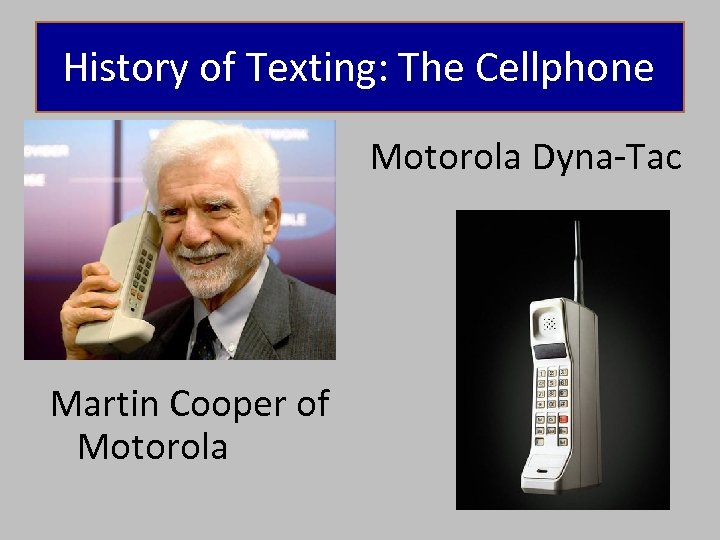
 History of Texting: The Cellphone • Federal Communications Commission (FCC) • New York City • April 3, 1973 • AT&T Bell Labs
 "People want to talk to other people - not a house, or an office, or a car. Given a choice, people will demand the freedom to communicate wherever they are, unfettered by the infamous copper wire. It is that freedom we sought to vividly demonstrate in 1973. "
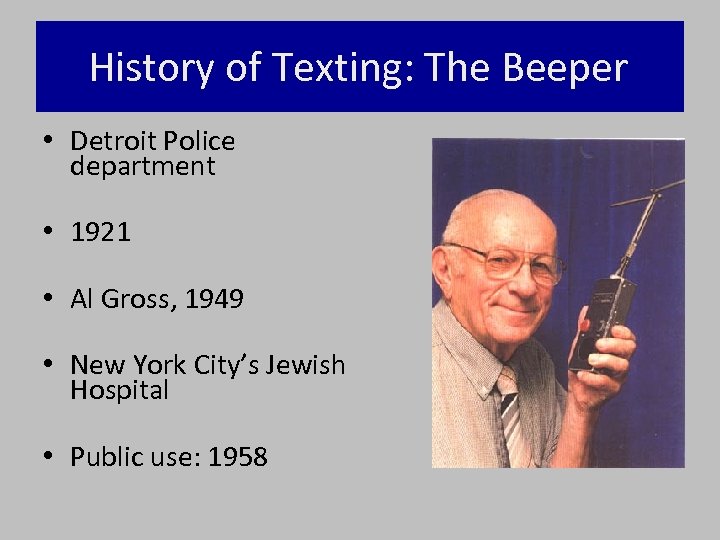 History of Texting: The Beeper • Detroit Police department • 1921 • Al Gross, 1949 • New York City’s Jewish Hospital • Public use: 1958
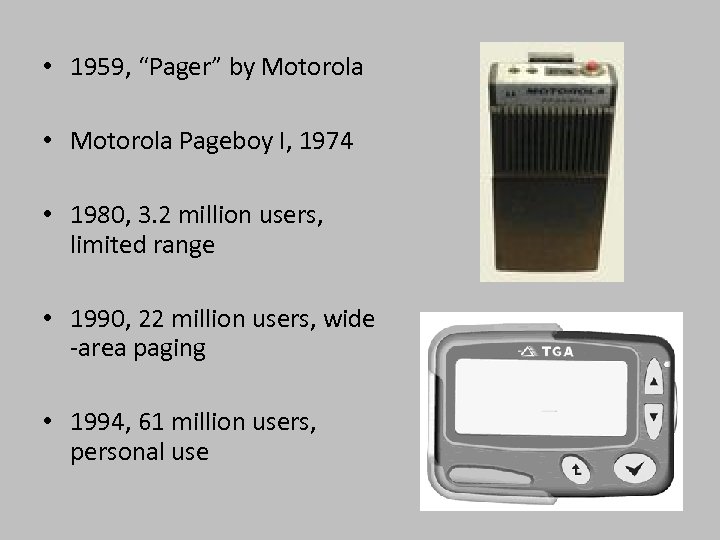 • 1959, “Pager” by Motorola • Motorola Pageboy I, 1974 • 1980, 3. 2 million users, limited range • 1990, 22 million users, wide -area paging • 1994, 61 million users, personal use
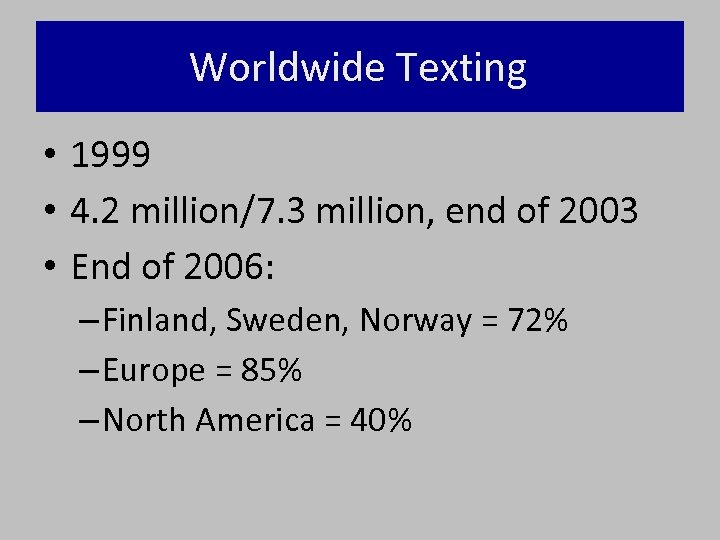 Worldwide Texting • 1999 • 4. 2 million/7. 3 million, end of 2003 • End of 2006: – Finland, Sweden, Norway = 72% – Europe = 85% – North America = 40%
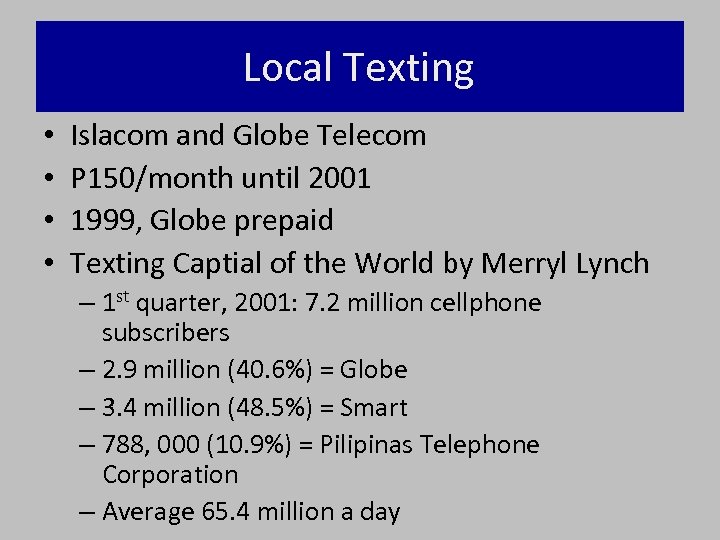 Local Texting • • Islacom and Globe Telecom P 150/month until 2001 1999, Globe prepaid Texting Captial of the World by Merryl Lynch – 1 st quarter, 2001: 7. 2 million cellphone subscribers – 2. 9 million (40. 6%) = Globe – 3. 4 million (48. 5%) = Smart – 788, 000 (10. 9%) = Pilipinas Telephone Corporation – Average 65. 4 million a day
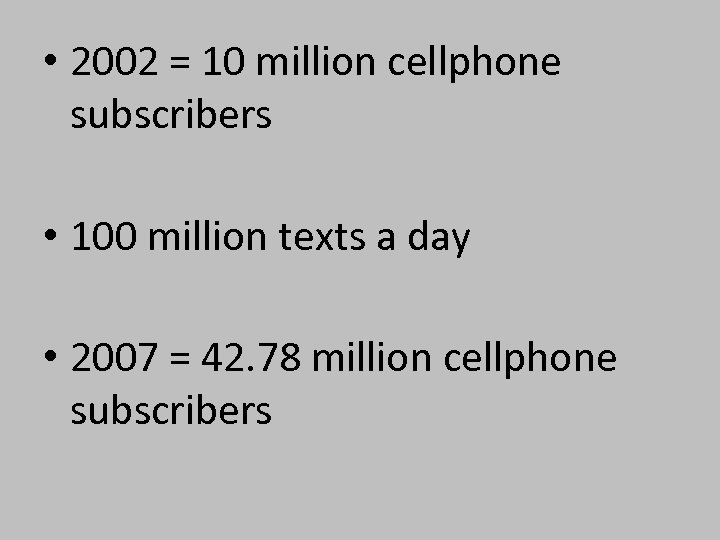 • 2002 = 10 million cellphone subscribers • 100 million texts a day • 2007 = 42. 78 million cellphone subscribers
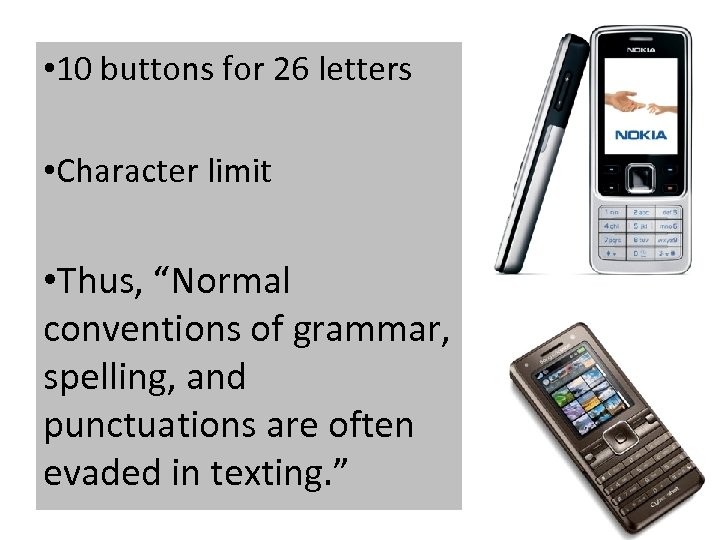 • 10 buttons for 26 letters • Character limit • Thus, “Normal conventions of grammar, spelling, and punctuations are often evaded in texting. ”
 Proliferation • Easily communicate • “Texting the unsayable” • Avoid confrontation • Text as talk
 Thesis tement Sta
 Thesis Statement In the Philippine context, two kinds of texting—Taglish texting and embellished texting--are reflections of how culture and mindsets affect language, specifically the youth’s texting language.
 ope and Sc Limitation
 Scope and Limitations The study covers the different texting styles as reflected in Philippine culture, with particular focus on Taglish Texting and Embellished Texting Two types of data will be used: Primary Data: survey conducted by the group Secondary data: Examples from previous studies
 inition of Def Terms
 Definition of Terms Taglish Texting - The use of Tagalog infused with English terms - An example of Code Switching • Alternating between two languages or dialects • Participants are usually have knowledge on the two languages used
 Definition of Terms Embellished Texting The process of affixing additional letters and symbols for decorative purposes.
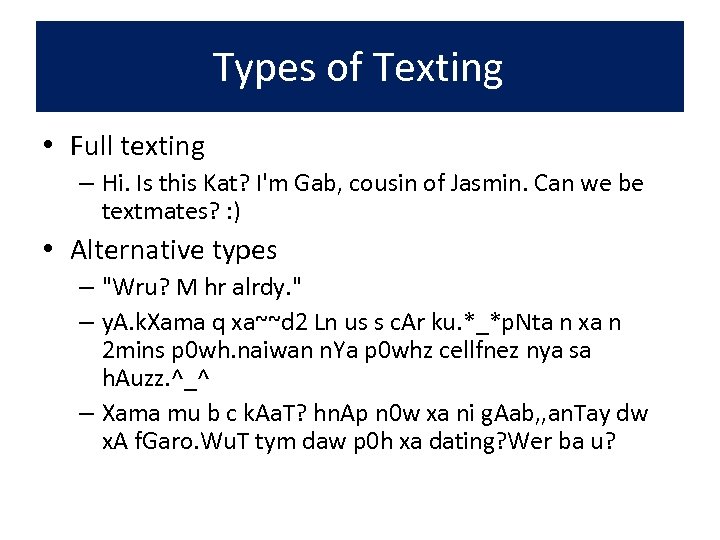 Types of Texting • Full texting – Hi. Is this Kat? I'm Gab, cousin of Jasmin. Can we be textmates? : ) • Alternative types – "Wru? M hr alrdy. " – y. A. k. Xama q xa~~d 2 Ln us s c. Ar ku. *_*p. Nta n xa n 2 mins p 0 wh. naiwan n. Ya p 0 whz cellfnez nya sa h. Auzz. ^_^ – Xama mu b c k. Aa. T? hn. Ap n 0 w xa ni g. Aab, , an. Tay dw x. A f. Garo. Wu. T tym daw p 0 h xa dating? Wer ba u?
 Typesof Texting Types of Texting • What can we see in these alternative types – Burloloy • English Definition: Tagalog slang for brick-a-brac, stuff, decorative items, ornaments, jewelry ; – palamuti, dekorasyon, gayak • In our homes • Jeepneys and Taxis
 meworks Fra
 Conceptual Framework 1 Hespos and Spelke’s “Conceptual Precursors to Language” - thought before language rather than language before thought - concepts already exist before we put them into words -language learning develops by linking linguistic forms to pre-existing representations of meaning
 Conceptual Framework 2 Linguistic Concepts Linguistic Borrowing • Adaptation of another language into another • Usually from a culture that is view as more superior Linguistic Interference • The importing of the structure of the language of the culture they perceive as superior
 Conceptual Framework 3 Elitism Critique • taste and style are socially and culturally determined Strinati, p. 39 “An elitist position assumes that popular mass culture can only be understood and interpreted properly from the vantage point provided by high culture or ‘high’ theory, from the principles derived from the aesthetics and taste of cultural and intellectual elites. ”
 Conceptual Framework - Filipino mass culture is deemed to be elitist because the elite believe that their tastes and preferences are superior to those who are below them. - The elite believe that their tastes and they themselves are classy, elegant, learned, educated and cultured. - These characteristics become the basis of the elite’s judgment and analysis of mass culture. - They develop a sense of superiority - This superiority overshadows the masses’ tastes and opinions, and dominates the analyses of popular culture
 Conceptual Framework 4 Colonial Mentality - Foreign culture influences people’s taste and preferences - Creates a basis or standard wherein all foreign things are deemed to be cool, classy, proper - Affects people’s judgments
 Embellished Texting Analysis Filipinos have a “maburloloy” way of thinking. They feel like they have to fill every empty space with something 30
 Embellished Texting Analysis since culture comes before language (hespos and spelke), our embellished texting style may be an illustration of our culture of wanting to fill up space 31
 Taglish Texting Analysis taglish texting = a form of code switching illustrates linguistic interference/language transfer 32
 Taglish Texting Analysis may be an illustration of colonial mentality because nations tend to borrow a lot from a language they find “superior” 33
 y Results Surve
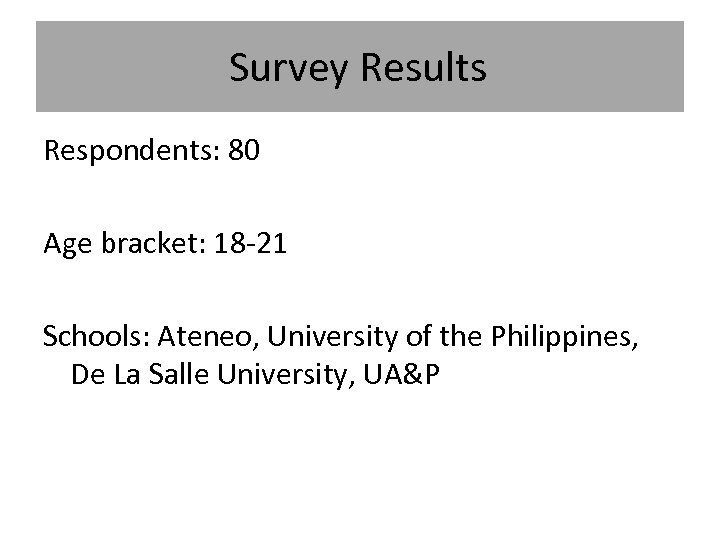 Survey Results Respondents: 80 Age bracket: 18 -21 Schools: Ateneo, University of the Philippines, De La Salle University, UA&P
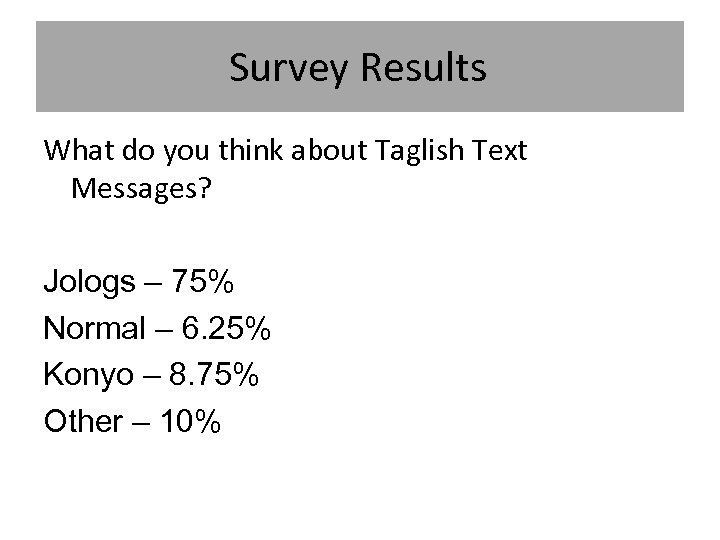 Survey Results What do you think about Taglish Text Messages? Jologs – 75% Normal – 6. 25% Konyo – 8. 75% Other – 10%
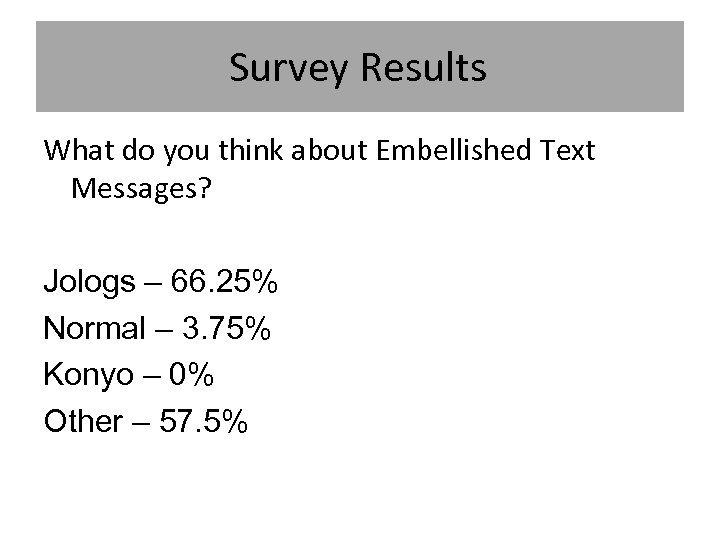 Survey Results What do you think about Embellished Text Messages? Jologs – 66. 25% Normal – 3. 75% Konyo – 0% Other – 57. 5%
 nalysis of A Results Survey
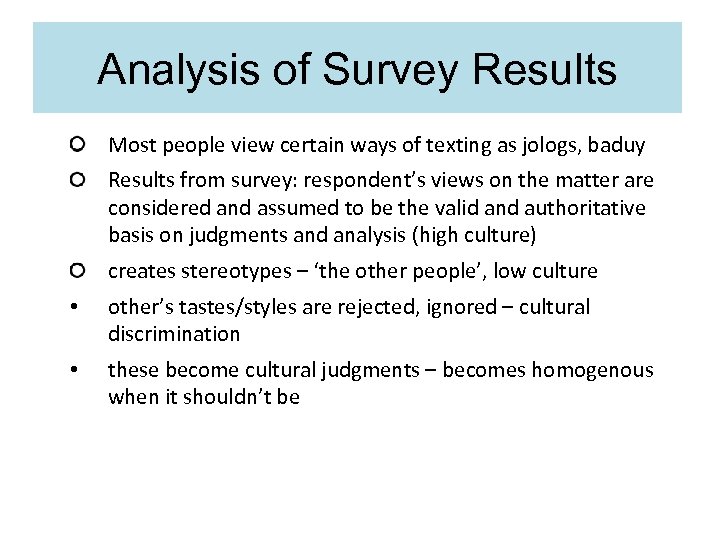 Analysis of Survey Results Most people view certain ways of texting as jologs, baduy Results from survey: respondent’s views on the matter are considered and assumed to be the valid and authoritative basis on judgments and analysis (high culture) creates stereotypes – ‘the other people’, low culture • other’s tastes/styles are rejected, ignored – cultural discrimination • these become cultural judgments – becomes homogenous when it shouldn’t be
 nclusion Co
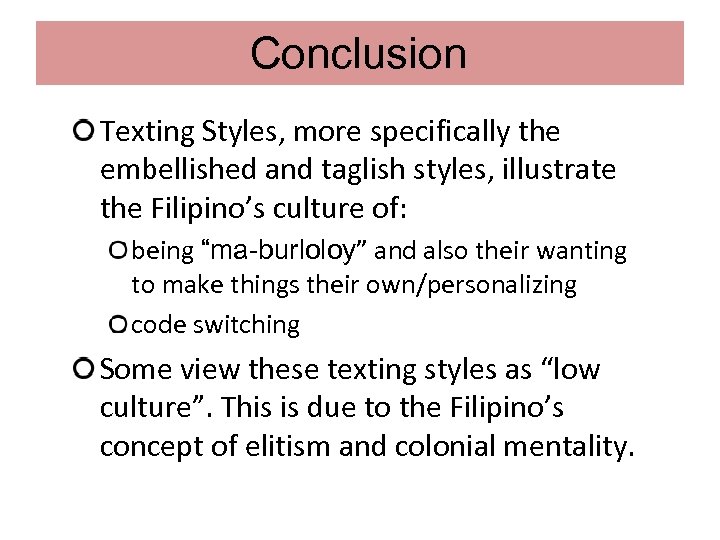 Conclusion Texting Styles, more specifically the embellished and taglish styles, illustrate the Filipino’s culture of: being “ma-burloloy” and also their wanting to make things their own/personalizing code switching Some view these texting styles as “low culture”. This is due to the Filipino’s concept of elitism and colonial mentality.
 Conclusion Some view these texting styles as “low culture”. This is due to both the elitist views and colonial mentality of some Filipinos. Since being “ma-burloloy” is associated with the Filipino culture, the embellished texting style is sometimes viewed as part of a “low culture”. 42
 OF THE END REPORT