


 Скачать презентацию Poet Playwright Actor Gentleman William
22aa9ac31fdf75c93a95fd20d3be1530.ppt
- Количество слайдов: 18
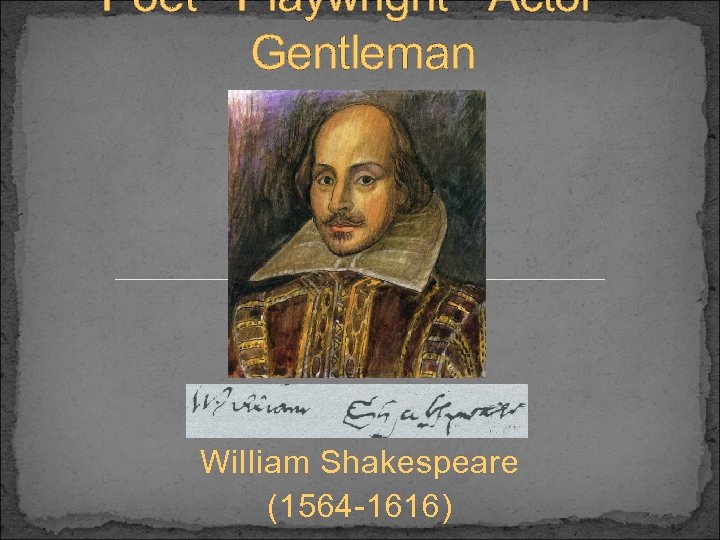 Poet • Playwright • Actor • Gentleman William Shakespeare (1564 -1616)
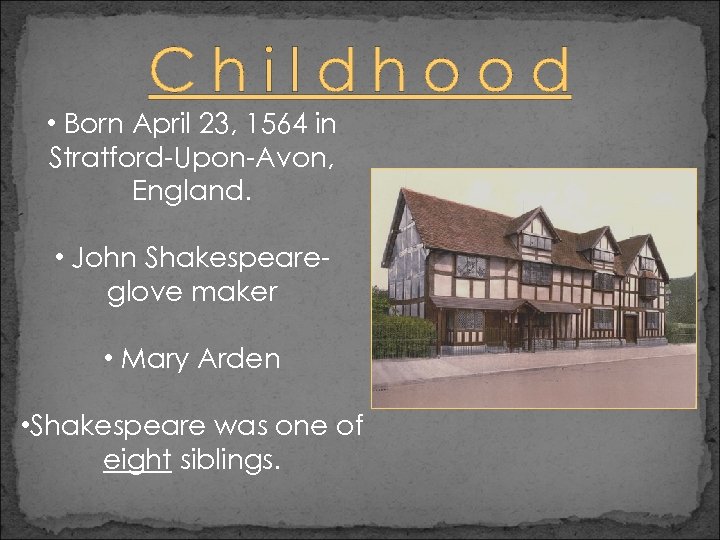 Childhood • Born April 23, 1564 in Stratford-Upon-Avon, England. • John Shakespeareglove maker • Mary Arden • Shakespeare was one of eight siblings.
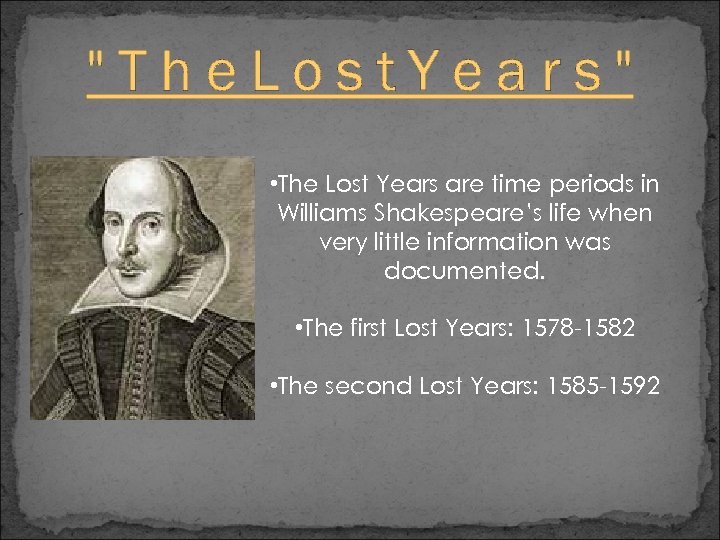 "The. Lost. Years" • The Lost Years are time periods in Williams Shakespeare’s life when very little information was documented. • The first Lost Years: 1578 -1582 • The second Lost Years: 1585 -1592
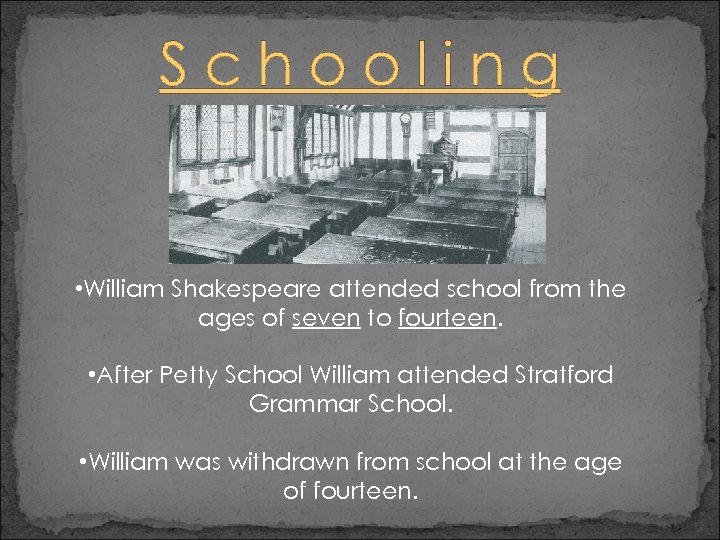 Schooling • William Shakespeare attended school from the ages of seven to fourteen. • After Petty School William attended Stratford Grammar School. • William was withdrawn from school at the age of fourteen.
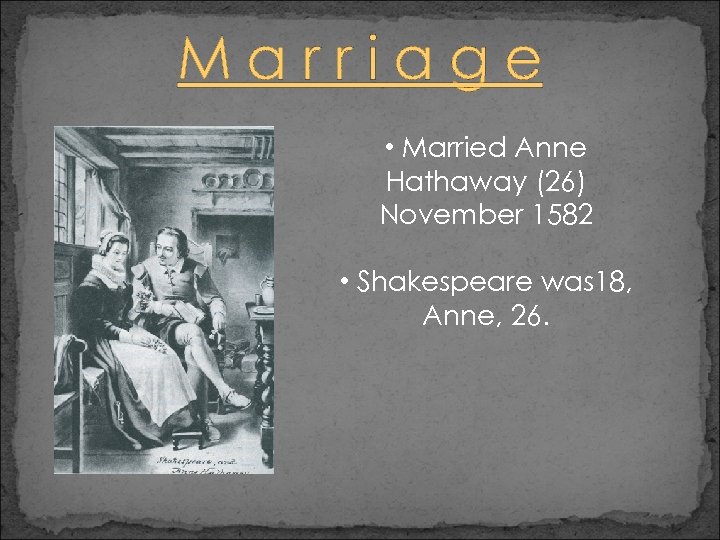 Marriage • Married Anne Hathaway (26) November 1582 • Shakespeare was 18, Anne, 26.
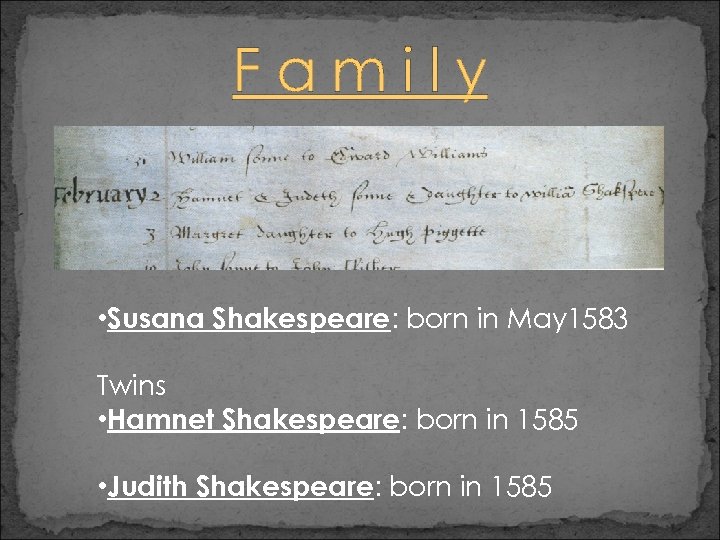 Family • Susana Shakespeare: born in May 1583 Twins • Hamnet Shakespeare: born in 1585 • Judith Shakespeare: born in 1585
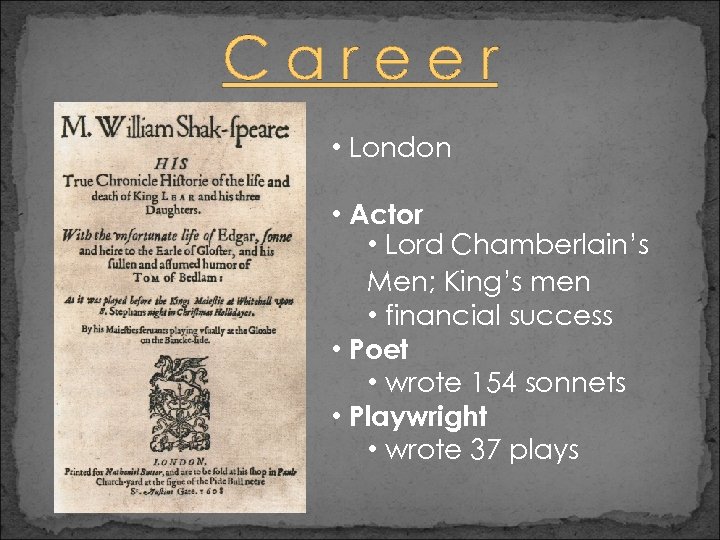 Career • London • Actor • Lord Chamberlain’s Men; King’s men • financial success • Poet • wrote 154 sonnets • Playwright • wrote 37 plays
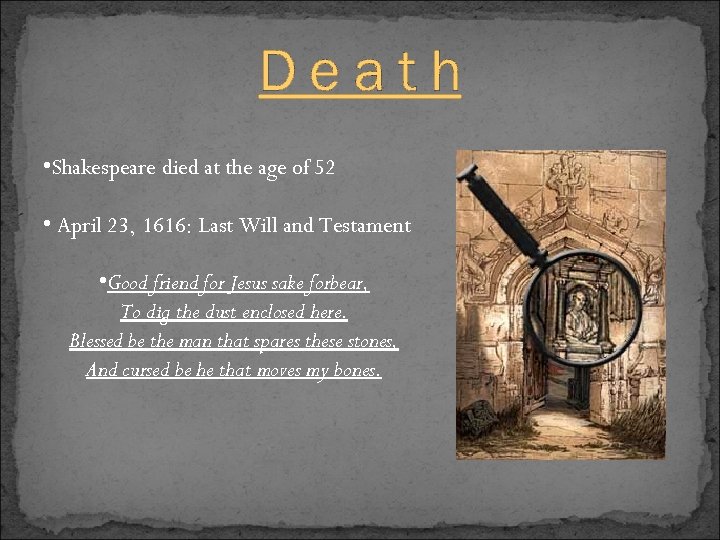 Death • Shakespeare died at the age of 52 • April 23, 1616: Last Will and Testament • Good friend for Jesus sake forbear, To dig the dust enclosed here. Blessed be the man that spares these stones, And cursed be he that moves my bones.
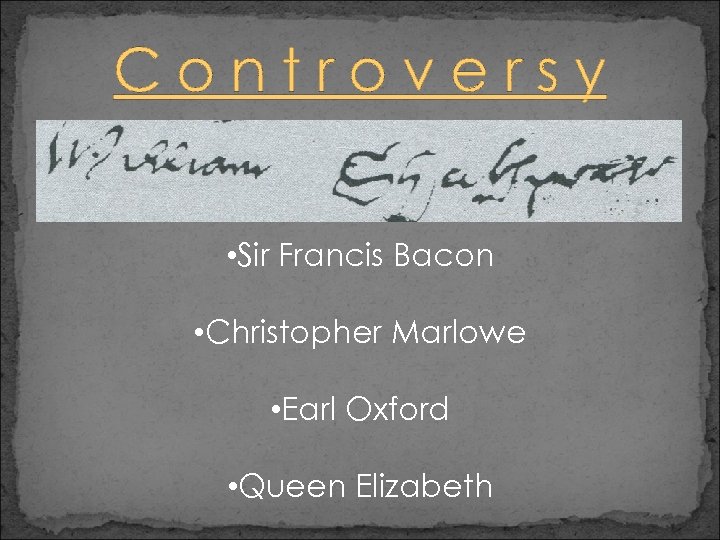 Controversy • Sir Francis Bacon • Christopher Marlowe • Earl Oxford • Queen Elizabeth
 Why so cool? Greatest playwright of all time, even after 400 years Wrote about universal themes LOVE, loss, romance, dreams, human psychology, behaviors and mannerisms Master of the English language Created nearly 2, 000 words Depth of writing
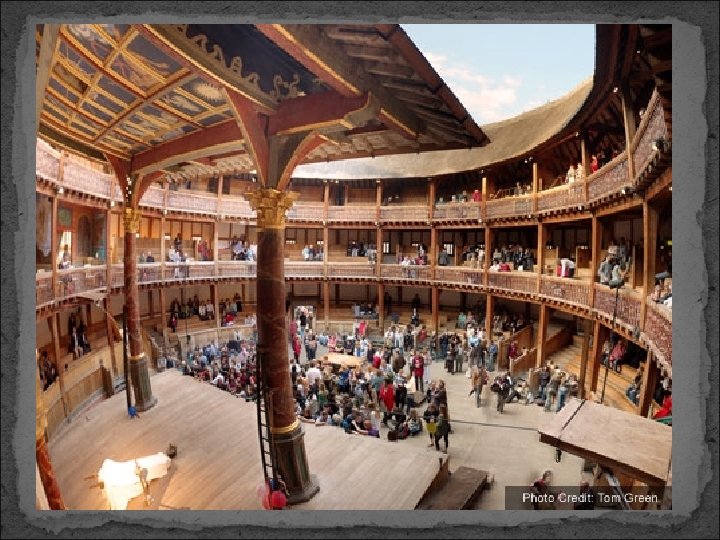
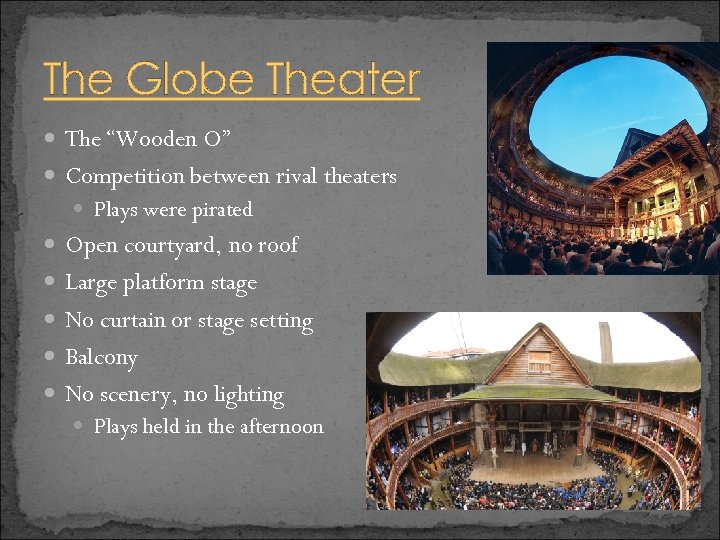 The Globe Theater The “Wooden O” Competition between rival theaters Plays were pirated Open courtyard, no roof Large platform stage No curtain or stage setting Balcony No scenery, no lighting Plays held in the afternoon
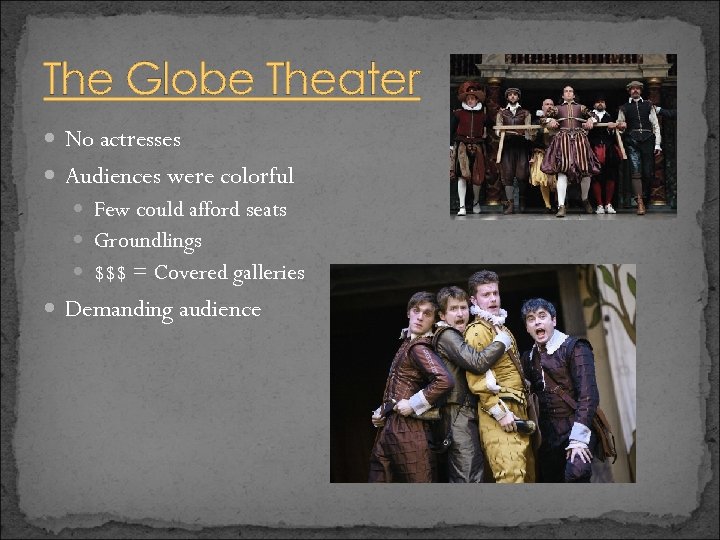 The Globe Theater No actresses Audiences were colorful Few could afford seats Groundlings $$$ = Covered galleries Demanding audience

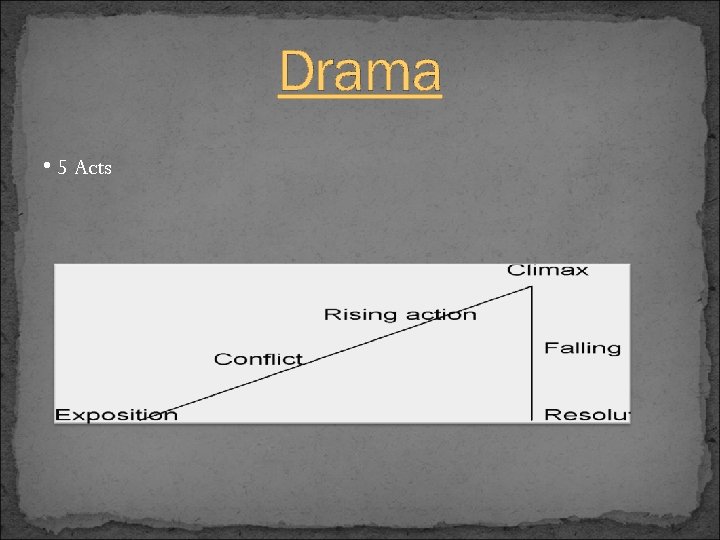 Drama • 5 Acts
 Elizabethan English 500, compared with at least 7, 500 Many words used in the Elizabethan language are no longer in use. Other words have replaced them or the original meaning and use of the words are no longer required An amusing example of words now 'extinct' in the modern English language is 'gong'. The Elizabethan word 'gong' meant dung. The men whose job was to empty and dispose of the waste from the privies (toilets) were called 'Gong Farmers'! The Elizabethan alphabet contained 24 letters, as opposed to the present day alphabet of 26 letters "u" and "v" "i" and "j“ The letter "u" was used only in the middle of a word, and the "v" was used at the beginning! Another letter which resembled a "y" was used to represent the "th" sound. The word "the" was therefore written in a similar way as "ye" would in the modern day
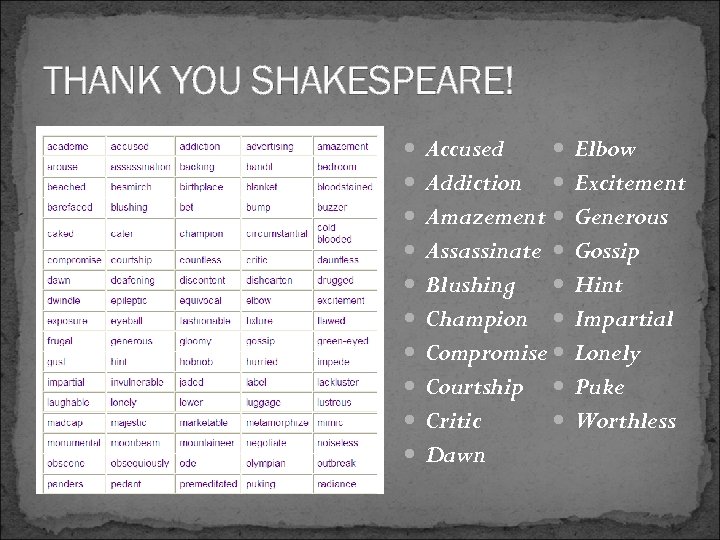 THANK YOU SHAKESPEARE! Accused Elbow Addiction Excitement Amazement Generous Assassinate Gossip Blushing Hint Champion Impartial Compromise Lonely Courtship Puke Critic Worthless Dawn
 Ordering Shakespeare Around I lost my homework