


 Скачать презентацию Plekhanov Russian University of Economics Foreign economic activity
4_Organization design.ppt
- Количество слайдов: 18
 Plekhanov Russian University of Economics Foreign economic activity Lecture 4 INTERNATIONAL ORGANIZATION DESIGN Elena A. Rozhanskaia Department of Foreign Economic Activity Vice-Head of Department, Assistant Professor, Ph. D.
 Objectives • Define and discuss the nature of international organization design and identify and describe the initial impacts of international business activity on organization design • Identify and describe five advanced forms of international organization design and discuss hybrid global designs • Identify and describe related issues in global organization design
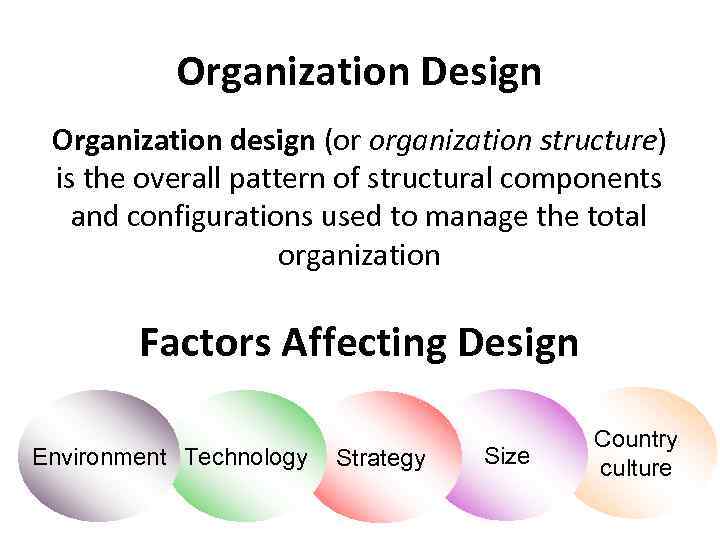 Organization Design Organization design (or organization structure) is the overall pattern of structural components and configurations used to manage the total organization Factors Affecting Design Environment Technology Strategy Size Country culture
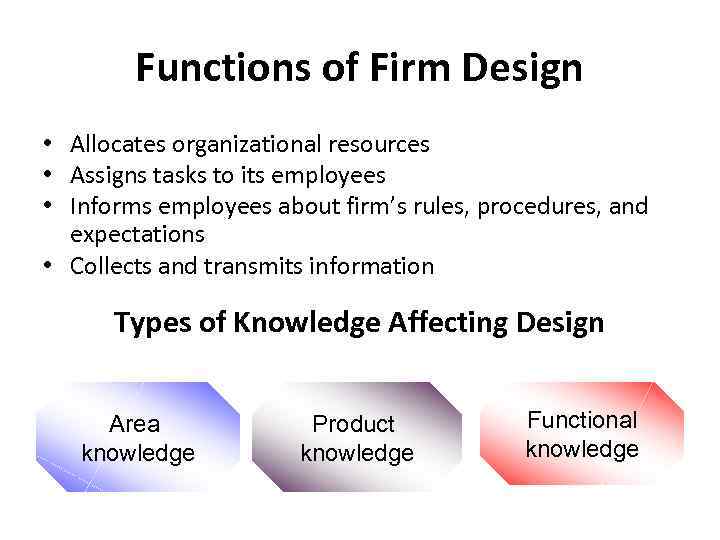 Functions of Firm Design • Allocates organizational resources • Assigns tasks to its employees • Informs employees about firm’s rules, procedures, and expectations • Collects and transmits information Types of Knowledge Affecting Design Area knowledge Product knowledge Functional knowledge
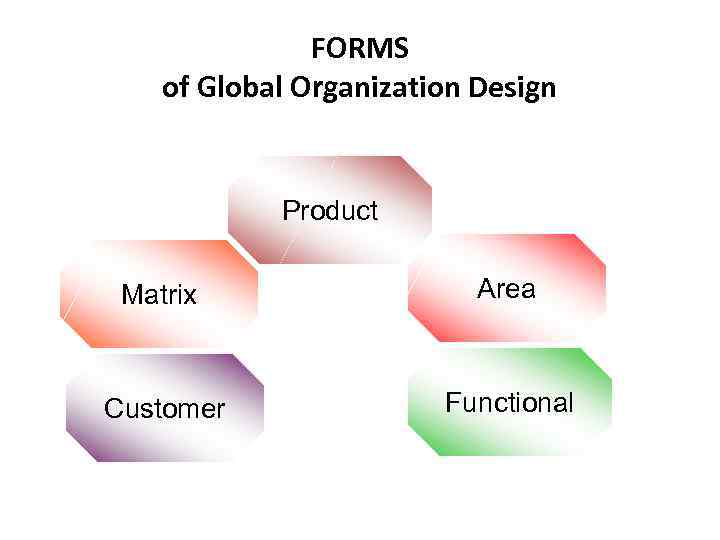 FORMS of Global Organization Design Product Matrix Area Customer Functional
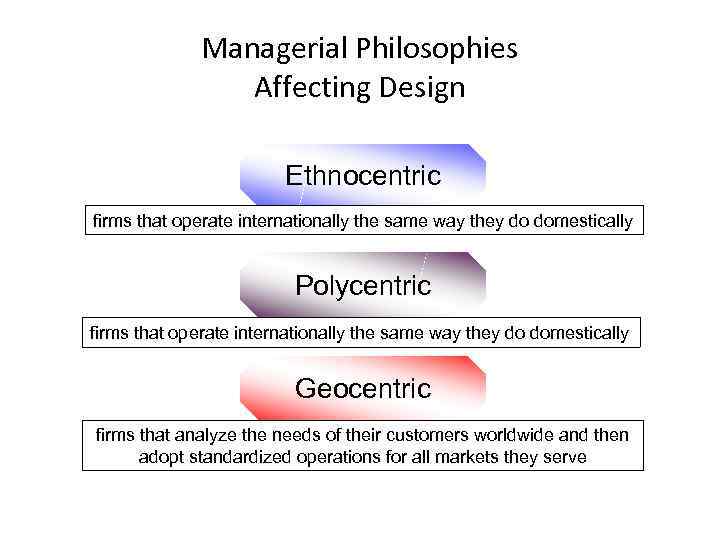 Managerial Philosophies Affecting Design Ethnocentric firms that operate internationally the same way they do domestically Polycentric firms that operate internationally the same way they do domestically Geocentric firms that analyze the needs of their customers worldwide and then adopt standardized operations for all markets they serve
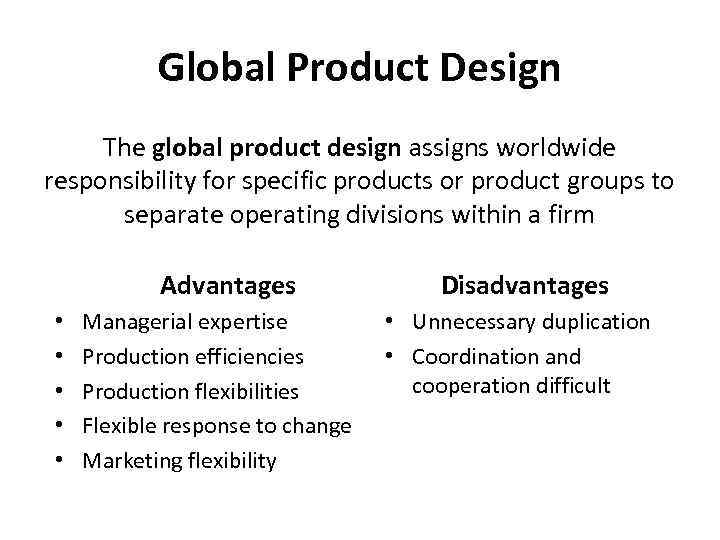 Global Product Design The global product design assigns worldwide responsibility for specific products or product groups to separate operating divisions within a firm Advantages • • • Managerial expertise Production efficiencies Production flexibilities Flexible response to change Marketing flexibility Disadvantages • Unnecessary duplication • Coordination and cooperation difficult
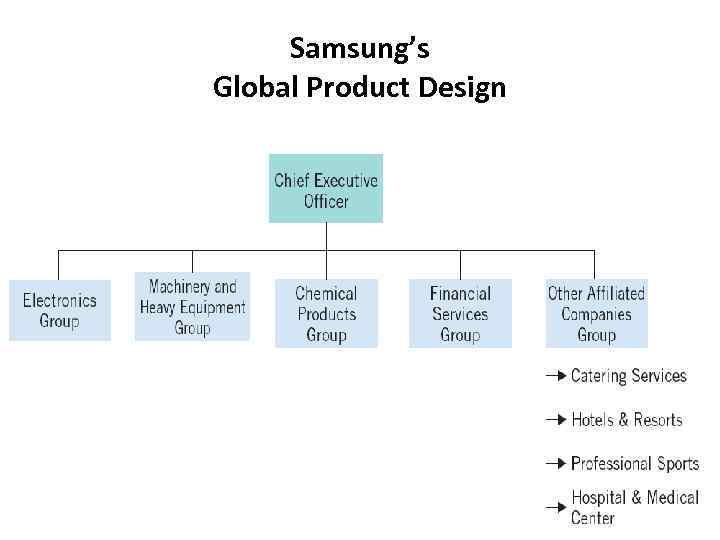 Samsung’s Global Product Design
 Global Area Design The global area design organizes the firm’s activities around specific areas or regions of the world. Disadvantages of Global Area Design • • • Firm may sacrifice cost efficiencies Diffusion of technology is slowed Design unsuitable for rapid technological change Duplication of resources Coordination across areas is expensive
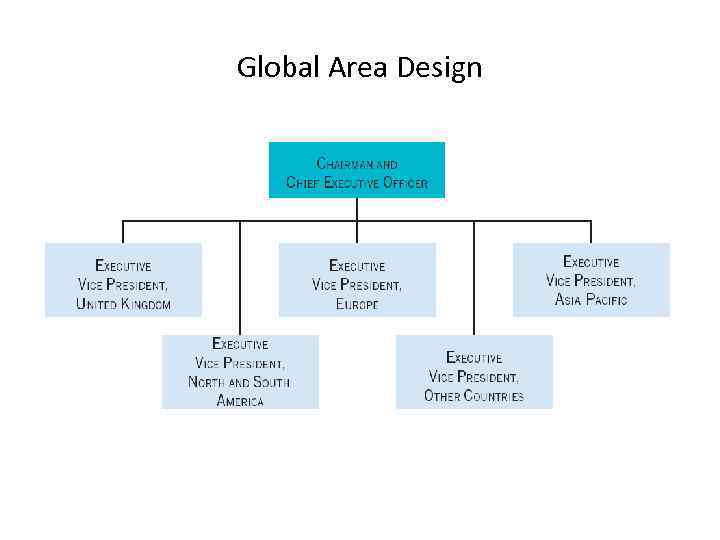 Global Area Design
 Global Functional Design The global functional design calls for a firm to create departments or divisions that have worldwide responsibility for the common organizational functions— finance, operations, marketing, R&D, and human resources management. Advantages • Transference of expertise • Highly centralized control • Focused attention of key functions Disadvantages • Practical only when firm has few products or customers • Coordination difficult • Duplication of resources
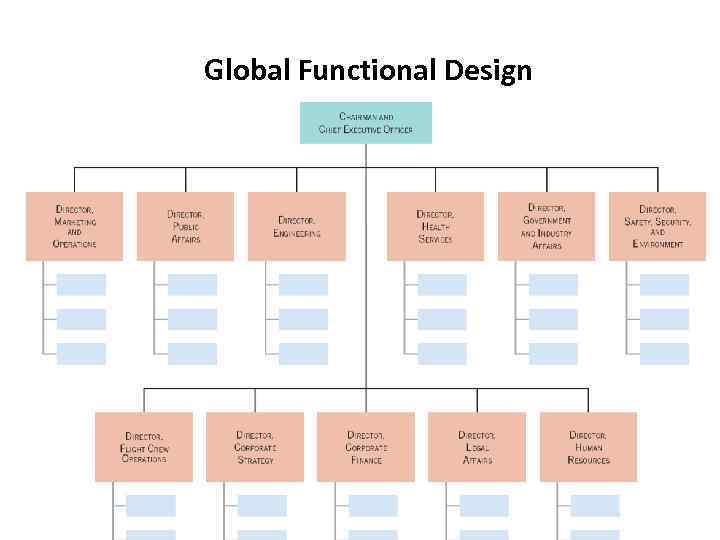 Global Functional Design
 Global Customer Design The global customer design is used when a firm serves different customers or customer groups, each with specific needs calling for special expertise or attention.
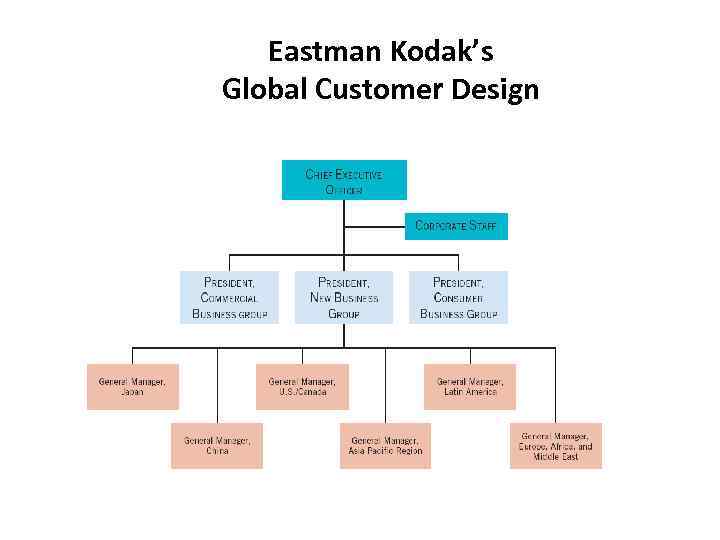 Eastman Kodak’s Global Customer Design
 Global Matrix Design A global matrix design, the most complex of designs, is the result of superimposing one form of organization design on top of an existing, different form Advantages Disadvantages • Brings together the • Appropriate for firms functional area and with many products and product expertise unstable environments • Promotes organizational • Employees accountable flexibility to multiple supervisors • Provides access to all • Decisions may take advantages of other longer designs
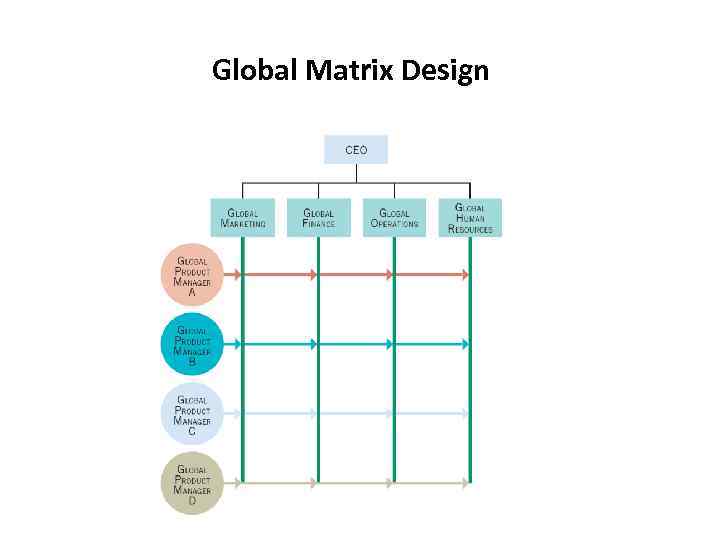 Global Matrix Design
 Global Hybrid Design Most firms create a hybrid design, rather than pure design, that best suits their purposes, given the firms’ size, strategy, technology, environment, and culture, and blends elements of all the designs discussed.
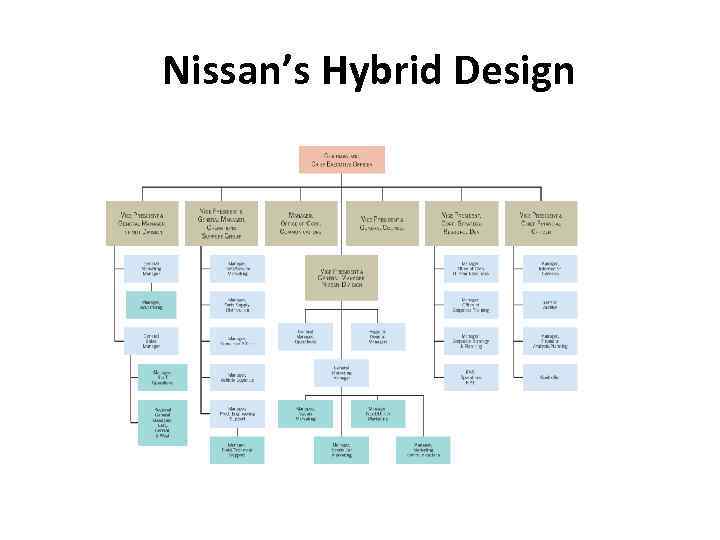 Nissan’s Hybrid Design