 Скачать презентацию Platform Technology for Multiple IGT applications Robert L
6f11eecd93a29073eb04170fa9192cc2.ppt
- Количество слайдов: 26



Platform Technology for Multiple IGT applications Robert L. Galloway Jr. , Ph. D Professor of Biomedical Engineering Professor of Neurosurgery Professor of Surgery Director, Center for Technology-Guided Therapy Vanderbilt University

Disclosure Bob Galloway is the founder of , and retains an equity position in, Pathfinder Therapeutics Inc, of Nashville, TN
History of Image-Guided Therapy • 1896 J. H. Clayton. X-Ray use in surgery • 1904 Horsley and Clarke. Stereotactic frame • 1946 Spiegel and Wycis. Stereotactic frame using xrays. • 1940’s~1950 s: Leksell, Riechert. Mundinger, Talairach, Cooper. . . TGT
Technology-Guided Therapy Timeline
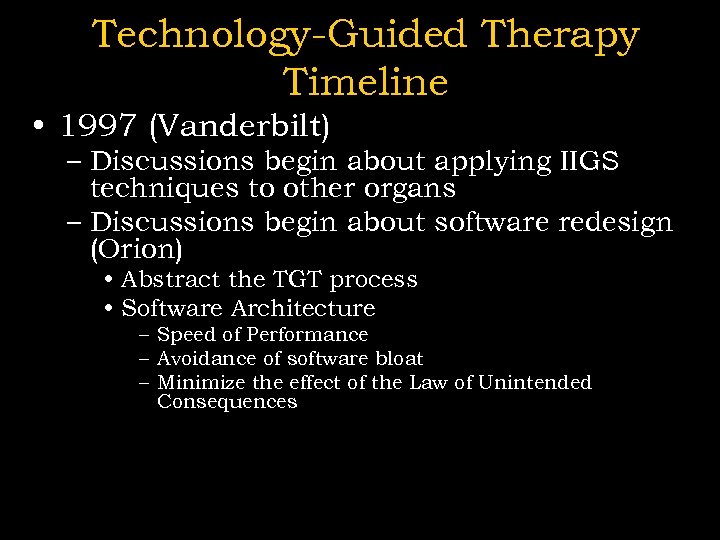
Technology-Guided Therapy Timeline • 1997 (Vanderbilt) – Discussions begin about applying IIGS techniques to other organs – Discussions begin about software redesign (Orion) • Abstract the TGT process • Software Architecture – Speed of Performance – Avoidance of software bloat – Minimize the effect of the Law of Unintended Consequences
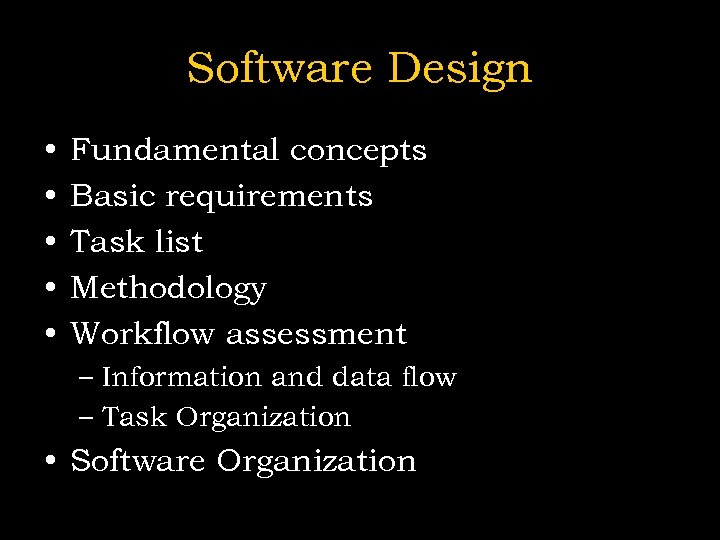
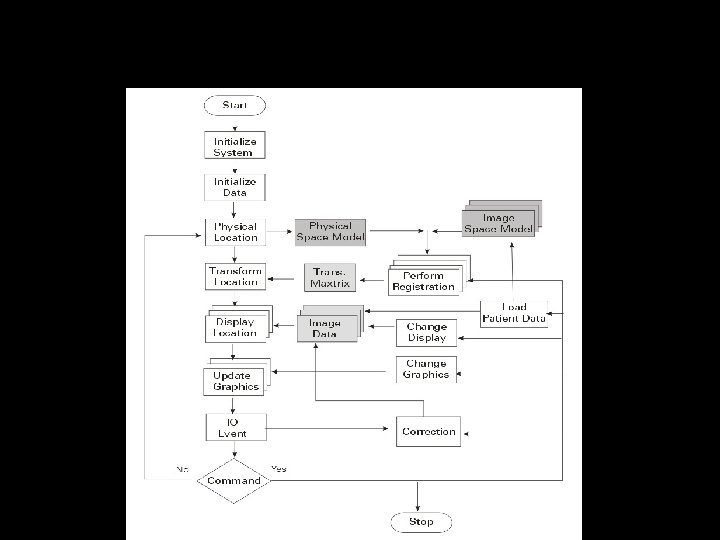
Software Design • • • Fundamental concepts Basic requirements Task list Methodology Workflow assessment – Information and data flow – Task Organization • Software Organization
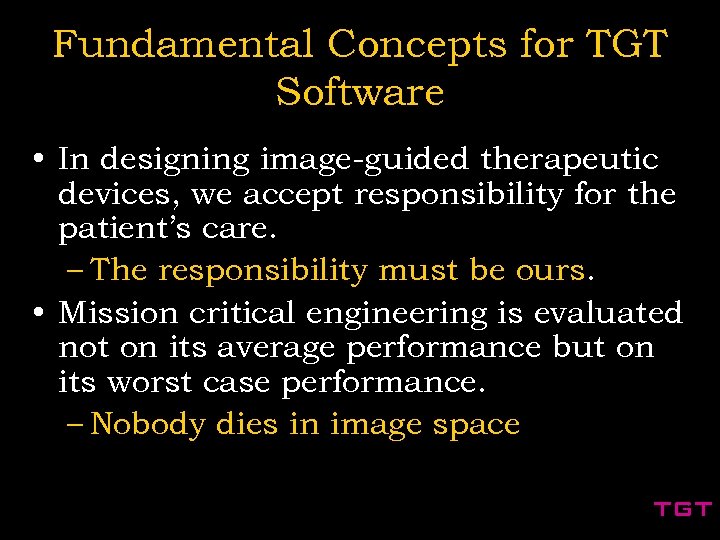
Fundamental Concepts for TGT Software • In designing image-guided therapeutic devices, we accept responsibility for the patient’s care. – The responsibility must be ours. • Mission critical engineering is evaluated not on its average performance but on its worst case performance. – Nobody dies in image space TGT
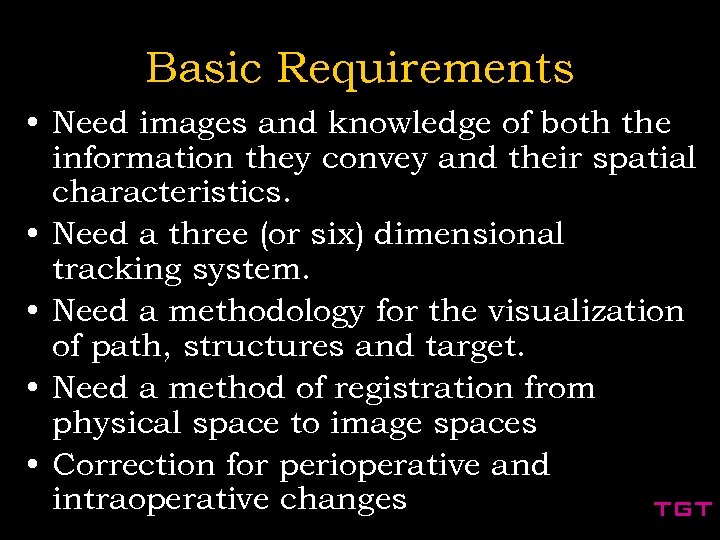
Basic Requirements • Need images and knowledge of both the information they convey and their spatial characteristics. • Need a three (or six) dimensional tracking system. • Need a methodology for the visualization of path, structures and target. • Need a method of registration from physical space to image spaces • Correction for perioperative and intraoperative changes TGT
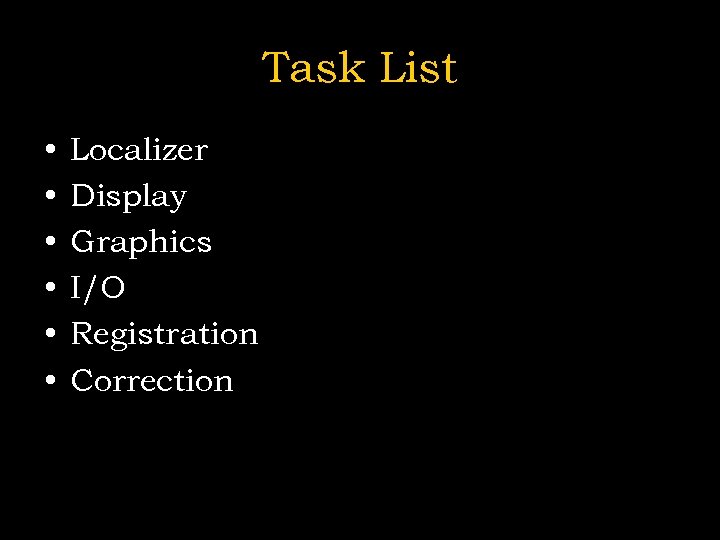
Task List • • • Localizer Display Graphics I/O Registration Correction
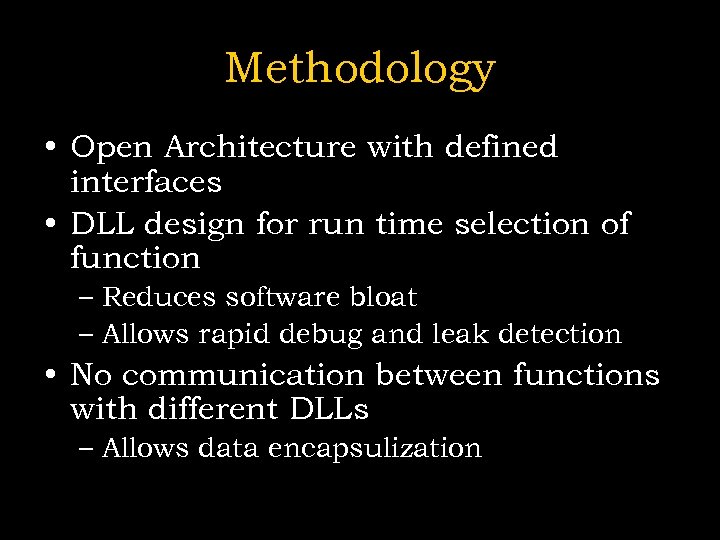
Methodology • Open Architecture with defined interfaces • DLL design for run time selection of function – Reduces software bloat – Allows rapid debug and leak detection • No communication between functions with different DLLs – Allows data encapsulization
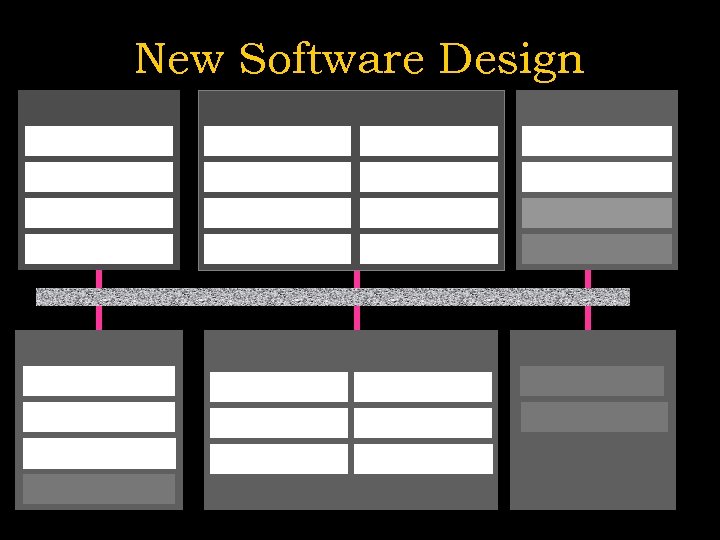
New Software Design
Applications of TGT • Intracranial Neurosurgery – Tumor resection – Implantation of Neuroprostheses – Functionally Guided Neurosurgery • • • Spinal Surgery Liver Surgery Colorectal Cancer Staging and Surgery Ophthalmologic Surgery Cochlear Implants
Applications of TGT • Kidney Surgery • Lung Therapy – Tumor resection/ablation/brachytherapy • Prostate Therapy – Open or robotic surgery – Brachytherapy • Direct injection Chemotherapy/ Gene Therapy
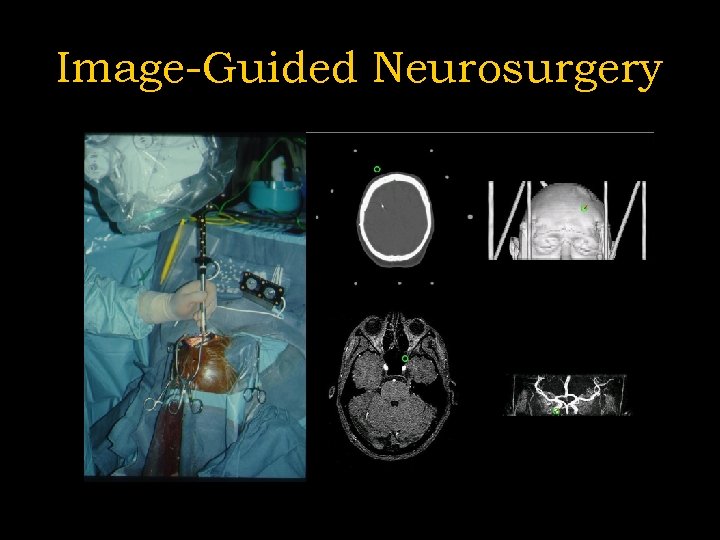
Image-Guided Neurosurgery
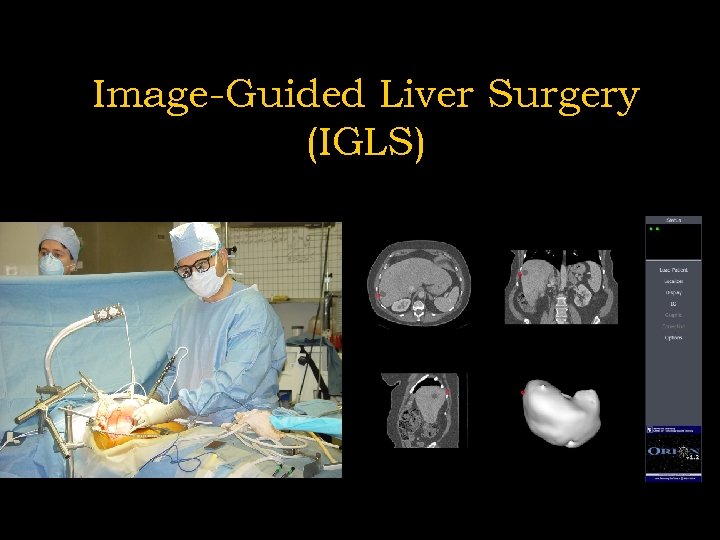
Image-Guided Liver Surgery (IGLS)
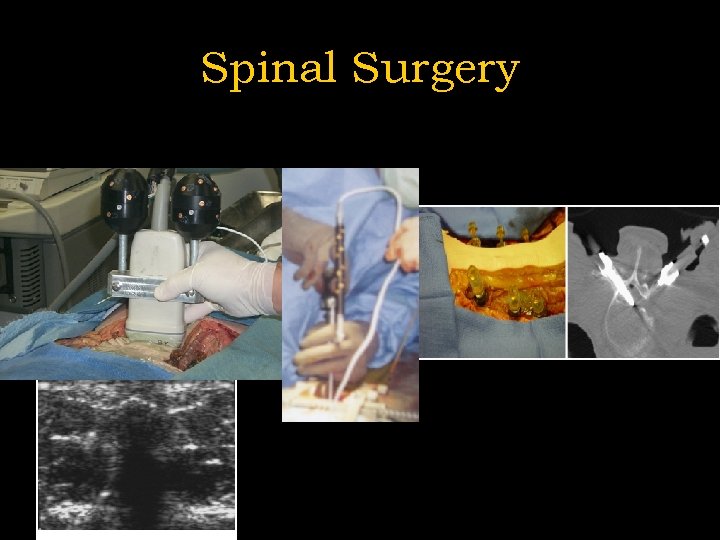
Spinal Surgery
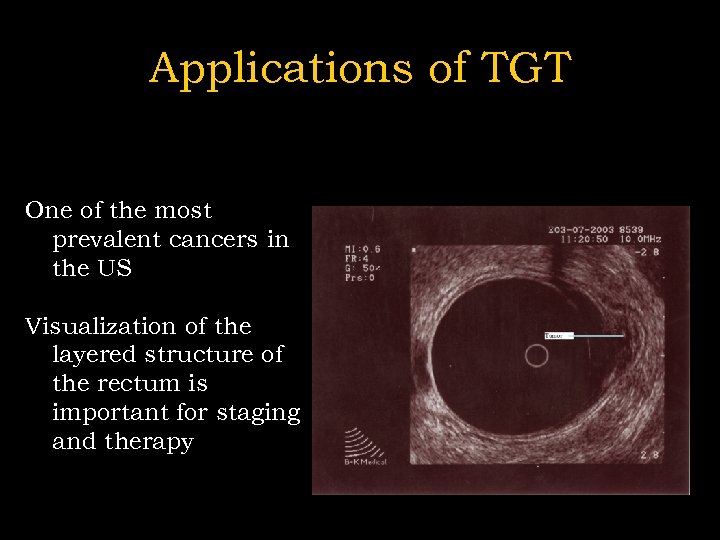
Applications of TGT One of the most prevalent cancers in the US Visualization of the layered structure of the rectum is important for staging and therapy
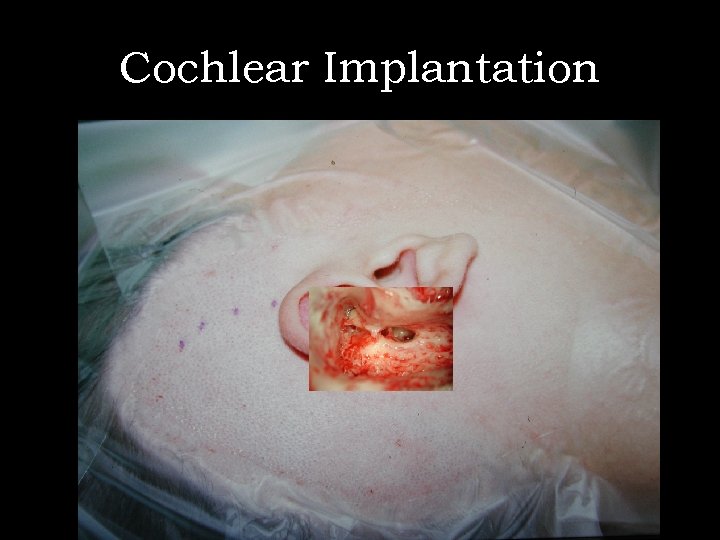
Cochlear Implantation
ORION Performance
Orion Code Base drives: (1) • Intracranial Neurosurgery – Tumor resection – Implantation of Neuroprostheses – Functionally Guided Neurosurgery • Spinal Surgery • Liver Surgery • Direct injection Chemotherapy
Orion Code Base drives: (2) • • • Colorectal Cancer Staging and Surgery Ophthalmologic Surgery Cochlear Implants Robotic Image-Guided Surgery Direct Injection Gene Therapy
• Base program + DLL’s available for research license from Vanderbilt University • Custom DLL development is available by contract to Vanderbilt • ORION with FDA V&V process available from Pathfinder Therapeutics Inc
Three important challenges for the engineering of IGT systems • Validation – Agreed upon accuracy metrics – Phantom design – Human use • Robustness – Sensitivity to variability • Vertical Integration – Will the solution work for all patients
• Image-Guidance is the modifier, not the driving force. • Involve the people doing therapy at every step: – Writing proposals – Reviewing proposals – Planning the protocols – Using the systems and providing feedback • IGS/IGT/IGP/TGT needs its own study section
Скачать презентацию Platform Technology for Multiple IGT applications Robert L
6f11eecd93a29073eb04170fa9192cc2.ppt