 Скачать презентацию Platform-Based Design Part 1 Introduction Wayne Wolf Princeton
7dcba620f738f299781445470a908978.ppt
- Количество слайдов: 28



Platform-Based Design Part 1, Introduction Wayne Wolf Princeton University Joerg Henkel NEC C&C Lab 1
Course outline z. Introduction: Wayne z. Methodologies: Joerg z. Applications: Wayne z. Tools, business models: Joerg 2
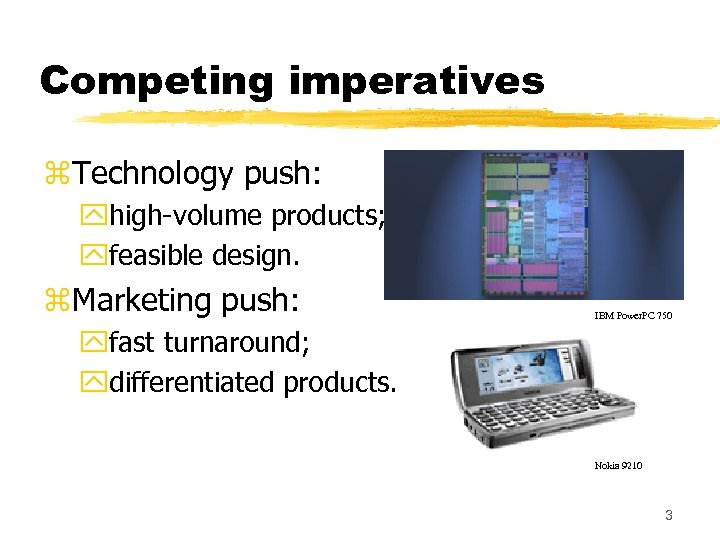
Competing imperatives z. Technology push: yhigh-volume products; yfeasible design. z. Marketing push: IBM Power. PC 750 yfast turnaround; ydifferentiated products. Nokia 9210 3
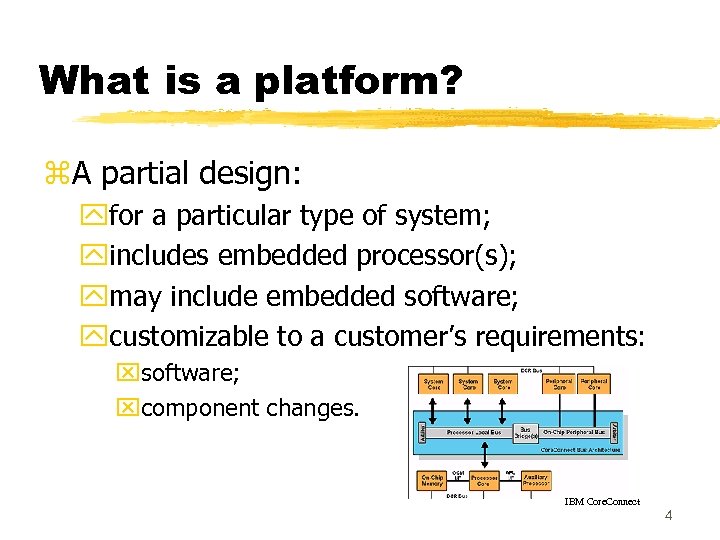
What is a platform? z. A partial design: yfor a particular type of system; yincludes embedded processor(s); ymay include embedded software; ycustomizable to a customer’s requirements: xsoftware; xcomponent changes. IBM Core. Connect 4
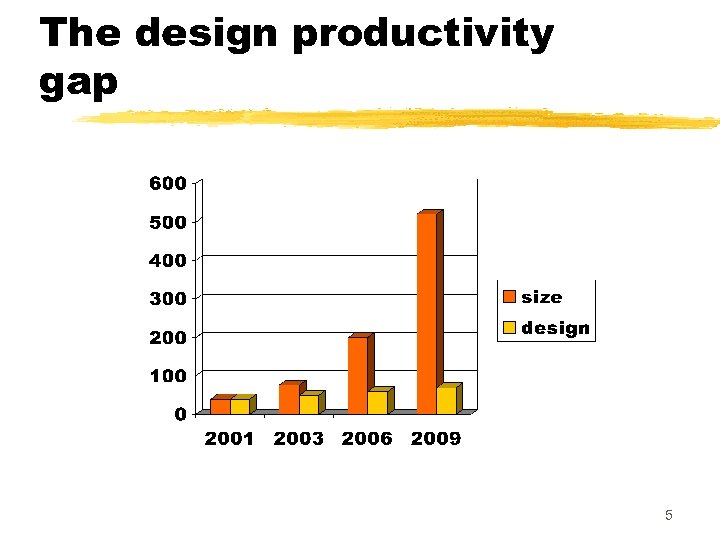
The design productivity gap 5
Why platforms? z. Any given space has a limited number of good solutions to its basic problems. z. A platform captures the good solutions to the important design challenges in that space. z. A platform reuses architectures. 6
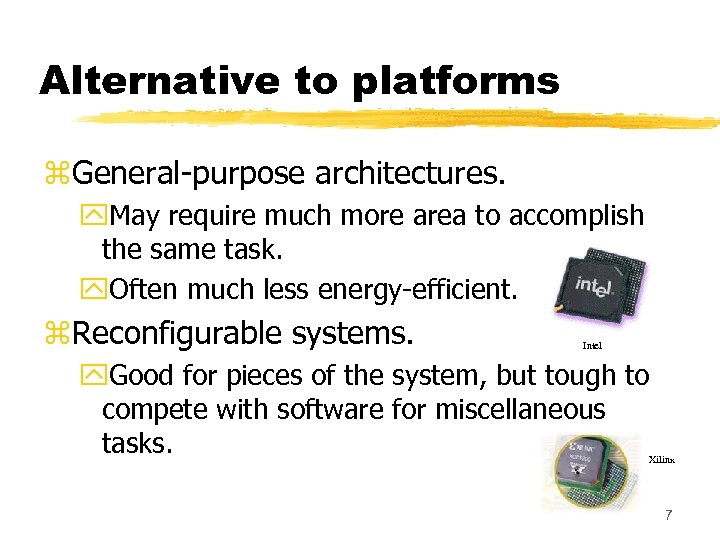
Alternative to platforms z. General-purpose architectures. y. May require much more area to accomplish the same task. y. Often much less energy-efficient. z. Reconfigurable systems. Intel y. Good for pieces of the system, but tough to compete with software for miscellaneous tasks. Xilinx 7
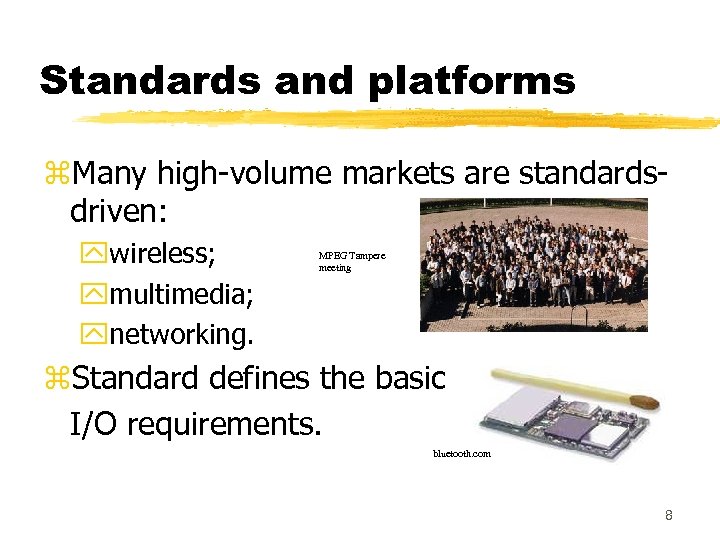
Standards and platforms z. Many high-volume markets are standardsdriven: ywireless; ymultimedia; ynetworking. MPEG Tampere meeting z. Standard defines the basic I/O requirements. bluetooth. com 8
Standards and platforms, cont’d. z. Systems house chooses implementation of standards functions: yimproved quality, lower power, etc. z. Product may be differentiated by added features: ycell phone user interface. z. Standards encourage platform-based design. 9
Platform vs. full-custom z. Platform has many fewer degrees of freedom: yharder to differentiate; ycan analyze design characteristics. z. Full-custom: yextremely long design cycles; ymay use less aggressive design styles if you can’t reuse some pieces. 10
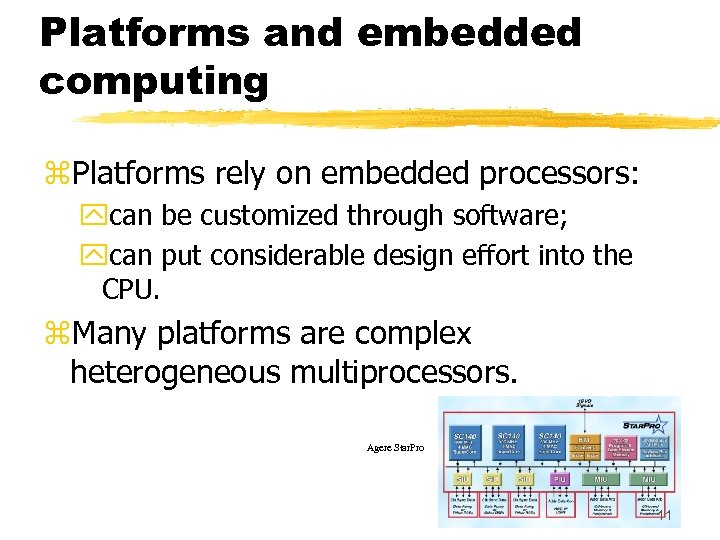
Platforms and embedded computing z. Platforms rely on embedded processors: ycan be customized through software; ycan put considerable design effort into the CPU. z. Many platforms are complex heterogeneous multiprocessors. Agere Star. Pro 11
Platforms and IP-based design z. Platforms use IP: y. CPUs; ymemories; y. I/O devices. z. Platforms are IP at the next level of abstraction. 12
Advantages of platformbased design z. Fast time-to-market. z. Reuse system design---hardware, software. z. Allows chip to be customized to add value. 13
Costs of platform-based design z. Masks. z. NRE: design of the platform + customization. z. Design verification. 14
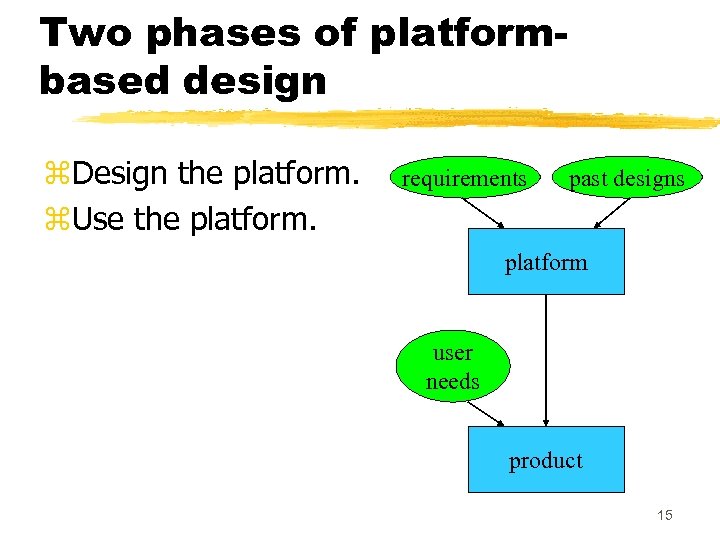
Two phases of platformbased design z. Design the platform. z. Use the platform. requirements past designs platform user needs product 15
Division of labor z. Platform design: ychoose, characterize hardware units; ycreate the system architecture; yoptimize for performance, power. z. Platform-based product design: ymodify hardware architecture; yoptimize programs. 16
Semiconductor vs. systems house z. Semiconductor house designs the platform. z. Systems house customizes the platform for its system: ycustomization may be done in-house or by contractor. 17
Platform design challenges z. Does it satisfy the application’s basic requirements? z. Is it sufficiently customizable? And in the right ways? z. Is it cost-effective? z. How long does it take to turn a platform into a product? 18
Platform design methodology z. Size the problem. y. How much horsepower? How much power? z. Develop an initial architecture. z. Evaluate for performance, power, etc. z. Evaluate customizability. z. Improve platform after each use. 19
Platform use challenges z. How do I understand the platform’s design? z. How do I modify it to suit my needs? z. How do I optimize for performance, power, etc. ? 20
Platform use methodology z. Start with reference design, evaluate differences required for your features. z. Evaluate hardware changes. z. Implement hardware and software changes in parallel. z. Integrate and test. 21
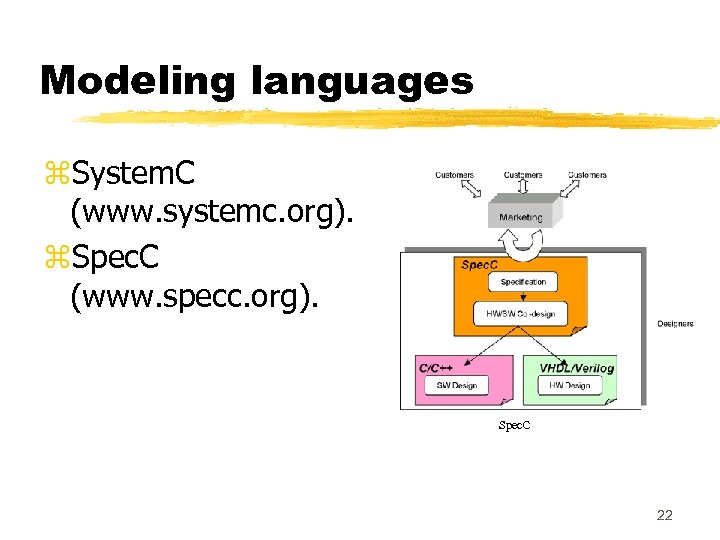
Modeling languages z. System. C (www. systemc. org). z. Spec. C (www. specc. org). Spec. C 22
Verification methodologies z. Execute high-level models. z. Co-simulation. z. Run software on sample chip. 23
Design refinement z. Bad news: yhard to learn the platform in order to change it. Worldwide shipping by UPS. . . roughly US$ 50 for CD and US$ 100 for paper copy (1500 pages, heavy!) Bluetooth. com z. Good news: yan existing design can be measured, analyzed, and refined. 24
Software and hardware reuse z. Want to reuse as many hardware components as possible: yknown performance, power. z. Want to use software libraries where possible. z. RTOS simplifies design of multi-tasking systems. 25
But who does it? z. Do we use a disciplined, analytical process to create a platform that can be used for a series of designs? Or z. Do we grab the last similar design and start hacking? 26
How do I choose a platform? z. Ideal: yevaluate aspects of the platform critical to my product’s requirements. Merck z. Base: ymarketing/sales decision. NEW! 27
Summary z. Trends encourage platform-based design. z. Two phases: design platform, use it. z. Iterative design style helps in evaluation, but requires steep learning curve. z. Pure form of platform-based design may be rare in practice. 28
Скачать презентацию Platform-Based Design Part 1 Introduction Wayne Wolf Princeton
7dcba620f738f299781445470a908978.ppt