 Скачать презентацию Plants of the Bible Lytton John Musselman Old
8551842dc619c073fcef58c520dee2b3.ppt
- Количество слайдов: 111



Plants of the Bible Lytton John Musselman Old Dominion University 23 April 2003
Plants of the Bible Symbolism and Spiritual Meaning of Plants in the Bible
Overview Local names Symbolism -Pomegranate -Cedar -Mustard -Tares From Sidnaya Monastery, Syria
About 125 different plants are mentioned in the Bible. This includes well known crops and also such obscure plants as almug wood (II Chronicles 2: 8) and “costly wood” (Revelation 18: 12). In addition, there are general terms as “weeds” and “trees”.
More plants are mentioned in the Old Testament than in the New Testament • Isaiah mentions more plants than any other book (it is also one of the longest books). • Song of Solomon mentions more unique plants, hapex legomena, than any other book.
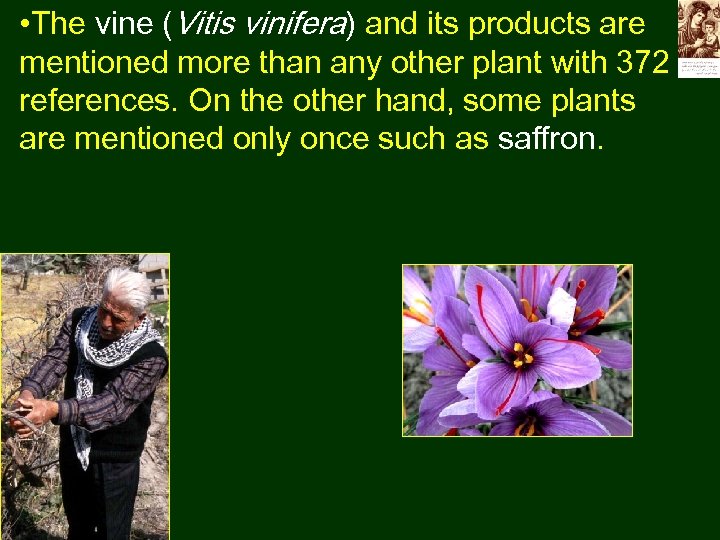
• The vine (Vitis vinifera) and its products are mentioned more than any other plant with 372 references. On the other hand, some plants are mentioned only once such as saffron.
Few plants and plant products are unique to the New Testament Papyrus Laurel
Paper is mentioned only in II John 12: Although I have much to write to you, I would rather not use paper and ink. . .
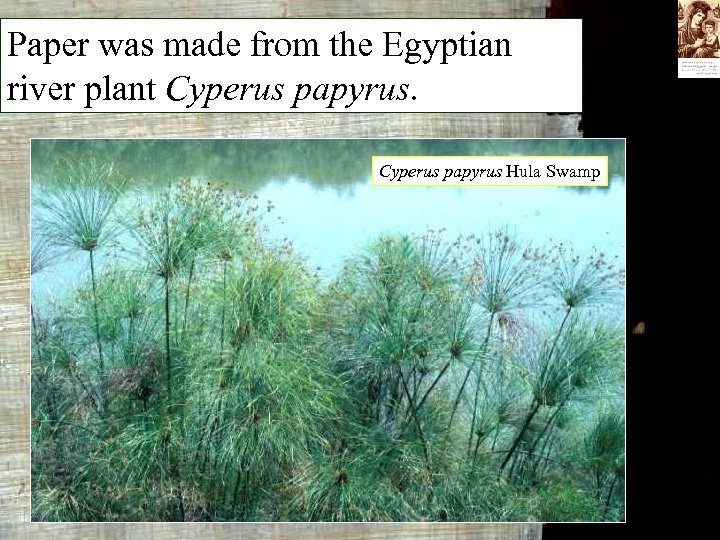
Paper was made from the Egyptian river plant Cyperus papyrus Hula Swamp
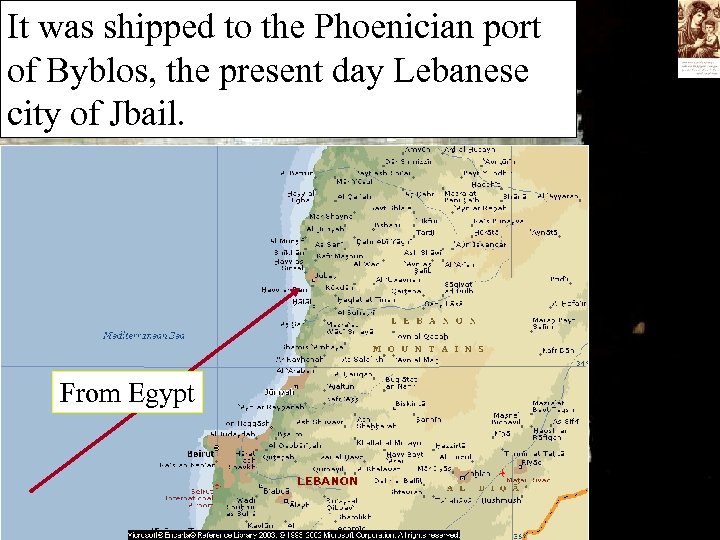
It was shipped to the Phoenician port of Byblos, the present day Lebanese city of Jbail. From Egypt
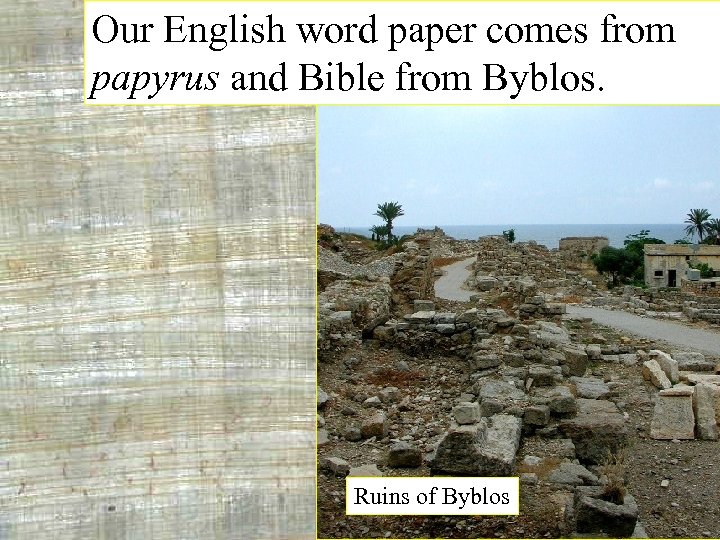
Our English word paper comes from papyrus and Bible from Byblos. Ruins of Byblos
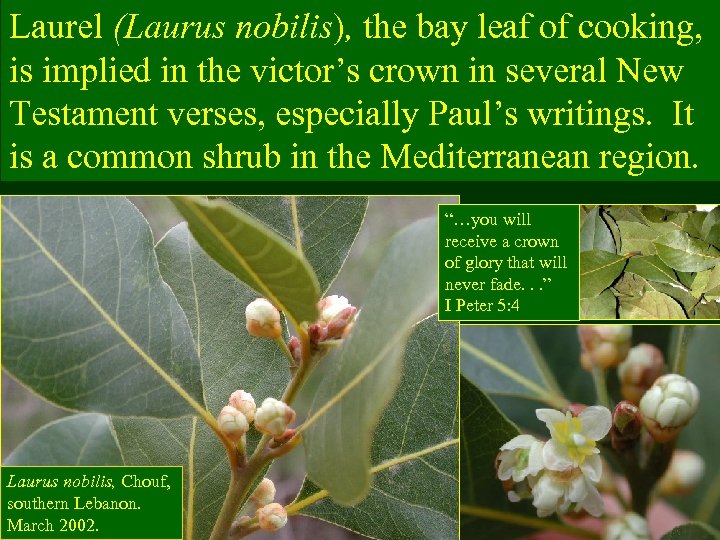
Laurel (Laurus nobilis), the bay leaf of cooking, is implied in the victor’s crown in several New Testament verses, especially Paul’s writings. It is a common shrub in the Mediterranean region. “…you will receive a crown of glory that will never fade. . . ” I Peter 5: 4 Laurus nobilis, Chouf, southern Lebanon. March 2002.
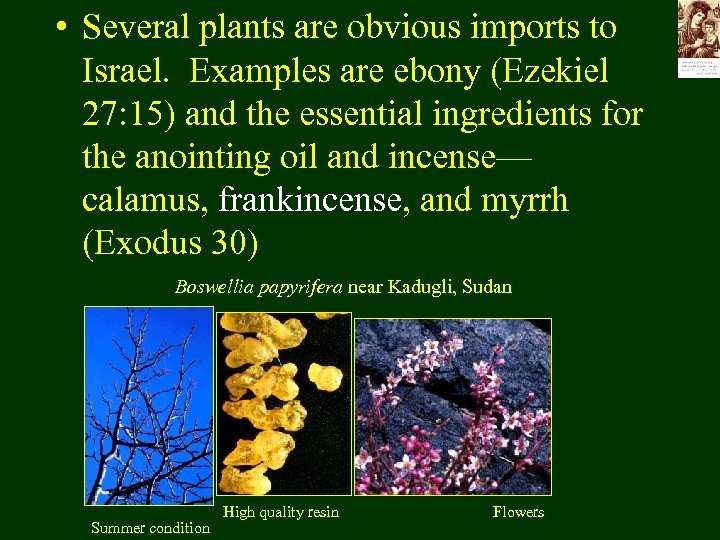
• Several plants are obvious imports to Israel. Examples are ebony (Ezekiel 27: 15) and the essential ingredients for the anointing oil and incense— calamus, frankincense, and myrrh (Exodus 30) Boswellia papyrifera near Kadugli, Sudan Summer condition High quality resin Flowers
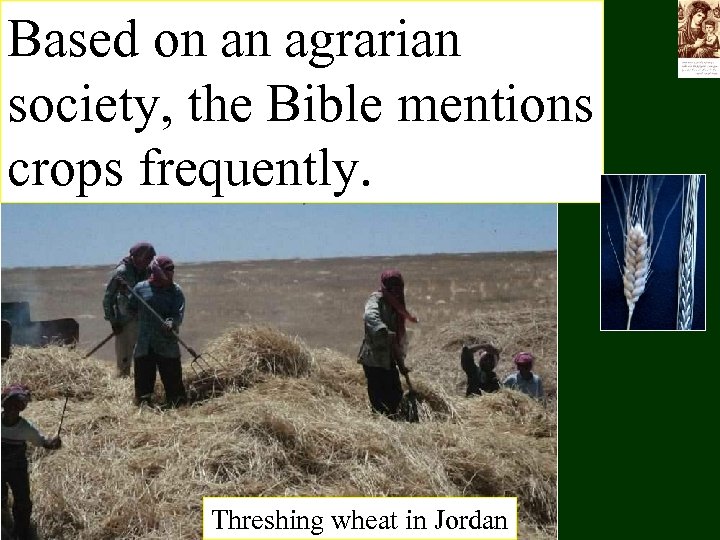
Based on an agrarian society, the Bible mentions crops frequently. Threshing wheat in Jordan
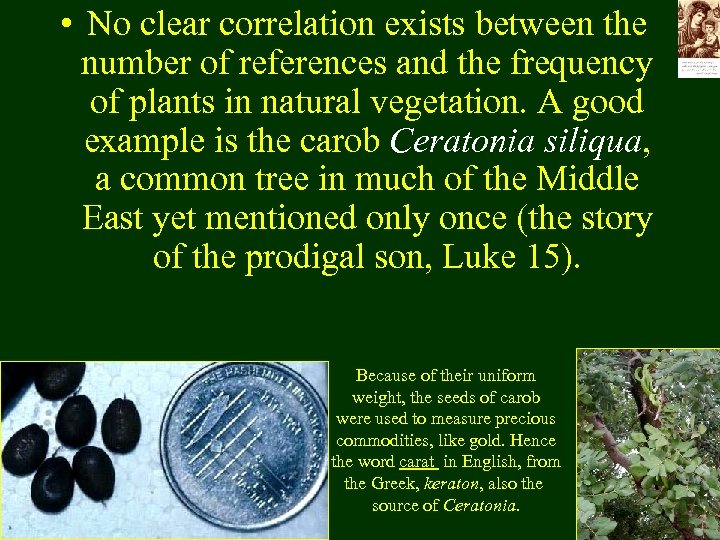
• No clear correlation exists between the number of references and the frequency of plants in natural vegetation. A good example is the carob Ceratonia siliqua, a common tree in much of the Middle East yet mentioned only once (the story of the prodigal son, Luke 15). Because of their uniform weight, the seeds of carob were used to measure precious commodities, like gold. Hence the word carat in English, from the Greek, keraton, also the source of Ceratonia.
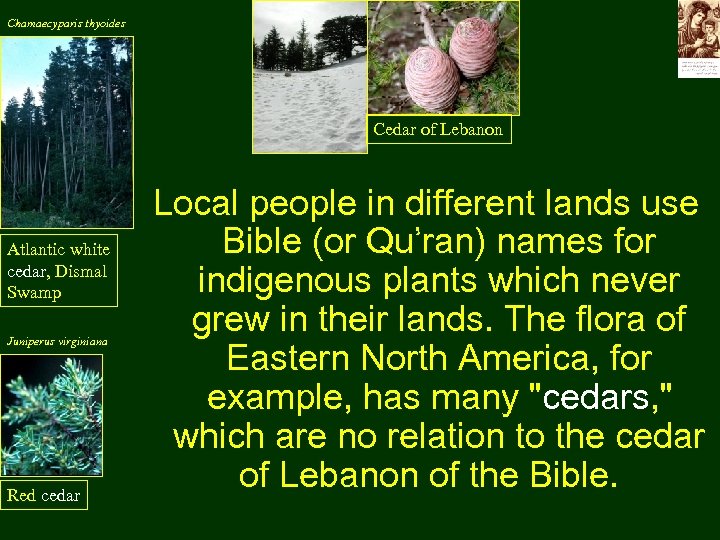
Chamaecyparis thyoides Cedar of Lebanon Atlantic white cedar, Dismal Swamp Juniperus virginiana Red cedar Local people in different lands use Bible (or Qu’ran) names for indigenous plants which never grew in their lands. The flora of Eastern North America, for example, has many "cedars, " which are no relation to the cedar of Lebanon of the Bible.
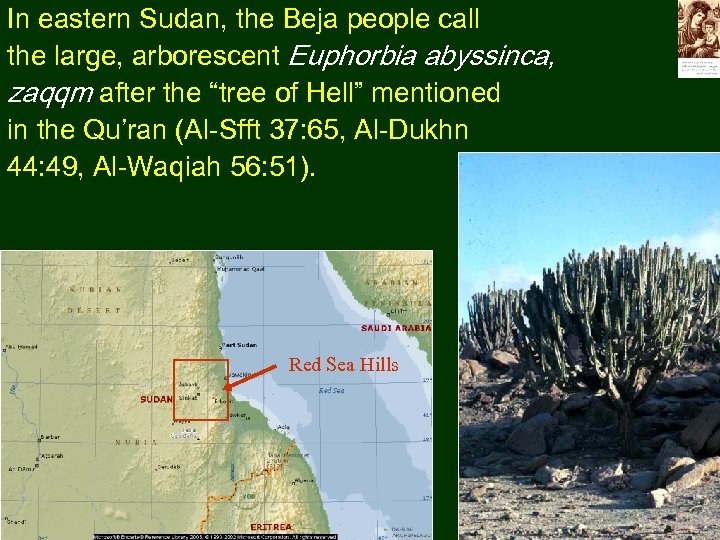
In eastern Sudan, the Beja people call the large, arborescent Euphorbia abyssinca, zaqqm after the “tree of Hell” mentioned in the Qu’ran (Al-Sfft 37: 65, Al-Dukhn 44: 49, Al-Waqiah 56: 51). Red Sea Hills, eastern Sudan.
Symbolism of Bible Plants
How can understanding the plants help us to better understand the text?
Research Methods 1. Linguistics 2. 2. Ethnology
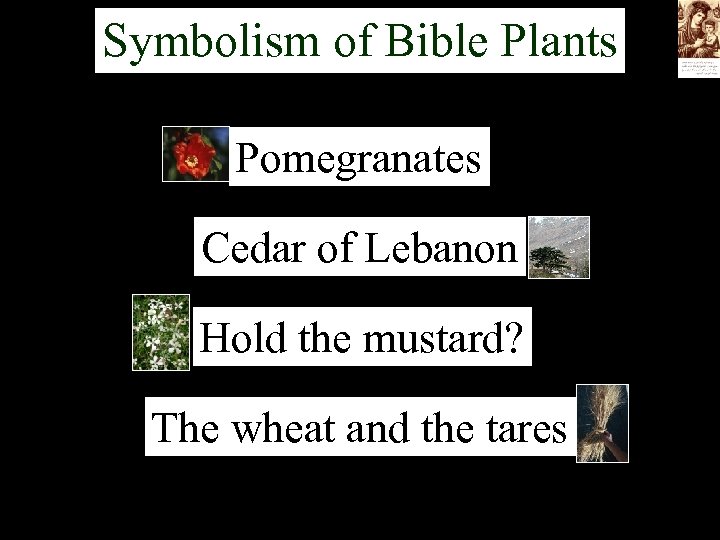
Symbolism of Bible Plants Pomegranates Cedar of Lebanon Hold the mustard? The wheat and the tares
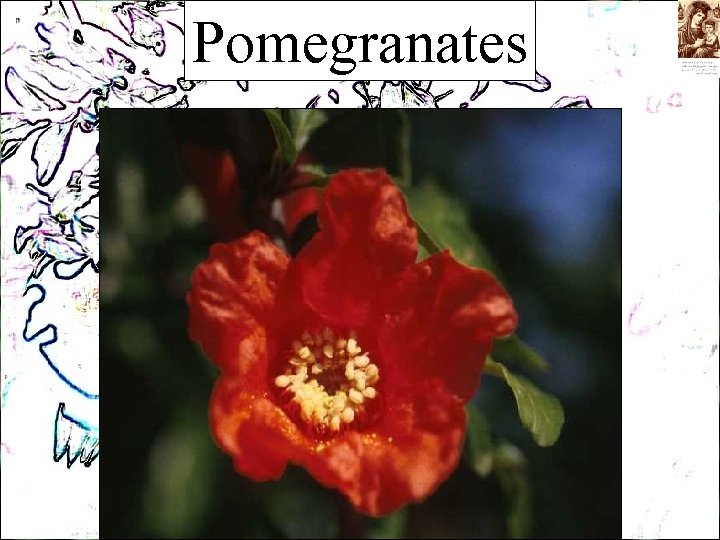
Pomegranates
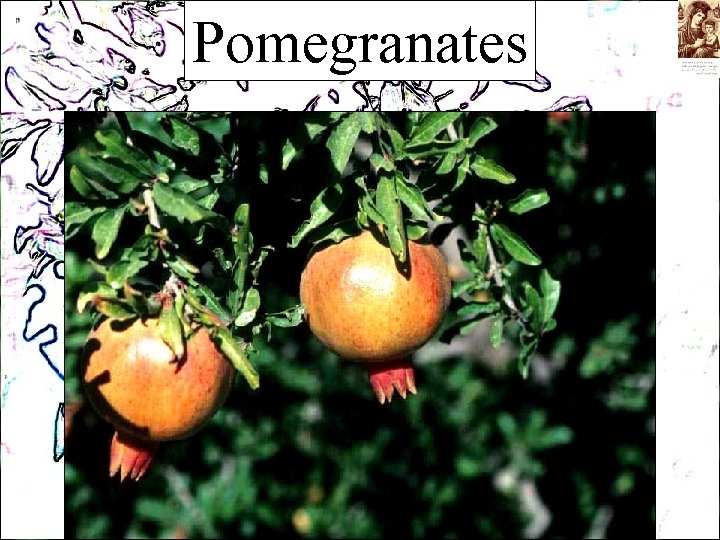
Pomegranates
Pomegranates Ancient image of beauty and fecundity
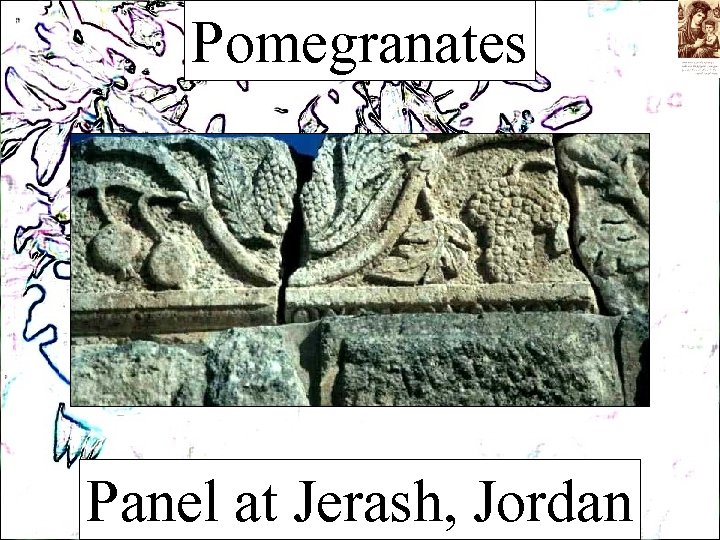
Pomegranates Panel at Jerash, Jordan
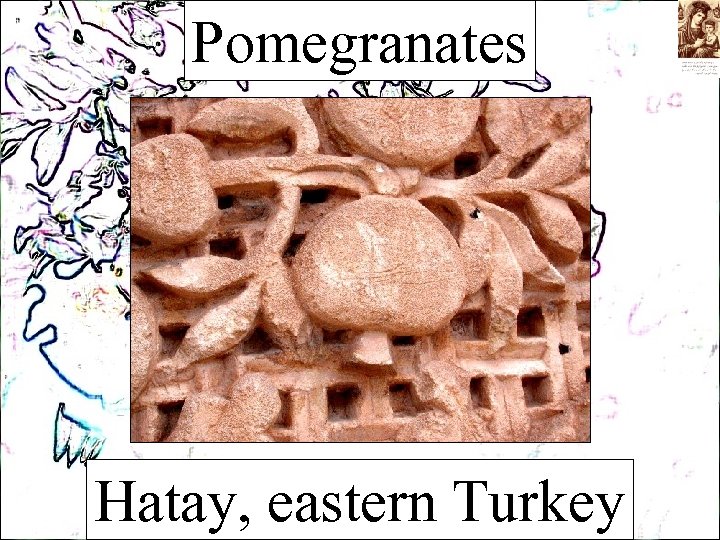
Pomegranates Hatay, eastern Turkey
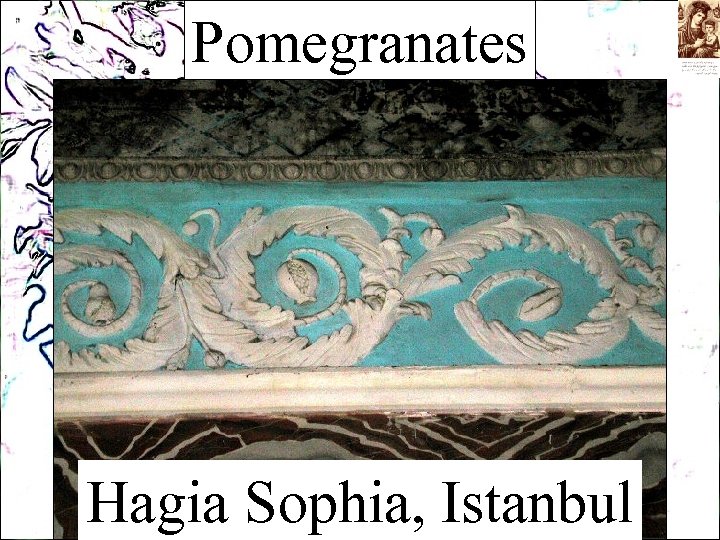
Pomegranates Hagia Sophia, Istanbul
Pomegranates in the Bible 1. Symbol of beauty Exodus 39 24. Pomegranates were attached to the bottom edge of the robe; these were made of linen cloth, embroidered with blue, purple, and scarlet. 25. Bells of pure gold were placed between the pomegranates along the bottom edge of the skirt, with bells and pomegranates alternating all around the edge. This robe was worn when Aaron ministered to the Lord, just as the Lord had commanded Moses. New Living Translation
Pomegranates in the Bible 1. Symbol of beauty 2. Image of feminine charm Song of Solomon 4 : 3 Your lips are like a ribbon of scarlet. Oh, how beautiful your mouth! Your cheeks behind your veil are like pomegranate halves-lovely and delicious. New Living Translation
Pomegranates in the Bible 1. Symbol of beauty 2. Image of feminine charm 3. Desirable food
Pomegranates in the Bible Numbers 20: 5 Why did you ever make us leave Egypt and bring us here to this evil place? Where is the fertile land of wonderful crops —the figs, vines, and pomegranates you told us about? Why, there isn't even water enough to drink!'‘ New Living Translation
Cedar of Lebanon Cedrus libani
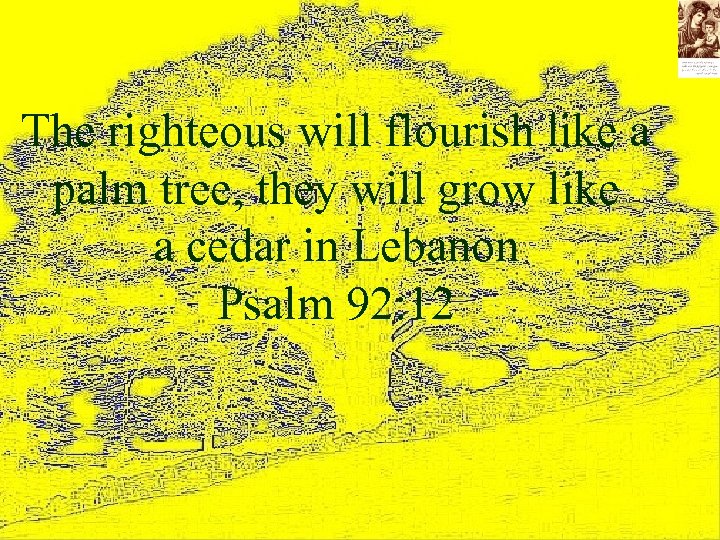
The righteous will flourish like a palm tree, they will grow like a cedar in Lebanon Psalm 92: 12
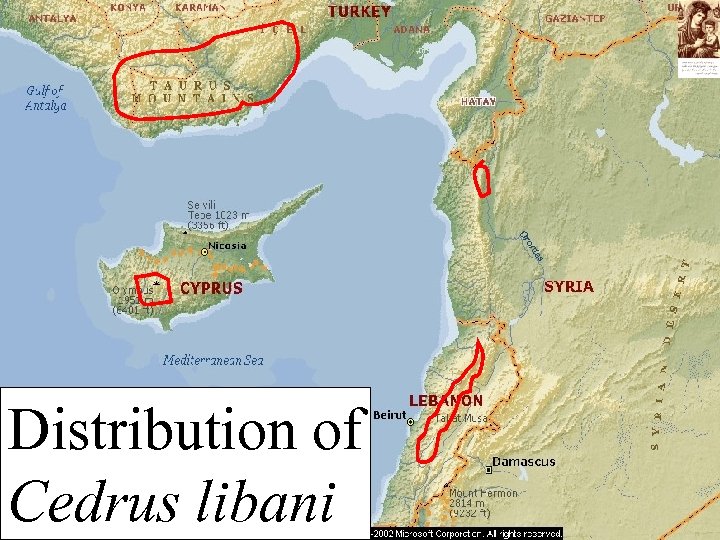
Distribution of Cedrus libani
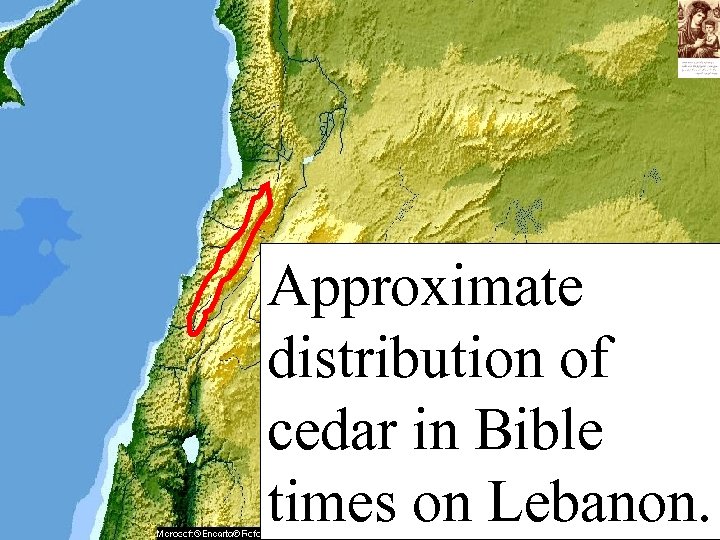
Approximate distribution of cedar in Bible times on Lebanon.
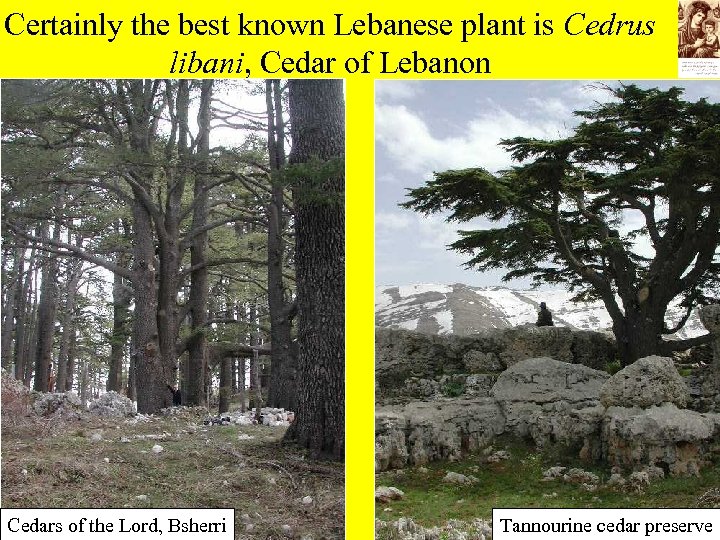
Certainly the best known Lebanese plant is Cedrus libani, Cedar of Lebanon Cedars of the Lord, Bsherri Tannourine cedar preserve
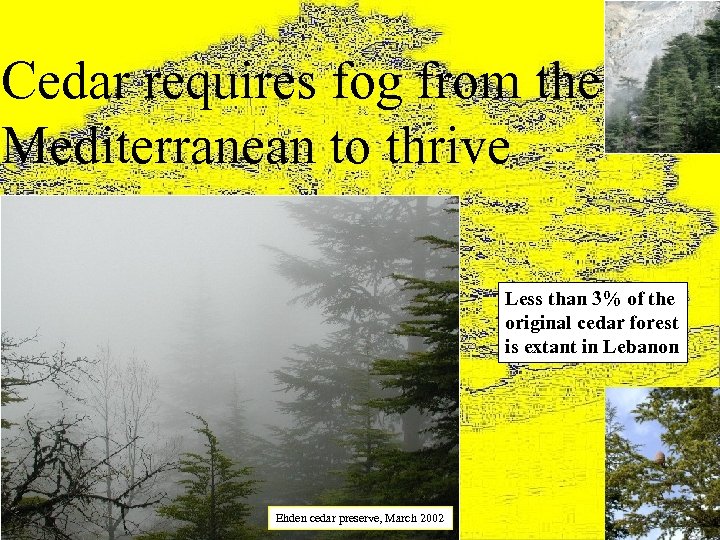
Cedar requires fog from the Mediterranean to thrive Less than 3% of the original cedar forest is extant in Lebanon Ehden cedar preserve, March 2002
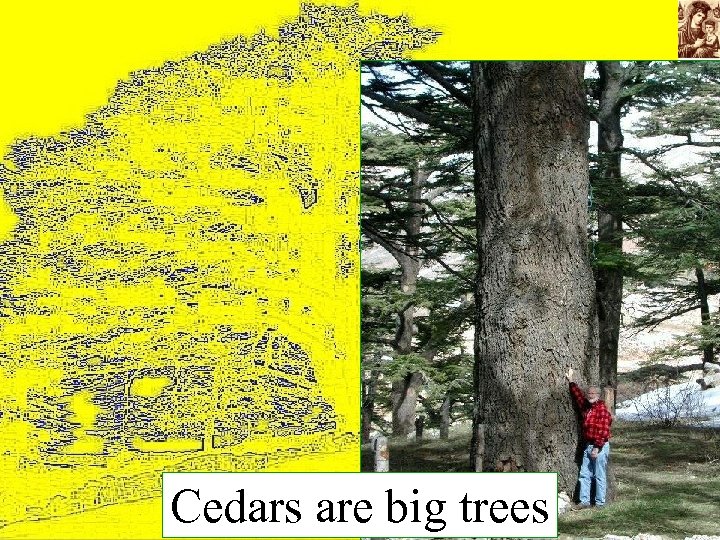
Cedars are big trees
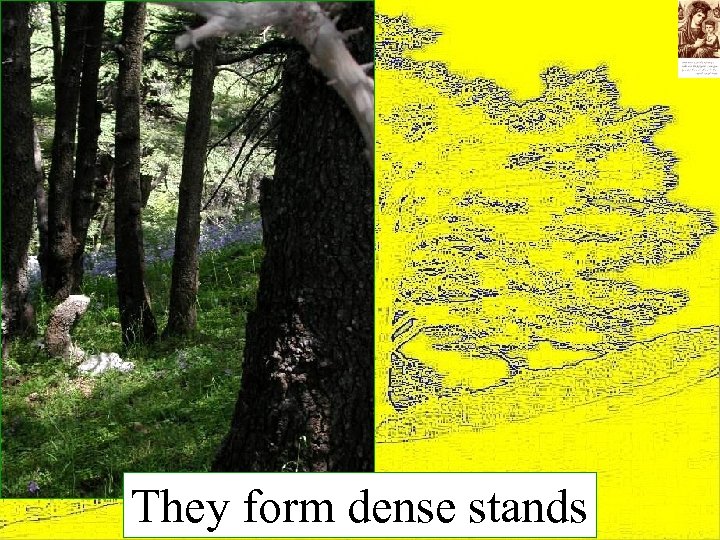
They form dense stands
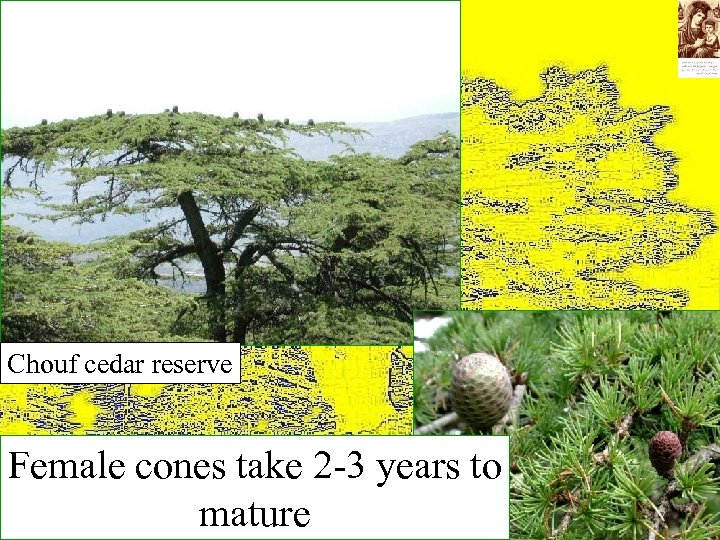
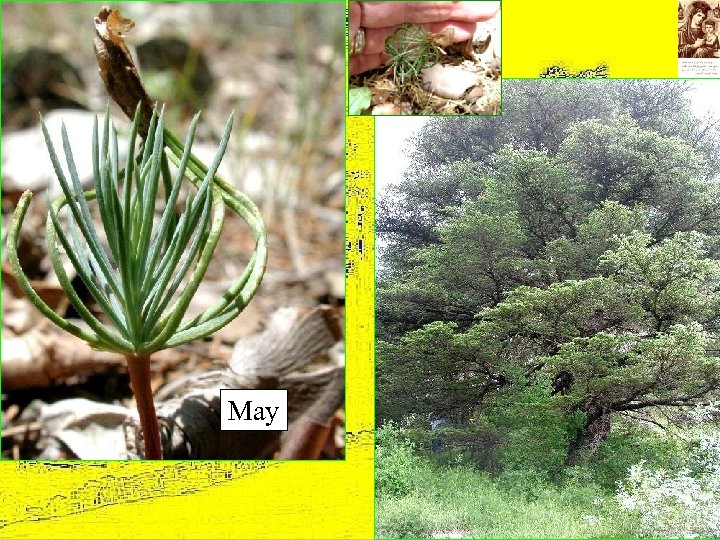
Chouf cedar reserve Female cones take 2 -3 years to mature
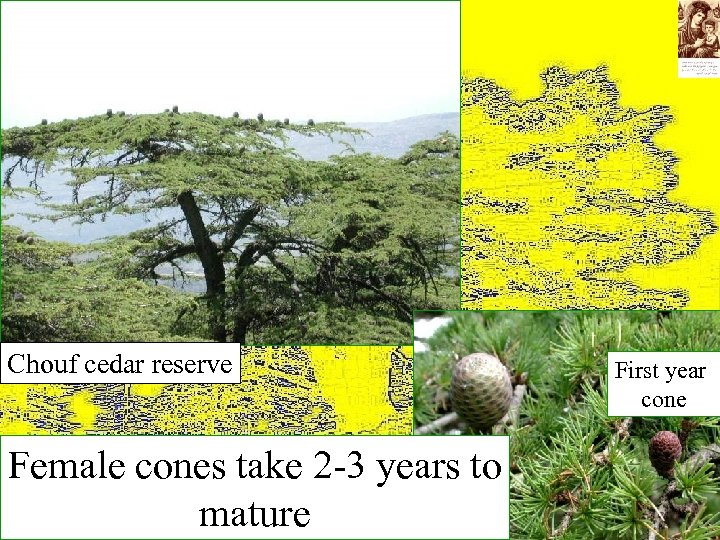
Chouf cedar reserve Female cones take 2 -3 years to mature First year cone
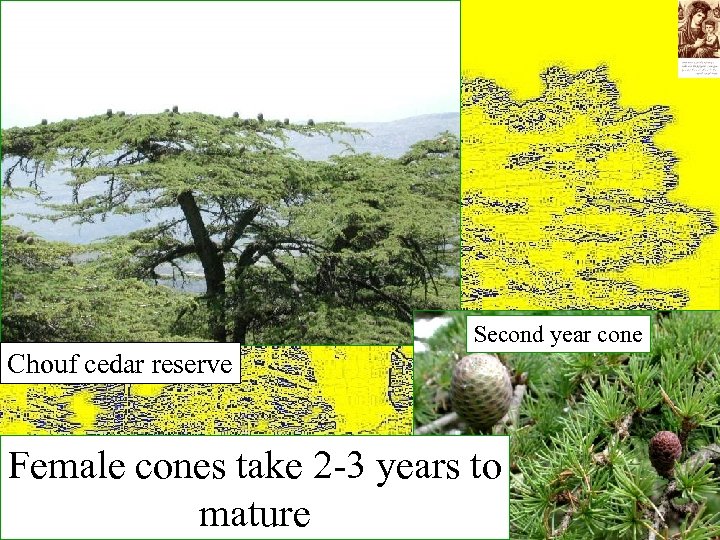
Second year cone Chouf cedar reserve Female cones take 2 -3 years to mature
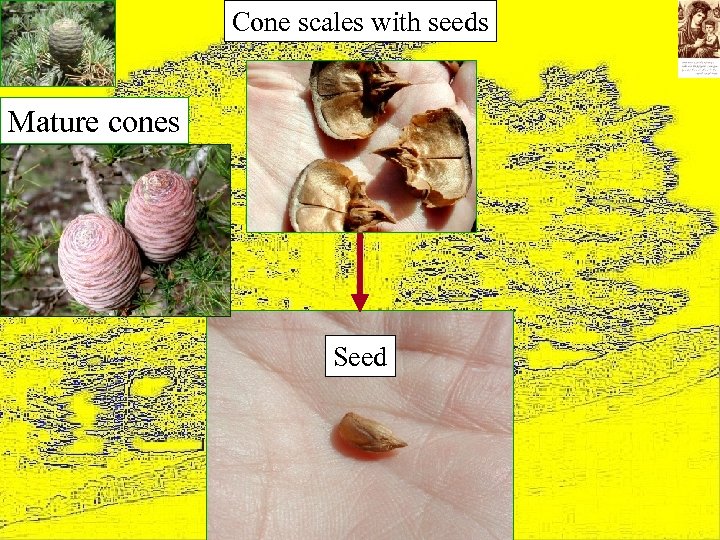
Cone scales with seeds Mature cones Seed
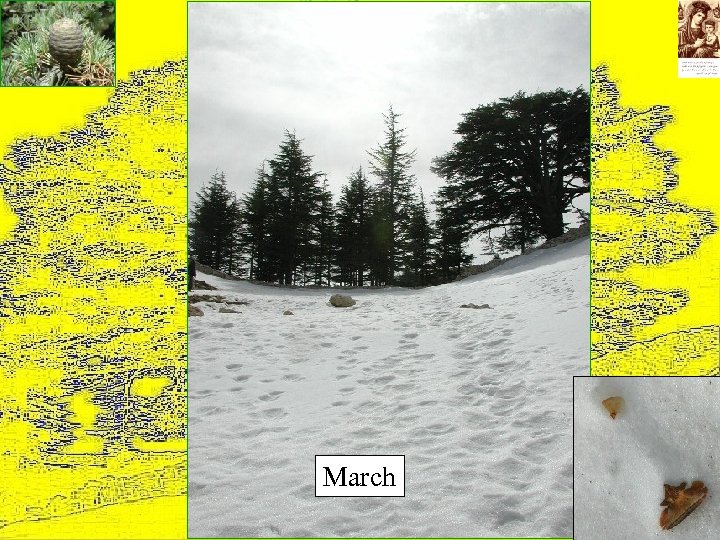
March
May
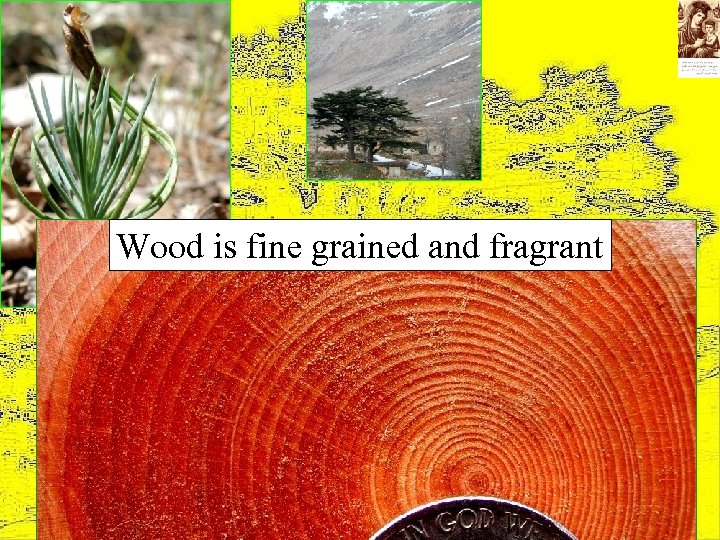
Wood is fine grained and fragrant
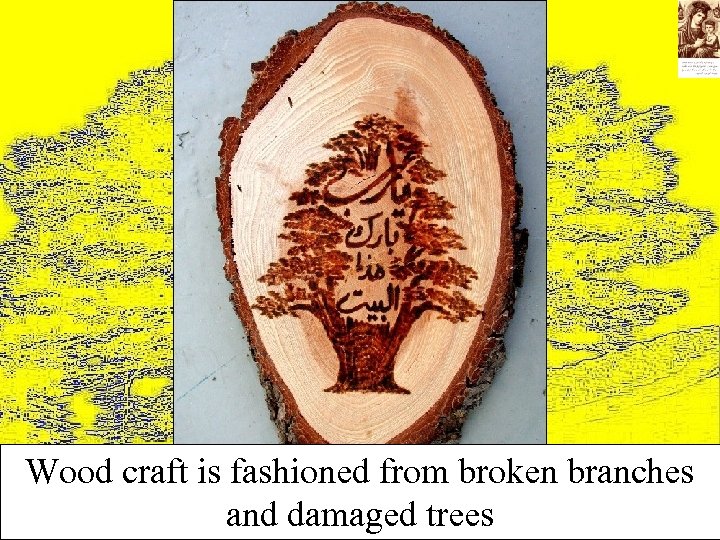
Wood craft is fashioned from broken branches and damaged trees
Symbolism 1. Large, stately trees.
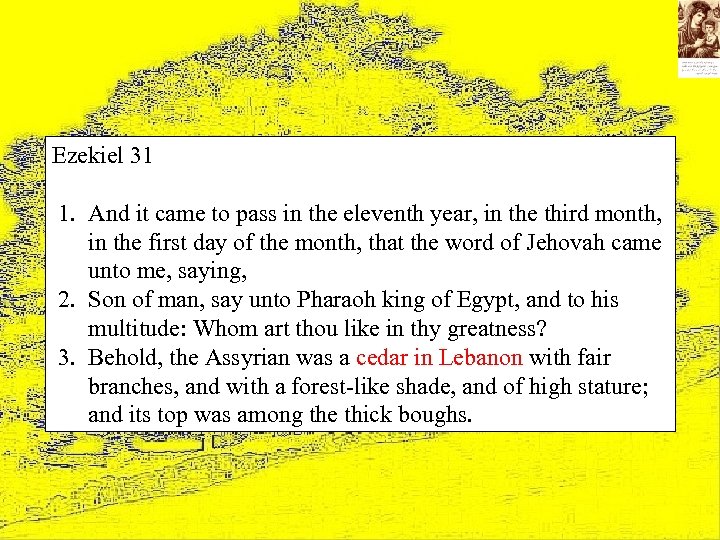
Ezekiel 31 1. And it came to pass in the eleventh year, in the third month, in the first day of the month, that the word of Jehovah came unto me, saying, 2. Son of man, say unto Pharaoh king of Egypt, and to his multitude: Whom art thou like in thy greatness? 3. Behold, the Assyrian was a cedar in Lebanon with fair branches, and with a forest-like shade, and of high stature; and its top was among the thick boughs.
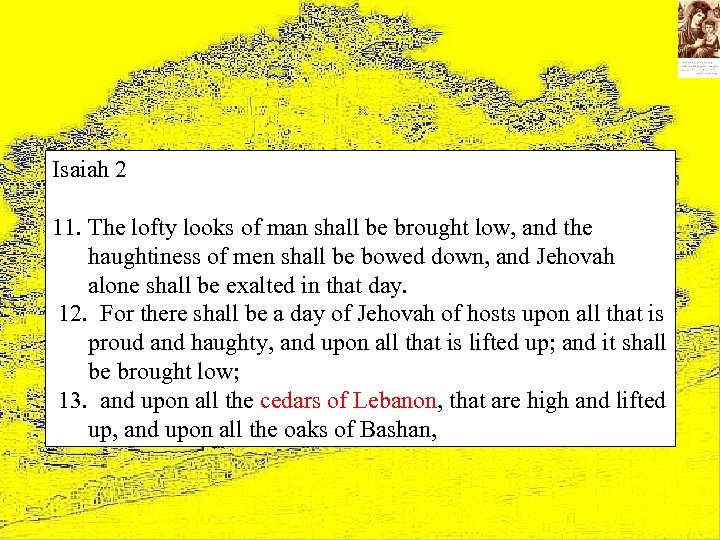
Isaiah 2 11. The lofty looks of man shall be brought low, and the haughtiness of men shall be bowed down, and Jehovah alone shall be exalted in that day. 12. For there shall be a day of Jehovah of hosts upon all that is proud and haughty, and upon all that is lifted up; and it shall be brought low; 13. and upon all the cedars of Lebanon, that are high and lifted up, and upon all the oaks of Bashan,
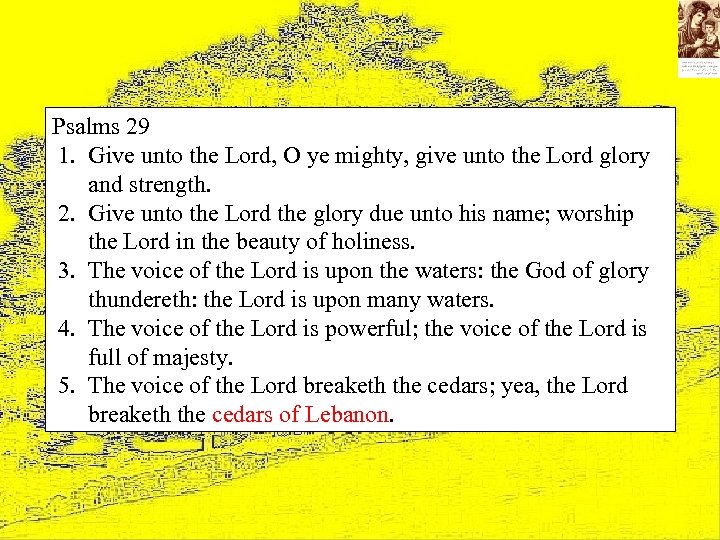
Psalms 29 1. Give unto the Lord, O ye mighty, give unto the Lord glory and strength. 2. Give unto the Lord the glory due unto his name; worship the Lord in the beauty of holiness. 3. The voice of the Lord is upon the waters: the God of glory thundereth: the Lord is upon many waters. 4. The voice of the Lord is powerful; the voice of the Lord is full of majesty. 5. The voice of the Lord breaketh the cedars; yea, the Lord breaketh the cedars of Lebanon.
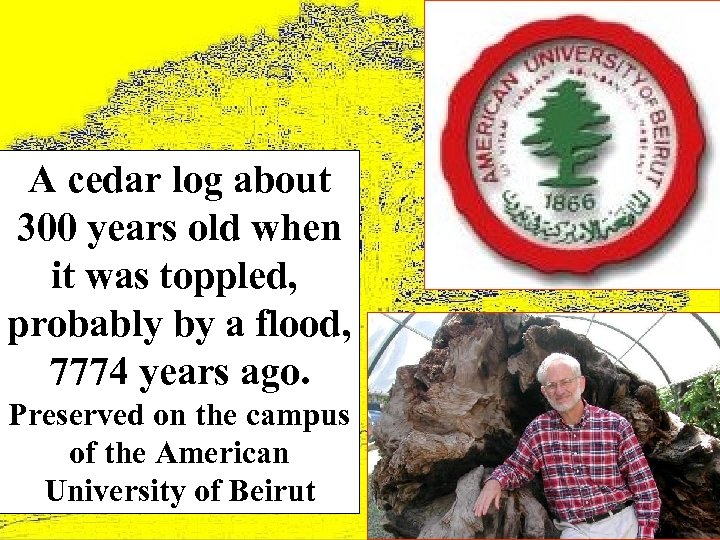
A cedar log about 300 years old when it was toppled, probably by a flood, 7774 years ago. Preserved on the campus of the American University of Beirut
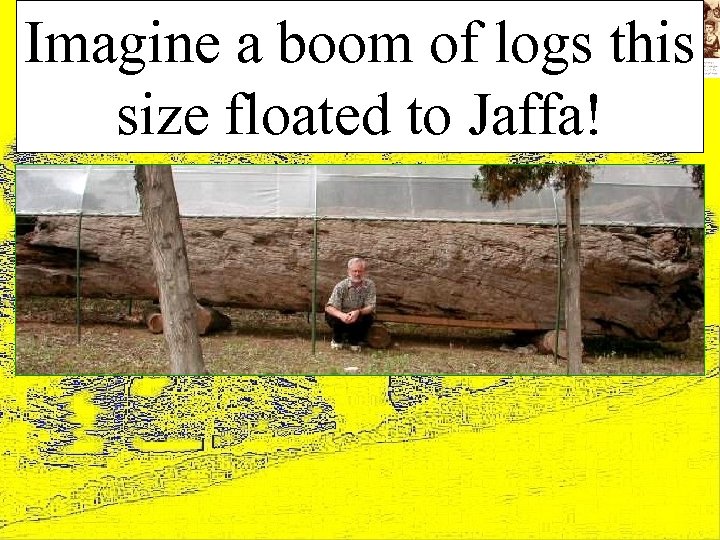
Imagine a boom of logs this size floated to Jaffa!
Ezra 3: 7. 7. Then they gave money to the masons and carpenters, and food, drink and oil to the Sidonians and to the Tyrians, to bring cedar wood from Lebanon to the sea at Joppa, according to the permission they had from Cyrus king of Persia.
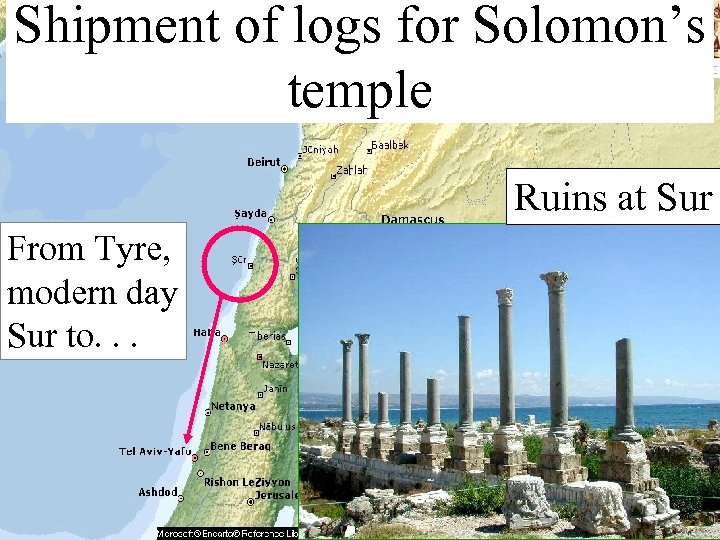
Shipment of logs for Solomon’s temple Ruins at Sur From Tyre, modern day Sur to. . .
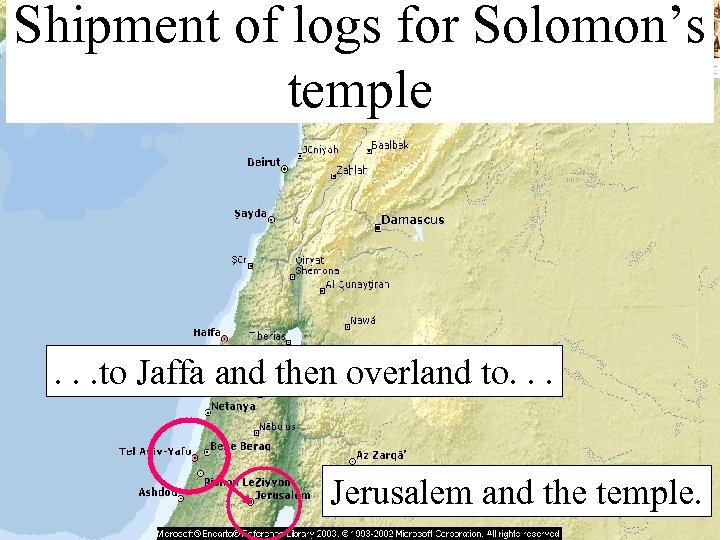
Shipment of logs for Solomon’s temple . . . to Jaffa and then overland to. . . Jerusalem and the temple.
Symbolism 1. Large, stately trees. 2. Fine timber, highly valued.
2 Samuel 7 1. And it came to pass, when the king sat in his house, and the Lord had given him rest round about from all his enemies; 2. That the king said unto Nathan the prophet, See now, I dwell in an house of cedar, but the ark of God dwelleth within curtains.
Symbolism 1. Large, stately trees. 2. Fine timber, highly valued. 3. Fragrant.
Leviticus 14 1. And Jehovah spake unto Moses, saying, 2. This shall be the law of the leper in the day of his cleansing: he shall be brought unto the priest: 3. and the priest shall go forth out of the camp; and the priest shall look; and, behold, if the plague of leprosy be healed in the leper, 4. then shall the priest command to take for him that is to be cleansed two living clean birds, and cedar wood, and scarlet, and hyssop:
Symbolism 1. Large, stately trees. 2. Fine timber, highly valued. 3. Fragrant. 4. Live in high mountains, in verdant forests.
II Kings 19: 23. 'Through your messengers you have reproached the Lord, And you have said, "With my many chariots I came up to the heights of the mountains, To the remotest parts of Lebanon; and I cut down its tall cedars {and} its choice cypresses. And I entered its farthest lodging place, its thickest forest.
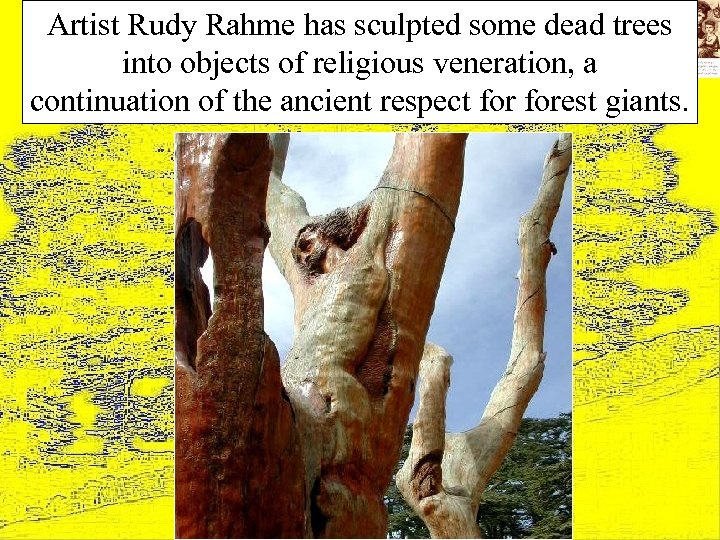
Artist Rudy Rahme has sculpted some dead trees into objects of religious veneration, a continuation of the ancient respect forest giants.
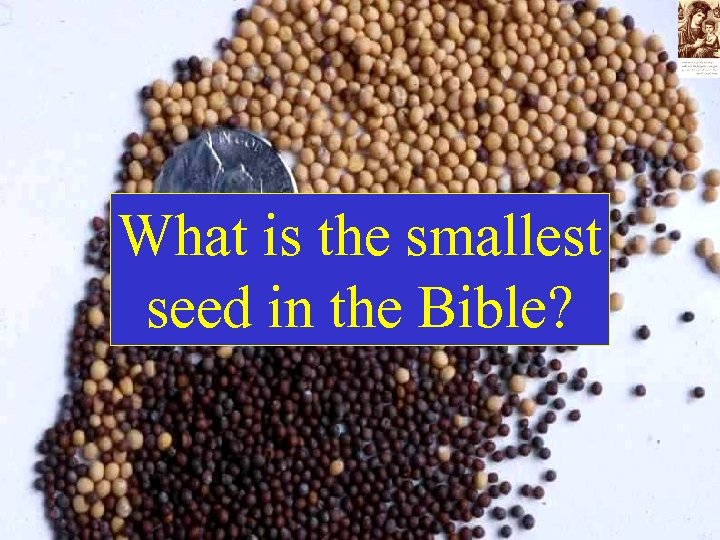
What is the smallest seed in the Bible?
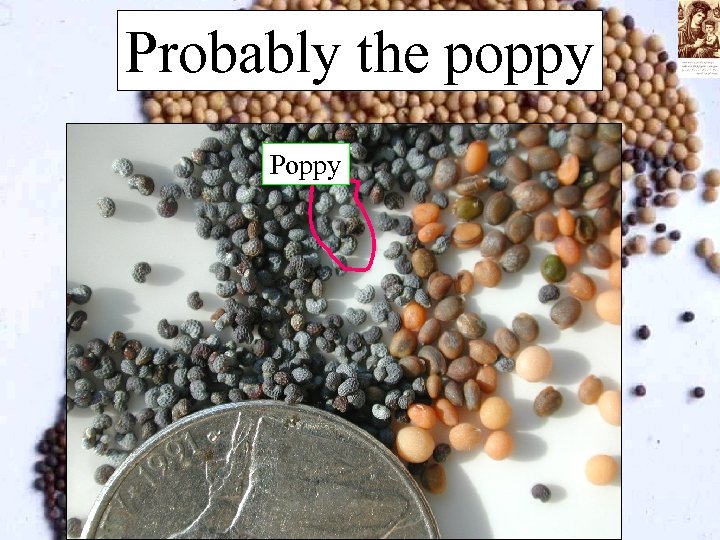
Probably the poppy Poppy
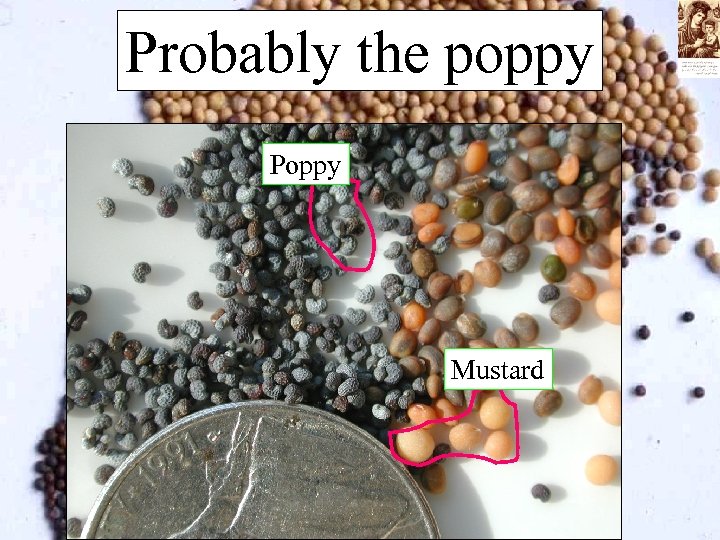
Probably the poppy Poppy Mustard
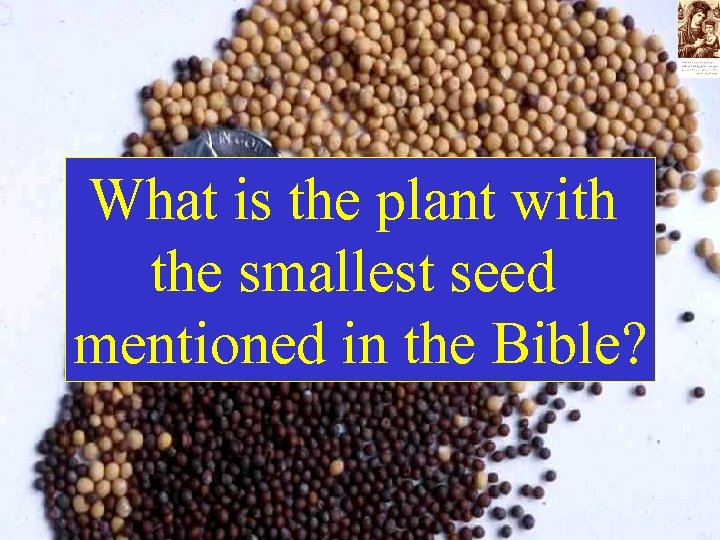
What is the plant with the smallest seed mentioned in the Bible?
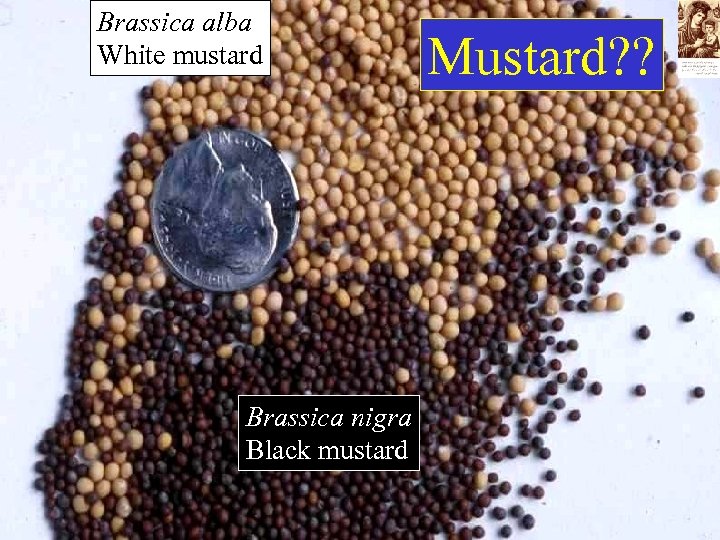
Brassica alba White mustard Brassica nigra Black mustard Mustard? ?
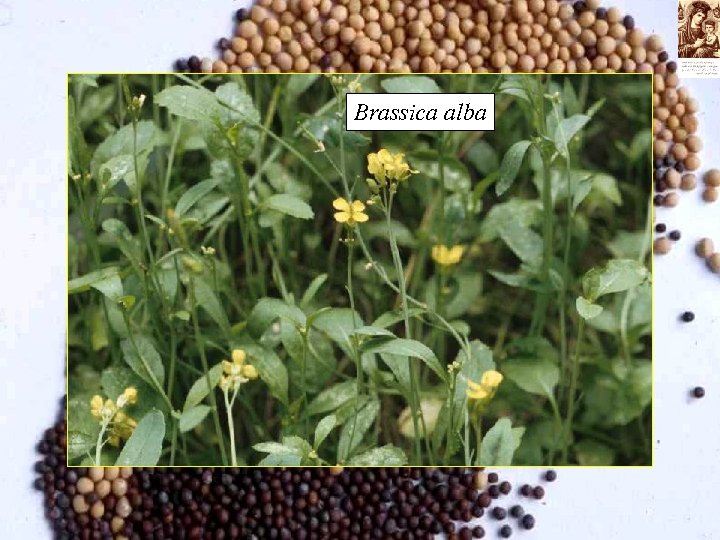
Brassica alba
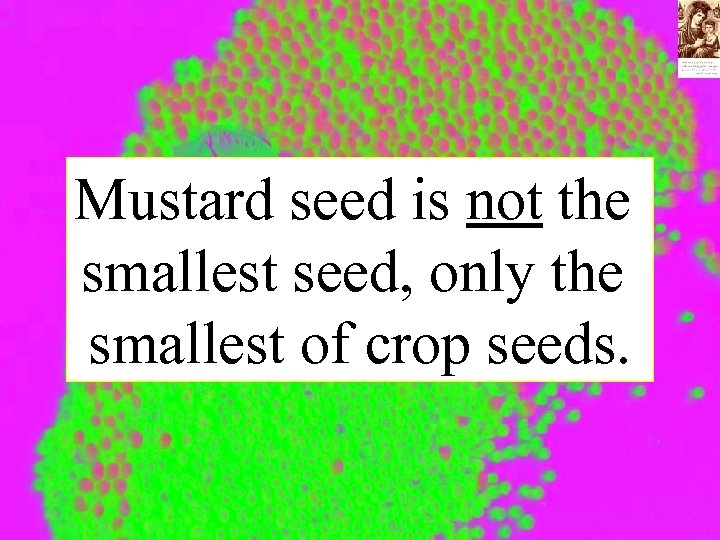
Mustard seed is not the smallest seed, only the smallest of crop seeds.
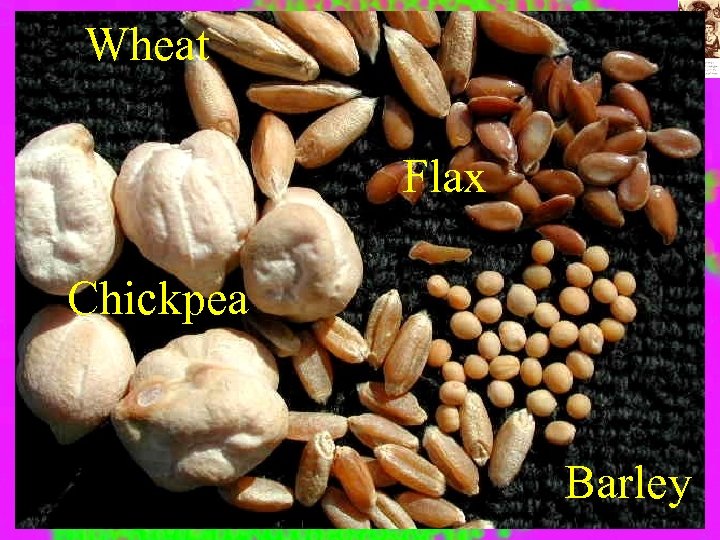
Wheat Flax Chickpea Barley
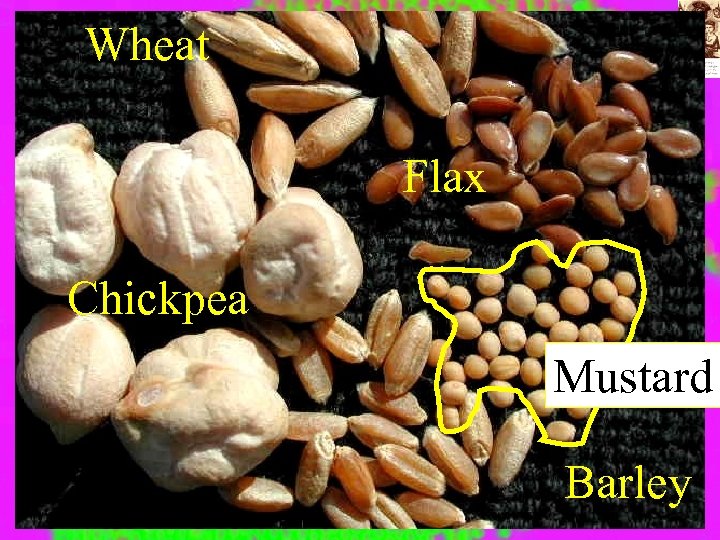
Wheat Flax Chickpea Mustard Barley
![Jesus said: “It [The Kingdom of God] is like a mustard seed, which is](https://present5.com/presentation/8551842dc619c073fcef58c520dee2b3/image-73.jpg "Jesus said: “It [The Kingdom of God] is like a mustard seed, which is")
Jesus said: “It [The Kingdom of God] is like a mustard seed, which is the smallest seed you plant. . . ” Mark 4: 31.
![Jesus said: “It [The Kingdom of God] is like a mustard seed, which is](https://present5.com/presentation/8551842dc619c073fcef58c520dee2b3/image-74.jpg "Jesus said: “It [The Kingdom of God] is like a mustard seed, which is")
Jesus said: “It [The Kingdom of God] is like a mustard seed, which is the smallest seed you plant. . . ” Mark 4: 31.
What feature makes mustard seed like the Kingdom of God?

Perhaps its unusually rapid germination.
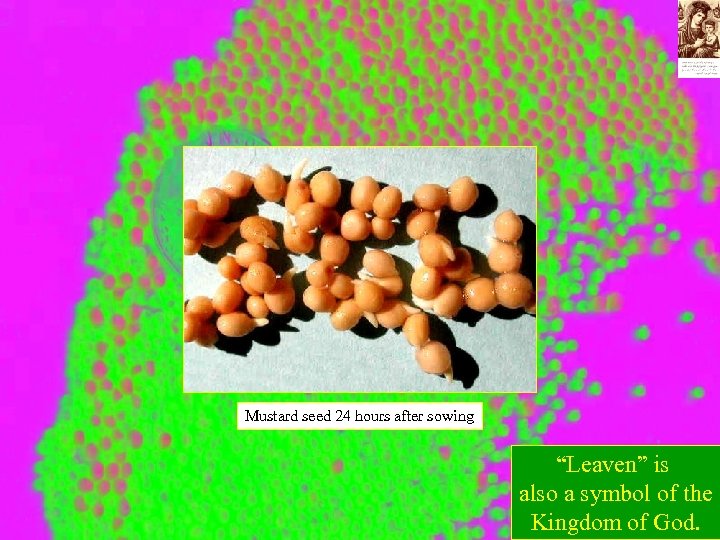
Mustard seed 24 hours after sowing “Leaven” is also a symbol of the Kingdom of God.
Symbolism of Mustard Is it normally a tree? Or, is this a monstrosity? Exegesis will depend theology
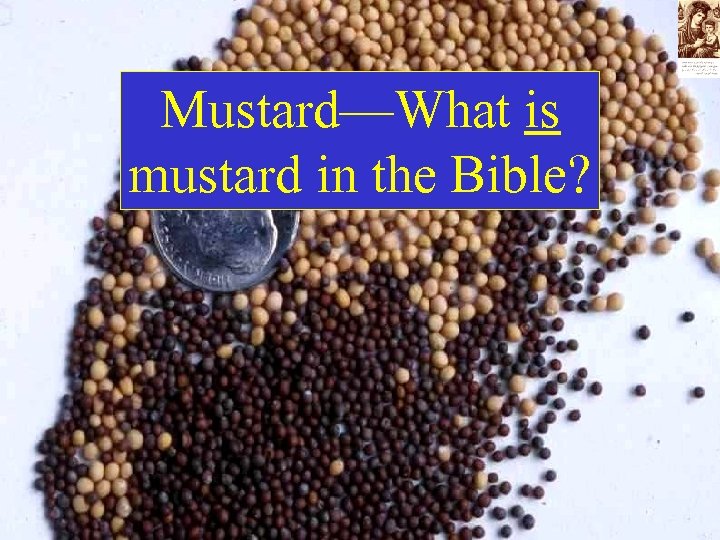
Mustard—What is mustard in the Bible?
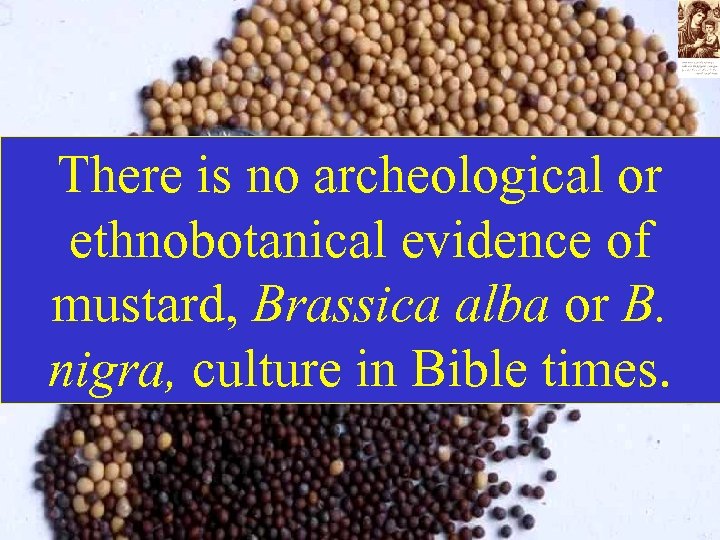
There is no archeological or ethnobotanical evidence of mustard, Brassica alba or B. nigra, culture in Bible times.
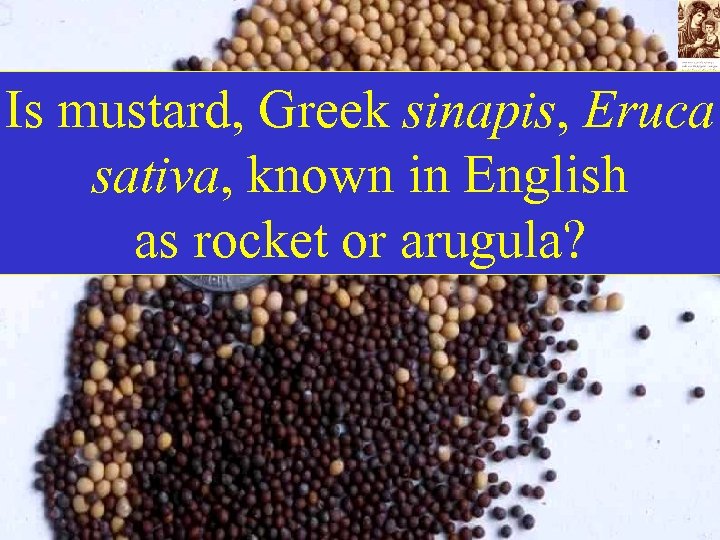
Is mustard, Greek sinapis, Eruca sativa, known in English as rocket or arugula?
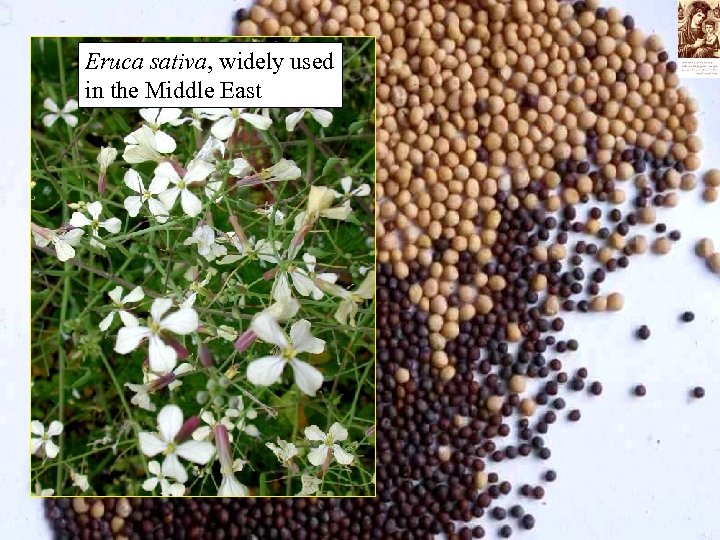
Eruca sativa, widely used in the Middle East
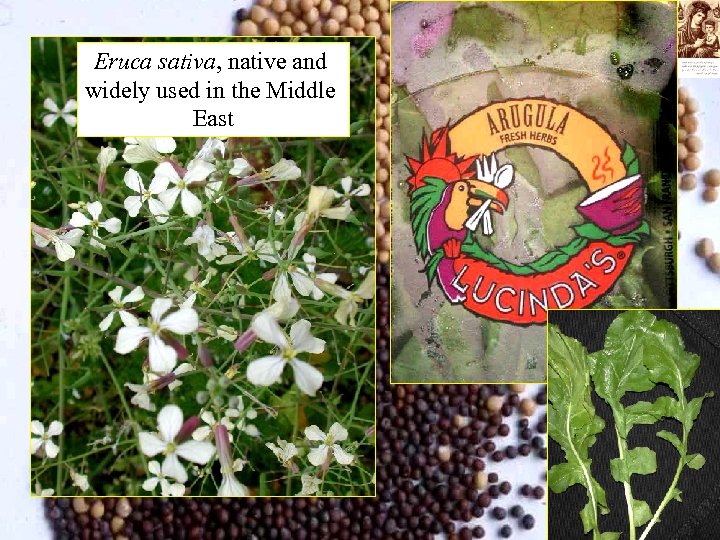
Eruca sativa, native and widely used in the Middle East
![What are tares [Greek zizanion] in the Bible?](https://present5.com/presentation/8551842dc619c073fcef58c520dee2b3/image-84.jpg "What are tares [Greek zizanion] in the Bible?")
What are tares [Greek zizanion] in the Bible?
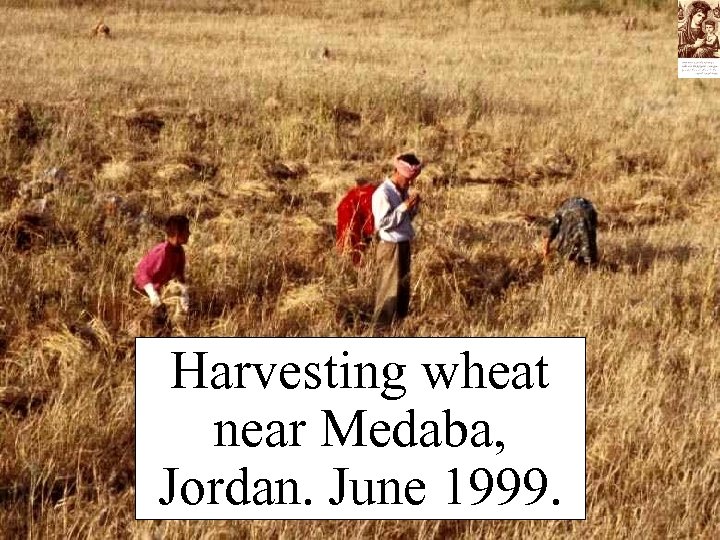
Harvesting wheat near Medaba, Jordan. June 1999.
Zizanion is translated into English as tares, darnel, or weeds.
Parable of the Tares Matthew 13: 24 -30 “The Kingdom of heaven is like a man who sowed good seed in his field. But while everyone was sleeping his enemy came and sowed weeds among the wheat and went away. When the wheat sprouted and formed ears, then the weeds also appeared. ”
“The owner’s servants came to him and said, Sir didn’t you sow good seed in your field? Where then did the weeds come from? An enemy did this, he replied. The servants asked him, Do you want us to go and pull them up? ”
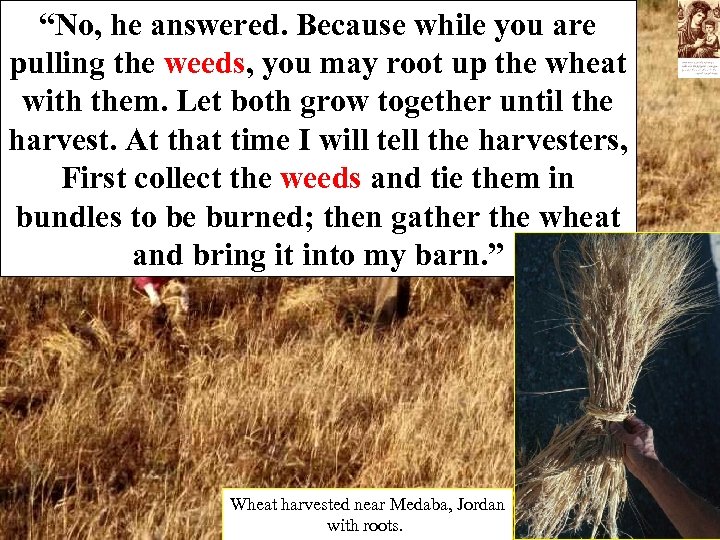
“No, he answered. Because while you are pulling the weeds, you may root up the wheat with them. Let both grow together until the harvest. At that time I will tell the harvesters, First collect the weeds and tie them in bundles to be burned; then gather the wheat and bring it into my barn. ” Wheat harvested near Medaba, Jordan with roots.
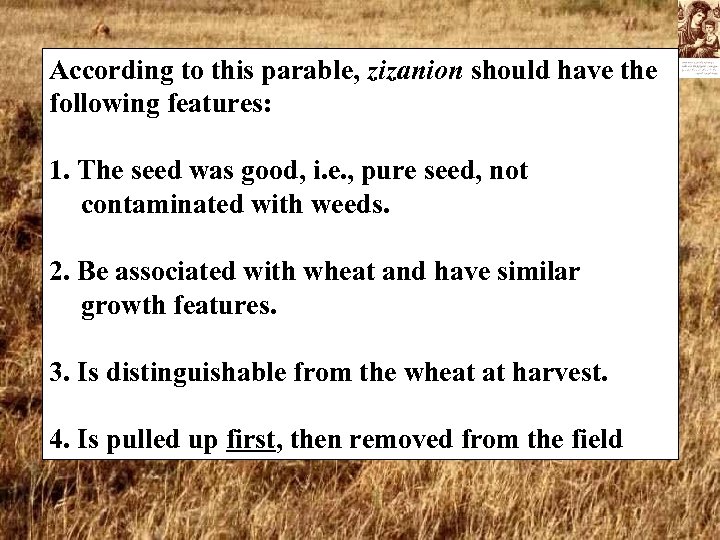
According to this parable, zizanion should have the following features: 1. The seed was good, i. e. , pure seed, not contaminated with weeds. 2. Be associated with wheat and have similar growth features. 3. Is distinguishable from the wheat at harvest. 4. Is pulled up first, then removed from the field
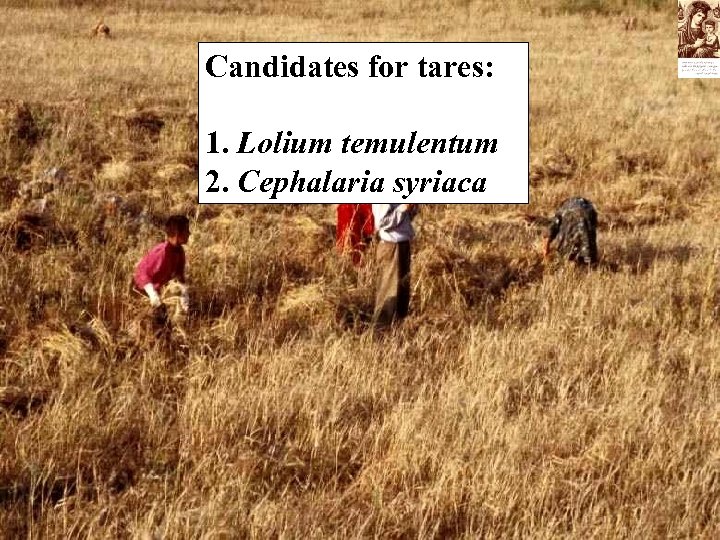
Candidates for tares: 1. Lolium temulentum 2. Cephalaria syriaca
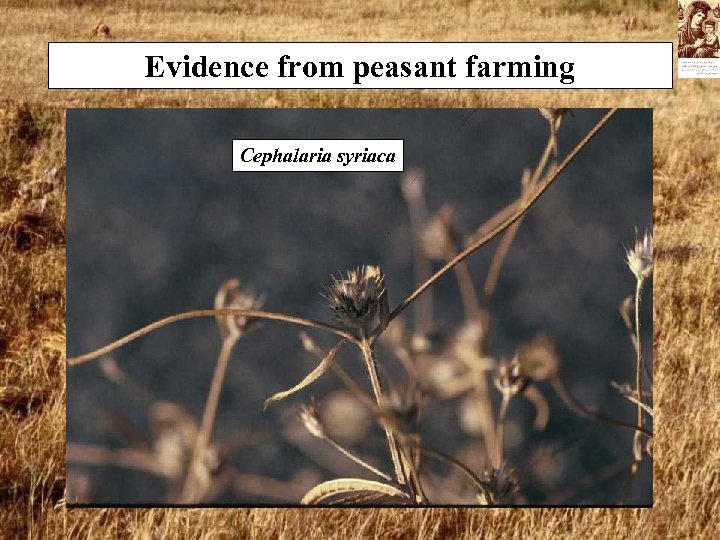
Evidence from peasant farming Cephalaria syriaca
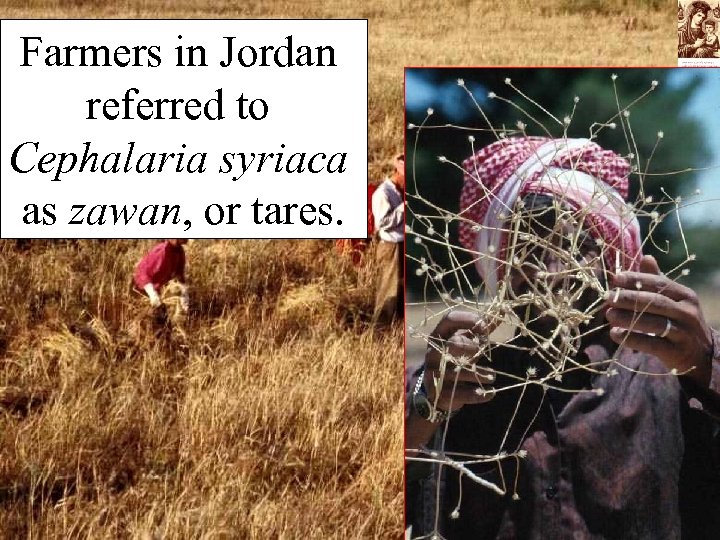
Farmers in Jordan referred to Cephalaria syriaca as zawan, or tares.
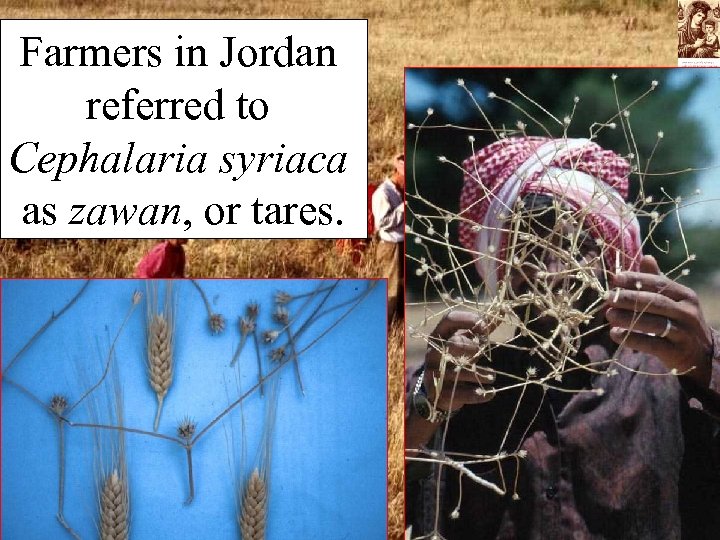
Farmers in Jordan referred to Cephalaria syriaca as zawan, or tares.
![There is an Arab proverb that says: “The tares [zawan] of your own field](https://present5.com/presentation/8551842dc619c073fcef58c520dee2b3/image-95.jpg "There is an Arab proverb that says: “The tares [zawan] of your own field")
There is an Arab proverb that says: “The tares [zawan] of your own field are better than the wheat of the Crusaders”
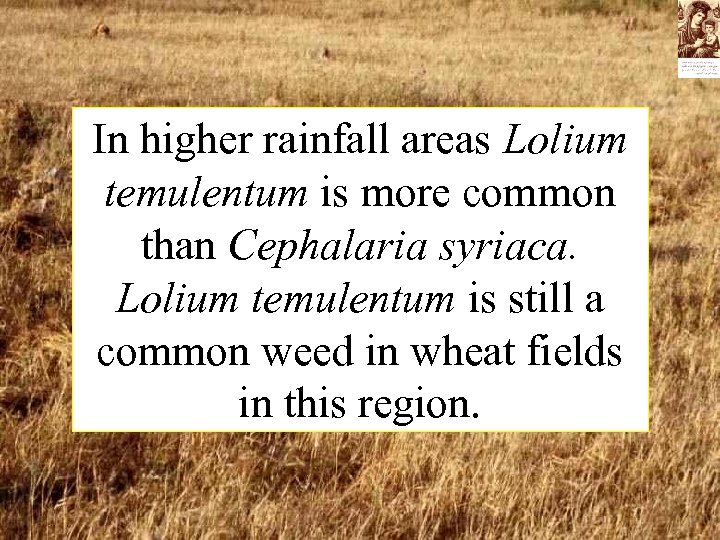
In higher rainfall areas Lolium temulentum is more common than Cephalaria syriaca. Lolium temulentum is still a common weed in wheat fields in this region.
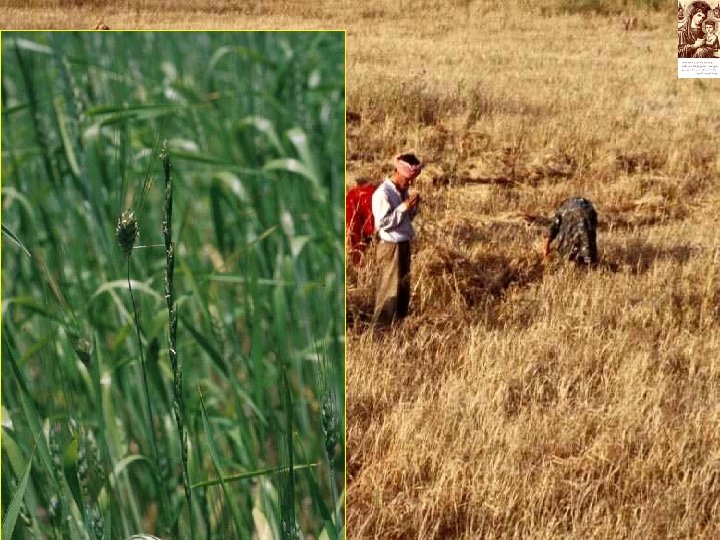
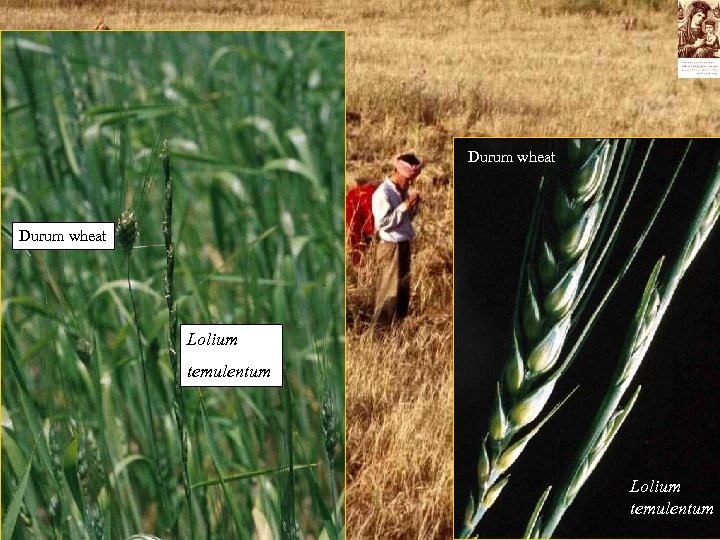
Durum wheat Lolium temulentum
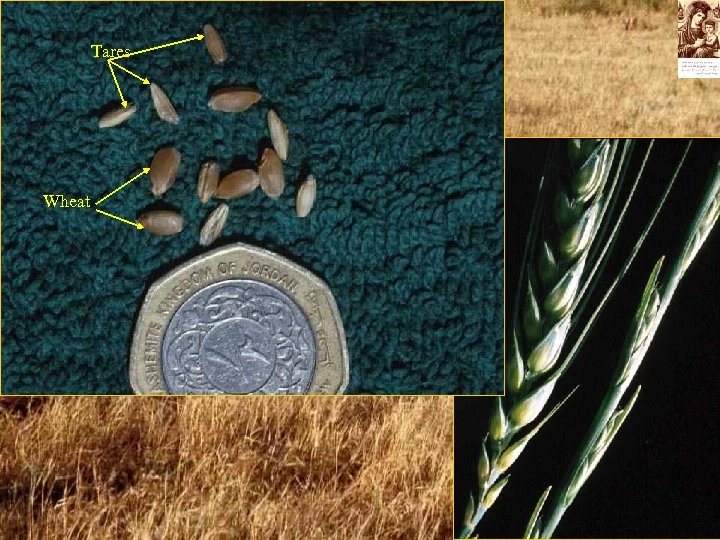
Tares Wheat
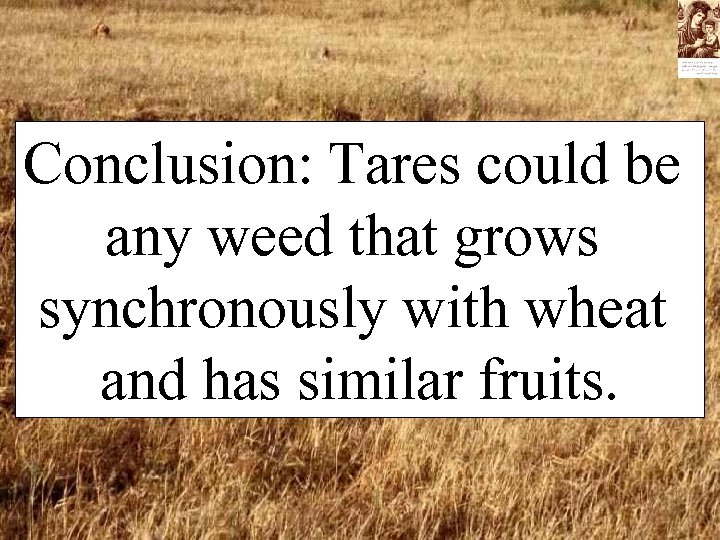
Conclusion: Tares could be any weed that grows synchronously with wheat and has similar fruits.
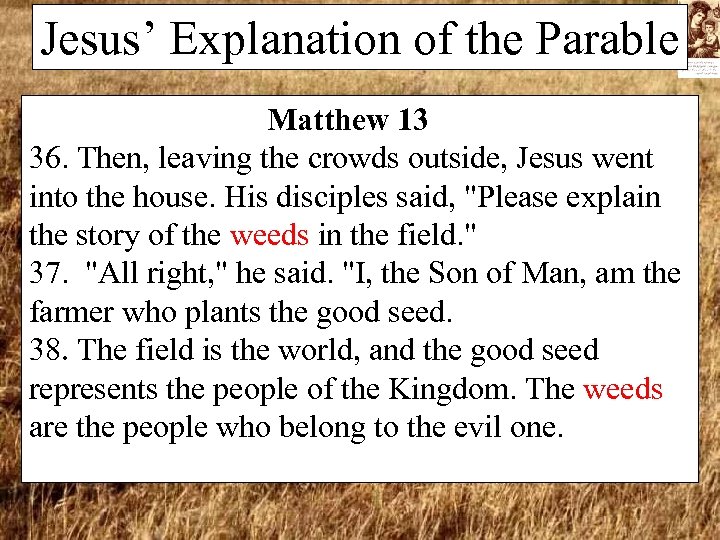
Jesus’ Explanation of the Parable Matthew 13 36. Then, leaving the crowds outside, Jesus went into the house. His disciples said, "Please explain the story of the weeds in the field. " 37. "All right, " he said. "I, the Son of Man, am the farmer who plants the good seed. 38. The field is the world, and the good seed represents the people of the Kingdom. The weeds are the people who belong to the evil one.
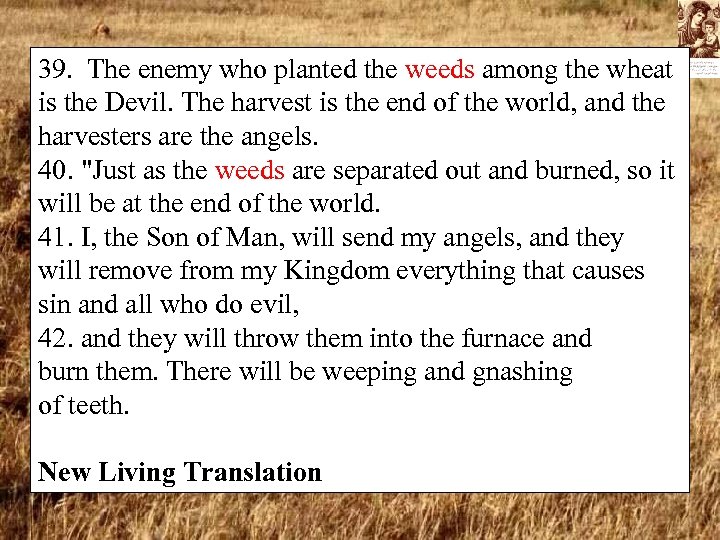
39. The enemy who planted the weeds among the wheat is the Devil. The harvest is the end of the world, and the harvesters are the angels. 40. "Just as the weeds are separated out and burned, so it will be at the end of the world. 41. I, the Son of Man, will send my angels, and they will remove from my Kingdom everything that causes sin and all who do evil, 42. and they will throw them into the furnace and burn them. There will be weeping and gnashing of teeth. New Living Translation
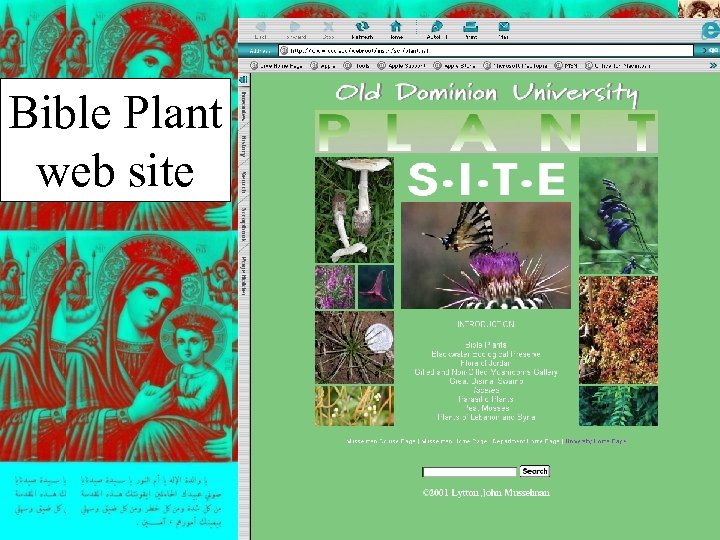
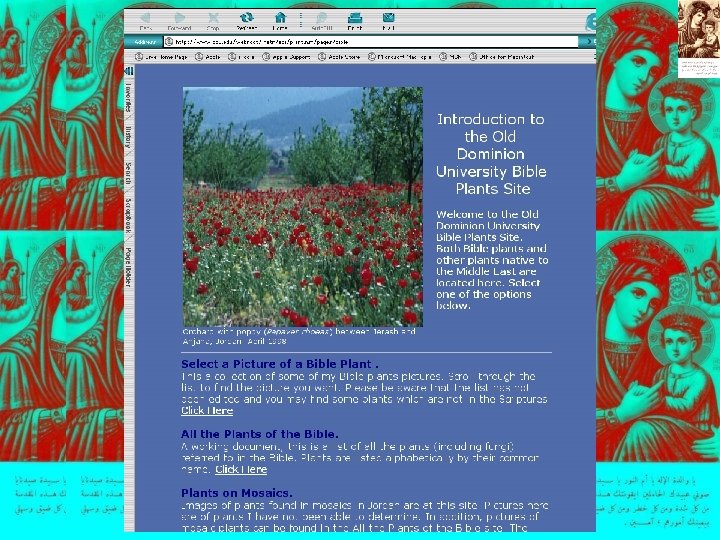
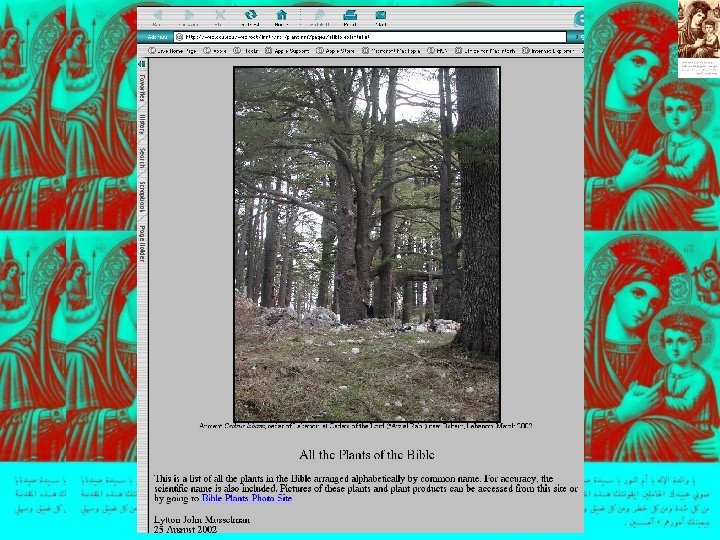
Bible Plant web site
Dedicated to my friend, F. Nigel Hepper, Bible plant authority and devoted Christian
With thanks to……
American University of Beirut and Old Dominion University…
John Musselman, eager field companion….
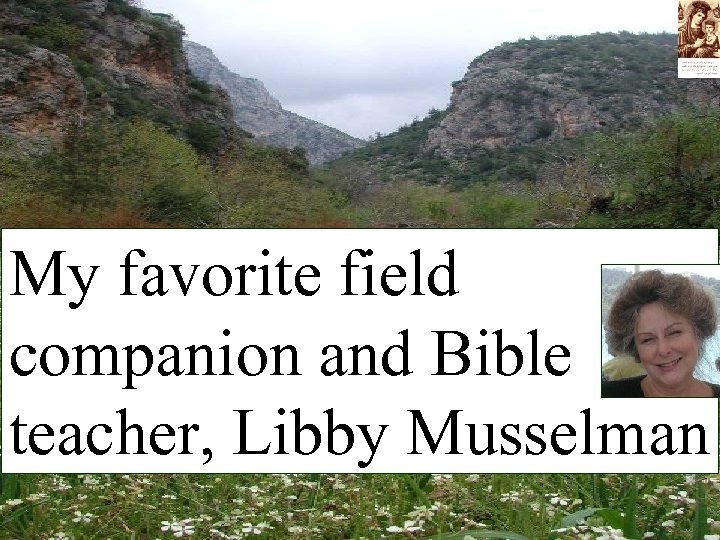
My favorite field companion and Bible teacher, Libby Musselman

Solo Deo Gloria Wadi Jhannem, northern Lebanon
Скачать презентацию Plants of the Bible Lytton John Musselman Old
8551842dc619c073fcef58c520dee2b3.ppt