


 Скачать презентацию Plants and People Dyes Dyes make the
f4cb925d53dded8f2a51c000cb0839b9.ppt
- Количество слайдов: 17
 Plants and People Dyes
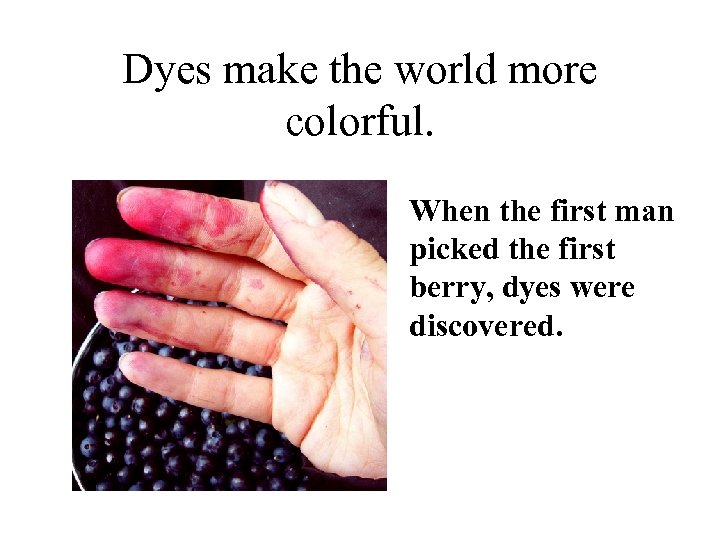 Dyes make the world more colorful. When the first man picked the first berry, dyes were discovered.
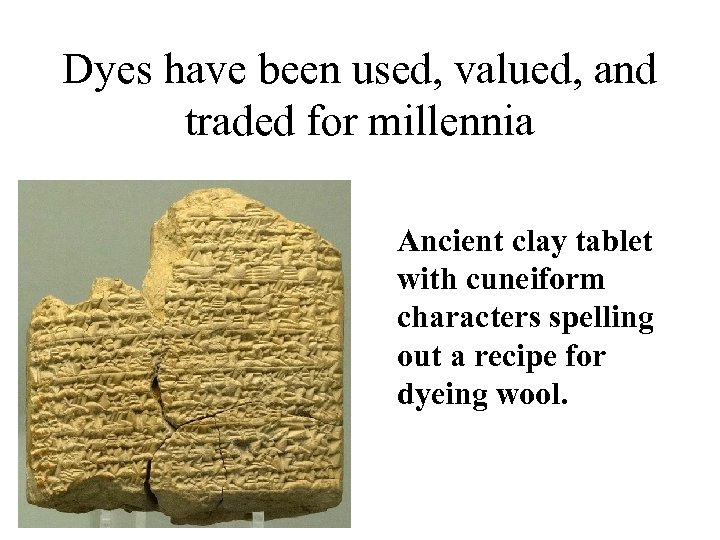 Dyes have been used, valued, and traded for millennia Ancient clay tablet with cuneiform characters spelling out a recipe for dyeing wool.
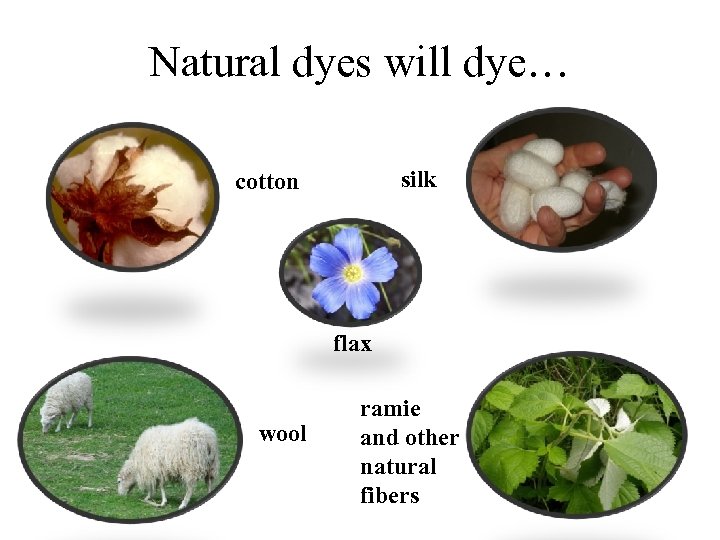 Natural dyes will dye… silk cotton flax wool ramie and other natural fibers
 Fastness Refers to the tendency of a dye to resist fading as a result of washing or exposure to light
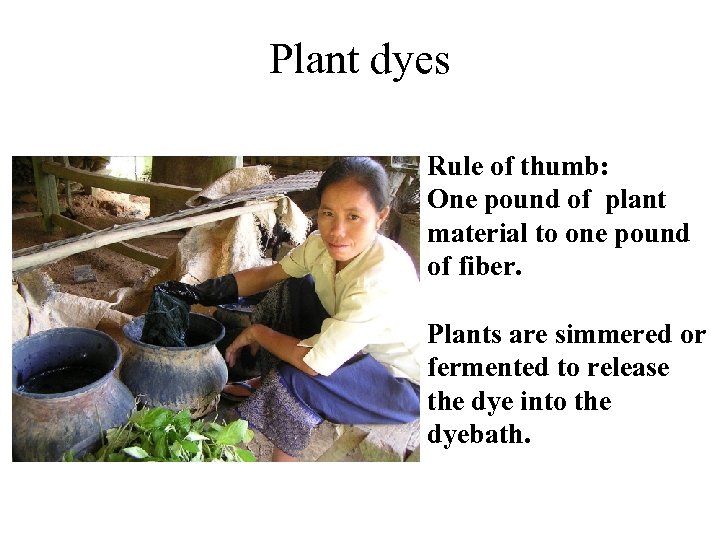 Plant dyes Rule of thumb: One pound of plant material to one pound of fiber. Plants are simmered or fermented to release the dye into the dyebath.
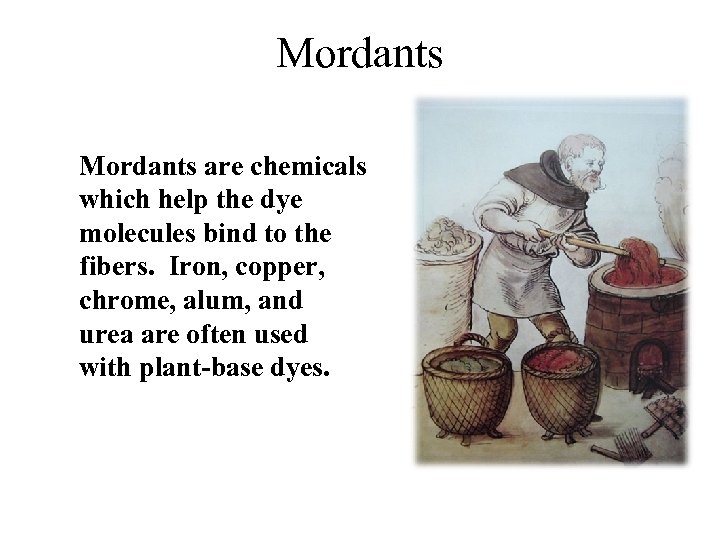 Mordants are chemicals which help the dye molecules bind to the fibers. Iron, copper, chrome, alum, and urea are often used with plant-base dyes.
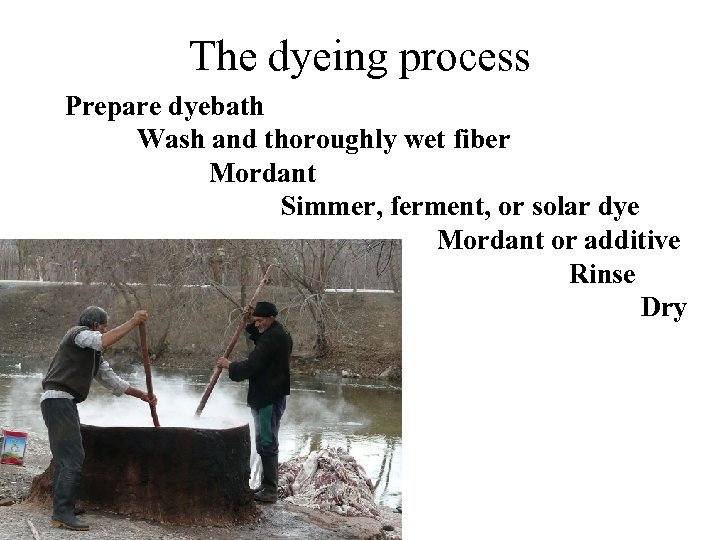 The dyeing process Prepare dyebath Wash and thoroughly wet fiber Mordant Simmer, ferment, or solar dye Mordant or additive Rinse Dry
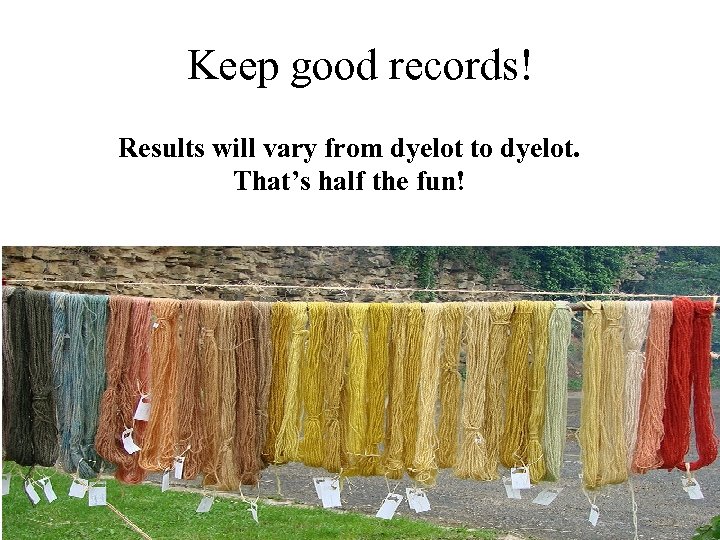 Keep good records! Results will vary from dyelot to dyelot. That’s half the fun!
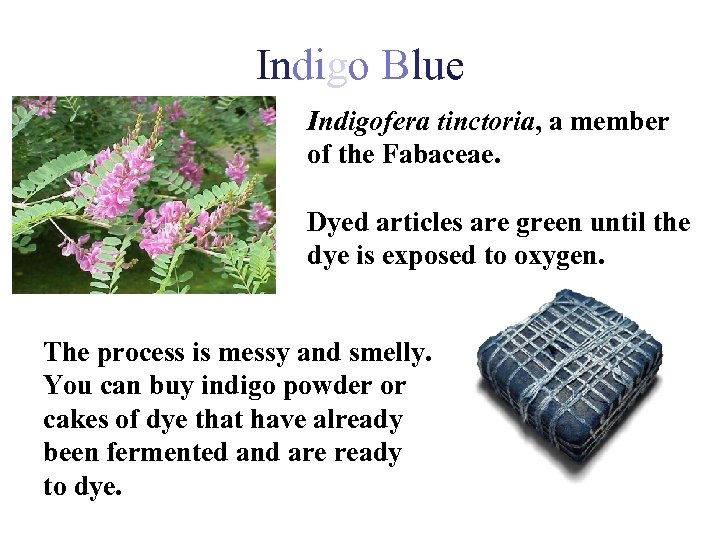 Indigo Blue Indigofera tinctoria, a member of the Fabaceae. Dyed articles are green until the dye is exposed to oxygen. The process is messy and smelly. You can buy indigo powder or cakes of dye that have already been fermented and are ready to dye.
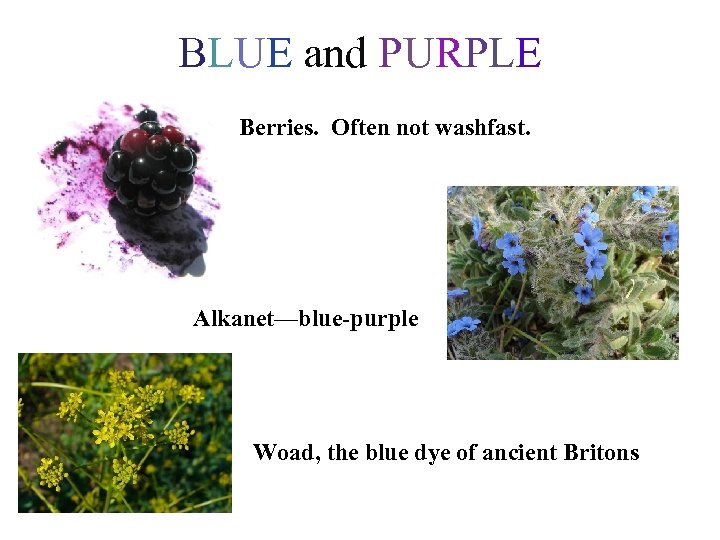 BLUE and PURPLE Berries. Often not washfast. Alkanet—blue-purple Woad, the blue dye of ancient Britons
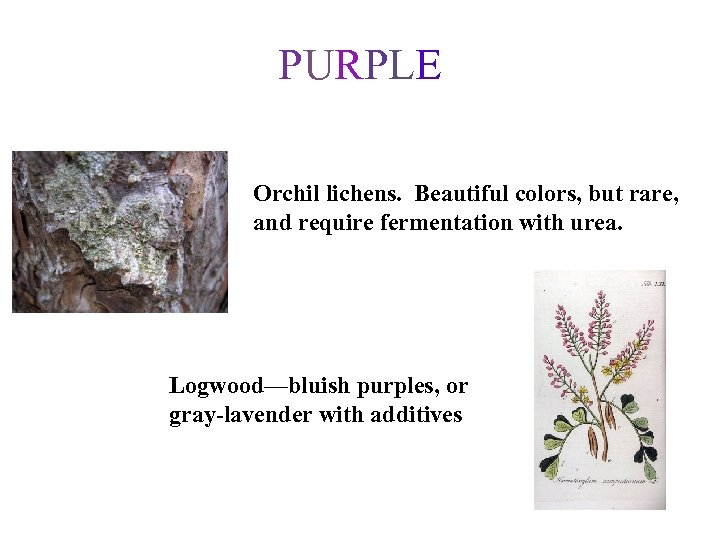 PURPLE Orchil lichens. Beautiful colors, but rare, and require fermentation with urea. Logwood—bluish purples, or gray-lavender with additives
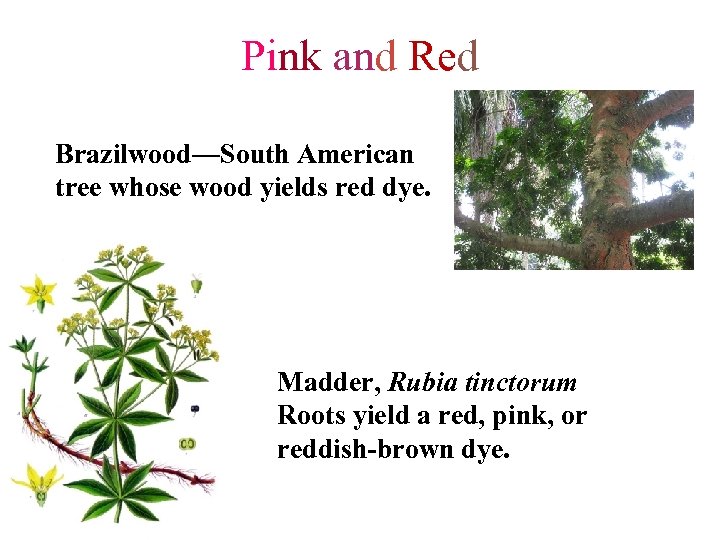 Pink and Red Brazilwood—South American tree whose wood yields red dye. Madder, Rubia tinctorum Roots yield a red, pink, or reddish-brown dye.
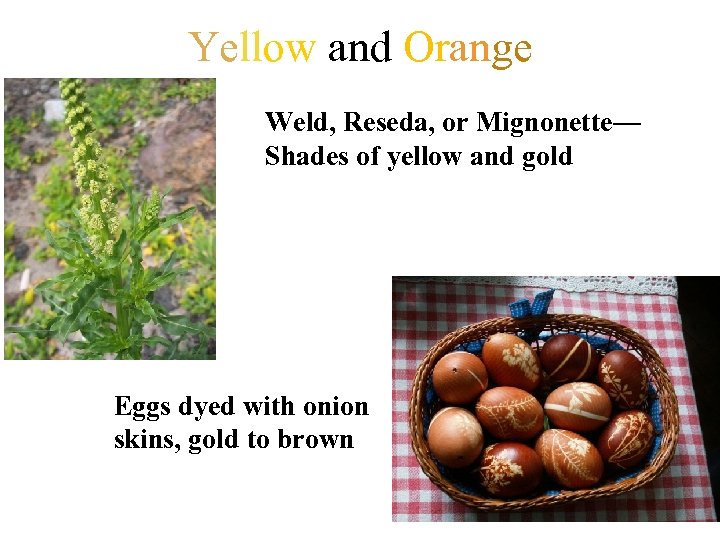 Yellow and Orange Weld, Reseda, or Mignonette— Shades of yellow and gold Eggs dyed with onion skins, gold to brown
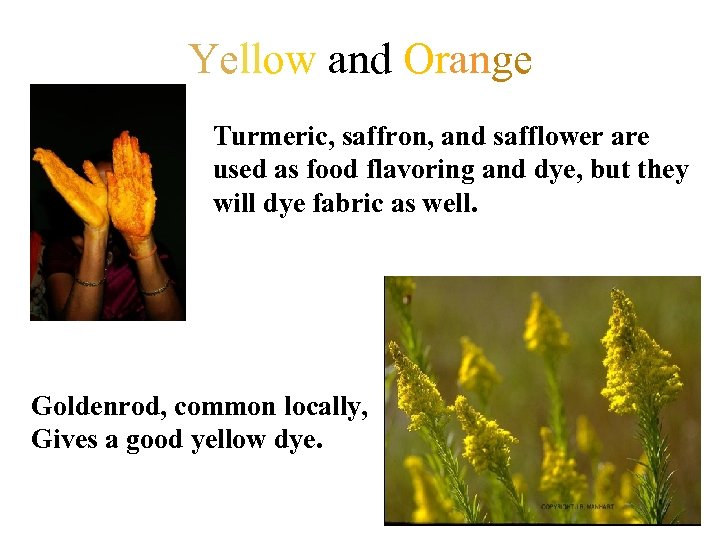 Yellow and Orange Turmeric, saffron, and safflower are used as food flavoring and dye, but they will dye fabric as well. Goldenrod, common locally, Gives a good yellow dye.
 Greens Many plants will yield a green dye --mostly chlorophyll—but these are often not colorfast. More successful greens can be obtained by dyeing yellow over blue or vice versa. Indigo and weld make a good green.
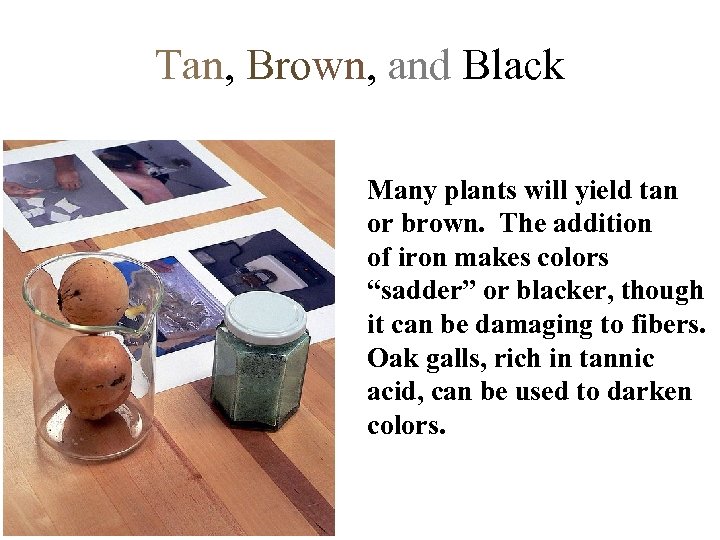 Tan, Brown, and Black Many plants will yield tan or brown. The addition of iron makes colors “sadder” or blacker, though it can be damaging to fibers. Oak galls, rich in tannic acid, can be used to darken colors.