 Скачать презентацию Plant Species Richness and Ecosystem Multifunctionality in Global
aac793d2bfff2e5cfdf251f8aff52f96.ppt
- Количество слайдов: 30




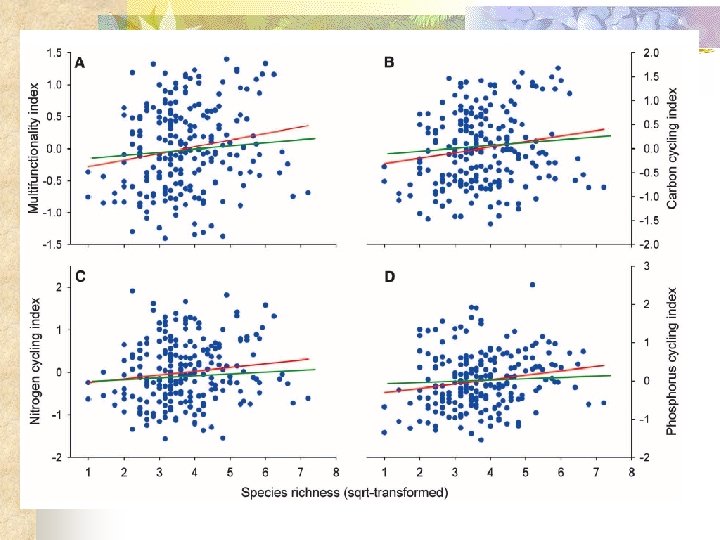
Plant Species Richness and Ecosystem Multifunctionality in Global Drylands Fernando T. Maestre et al. SCIENCE VOL 335 13 JANUARY 2012
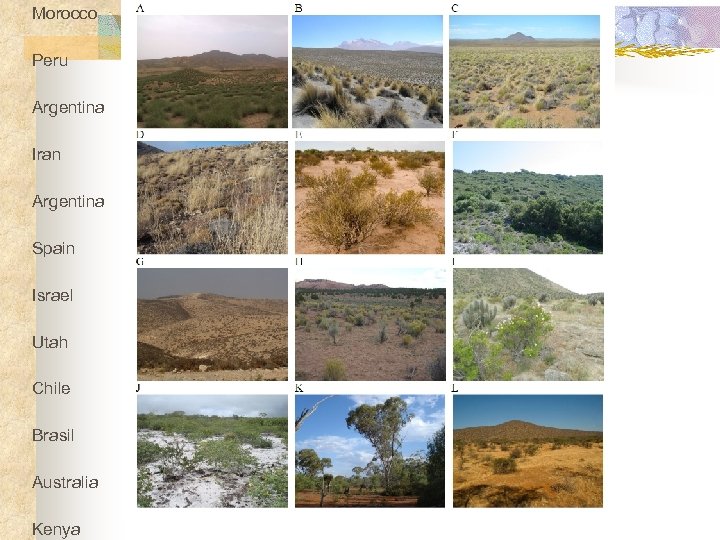
Morocco Peru Argentina Iran Argentina Spain Israel Utah Chile Brasil Australia Kenya
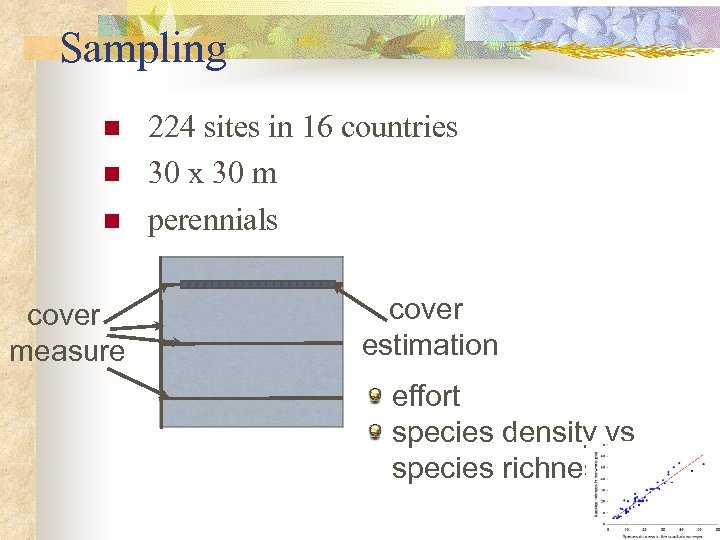
Sampling n n n cover measure 224 sites in 16 countries 30 x 30 m perennials cover estimation effort species density vs species richness
n n 50 cm x 50 cm quadrates 5 under major plants canopy and 5 in the open 5 x 145 cm 2 soil cores (0 -7. 5 cm depth) from each 10 -15 soil samples from each site sieved 2 mm mesh
Variables (Z scores) n n n nitrate (NO 3 --N) ammonium (NH 4+-N), organic C total N available inorganic P amino acids proteins pentoses hexoses aromatic compounds phenols potential N transformation rate activity of two extracellular β-glucosidase and phosphatase
Taxonomic diversity Phylogenetic diversity Genetic diversity Functional diversity Spatial and temporal diversity Interaction diversity Landscape diversity
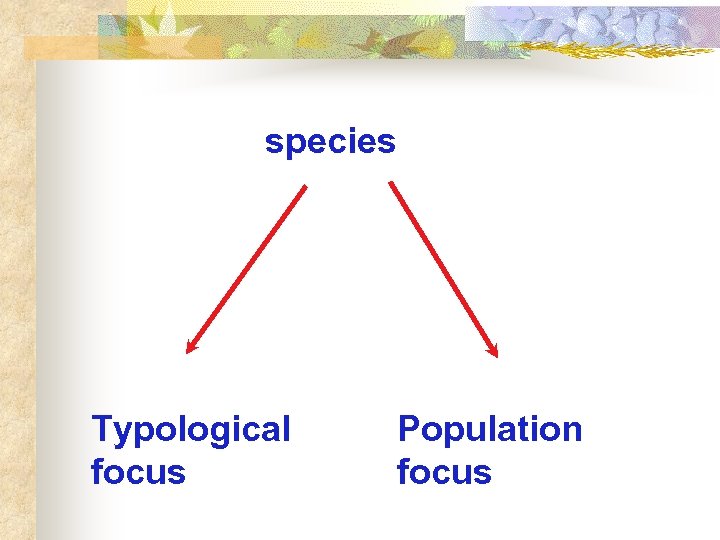
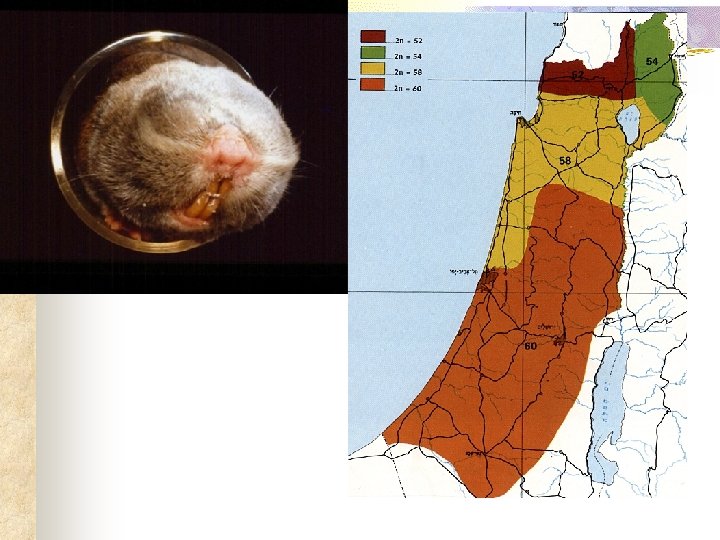
species Typological focus Population focus
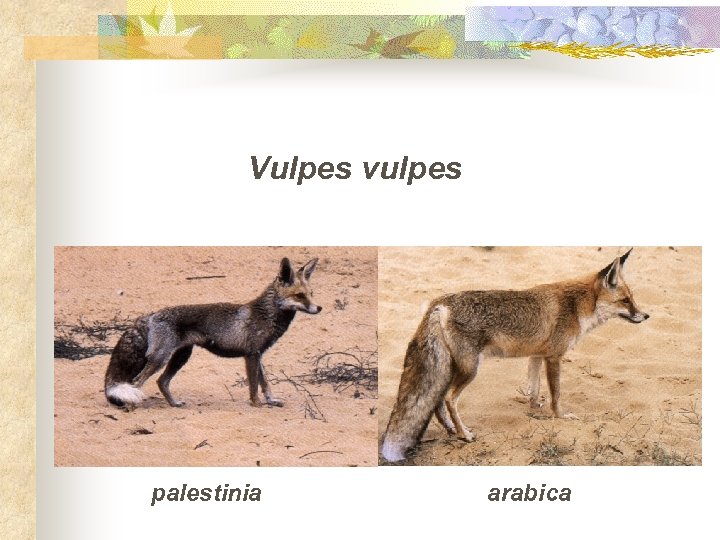
Vulpes vulpes palestinia arabica
3 most popular definitions for species: 1)Biological species 2)Phylogenetic species 3)Evolutionary species
Biological species concept Populations that are or can reproduce and are reproductively separate from others
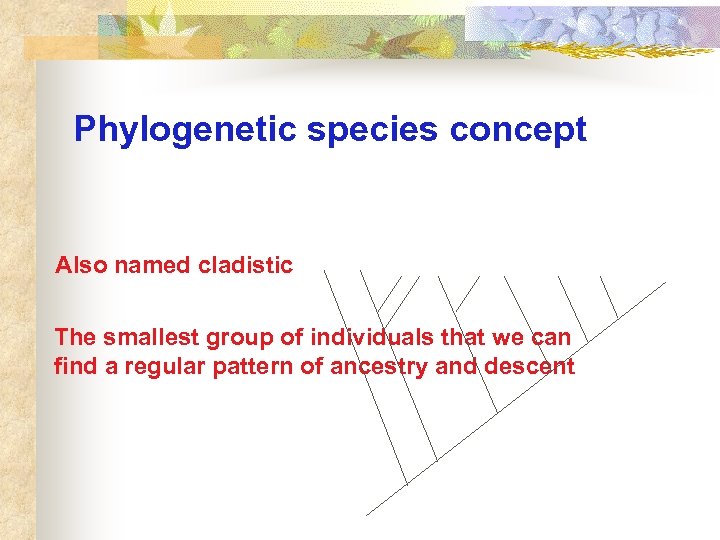
Phylogenetic species concept Also named cladistic The smallest group of individuals that we can find a regular pattern of ancestry and descent
Evolutionary species concept Similar to the phylogenetic concept with an emphasis on the evolutionary tendency
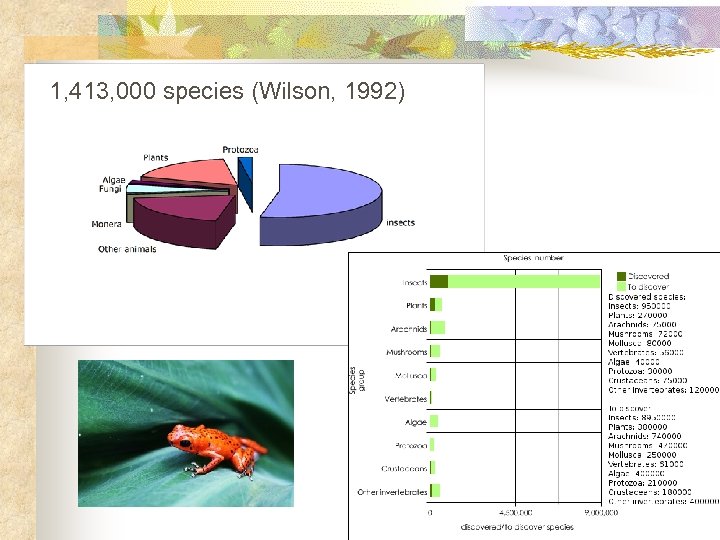
1, 413, 000 species (Wilson, 1992)
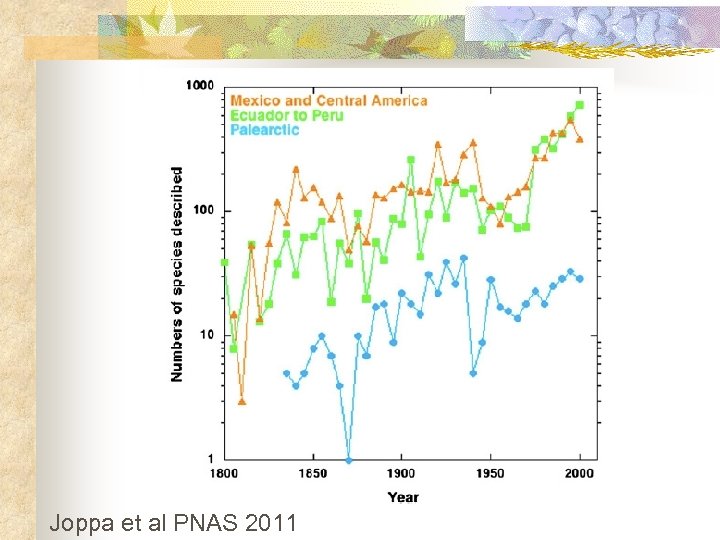
Joppa et al PNAS 2011

A A A
A B C
Protecting a population in its local ecosystem vs global protection of the species
snakes turtles S. punctatus S. guentheri
Endangered species Act “…Any subspecies of fish or wildlife or plants which interbreeds when mature…”
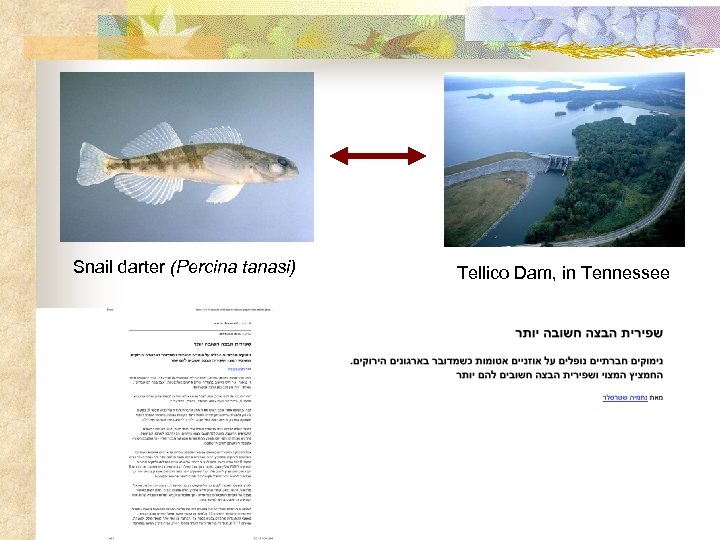
Snail darter (Percina tanasi) Tellico Dam, in Tennessee
Who to save? Keystone Indicator Umbrella Flagship Vulnerable Economically important
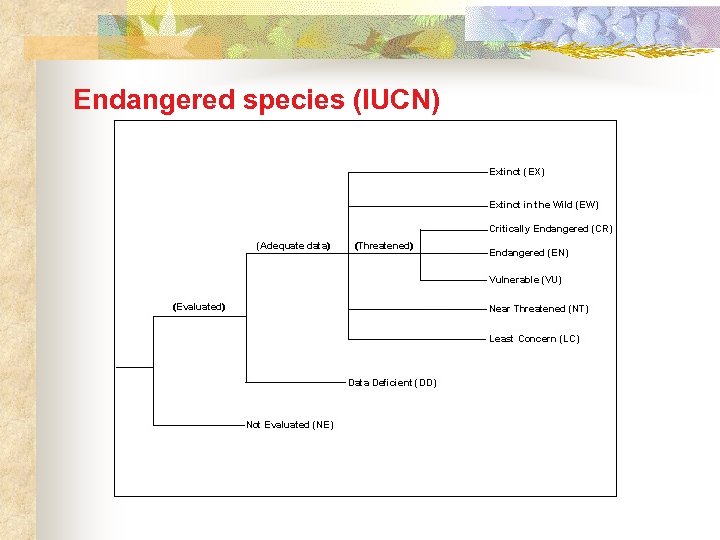
Endangered species (IUCN)
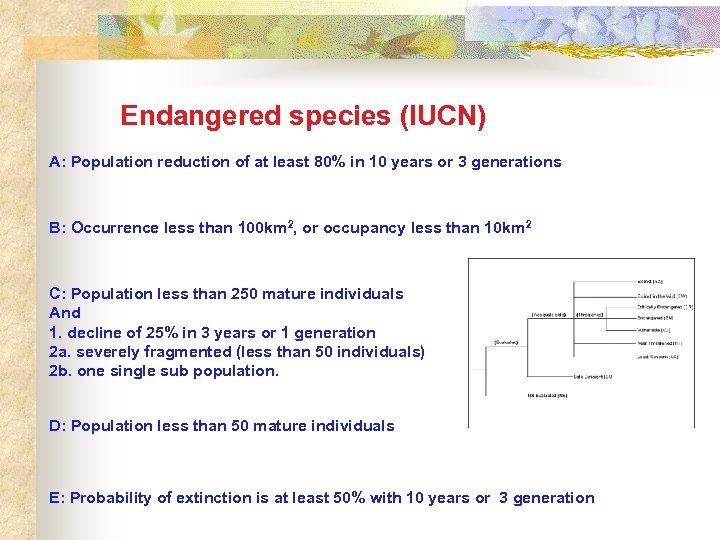
Endangered species (IUCN) A: Population reduction of at least 80% in 10 years or 3 generations B: Occurrence less than 100 km 2, or occupancy less than 10 km 2 C: Population less than 250 mature individuals And 1. decline of 25% in 3 years or 1 generation 2 a. severely fragmented (less than 50 individuals) 2 b. one single sub population. D: Population less than 50 mature individuals E: Probability of extinction is at least 50% with 10 years or 3 generation
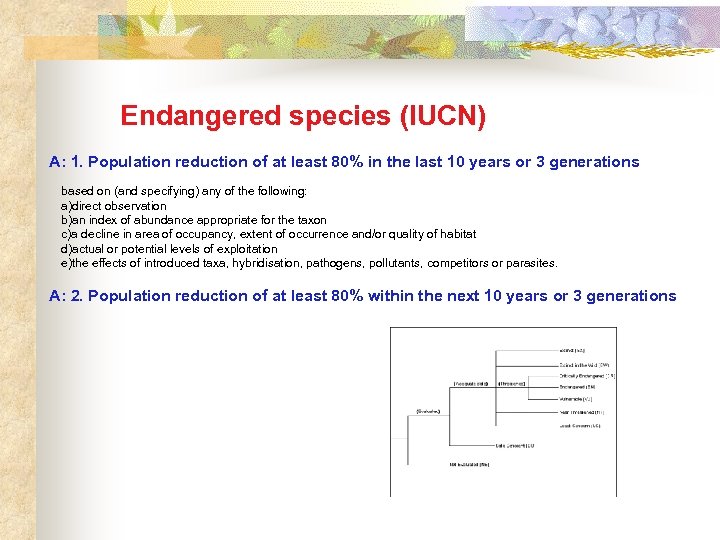
Endangered species (IUCN) A: 1. Population reduction of at least 80% in the last 10 years or 3 generations based on (and specifying) any of the following: a)direct observation b)an index of abundance appropriate for the taxon c)a decline in area of occupancy, extent of occurrence and/or quality of habitat d)actual or potential levels of exploitation e)the effects of introduced taxa, hybridisation, pathogens, pollutants, competitors or parasites. A: 2. Population reduction of at least 80% within the next 10 years or 3 generations
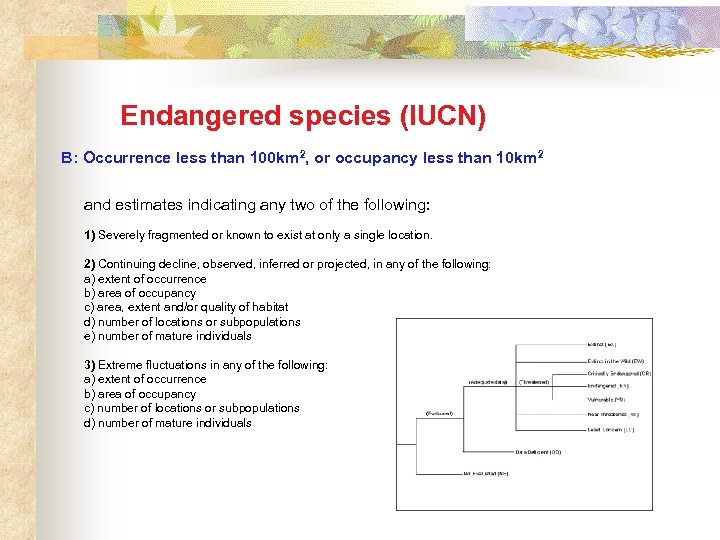
Endangered species (IUCN) B: Occurrence less than 100 km 2, or occupancy less than 10 km 2 and estimates indicating any two of the following: 1) Severely fragmented or known to exist at only a single location. 2) Continuing decline, observed, inferred or projected, in any of the following: a) extent of occurrence b) area of occupancy c) area, extent and/or quality of habitat d) number of locations or subpopulations e) number of mature individuals 3) Extreme fluctuations in any of the following: a) extent of occurrence b) area of occupancy c) number of locations or subpopulations d) number of mature individuals
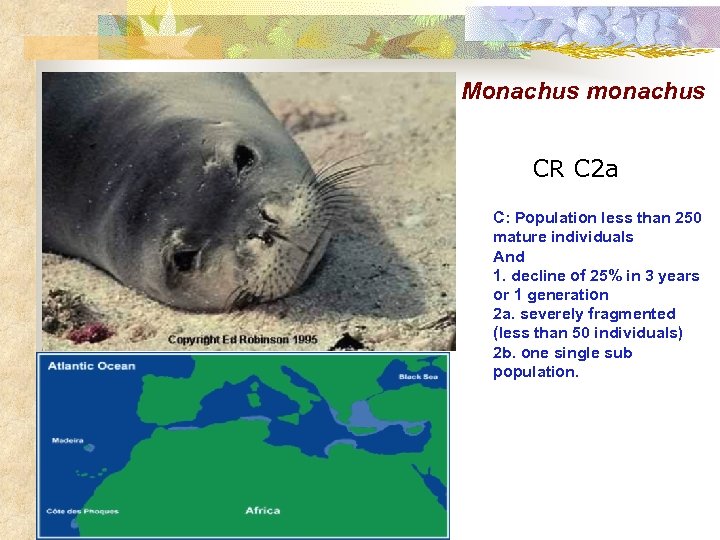
Monachus monachus CR C 2 a C: Population less than 250 mature individuals And 1. decline of 25% in 3 years or 1 generation 2 a. severely fragmented (less than 50 individuals) 2 b. one single sub population.
Скачать презентацию Plant Species Richness and Ecosystem Multifunctionality in Global
aac793d2bfff2e5cfdf251f8aff52f96.ppt