 Скачать презентацию Plant and brain cannabinoids major players in physiology
c79aadf5bd3cd3ebedce80e204ac0f6f.ppt
- Количество слайдов: 49



Plant and brain cannabinoids: major players in physiology. Raphael Mechoulam Beit Dagan, January 2007 LOH 2003
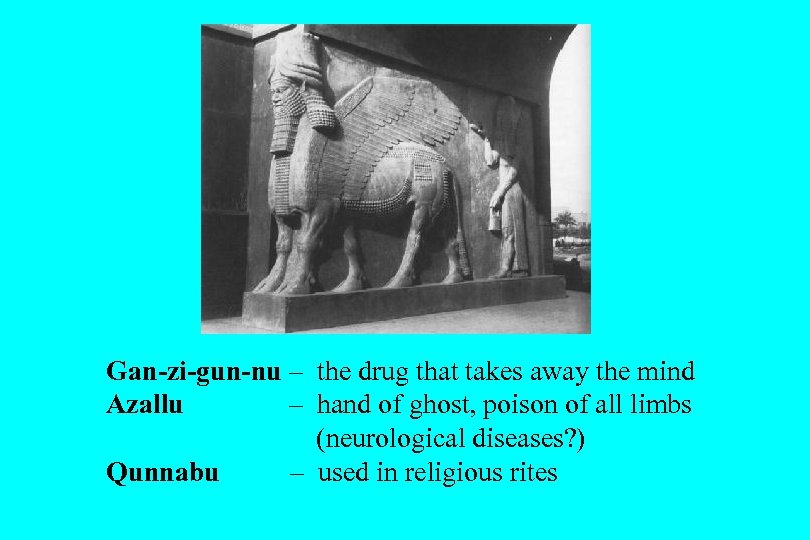
Gan-zi-gun-nu – the drug that takes away the mind Azallu – hand of ghost, poison of all limbs (neurological diseases? ) Qunnabu – used in religious rites
Pliny, the Elder (79 AD): The roots boiled in water ease cramped joints, gout too and similar violent pain. Dioscorides (90 AD): The sodden root when placed on inflammations sooths them, eliminates edema and disperses obdurate matter above inflammed joints. LOH 2003
For the relief of certain kinds of pain, I believe, there is no more useful medicine than Cannabis within our reach. J. Russell Reynolds, Archives of Medicine, Vol 2, 154, 1859
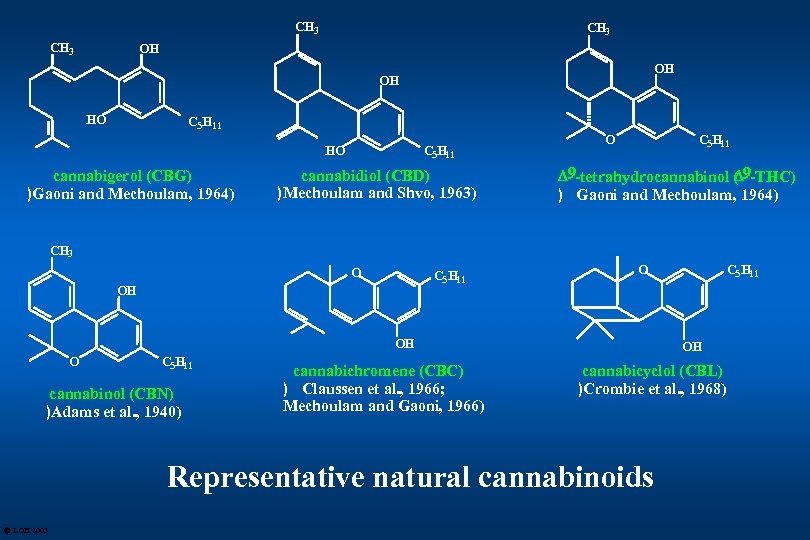
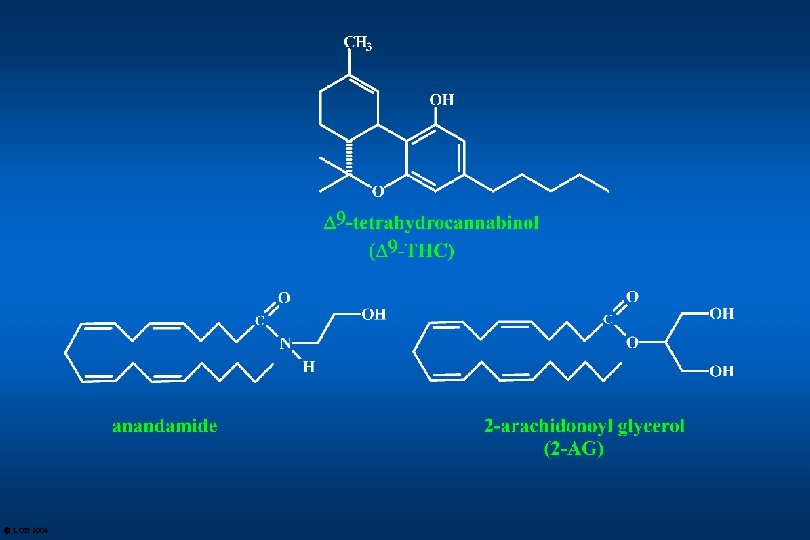
CH 3 OH OH OH HO C 5 H 11 HO cannabigerol (CBG) )Gaoni and Mechoulam, 1964) C 5 H 11 cannabidiol (CBD) )Mechoulam and Shvo, 1963) O C 5 H 11 D 9 -tetrahydrocannabinol ( 9 -THC) D ) Gaoni and Mechoulam, 1964) CH 3 O C 5 H 11 OH O C 5 H 11 cannabinol (CBN) )Adams et al. , 1940) cannabichromene (CBC) ) Claussen et al. , 1966; Mechoulam and Gaoni, 1966) OH cannabicyclol (CBL) )Crombie et al. , 1968) Representative natural cannabinoids LOH 2003 C 5 H 11
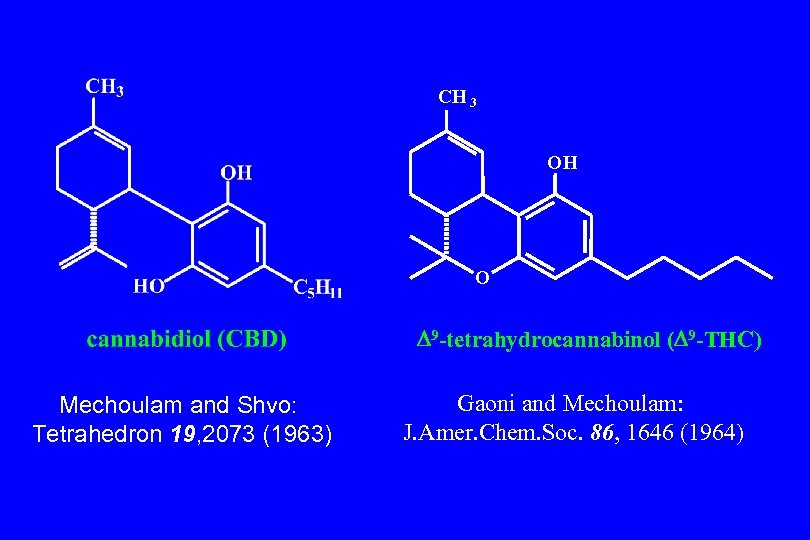
CH 3 OH O D 9 -tetrahydrocannabinol (D 9 -THC) Mechoulam and Shvo: Tetrahedron 19, 2073 (1963) Gaoni and Mechoulam: J. Amer. Chem. Soc. 86, 1646 (1964)
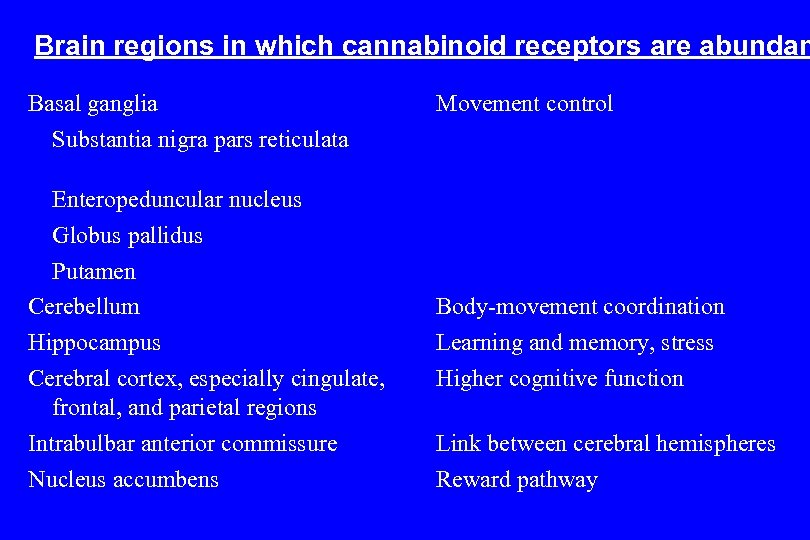
Brain regions in which cannabinoid receptors are abundan Basal ganglia Substantia nigra pars reticulata Enteropeduncular nucleus Globus pallidus Putamen Cerebellum Hippocampus Cerebral cortex, especially cingulate, frontal, and parietal regions Intrabulbar anterior commissure Nucleus accumbens Movement control Body-movement coordination Learning and memory, stress Higher cognitive function Link between cerebral hemispheres Reward pathway
LOH 2004
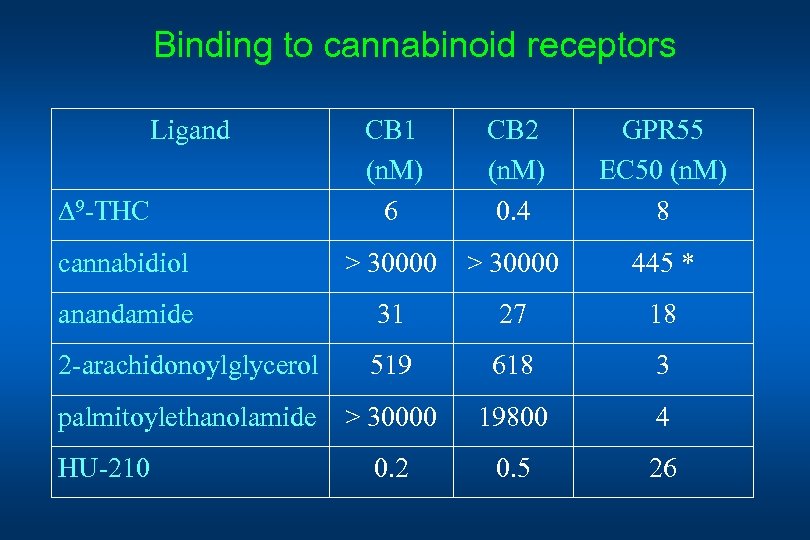
Binding to cannabinoid receptors Ligand CB 1 (n. M) 6 CB 2 (n. M) 0. 4 GPR 55 EC 50 (n. M) 8 cannabidiol > 30000 445 * anandamide 31 27 18 2 -arachidonoylglycerol 519 618 3 palmitoylethanolamide > 30000 19800 4 0. 2 0. 5 26 D 9 -THC HU-210
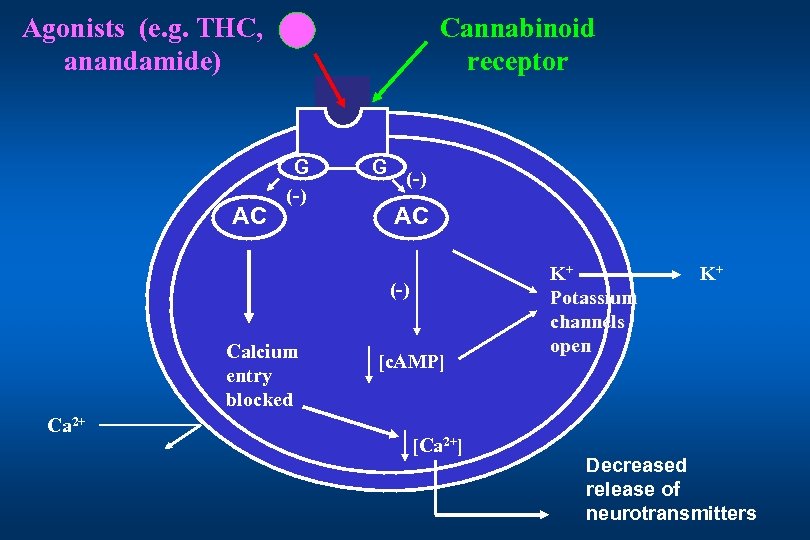
Agonists (e. g. THC, anandamide) AC Cannabinoid receptor G (-) AC (-) Calcium entry blocked Ca 2+ [c. AMP] [Ca 2+] K+ Potassium channels open K+ Decreased release of neurotransmitters
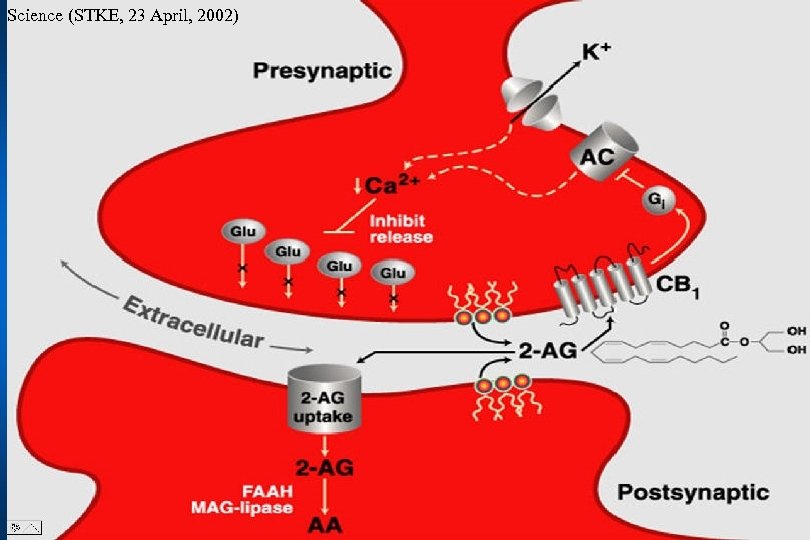
Science (STKE, 23 April, 2002)
What do endocannabinoids do? “Relax, eat, sleep, forget and protect” Di Marzo, 1998
Physiological systems and conditions affected by endocannabinds (a partial list) Anxiety Appetite/feeding Blood pressure Bone formation Cerebral blood flow Digestive system Emesis and nausea Immune system Inflammation Memory Mood Movement Neuroprotection Pain Reproduction Stress
Neuroprotection
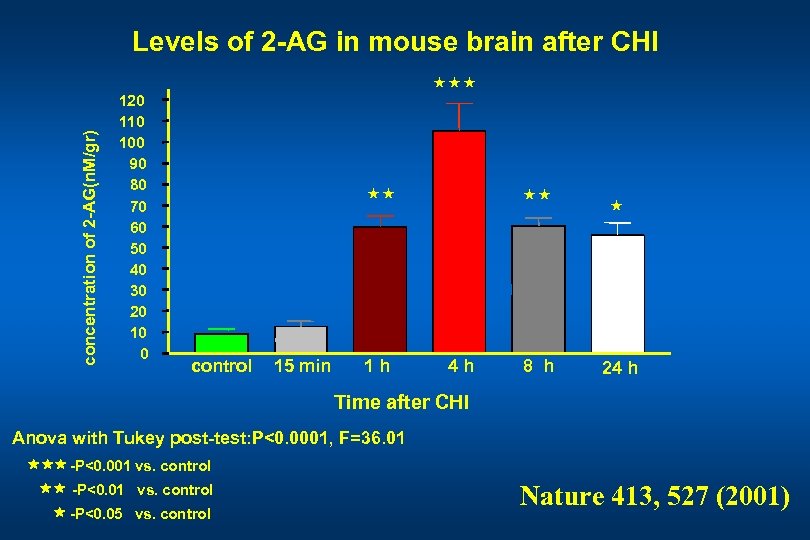
concentration of 2 -AG(n. M/gr) Levels of 2 -AG in mouse brain after CHI 120 110 100 90 80 70 60 50 40 30 20 10 0 « « « control 15 min 1 h « « 4 h 8 h « 24 h Time after CHI Anova with Tukey post-test: P<0. 0001, F=36. 01 « « « -P<0. 001 vs. control « « -P<0. 01 vs. control « -P<0. 05 vs. control Nature 413, 527 (2001)
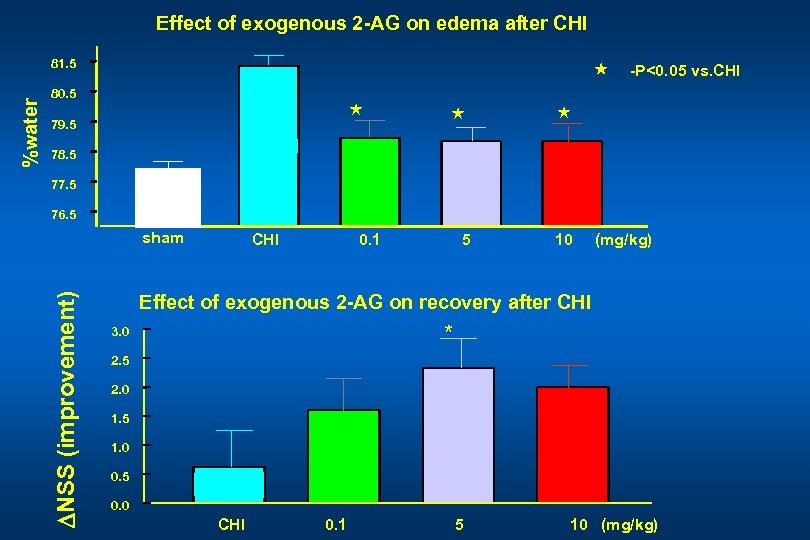
Effect of exogenous 2 -AG on edema after CHI « 80. 5 « 79. 5 « -P<0. 05 vs. CHI « 78. 5 77. 5 76. 5 sham DNSS (improvement) %water 81. 5 CHI 0. 1 5 10 (mg/kg) Effect of exogenous 2 -AG on recovery after CHI * 3. 0 2. 5 2. 0 1. 5 1. 0 0. 5 0. 0 CHI 0. 1 5 10 (mg/kg)
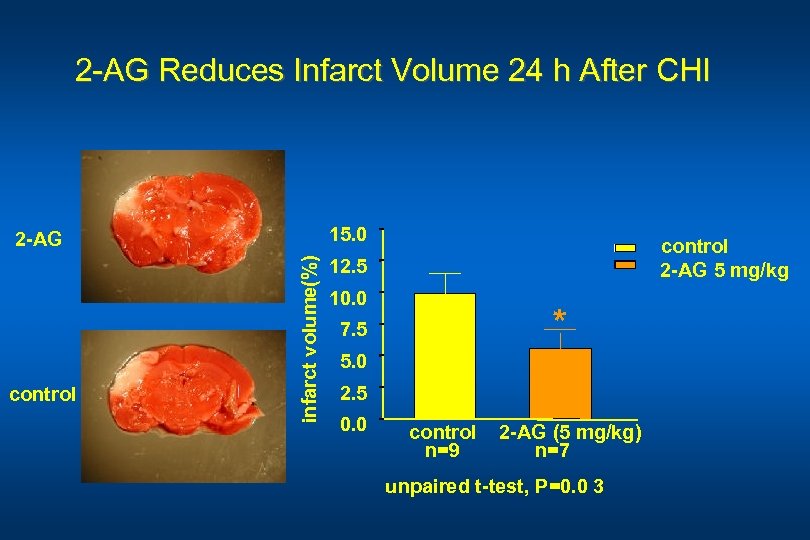
2 -AG Reduces Infarct Volume 24 h After CHI 15. 0 control infarct volume(%) 2 -AG control 2 -AG 5 mg/kg 12. 5 10. 0 * 7. 5 5. 0 2. 5 0. 0 control n=9 2 -AG (5 mg/kg) n=7 unpaired t-test, P=0. 0 3
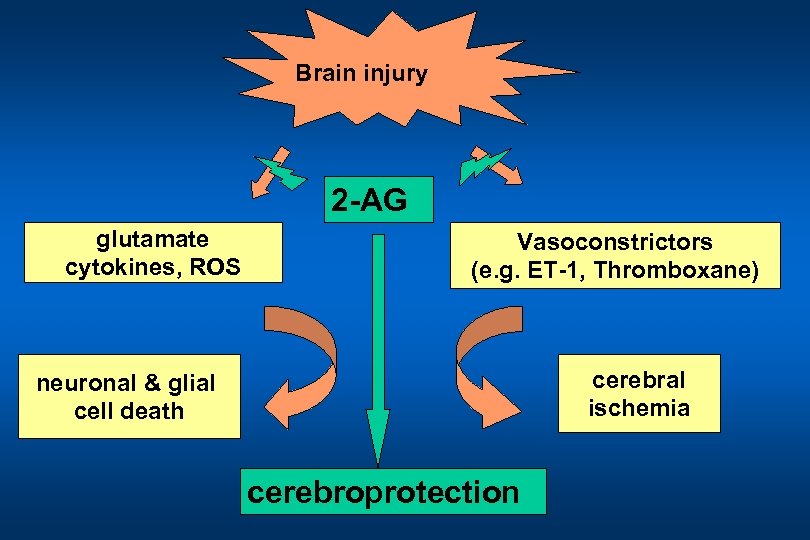
Brain injury 2 -AG glutamate cytokines, ROS Vasoconstrictors (e. g. ET-1, Thromboxane) cerebral ischemia neuronal & glial cell death cerebroprotection
Regulation of vasodilation
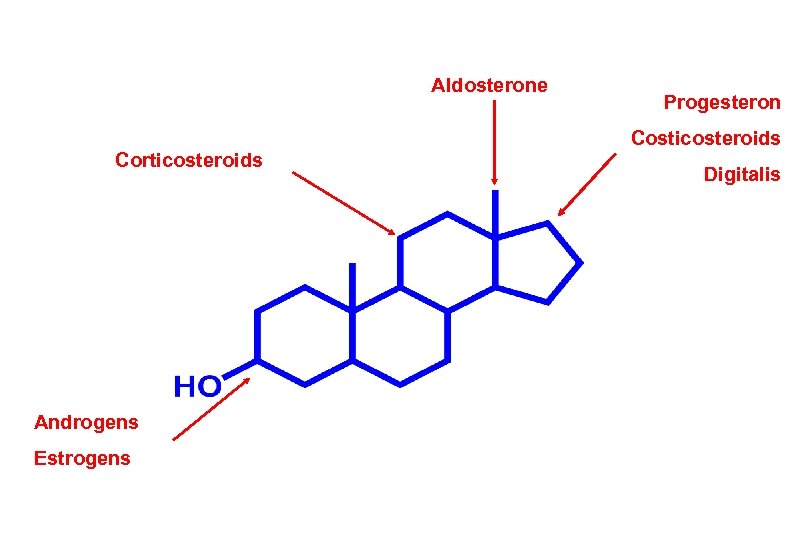
Aldosterone Progesteron Costicosteroids Corticosteroids Androgens Estrogens Digitalis
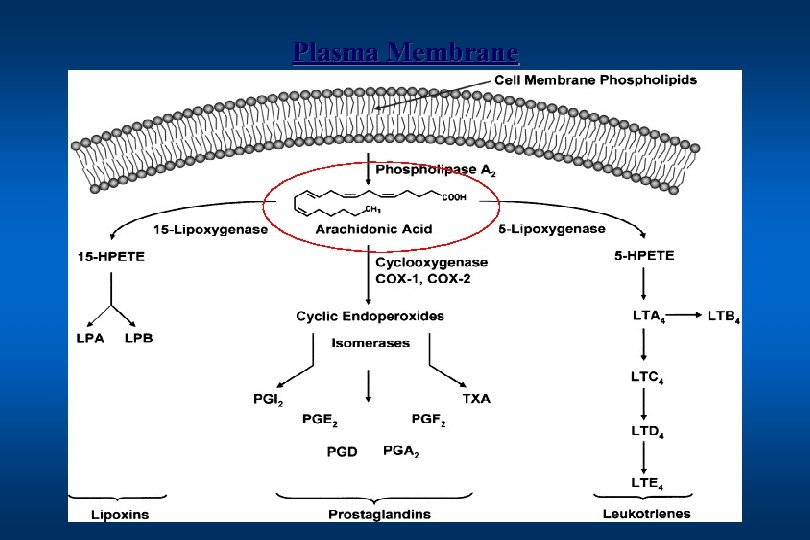
Plasma Membrane
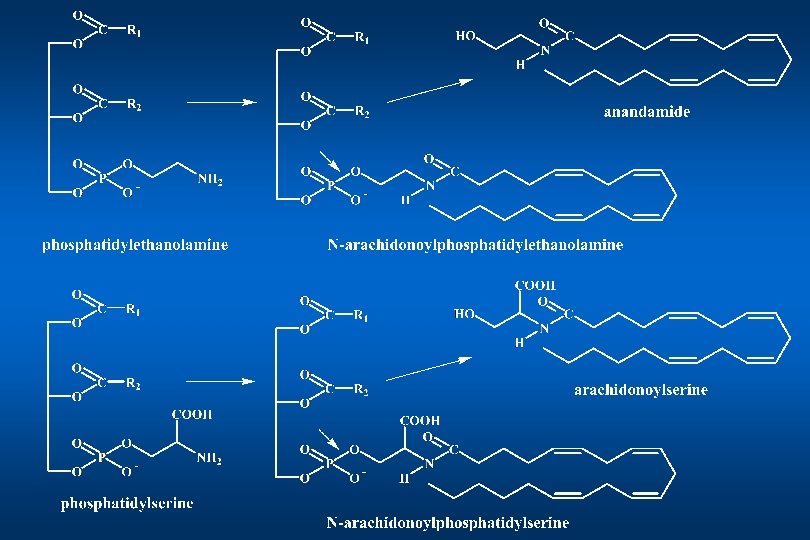
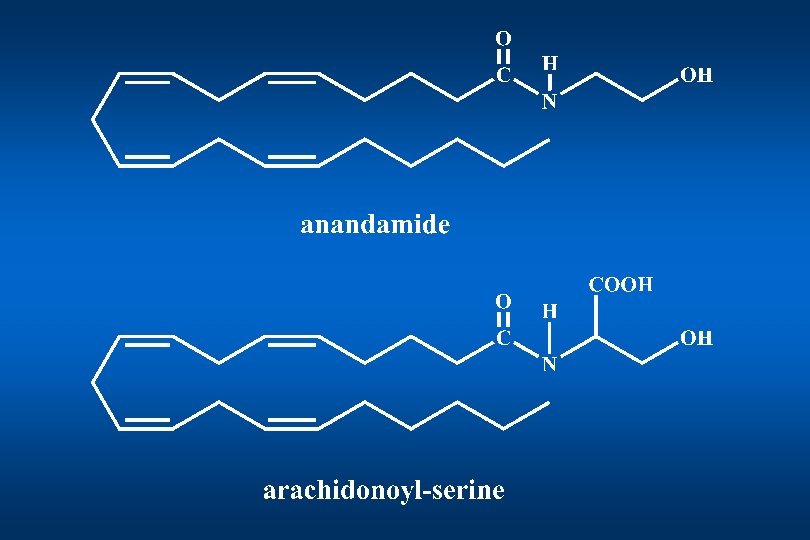
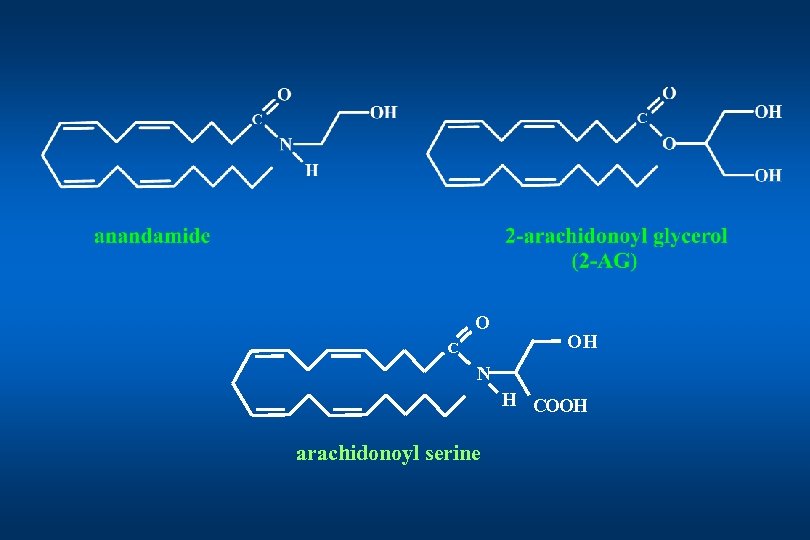
O C OH N H COOH arachidonoyl serine
Inflammation
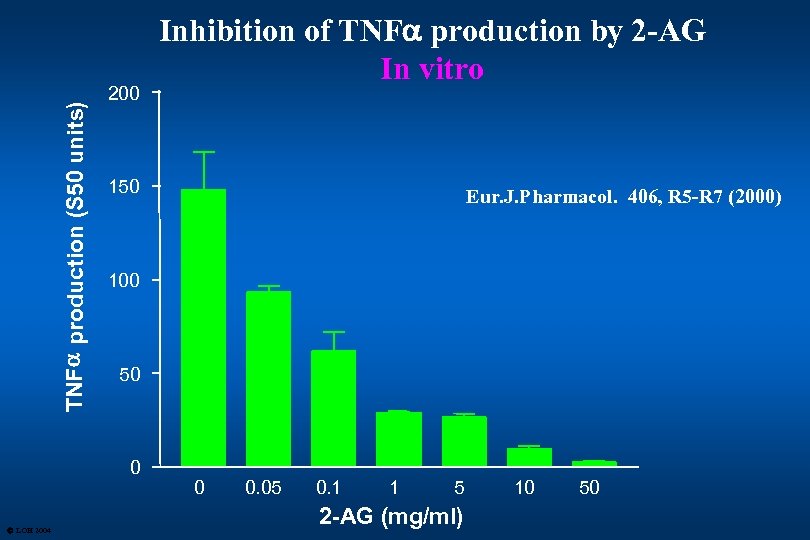
TNFa production (S 50 units) 200 150 Eur. J. Pharmacol. 406, R 5 -R 7 (2000) 100 50 0 LOH 2004 Inhibition of TNFa production by 2 -AG In vitro 0 0. 05 0. 1 1 5 2 -AG (mg/ml) 10 50
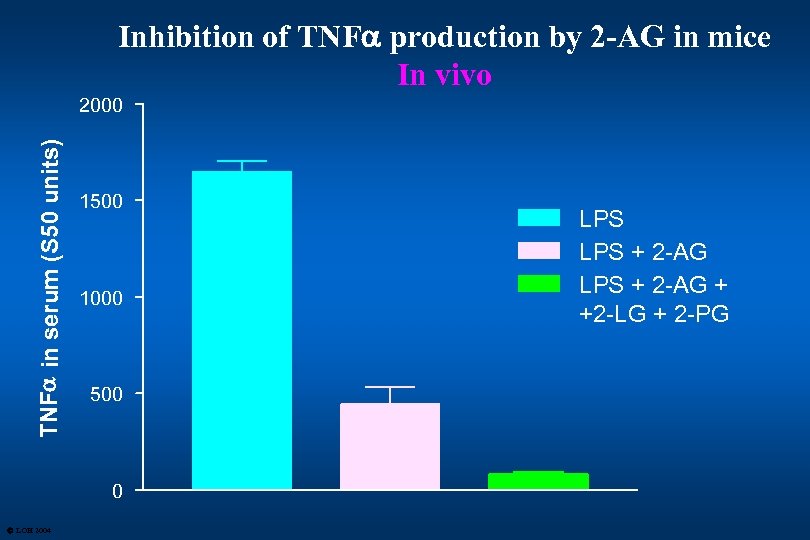
Inhibition of TNFa production by 2 -AG in mice In vivo TNFa in serum (S 50 units) 2000 1500 1000 500 0 LOH 2004 LPS + 2 -AG + +2 -LG + 2 -PG
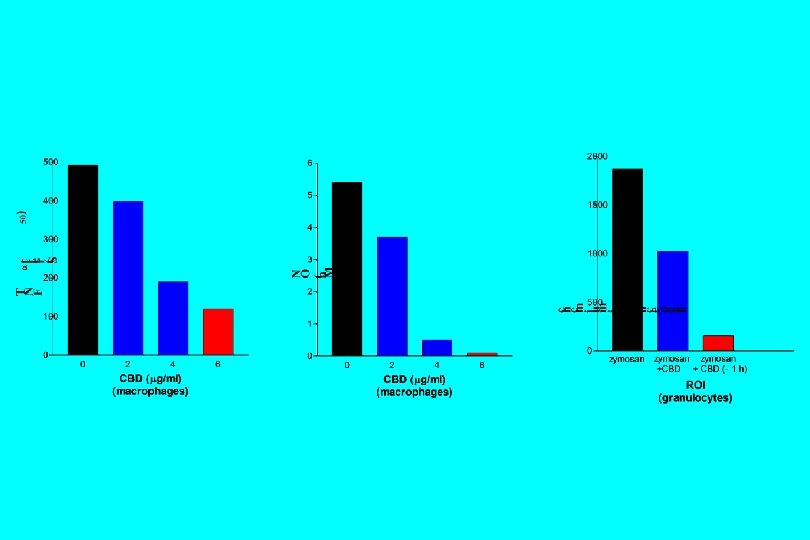
Synovium is the most critical site of cytokine production in arthritis. Synovial cells from arthritic mice spontaneously produce large amounts of TNF when cultured in vitro. Cells from arthritic mice which had been treated with CBD produced significantly less (50%) TNF. LOH 2003
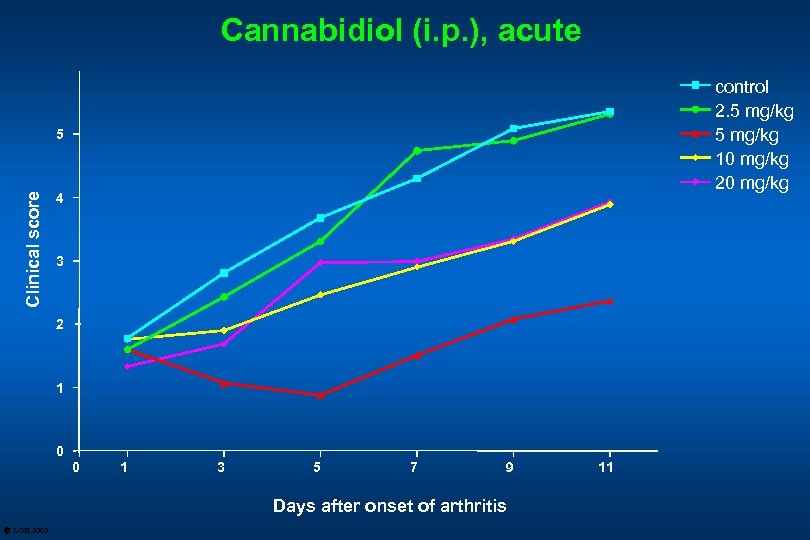
Cannabidiol (i. p. ), acute control 2. 5 mg/kg 10 mg/kg 20 mg/kg Clinical score 5 4 3 2 1 0 0 1 3 5 7 9 Days after onset of arthritis LOH 2003 11

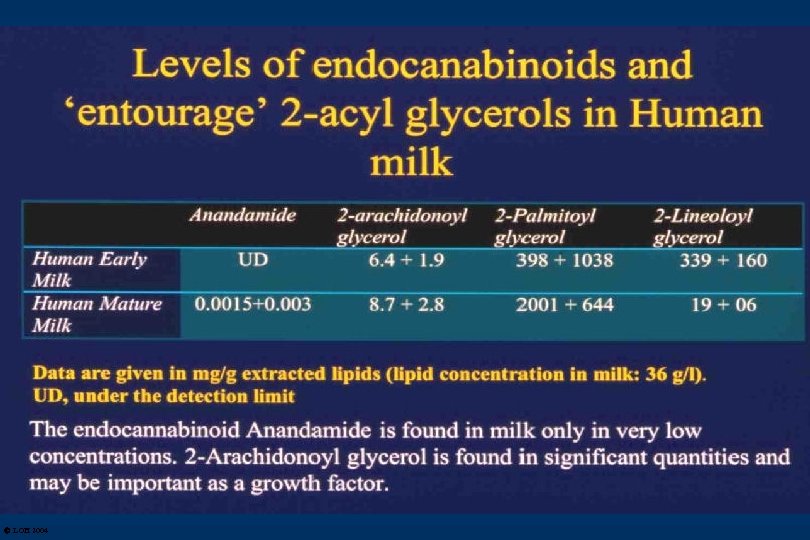
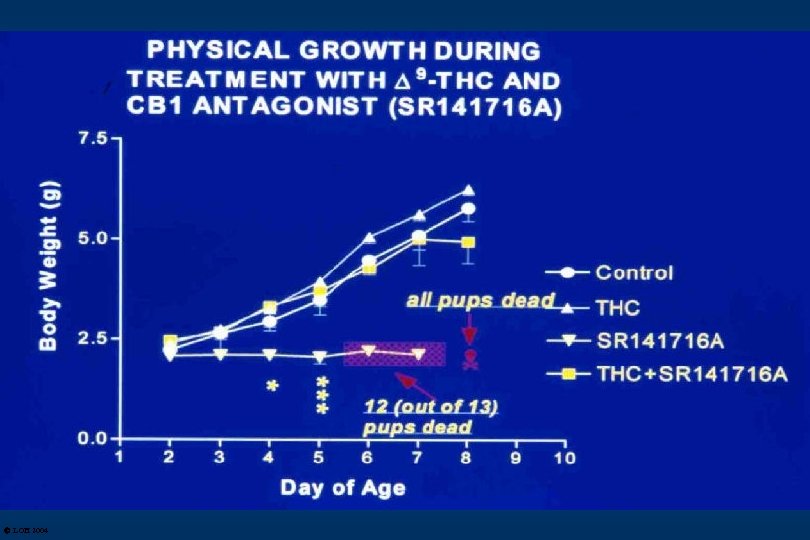
Appetite and feeding
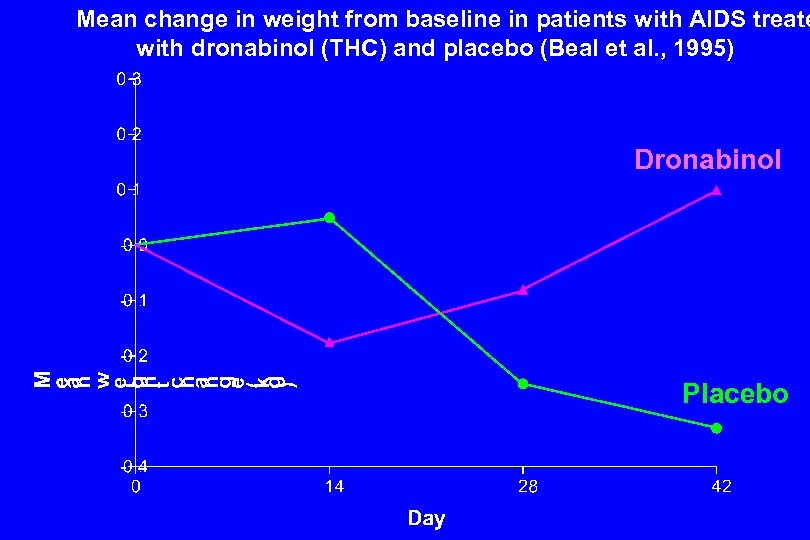
Mean change in weight from baseline in patients with AIDS treate with dronabinol (THC) and placebo (Beal et al. , 1995) Dronabinol Placebo
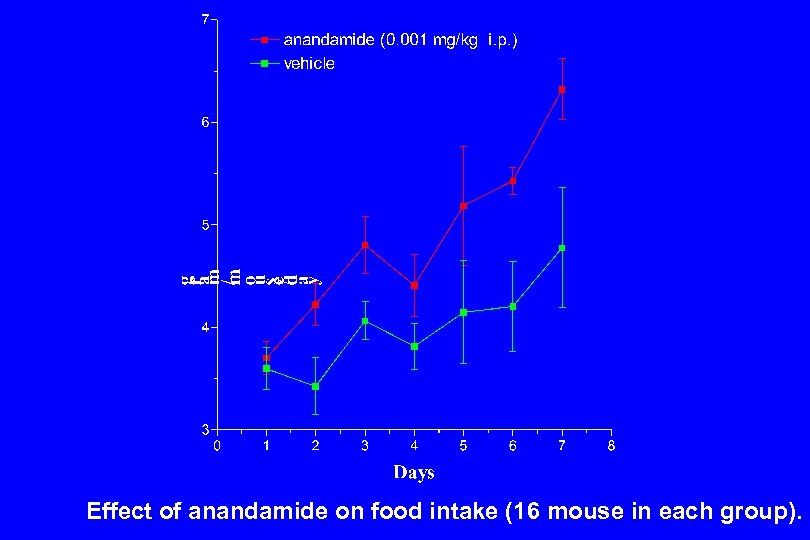
Effect of anandamide on food intake (16 mouse in each group).
LOH 2004
LOH 2004
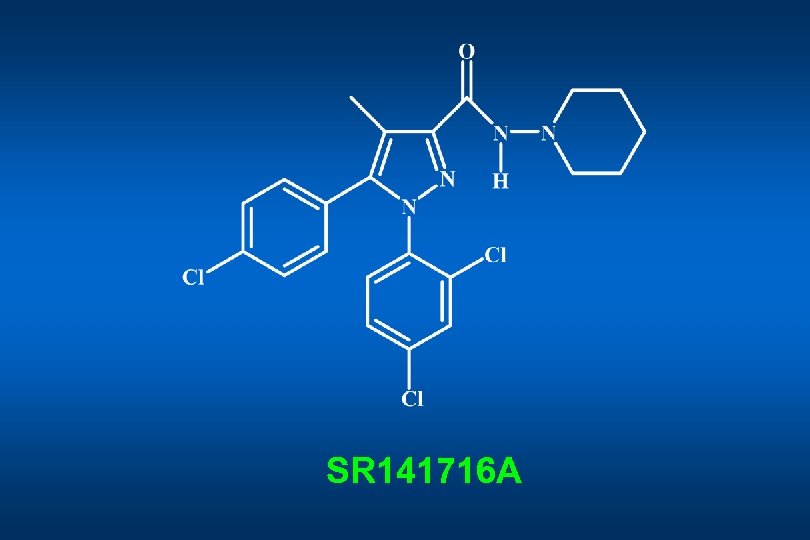
SR 141716 A
Memory extinction
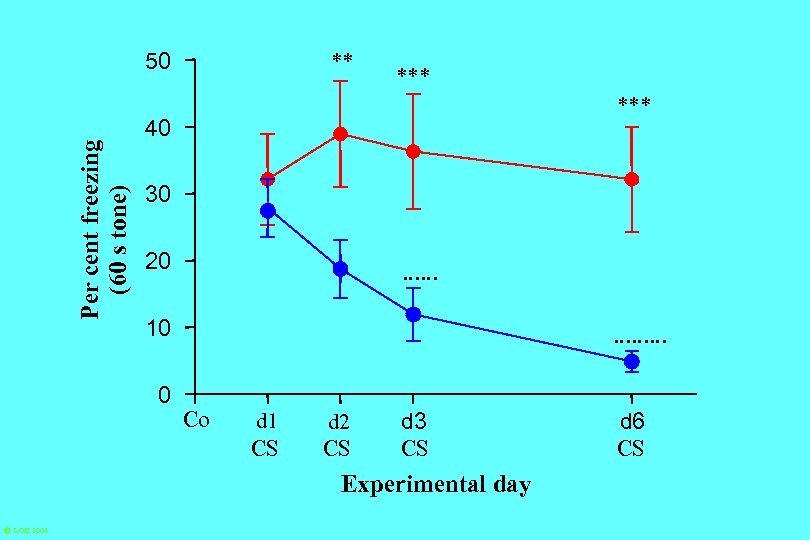
Per cent freezing (60 s tone) 50 ** *** 40 30 20 …… 10 0 ……… Co d 1 CS d 2 CS d 3 CS Experimental day LOH 2004 d 6 CS
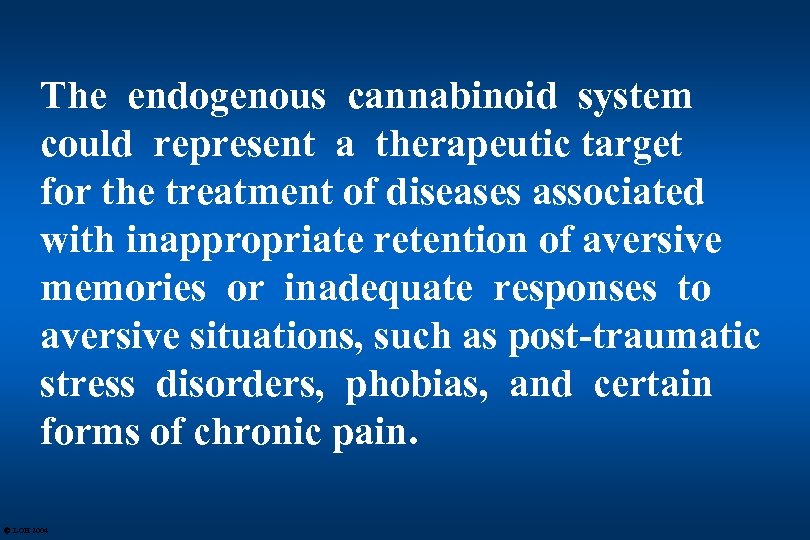
The endogenous cannabinoid system could represent a therapeutic target for the treatment of diseases associated with inappropriate retention of aversive memories or inadequate responses to aversive situations, such as post-traumatic stress disorders, phobias, and certain forms of chronic pain. LOH 2004
Cannabinoids and anxiety. 1. In animal models as well as in limited clinical trials cannabidiol has been shown to lower anxiety. Mechanism unknown. 2. Blocking of anandamide hydrolysis in vivo (rats) enhances anandamide levels in brain and lowers anxiety. This effect is blocked by endocannabinoid antagonists.
Cannabinoids and schizophrenia. 1. Large doses of cannabis (particularly if they lack cannabidiol) may cause a psychotic state resembling psychosis. 2. In schizophrenic patients cannabis use may worsen positive symptoms. 3. Heavy use of cannabis may precipitate schizophrenia in susceptible individuals. Frequent cannabis use was associated with 6 fold increase of in high risk individuals (family history). 4. Increase in density of CB 1 receptors in several brain areas in postmortem schizophrenic brains. Two fold increase of anandamide levels in CSF of patients.
Cannabidiol treatment of positive schizophrenia. High doses of the non psychoactive Cannabis constituent cannabidiol have shown effectiveness in the treatment of schizophrenics (lowering of positive effects). Mechanism – unknown.
Endocannabinoids and depression. Although at low doses cannabis may enhance mood it is not antidepressive. A selective inhibitor of the enzyme which causes endocannabinoid hydrolysis (in vivo) exerts potent anti-depressant effects in the rat forced swim test.
Hepatic encephalopathy (HE) is a neuropsychiatric syndrome due to liver disease. It is the feature that defines prognosis in acute liver injury. 1. In a mouse model of HE (produced by the toxin thioacetamide) 2 -AG levels are enhanced in the brain. 2. Administration of either 2 -AG or the specific CB 2 agonist HU-308 improves a neurological score, activity, cognitive function. 3. A specific CB 2 receptor antagonist blocks these effects.
Alzheimer’s disease Compared to currently approved drugs prescribed for the treatment of Alzheimer’s disease, THC is considerably superior inhibitor of Ab aggregation and thus cannabinoid molecules may directly impact the progression of this debilitating disease. (Eubanks et al. , Mol. Pharmac. 2006)

Collaboration in Israel Jerusalem Rehovot Prof. L. Hanuš Prof. E. Fride Dr. W. A. Devane Dr. A. Breuer Dr. S. Ben-Shabat D. Panikashvili G. Milman N. Kogan Y. Maor LOH 2003 Jerusalem Prof. E. Shohami Prof. R. Gallily Prof. E. Berry Prof. M. Schlesinger Dr. Y. Avraham Prof. Z. Vogel Haifa Prof. A. Mandelbaum Tel Hashomer Dr. S. Almog Dr. A. Gopher
Collaboration abroad Aberdeen R. Pertwee Bonn M. Karsak A. Zimmer Brno A. Šulcová Greece C. Simeonidou LOH 2003 Richmond B. Martin A. H. Lichtman Canada L. A. Parker Bethesda G. Kunos M. Spatz Napoli V. Di Marzo Rome M. Maccarrone Siberia L. Maslov London M. Feldmann A. M. Malfait P. F. Sumariwalla
Скачать презентацию Plant and brain cannabinoids major players in physiology
c79aadf5bd3cd3ebedce80e204ac0f6f.ppt