 Скачать презентацию Planetary Models for Herschel Raphaël Moreno Observatoire de
71171870ef21a05330f11bb0153c6694.ppt
- Количество слайдов: 37



Planetary Models for Herschel Raphaël Moreno Observatoire de Paris-Meudon (LESIA) • Uranus, Neptune • Radiative transfert Modelling • Submm spectrum and uncertainties • Constraints from PACS and SPIRE
Modelling (I) • Collision induced opacity : H 2 - H 2; H 2 - He ; H 2 - CH 4 (Birnbaum 1996, Borysow and Frommhold 1986) See A. Borissow web page • Molecular Opacity : NH 3 ; CH 4 , CO, H 2 O -- Absorption Coefficient ( JPL Catalog) -- Pressure broadening coefficient -- Lineshape: Ben-Reuven, Van-Vleck & Weisskopf, Lorentz, Voigt, Doppler
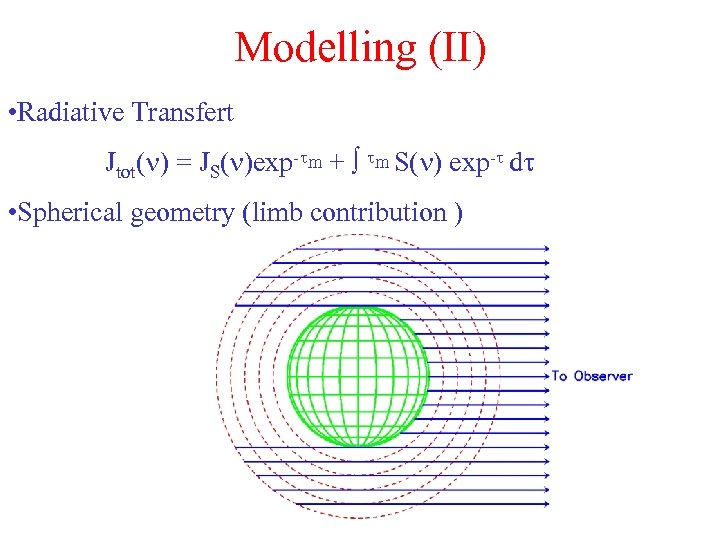
Modelling (II) • Radiative Transfert Jtot( ) = JS( )exp- m + m S( ) exp- d • Spherical geometry (limb contribution )
Modelling (III) Physical parameters Inputs : • Thermal Structure • He/H 2 • Vertical distribution of minor species
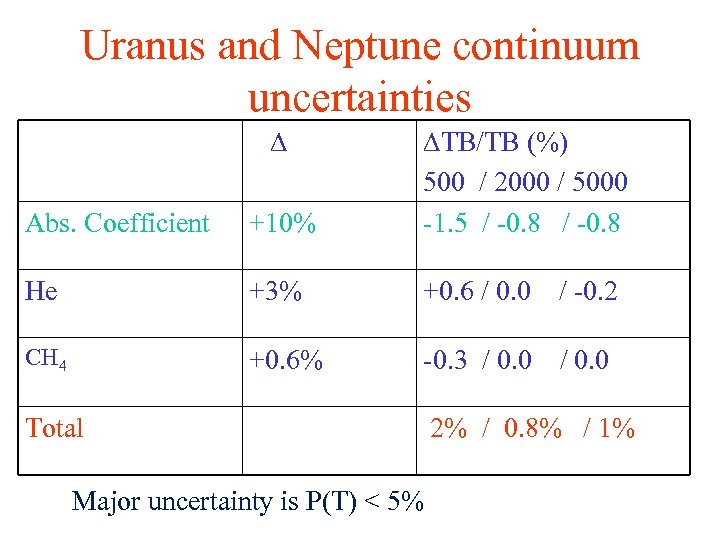
Uranus and Neptune continuum uncertainties Abs. Coefficient +10% TB/TB (%) 500 / 2000 / 5000 -1. 5 / -0. 8 He +3% +0. 6 / 0. 0 / -0. 2 CH 4 +0. 6% -0. 3 / 0. 0 Total 2% / 0. 8% / 1% Major uncertainty is P(T) < 5%
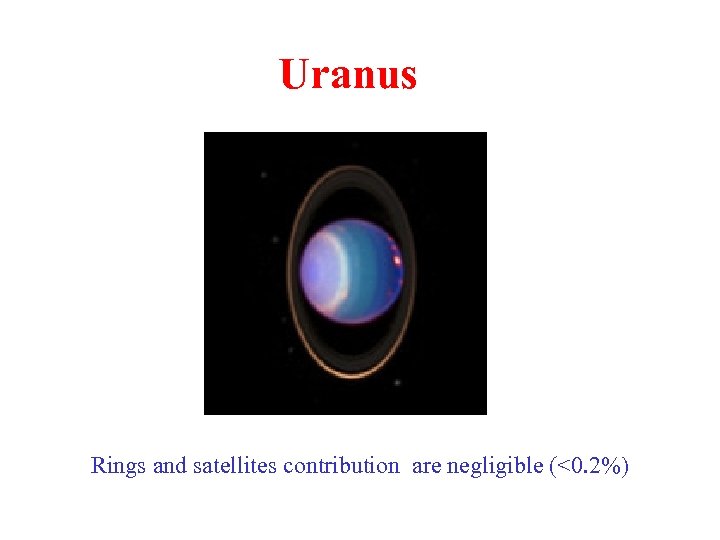
Uranus Rings and satellites contribution are negligible (<0. 2%)
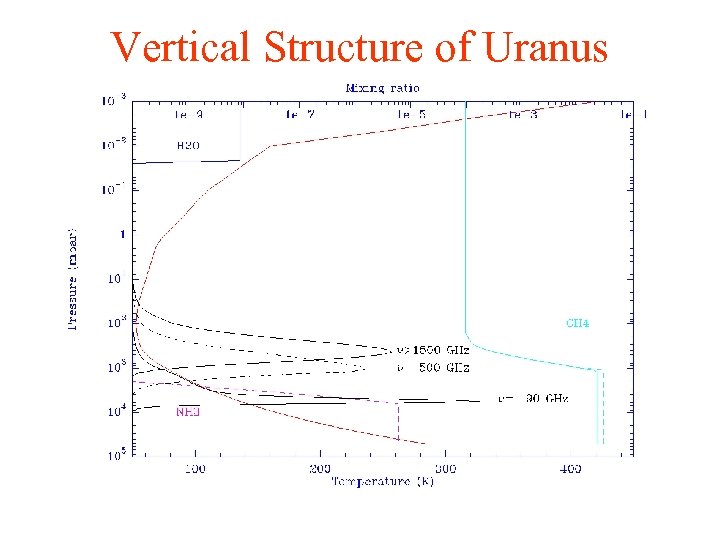
Vertical Structure of Uranus
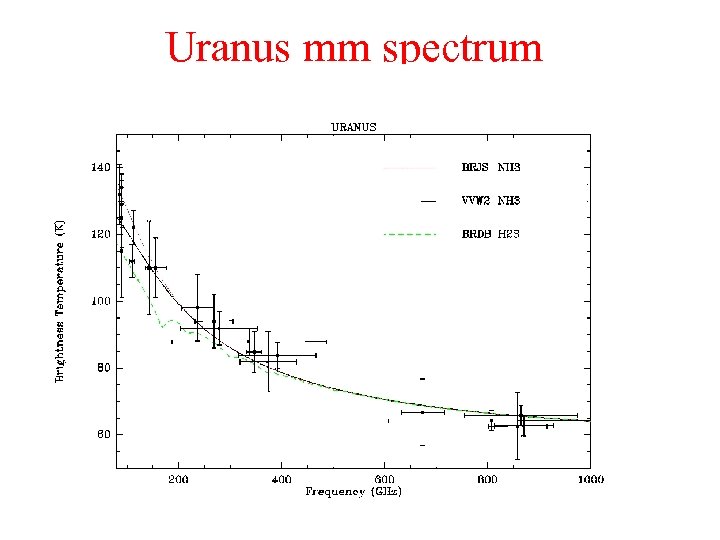
Uranus mm spectrum
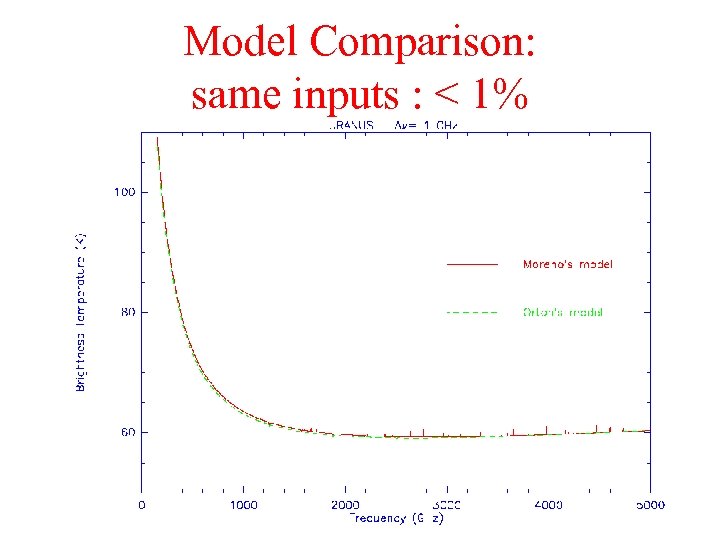
Model Comparison: same inputs : < 1%
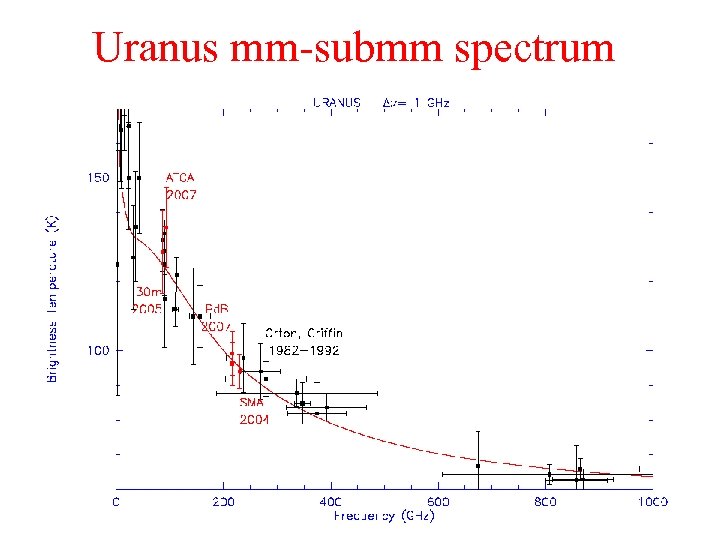
Uranus mm-submm spectrum
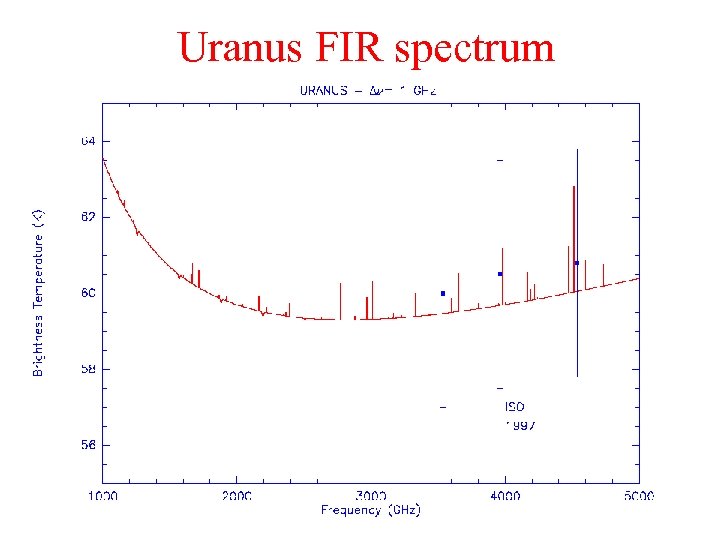
Uranus FIR spectrum
Uranus’ summary • Model uncertainties 1 -2% • Comparison with Orton’s Model with same inputs 1% • Absolute uncertainties limited by our knowledge of thermal structure (5%)
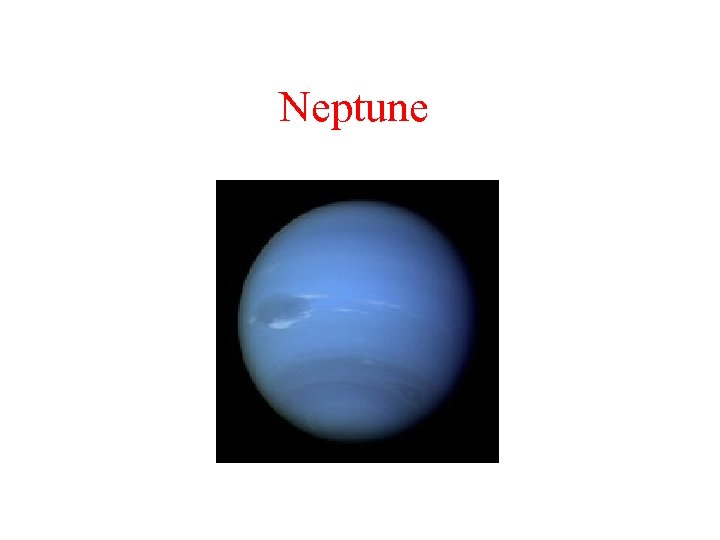
Neptune
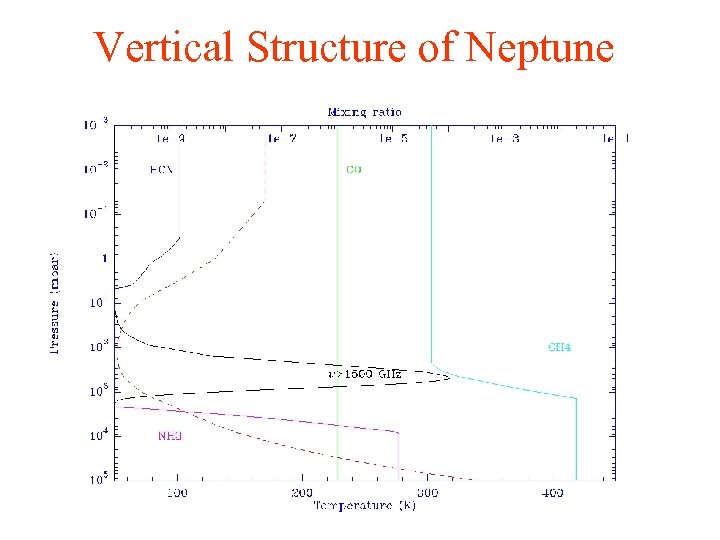
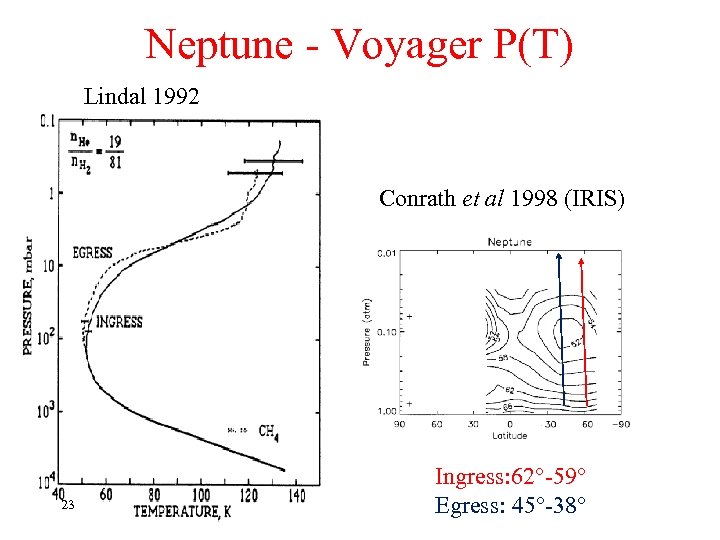
Vertical Structure of Neptune
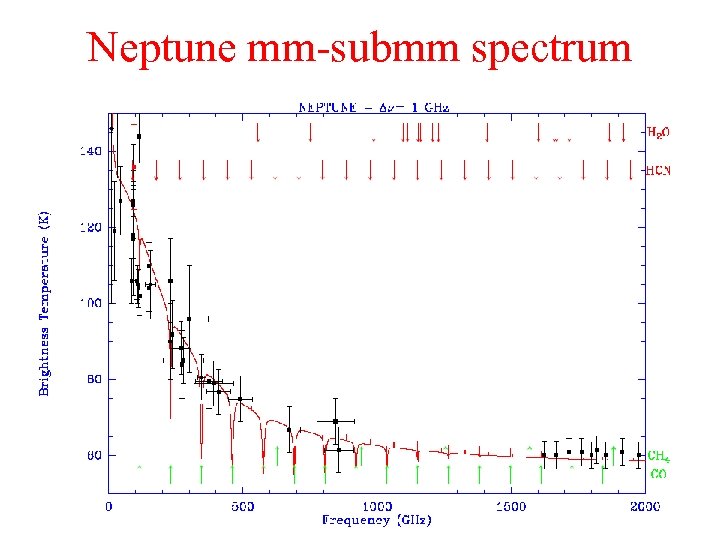
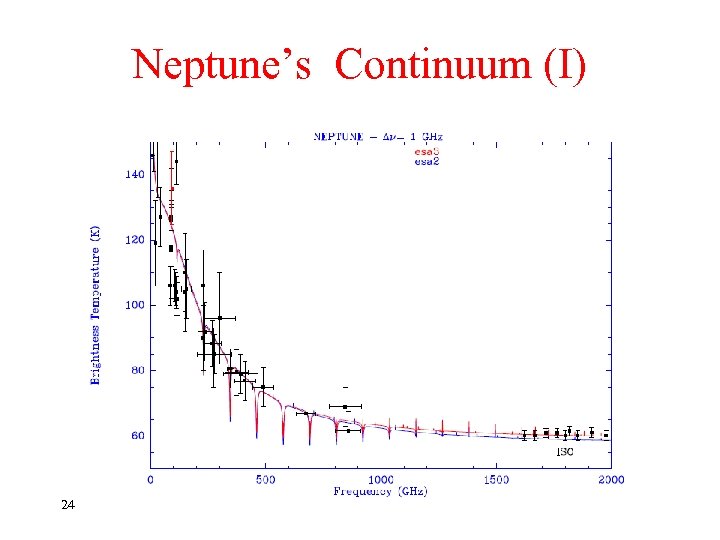
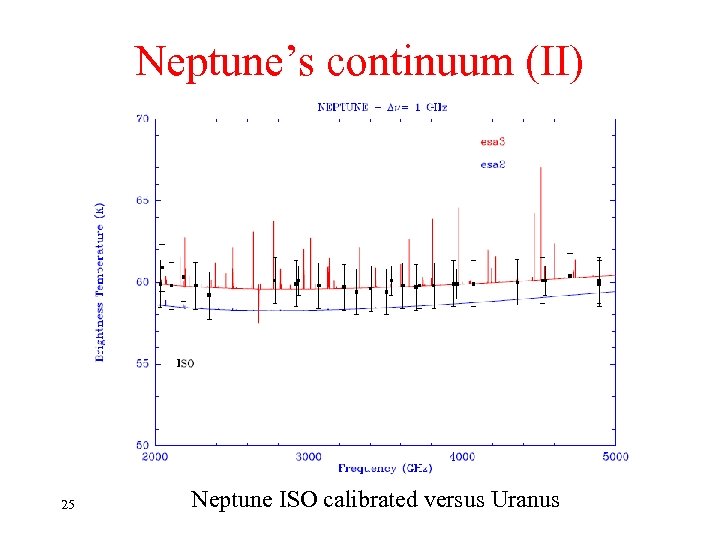
Neptune mm-submm spectrum
Models delivery (ESA 2) Computed initially up to 50 micron (now up to 15 μm) Jupiter, Saturn, Uranus and Neptune (+ESA 3) Callisto, Ganymede, Europa, Io + Titan Mars* (www. lesia. obspm. fr/perso/emmanuel-lellouch/mars/) ASCII files available at the ESA FTP site: Hcalsg @ ftp. sciops. esa. int FITS files included in HIPE
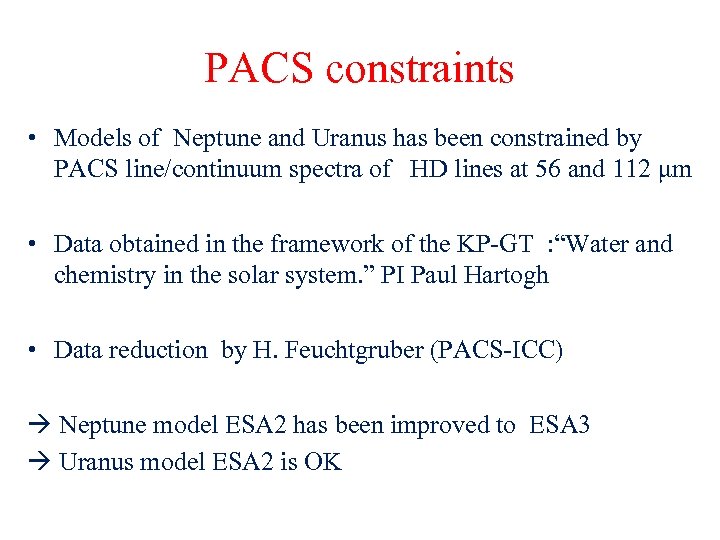
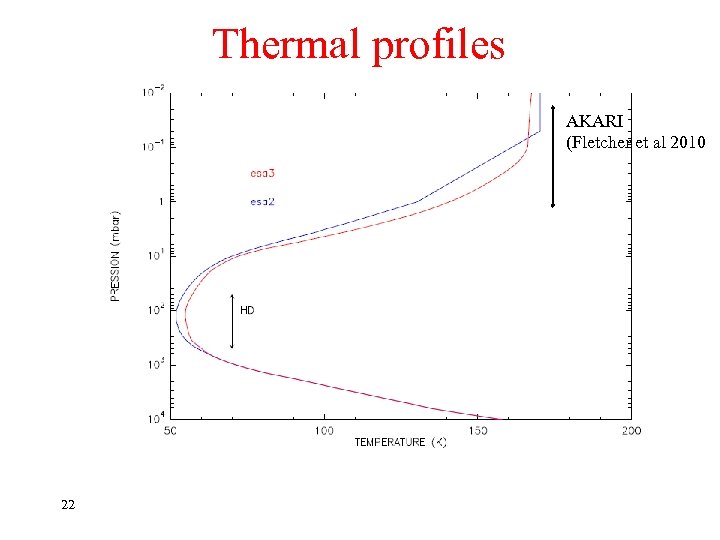
PACS constraints • Models of Neptune and Uranus has been constrained by PACS line/continuum spectra of HD lines at 56 and 112 μm • Data obtained in the framework of the KP-GT : “Water and chemistry in the solar system. ” PI Paul Hartogh • Data reduction by H. Feuchtgruber (PACS-ICC) Neptune model ESA 2 has been improved to ESA 3 Uranus model ESA 2 is OK
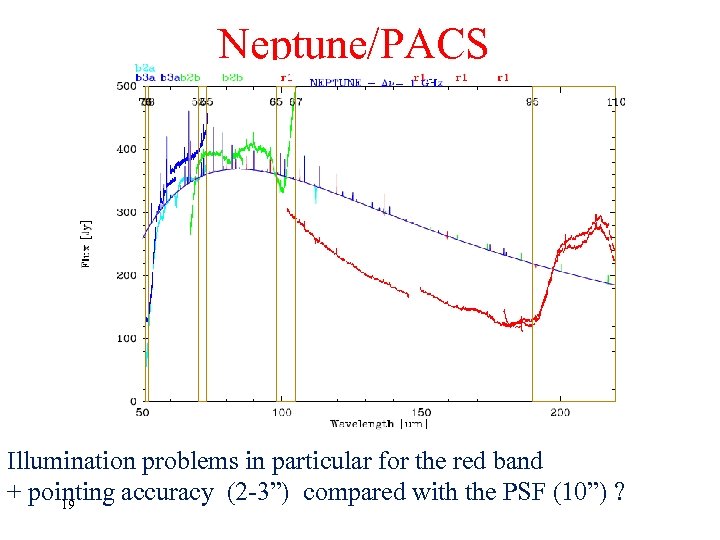
Neptune/PACS Illumination problems in particular for the red band + pointing accuracy (2 -3”) compared with the PSF (10”) ? 19
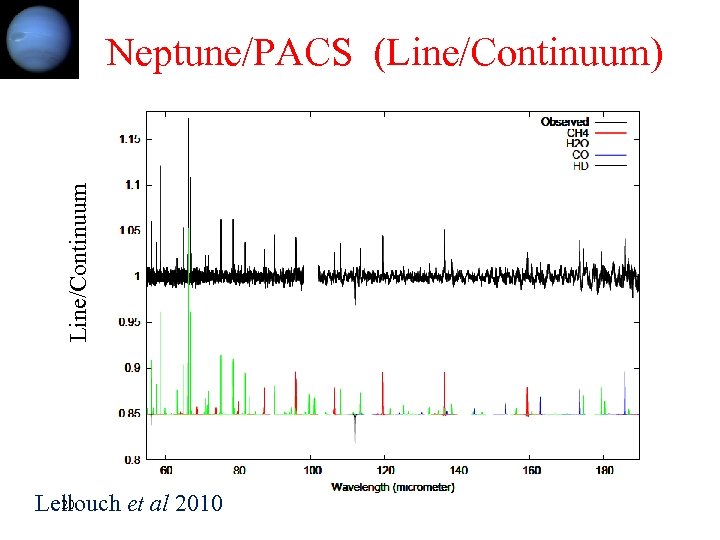
Line/Continuum Neptune/PACS (Line/Continuum) 20 Lellouch et al 2010
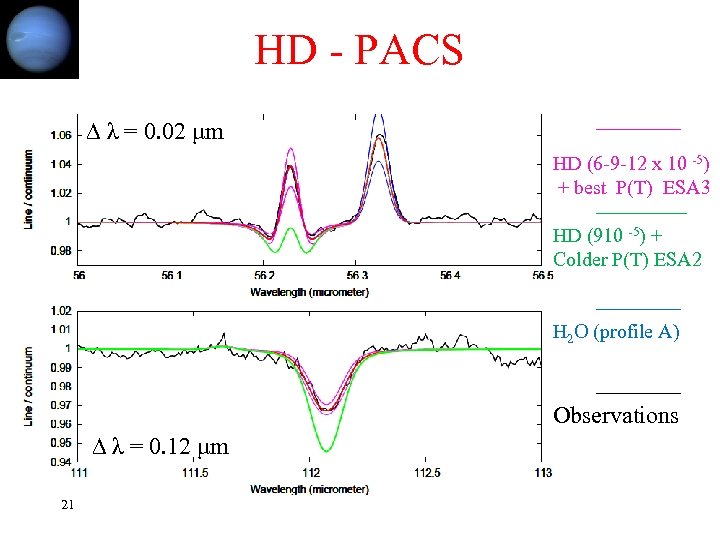
HD - PACS ∆ λ = 0. 02 μm HD (6 -9 -12 x 10 -5) + best P(T) ESA 3 HD (910 -5) + Colder P(T) ESA 2 H 2 O (profile A) ∆ λ = 0. 12 μm 21 Observations
Thermal profiles AKARI (Fletcher et al 2010 22
Neptune - Voyager P(T) Lindal 1992 Conrath et al 1998 (IRIS) 23 Ingress: 62°-59° Egress: 45°-38°
Neptune’s Continuum (I) 24
Neptune’s continuum (II) 25 Neptune ISO calibrated versus Uranus
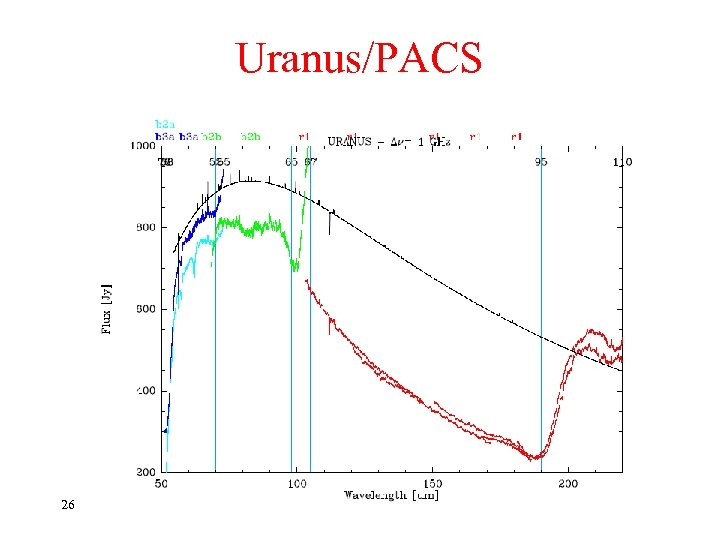
Uranus/PACS 26
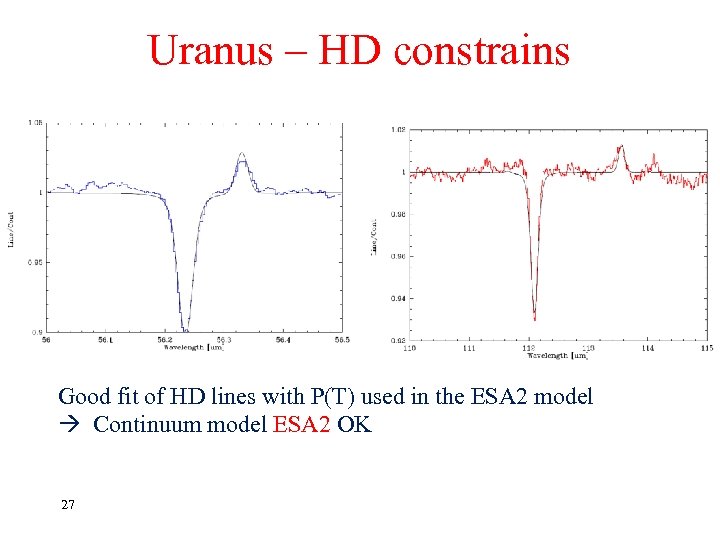
Uranus – HD constrains Good fit of HD lines with P(T) used in the ESA 2 model Continuum model ESA 2 OK 27
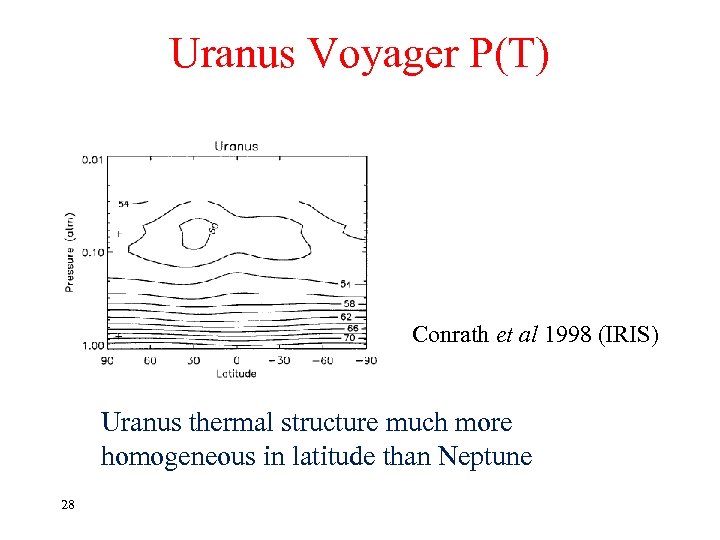
Uranus Voyager P(T) Conrath et al 1998 (IRIS) Uranus thermal structure much more homogeneous in latitude than Neptune 28
PACS constraints summary • The thermal profiles of the models of Neptune and Uranus has been constrained by PACS line/continuum measurements of HD lines at 56 and 112 μm • Improvement in Neptune’s model by +1. 5% in Tb (+5% in flux) at ν > 1000 GHz New Neptune model « ESA 3 » • The Measurements of HD confirm “ESA 2” model of Uranus was accurate 29
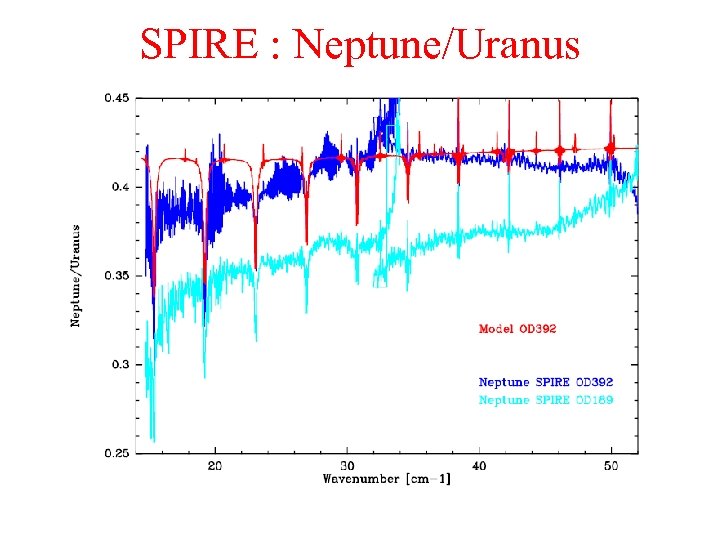
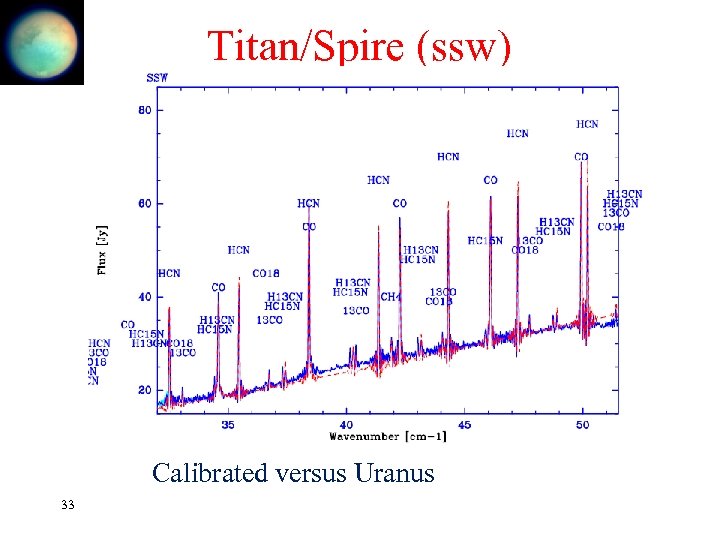
SPIRE constraints • Comparison between SPIRE-FTS recent observations (not apodized) of Uranus and Neptune (+ Titan) • Data obtained in the framework of the KP-GT : “Water and chemistry in the solar system. ” PI Paul Hartogh • Neptune (OD 392 + OD 189) , Uranus (OD 428) , data reduction performed by B. Swinyard (SPIRE) • Comparison with Neptune (ESA 3) – Uranus (ESA 2) • Titan reduced by T. Fulton and compared with model ESA 2 30
SPIRE : Neptune/Uranus
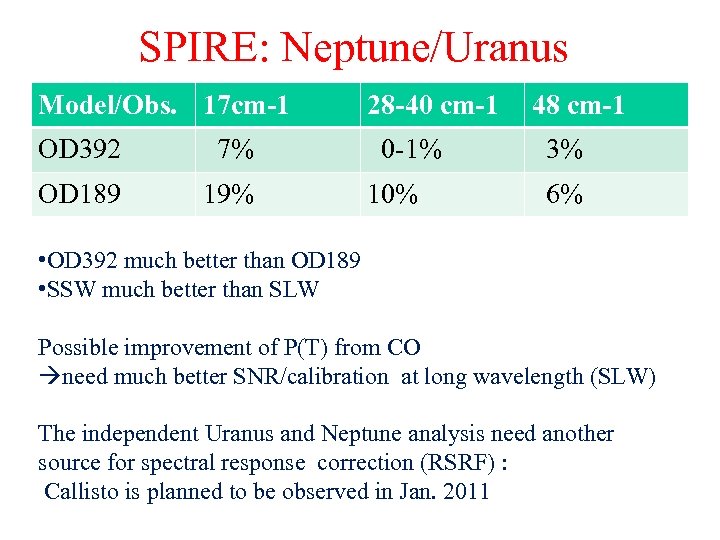
SPIRE: Neptune/Uranus Model/Obs. 17 cm-1 28 -40 cm-1 48 cm-1 OD 392 7% 0 -1% 3% OD 189 19% 10% 6% • OD 392 much better than OD 189 • SSW much better than SLW Possible improvement of P(T) from CO need much better SNR/calibration at long wavelength (SLW) The independent Uranus and Neptune analysis need another source for spectral response correction (RSRF) : Callisto is planned to be observed in Jan. 2011
Titan/Spire (ssw) Calibrated versus Uranus 33
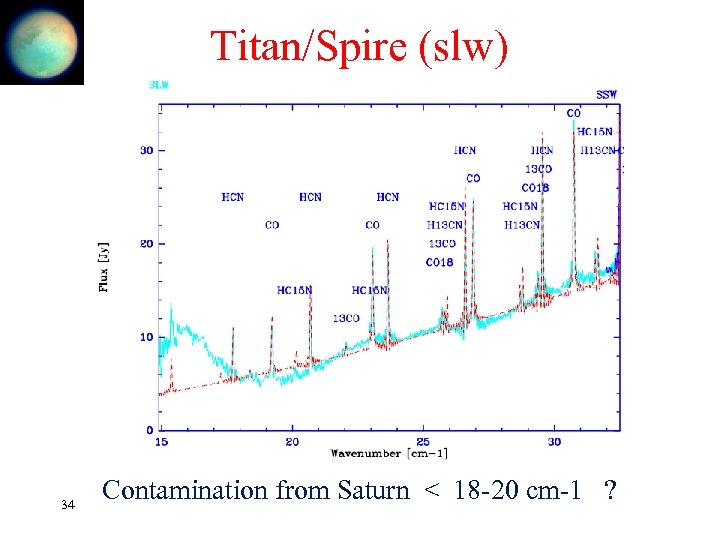
Titan/Spire (slw) 34 Contamination from Saturn < 18 -20 cm-1 ?
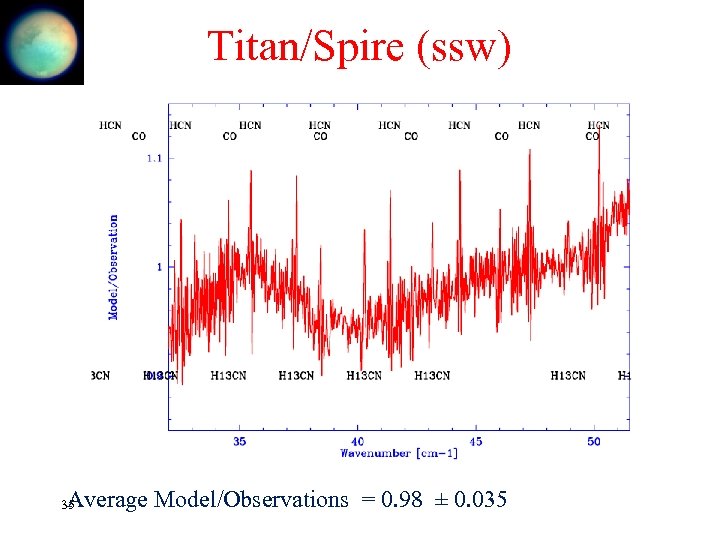
Titan/Spire (ssw) Average Model/Observations = 0. 98 ± 0. 035 35
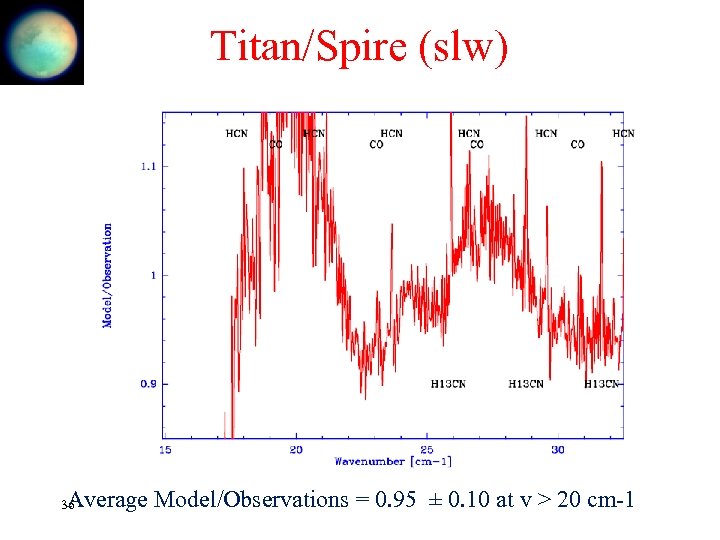
Titan/Spire (slw) Average Model/Observations = 0. 95 ± 0. 10 at v > 20 cm-1 36
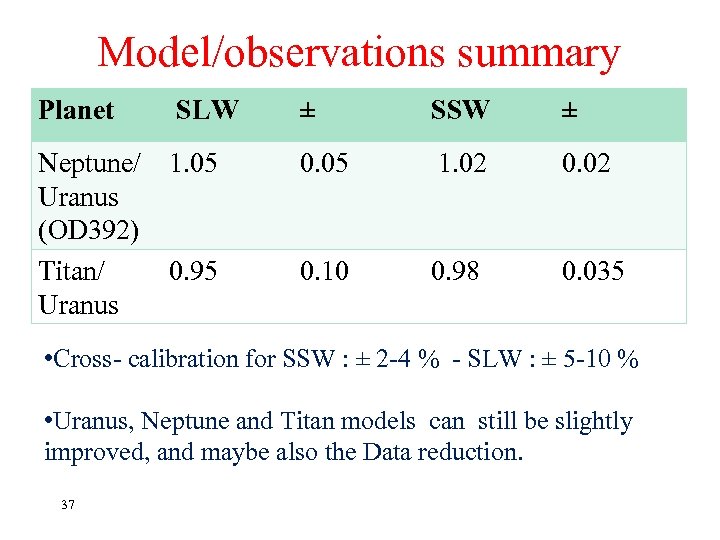
Model/observations summary Planet SLW ± SSW ± Neptune/ Uranus (OD 392) Titan/ Uranus 1. 05 0. 05 1. 02 0. 95 0. 10 0. 98 0. 035 • Cross- calibration for SSW : ± 2 -4 % - SLW : ± 5 -10 % • Uranus, Neptune and Titan models can still be slightly improved, and maybe also the Data reduction. 37
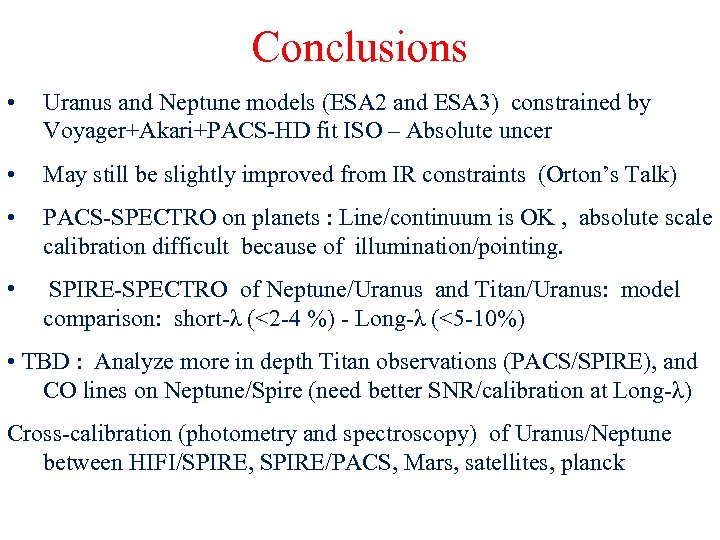
Conclusions • Uranus and Neptune models (ESA 2 and ESA 3) constrained by Voyager+Akari+PACS-HD fit ISO – Absolute uncer • May still be slightly improved from IR constraints (Orton’s Talk) • PACS-SPECTRO on planets : Line/continuum is OK , absolute scale calibration difficult because of illumination/pointing. • SPIRE-SPECTRO of Neptune/Uranus and Titan/Uranus: model comparison: short-λ (<2 -4 %) - Long-λ (<5 -10%) • TBD : Analyze more in depth Titan observations (PACS/SPIRE), and CO lines on Neptune/Spire (need better SNR/calibration at Long-λ) Cross-calibration (photometry and spectroscopy) of Uranus/Neptune between HIFI/SPIRE, SPIRE/PACS, Mars, satellites, planck
Скачать презентацию Planetary Models for Herschel Raphaël Moreno Observatoire de
71171870ef21a05330f11bb0153c6694.ppt