


 Скачать презентацию Plan Using the Most Significant Change MSC
7c2e6bb08256b95589773139cce9bc69.ppt
- Количество слайдов: 13
 Plan Using the Most Significant Change ( MSC) technique for actual program improvement (New way towards a downward accountability and collective learning) Presented By Awny Amer- Plan Egypt M&E advisor © Plan April 1, 09 : awni. amer@plan-international. org
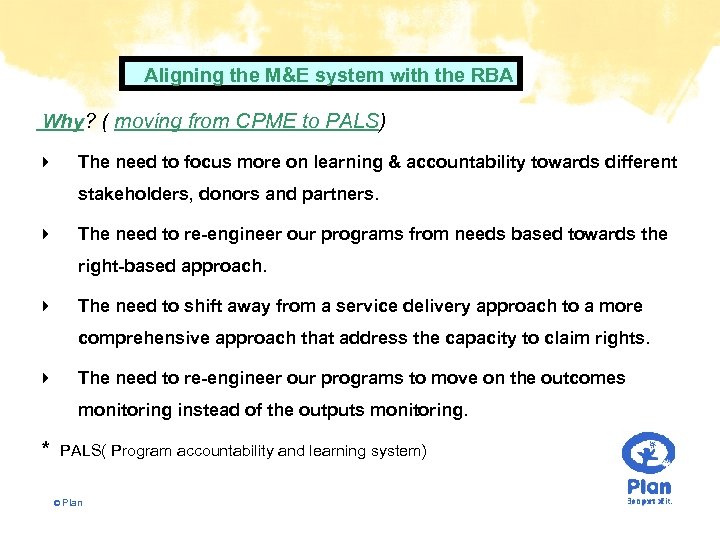 Aligning the M&E system with the RBA Why? ( moving from CPME to PALS) 4 The need to focus more on learning & accountability towards different stakeholders, donors and partners. 4 The need to re-engineer our programs from needs based towards the right-based approach. 4 The need to shift away from a service delivery approach to a more comprehensive approach that address the capacity to claim rights. 4 The need to re-engineer our programs to move on the outcomes monitoring instead of the outputs monitoring. * PALS( Program accountability and learning system) © Plan
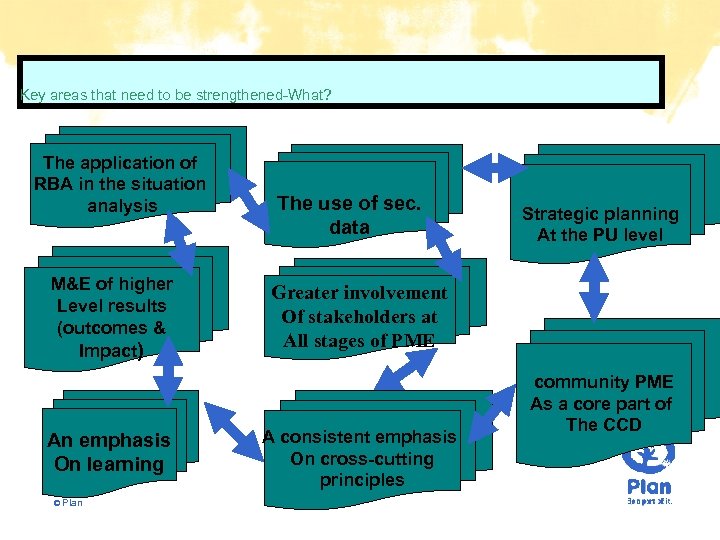 Key areas that need to be strengthened-What? The application of RBA in the situation analysis M&E of higher Level results (outcomes & Impact) An emphasis On learning © Plan The use of sec. data Strategic planning At the PU level Greater involvement Of stakeholders at All stages of PME A consistent emphasis On cross-cutting principles community PME As a core part of The CCD
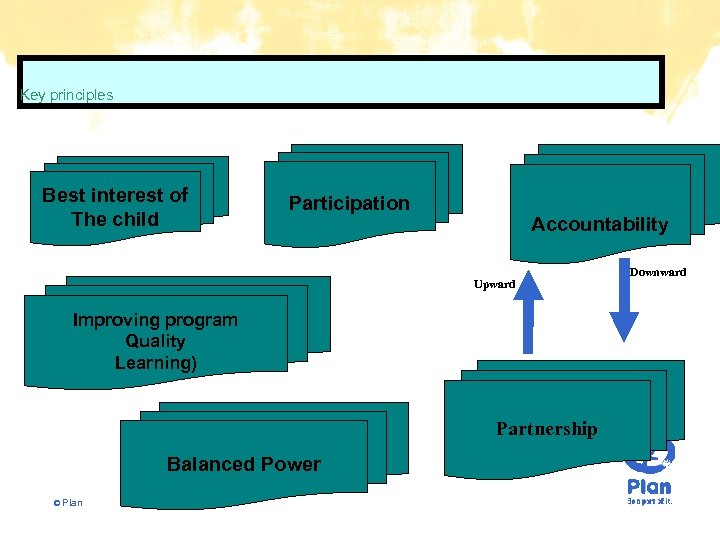 Key principles Best interest of The child Participation Accountability Upward Improving program Quality Learning) Partnership Balanced Power © Plan Downward
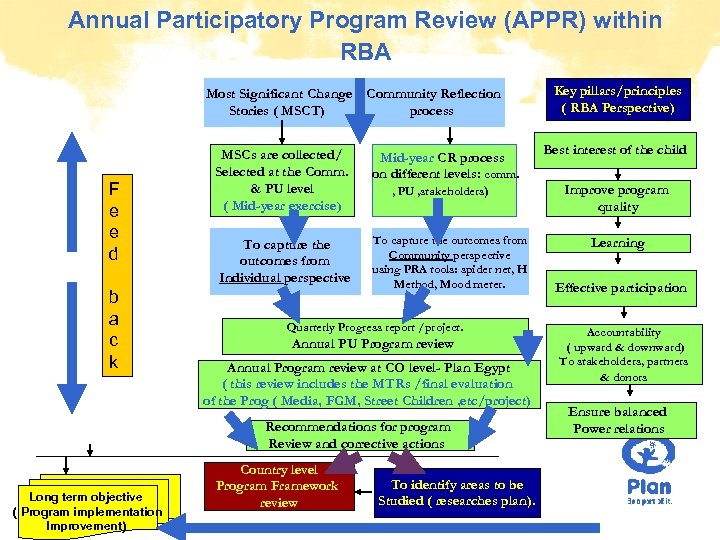 Annual Participatory Program Review (APPR) within RBA Most Significant Change Community Reflection Stories ( MSCT) process F e e d b a c k MSCs are collected/ Selected at the Comm. & PU level ( Mid-year exercise) To capture the outcomes from Individual perspective Mid-year CR process on different levels: comm. , PU , stakeholders) To capture the outcomes from Community perspective using PRA tools: spider net, H Method, Mood meter. Quarterly Progress report /project. Annual PU Program review Annual Program review at CO level- Plan Egypt ( this review includes the MTRs /final evaluation of the Prog ( Media, FGM, Street Children , etc/project) Recommendations for program Review and corrective actions Long term objective © Plan ( Program implementation Improvement) Country level Program Framework review To identify areas to be Studied ( researches plan). Key pillars/principles ( RBA Perspective) Best interest of the child Improve program quality Learning Effective participation Accountability ( upward & downward) To stakeholders, partners & donors Ensure balanced Power relations
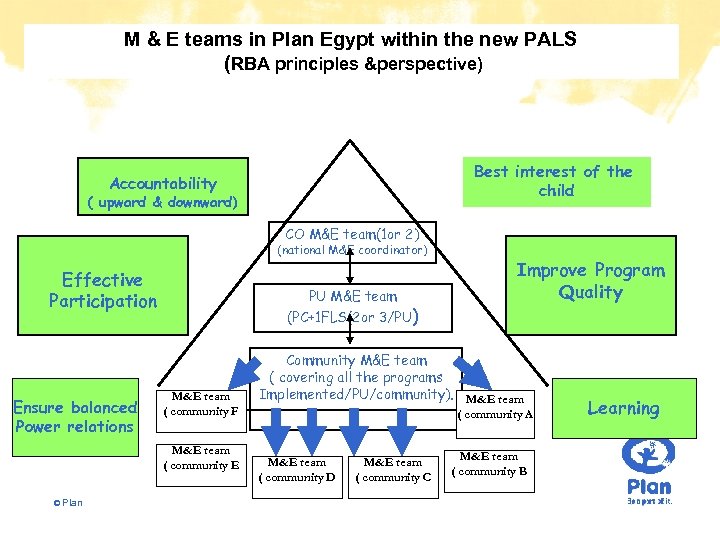 M & E teams in Plan Egypt within the new PALS (RBA principles &perspective) Best interest of the child Accountability ( upward & downward) CO M&E team(1 or 2) (national M&E coordinator) Effective Participation Ensure balanced Power relations PU M&E team (PC+1 FLS(2 or 3/PU) M&E team ( community F M&E team ( community E © Plan Improve Program Quality Community M&E team ( covering all the programs Implemented/PU/community). M&E team ( community A M&E team ( community D M&E team ( community C M&E team ( community B Learning
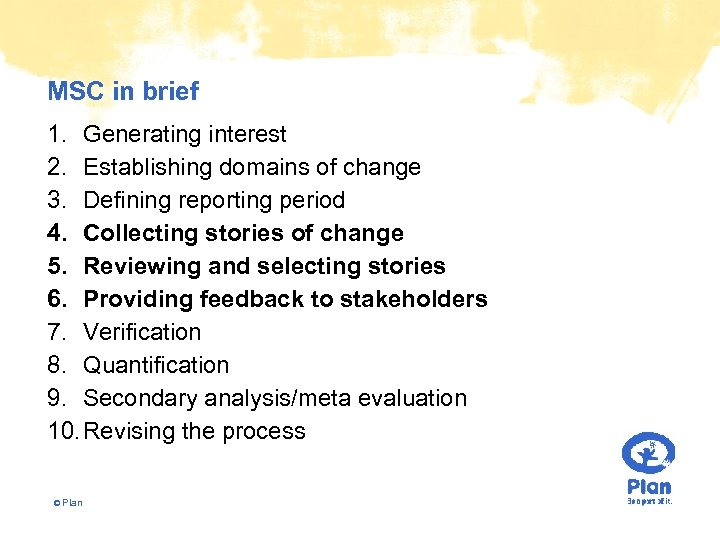 MSC in brief 1. Generating interest 2. Establishing domains of change 3. Defining reporting period 4. Collecting stories of change 5. Reviewing and selecting stories 6. Providing feedback to stakeholders 7. Verification 8. Quantification 9. Secondary analysis/meta evaluation 10. Revising the process © Plan
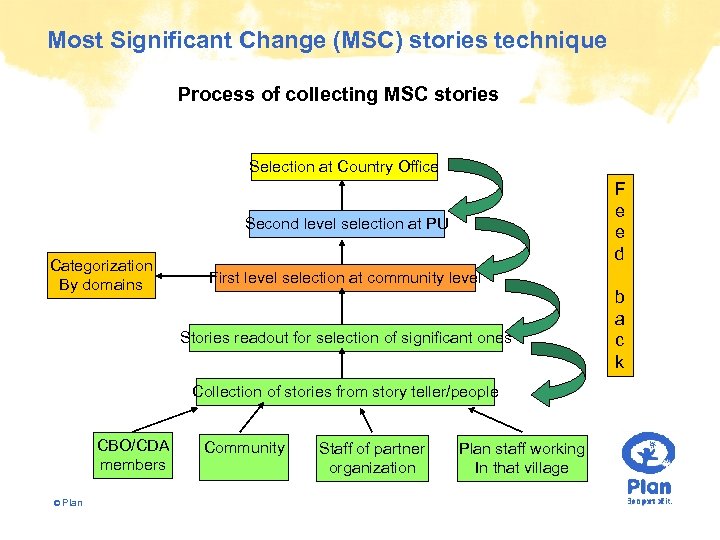 Most Significant Change (MSC) stories technique Process of collecting MSC stories Selection at Country Office F e e d Second level selection at PU Categorization By domains First level selection at community level Stories readout for selection of significant ones Collection of stories from story teller/people CBO/CDA members © Plan Community Staff of partner organization Plan staff working In that village b a c k
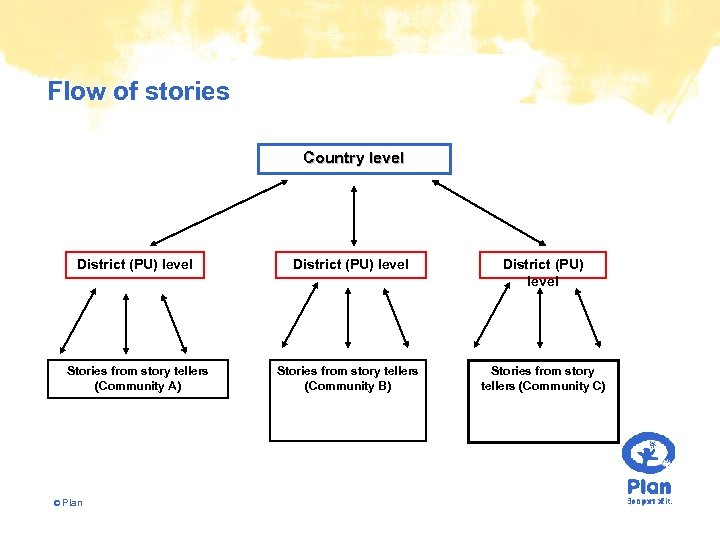 Flow of stories Country level District (PU) level Stories from story tellers (Community A) Stories from story tellers (Community B) Stories from story tellers (Community C) © Plan
 Why stories? • People tell stories naturally – indigenous way of passing on knowledge or information. • Stories can deal with complexity and context • People remember stories • Stories can carry hard messages /undiscussables • But stories are not known for accuracy/truth – this could be affected by • Who tells the story • To whom it is told • When they tell story • Their motivation • Even their mood © Plan • Note that some people are naturally bad story tellers
 Most Significant Change • Creates space for stakeholders to reflect, to make sense of complex changes • Provides dialogue to help make sense of each other people’s values • Facilitates dynamic dialogue ie. “what do we really want to achieve and how will we produce more of it? ” • Excellent for participatory programs with diverse, complex outcomes, & multiple stakeholders. • Promote the downward accountability, effective & authentic participation and project ownership. © Plan
 The Core of MSC • A question: • “In your opinion what was the most significant change that took place in …. over the … months” • [describe the change and explain why you think it is significant] • Re-iteration of the same kind of question • “Which of these SC stories do you think is the most significant of all? ” • [describe the change and explain why you think it is significant] © Plan
 How it is used- Example ( FGM program)- ( Key recommendations resulted from the MSCT exercise) • Mobilizing men against FGM is a very important intervention for the vital role that they may play in discouraging FGM. • It is recommended to include the basic life skills intervention in the awareness component provided for all ages starting at 9 years. • Using the negative models as result of the practice of the FGM played a vital role in saving others who are still at risk of the FGM. • Support the role of the school, mosque, children clubs and church should be continued and enhanced and promoted on different levels in the project design. © Plan