 Скачать презентацию Piero Zucchelli On leave of absence from High
a1f4395f77f489a296c024081675f217.ppt
- Количество слайдов: 30



Piero Zucchelli On leave of absence from: High Energy Physics and INFN - Sezione di Ferrara M. Mezzetto D. Casper M. Lindroos A. Blondel U. Koester S. Hancock B. Autin M. Benedikt H. Haseroth M. Grieser A. Jansson S. Russenschuck F. Wenander BETA-BEAMS An idea Physics Letters B 532 (3 -4) (2002) pp. 166 -172
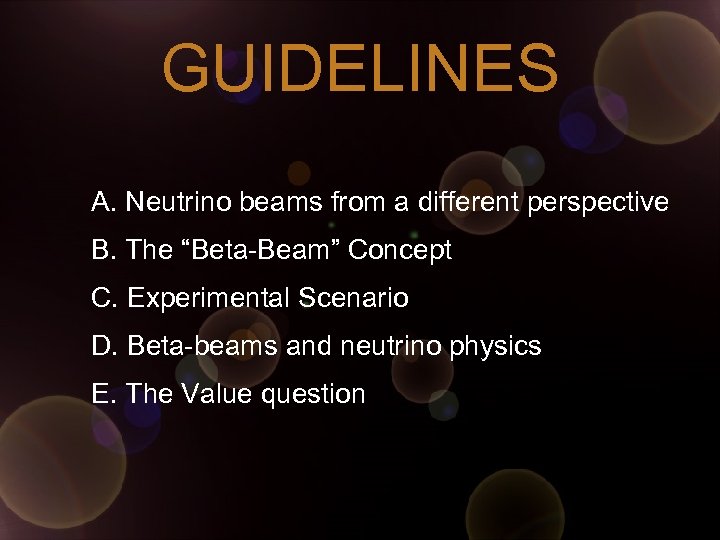
GUIDELINES A. Neutrino beams from a different perspective B. The “Beta-Beam” Concept C. Experimental Scenario D. Beta-beams and neutrino physics E. The Value question
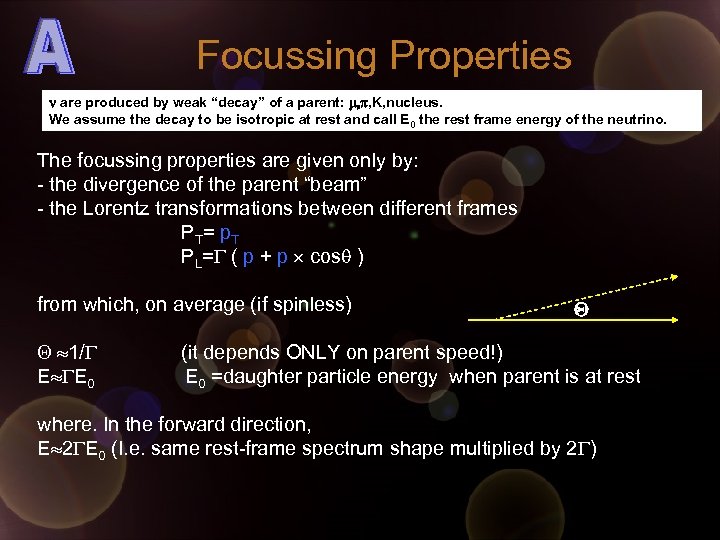
Focussing Properties n are produced by weak “decay” of a parent: m, p, K, nucleus. We assume the decay to be isotropic at rest and call E 0 the rest frame energy of the neutrino. The focussing properties are given only by: - the divergence of the parent “beam” - the Lorentz transformations between different frames P T = p. T PL=G ( p + p cosq ) from which, on average (if spinless) Q 1/G E GE 0 Q (it depends ONLY on parent speed!) E 0 =daughter particle energy when parent is at rest where. In the forward direction, E 2 GE 0 (I. e. same rest-frame spectrum shape multiplied by 2 G)
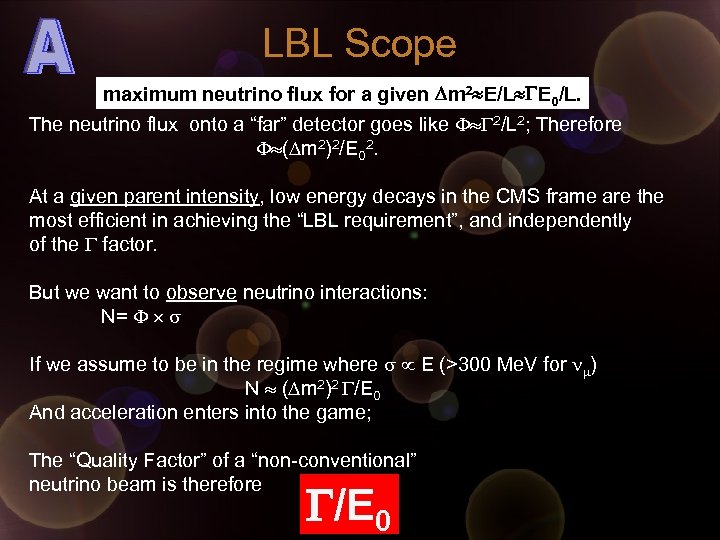
LBL Scope maximum neutrino flux for a given Dm 2 E/L GE 0/L. The neutrino flux onto a “far” detector goes like F G 2/L 2; Therefore F (Dm 2)2/E 02. At a given parent intensity, low energy decays in the CMS frame are the most efficient in achieving the “LBL requirement”, and independently of the G factor. But we want to observe neutrino interactions: N= F s If we assume to be in the regime where s E (>300 Me. V for nm) N (Dm 2)2 G/E 0 And acceleration enters into the game; The “Quality Factor” of a “non-conventional” neutrino beam is therefore G/E 0
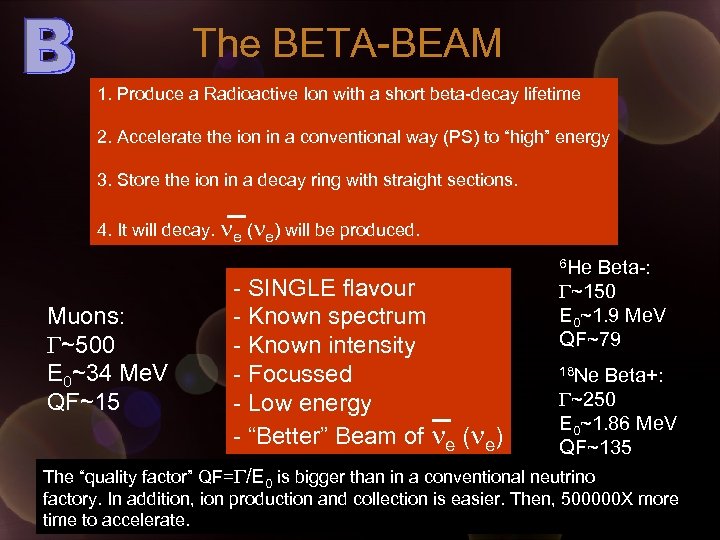
The BETA-BEAM 1. Produce a Radioactive Ion with a short beta-decay lifetime 2. Accelerate the ion in a conventional way (PS) to “high” energy 3. Store the ion in a decay ring with straight sections. 4. It will decay. ne (ne) will be produced. Muons: G~500 E 0~34 Me. V QF~15 - SINGLE flavour - Known spectrum - Known intensity - Focussed - Low energy - “Better” Beam of ne (ne) 6 He Beta-: G~150 E 0~1. 9 Me. V QF~79 18 Ne Beta+: G~250 E 0~1. 86 Me. V QF~135 The “quality factor” QF=G/E 0 is bigger than in a conventional neutrino factory. In addition, ion production and collection is easier. Then, 500000 X more time to accelerate.
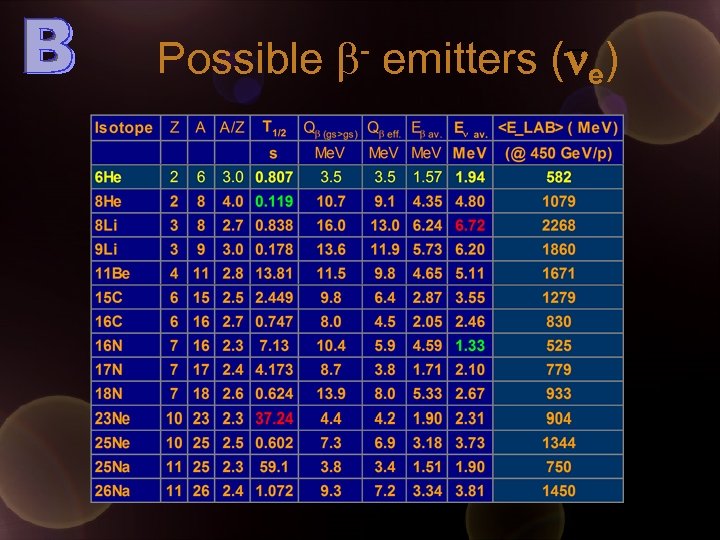
Possible b- emitters (ne)
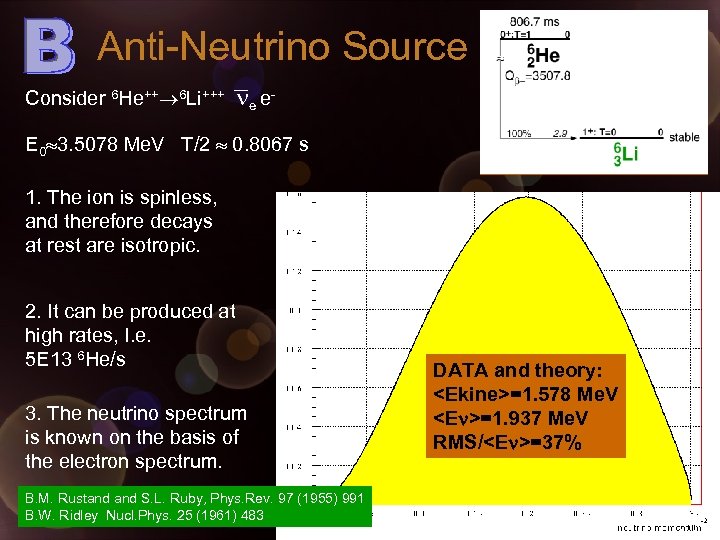
Anti-Neutrino Source Consider 6 He++ 6 Li+++ n e e- E 0 3. 5078 Me. V T/2 0. 8067 s 1. The ion is spinless, and therefore decays at rest are isotropic. 2. It can be produced at high rates, I. e. 5 E 13 6 He/s 3. The neutrino spectrum is known on the basis of the electron spectrum. B. M. Rustand S. L. Ruby, Phys. Rev. 97 (1955) 991 B. W. Ridley Nucl. Phys. 25 (1961) 483 DATA and theory: <Ekine>=1. 578 Me. V <En>=1. 937 Me. V RMS/<En>=37%
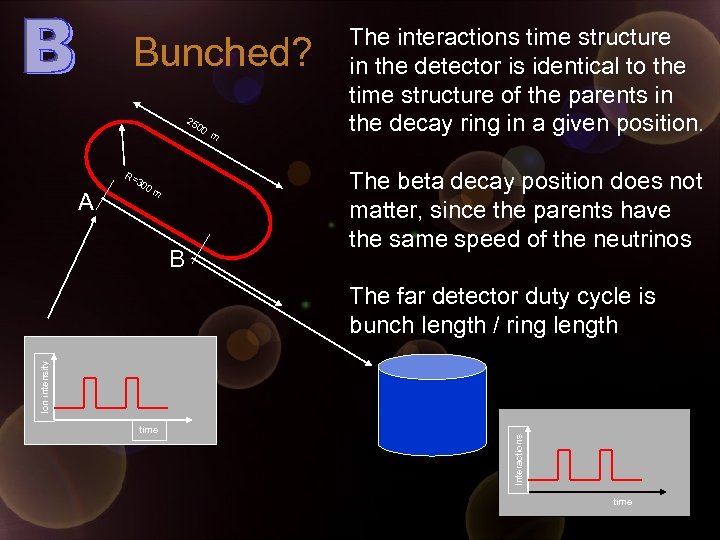
Bunched? 25 R= A 30 0 m B 00 m The interactions time structure in the detector is identical to the time structure of the parents in the decay ring in a given position. The beta decay position does not matter, since the parents have the same speed of the neutrinos time Interactions Ion intensity The far detector duty cycle is bunch length / ring length time
Next decades neutrino physics A. Imagine that there will be a next generation neutrino detector. An R&D, design and construction phase will lead us into next decade. B. Imagine to explore non-accelerator physics first. C. Imagine that this program is compatible with a superbeam shooting muon neutrinos onto it. If this will expand the neutrino knowledge of the period 2010 -2020, you’re ready to do it (known technology). D. Imagine that you have PREPARRED and STUDIED an option to shoot electron neutrinos onto the same detector. If the next decade neutrino physics will demand it, you’re ready to do it.
A Dream? A. the ~600 Kton UNO detector. B. Supernovae, Solar, Atmospheric, Proton Decay: q 12, m 12, q 23, m 23. C. Frejus site and SPL Super-Beam: possibly q 13 D. Frejus site and SPS Beta-Beam: possibly q 13 , possibly CP (2) and T Is this physics program less visionary than a muon-based neutrino factory program? The objectives are wider, the discovery potential for some specific assumptions is smaller. Speculations and fashions on the d value will also last many years!
Super. Beam: a competition? The proton requirements of the Beta-Beam are part of the ISOLDE@SPL (100 u. A for 1 s every 2 -5 s). The ISOLDE@SPL plans 100 u. A protons overall. The Superbeam uses 2 m. A from the SPL. Therefore: The Beta. Beam affects the Super. Beam intensity by 3% at most.
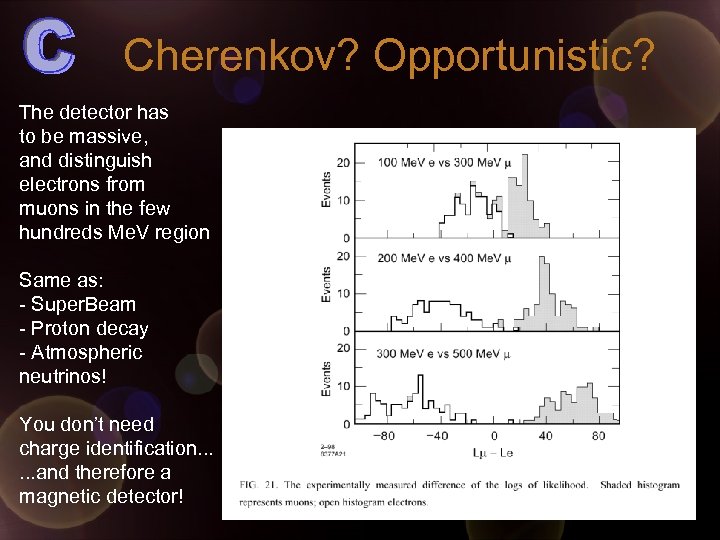
Cherenkov? Opportunistic? The detector has to be massive, and distinguish electrons from muons in the few hundreds Me. V region Same as: - Super. Beam - Proton decay - Atmospheric neutrinos! You don’t need charge identification. . . and therefore a magnetic detector!
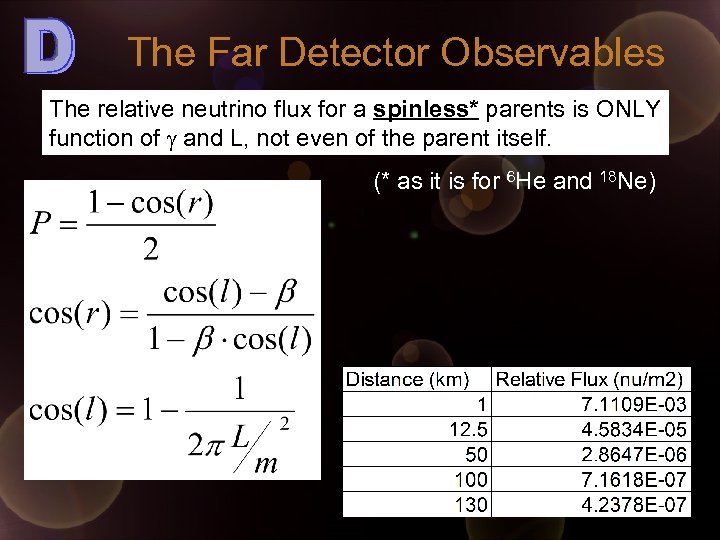
The Far Detector Observables The relative neutrino flux for a spinless* parents is ONLY function of g and L, not even of the parent itself. (* as it is for 6 He and 18 Ne)
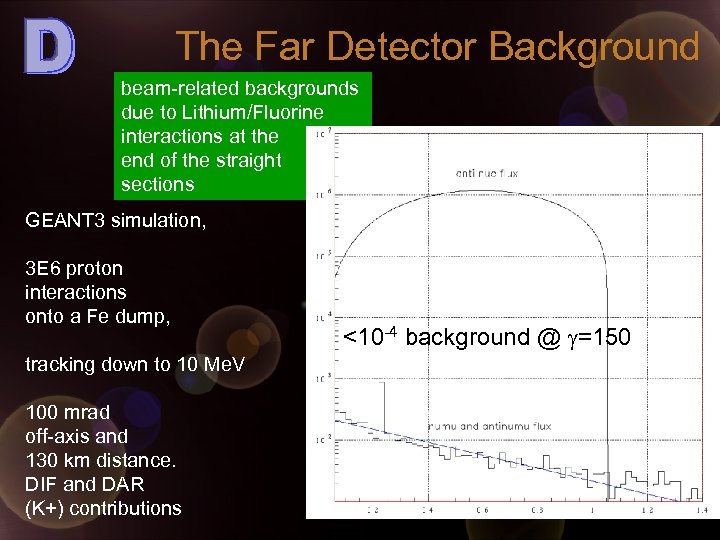
The Far Detector Background beam-related backgrounds due to Lithium/Fluorine interactions at the end of the straight sections GEANT 3 simulation, 3 E 6 proton interactions onto a Fe dump, tracking down to 10 Me. V 100 mrad off-axis and 130 km distance. DIF and DAR (K+) contributions <10 -4 background @ g=150
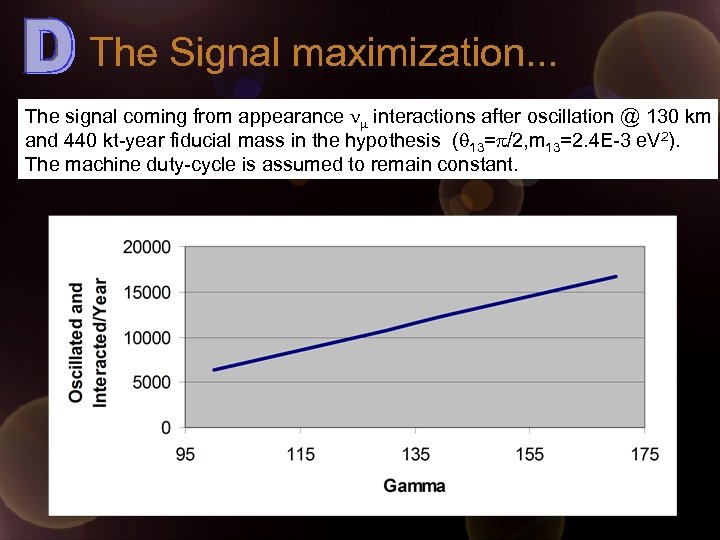
The Signal maximization. . . The signal coming from appearance nm interactions after oscillation @ 130 km and 440 kt-year fiducial mass in the hypothesis (q 13=p/2, m 13=2. 4 E-3 e. V 2). The machine duty-cycle is assumed to remain constant. table
…and the interaction background. . . NC interactions potentially produce D++ decays (almost at rest) and the p+ is misidentified as a muon. Asymmetries with Superbeams start to appear (the e/p 0 separation becomes m/p) Kinematical cuts are possible, still delicate and MC dependent. Another strategy consists in having the pions below Cherenkov threshold (M. Mezzetto). Interaction Background
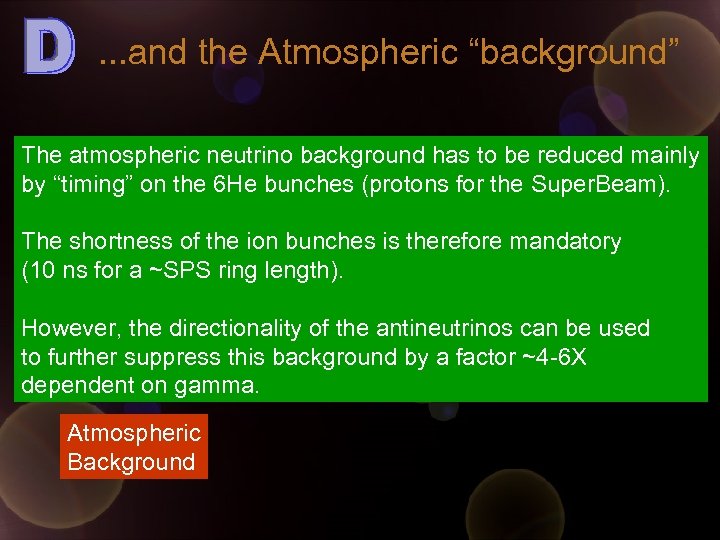
. . . and the Atmospheric “background” The atmospheric neutrino background has to be reduced mainly by “timing” on the 6 He bunches (protons for the Super. Beam). The shortness of the ion bunches is therefore mandatory (10 ns for a ~SPS ring length). However, the directionality of the antineutrinos can be used to further suppress this background by a factor ~4 -6 X dependent on gamma. Atmospheric Background
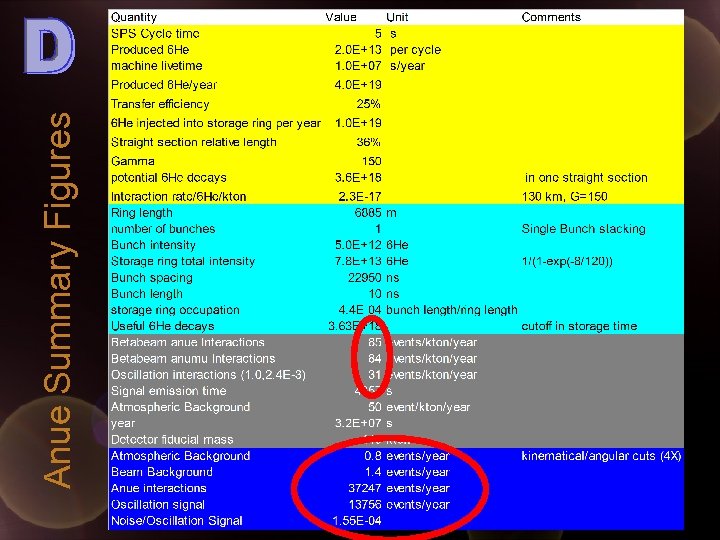
Anue Summary Figures
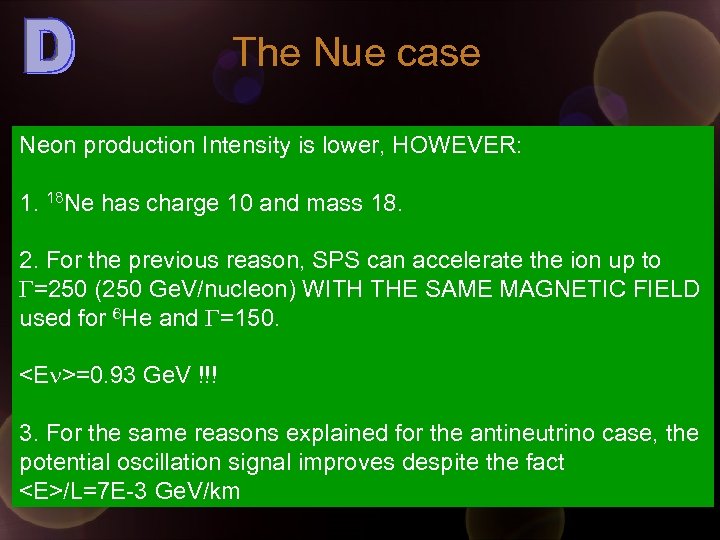
The Nue case Neon production Intensity is lower, HOWEVER: 1. 18 Ne has charge 10 and mass 18. 2. For the previous reason, SPS can accelerate the ion up to G=250 (250 Ge. V/nucleon) WITH THE SAME MAGNETIC FIELD used for 6 He and G=150. <En>=0. 93 Ge. V !!! 3. For the same reasons explained for the antineutrino case, the potential oscillation signal improves despite the fact <E>/L=7 E-3 Ge. V/km
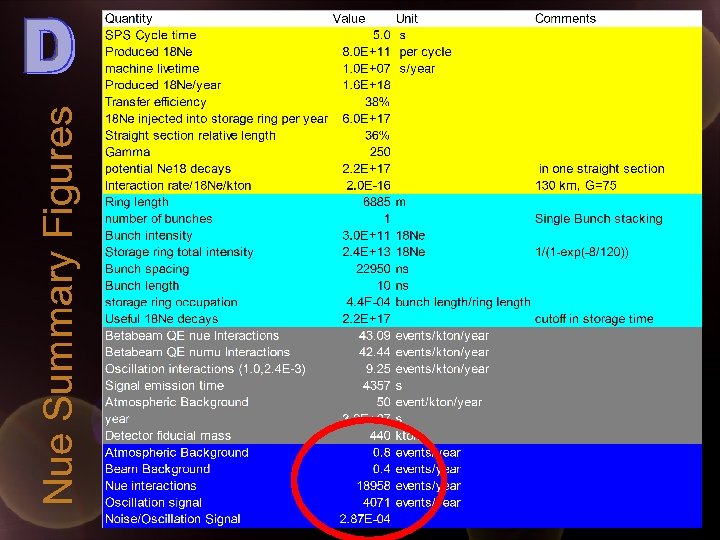
Nue Summary Figures
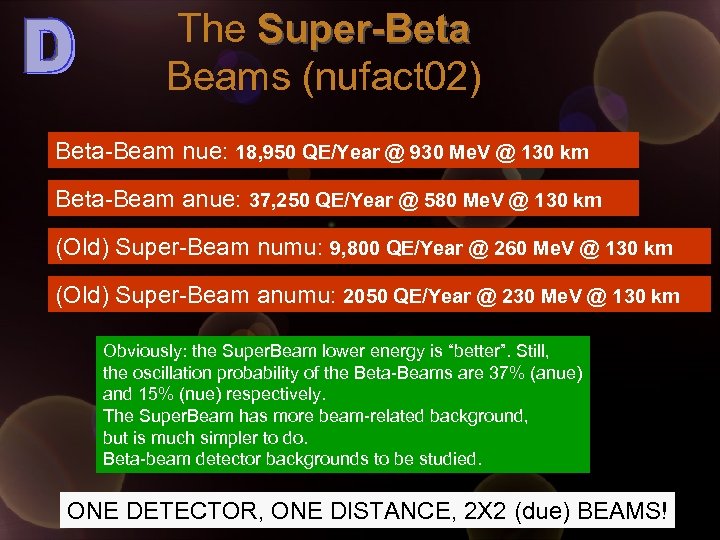
The Super-Beta Beams (nufact 02) Beta-Beam nue: 18, 950 QE/Year @ 930 Me. V @ 130 km Beta-Beam anue: 37, 250 QE/Year @ 580 Me. V @ 130 km (Old) Super-Beam numu: 9, 800 QE/Year @ 260 Me. V @ 130 km (Old) Super-Beam anumu: 2050 QE/Year @ 230 Me. V @ 130 km Obviously: the Super. Beam lower energy is “better”. Still, the oscillation probability of the Beta-Beams are 37% (anue) and 15% (nue) respectively. The Super. Beam has more beam-related background, but is much simpler to do. Beta-beam detector backgrounds to be studied. ONE DETECTOR, ONE DISTANCE, 2 X 2 (due) BEAMS!
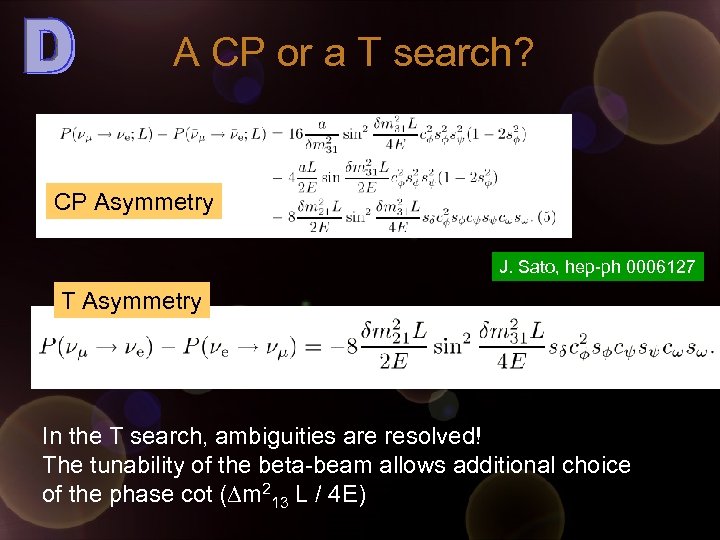
A CP or a T search? CP Asymmetry J. Sato, hep-ph 0006127 T Asymmetry In the T search, ambiguities are resolved! The tunability of the beta-beam allows additional choice of the phase cot (Dm 213 L / 4 E)
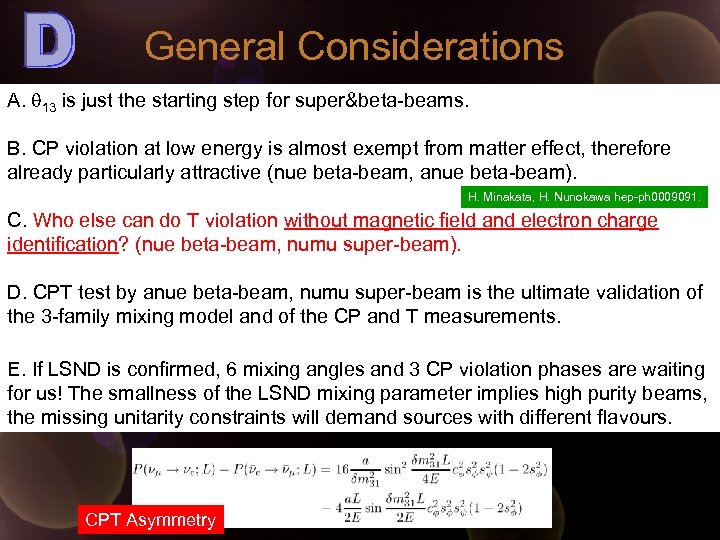
General Considerations A. q 13 is just the starting step for super&beta-beams. B. CP violation at low energy is almost exempt from matter effect, therefore already particularly attractive (nue beta-beam, anue beta-beam). H. Minakata, H. Nunokawa hep-ph 0009091. C. Who else can do T violation without magnetic field and electron charge identification? (nue beta-beam, numu super-beam). D. CPT test by anue beta-beam, numu super-beam is the ultimate validation of the 3 -family mixing model and of the CP and T measurements. E. If LSND is confirmed, 6 mixing angles and 3 CP violation phases are waiting for us! The smallness of the LSND mixing parameter implies high purity beams, the missing unitarity constraints will demand sources with different flavours. CPT Asymmetry
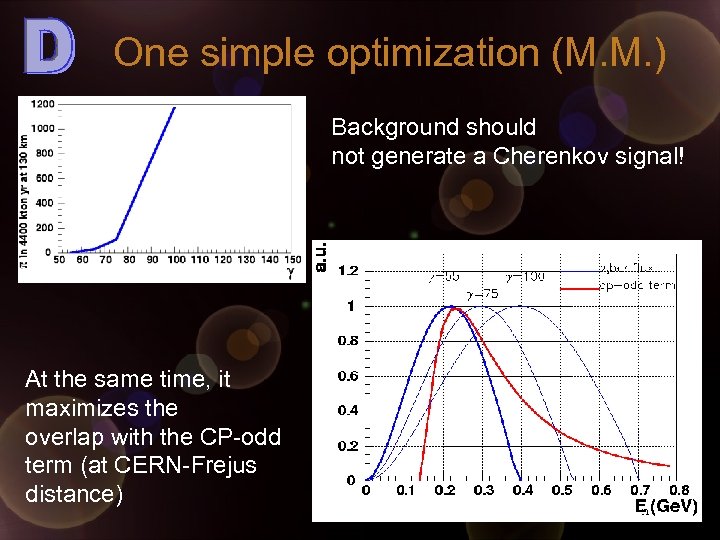
One simple optimization (M. M. ) Background should not generate a Cherenkov signal! At the same time, it maximizes the overlap with the CP-odd term (at CERN-Frejus distance)
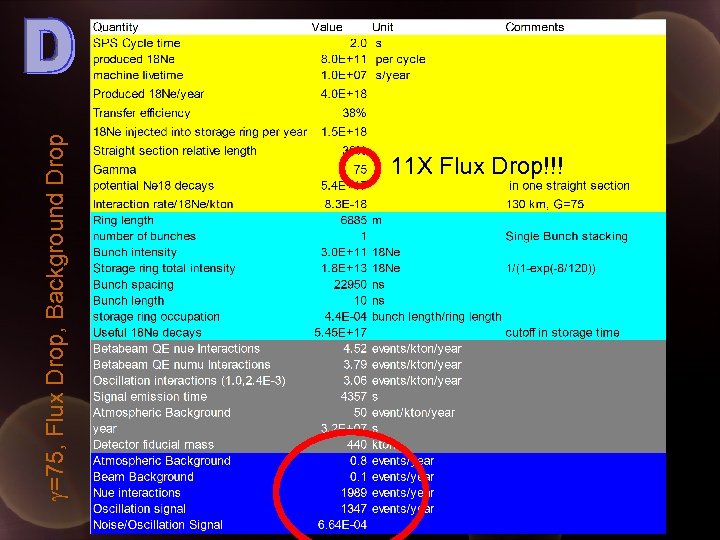
g=75, Flux Drop, Background Drop Beta. Beam “downgrading” 11 X Flux Drop!!!
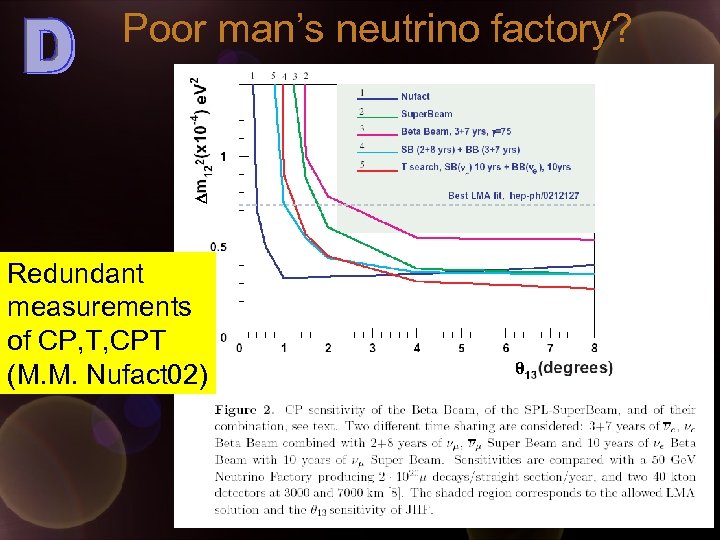
Poor man’s neutrino factory? Redundant measurements of CP, T, CPT (M. M. Nufact 02)
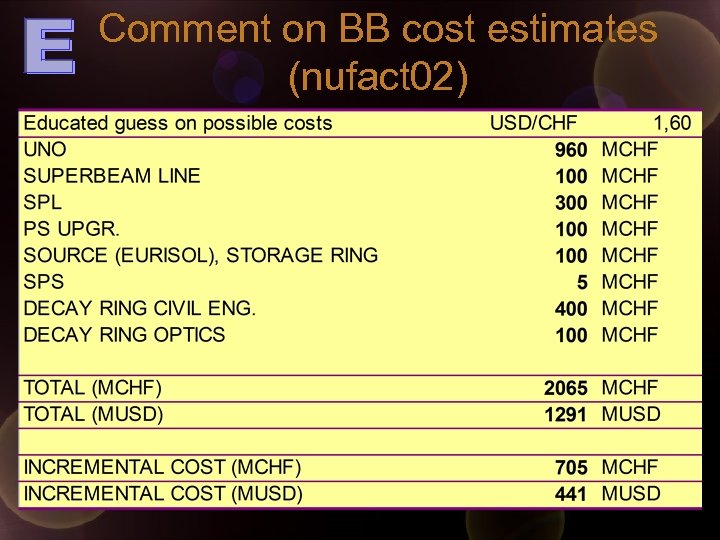
Comment on BB cost estimates (nufact 02)
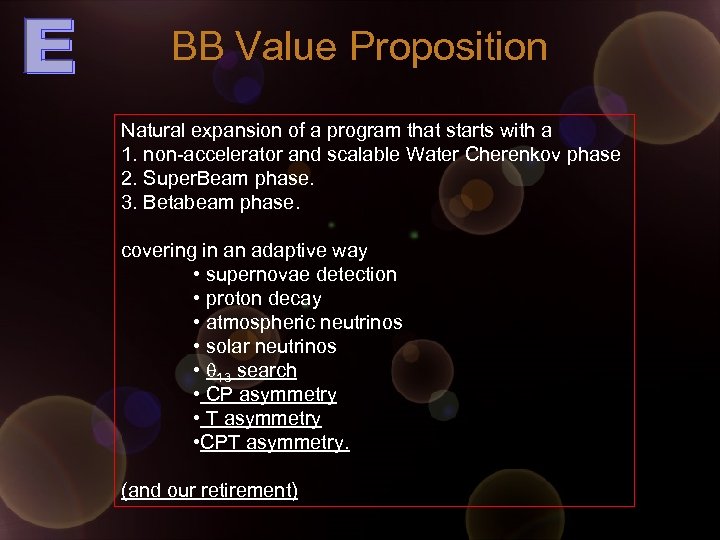
BB Value Proposition Natural expansion of a program that starts with a 1. non-accelerator and scalable Water Cherenkov phase 2. Super. Beam phase. 3. Betabeam phase. covering in an adaptive way • supernovae detection • proton decay • atmospheric neutrinos • solar neutrinos • q 13 search • CP asymmetry • T asymmetry • CPT asymmetry. (and our retirement)
Buy a Beta. Beam? • If somebody will prove it can be done • If somebody will show it can deliver the neutrino answers we will possibly need in 10 -20 years from now. • If those questions will be within reach at all • If the neutrino program will progress in the water cherenkov direction • If there will be no other - simpler, cheaper - solution that will deliver the same or more
CONCLUSIONS e “Se son rose, fioriranno”. “If they're roses, they will blossom” “Si tiene barbas, San Antón, si no la Purísima Concepción”
Скачать презентацию Piero Zucchelli On leave of absence from High
a1f4395f77f489a296c024081675f217.ppt