


 Скачать презентацию PI and D O Conflicts Why would
ff08f7276468fccca34b3a7e44eec031.ppt
- Количество слайдов: 19
 PI and D&O • • Conflicts Why would actuaries be interested? What is PI? What is D&O? Topical issues Market statistics Pricing issues and conclusion
 PI and D&O: Conflicts • Disclaimer • People who know about Professional Indemnity and Directors & Officers are often unable or unwilling to talk publicly • Frequently settled out of court • Classes of business that cause trouble • Actuaries are also at risk of claims
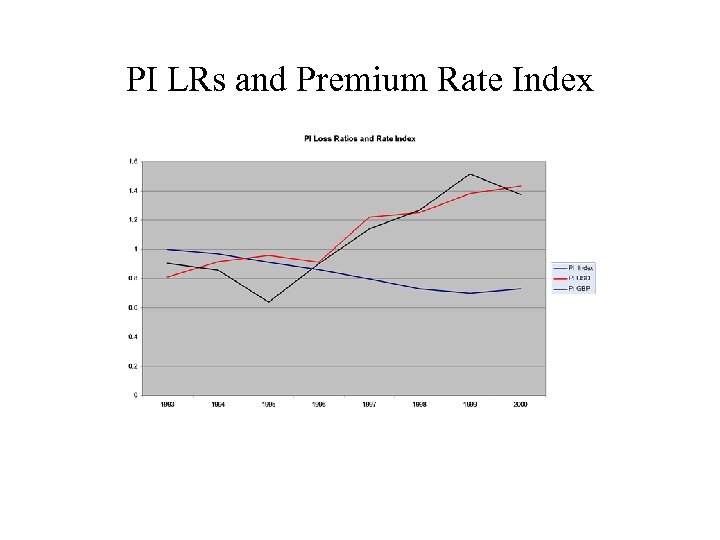
 PI and D&O: Why should actuaries care? • • Important lines of insurance Losses Difficult to price and to reserve Actuaries like other professionals can suffer claims • Underpricing: “PI is the red light district of the London Market” (Reg Brown)
 PI and D&O: What is PI? • • • Professional Indemnity Claims against professionals for negligence Must be a duty of care Normally only clients can claim Duty of care has been well-defined but definitions always at risk of being extended • Time limited to six years - also at risk?
 Topical issues: PI • New professions eg IT – failure to deliver what was expected – may come under contract law rather than tort • Time limit of six years attacked – Several recent Appeal Court decisions have gone beyond six years • Woolf: fewer court cases, but more pre-litigation cases
 Topical issues: PI • Barristers no longer immune (since 2000) • Duty of care extended to non-clients? – Dean vs Allin & Watts • Not just partners: Babb case
 Babb Case • Mr Babb was employed as a surveyor • He carried out a standard house mortgage survey in 1992 (fee to his employer was £ 70), never having met the client • Babb changed jobs in 1993 • In 1994 his former employer went out of business • When cracks were found in the house, the owner successfully sued Babb; no PI cover in force • Babb forced to pay £ 40, 000 from his own pocket
 PI and D&O: What is D&O • Directors and Officers liability • Claims against Directors and Officers for negligence in carrying out their duties • Third parties can claim - shareholders, employees, customers • Less clearly defined and coverage keeps expanding
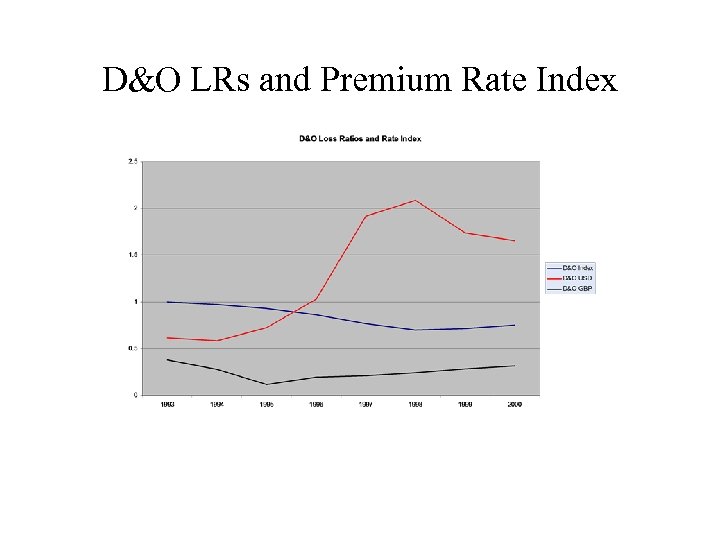
 Topical issues: D&O • Losses increasing especially on older years • Typical soft market factors: package policies, entity covers, outside entity covers, long term deals • High stock market increased exposure • “Ambulance chasing” • Security Litigation Reform Act 1995 • Not always clear what is covered especially outside US and UK
 Topical issues: D&O • Package policies – Include Employment Practices Liability etc • Entity covers – Cover the Company as well as the Directors so claims which would have been split both hit the insurance • Outside entity covers – Directorships of other entities, trusteeships, etc – No underwriting of these is possible – Extra exposure taken for no extra premium
 Topical issues: D&O • Security Litigation Reform Act 1995 – Intended to prevent nuisance claims – Has had some success, but… – New style of claim is to say that accounts were misleading, eg if targets not met could say reserves were too low
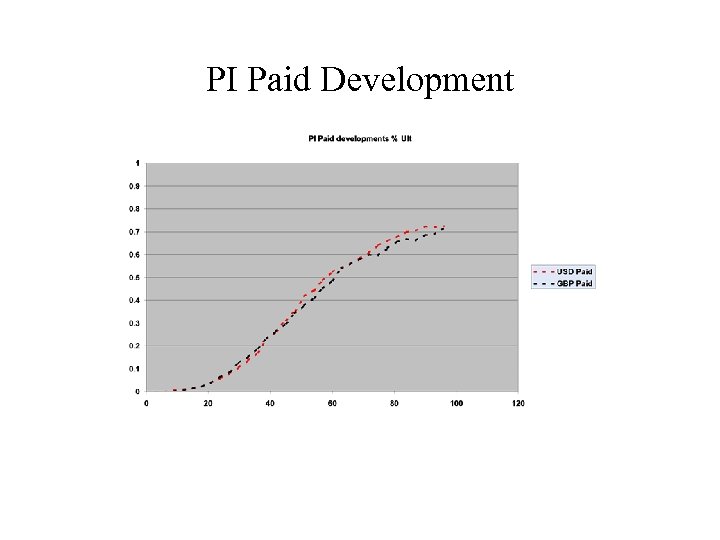
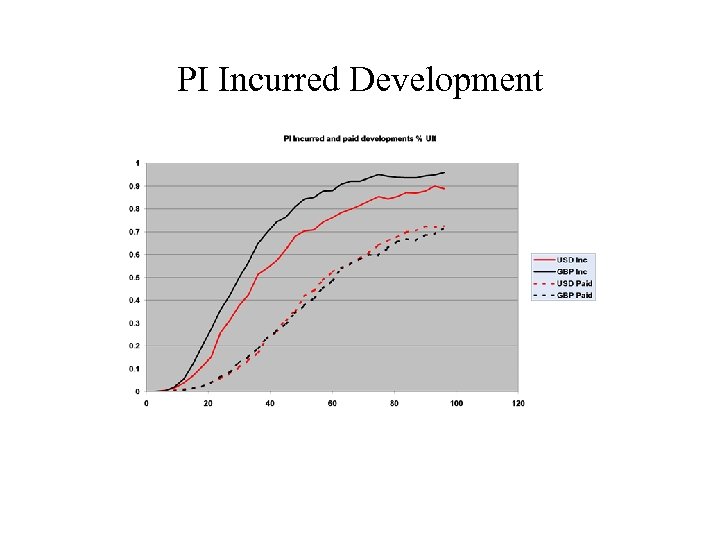
 PI and D&O: Figures and graphs • Lloyd’s data projected using standard methods • Usual disclaimers apply • Also premium rate indices
 PI Paid Development
 PI Incurred Development
 PI LRs and Premium Rate Index
 D&O LRs and Premium Rate Index
 PI and D&O: Why standard pricing methods might fail • Small number of large claims • Very heterogenous exposures and claims • Overall average development is slow (IBNR and IBNER) • Development pattern varies for different claims • No good exposure measure • Cycles and secular change
 PI and D&O: One possible pricing approach • Mack 1997 paper • Individual claim projections • “Types” of claim at each development (Estimate only, Estimate + Paid, Settled) • Distance measure: Sqrt(squared difference in estimate + squared difference in paid) • Choose a more developed claim of same type with smallest distance when at same development • Still has problems with heterogenous data, but can be developed - eg operational time? • No IBNR - need separate frequency analysis
 PI and D&O: Conclusions • Important and dangerous classes of business • “Red Light District” - attract unwary punters • Standard actuarial techniques must be adapted but can be • Essential to work with underwriters and claims staff to understand complexities • International risks - each country different • Demand is real: people need this cover