 Скачать презентацию Physics is Fun Why do objects fall Grzegorz
6afd34223d831df078c9b52f1a8f521d.ppt
- Количество слайдов: 47



Physics is Fun: Why do objects fall? Grzegorz Karwasz Didactics of Physics Division Nicolaus Copernicus University Toruń, Poland 송미영 선임 연구원 플라즈마물성데이터 센터 플라즈마물성연구팀 / 원천기술연구부/ 플라즈마기술연구센터 /국가핵융합연구소

Toruń – medioeval city (*1227) Established by German religious order
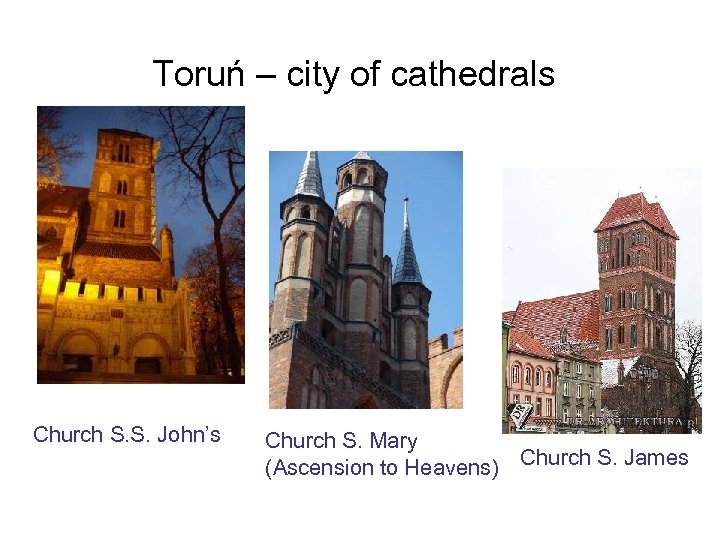
Toruń – city of cathedrals Church S. S. John’s Church S. Mary (Ascension to Heavens) Church S. James
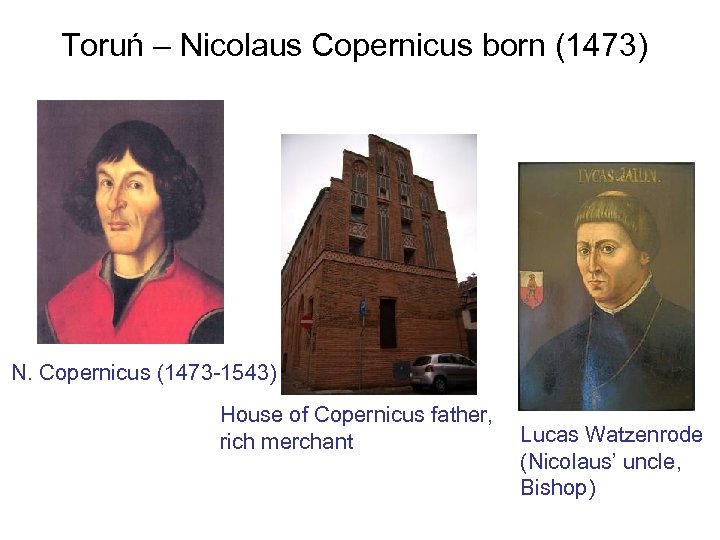
Toruń – Nicolaus Copernicus born (1473) N. Copernicus (1473 -1543) House of Copernicus father, rich merchant Lucas Watzenrode (Nicolaus’ uncle, Bishop)

What happened in Poland/ Europe? Poland 1466: war between German order and Poland finished (peace in Toruń) Europe 1453: Constantinopole (=Instabul) conquered by Turks (=end of Bizantine Imperium)
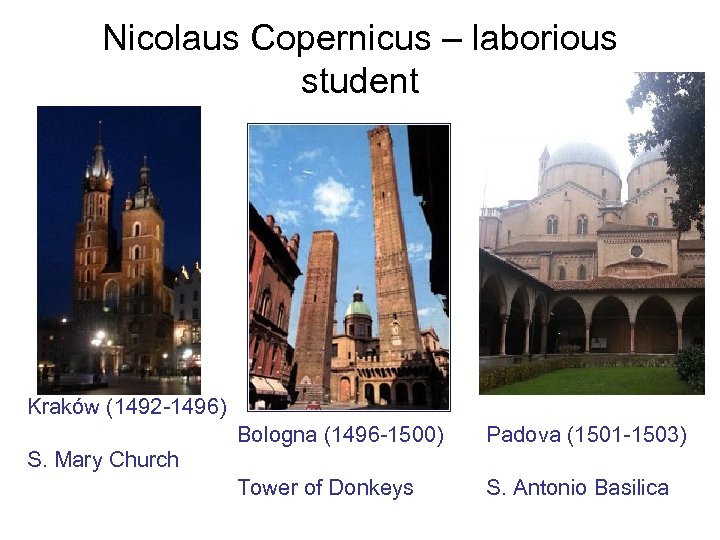
Nicolaus Copernicus – laborious student Kraków (1492 -1496) S. Mary Church Bologna (1496 -1500) Padova (1501 -1503) Tower of Donkeys S. Antonio Basilica
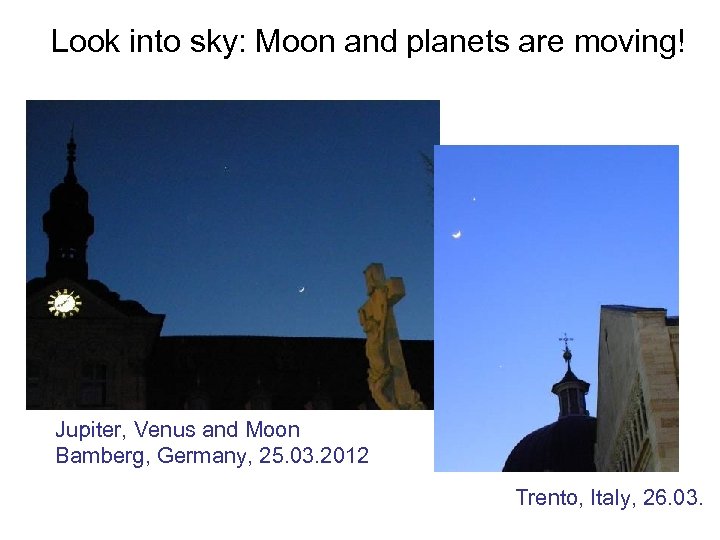
Look into sky: Moon and planets are moving! Jupiter, Venus and Moon Bamberg, Germany, 25. 03. 2012 Trento, Italy, 26. 03.
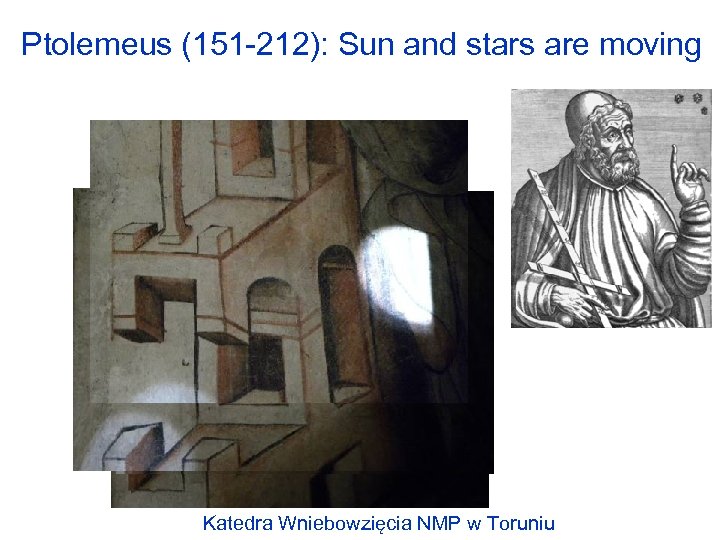
Ptolemeus (151 -212): Sun and stars are moving Katedra Wniebowzięcia NMP w Toruniu
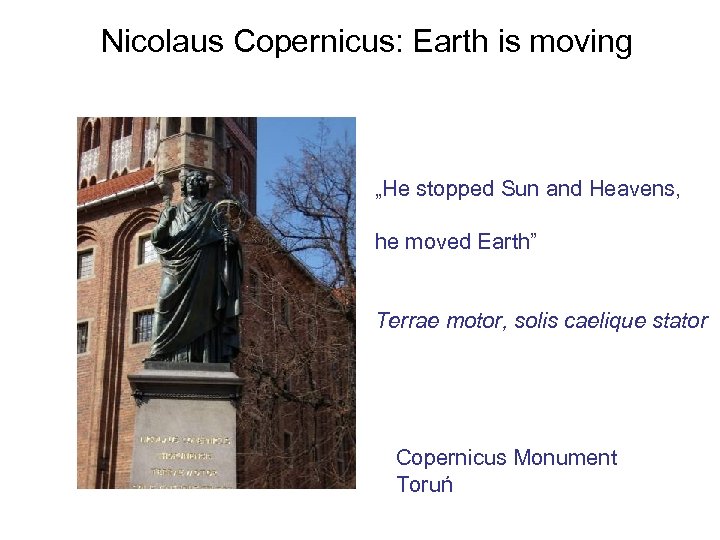
Nicolaus Copernicus: Earth is moving „He stopped Sun and Heavens, he moved Earth” Terrae motor, solis caelique stator Copernicus Monument Toruń
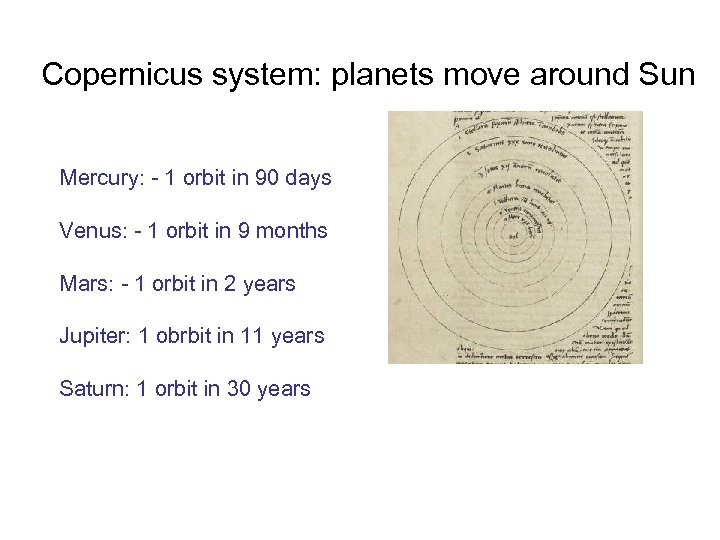
Copernicus system: planets move around Sun Mercury: - 1 orbit in 90 days Venus: - 1 orbit in 9 months Mars: - 1 orbit in 2 years Jupiter: 1 obrbit in 11 years Saturn: 1 orbit in 30 years
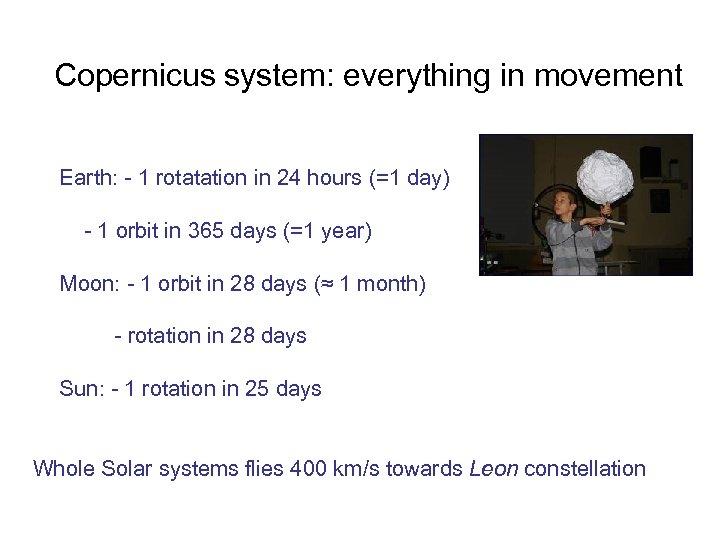
Copernicus system: everything in movement Earth: - 1 rotatation in 24 hours (=1 day) - 1 orbit in 365 days (=1 year) Moon: - 1 orbit in 28 days (≈ 1 month) - rotation in 28 days Sun: - 1 rotation in 25 days Whole Solar systems flies 400 km/s towards Leon constellation
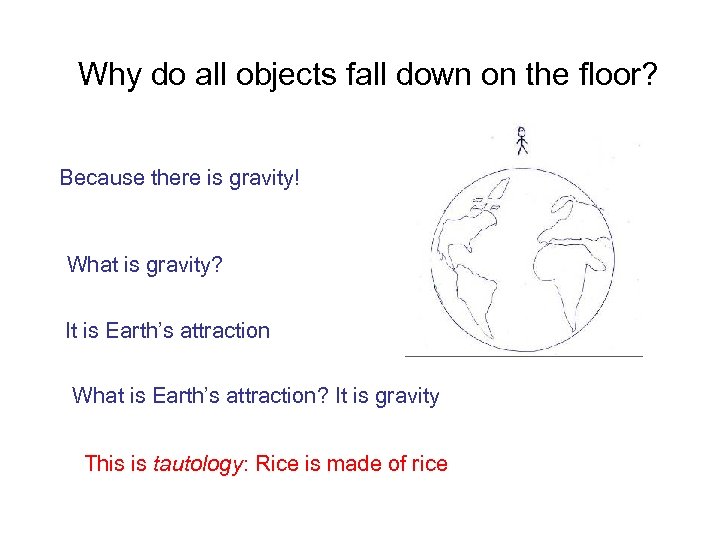
Why do all objects fall down on the floor? Because there is gravity! What is gravity? It is Earth’s attraction What is Earth’s attraction? It is gravity This is tautology: Rice is made of rice
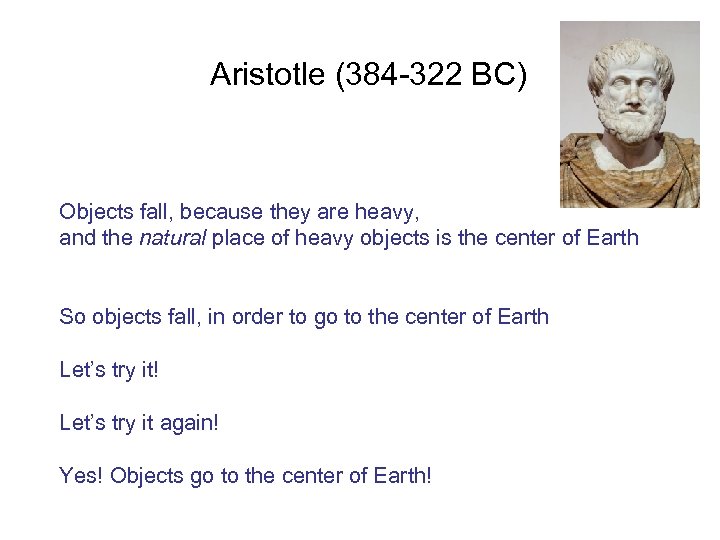
Aristotle (384 -322 BC) Objects fall, because they are heavy, and the natural place of heavy objects is the center of Earth So objects fall, in order to go to the center of Earth Let’s try it! Let’s try it again! Yes! Objects go to the center of Earth!
Can the ball jump up? And what about jumping up? http: //dydaktyka. fizyka. umk. pl/nowa_strona/? q=node/171 Have a look on this film! And again. . . No! it was a trick. The film was inverted. . .
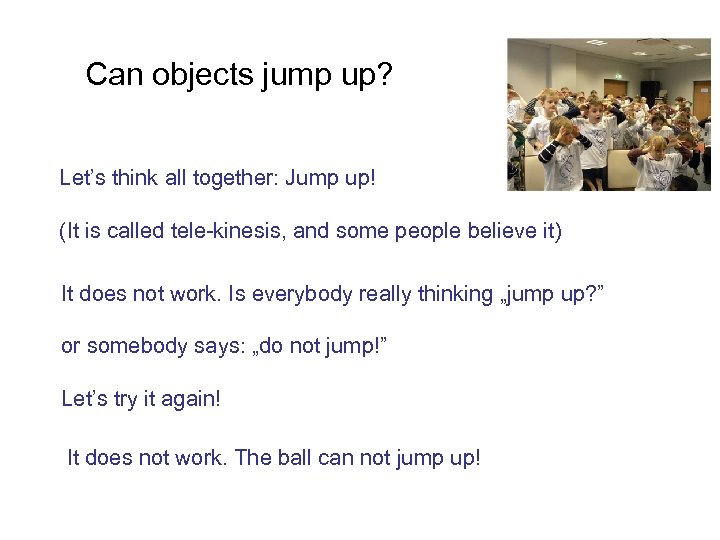
Can objects jump up? Let’s think all together: Jump up! (It is called tele-kinesis, and some people believe it) It does not work. Is everybody really thinking „jump up? ” or somebody says: „do not jump!” Let’s try it again! It does not work. The ball can not jump up!
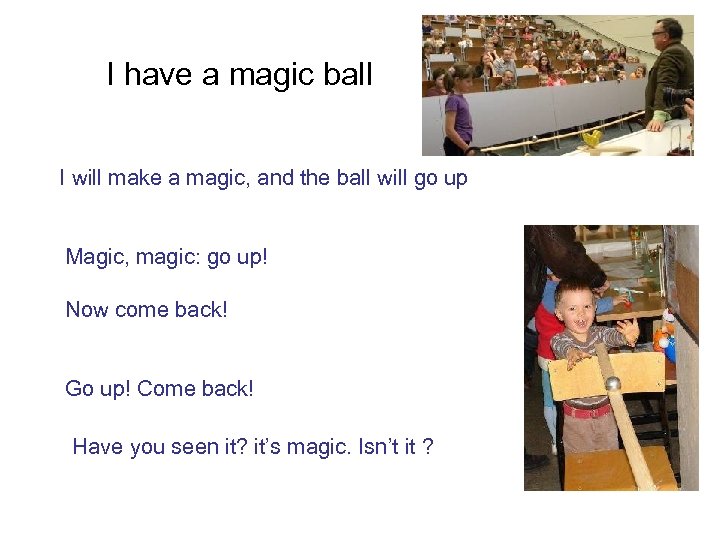
I have a magic ball I will make a magic, and the ball will go up Magic, magic: go up! Now come back! Go up! Come back! Have you seen it? it’s magic. Isn’t it ?
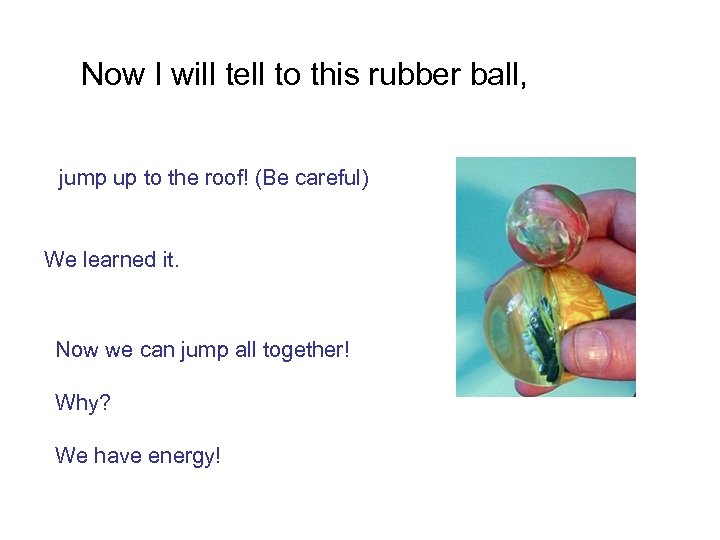
Now I will tell to this rubber ball, jump up to the roof! (Be careful) We learned it. Now we can jump all together! Why? We have energy!
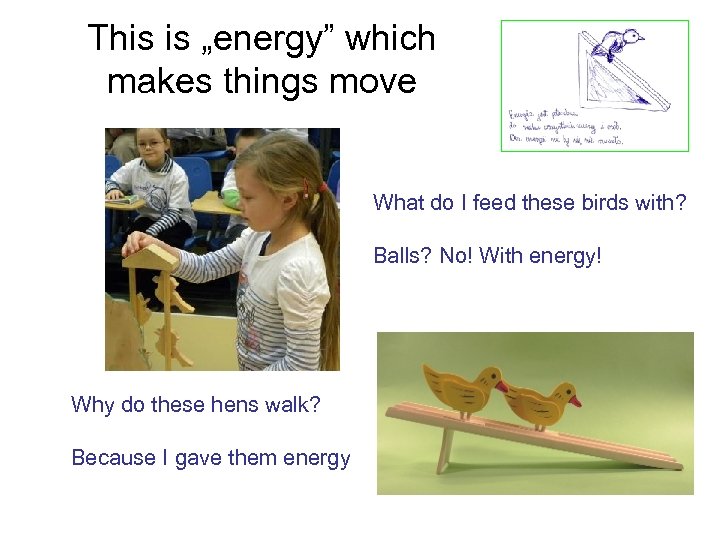
This is „energy” which makes things move What do I feed these birds with? Balls? No! With energy! Why do these hens walk? Because I gave them energy
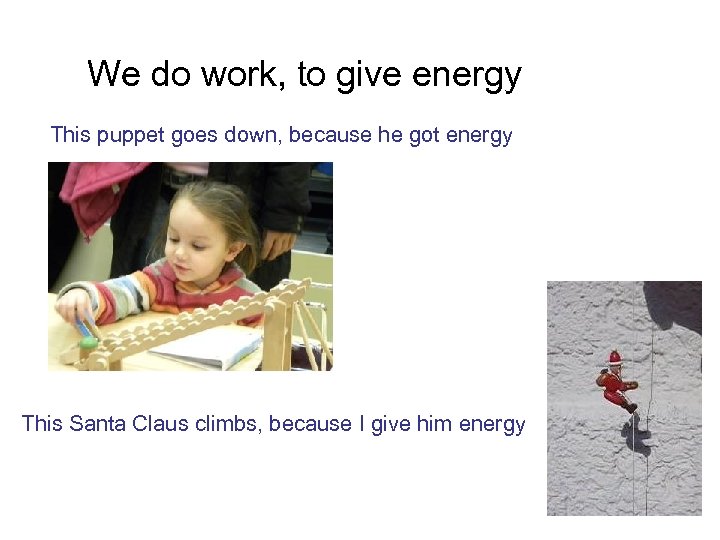
We do work, to give energy This puppet goes down, because he got energy This Santa Claus climbs, because I give him energy
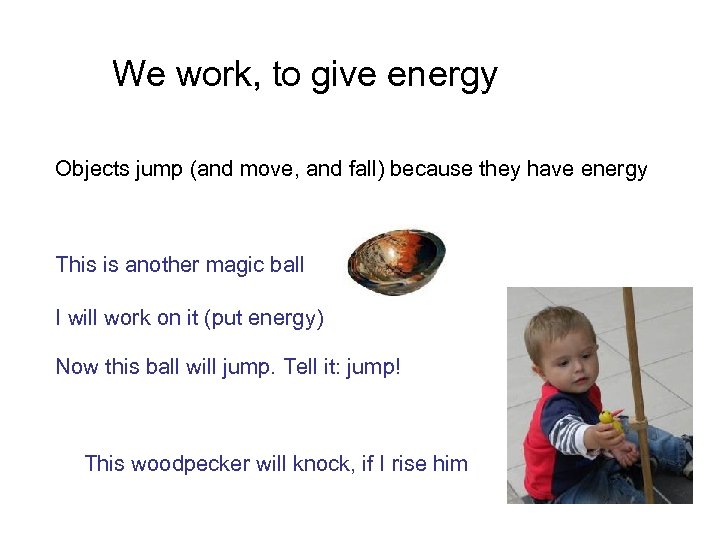
We work, to give energy Objects jump (and move, and fall) because they have energy This is another magic ball I will work on it (put energy) Now this ball will jump. Tell it: jump! This woodpecker will knock, if I rise him
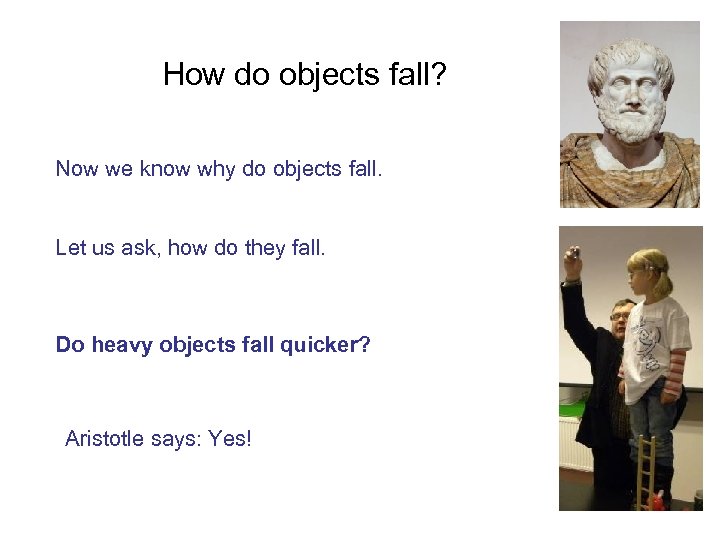
How do objects fall? Now we know why do objects fall. Let us ask, how do they fall. Do heavy objects fall quicker? Aristotle says: Yes!
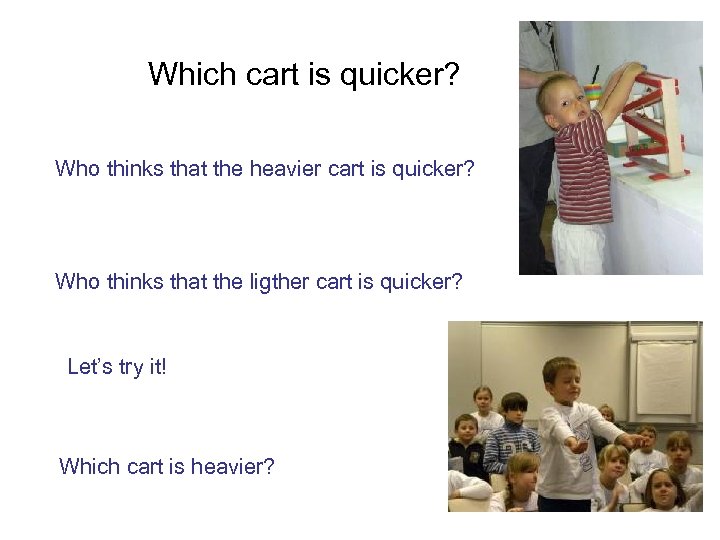
Which cart is quicker? Who thinks that the heavier cart is quicker? Who thinks that the ligther cart is quicker? Let’s try it! Which cart is heavier?
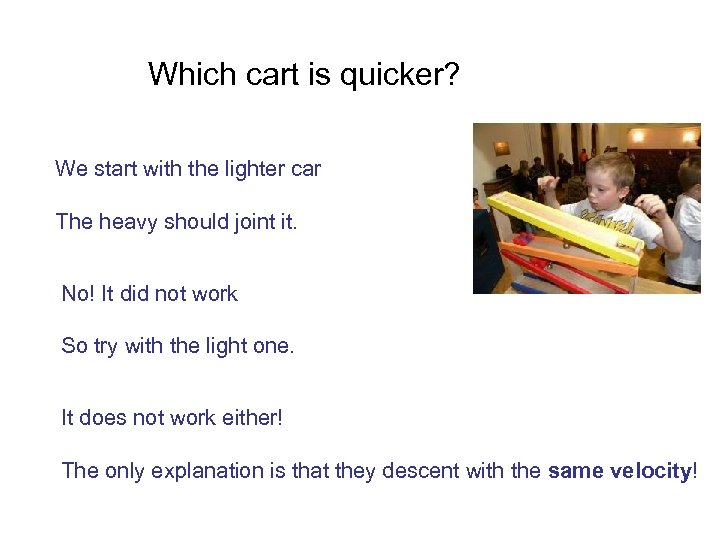
Which cart is quicker? We start with the lighter car The heavy should joint it. No! It did not work So try with the light one. It does not work either! The only explanation is that they descent with the same velocity!
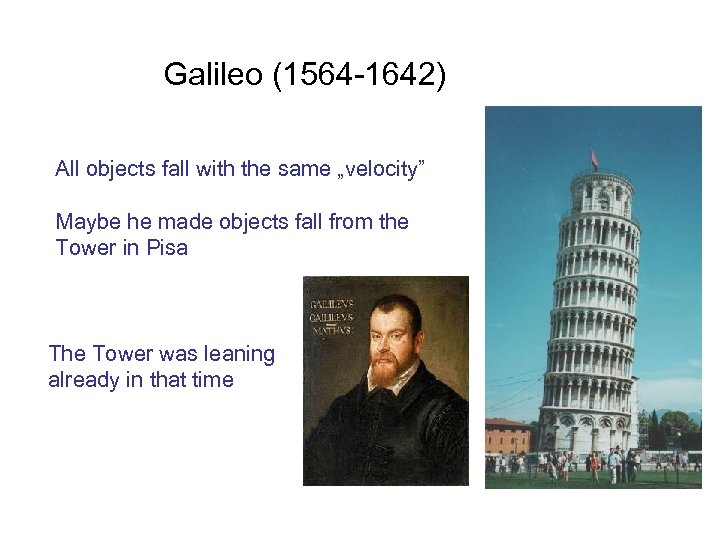
Galileo (1564 -1642) All objects fall with the same „velocity” Maybe he made objects fall from the Tower in Pisa The Tower was leaning already in that time
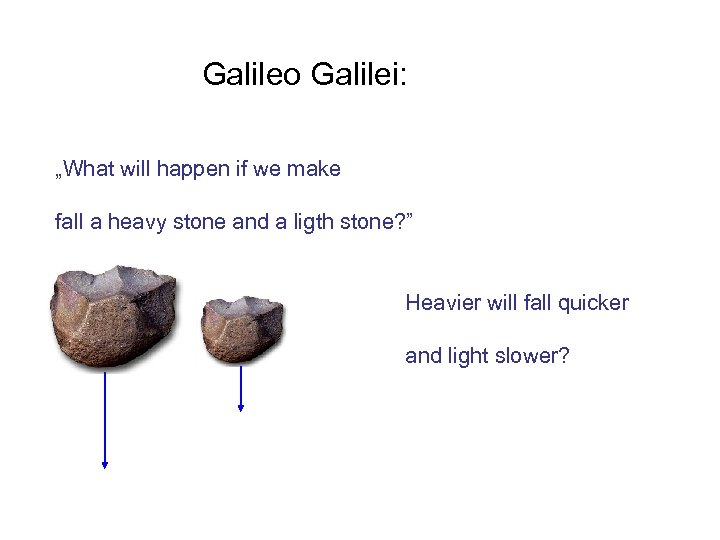
Galileo Galilei: „What will happen if we make fall a heavy stone and a ligth stone? ” Heavier will fall quicker and light slower?
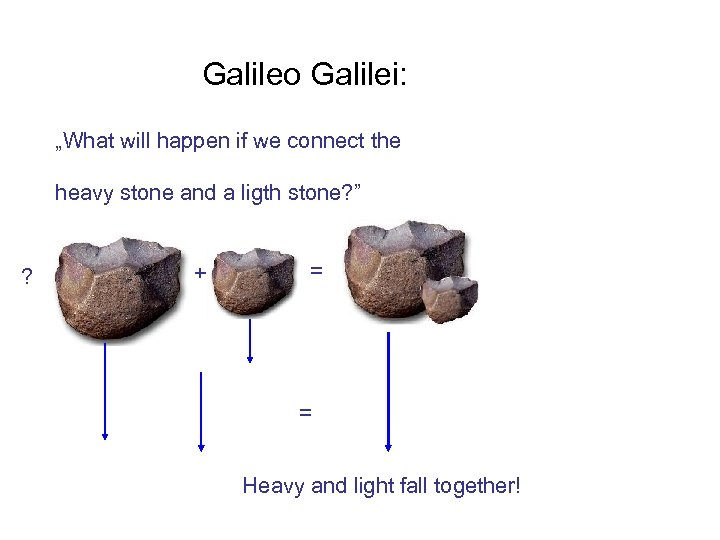
Galileo Galilei: „What will happen if we connect the heavy stone and a ligth stone? ” ? + = = Heavy and light fall together!
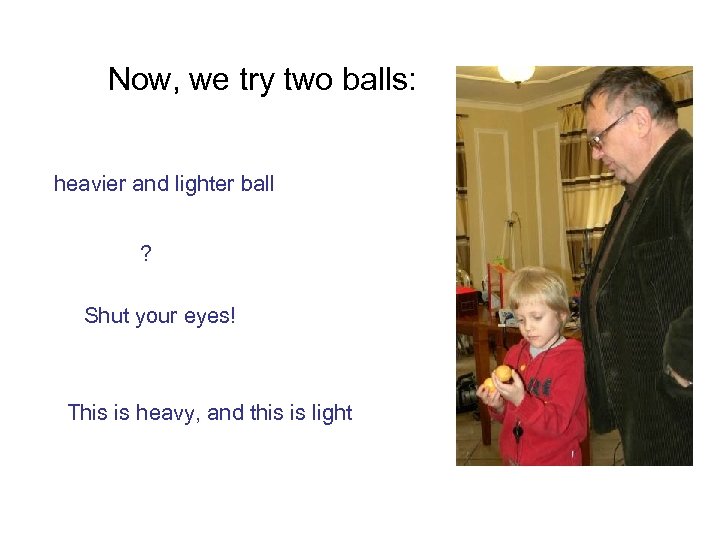
Now, we try two balls: heavier and lighter ball ? Shut your eyes! This is heavy, and this is light
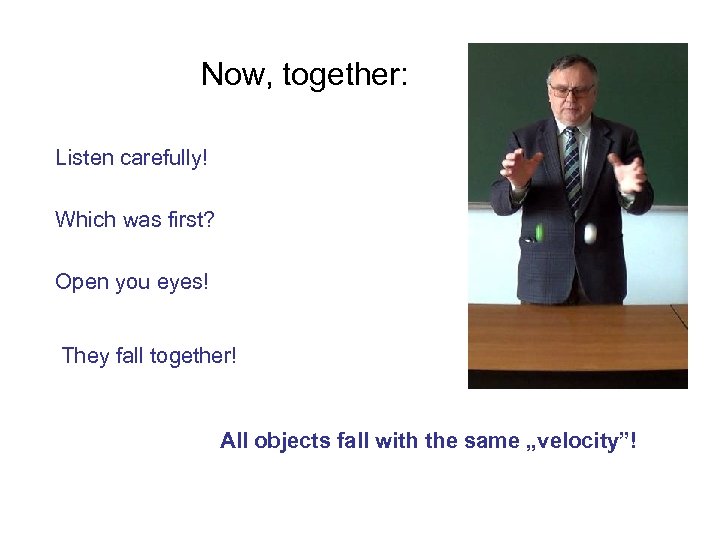
Now, together: Listen carefully! Which was first? Open you eyes! They fall together! All objects fall with the same „velocity”!
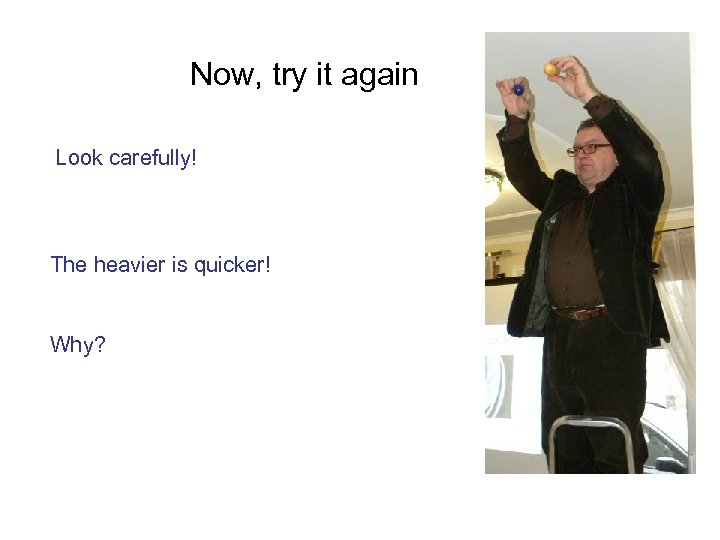
Now, try it again Look carefully! The heavier is quicker! Why?
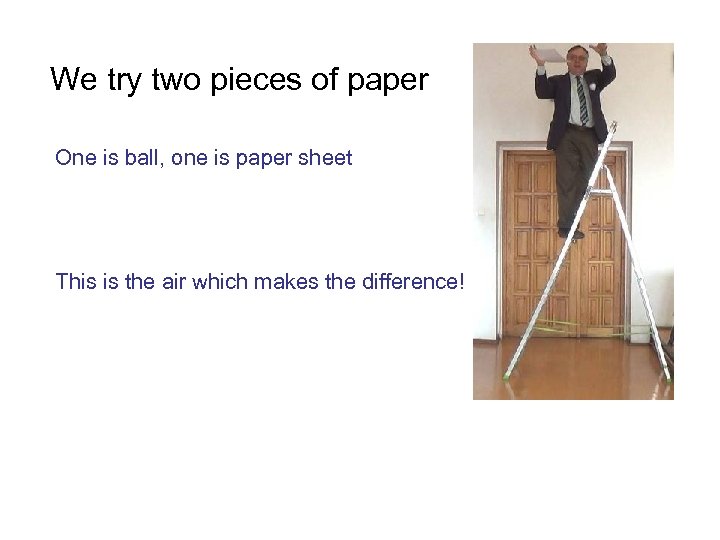
We try two pieces of paper One is ball, one is paper sheet This is the air which makes the difference!
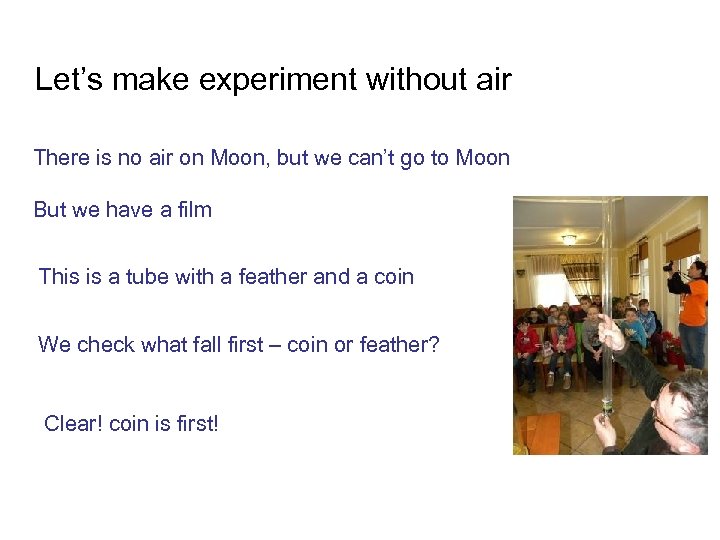
Let’s make experiment without air There is no air on Moon, but we can’t go to Moon But we have a film This is a tube with a feather and a coin We check what fall first – coin or feather? Clear! coin is first!
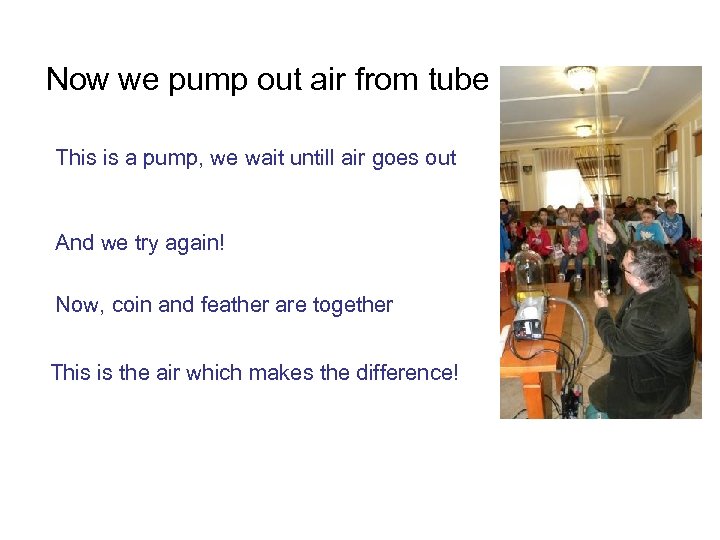
Now we pump out air from tube This is a pump, we wait untill air goes out And we try again! Now, coin and feather are together This is the air which makes the difference!
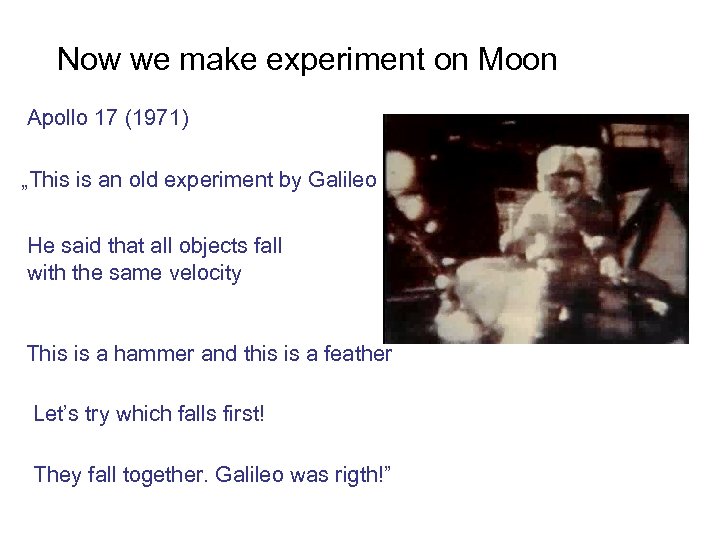
Now we make experiment on Moon Apollo 17 (1971) „This is an old experiment by Galileo He said that all objects fall with the same velocity This is a hammer and this is a feather Let’s try which falls first! They fall together. Galileo was rigth!”
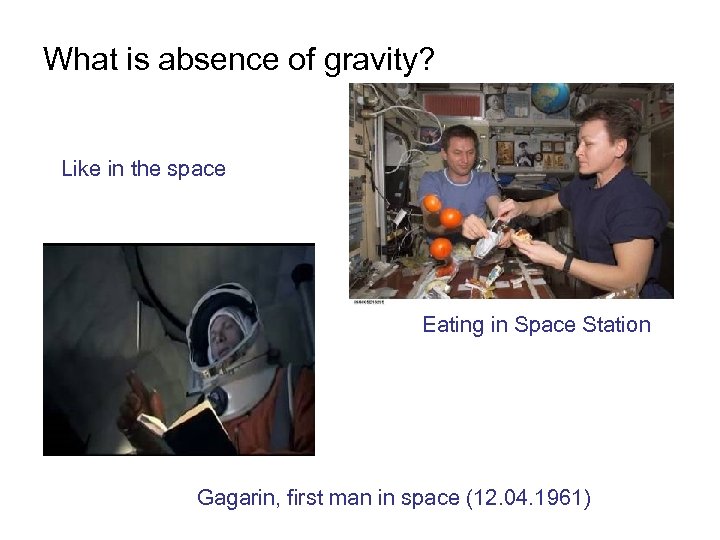
What is absence of gravity? Like in the space Eating in Space Station Gagarin, first man in space (12. 04. 1961)
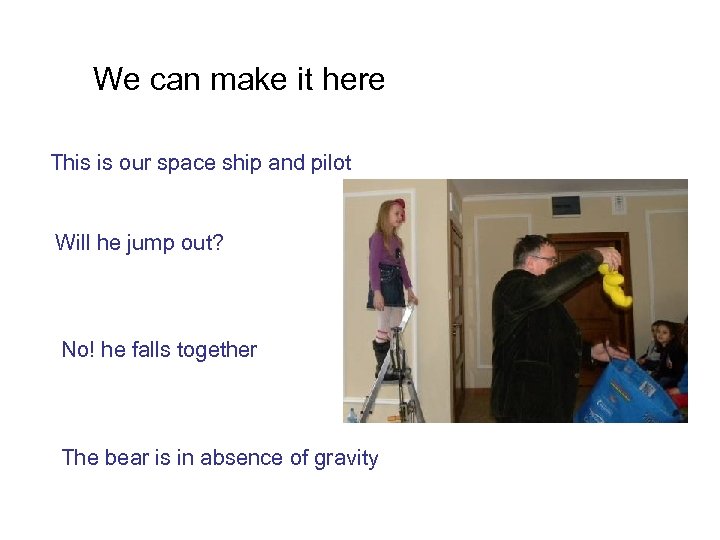
We can make it here This is our space ship and pilot Will he jump out? No! he falls together The bear is in absence of gravity
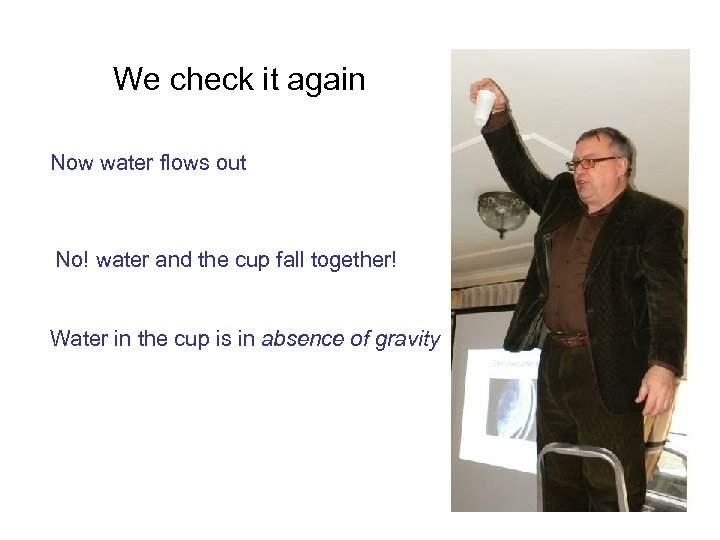
We check it again Now water flows out No! water and the cup fall together! Water in the cup is in absence of gravity
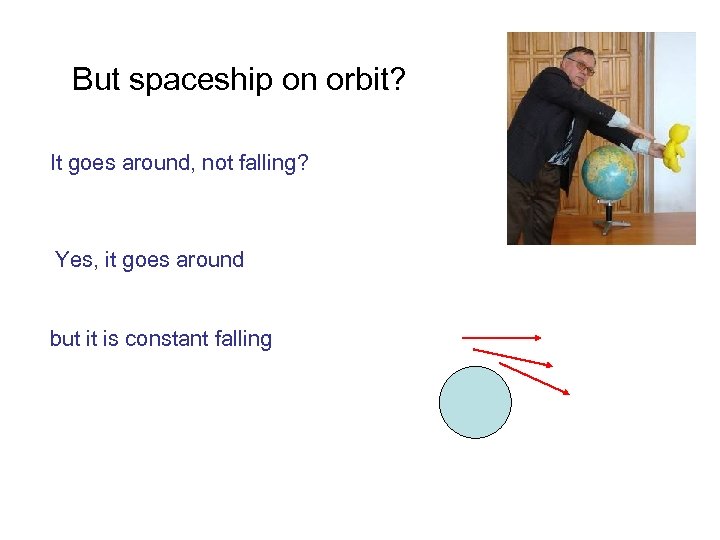
But spaceship on orbit? It goes around, not falling? Yes, it goes around but it is constant falling
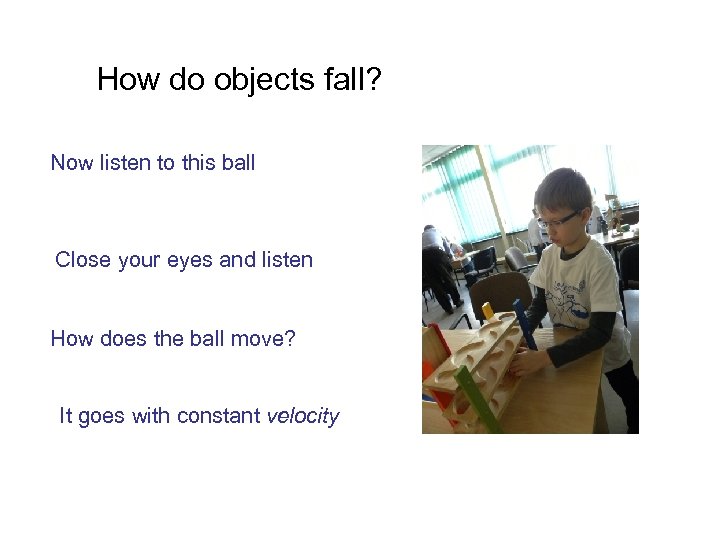
How do objects fall? Now listen to this ball Close your eyes and listen How does the ball move? It goes with constant velocity
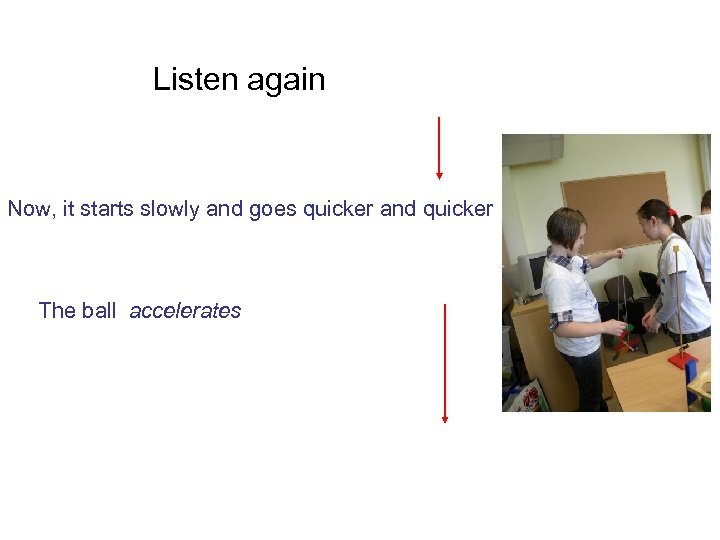
Listen again Now, it starts slowly and goes quicker and quicker The ball accelerates
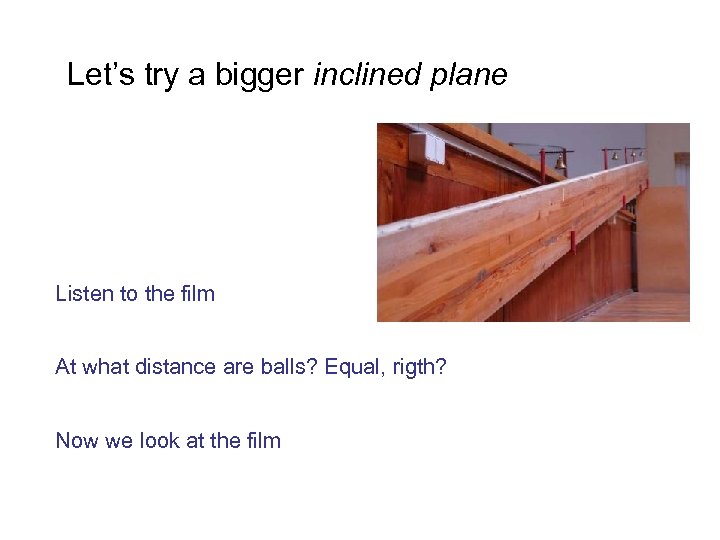
Let’s try a bigger inclined plane Listen to the film At what distance are balls? Equal, rigth? Now we look at the film
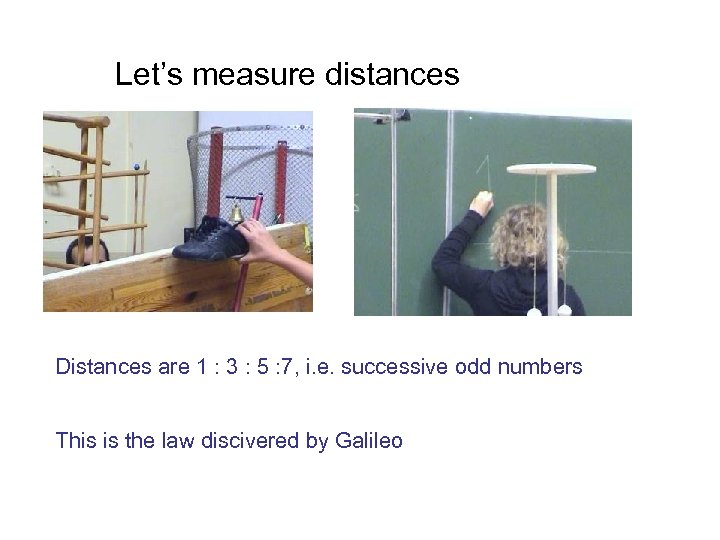
Let’s measure distances Distances are 1 : 3 : 5 : 7, i. e. successive odd numbers This is the law discivered by Galileo
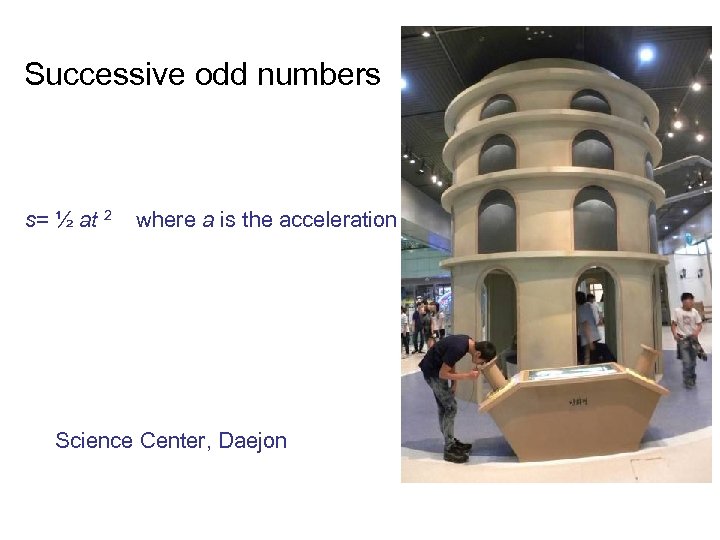
Successive odd numbers s= ½ at 2 where a is the acceleration Science Center, Daejon
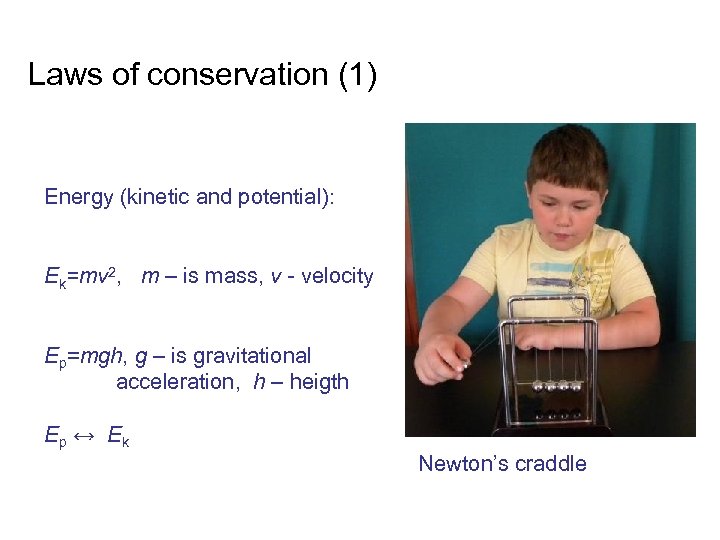
Laws of conservation (1) Energy (kinetic and potential): Ek=mv 2, m – is mass, v - velocity Ep=mgh, g – is gravitational acceleration, h – heigth Ep ↔ Ek Newton’s craddle
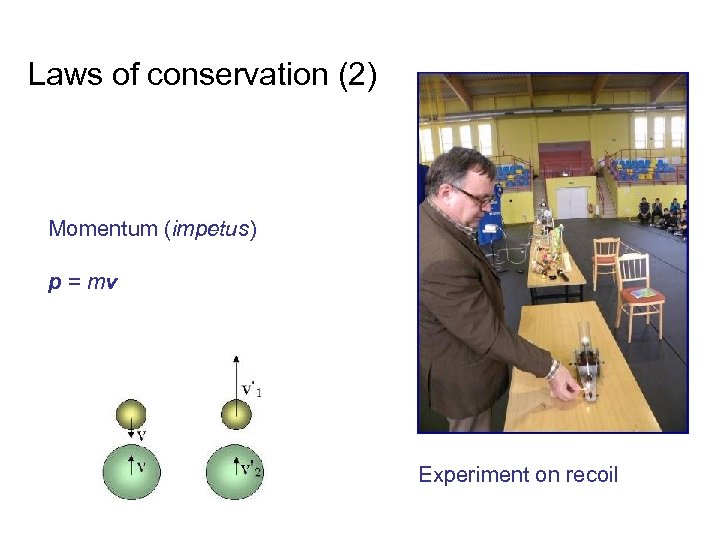
Laws of conservation (2) Momentum (impetus) p = mv Experiment on recoil
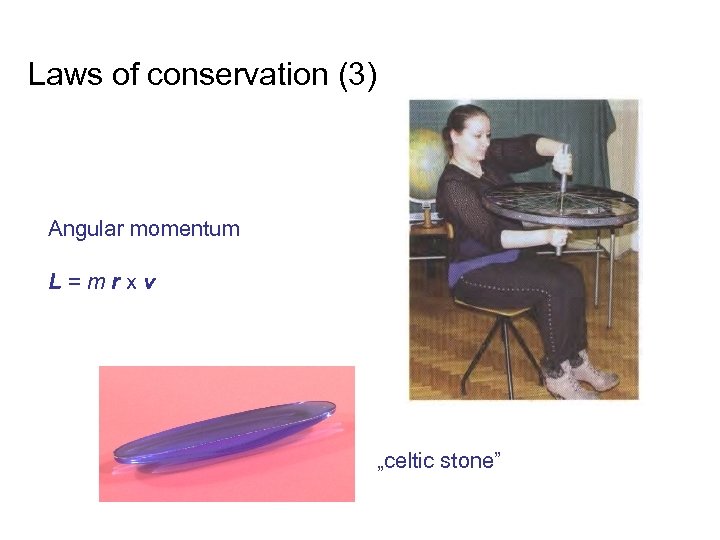
Laws of conservation (3) Angular momentum L = m r x v „celtic stone”
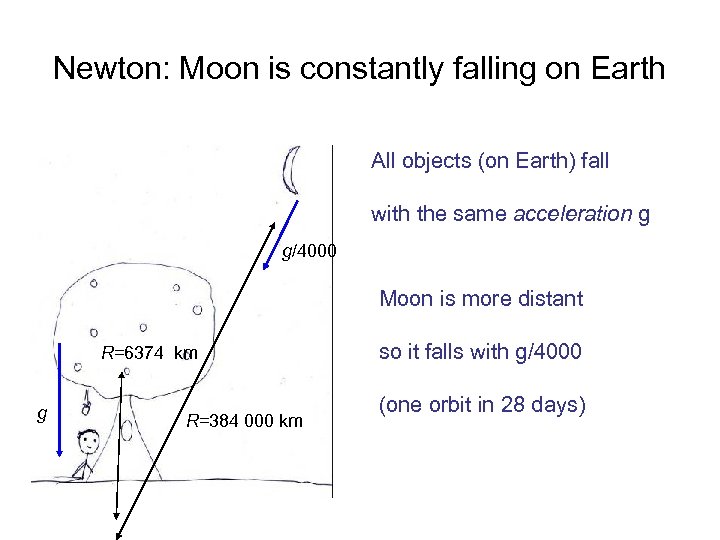
Newton: Moon is constantly falling on Earth All objects (on Earth) fall with the same acceleration g g/4000 Moon is more distant R=6374 km g R=384 000 km so it falls with g/4000 (one orbit in 28 days)
Physics is Fun! But physics is also discovery: Albert Einstein: How can we recognize real absence of gravity from free falling? → General theory of relativity (1915)
Скачать презентацию Physics is Fun Why do objects fall Grzegorz
6afd34223d831df078c9b52f1a8f521d.ppt