 Скачать презентацию Physician and Hospital Collaboration Reducing Harm Improving
7a4efc3bb08dd9c4c4415004e89c9fea.ppt
- Количество слайдов: 70



Physician and Hospital Collaboration: Reducing Harm & Improving Care Delivery Through Quality-based Incentives! Concurrent Session: 1. 04 Karen Boudreau, M. D. , Medical Director for Healthcare Quality Improvement Blue Cross Blue Shield of Massachusetts Carey Vinson, M. D. , M. P. M. , Vice President, Quality and Medical Performance Management, Highmark, Inc. Carol Wilhoit, M. D. , M. S. , Medical Director, Quality Improvement, Blue Cross Blue Shield of Illinois Rome (Skip) Walker, M. D. , Medical Director for Health & Preventive Services, Anthem Blue Cross Blue Shield of Virginia Matt Schuller, M. S. , R. H. I. A, Manager, Quality Initiatives, Blue. Cross Blue. Shield Association February 28, 2008
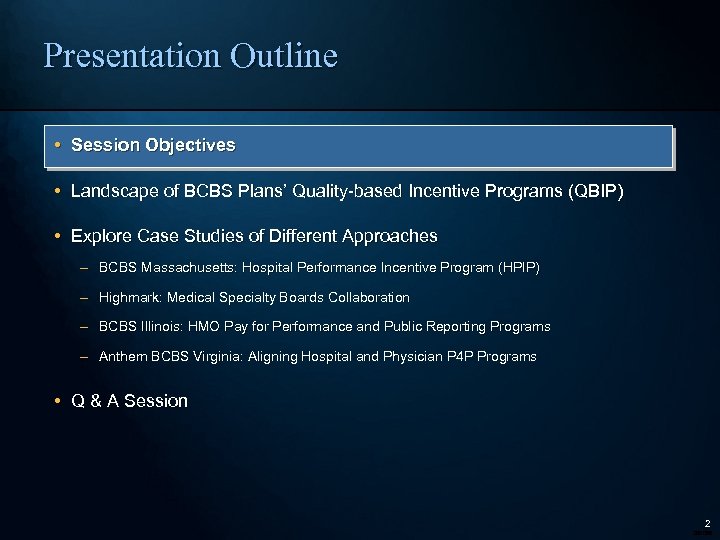
Presentation Outline • Session Objectives • Landscape of BCBS Plans’ Quality-based Incentive Programs (QBIP) • Explore Case Studies of Different Approaches – BCBS Massachusetts: Hospital Performance Incentive Program (HPIP) – Highmark: Medical Specialty Boards Collaboration – BCBS Illinois: HMO Pay for Performance and Public Reporting Programs – Anthem BCBS Virginia: Aligning Hospital and Physician P 4 P Programs • Q & A Session 2 280066
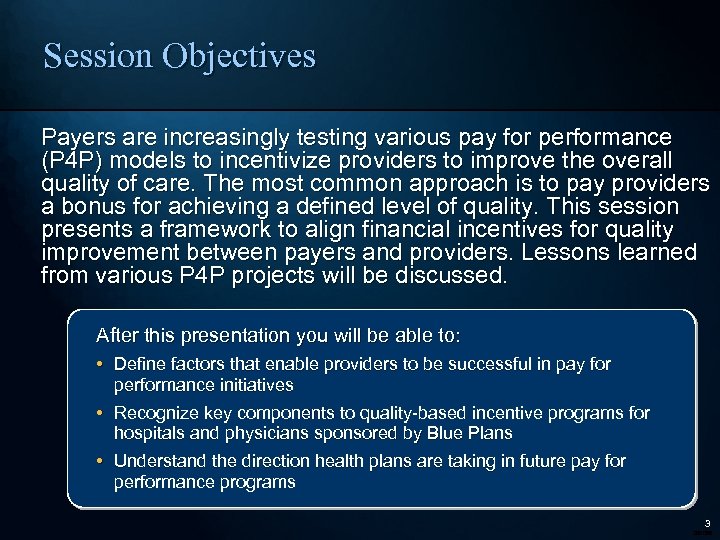
Session Objectives Payers are increasingly testing various pay for performance (P 4 P) models to incentivize providers to improve the overall quality of care. The most common approach is to pay providers a bonus for achieving a defined level of quality. This session presents a framework to align financial incentives for quality improvement between payers and providers. Lessons learned from various P 4 P projects will be discussed. After this presentation you will be able to: • Define factors that enable providers to be successful in pay for performance initiatives • Recognize key components to quality-based incentive programs for hospitals and physicians sponsored by Blue Plans • Understand the direction health plans are taking in future pay for performance programs 3 280066
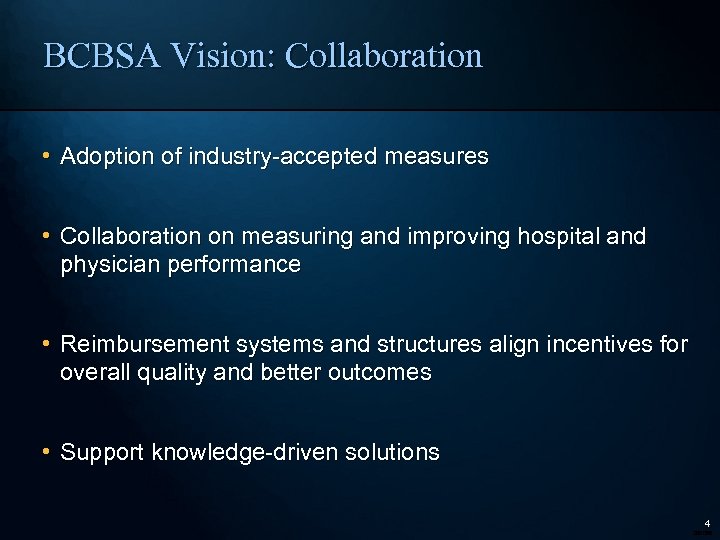
BCBSA Vision: Collaboration • Adoption of industry-accepted measures • Collaboration on measuring and improving hospital and physician performance • Reimbursement systems and structures align incentives for overall quality and better outcomes • Support knowledge-driven solutions 4 280066
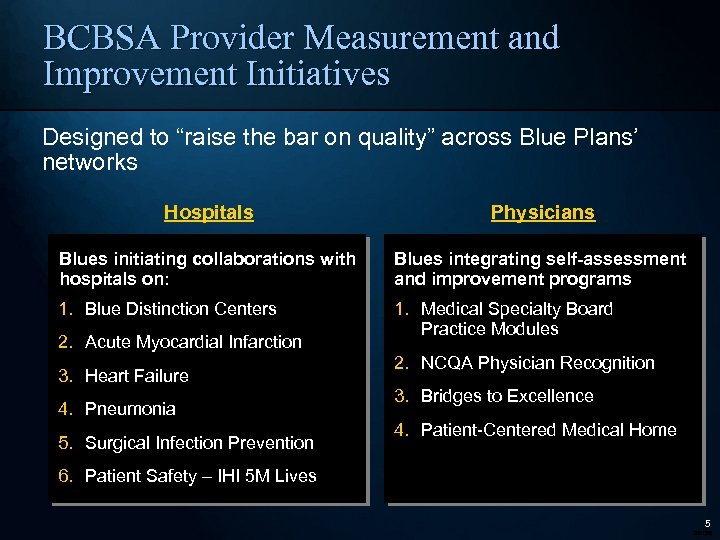
BCBSA Provider Measurement and Improvement Initiatives Designed to “raise the bar on quality” across Blue Plans’ networks Hospitals Physicians Blues initiating collaborations with hospitals on: Blues integrating self-assessment and improvement programs 1. Blue Distinction Centers 1. Medical Specialty Board Practice Modules 2. Acute Myocardial Infarction 3. Heart Failure 4. Pneumonia 5. Surgical Infection Prevention 2. NCQA Physician Recognition 3. Bridges to Excellence 4. Patient-Centered Medical Home 6. Patient Safety – IHI 5 M Lives 5 280066
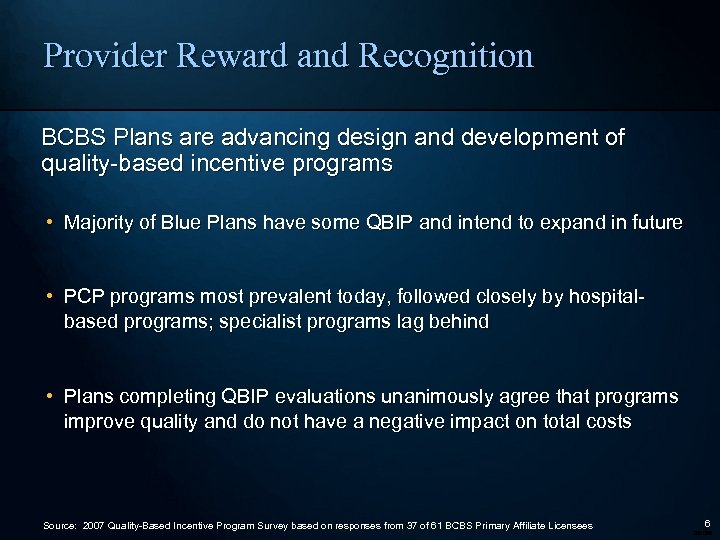
Provider Reward and Recognition BCBS Plans are advancing design and development of quality-based incentive programs • Majority of Blue Plans have some QBIP and intend to expand in future • PCP programs most prevalent today, followed closely by hospitalbased programs; specialist programs lag behind • Plans completing QBIP evaluations unanimously agree that programs improve quality and do not have a negative impact on total costs Source: 2007 Quality-Based Incentive Program Survey based on responses from 37 of 61 BCBS Primary Affiliate Licensees 6 280066
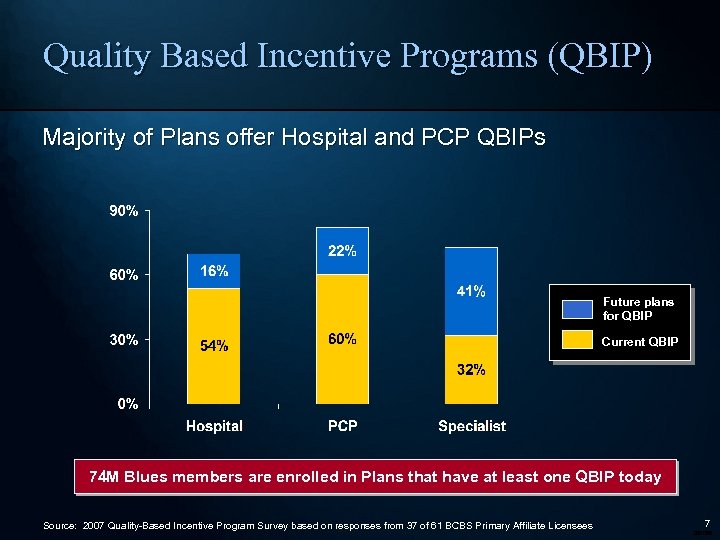
Quality Based Incentive Programs (QBIP) Majority of Plans offer Hospital and PCP QBIPs Future plans for QBIP Current QBIP 74 M Blues members are enrolled in Plans that have at least one QBIP today Source: 2007 Quality-Based Incentive Program Survey based on responses from 37 of 61 BCBS Primary Affiliate Licensees 7 280066
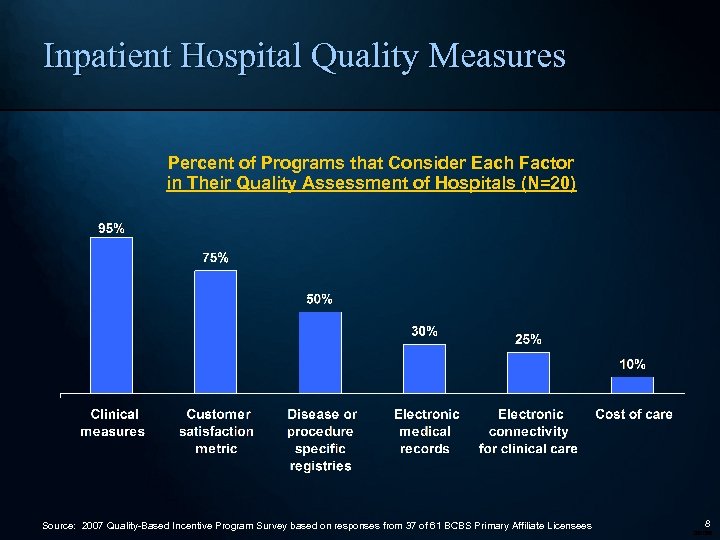
Inpatient Hospital Quality Measures Percent of Programs that Consider Each Factor in Their Quality Assessment of Hospitals (N=20) Source: 2007 Quality-Based Incentive Program Survey based on responses from 37 of 61 BCBS Primary Affiliate Licensees 8 280066
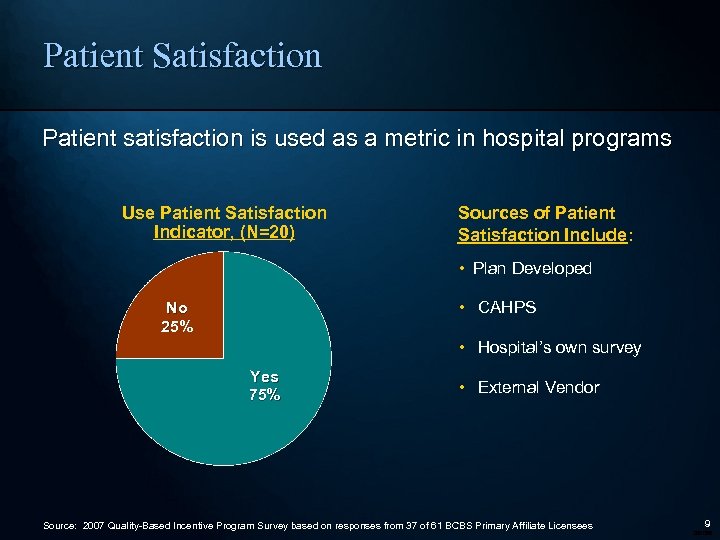
Patient Satisfaction Patient satisfaction is used as a metric in hospital programs Use Patient Satisfaction Indicator, (N=20) Sources of Patient Satisfaction Include: • Plan Developed • CAHPS No 25% • Hospital’s own survey Yes 75% • External Vendor Source: 2007 Quality-Based Incentive Program Survey based on responses from 37 of 61 BCBS Primary Affiliate Licensees 9 280066
Reducing Harm and Improving Care Delivery Through Unprecedented Collaboration and Quality-based Incentives Karen M. Boudreau, M. D. Blue Cross Blue Shield of Massachusetts February 28, 2008
Our Promise To Always Put Our Members’ Health First 11 280066
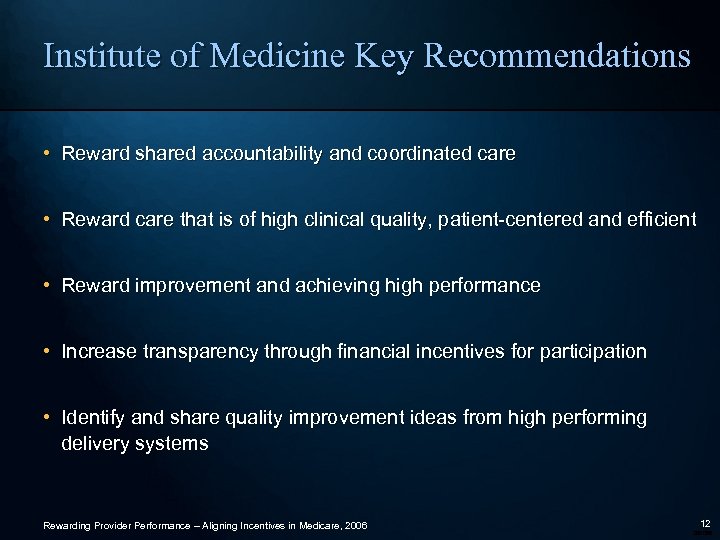
Institute of Medicine Key Recommendations • Reward shared accountability and coordinated care • Reward care that is of high clinical quality, patient-centered and efficient • Reward improvement and achieving high performance • Increase transparency through financial incentives for participation • Identify and share quality improvement ideas from high performing delivery systems Rewarding Provider Performance – Aligning Incentives in Medicare, 2006 12 280066
Pay for Performance: Objectives • Reward high quality providers • Accelerate implementation of known quality and safety practices • Support innovation • Promote better care and outcomes • Align goals of Providers and Payors 13 280066
Pay for Performance: Criticisms • Physicians, Nurses and other Healthcare Professionals are just that Professionals – incentives are degrading • Incentives are too small – not worth the effort and resources needed to improve • Measures used are faulty • Patient compliance varies by socio-economic segments 14 280066
Leading Thinkers’ Support The Problem: The fee for service system rewards overuse and duplication of services. . . without rewarding prevention of avoidable hospitalizations, control of chronic conditions or care coordination. The Solution: Payment systems that reward both the quality and efficiency of care. Karen Davis, President, The Commonwealth Fund, March 2007 15 280066
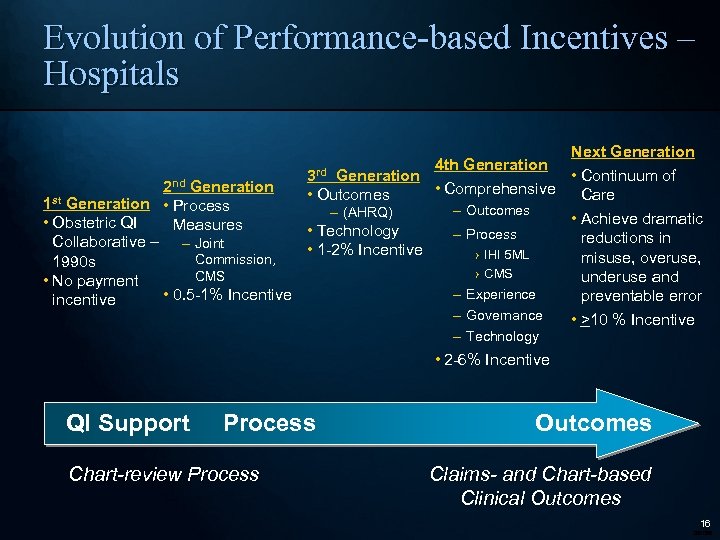
Evolution of Performance-based Incentives – Hospitals Next Generation 4 th Generation • Continuum of 3 rd Generation • Comprehensive • Outcomes Care 2 nd Generation 1 st Generation • Process – (AHRQ) • Obstetric QI Measures • Technology Collaborative – – Joint • 1 -2% Incentive Commission, 1990 s CMS • No payment • 0. 5 -1% Incentive incentive – Outcomes – Process › IHI 5 ML › CMS – Experience – Governance – Technology • Achieve dramatic reductions in misuse, overuse, underuse and preventable error • >10 % Incentive • 2 -6% Incentive QI Support Process Chart-review Process Outcomes Claims- and Chart-based Clinical Outcomes 16 280066
Guiding Principles for Selecting Performance Measures • Nationally accepted standard measure set • Clinically important • Provides stable and reliable information at the level reported (hospital, physician) • Provider participation in development and validation of measures – Opportunity for providers to examine their own data • Overall goal – Safe, affordable, effective, patient-centered – Patient experience, process, outcome – Pay for improvement and for reaching absolute performance 17 280066
Hospital Performance Improvement Program Goals • Improve the overall quality of care our members receive • Accelerate performance improvement activities • Identify opportunities that represent shared priorities for Plan and hospital • Identify and share best practices • Use quality performance incentives to support and recognize hospitals’ active participation in data driven, outcome oriented performance improvement processes • By-product is to elevate the “importance of quality” in hospital strategic and financial planning discussions 18 280066
Improving Hospital Quality Building Momentum When There’s So Much To Do • Recognize that today’s hospitals are responsible for approximately 400 quality measures from numerous organizations (Joint Commission, CMS, State Governments, Plans, Patients First…) • Reflect national measurement agenda and include clinical areas of high importance • Inclusion of IHI Campaign measures (pay-for-process, pay-forreporting) promotes campaign participation, self-measurement and adoption of evidence-based improvement strategies • Annual revision of the program based on our experience and feedback from hospitals 19 280066
Measure Selection and Goal-setting • Highly individualized at the hospital level – Comprehensive reporting of AHRQ patient safety indicators and CMS process measures by cohort (academic, large, medium and small community hospital) – Hospitals encouraged to look at measures with most opportunity › Look specifically at the patients in the numerator to determine potential for impact • Measures and goals ultimately chosen based on attainable, clinically and statistically meaningful improvement potential and alignment with QI priorities • Mutually agreed-upon targets aim to progressively bring performance to top deciles • Process meets BCBSMA Guiding Principles and IOM Recommendation of rewarding improvement/achieving high performance 20 280066
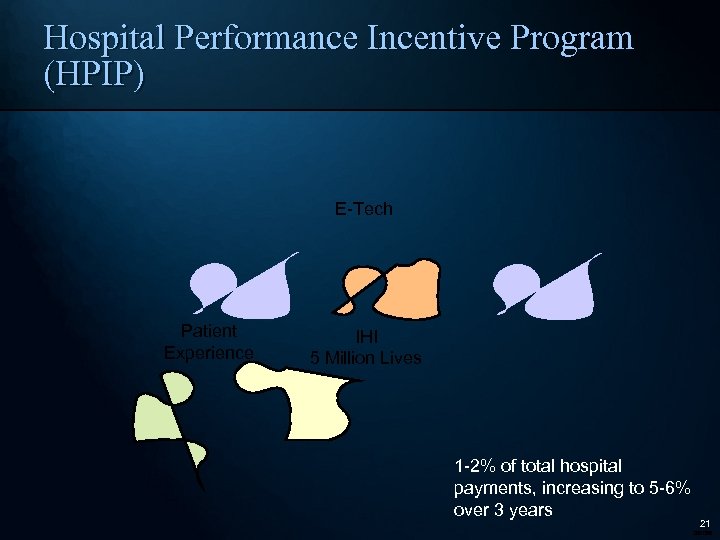
Hospital Performance Incentive Program (HPIP) E-Tech Patient Experience IHI 5 Million Lives 1 -2% of total hospital payments, increasing to 5 -6% over 3 years 21 280066
The 5 Million Lives Campaign 22 280066
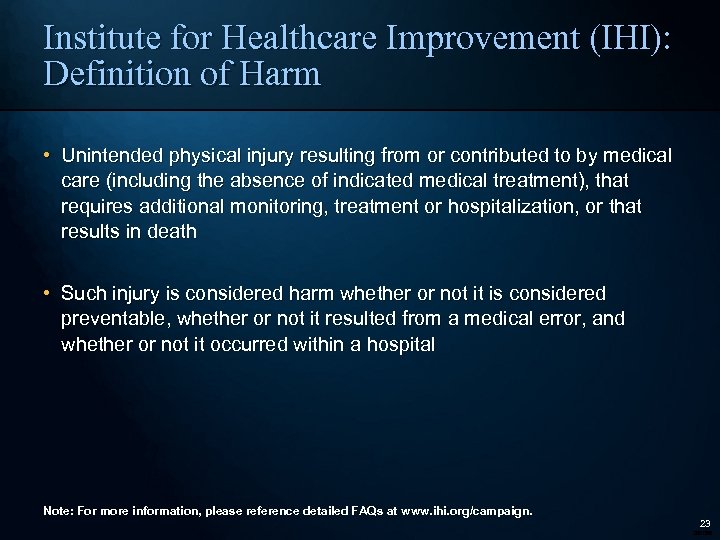
Institute for Healthcare Improvement (IHI): Definition of Harm • Unintended physical injury resulting from or contributed to by medical care (including the absence of indicated medical treatment), that requires additional monitoring, treatment or hospitalization, or that results in death • Such injury is considered harm whether or not it is considered preventable, whether or not it resulted from a medical error, and whether or not it occurred within a hospital Note: For more information, please reference detailed FAQs at www. ihi. org/campaign. 23 280066
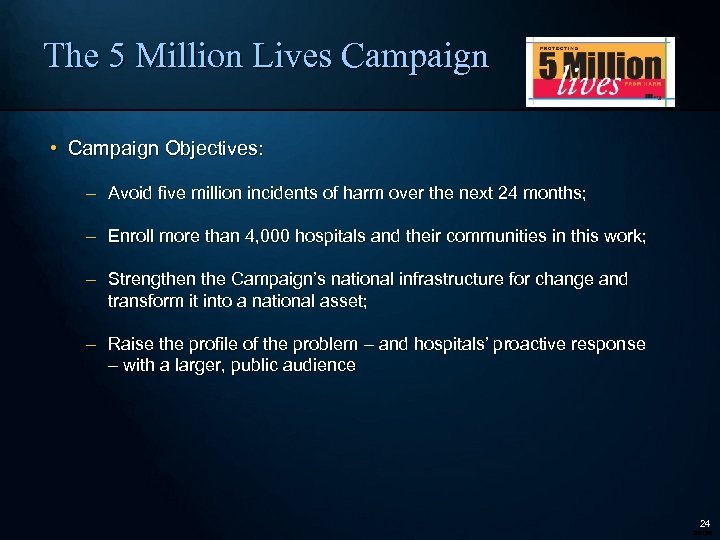
The 5 Million Lives Campaign • Campaign Objectives: – Avoid five million incidents of harm over the next 24 months; – Enroll more than 4, 000 hospitals and their communities in this work; – Strengthen the Campaign’s national infrastructure for change and transform it into a national asset; – Raise the profile of the problem – and hospitals’ proactive response – with a larger, public audience 24 280066
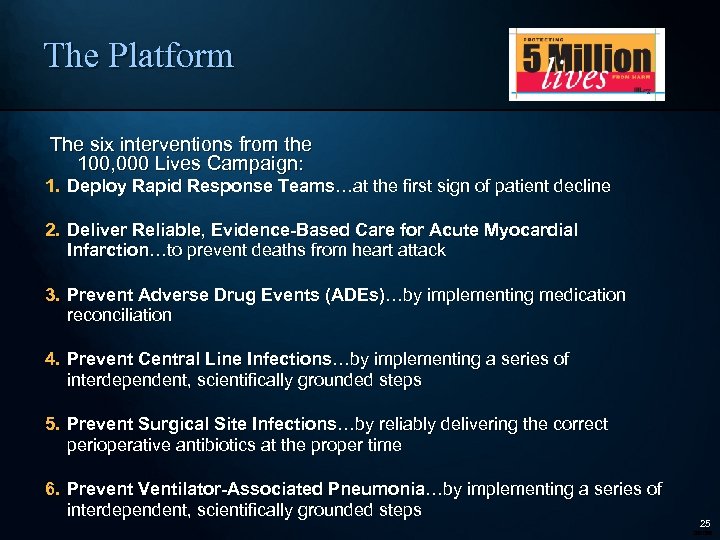
The Platform The six interventions from the 100, 000 Lives Campaign: 1. Deploy Rapid Response Teams…at the first sign of patient decline 2. Deliver Reliable, Evidence-Based Care for Acute Myocardial Infarction…to prevent deaths from heart attack 3. Prevent Adverse Drug Events (ADEs)…by implementing medication reconciliation 4. Prevent Central Line Infections…by implementing a series of interdependent, scientifically grounded steps 5. Prevent Surgical Site Infections…by reliably delivering the correct perioperative antibiotics at the proper time 6. Prevent Ventilator-Associated Pneumonia…by implementing a series of interdependent, scientifically grounded steps 25 280066
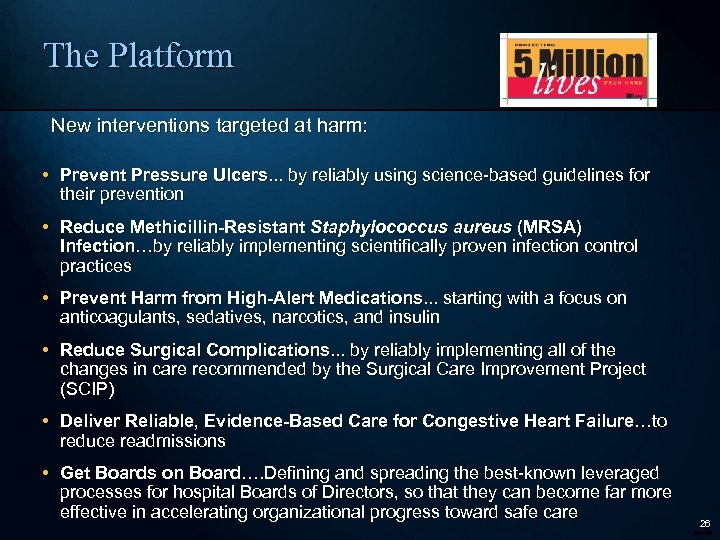
The Platform New interventions targeted at harm: • Prevent Pressure Ulcers. . . by reliably using science-based guidelines for their prevention • Reduce Methicillin-Resistant Staphylococcus aureus (MRSA) Infection…by reliably implementing scientifically proven infection control practices • Prevent Harm from High-Alert Medications. . . starting with a focus on anticoagulants, sedatives, narcotics, and insulin • Reduce Surgical Complications. . . by reliably implementing all of the changes in care recommended by the Surgical Care Improvement Project (SCIP) • Deliver Reliable, Evidence-Based Care for Congestive Heart Failure…to reduce readmissions • Get Boards on Board…. Defining and spreading the best-known leveraged processes for hospital Boards of Directors, so that they can become far more effective in accelerating organizational progress toward safe care 26 280066
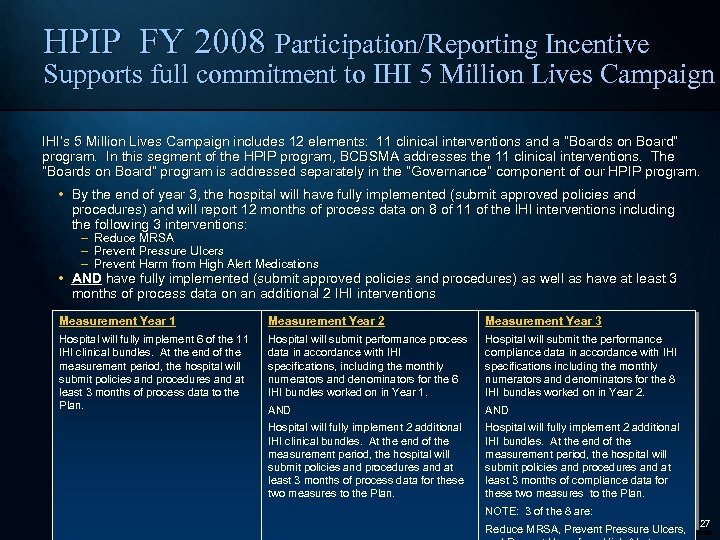
HPIP FY 2008 Participation/Reporting Incentive Supports full commitment to IHI 5 Million Lives Campaign IHI’s 5 Million Lives Campaign includes 12 elements: 11 clinical interventions and a “Boards on Board” program. In this segment of the HPIP program, BCBSMA addresses the 11 clinical interventions. The “Boards on Board” program is addressed separately in the “Governance” component of our HPIP program. • By the end of year 3, the hospital will have fully implemented (submit approved policies and procedures) and will report 12 months of process data on 8 of 11 of the IHI interventions including the following 3 interventions: – Reduce MRSA – Prevent Pressure Ulcers – Prevent Harm from High Alert Medications • AND have fully implemented (submit approved policies and procedures) as well as have at least 3 months of process data on an additional 2 IHI interventions Measurement Year 1 Measurement Year 2 Measurement Year 3 Hospital will fully implement 6 of the 11 IHI clinical bundles. At the end of the measurement period, the hospital will submit policies and procedures and at least 3 months of process data to the Plan. Hospital will submit performance process data in accordance with IHI specifications, including the monthly numerators and denominators for the 6 IHI bundles worked on in Year 1. Hospital will submit the performance compliance data in accordance with IHI specifications including the monthly numerators and denominators for the 8 IHI bundles worked on in Year 2. AND Hospital will fully implement 2 additional IHI clinical bundles. At the end of the measurement period, the hospital will submit policies and procedures and at least 3 months of process data for these two measures to the Plan. Hospital will fully implement 2 additional IHI bundles. At the end of the measurement period, the hospital will submit policies and procedures and at least 3 months of compliance data for these two measures to the Plan. NOTE: 3 of the 8 are: Reduce MRSA, Prevent Pressure Ulcers, 27 280066
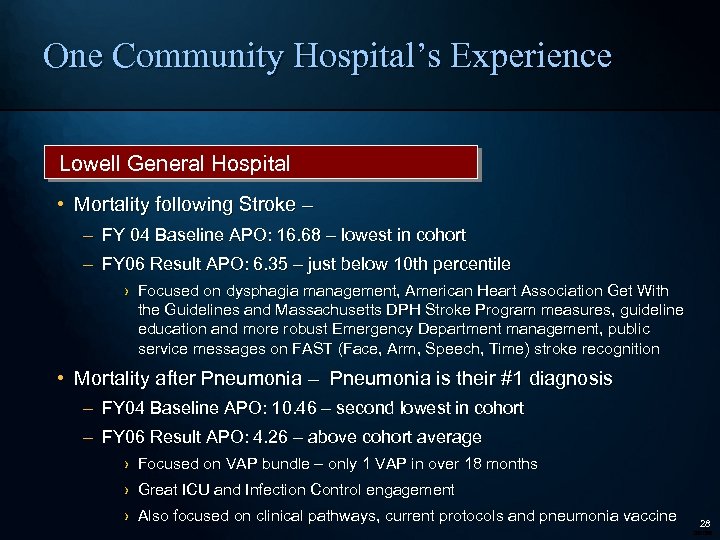
One Community Hospital’s Experience Lowell General Hospital • Mortality following Stroke – – FY 04 Baseline APO: 16. 68 – lowest in cohort – FY 06 Result APO: 6. 35 – just below 10 th percentile › Focused on dysphagia management, American Heart Association Get With the Guidelines and Massachusetts DPH Stroke Program measures, guideline education and more robust Emergency Department management, public service messages on FAST (Face, Arm, Speech, Time) stroke recognition • Mortality after Pneumonia – Pneumonia is their #1 diagnosis – FY 04 Baseline APO: 10. 46 – second lowest in cohort – FY 06 Result APO: 4. 26 – above cohort average › Focused on VAP bundle – only 1 VAP in over 18 months › Great ICU and Infection Control engagement › Also focused on clinical pathways, current protocols and pneumonia vaccine 28 280066
What Do We Hear From Hospitals? • You’re the only plan that really engages us on quality • This program has fundamentally changed the conversations in our hospital • Quality Forum attendance has increased annually – Participants highly satisfied with the conference – Provides opportunities for networking among hospitals “Thank you so much for meeting with us this morning and planting the seeds for improvement into the heads of those in attendance. Your clear explanation of the report helped everyone in their understanding of the data and the financial impact it has now and in the future…oh…and of course…improved patient care. ” – Cathy Carvin, Director of Quality Management, Quincy Medical Center 29 280066
Pay for Performance Where Is It Heading? BCBSMA has made a commitment to substantially increase the amount of money made available to providers through our incentive programs • Promote higher quality, better overall outcomes and more cost-effective care • Performance-based increases are eclipsing traditional inflationary cost adjustments Measurement Evolution – • Physicians and hospitals need to be able to see not only how individual patients are doing but how their full patient populations are doing as well. • With overall performance on individual “process measures” at very high levels, “allor-nothing” or composite measures play increasingly important role • Outcomes Focus –Movement away from claims data towards tracking and responding to one’s own data – real-time outcomes (NSQIP, IHI measures) • Innovating payment mechanisms for measures still under development or validation (such as pay-for-reporting) 30 280066

Highmark and Specialty Boards Collaboration Carey Vinson, M. D. , M. P. M. Highmark, Inc. February 28, 2008
Program Scope • Current design in place since July 2005 in Western Region • Incentive programs new to Central in April 2006 • Primary Care only • 1100 practices, over 5000 physicians eligible 32 280066
Program Components • Clinical Quality • Generic/Brand Prescribing Patterns • Member Access • Electronic Health Records • Electronic Prescribing • Best Practice 33 280066
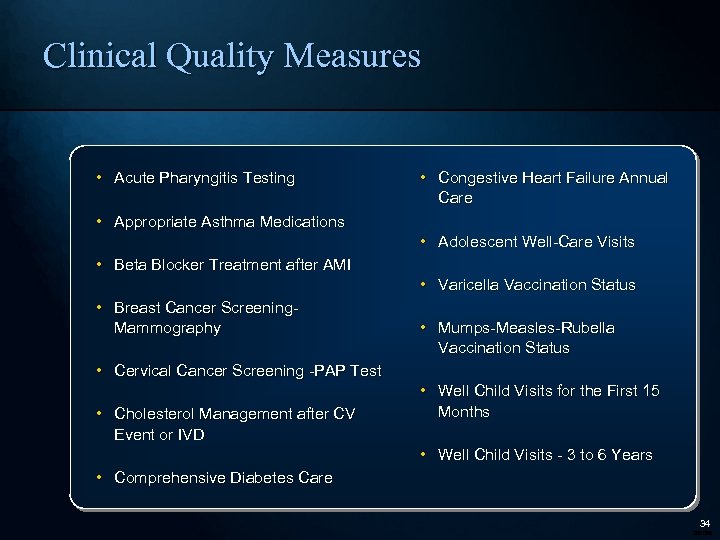
Clinical Quality Measures • Acute Pharyngitis Testing • Congestive Heart Failure Annual Care • Appropriate Asthma Medications • Adolescent Well-Care Visits • Beta Blocker Treatment after AMI • Varicella Vaccination Status • Breast Cancer Screening. Mammography • Mumps-Measles-Rubella Vaccination Status • Cervical Cancer Screening -PAP Test • Cholesterol Management after CV Event or IVD • Well Child Visits for the First 15 Months • Well Child Visits - 3 to 6 Years • Comprehensive Diabetes Care 34 280066
Best Practice • Innovative practice improvements focusing on medical management and clinical quality issues that are not currently being measured in our program • Begun in response to physician request • Accept – ABIM, ABFM and ABP Practice Quality Improvement Modules – AAFP Metric Program – NCQA Certifications 35 280066
Collaboration History • Initially approached by American Board of Internal Medicine in spring 2006 • Need to provide options for all specialties • Heard of American Academy of Family Physician METRIC program • Outreach to American Board of Family Medicine, American Board of Pediatrics • Arranged collaborations, signed agreements and developed promotions in Fall 2006 36 280066
American Board of Internal Medicine • Practice Improvement Module (PPM) • Web-based, quality improvement modules • Enables physicians to conduct a confidential self-evaluation of the medical care that they provide • Helps physicians gain knowledge about their practices through analysis of data from the practice • Development and implementation of a plan to target areas for improvement • Part of ABIM’s Maintenance of Certification program 37 280066
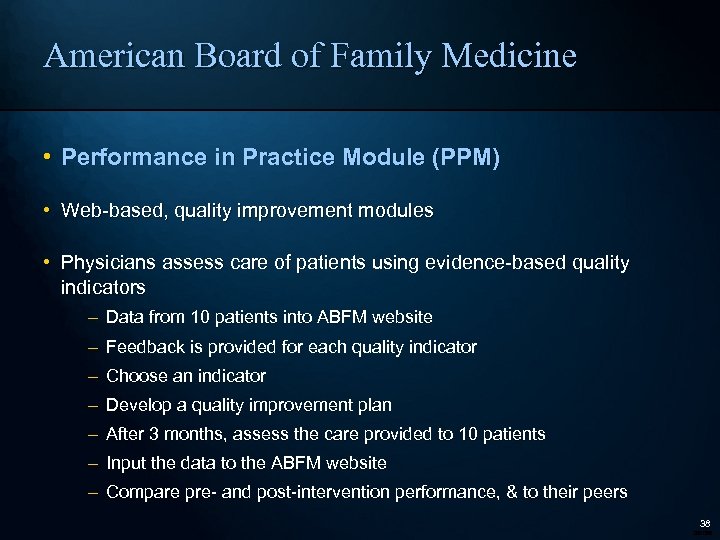
American Board of Family Medicine • Performance in Practice Module (PPM) • Web-based, quality improvement modules • Physicians assess care of patients using evidence-based quality indicators – Data from 10 patients into ABFM website – Feedback is provided for each quality indicator – Choose an indicator – Develop a quality improvement plan – After 3 months, assess the care provided to 10 patients – Input the data to the ABFM website – Compare pre- and post-intervention performance, & to their peers 38 280066
Positive Outcomes • Wonderful collaboration with boards, specialty society and NCQA • Reduce redundancy – Practices already stretched • Simpler process for us • Synergy – Emphasizes the need for QI at the practice level – Helps educate regarding the MOC process • Good PR with physicians 39 280066
Future Directions • Started slowly – takes a while to get certifications • Increase value of Best Practice measure • Hope to add icons to transparency web site 40 280066
HMO Pay for Performance and Public Reporting Programs Carol Wilhoit, M. D. , M. S. Blue Cross and Blue Shield of Illinois February 28, 2008
BCBSIL HMO P 4 P Program • HMO Illinois and Blue. Advantage HMO provide coverage for approximately 850, 000 members. • The HMOs contract with about eighty medical groups and IPAs. The HMOs do not contract with individual physicians. HMO performancebased reimbursement was implemented in 2000. • Transparency was added in 2003 with publication of the Blue Star MG/IPA report. • In 2007, ten clinical projects were supported by the HMO QI Fund: – Asthma, Diabetes, Cardiovascular Disease, Hypertension, Mental Health Follow-Up – Childhood Immunization, Influenza Vaccination, Colorectal Cancer Screening, Breast Cancer Screening, Cervical Cancer Screening • The total QI Fund available for HMO clinical projects exceeds $60 million/year. • Payment plus transparency of results has lead to significant improvements in multiple clinical areas. 42 280066
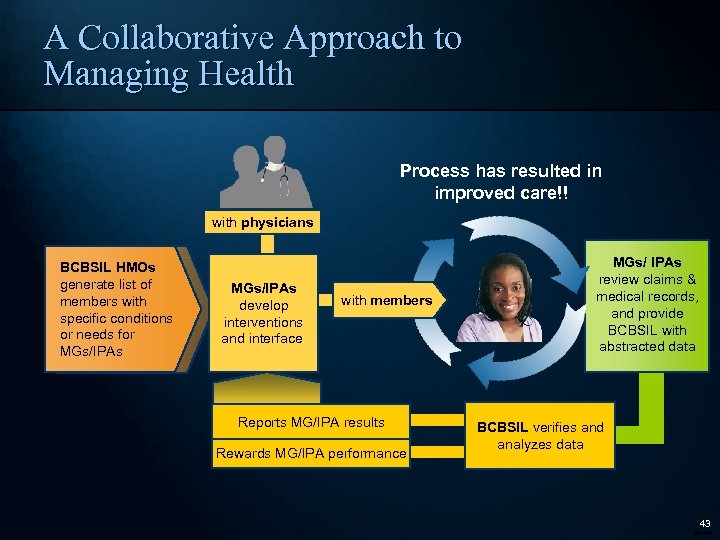
A Collaborative Approach to Managing Health Process has resulted in improved care!! with physicians BCBSIL HMOs generate list of members with specific conditions or needs for MGs/IPAs develop interventions and interface: with members Reports MG/IPA results Rewards MG/IPA performance MGs/ IPAs review claims & medical records, and provide BCBSIL with abstracted data BCBSIL verifies and analyzes data 43 280066
Diabetes Flowsheet QI Fund Project • The project was implemented in 2000. The objective is to promote improvements in diabetic care by encouraging physicians to track and trend diabetes care on a flowsheet. • The project has been expanded over time to include eye exam (2001), Hb. A 1 c control and LDL control (2003), depression screening (2004), “Overall Diabetes Care” and nephropathy screening/medical attention for nephropathy (2005), and blood pressure control (2007). • Public reporting of IPA performance, including diabetes care, began in 2003. • The project includes the entire population of identified diabetics (>20, 000 each year. ) Of these, 9, 993 diabetic members had diabetes claims EACH year from 2002 to 2006 and were included in the diabetes project each year from 2003 through 2006. • The remainder of the analysis is focused on the above cohort of 9, 993 diabetic members. 44 280066
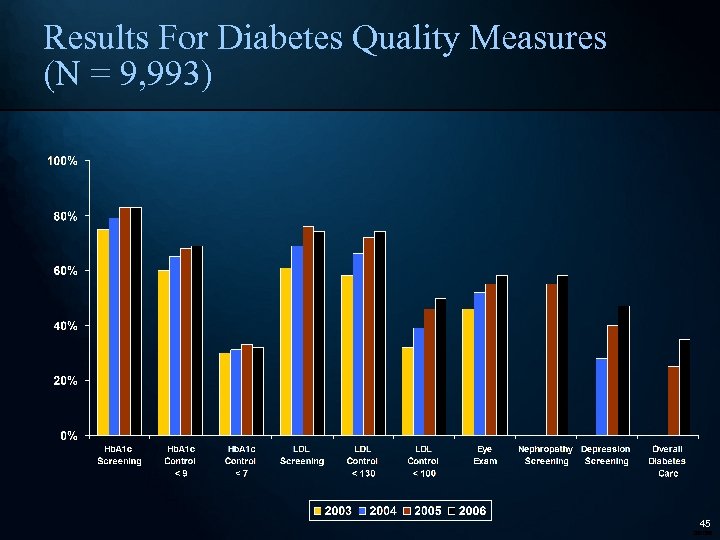
Results For Diabetes Quality Measures (N = 9, 993) 45 280066
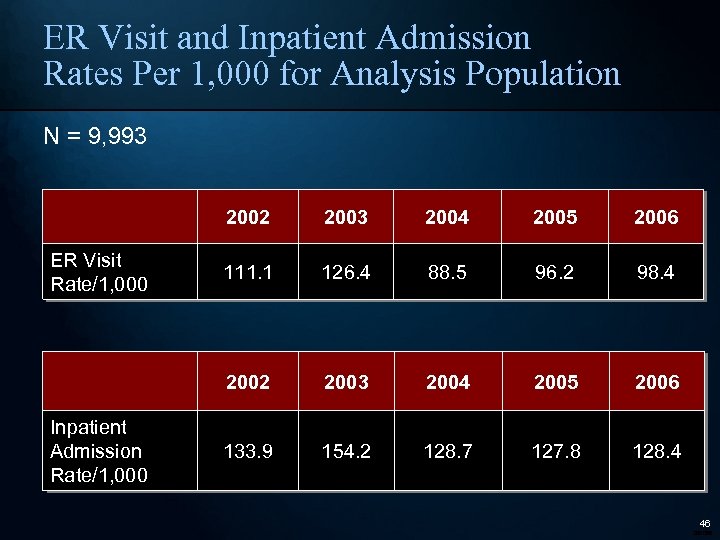
ER Visit and Inpatient Admission Rates Per 1, 000 for Analysis Population N = 9, 993 2002 Inpatient Admission Rate/1, 000 2004 2005 2006 111. 1 126. 4 88. 5 96. 2 98. 4 2002 ER Visit Rate/1, 000 2003 2004 2005 2006 133. 9 154. 2 128. 7 127. 8 128. 4 46 280066
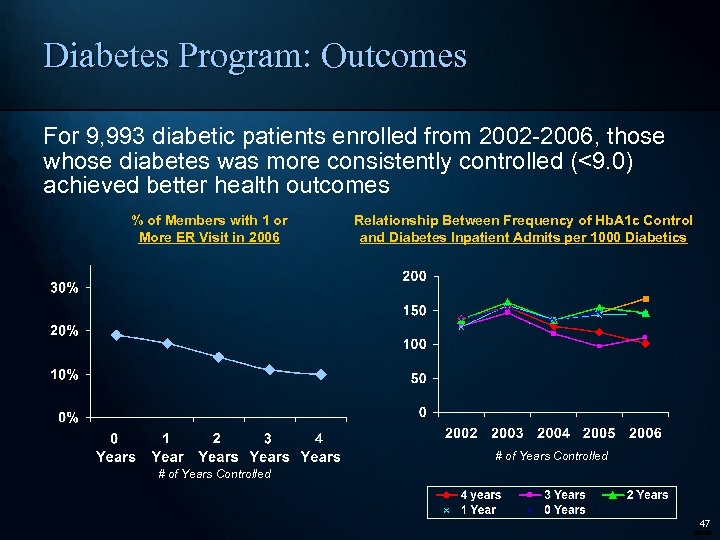
Diabetes Program: Outcomes For 9, 993 diabetic patients enrolled from 2002 -2006, those whose diabetes was more consistently controlled (<9. 0) achieved better health outcomes % of Members with 1 or More ER Visit in 2006 Relationship Between Frequency of Hb. A 1 c Control and Diabetes Inpatient Admits per 1000 Diabetics # of Years Controlled 47 280066
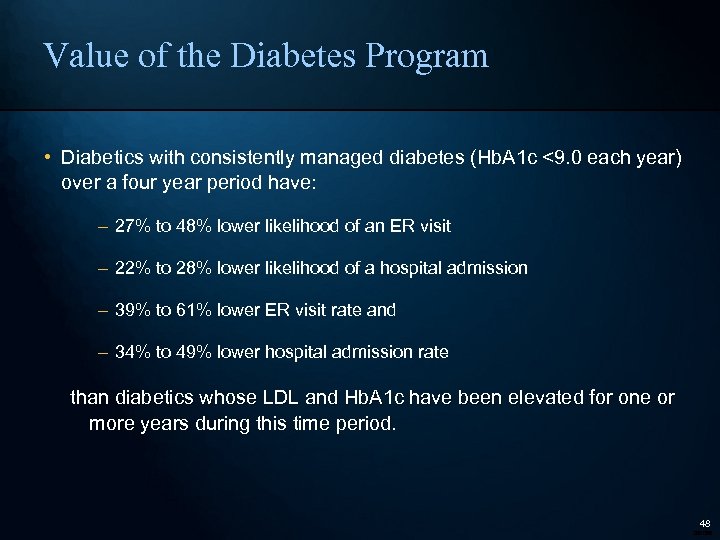
Value of the Diabetes Program • Diabetics with consistently managed diabetes (Hb. A 1 c <9. 0 each year) over a four year period have: – 27% to 48% lower likelihood of an ER visit – 22% to 28% lower likelihood of a hospital admission – 39% to 61% lower ER visit rate and – 34% to 49% lower hospital admission rate than diabetics whose LDL and Hb. A 1 c have been elevated for one or more years during this time period. 48 280066
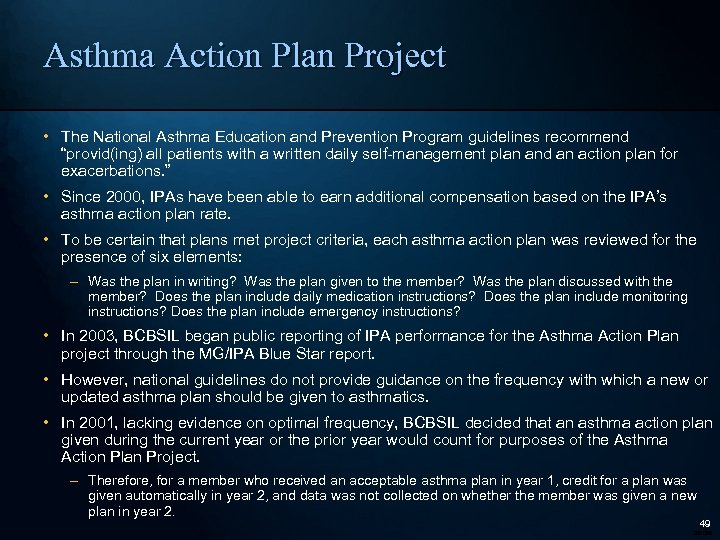
Asthma Action Plan Project • The National Asthma Education and Prevention Program guidelines recommend “provid(ing) all patients with a written daily self-management plan and an action plan for exacerbations. ” • Since 2000, IPAs have been able to earn additional compensation based on the IPA’s asthma action plan rate. • To be certain that plans met project criteria, each asthma action plan was reviewed for the presence of six elements: – Was the plan in writing? Was the plan given to the member? Was the plan discussed with the member? Does the plan include daily medication instructions? Does the plan include monitoring instructions? Does the plan include emergency instructions? • In 2003, BCBSIL began public reporting of IPA performance for the Asthma Action Plan project through the MG/IPA Blue Star report. • However, national guidelines do not provide guidance on the frequency with which a new or updated asthma plan should be given to asthmatics. • In 2001, lacking evidence on optimal frequency, BCBSIL decided that an asthma action plan given during the current year or the prior year would count for purposes of the Asthma Action Plan Project. – Therefore, for a member who received an acceptable asthma plan in year 1, credit for a plan was given automatically in year 2, and data was not collected on whether the member was given a new plan in year 2. 49 280066
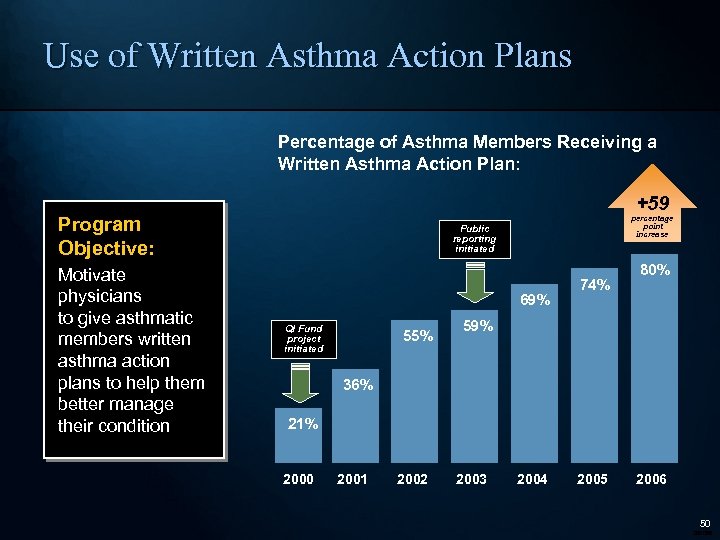
Use of Written Asthma Action Plans Percentage of Asthma Members Receiving a Written Asthma Action Plan: +59 Program Objective: Motivate physicians to give asthmatic members written asthma action plans to help them better manage their condition percentage point increase Public reporting initiated 69% QI Fund project initiated 55% 74% 80% 59% 36% 21% 2000 2001 2002 2003 2004 2005 2006 50 280066
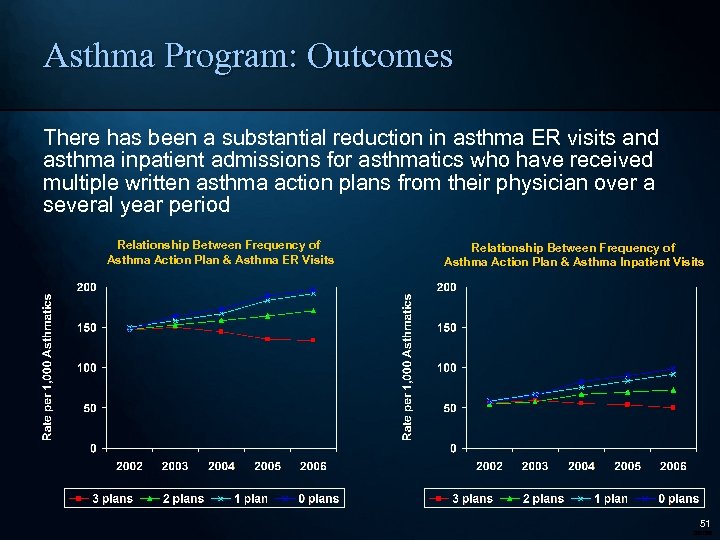
Asthma Program: Outcomes There has been a substantial reduction in asthma ER visits and asthma inpatient admissions for asthmatics who have received multiple written asthma action plans from their physician over a several year period Relationship Between Frequency of Asthma Action Plan & Asthma ER Visits Relationship Between Frequency of Asthma Action Plan & Asthma Inpatient Visits 51 280066
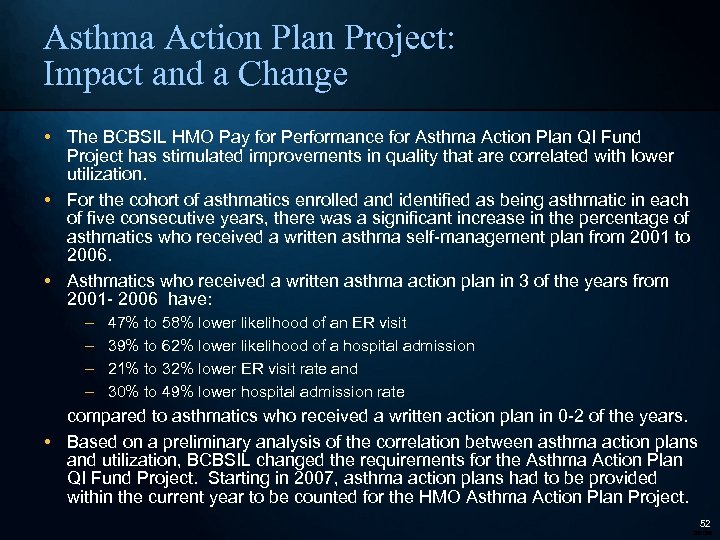
Asthma Action Plan Project: Impact and a Change • The BCBSIL HMO Pay for Performance for Asthma Action Plan QI Fund Project has stimulated improvements in quality that are correlated with lower utilization. • For the cohort of asthmatics enrolled and identified as being asthmatic in each of five consecutive years, there was a significant increase in the percentage of asthmatics who received a written asthma self-management plan from 2001 to 2006. • Asthmatics who received a written asthma action plan in 3 of the years from 2001 - 2006 have: – – 47% to 58% lower likelihood of an ER visit 39% to 62% lower likelihood of a hospital admission 21% to 32% lower ER visit rate and 30% to 49% lower hospital admission rate compared to asthmatics who received a written action plan in 0 -2 of the years. • Based on a preliminary analysis of the correlation between asthma action plans and utilization, BCBSIL changed the requirements for the Asthma Action Plan QI Fund Project. Starting in 2007, asthma action plans had to be provided within the current year to be counted for the HMO Asthma Action Plan Project. 52 280066
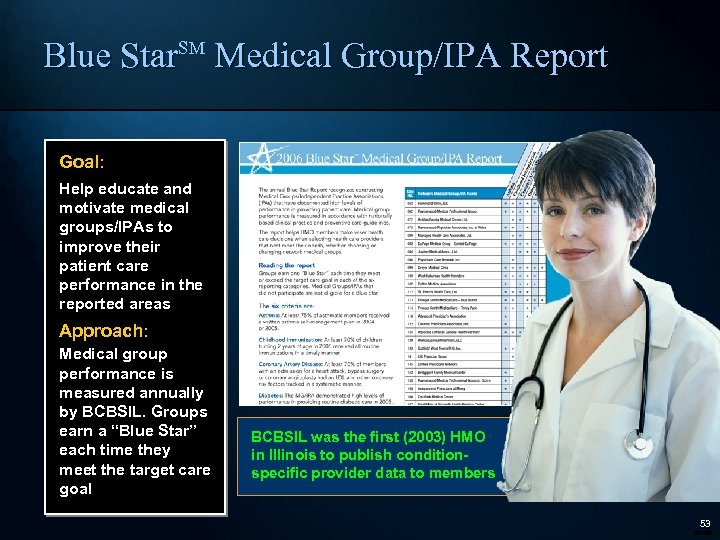
Blue Star. SM Medical Group/IPA Report Goal: Help educate and motivate medical groups/IPAs to improve their patient care performance in the reported areas Approach: Medical group performance is measured annually by BCBSIL. Groups earn a “Blue Star” each time they meet the target care goal BCBSIL was the first (2003) HMO in Illinois to publish conditionspecific provider data to members 53 280066
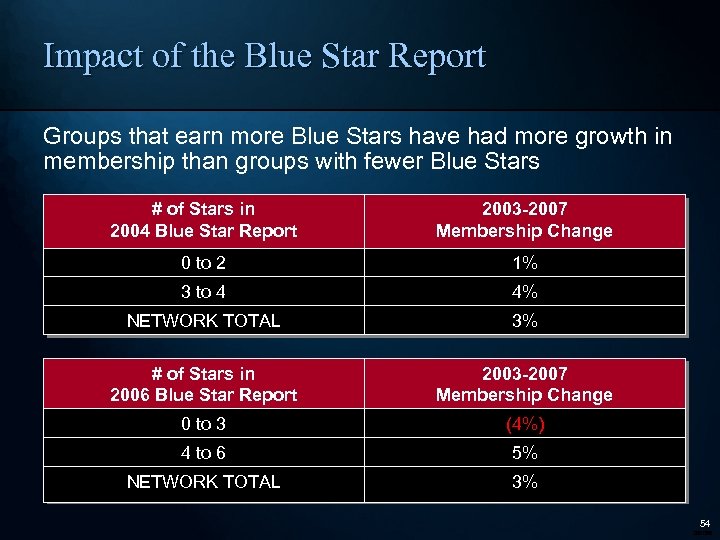
Impact of the Blue Star Report Groups that earn more Blue Stars have had more growth in membership than groups with fewer Blue Stars # of Stars in 2004 Blue Star Report 2003 -2007 Membership Change 0 to 2 1% 3 to 4 4% NETWORK TOTAL 3% # of Stars in 2006 Blue Star Report 2003 -2007 Membership Change 0 to 3 (4%) 4 to 6 5% NETWORK TOTAL 3% 54 280066
Aligning Hospital and Physician P 4 P Programs Rome (Skip) H. Walker, M. D. Anthem Blue Cross Blue Shield of Virginia February 28, 2008
Anthem’s Quality Evolution Quality-In-Sights®: Hospital Incentive Program (Q-HIPSM) – Partnership developed in collaboration with the American College of Cardiology and the Society of Thoracic Surgeons Quality Physician Performance Program (Q-P 3 SM) – Sister program to Q-HIPSM designed to align incentives 56 280066
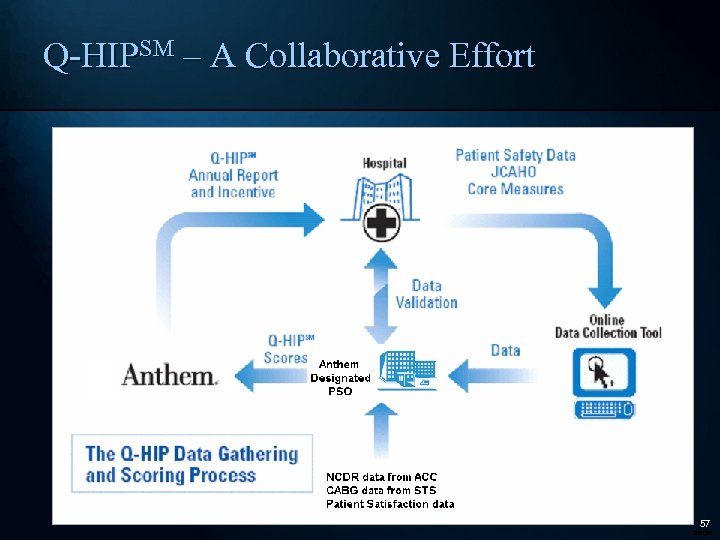
Q-HIPSM – A Collaborative Effort 57 280066
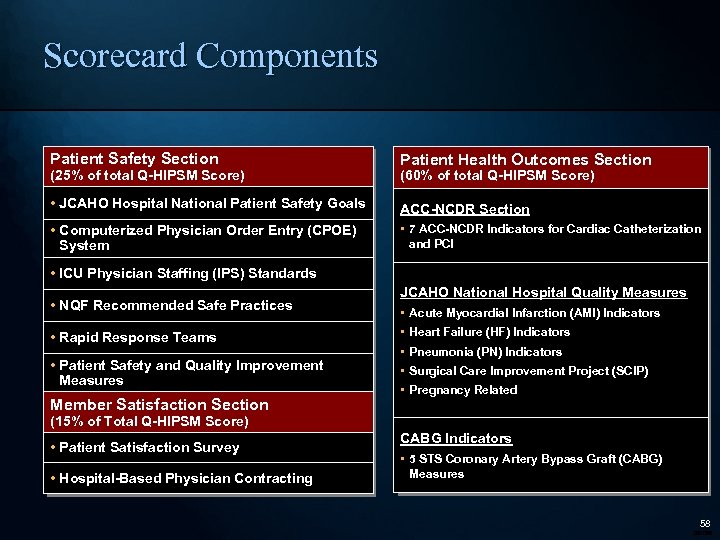
Scorecard Components Patient Safety Section (25% of total Q-HIPSM Score) Patient Health Outcomes Section (60% of total Q-HIPSM Score) • JCAHO Hospital National Patient Safety Goals ACC-NCDR Section • Computerized Physician Order Entry (CPOE) System • 7 ACC-NCDR Indicators for Cardiac Catheterization and PCI • ICU Physician Staffing (IPS) Standards • NQF Recommended Safe Practices JCAHO National Hospital Quality Measures • Acute Myocardial Infarction (AMI) Indicators • Rapid Response Teams • Heart Failure (HF) Indicators • Patient Safety and Quality Improvement Measures • Surgical Care Improvement Project (SCIP) Member Satisfaction Section • Pneumonia (PN) Indicators • Pregnancy Related (15% of Total Q-HIPSM Score) • Patient Satisfaction Survey • Hospital-Based Physician Contracting CABG Indicators • 5 STS Coronary Artery Bypass Graft (CABG) Measures 58 280066
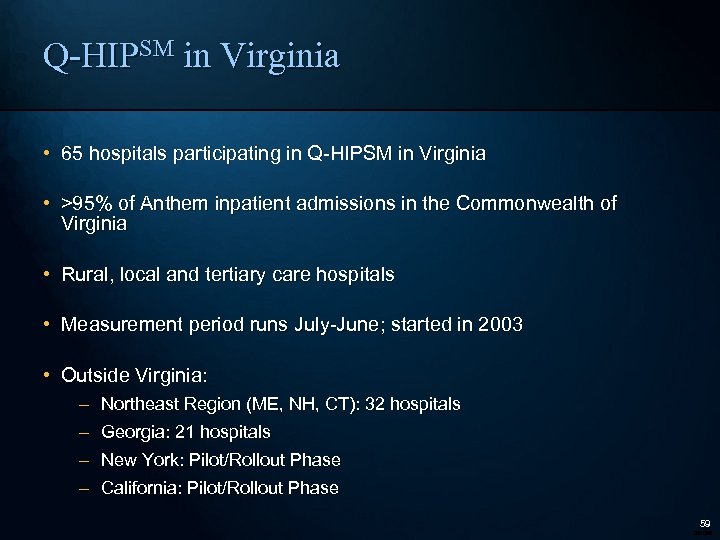
Q-HIPSM in Virginia • 65 hospitals participating in Q-HIPSM in Virginia • >95% of Anthem inpatient admissions in the Commonwealth of Virginia • Rural, local and tertiary care hospitals • Measurement period runs July-June; started in 2003 • Outside Virginia: – Northeast Region (ME, NH, CT): 32 hospitals – Georgia: 21 hospitals – New York: Pilot/Rollout Phase – California: Pilot/Rollout Phase 59 280066
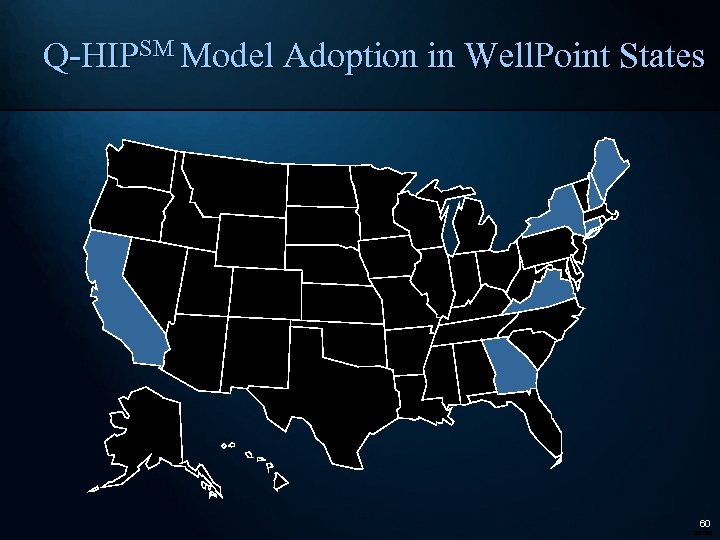
Q-HIPSM Model Adoption in Well. Point States 60 280066
Q-P 3 SM Program • Q-P 3 SM is Anthem’s performance based incentive program (Pay-for-Performance) for physicians • Opportunity to reward high quality performance • Collaborated with the American College of Cardiology and the Society of Thoracic Surgeons • Researched published guidelines, medical society recommendations and evidence-based clinical indicators • Programs implemented in 2006 61 280066
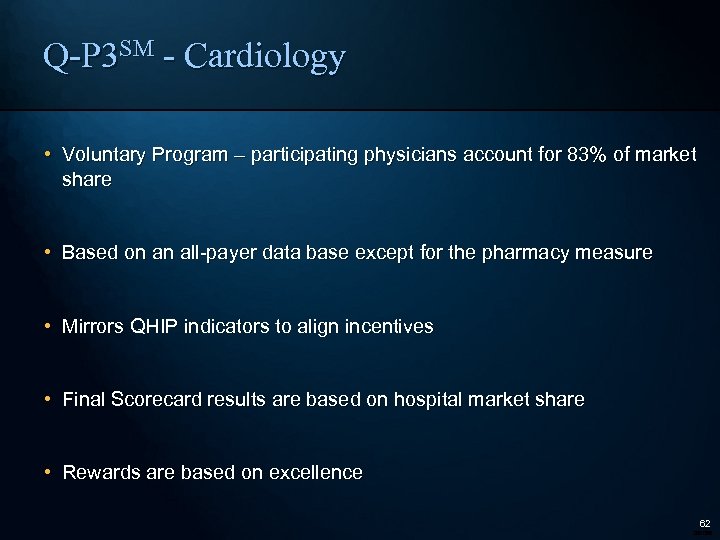
Q-P 3 SM - Cardiology • Voluntary Program – participating physicians account for 83% of market share • Based on an all-payer data base except for the pharmacy measure • Mirrors QHIP indicators to align incentives • Final Scorecard results are based on hospital market share • Rewards are based on excellence 62 280066
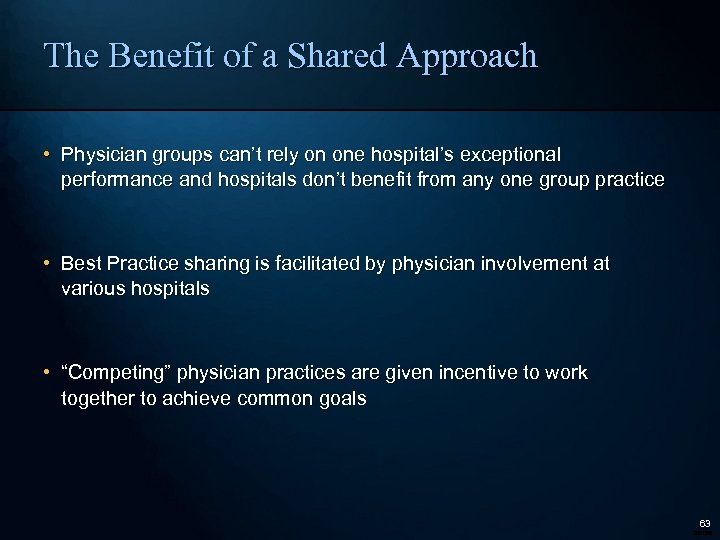
The Benefit of a Shared Approach • Physician groups can’t rely on one hospital’s exceptional performance and hospitals don’t benefit from any one group practice • Best Practice sharing is facilitated by physician involvement at various hospitals • “Competing” physician practices are given incentive to work together to achieve common goals 63 280066
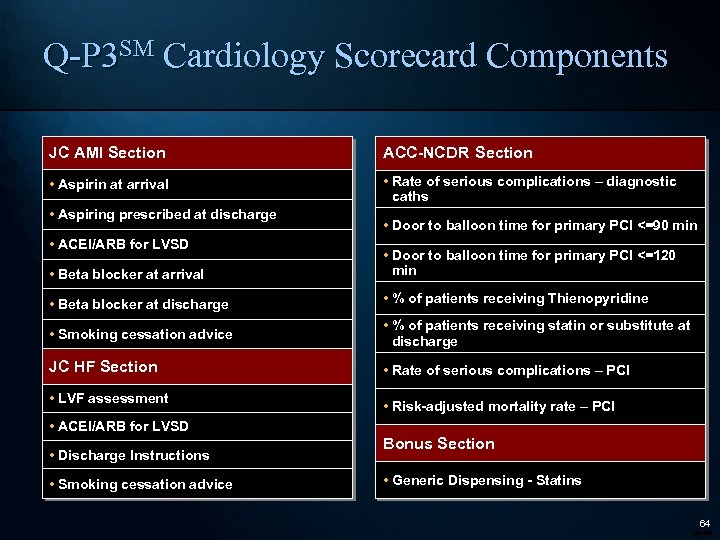
Q-P 3 SM Cardiology Scorecard Components JC AMI Section ACC-NCDR Section • Aspirin at arrival • Rate of serious complications – diagnostic caths • Aspiring prescribed at discharge • ACEI/ARB for LVSD • Door to balloon time for primary PCI <=90 min • Beta blocker at arrival • Door to balloon time for primary PCI <=120 min • Beta blocker at discharge • % of patients receiving Thienopyridine • Smoking cessation advice • % of patients receiving statin or substitute at discharge JC HF Section • Rate of serious complications – PCI • LVF assessment • ACEI/ARB for LVSD • Discharge Instructions • Smoking cessation advice • Risk-adjusted mortality rate – PCI Bonus Section • Generic Dispensing - Statins 64 280066
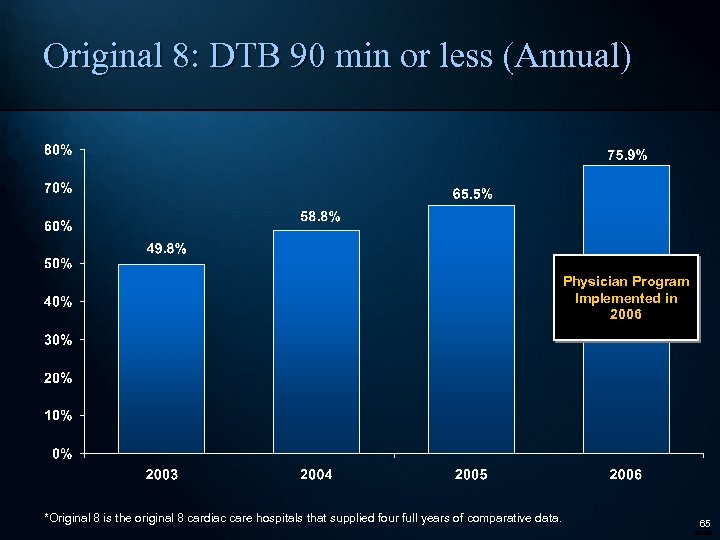
Original 8: DTB 90 min or less (Annual) Physician Program Implemented in 2006 *Original 8 is the original 8 cardiac care hospitals that supplied four full years of comparative data. 65 280066
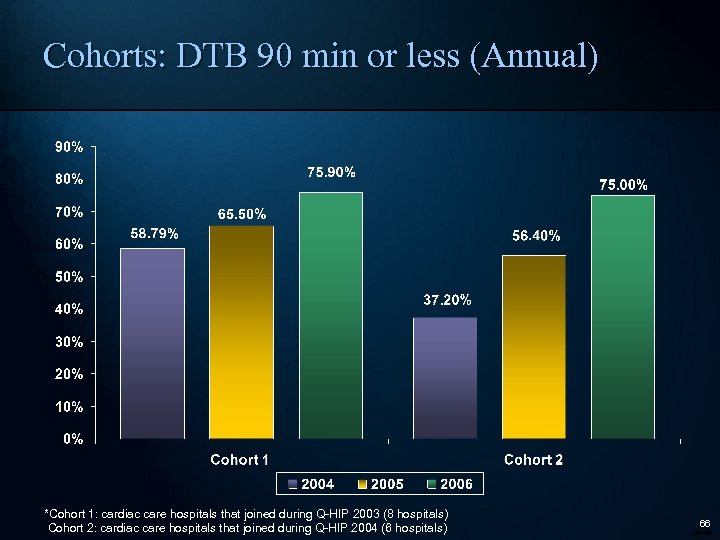
Cohorts: DTB 90 min or less (Annual) *Cohort 1: cardiac care hospitals that joined during Q-HIP 2003 (8 hospitals) Cohort 2: cardiac care hospitals that joined during Q-HIP 2004 (6 hospitals) 66 280066
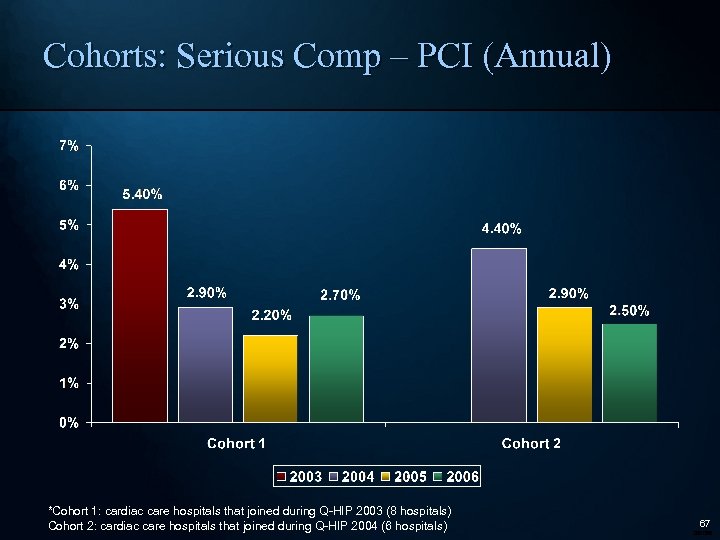
Cohorts: Serious Comp – PCI (Annual) *Cohort 1: cardiac care hospitals that joined during Q-HIP 2003 (8 hospitals) Cohort 2: cardiac care hospitals that joined during Q-HIP 2004 (6 hospitals) 67 280066
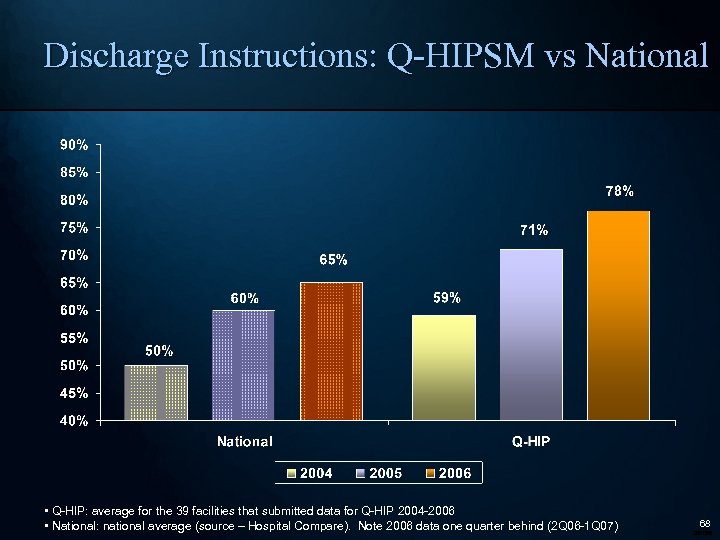
Discharge Instructions: Q-HIPSM vs National • Q-HIP: average for the 39 facilities that submitted data for Q-HIP 2004 -2006 • National: national average (source – Hospital Compare). Note 2006 data one quarter behind (2 Q 06 -1 Q 07) 68 280066
Summary • Marketplace is looking for a solution • A demonstrated impact on quality of care for cardiology • Feeds into hospital transparency efforts • Drives alignment between hospitals and cardiac specialists • Win-Win solution for providers, members and employers 69 280066

Thank you! Questions and Comments 70 280066
Скачать презентацию Physician and Hospital Collaboration Reducing Harm Improving
7a4efc3bb08dd9c4c4415004e89c9fea.ppt