


 Скачать презентацию Phonics Workshop Wednesday 21 st January 2015 Teach
12102c65b55f10d6699feb0cb1816a62.ppt
- Количество слайдов: 30
 Phonics Workshop Wednesday 21 st January 2015 “Teach us to read and write and teach us well so we grow up to be the best we can at whatever we wish to do. ” The UN Convention on the Rights of the Child
 How do we read? Mr Gumpy owned a boat and his house was by the river. One day Mr Gumpy went out in his boat. “May we come with you? ” said the children. “Yes, ” said Mr Gumpy, “if you don’t squabble. ” Mr Gumpy’s Outing
 How do we read? This gallimaufry is multitudinously gargantuan, puissantly capacious and ineffably Junoesque and in consequence of such Protean tribulations and in such psychotic contravention of stereotypical hygiene, there exists the infinitesimal exiguity of a satisfactory resolution to this cataclysmic dilemma. Cat in the Hat (modified)
 How do we teach phonics?
 Reception Covers Phases 1, 2, 3 and 4 Year 1 Covers Phases 4 and 5
 Letters and Sounds Phase 0 ne
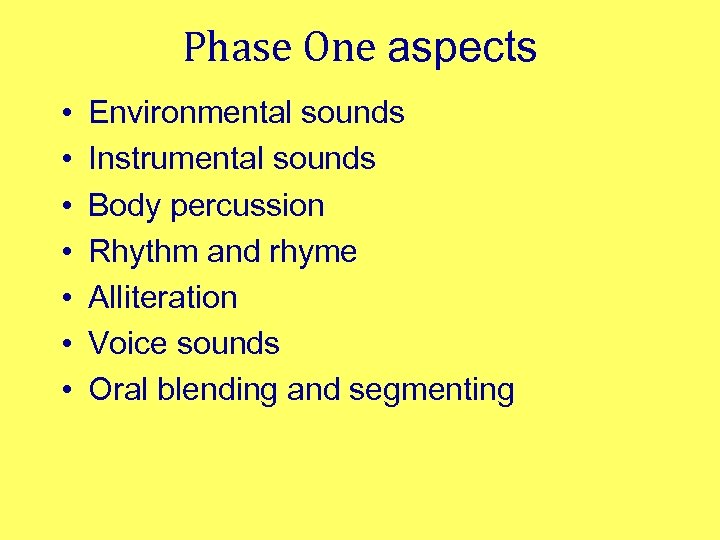 Phase One aspects • • Environmental sounds Instrumental sounds Body percussion Rhythm and rhyme Alliteration Voice sounds Oral blending and segmenting
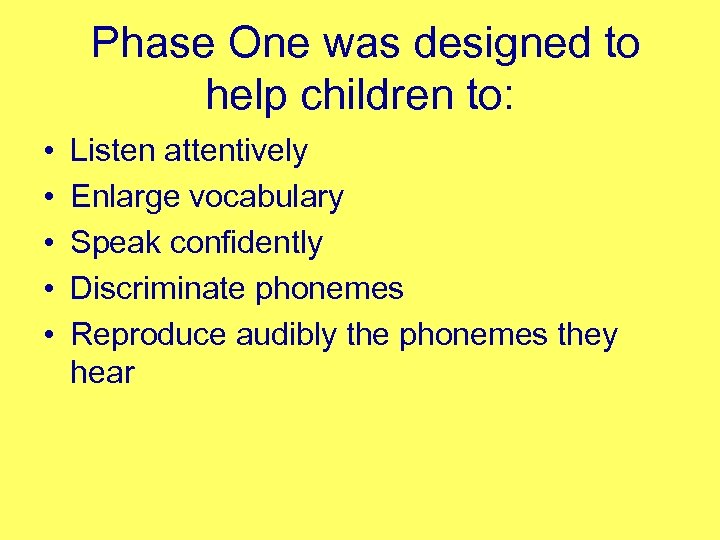 Phase One was designed to help children to: • • • Listen attentively Enlarge vocabulary Speak confidently Discriminate phonemes Reproduce audibly the phonemes they hear
 Phonics Phase 2 and 3 Reception
 Phase 2 • Is the start of systematic phonic work. • Begins the understanding of grapheme - phoneme correspondence. • Understand that words are constructed from phonemes and that phonemes are represented by graphemes.
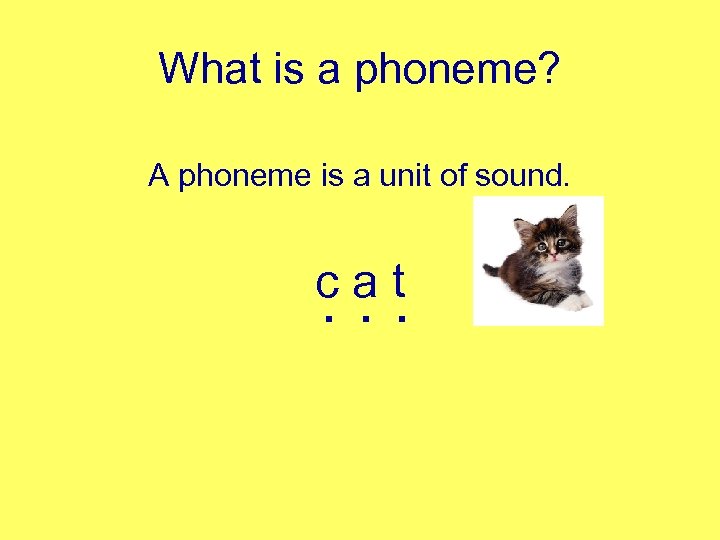 What is a phoneme? A phoneme is a unit of sound. cat . . .
 What is a grapheme? A grapheme is how a sound is represented in writing.
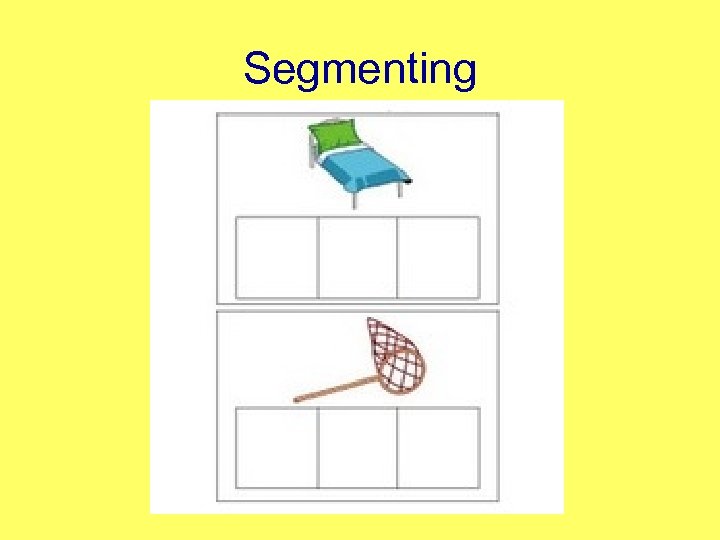
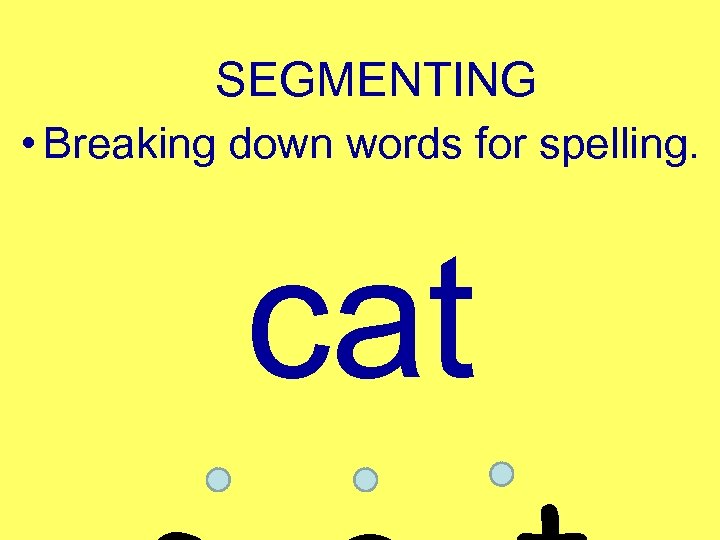 SEGMENTING • Breaking down words for spelling. cat
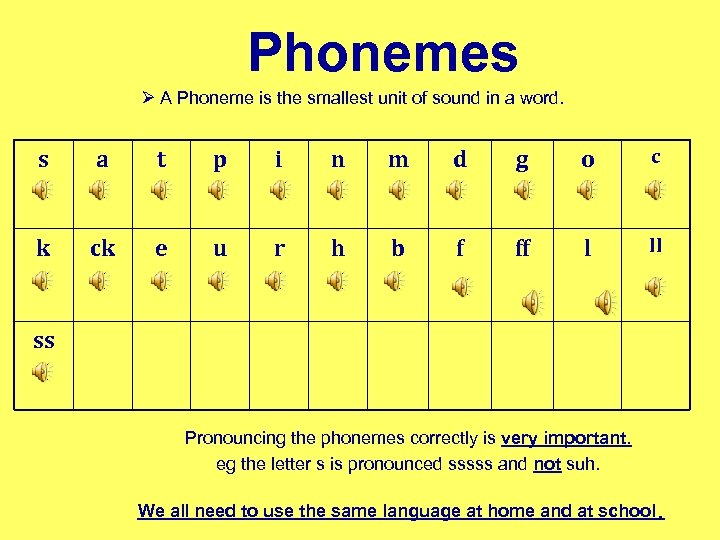 Phonemes Ø A Phoneme is the smallest unit of sound in a word. s a t p i n m d g o c k ck e u r h b f ff l ll ss Pronouncing the phonemes correctly is very important. eg the letter s is pronounced sssss and not suh. We all need to use the same language at home and at school.
 Next steps … • Children then begin to blend for reading. • Starting with simple VC (vowel consonant) words e. g at, is • and then to CVC (consonant vowel consonant) words. E. g dog, cat, man
 BLENDING Recognise and say the letter sounds in a written word, for example: s-a-t by merging or ‘blending’ them in the order in which they are written to pronounce the word ‘sat’.
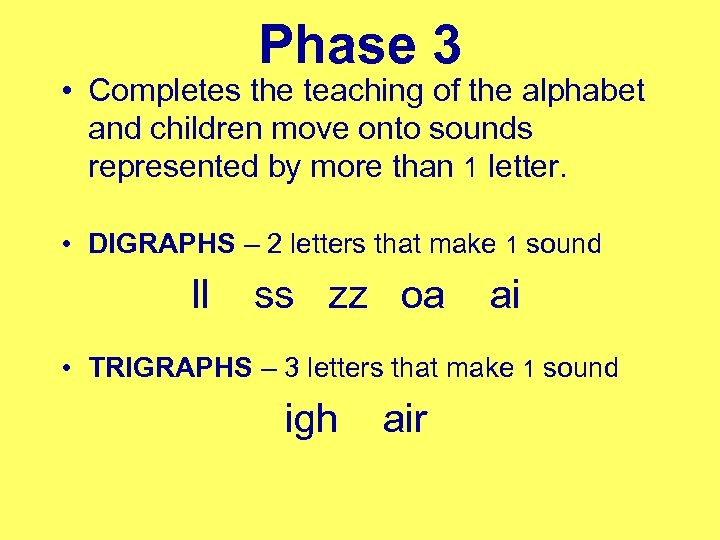 Phase 3 • Completes the teaching of the alphabet and children move onto sounds represented by more than 1 letter. • DIGRAPHS – 2 letters that make 1 sound ll ss zz oa ai • TRIGRAPHS – 3 letters that make 1 sound igh air
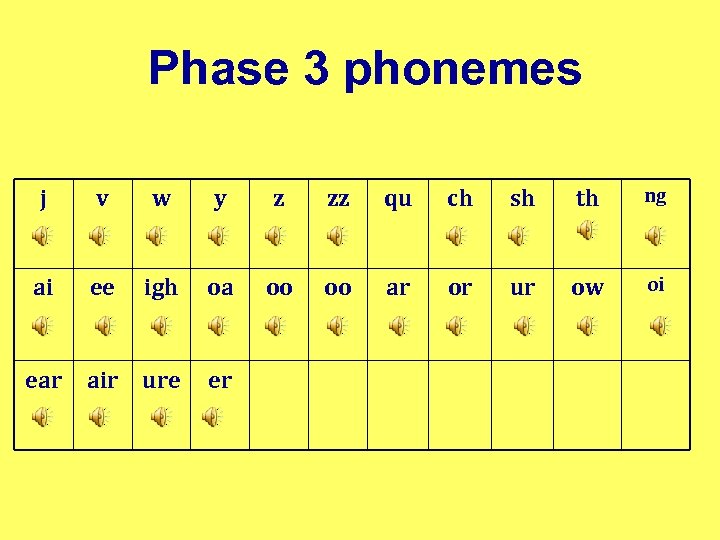 Phase 3 phonemes j v w y z zz qu ch sh th ng ai ee igh oa oo oo ar or ur ow oi ear air ure er
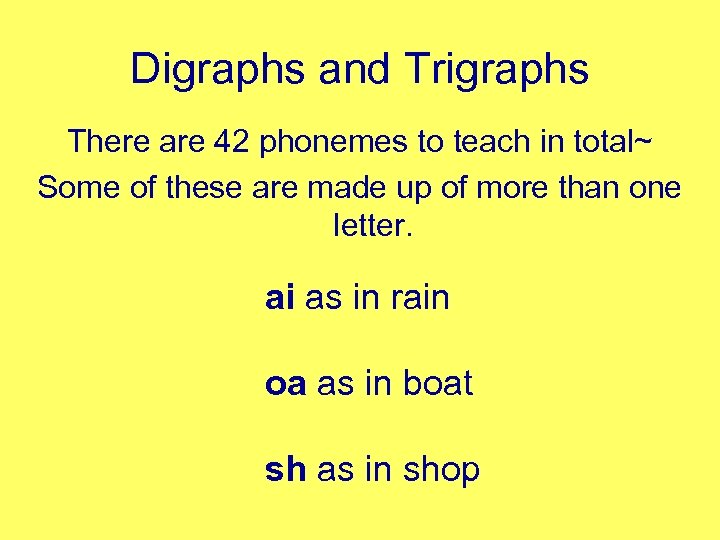 Digraphs and Trigraphs There are 42 phonemes to teach in total~ Some of these are made up of more than one letter. ai as in rain oa as in boat sh as in shop
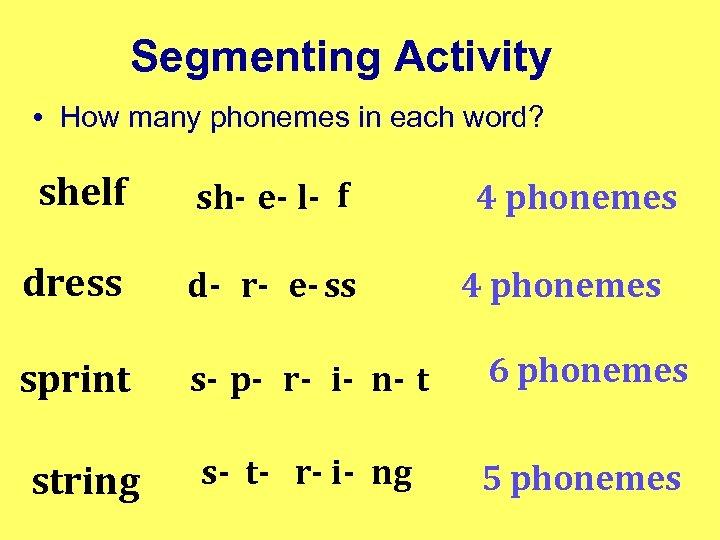 Segmenting Activity • How many phonemes in each word? shelf sh- e- l- f dress d- r- e- ss sprint s- p- r- i- n- t 6 phonemes string s- t- r- i- ng 5 phonemes 4 phonemes
 SIGHT WORDS • Words that are not phonically decodable. • e. g. was, the, I. • Some are ‘tricky’ to start with but will become decodable once we have learned the harder phonemes. • e. g. out, there.
 Sight words He was going to the park. I think you are right. The sun is hot.
 Phase 4 and Phase 5
 Phase 4 • In Phase 4, no new graphemes are introduced. The main aim of this phase is to consolidate the children's knowledge and to help them learn to read and spell words which have adjacent consonants, such as trap, string and milk. • Phase 4 is generally started at the beginning of Year 1, but may sometimes be covered at the end of YR then recapped at the start of Y 1.
 Phase 4 Sight words During Phase 4, the following tricky words (which can't yet be decoded) are introduced: said have like so do some come were there little one when out what
 Now you have the knowledge…. • Play lots of sound and listening games with your child. For Example… Ø I spy. Ø Use the sound boxes school provides to make words (real and nonsense ones) sounding them out. Ø Make duplicate sounds and play pairs… matching games. Ø Stick sounds on items that start with that letter sound. Ø At home, on car journeys, outings ask children to find as many things they can that start with a sound chosen. Ø Let them hear sounds… sound talk to them. “Fetch me your c-oa-t”! • Read as much as possible to and with your child. • Encourage and praise – get them to have a ‘good guess’. • Ask if you want to know more. ØMake it fun and in short, sharp bursts!
 Segmenting
 Blending
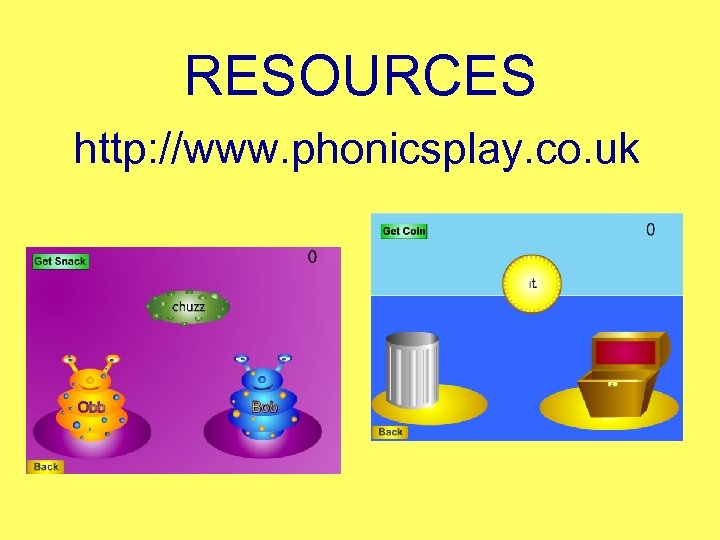 RESOURCES http: //www. phonicsplay. co. uk
 “The more that you read, the more things you will know. The more that you learn, the more places you’ll go. ” Dr Seuss, author of The Cat in the Hat